


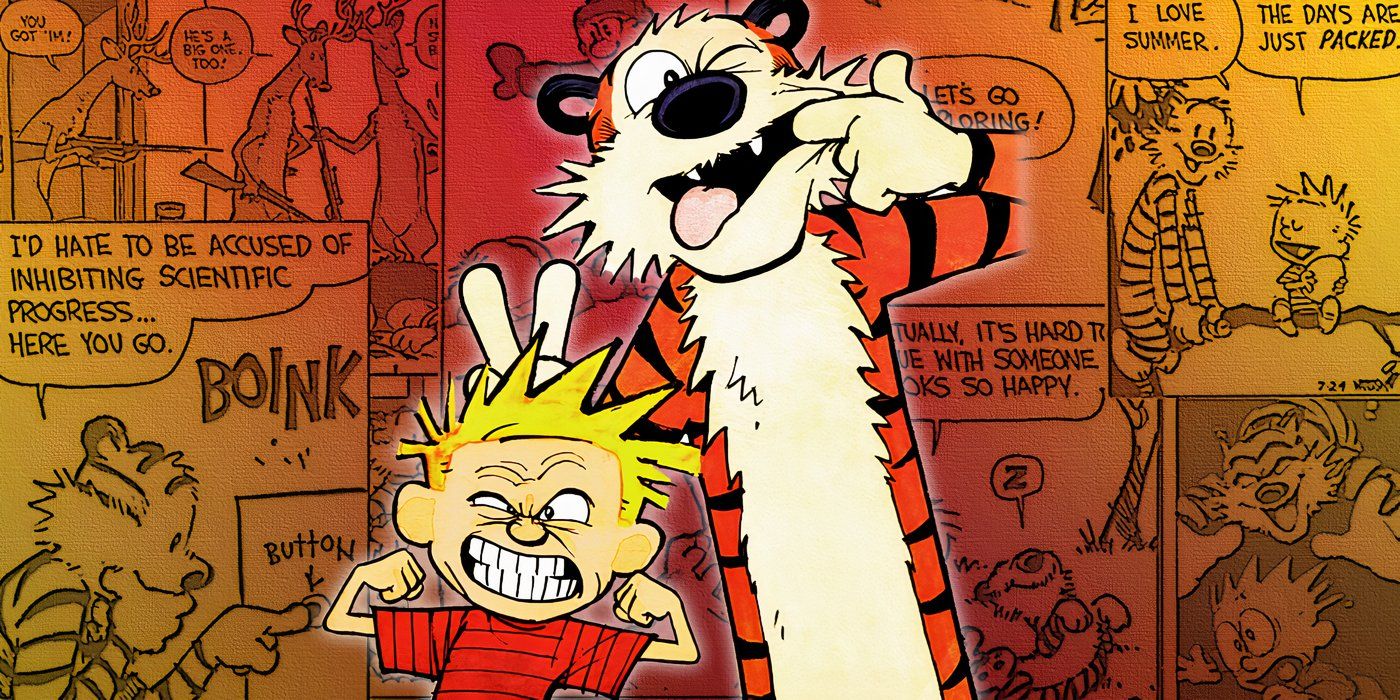
Calvin and Hobbes is one of the most famous comic strips ever written. Bill Watterson wrote and drew these beloved comics daily from 1985 to 1995, and during that time, they appeared in newspapers worldwide, delighting readers of all ages. Although Calvin and Hobbes comics have not been published in many years, the series has retained its shine among those who read it during its release and is still steadily drawing in new readers with its enduring reputation.
Calvin's experiences as a child learning about the world were fairly universal, which contributed to the comic's popularity. The art would sometimes shift from a standard comic style to incredibly beautiful and detailed for dramatic or comedic effect. There have been so many amazing Calvin and Hobbes comics over the years that it is difficult to pinpoint the very best. However, plenty of standout Calvin and Hobbes comic strips display the best the series offers.
Updated on August 1, 2025, by Ajay Aravind: Calvin and Hobbes, named after French reformer John Calvin and English philosopher Thomas Hobbes, often expressed thoughts as complex as their real-life namesakes. Despite the cutesy art and occasionally bright colors, these two adorable characters explored themes like postmodernism, artistic license, consumerist critiques and even existentialism. With the sheer weight of philosophical depth throughout the series, it's easy to find five more examples of the best Calvin and Hobbes comic strips.
30 Calvin Sculpts a Snowman Accident in the Driveway
Calvin's Parents Worry About His Mental Health
 Image via Bill Watterson
One of the repeated settings in Calvin and Hobbes was Calvin's gallery of snowman art that he sculpted every winter and lost due to the sun. These comics display what a vivid imagination Calvin had, and are trophies of Bill Watterson's ability to create a range of emotions and expressions with very few artistic devices. Most of these comics are in black and white (though this one has some color).
In these panels, Calvin makes the bodies of three snowmen before Watterson shows the whole scene. Calvin has crafted an accident scene in which one snowman has been hit and dismembered, and three others look on shocked and horrified. The combination of the scene's cleverness, the snowmen's expressions, and the equanimity of Calvin's parents makes this a hilarious strip.
29 Calvin and Hobbes Go Camping by Themselves
Belief in Ghosts Keeps the Pair up All Night
 Image via Bill Watterson
In this short four-panel comic, Calvin and his toy tiger Hobbes are camping. The first panel shows them inside their sleeping bags in their tent, saying good night to each other. The second panel does more than just set the scene. It creates the stillness and overwhelming quiet for the reader that one can only experience camping in the wilderness. The odd curvature of the moon brings a strange quality to the panel.
That second panel validates Watterson's artistic talent because the rest of the comic really hinges on that panel. Still looking at the outside of the tent, one of the characters (probably Calvin) asks, "Do you believe in Ghosts?" In the next panel, it is morning, and Calvin and Hobbes are sitting outside the tent with deranged expressions while Hobbes holds a baseball bat. The reader doesn't need an explanation to know what Calvin's imagination did with that question.
28 Calvin Can Change Anything With a Magic Word
Calvin Can't Change His Father's Desire for Quiet
 Image via Bill Watterson
Many strips from Calvin and Hobbes were devoted to Calvin's relationship with his parents. While several showed the loving aspects of their relationship, the strip is largely remembered for its portrayal of the antagonistic side of the relationship. Here, Calvin is going around the house, KaZAMing everything in sight, starting with his parents.
It doesn't take long for his father (who has now morphed into an alien) to tell Calvin to be quiet or endure his father's solution to boredom. This leads to the angry boy shuffling quietly upstairs. He looks out his bedroom window and shouts, "KaZAM!" Suddenly, Calvin's neighborhood is transformed into a desolate alien landscape. This comic is a tribute to the power of imagination as much as it is to the scope of Watterson's art.
27 Calvin's Medical Skill Is a Dark Reflection of Reality
Calvin Proposes a Lobotomy for Susie's Foot Pain
 Image via Bill Watterson
Calvin and Susie are neighbors and often play together, but one hesitates to categorize them as friends. If they are, their "friendship" is based on problematic tropes associated with boys and girls. Calvin is rude, shocking, and often revolting, whereas Susie is opinionated and intimidating. Both are uncompromising. Watterson devoted several comics to their mutually imaginary scenarios, allowing him to show off his art skills and create some great comedy.
In this one, Calvin and Susie are playing doctor. Calvin is the MD and Susie is the patient who complains of a sore foot. Clavin quickly claims her symptoms are psychosomatic and recommends a lobotomy. Outraged, Susie argues the two end up fighting. Watterson portrays all this in comic-book style, keeping their imaginary adult personas as the two devolve into kicking and fighting. This is one of the best Calvin and Susie strips with pertinent commentary worked in about the medical profession's general disregard for women.
26 Calvin's Love for Nature Is Endearingly Naive
Some Calvin & Hobbes Strips Need No Words
 Image via Bill Watterson
Despite Calvin's rambunctious behavior, which often results in acts of childish violence that cause property damage and his parents' melancholy, he loves nature more than anything else. In addition to his bond with Hobbes, Calvin deeply enjoys spending time outside, especially during summer, although there have been a few exceptions to the rule. This dialogue-less comic not only underscores Watterson's storytelling skill but also reveals much about Calvin's nature.
Calvin and Hobbes often look for and pick at various creepy-crawlies around the house, which lots of children enjoy. Calvin, however, is shown to be a surprisingly compassionate kid who only catches the fly inside his house so he can set it free outside. Of course, he's completely oblivious to the three flies that entered the house while he was letting one of them go. This strip says everything without a single word, and fans instantly understand two separate sides of Calvin's nature.
25 Calvin Learns What School Is Really About
It's All About Manipulating the System
 Image via Bill Watterson
Ever since school was invented, there probably hasn't been a student who hasn't, at some point, felt that the course of education was just about manipulating the system to get good grades and move higher up. Whether or not that is true, what is certainly apparent is that, Calvin has an epiphany about school in this panel. Calvin is famously at odds with school, bullies, teachers, and other students. He hates school with a passion.

15 Best Calvin and Hobbes Comics About School, Ranked
Though he is a charming kid, Calvin is a horrible student in the Calvin and Hobbes strip, which is why his in-school adventures are so hilarious.
So, to see him resign himself to his fate as a student here is hilarious because he does it with his typical, cynical aplomb. While answering a test question, he philosophizes that he has learned nothing and will forget what he does know as soon as he has answered the question. All he has learned is to manipulate the system. Breaking the fourth wall, Calvin snarkily states, "They say the satisfaction of teaching makes up for the lousy pay."
24 Hobbes' Pounce Shows How Comics Capture Movement
It Also Shows Hobbes' Love for Startling Calvin
 Image via Bill Watterson
Calvin and Hobbes comics demonstrate an incredible range of artistic styles. Some comic strips could be packed with detailed art and text, while others used little to no dialogue. Bill Watterson recognized that sometimes less is more, and his skill as an artist allowed him to tell vibrant stories that didn't always require comment from the characters involved. Here, however, the dialogue is saved for a two-fold "punch line," with different opinions on the encounter expressed by Calvin and Hobbes.
As a running gag, Hobbes would pounce on Calvin when he returned home from school. Capturing movement in a two-dimensional medium can truly be difficult. Watterson, however, used his impressive artistic talents here to render a series of panels that humorously mimicked slow motion and depicted quite the tumble sans animation. Even with Calvin's gripes about being pounced on by Hobbes, the tiger's excitement each time Calvin returns home is endearing.
23 The Baby Raccoon Story Broke the Hearts of Readers
Calvin Experiences Grief for the First Time
 Image via Bill Watterson
Calvin and Hobbes comic strips often sought to make readers laugh out loud over common commiserations or lessons learned. At the same time, Calvin and Hobbes comics could also genuinely tug at the reader's heartstrings. One sad series of comic strips that stuck with readers after its conclusion was the story of a sick baby raccoon that Calvin had found in the woods with Hobbes.
Calvin is a young boy still learning about life and death, and though he did the right thing by telling his parents right away so they could help, the raccoon kit didn't have much longer left. With this death, readers see Calvin experience his first loss. The boy even has a fairly measured take on the matter through his sobs, putting into words what many readers surely have felt when experiencing the loss of a family member, friend, or pet.
22 Calvin Plans a Snowball Attack for Months (and Fails)
The Best Laid Plan Blew up in Calvin's Face
 Image via Bill Watterson
Pranking Susie, the only girl who even deigns to interact with Calvin, is one of the greatest joys of his young life. Even if the stereotypes between the two verge on "boy-pulls-pigtails-because-he-likes-girl" territory, this comic panel is a smashing showcase of the consequences of Calvin's actions. Rather than pelting snowballs at Susie during winter like an ordinary kid, Calvin concocts a borderline Machiavellian scheme to present her with the most shocking prank of all time.
As it turned out, Calvin spent far too much time gloating about his evil genius before going through with his plan, throwing a snowball that had been stored in the freezer until June. Calvin's attack missed at close range, an embarrassing moment that was instantly made worse when Susie rolled up the snow chunks and returned the favor. At least Calvin understands the dramatic irony of his own defeat, making this already brilliant comic strip a shade brighter.
21 Calvinball Is Calvin's Preferred Sport To Play With Hobbes
Almost Anything Can Turn Into Calvinball
 Image via Bill Watterson
Of Calvin's many inspired creations, Calvinball is one of his most active, beyond the framing of everyday chaos through an imaginary lens. The core of Calvinball is that the rules are made up and the points don't matter, with bonuses and penalties randomly handed out for various acts. When seeing how eager Hobbes is to get involved, it becomes possible to discern that Calvinball is a way Calvin sometimes channels his excessive bursts of energy and creation.
This can speak to many readers' time spent playing games between friends while trying to one-up each other in friendly competition. Rules and keeping count of actual scores are less important than trying to be the player in the lead at any given moment. While much of Calvin and Hobbes speaks to grander lessons or pondering, it takes breaks to delight in the joys of childhood as well.
20 A Big Sunny Field Is All That Hobbes Truly Wants
Calvin Understands the Power of Simple Living
 Image via Bill Watterson
Calvin was always learning and growing throughout the Calvin and Hobbes comic strips, but not all his lessons involved reprimand or difficult subjects. Many of the most important lessons Calvin learned were about the importance of values like love and cherishing nature. In Hobbes' role as Calvin’s subconscious voice, Hobbes was usually the first to express these bits of wisdom in a way Calvin could begin to process.

10 Things Everyone Gets Wrong About Calvin and Hobbes
Bill Watterson's Calvin and Hobbes is a universally beloved comic strip, but some major things about the story are completely misunderstood.
With such an intense imagination, many of Calvin’s fantasies are dramatic and expansive, involving city-sized monsters or adventures in outer space. On the other hand, Hobbes has far more simple delights in mind. Hobbes is shown to enjoy the small things and appreciate what he already has available to him. In this heartwarming Calvin and Hobbes strip, Hobbes indirectly passes this wisdom on to Calvin.
19 The Torment of Existence Showed Unexpected Maturity
Watterson Uses Calvin to Critique the Art World
 Image via Bill Watterson
Calvin is often shown to be proficient at manipulating snow into fantastic sculptures and unique snowmen with relative ease for a child of his size. In this iconic Calvin and Hobbes comic, Calvin creates a philosophical but disturbing snowman that he feels is more interesting than the "pathetic cliché" of the snowman he evaluated with Hobbes prior. Hobbes, however, bursts Calvin's bubble by pointing out its lack of marketability with a partially backhanded compliment.
Left to dwell on this, Calvin succumbs to the pressure and goes about making a snowman that would appeal to a wider audience overall. While Calvin's silent resignation is humorous on its own, the strip also has another layer of humor when considering Bill Watterson's tendency to hint at his own opinions on certain topics, particularly those related to the art of drawing and the production of comics. Here, it's likely that Watterson is taking a jab at the fact that artistic merit is often sacrificed in exchange for profit.
18 Calvin's Imagination Brings the Latest in Cardboard Technology
Scientific Progress Isn't Fun Without Sound Effects
 Image via Bill Watterson
Although Calvin frequently struggled to pay attention in school, he always enjoyed envisioning himself as a mad scientist who creates innovative devices. For example, Calvin once produced a "transmogrifier" that turned him into a small tiger. This comic strip is the beginning of a series centering on Calvin's creation of a duplicator device. Underneath and within the box, Calvin could duplicate himself, and he aimed to produce clones that he would order to do all the things he didn’t want to do, like his chores and homework.
Unfortunately, nearly all of Calvin's clones turned out as rebellious as he was, and none of them were willing to do any real work, especially at the behest of outside orders. While Hobbes is undoubtedly projected from Calvin's thoughts, there are times when the tiger aligns with the reader's interest in seeing where Calvin's ideas will go.
17 Calvin Often Makes School More Entertaining in His Head
It's How Calvin Makes It Through the Day
 Image via Bill Watterson
It's apparent that a child as active and imaginative as Calvin finds the rigid schedule and guidelines of his schooling quite restricting and a bit demeaning, feeling as if he is either engaged in work or simply doing what he's told without any personal input. While education is important, it's not hard for readers to relate to these feelings of wanting to be out and about on a nice day rather than being metaphorically tied to their desks for six hours or more inside.
More telling is the relief Calvin feels around Hobbes and how easily he unwinds when he's with him, which Calvin's parents certainly realize will benefit him more than harm him in the long run, usually not minding his constant adventuring with Hobbes in the slightest. Readers familiar with Calvin's opinion on school can catch on to what's happening before the punchline, thanks to Watterson's great ability to convey ideas with imagery alone.
16 Calvin Reminds Himself About the Warmth of Friendship
Calvin Cuddling With Hobbes Is Always Adorable
 Image via Bill Watterson
Calvin might hate the idea of going to bed, but he rarely has any trouble sleeping. In this case, however, Calvin's inability to fall asleep leads to a spiralling train of thought, with him catastrophizing the situation into the worst possible outcomes. While driving himself crazy, Calvin suddenly notices Hobbes sleeping peacefully next to him. He notes that his toy tiger "looks funny" with his eyes shut tight, and this realization immediately puts him in a much better mood.
By the end of this strip, Calvin reminds himself that fear works best when one is alone; with Hobbes as his best friend, the looming darkness and oversized grown-up world seem much less threatening. Hobbes doesn't even need to be awake to reassure Calvin — the latter simply and clearly speaks on behalf of the former, and readers know Hobbes' intentions are as clear as day.
15 The Days Are Just Packed During Summer Vacation
Calvin and Hobbes Love Summer
 Image via Bill Watterson
This Calvin and Hobbes strip was so iconic that its punchline became the title of one of the Calvin and Hobbes anthology collections. During the summer, Calvin can often be found having water balloon fights with his neighbor Susie. In this instance, Calvin prepares for a prank well ahead of its intended target Susie even arriving, merely because he now appreciates his enjoyment of sitting around relaxing on a summer's day.

15 Best Calvin and Hobbes Comics Set In A Winter Wonderland
Calvin and Hobbes always knew how to appreciate the best that winter had to offer thanks to the snow and Calvin's imagination.
This Calvin and Hobbes comic is beloved because it fondly represents an idyllic childhood summer. Calvin is outside playing with his best friend. He has no commitments or overhead, and he’s perfectly free to sit in a tree all day if he wants to. It's a kind of innocence that many older readers would love to recapture -- the seemingly endless days of summer merging together in a series of blissful moments.
14 Thinning the Human Herd Recognized Dark Truths
Watterson Takes a Page From The Far Side
 Image via Bill Watterson
This Calvin and Hobbes Sunday strip provides a fine example of Bill Watterson’s ability to depict motion within singular panels with more of his broader artistic skills in the strip. It also shares the sometimes dark but palatable side of Watterson's humor. Here, a hunting trip was turned on its head as a group of deer hunted human office workers to "thin the herd." In the final panels, the comic reveals that this story of nature's revenge on humanity was taken directly from Calvin, presenting a story to his class.
Calvin and Hobbes comics often focused on the value of the natural world and used Calvin’s innocence to point out ironies and injustices in humanity's relationship with nature. Calvin's childish candidness while sharing this information with fellow students has gotten him in hot water more than once, as is apparent by the additional punchline from Calvin's parents added after Calvin proudly finishes his presentation.
13 Calvin's Parents Aren't Immune to His Funniest Griping
Calvin Hilariously Imitates His Dad
 Image via Bill Watterson
Calvin usually does get his comeuppance when he's a bit out of line, but sometimes, his blunt summarizations of his feelings on certain matters are enough to get through to his parents. A long-running trend in Calvin and Hobbes depicts various additional or temporary chores handed out to Calvin by his dad, who often cites building character as the primary benefit of the work.
In this entry's Calvin and Hobbes comic, readers are given an unexpected pay-off to the trend by Calvin mockingly reciting his father's paraphrasing and repeated reasoning. Watterson usually relates to most of his readers with each Calvin and Hobbes strip in one way or another. This time, he throws a bone to parents who can recall being caught off-guard by a joke from their children, but also shows self-awareness of how he presents the various characters who orbit Calvin.
12 Calvin's Snow Day With Dad Showed Good Prioritizing
Clavin's Dad Loves To Spend Time With Calvin
 Image via Bill Watterson
Over the years, Calvin and Hobbes' comics taught many lessons about affection between family and friends, with time often lent to showing just how much Calvin's parents appreciated and loved him. Even with their occasional frustration at his more rambunctious and destructive nature, there was no doubt they cherished Calvin, even beyond their ample accommodation for his relationship with Hobbes. Here, Calvin's dad demonstrated his love for Calvin without a single word.
Calvin’s dad is often shown working in Calvin and Hobbes comic strips, with Calvin's inquiries intermittently interrupting his Father's focus on various days. However, this strip displayed that Calvin’s dad understood the value of spending time with Calvin while his son was still young. Watterson shows some fantastic depictions of expressions here to illustrate Calvin's father's thought process leading up to his decision to head out into the snow with Calvin.
11 Calvin Reckons With the Scope of the Universe
Calvin Is Humbled by His Insignificance
 Image via Bill Watterson
Unlike many of its contemporaries, Calvin and Hobbes often explored big, philosophical ideas. As Calvin grew and experienced more of life, he innocently asked aloud the sort of questions that everyone mulls over from time to time, making the comic strip both thought-provoking and relatable. In this profound strip, Calvin was staring at the stars in the night sky and clearly felt very small. In an apparent effort to maintain his sense of importance, he screams, "I'm significant!"
By the final panel, however, Calvin can't escape the understanding that he is just a small part of an ever-growing universe, a realization that must be grappled with at some point in life. Realizations like this keep Calvin's more abrasive behavior in check as well, making it clear that his misbehavior generally stems from his understanding of grander ideas clashing with the temporary limitations of childhood.
10 Calvin and Hobbes Play-Act the Absolute Futility of War
A Child and His Imaginary Toy Know Better Than Governments
 Image via Bill Watterson
Philosophical ruminations are a mainstay of Calvin and Hobbes, but sometimes the message is so simple even a child can understand it. In this comic, Hobbes wonders why they never play any games about peace, to which Calvin suggests that war has far more role models. The pair then launches into play-act mode, with Calvin referring to himself as a "fearless American defender of liberty and democracy" and making Hobbes play the generic part of "loathsome godless Communist oppressor."

25 Best Calvin & Hobbes Quotes
Bill Watterson published thousands of Calvin and Hobbes strips, but some essential quotes stand out. Dust specks and scientific boinks abound.
The rules for the ensuing game were pretty basic: anyone struck by a dart wins. Calvin and Hobbes instantly "kill" each other, leaving Calvin to call it "a stupid game." And that's the exact point that Bill Watterson was trying to make. Even in the real world, war is often treated as a game by those in power, sending others lower in the hierarchy to die in wars waged over corporate profits. The comic strip was even drawn on a wall of an American base in Afghanistan, demonstrating the sentiment of at least a few US Marines.
9 The Final Strip Sends Calvin and Hobbes on New Adventures
The World Is a Magical Place for the Boy and His Tiger
 Image via Bill Watterson
Ten years is a long time to spend visiting the same characters daily, and it made sense that Bill Watterson decided to end Calvin and Hobbes after that point. No matter how the strip concluded, it would have been a bittersweet moment for Watterson and his fans, but he handled the strip's retirement with his usual skill and grace. Throughout Calvin and Hobbes, the comics taught readers important life lessons about valuing nature and exploration.
The final Calvin and Hobbes strip held those values at the forefront one last time, by showing Calvin and Hobbes' optimism for the future before sending them off to explore the unknown in its final panel. It was a perfect ending for one of the most well-regarded comic strips ever. The optimism of the send-off is perhaps even more heartfelt than a more overtly bittersweet ending would have been.
8 Spaceman Spiff Stories Are Calvin's Go-To Daydream
Calvin Roams the Universe
 Image via Bill Watterson
While there is no end to the range of scenarios Calvin can mentally concoct to express his internal monologue, Calvin's Spaceman Spiff persona remains his most famous and well-remembered. Spaceman Spiff comics are often featured as Sunday strips to maximize the use of colors and show off some of the more impressive art that Bill Watterson is capable of. While any range of scenarios could be warped into a Spaceman Spiff adventure, Calvin often resorted to it in school in alignment with his daring and rebellious behavior.
Even if it's just Calvin wanting to get home and run around as he wishes, the framing of Hobbes as a separate entity and personal friend presents an endearing framing: a child wanting nothing more than to hang out with his best friend. As an aside, this strip also keeps up the unbroken trend of Calvin's parents' names never being presented, with Watterson doing so purposely to keep their roles established as contrasting perspectives that foil Calvin's immaturity.
7 Calvin Imagines That He Is One of the Old Gods
Calvin Creates Merely To Destroy
 Image via Bill Watterson
Imagine reading a typical newspaper comics page in the late 1980s, seeing all the ordinary cartoon families and dogs doing typical cartoon activities, and then coming across this epic Calvin and Hobbes comic strip. Captivating comic strips like this is another prime reason for Calvin and Hobbes' ability to stand out. The detail and intensity of this comic are the first things that readers notice, with dramatic, high-contrast graphics showing artful depictions of cosmic creation and terrifying deities, enhanced with Gothic fonts.
However, the actual content still makes the reader laugh once it's reframed and understood to be part of Calvin's powerful imagination, in which he destroys the planet at his whim. This is doubled down on by Calvin’s parents' innocent speculations that Calvin might someday be an architect because of how much entertainment he gets from his tinker toys.
6 Hobbes Thinks That People Exist To Devour Each Other
Calvin Wants To Know the Meaning of Life
 Image via Bill Watterson
In the best Calvin and Hobbes comic strips, Calvin’s respect for nature is as strong as his love for it. While he and Hobbes wander through the woods, Calvin often muses about the wonders of nature and reflects on how humanity is either ignoring or destroying it. This comic first appears to fit within that same vein, with Calvin worrying that humans have lost touch with nature due to modern comforts.
After expressing his confusion, Calvin turns to his friend Hobbes for advice, asking Hobbes why people exist. Hobbes is usually the more level-headed of the pair, though, in this strip, his tiger nature wins out, and he uncharacteristically escalates Calvin’s anxiety, stating the purpose of life is to “devour each other alive.” The punchline comes as Calvin, freaking out, embraces the modern comforts he was lamenting a few panels before.
5 Aliens Prefer Our Extinction to Their Loss of Employment
It's a Simple Equation That Calvin Comprehends
 Image via Bill Watterson
Calvin and Hobbes creator Bill Watterson liked to experiment with the format of his storytelling and push the boundaries of what readers would find on the comics page. In this Sunday comic, Watterson played both with graphic formats and language, creating a rhyming poem over several tall, vertical panels. In this classic Calvin and Hobbes comic, Calvin creates a story in which aliens come to Earth and steal all its resources, leaving Earth’s population to die.

15 Best Calvin and Hobbes Comics About the Environment, Ranked
While Calvin & Hobbes provides readers with comedy, Bill Watterson also incorporates universal themes about environmental issues.
The story is a thinly veiled reference to humanity’s own exploitation of the Earth’s resources, echoing the frequent trend in Calvin and Hobbes of the two going to bat for the natural world. Hobbes’ sarcastic comment in the final panel that the story isn’t far-fetched enough evidences this, underlining the not-so-hidden criticism of humanity's missteps while encroaching on nature for its bounties.
4 Calvin's Dad Misleads Him Toward Hilarious Consequences
Dad's Nonsense Explanations Could Be Dangerous
 Image via Bill Watterson
Calvin's father doesn't participate in the usual brand of dad jokes. Instead of making the cringiest puns known to humanity, Dad always tends to glamorize his storytelling. In one case, he told Calvin some utter nonsense about time dilation in quantum physics, but nothing is as good or bad as this comic strip. Calvin asks his father about old black-and-white photos while simultaneously coming up with the correct answer: "There was no color film back then." But Dad flat-out lies to his son, stating the entire world was black-and-white.
Thus ensues a series of increasingly frustrated comments from Calvin, who actually asks some intelligent questions, only for Dad to consistently misguide the boy, leaving him even less informed than before. While this strip is a testament to fathers who enjoy pranking their sons, Calvin's dad doesn't always correct his false explanations. Still, the strip is made all the better with its three acts, with the first and third being relatively independent from Act 2.
3 Hobbes Has Never Been Just One of Calvin's Toys
Calvin's Parents Also Feel This Way

Calvin's parents more than go out of their way to work with and around Calvin's unique companionship with Hobbes, though it's sometimes shown that Calvin's mom, in particular, is a bit closer to the idea of Hobbes than Calvin's dad. Here, we see a strip that shows a simple but telling act that shows the attentiveness Calvin's mother has for Hobbes, knowing that the stuffed tiger means the world to Calvin.
It's also reinforced by the fact that Calvin's mom allowed Calvin to borrow an umbrella just for Hobbes, which isn't a request she had to entertain, given that it was time for Calvin to be bussed off to school. Even if her cooking typically goes unappreciated by Calvin, her unseen work keeping Hobbes in tip-top shape, with all the wear and tear Calvin puts on his companion, is given the occasional chance to shine through.
2 Calvin's Original Snowman House of Horror
Calvin Has a Morbid Imagination
 Image via Bill Watterson
In each season, Calvin and Hobbes comics feature Calvin enjoying seasonally appropriate activities. This usually means water balloon fights for Calvin in the summer, but in the winter, Calvin takes off on his sled with Hobbes or shows off his talents as a snow artist. This strip of Calvin and Hobbes snowmen-related comics creatively shares Calvin's macabre sense of humor with a snowman "house of horrors," where he has devised numerous ingenious ways of killing or disfiguring his unfortunate snowmen.
While the ideas are certainly perturbing in concept, as amusingly expressed by a rare, comedic simplification of expression from Calvin's mom, the execution helps almost completely undercut the horror of the scenarios depicted. Many Calvin and Hobbes comics have a more potent message underneath them, but this is one of those comic strips meant to amuse readers with Calvin's antics.
1 Virtue Needs Some Cheaper Thrills To Entice Calvin
Otherwise, It's Just Too Much Work
 Image via Bill Watterson
In Calvin and Hobbes comics, Hobbes is often the voice of wisdom and reason, though Calvin doesn’t always choose to follow his advice. In this Calvin and Hobbes strip, though, Calvin gives Hobbes’ advice a chance without hesitation, comment or rebuttal for once. To test Hobbes’ philosophy of finding true happiness "from a life of virtue," Calvin spends the day acting as well-mannered as he can muster. This amounts to him handling his chores and assisting his parents without pause or rebellion.

10 Must-Read Comic Strip Collections Every Fan Needs to Own
The best comic strip collections are just that because of what the material accomplished in terms of presence, consistency, and artistic design.
By the time his work is done, Calvin finds that he would still derive more joy from his original plan of catching Susie by surprise with a snowball, personally showing approval for his decision by suggesting that he make his own philosophy book. Hobbes' response that "Virtue needs some cheaper thrills" is one of the most quoted lines from any Calvin and Hobbes comic, with many finding it relatable to admit that striving to be virtuous can be a steep climb, especially at younger ages.
Calvin and Hobbes
- Writer
- Bill Watterson
- Publisher
- Andrews McMeel Publishing
- Artist
- Bill Watterson
From 1985 to 1995, Calvin & Hobbes had a legendary run in newspaper comics. Almost 30 years later, Bill Watterson's strip about an imaginative, chaotic child and his stuffed tiger is still one of America's most popular comic strips. Known for its versatile art style, sense of whimsy and imagination, and realistic characters, Calvin & Hobbes is easily one of the funniest and smartest 20th Century comics.