 first
first inquiry
Much attention is gathered
Electronic database
Electronic database
Hermopotus glass

| Event | Hushobosogarasu (beaked raven) | Classification |
Sparrows Crowaceae Crow |
Scientific name | Carvus corone | English name | Carrion Crow |
|---|---|---|---|---|---|---|---|
| Hermopotus glass (Beyond Raven) |
Sparrows Crowaceae Crow |
Carvus corone | Carrion Crow |
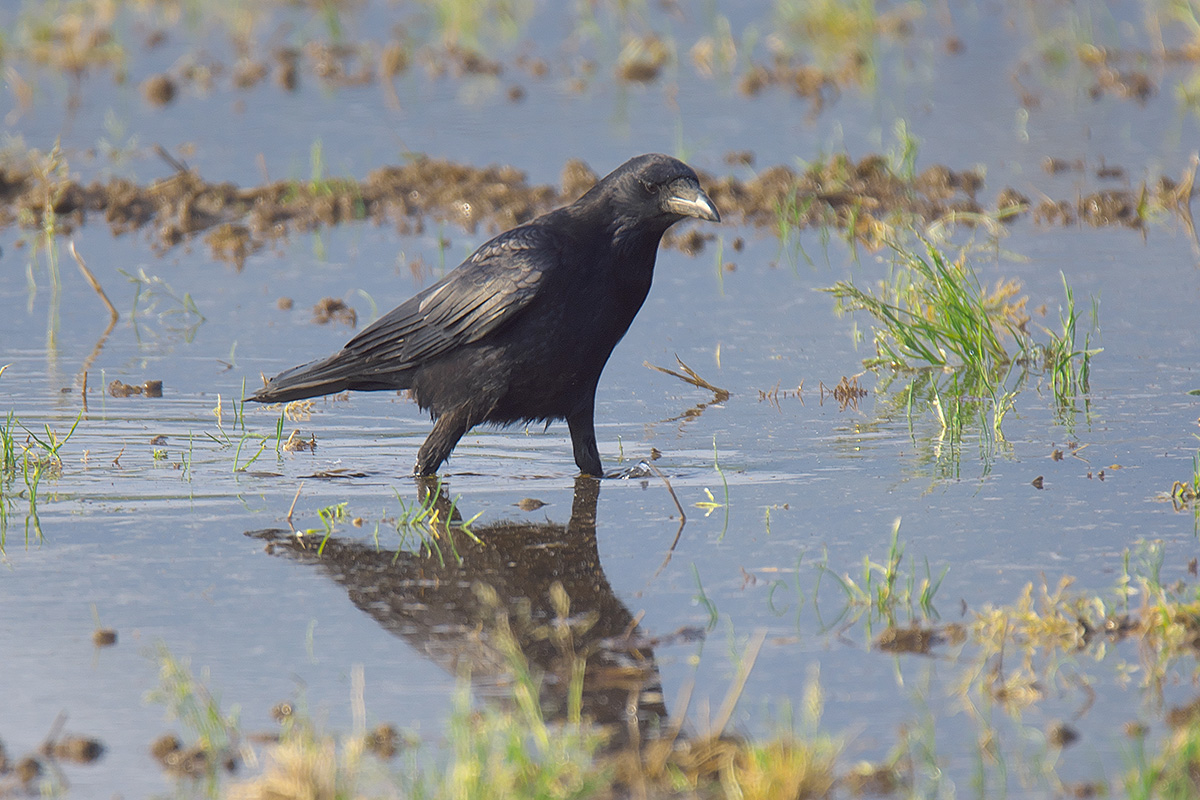
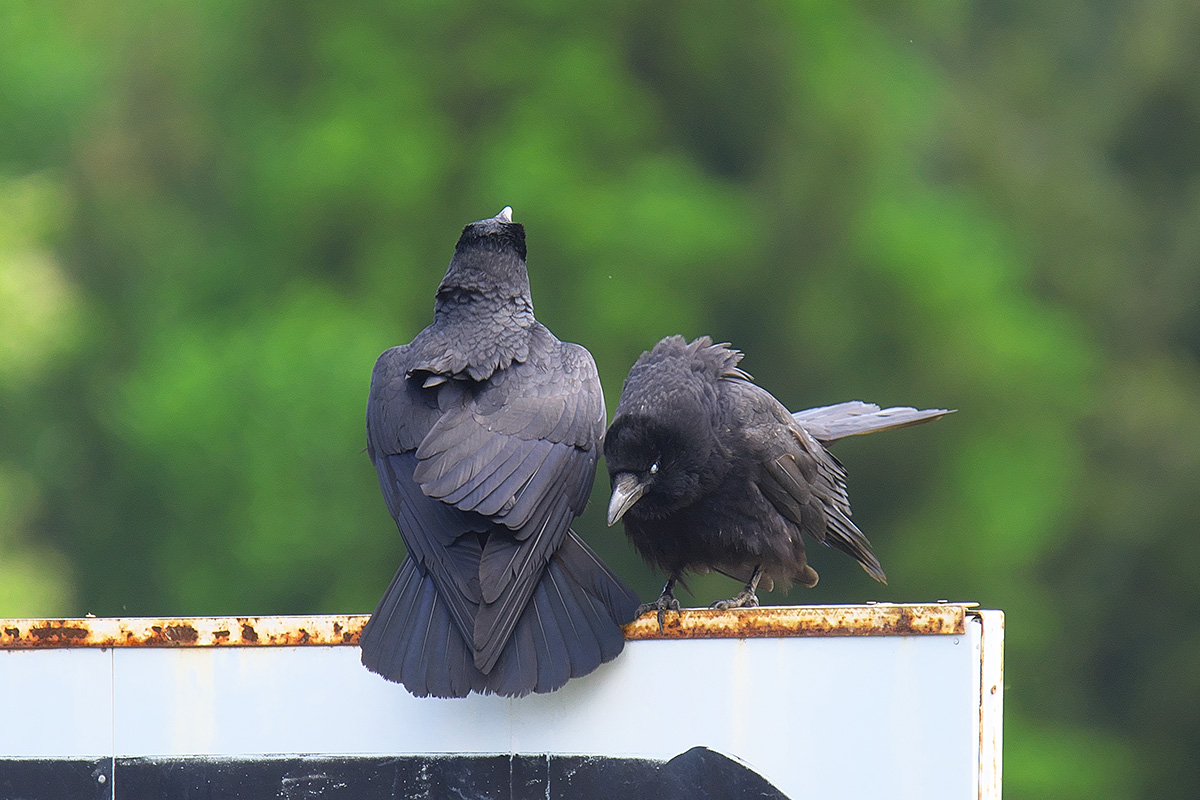
Places and times seen in Munakata city
In Munakata it is an abducted bird and can be seen throughout the city throughout the year.
Characteristic
Total length 50 cm. It is smaller than a horsetail glass. It is the same color in both sexes.
It is whole body black and has blue violet shiny. The beak and leg are black and the beak is rounded. The iris is dark.
Young birds are especially windy, brownish on the tail. The mouth is red. The iris is dark gray. The mouth corner has redness.
Habit
They live in flatlands and mountainous areas of agricultural lands, rivers and grasslands. It is omnivorous, but it eats as much as grass tree nuts and insects, not as much as hazel glass. Also we drop walnut etc from the air, break the shell and eat it. Learning ability is also high, human identification is also possible.
distribution
As resident birds inhabit the plains of mountains from the northernmost part of Kyushu, highlands, parks and gardens of urban areas, riverbeds and coasts. In winter we make a big flock. They live in the same environment as the horsetail glass, but rarely seen in the alpine belt to the alpine belt.
It is distributed throughout the Japanese archipelago, the Korean Peninsula and the Eurasian continent excluding the extreme North. Some flocks overwinter around China Fujian Province, Guangdong province.
Other
It was during the Edo period that Hoshibogosara and Hashibuto were recognized as different species. The size of the brain is large, but in the sense of intelligence it is said that the cabbage glass is above. In the Tohoku region, a group of walnuts is divided in the Tohoku district by cars, and among the individuals living on the coast of Tohoku from Hokkaido, some flocks of shellfish are remembered by dropping shellfish into rocks. These have been transmitted beyond generations.