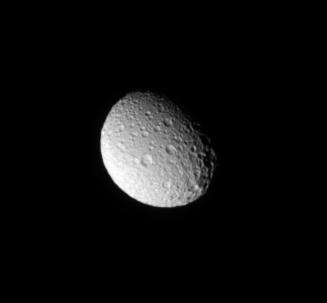
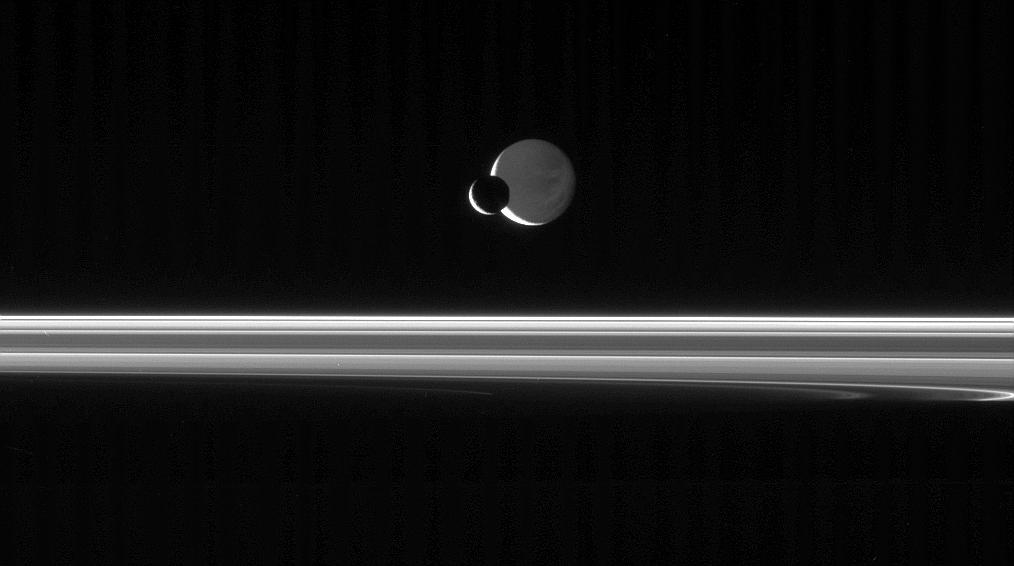
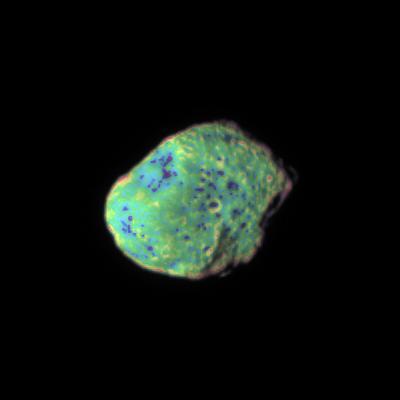
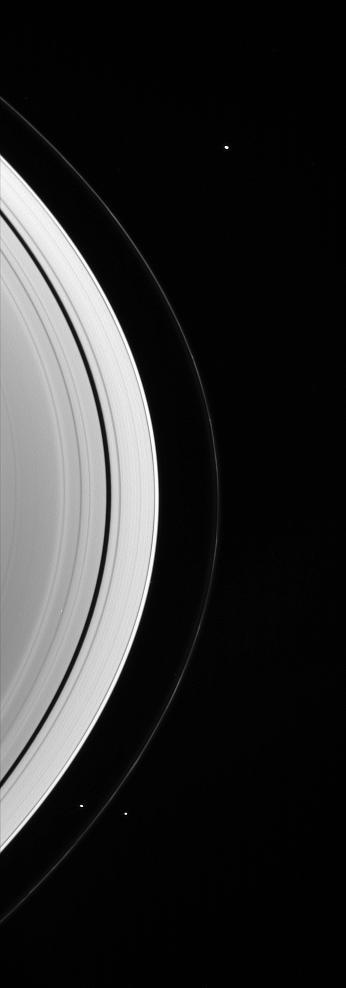
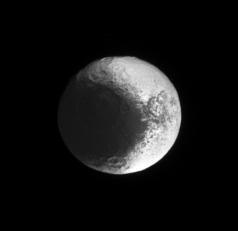
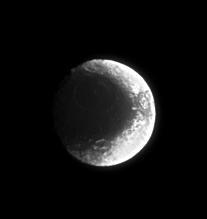
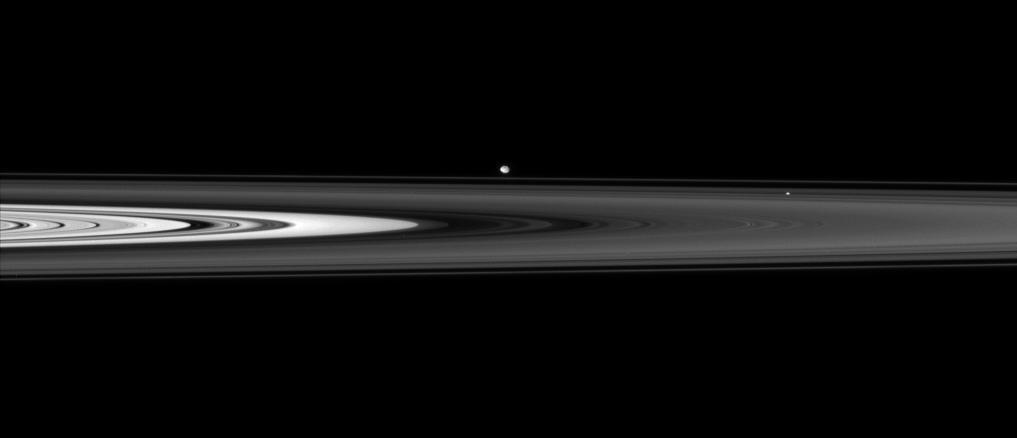
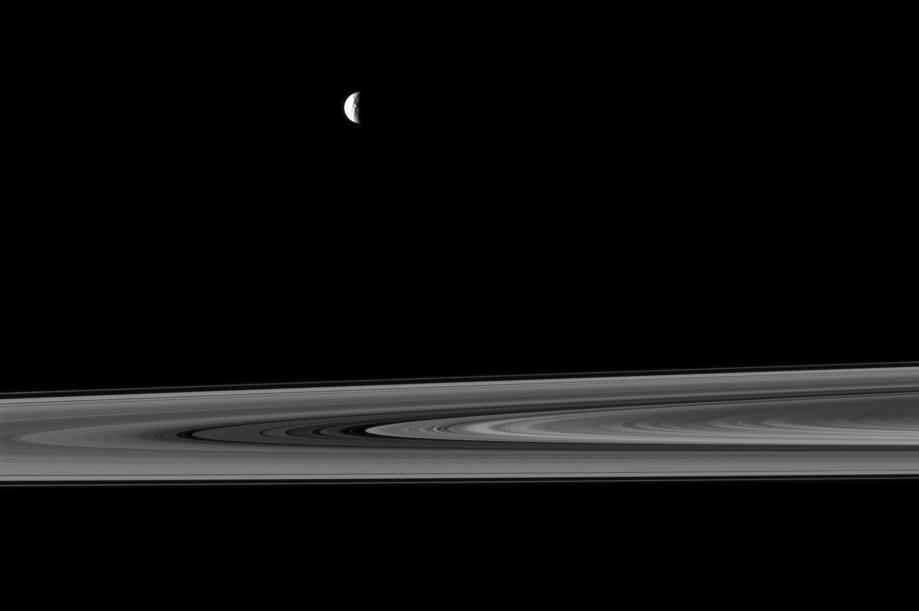
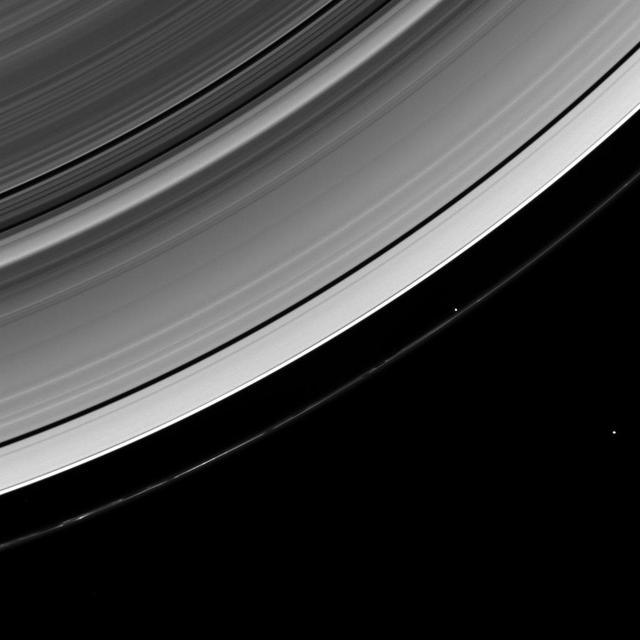
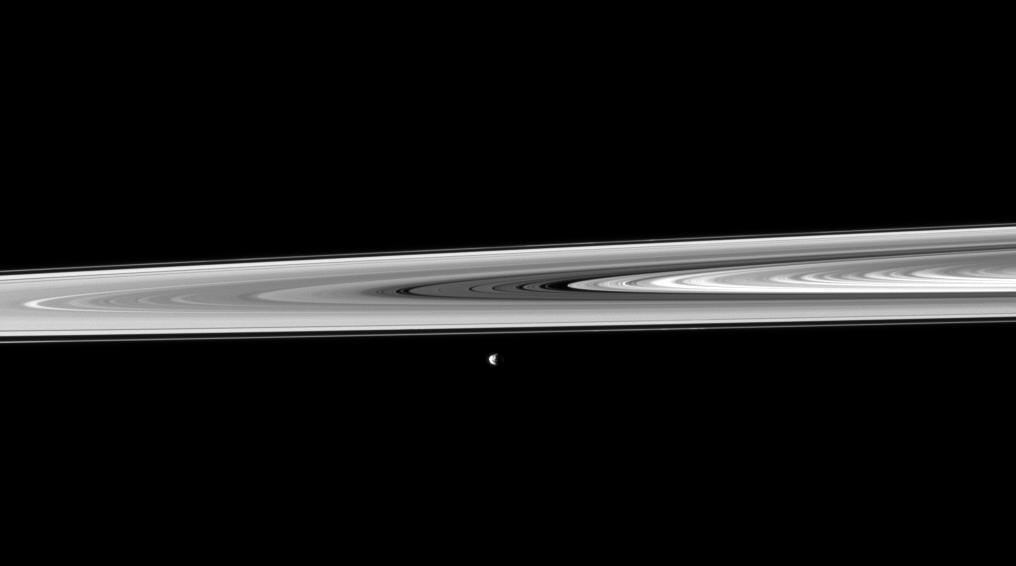
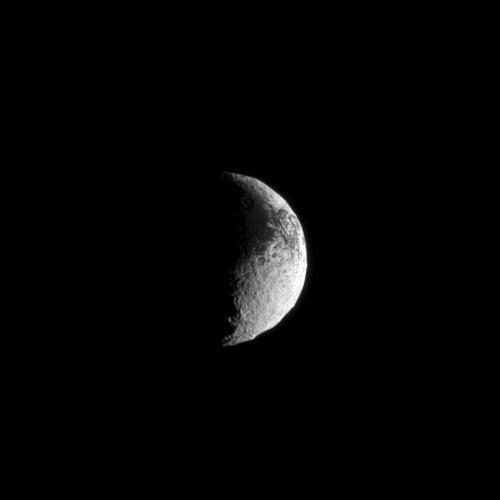
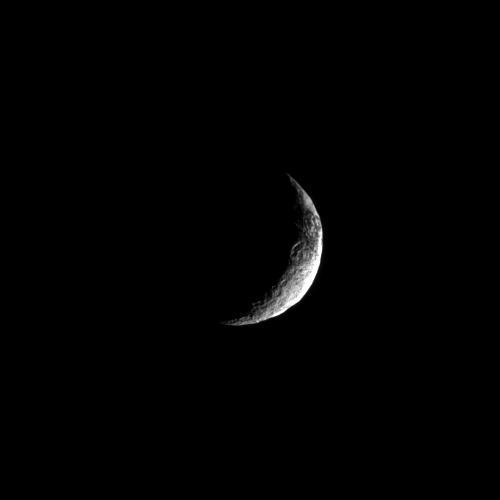
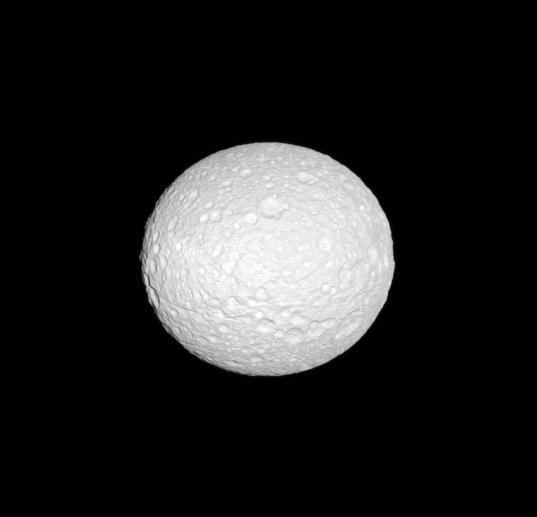
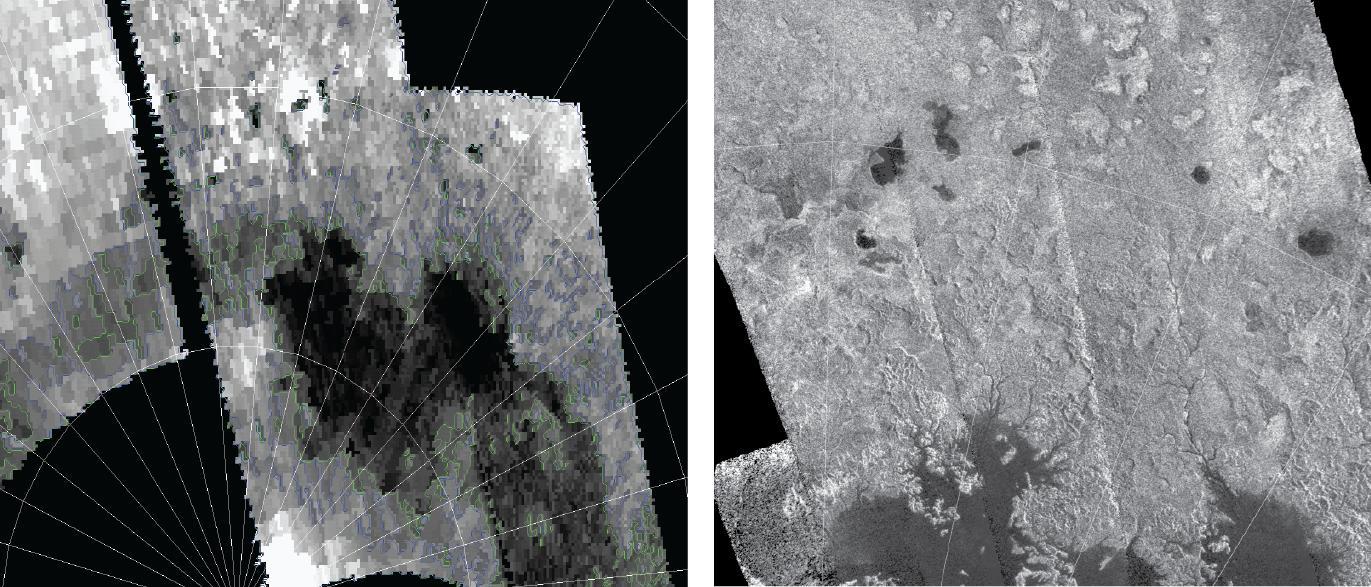
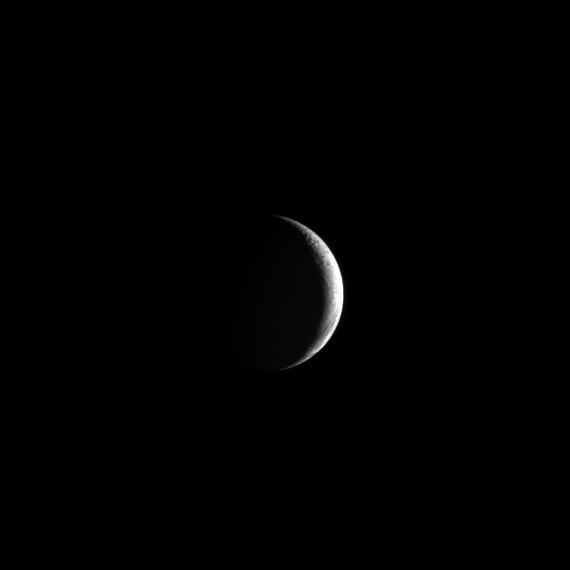
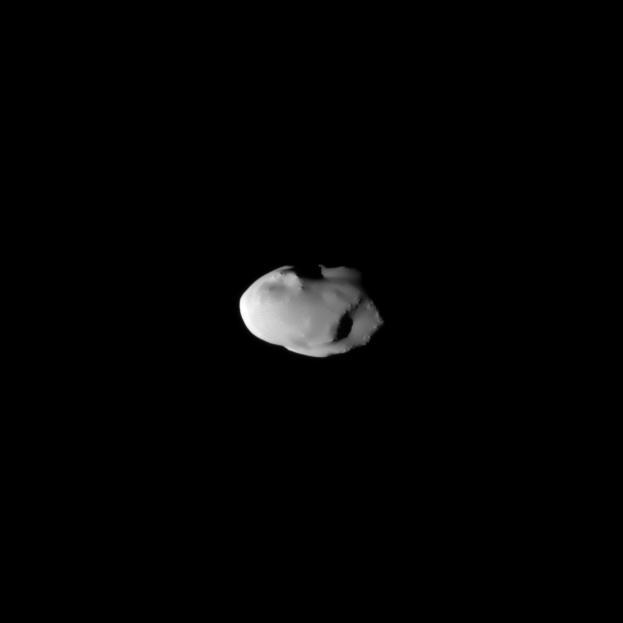
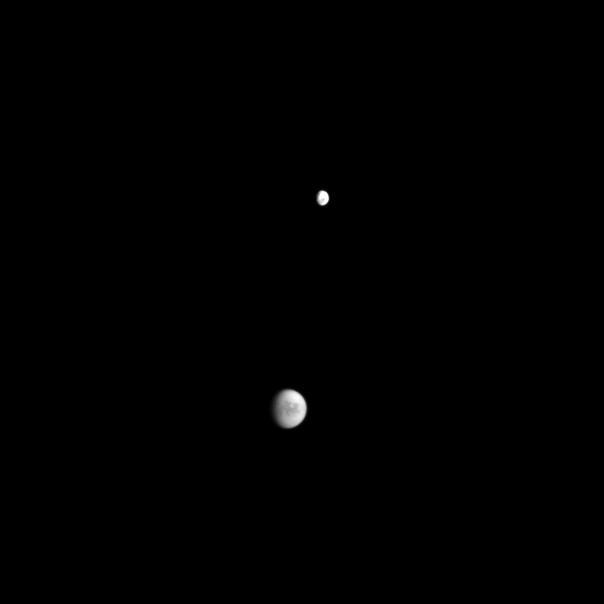
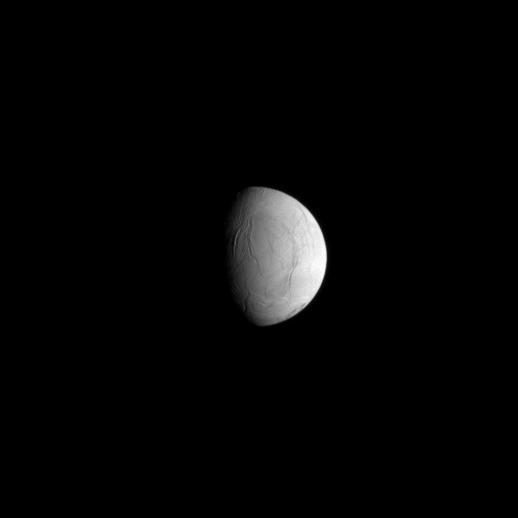
These two global images of Iapetus taken by NASA Cassini spacecraft show the extreme brightness dichotomy on the surface of this peculiar Saturnian moon.
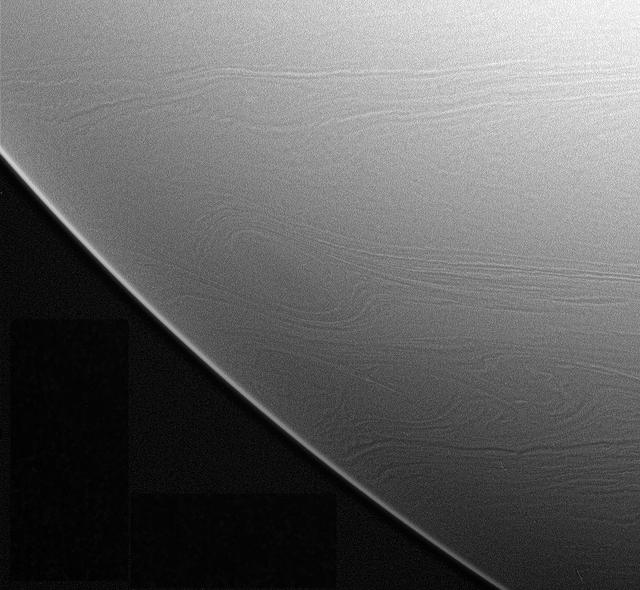
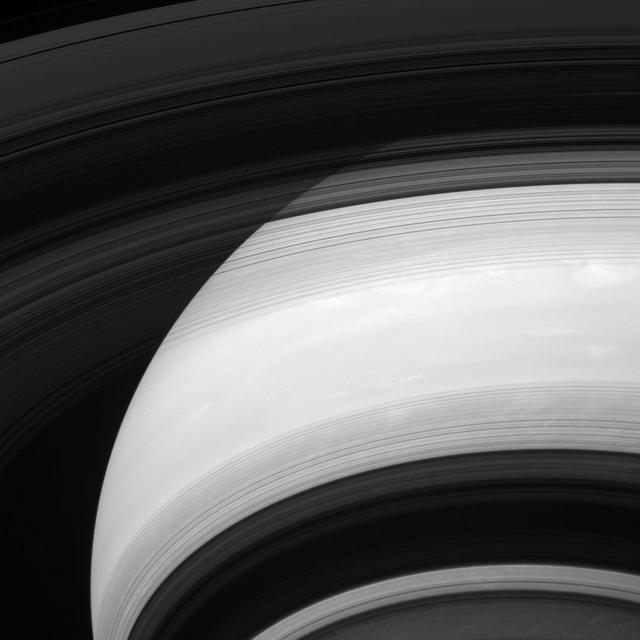
Clouds in Saturn atmosphere create an intricate pattern reminiscent of whipped cream swirling in coffee in this image captured by NASA Cassini spacecraft.
The northern and southern hemispheres of Rhea are seen in these polar stereographic maps, mosaicked from the best-available NASA Cassini and Voyager images.
To the infrared eyes of NASA Cassini spacecraft, Saturn graceful clouds sometimes take on the appearance of an impressionist painting of the giant planet.
The shadow of the moon Enceladus appears on Saturn just south of the thin shadow of the planet rings in this image captured by NASA Cassini spacecraft.
The northern and southern hemispheres of Rhea are seen in these polar stereographic maps, mosaicked from the best-available NASA Cassini and Voyager images.
The Cassini spacecraft continues to image terrain on Iapetus that is progressively eastward of the terrain it has previously seen illuminated by sunlight