

Taxonomies of the Invisible Frontier – Part 3
Demonstrating a Method to Identify, Extract, and Categorize Observational Data from Cultural Records

Introduction
We return from the 2025 Holiday season with Part 3 of our series Taxonomies of the Invisible Frontier. In Part 1 we introduced our approach that re-centers taxonomy and prioritizes human observation in the scientific study of UAP/UFO/NHI/TUO, defined our terms, and sketched new taxonomic frameworks suitable to the frontier study of anomalous intelligence (XI/X-Life) and anomalous technologies (XT/X-Tech). Part 2 introduced our method of data extraction for ultimate use in the preliminary Linnaean classification of XI, introduced our first primary source, explained the rationale for its selection, and identified a candidate X-Life specimen for observational data.
In Part 3, we demonstrate a preliminary method for extracting observational data about candidate anomalous intelligences (XI/X-Life) recorded in the oral and written mythologies of human cultures. Our results are presented and discussed: a dataset describing a candidate anomalous life form, and early analysis. Further expansions of this dataset, and methodological refiniment, will allow for the eventual description and provisional classification of the Ayniwzh X-Life candidate, and other candidate anomalous intelligences found in historic records.
1. Purpose and Scope
1.1 Objective
Here we describe our preliminary structured dataset for a candidate anomalous life form (X-Life), the Ayniwzh. Recorded in the cultural traditions of the Caucasus region of Eurasia, we are initially confined to records from the Northwest Caucasus. Our objective is to demonstrate that recurring narrative descriptions of an anomalous intelligence can be systematically extracted, encoded, and analyzed using a trait-based framework – without presupposing the nature or origin of the entity itself.
1.2 Scope
The analysis is limited to observational data extracted from a single primary source, and to the descriptive characteristics preserved within. No external cultural records, comparative datasets, or corroborating traditions are incorporated into the present study, other than those inherent to the data. Interpretive claims are for now confined to patterns observable within the dataset generated from the source material.
1.3 Intended Use
This work is intended as a methodological demonstration of how observational data relevant to the discovery and study of anomalous life (X-Life) may be extracted from cultural records. The framework presented here is designed to support reproducibility, internal consistency, and future comparative analysis, rather than to advance specific historical, or biological conclusions at this time.
2. Method Overview
2.1 Analytical Premise
Our basic premise for this method is that recurrent narrative descriptions preserve observable trait information that can be systematically extracted, compared, and analyzed – even when those descriptions are embedded in mythological or folkloric forms. Rather than treating such narratives as symbolic or allegorical by default, this approach assumes that they fundamentally constitute records of human observation transmitted through pre-scientific cultural media.
This premise does not require that the entities described be accepted as literal, fictional, or metaphysical in nature. Instead, we acknowledge these questions of ultimate ontology, but choose to favor an operational bias: if a narrative corpus preserves consistent descriptions of form, behavior, ecology, and interaction across multiple independent instances, then those descriptions may be treated as data suitable for comparative analysis. Under this assumption, internal coherence, and repetition (especially across and between disparate sources) function as the primary criteria for analytical interest.
The method further assumes that Linnaean taxonomic tools can be provisionally adapted to anomalous intelligences described in cultural records, provided that we accept the limits of the source material on a case-by-case basis. Traits are not inferred beyond what is explicitly described, nor are gaps in the record filled through speculation. The goal is not to explain the origin or nature of the Ayniwzh (or future X-Life searched for with this tool), but to determine whether a structured trait-based framework can generate meaningful observational content.
Together, these assumptions establish our defensible analytical space: narrative records are treated as observational data; coherence and recurrence signal analytical interest; and taxonomy is used as a descriptive tool rather than explanatory. This premise allows our effort to proceed without diverting into debates over myth, belief, or literal existence, while still extracting structured information from the corpus.
2.2 Entity Definition
The entity analyzed in this study is the Ayniwzh (/a-yn-uhzh/, “the big evil one”), an XI described consistently within the Nart Sagas and selected as the focus of this initial case study. The Ayniwzh is not chosen for its novelty or divergence relative to other candidate X-Life specimens in the corpus, but, as explored in detail further on, because it represents the most viable candidate for early-application of our provisional taxonomic framework for anomalous life (X-Life).
The Ayniwzh appears with notable frequency across multiple stories, contexts, narrative arcs, and language groups within the Nart Sagas. This recurrence produces a dense observational record for comparative analysis rather than reliance on sporadic or anecdotal accounts. Across these narratives, the Ayniwzh is characterized by a coherent cluster of traits, including bipedal morphology, exceptional physical stature relative to Homo sapiens, regenerative healing capabilities, consumption of—and reproduction with—humans, and advanced tool use. While each story varies in detail these core characteristics remain consistent enough to permit systematic trait coding and pattern recognition.
In addition to morphological and behavioral consistency, the Ayniwzh is situated within a limited and coherent ecological context. Narratives describe it as occupying defined territories, aggressively defending those territories, exploiting local resources, and engaging in sustained conflict with neighboring human populations. Such descriptions imply a persistent organism operating within a shared environment rather than a transient, episodic, or purely symbolic figure. This ecological grounding further supports its treatment as a discrete analytical entity rather than a literary abstraction.
Finally, the Ayniwzh exists not solely as a regional figure but as a candidate X-Life of broader comparative relevance. Entities exhibiting analogous descriptive elements: large-bodied, humanoid, long-haired, tool-using, and hostile toward Homo sapiens –are documented in cultural traditions beyond the Caucasus.[1] While this study does not attempt to resolve whether these accounts reflect a single narrative lineage, convergent myth-making, or cultural diffusion, their recurrence and geographical isolation elevates the Ayniwzh from a localized folkloric figure to a potential bridge between regional narrative accounts and a potential global dataset of similar anomalous humanoid observations. As such, the Ayniwzh functions as a compelling test case.
2.3 Observational Unit Definition
An observational unit is defined in this study as a discrete narrative unit in which the Ayniwzh is described performing an action, exhibiting a trait, interacting with humans or the environment, or otherwise being observed by human witnesses. Each unit is extracted from the Nart Sagas as a section of text that preserves a specific descriptive claim about the entity, independent of broader plot or framing.
Observational units are selected at the level of individual descriptions rather than entire stories or arcs. This detail allows multiple traits to be identified within a single narrative while preventing the accretion of irrelevant or metaphorical elements. A single story may therefore yield multiple observational units, while repeated descriptions of the same trait across different stories are treated as separate units, preserving the independence of observations within the corpus. In short, we treat smoke as indicative of fire.
This level of analysis is chosen to reflect the nature of the source material itself. The Nart Sagas do not present continuous descriptive accounts, but rather periodic observations transmitted through oral tradition. By treating each descriptive instance as an observational unit, the method mirrors how information about the Ayniwzh is preserved: as instances of witnessed behavior, morphology, and ecology embedded within cultural records. This approach allows traits to be coded, compared, and aggregated across not only the corpus, but future data sources as well.
Importantly, observational units are not weighted according to recurrence, narrative prominence, or dramatic emphasis. All units are treated as equivalent inputs for trait analysis, regardless of whether they reoccur or incidental. This ensures that the resulting trait clusters reflect the frequency and consistency of observed characteristics, rather than editorial selection or artifacts of the encoding process.
3. Analytical Process
The analytical process applied in this study follows a structured workflow designed to extract, standardize, and compare descriptive information contained within the narrative corpus. Each step is intended to minimize interpretive differences while preserving the observational value of the source material.
Source Selection
The primary source was selected based on data density, internal descriptive coherence, and recurrence of a candidate non-human entity across multiple independent narratives. The Nart Sagas from the Caucasus was chosen because it preserves repeated descriptions of the Ayniwzh across a wide range of contexts, providing a sufficiently large and internally coherent dataset to support comparative analysis rather than speculative interpretation. The source corpus is not treated as a closed dataset for the purposes of this study since additional related cultural records are known to exist in other repositories.
Observational Unit Segmentation
The source text was segmented into observational units to assist in the isolation and extraction of relevant data in which the Ayniwzh is described exhibiting a trait, performing an action, interacting with humans, or occupying a specific environment. Segmentation was performed at the level of descriptive content rather than overarching story or chapter boundaries, allowing multiple observational units to be extracted from a single narrative.
Descriptor Extraction
Descriptors were extracted when the text contained explicit or implicit statements about morphology, behavior, ecology, life history, or interaction, defensibly attributable to the Ayniwzh. Repeated descriptors appearing in different narrative contexts were recorded as separate observations.
Trait Assignment
Each descriptor was assigned to a trait category based on its apparent descriptive function. Traits were grouped according to the predefined analytical domains established in the study, allowing similar observations to be compared across multiple instances. Assignment was constrained to the minimum category necessary to capture the descriptive content, avoiding speculative expansion or reclassification. Future expansions, once a formal standardized lexicon is arrived at, will allow for additional levels of trait-detail to be collected.
Epistemic Classification
Encoded traits were flagged as observed or inferred based on whether the narrative explicitly described the trait or whether it was implied through consistent patterns across multiple observational units. Observed traits are those explicitly stated in the text, while inferred traits are limited to cases where aggregation of multiple observed descriptors supports a higher-order characterization, or where such implicit meanings were inherent to the passage.
4. Trait Ontology
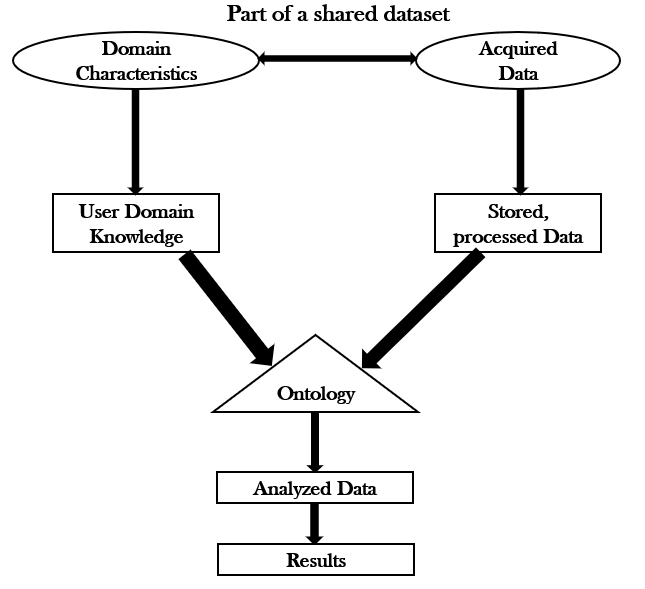
The analytical framework employed in this study organizes descriptive information into a fixed set of trait categories. These categories are intended to capture distinct categories of observable features while remaining flexible enough to accommodate narrative-based data. Together, they form a provisional system for comparing XI specimens described in cultural records.
4.1 Trait Categories
The following trait categories were used:
Cognitive (COG): Traits describing apparent mental capacities, awareness, communication, problem-solving ability, tool-use, planning, or strategic behavior as expressed through actions or observations recorded in the source. Cognitive traits are limited to those implied by described behavior rather than unobserved internal states. Cognitive traits are arguably second-order abstractions from behavior, but are retained as a separate category because they cluster coherently and recur independently.
Morphological (MOR): Traits describing a XI’s physical form and structure, including body plan, size, posture, integument, and anatomical features relative to Homo sapiens or other referenced organisms. Morphological traits are extracted only when explicitly described.
Behavioral (BEH): Traits describing actions, patterns of activity, modes of interaction, aggression or cooperation, territoriality, and other observable behaviors exhibited by the entity in relation to humans or its environment.
Ecological (ECO): Traits describing the environments occupied by the entity, including habitat type, territorial range, resource use, and interactions with local landscapes or ecosystems. Ecological traits are derived from narrative descriptions of setting and environment.
Life History (LIF): Traits describing developmental processes, reproduction, longevity, regeneration, mortality, or transformation over time. Life history traits are extracted only when the narrative explicitly addresses these processes or when consistent patterns emerge across multiple accounts.
4.2 Trait Sub-Categories
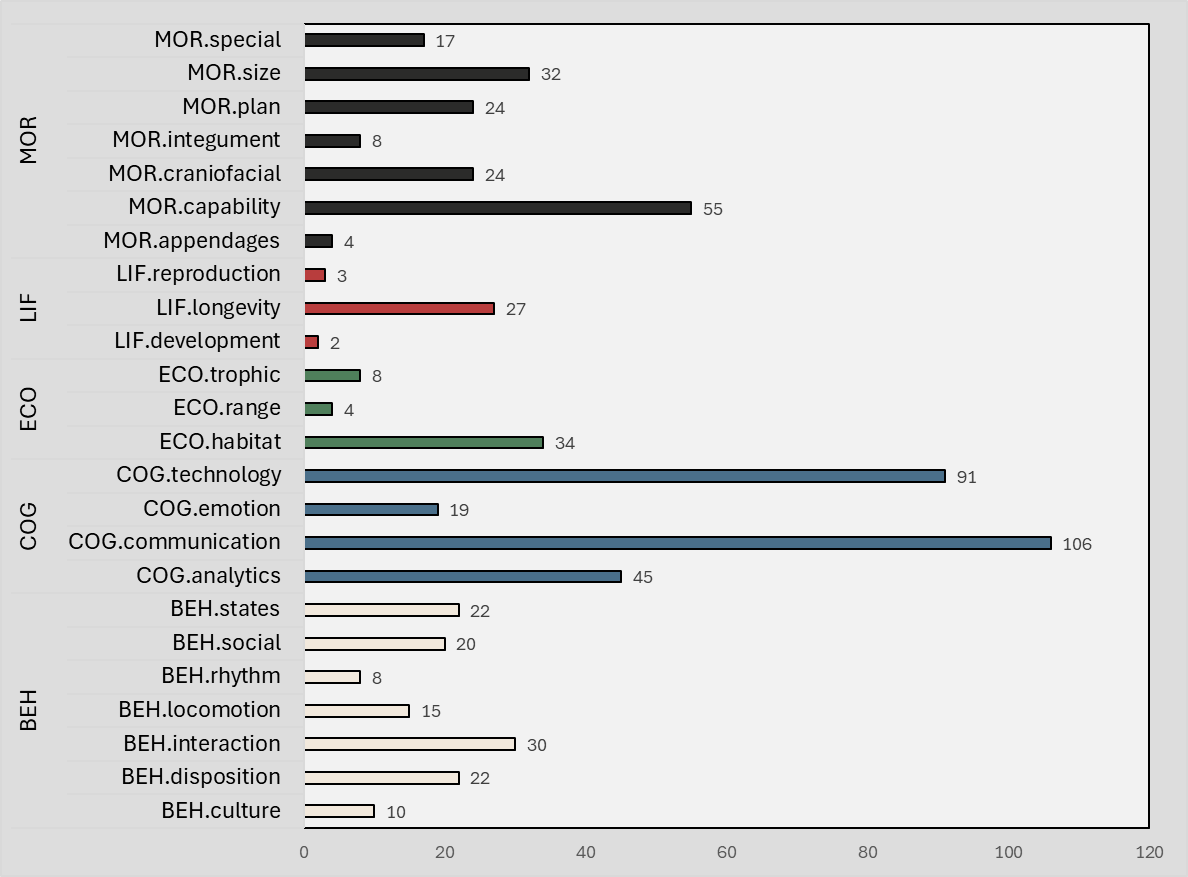
Trait sub-categories were defined as structured refinements within each primary category, used to increase analytical detail while preserving interchangeability across observational units. Sub-categories were created when multiple descriptors within a category recurred with sufficient consistency to warrant differentiation. Sub-categories do not introduce new trait domains but serve to organize related descriptors under a common functional or descriptive theme.
5. Primary Source Description
5.1 Source Identification
The primary source analyzed is The Nart Sagas from the Caucasus – Myths and Legends from the Circassians, Abazas, Abkhaz, and Ubykhs by John Colarusso. This book is a collection of folklore translated from the oral traditions of the peoples of the Northwest Caucasus region. Ancient by modern standards, the core motifs, and archetypes central to the Nart Sagas are descended from the Indo-Aryan culture and language group (Alternatively; Indic, Indo-Iranian, or Sanskrit) – allowing the oldest narrative layers to be defensibly dated to at least 1400 BC and no later than 1000 BC.[2][3][4]
These collected works are sourced from the oral traditions of the Abkhazo-Adyghean language group as found in the Northwest Caucasus region. The transition of this oral tradition into the written record primarily occurred following the completion of the Russian Empire’s conquest of the Caucasus region from 1817 to 1864. Prior to the Russian conquest, the Nart Sagas existed for thousands of years as an oral tradition transmitted by bards among the Indo-Aryan tribes of great antiquity. Subsequent Russian-Imperial, Russian-Soviet, and later Russian Federation efforts to catalogue and transcribe the mythologies of the various peoples of the Caucasus resulted in an extensive Russian-language (and native-language) documentary record of these ancient tales.
Portions of this work have been translated and surfaced into the modern English-speaking world by Professor John Colarusso of X University, and a team of associated translators. The primary sources consulted by the Colarusso effort include audio recordings and written accounts of Circassian, Abazas, Abkhaz, and Ubykh native speakers, and Russian transcriptions and translations of the same. Thus, the transmission of this information into the modern written record has occurred sporadically from the late 19th century to the present day primarily through Russian and American efforts, though an early interest by Imperial Germany also contributed to the body of work.[5][6]
5.2 Cultural and Linguistic Context
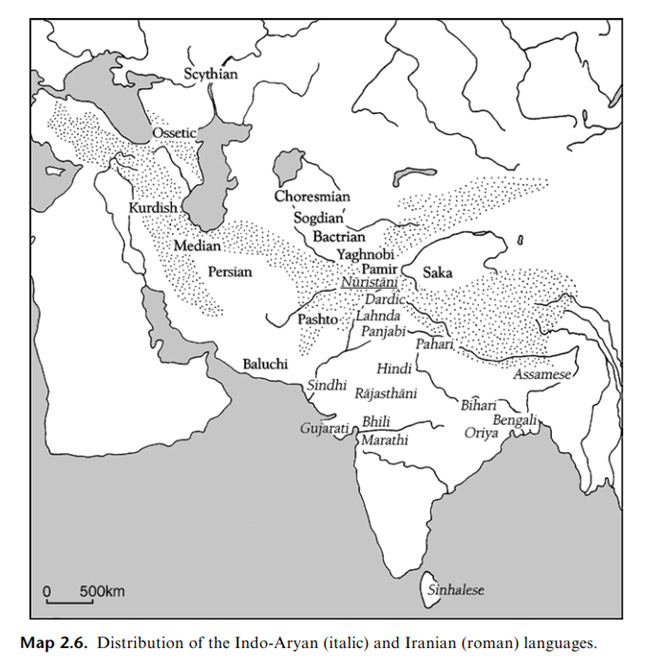
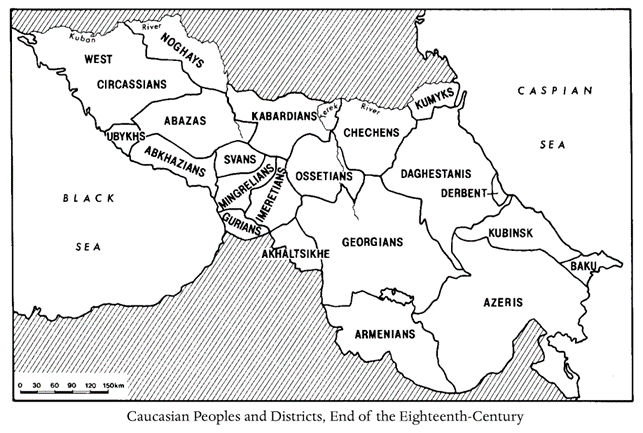
The cultural records examined in this study originate from populations descended from Indo-Aryan or Indo-Iranian groups that migrated into the Caucasus region between approximately 1500 and 800 BC. Descendants of these populations comprise several of the historic and modern ethnic groups of the Caucasus. In the Northwest Caucasus, these groups are known today as the Abazas, Abkhaz, Circassians, and Ubykhs.
The Nart Sagas fall within the linguistic domain of the Abkhazo-Adyghean language family. The specific languages represented in The Nart Sagas from the Caucasus include Abaza, Abkhaz, Bzhedukh West Circassian, Kabardian East Circassian, Shapsegh West Circassian, Ubykh, and West Circassian.
The foundational religious tradition of the people of the Northwest Caucasus is generally classed as Khabzism.[7] Subsequent overlay traditions include Byzantine Christianity and the Shafi‘i branch of Sunni Islam.[8][9] As an interstitial region situated along multiple ancient trade routes, the Northwest Caucasus also exhibits cultural fragments and thematic borrowings from Greek, Norse, Semitic, Vedic, and Zoroastrian traditions.[10]
5.3 Source Characteristics
The source for this dataset, The Nart Sagas from the Caucasus, possesses several characteristics that make it well suited for methodological demonstration and observational data extraction in the study of anomalous life (X-Life). Chief among these characteristics is source transparency through documented audio, written, and oral-tradition materials; multi-ethnic and multi-linguistic corroboration; preservation of narrative variants rather than harmonization; and a pronounced narrative emphasis on non-human agents relevant to X-Life analysis.
Our source derives from long-standing oral traditions preserved and transmitted for millennia by specialist storytellers. By necessity, such traditions exhibit stable narrative structures, repetitious passages, recurring motifs, and identifiable archetypes. These features enable the preservation of consistent descriptive elements despite the absence of a formal writing system.
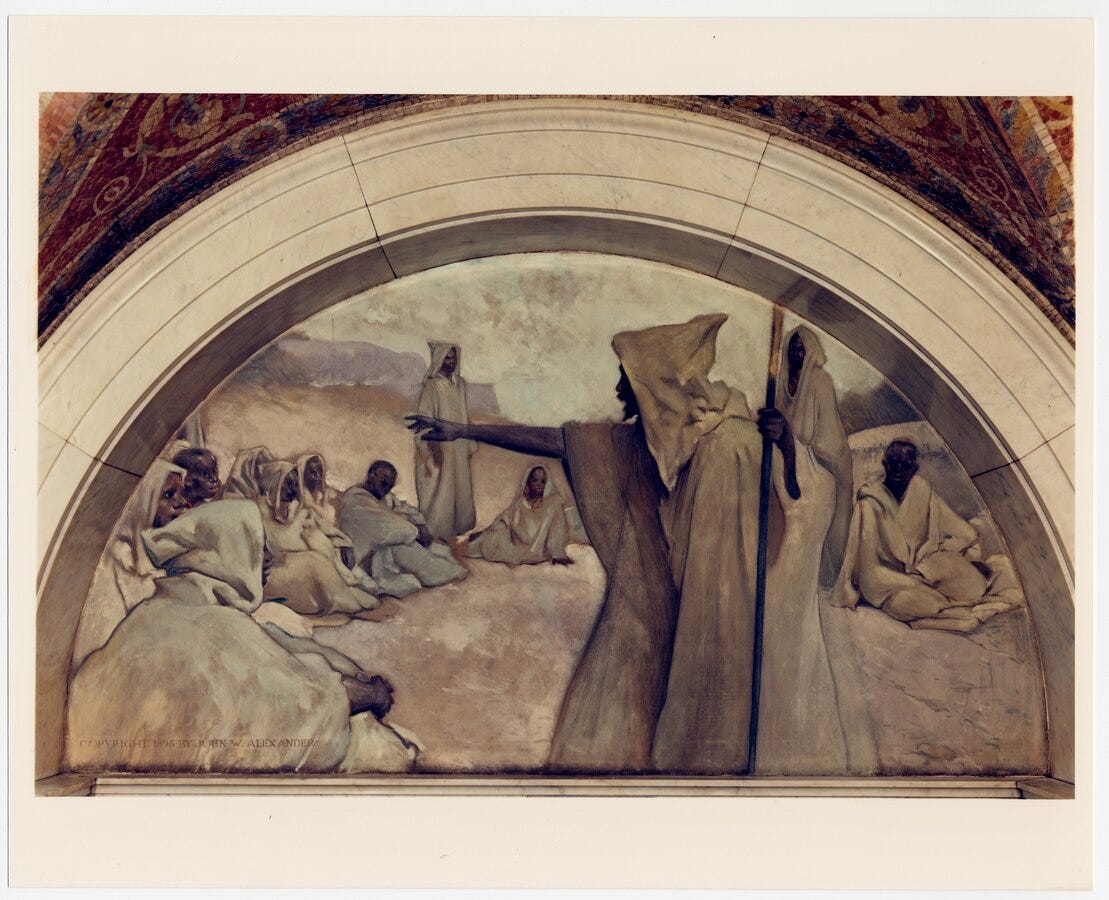
The preservation of common and unique variants of the Nart Sagas across multiple ethnic and linguistic groups enables comparative analysis and facilitates the identification of semantic drift or external cultural injections. Spanning several languages within the Abkhazo-Adyghean family, the recurrence of specific entities, traits, and motifs strengthens the reliability of extracted descriptors by reducing the likelihood of idiosyncratic distortions.
By explicitly preserving cultural and linguistic variants, Colarusso’s compilation retains multiple narrative lineages rather than imposing a single canonical version. Particular attention to historical accuracy during the translation process restored descriptive passages that had previously been omitted or softened due to the cultural sensitivities of some early Russian collectors of Caucasian mythology.
Finally, the source corpus displays numerous occurrences of candidate X-Life observations relevant to the present study. Many Nart Sagas depict non-human entities acting with agency, cognition, and strategic intent, rather than serving purely symbolic or allegorical functions. This narrative framing makes the corpus particularly well suited for the extraction of cognitive, behavioral, and morphological descriptors relevant to X-Life analysis.
5.4 Source Constraints
Obvious constraints and limitations of the primary source restrict the scope and defensible interpretation of the extracted data. The principal constraints include uncertain dating, oral transmission artifacts, translation and cultural mediation layers, narrative framing biases, and an incomplete corpus of relevant cultural records from the Northwest and greater Caucasus region.
Uncertainty surrounding the precise dating of individual Nart Sagas means that extracted data relevant to the study of X-Life cannot be reliably associated with discrete, time-bound events. What can be established instead are temporal windows during which particular stories, characters, concepts, and narrative structures entered or stabilized within oral and written traditions. Such windows may be constrained through interdisciplinary approaches drawing on archaeology, linguistics, semiotics, inter-textual analysis, and related methods. Nevertheless, the present dataset reflects cumulative cultural memory rather than time-resolved observation.
As an oral tradition, the source is subject to compression, embellishment, and narrative structuring. Repetition and exaggeration may amplify certain traits, while others may be selectively omitted due to data retention and transfer limitations inherent to oral transmission. Careful distinction between observed and inferred traits, together with methodological restraint, is therefore required to mitigate these effects.
The English-language text represents the terminal stage of a multi-step transmission process, proceeding from oral performance to native transcription, to Russian translation, and finally to English translation. Each stage introduces the potential for semantic drift, cultural substitution, and loss of nuance. These effects may be especially pronounced in descriptors related to complex phenomena or internal cognitive states.
Relatedly, distortions arise from the narrative nature of the source material itself. As stories, the Nart Sagas necessarily select, omit, compress, and rearrange information to suit the needs of the form. Consequently, narratively salient elements—such as conflict, violence, high-strangeness, and moral consequence—may be overrepresented relative to neutral physical or ecological description. While these biases are manageable, they are expected to surface most clearly in relation to entities described as fundamentally non-human.
Finally, the present study is limited to the Northwest Caucasus corpus as represented in The Nart Sagas from the Caucasus. Substantial and relevant Nart-related traditions are known to exist outside this region, particularly in the East Caucasus and South Caucasus, as well as in diaspora contexts shaped by forced migration and modern conflict. Pre-identified corpora awaiting systematic ingestion include additional Circassian, Abkhaz, and Ubykh materials; the full Ossetic corpus; the full Karachay-Malkar (Balkar) corpus; the Chechen-Ingush corpus; and the Svan corpus. All but the latter two are available in Russian and, in some cases, English, while the Chechen-Ingush and Svan traditions remain untranslated from their source languages.
These constraints are not treated as disqualifying factors, but rather as structural boundaries inherent to observational data derived from cultural records. By explicitly acknowledging these limitations and adopting appropriate mitigatory measures, the present study seeks to prevent undue inference, over-generalization, and encoding error.
6. Dataset Description
Here we describe the structure and scale of a dataset generated through application of the analytical workflow outlined above. The dataset represents a structured transformation of cultural records into standardized trait observations suitable for comparative analysis and description.
6.1 Dataset Structure
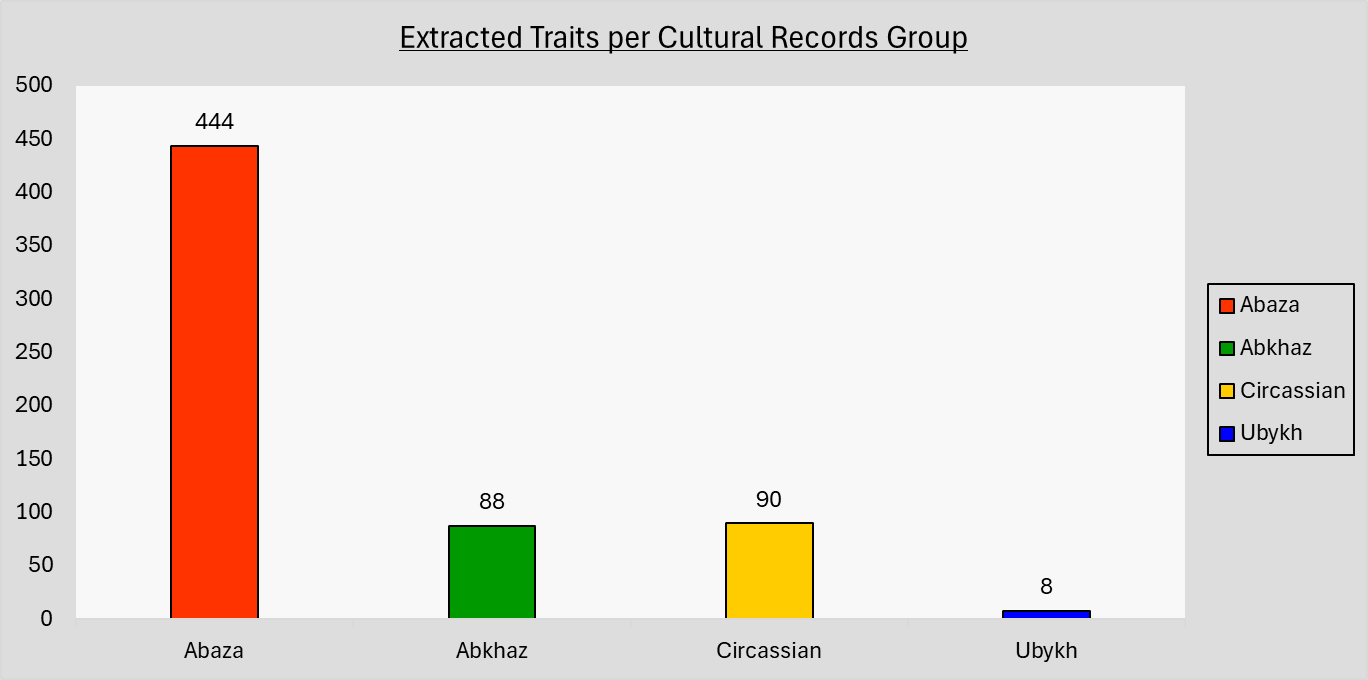
The dataset consists of 630 rows and 20 columns. Each row represents a single trait observation extracted from an individual observational unit and coded according to the trait ontology defined in Section 4. The dataset is organized in a generic excel format to support sorting, filtering, aggregation, and cross-comparison of traits across observational units.
6.2 Dataset Fields
The dataset includes the following fields:
Entity identifier: A unique identifier designating the analyzed X-Life entity (e.g., XI-AYN).
Observational unit identifier: A unique identifier assigned to each discrete narrative instance from which traits are extracted.
Source reference: Bibliographic citation for the narrative source containing the observational unit.
Extracted descriptor: The verbatim descriptive phrase or term extracted from the source text.
Trait category: The primary analytical domain to which the descriptor is assigned (COG, MOR, BEH, ECO, LIF).
Trait sub-category: A structured refinement within the primary category, used to increase analytical resolution.
Trait value: A standardized value representing the coded form of the extracted descriptor.
Observed vs. inferred classification: A flag indicating whether the trait is directly observed in the narrative or inferred through aggregation.
Additional metadata:
Source language group and ethnolinguistic identifiers
Foundational, overlay, and peripheral religious tradition markers
Geographic coordinates and political territories
6.3 Dataset Scale
The dataset includes:
630 total trait observations
163 observational units with an average of 3.94 extracted traits per observational unit
This distribution reflects the episodic nature of the source material, in which discrete narrative descriptions frequently preserve multiple independent descriptive accounts about the Ayniwzh.
7. Descriptive Results
This section summarizes the descriptive properties of the dataset generated through application of the analytical workflow. The results presented here are limited to distributional patterns and do not advance causal or ontological claims.
7.1 Trait Category Distribution
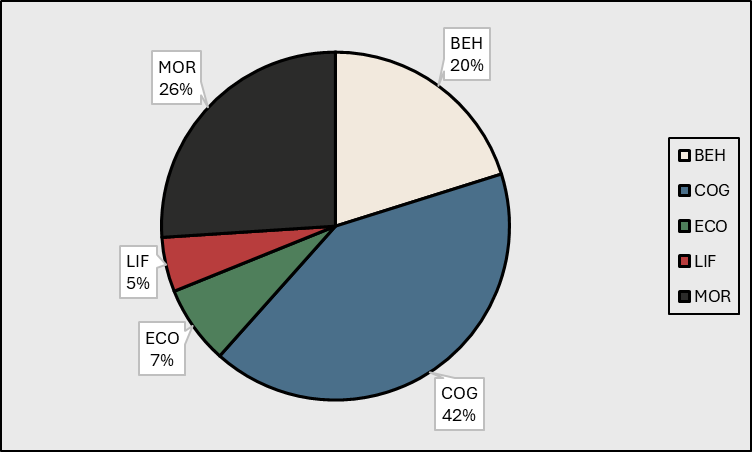
Trait counts by category are as follows:
Cognitive (COG): 261
Morphological (MOR): 164
Behavioral (BEH): 127
Ecological (ECO): 46
Life History (LIF): 32
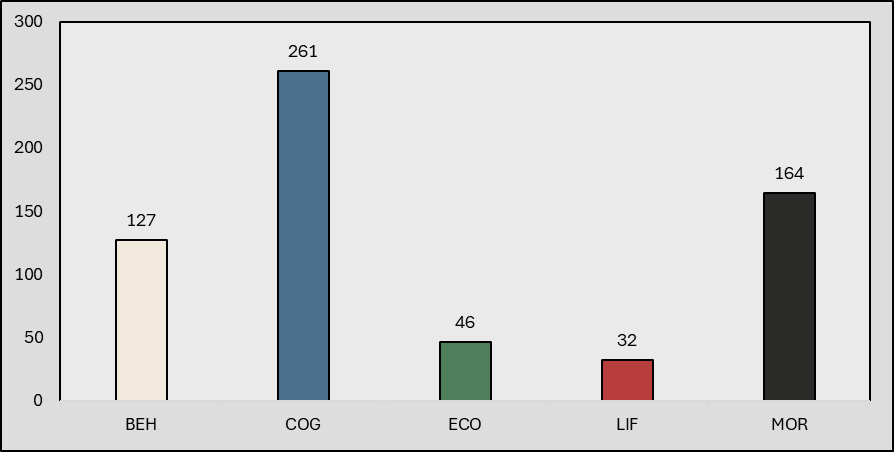
Usable observations extracted from the text are heavily concentrated in the Cognitive trait category. Secondary concentrations are located in the Morphological and Behavioral categories. A smaller proportion of encoded traits fall within the Ecological and Life History categories.
7.2 Dominant Categories
The most frequently occurring trait category in the dataset is Cognitive (COG). Cognitive traits account for the largest share of encoded observations, reflecting the prominence of descriptions related to communication, tool-use, and strategic behavior patterns preserved in the narrative record.
7.3 Secondary Categories
Secondary trait categories include Morphological (MOR) and Behavioral (BEH) traits. These categories together comprise a substantial portion of the dataset and capture recurring descriptions of physical form, stature, actions, aggression, and interaction with humans. Ecological (ECO) and Life History (LIF) traits occur less frequently, reflecting more limited narrative attention to habitat structure and developmental processes.
7.4 Observed vs. Inferred Distribution
Of the 630 total trait observations:
493 traits are classified as observed
137 traits are classified as inferred
Observed traits constitute the clear majority of the dataset, indicating that most encoded traits are derived directly from explicit narrative descriptions. Inferred traits represent a smaller subset and are restricted to cases where repeated observed descriptors across independent observational units support their inclusion.
8. Pattern Identification
The patterns identified here are purely descriptive in nature and reflect how information about the Ayniwzh is distributed across narrative instances.
8.1 Internal Distribution Patterns
Notable distribution patterns include a strong asymmetry in extracted trait concentration across observational units. While the average number of traits extracted per observational unit is 3.94, trait density varies widely. Certain observational units preserve only a single trait, while others encode as many as 18 distinct traits from a single, dense observational unit.
This distribution indicates that cultural or narrative attention to the Ayniwzh is distributed unevenly across the corpus. A minority of occurrences function as high-density descriptive nodes, while the majority preserve smaller, more isolated observations. This pattern is consistent with episodic oral traditions in which certain encounters center a certain subject, while others merely mention it in passing.
8.2 Trait Co-Occurrence
Observed trait co-occurrence patterns show clustering among specific trait categories within individual observational units. The most frequent co-occurring category pairs are:
Cognitive (COG) and Morphological (MOR)
Cognitive (COG) and Behavioral (BEH)
Morphological (MOR) and Behavioral (BEH)
These pairings occur more often than other combinations, indicating that descriptions of the Ayniwzh’s physical form are commonly presented alongside accounts of communication, awareness, or action. Ecological traits co-occur most frequently with Behavioral and Cognitive traits, suggesting that environmental context is typically introduced in relation to activity or interaction rather than as a specific focus itself.
Life History traits exhibit the lowest overall co-occurrence rates and most frequently appear in combination with Morphological or Cognitive traits, reflecting their more limited and episodic presence within the source material.
8.3 Narrative Concentration
Trait density varies markedly across observational units. Half of all observational units contain three or fewer traits, while a smaller subset accounts for the larger share of total extracted trait observations. These high-density units function as narrative concentration points in which multiple descriptive dimensions; form, behavior, cognition, and environment – are recorded simultaneously.
This pattern suggests that the dataset is not composed of uniformly informative narrative fragments, but rather a mixture of anecdotal mentions and richly detailed encounters. As a result, analytical weight within the dataset disproportionately carried by a limited number of observational units, a factor that must be accounted for in any future analysis.
9 Methodological Limitations
The method applied in this study is intentionally provisional and carries several inherent limitations:
Dependence on explicit description: Traits are extracted only when supported by narrative description, potentially limiting analytical resolution to what the source material preserves.
Inference constraints: Inferred traits are necessarily conservative and rely primarily on repeated observations.
Taxonomic adaptation: The application of biological taxonomic concepts to narrative-based entities is exploratory and descriptive, not explanatory, or conclusive.
Observer ambiguity: This method currently cannot distinguish between direct human observation, cultural interpretation, and later narrative embellishment within the source material.
Non-comparative scope: With only a single entity analyzed, the method cannot yet assess inter-entity variation or broader taxonomic structure.
As a result, our results presented here are best understood as a framework for organizing and extracting descriptive data, rather than a mechanism for establishing specific ontological claims, historical certainty, or biological classification. Future work will result in levels of standardization, scope, and detail increasingly applicable to directing exploratory resources to investigate and confirm or disprove theories emerging from this dataset and others like it. The primary accomplishment is in demonstrating that structured, repeatable analysis can be applied to cultural records without reducing them to purely symbolic or anthropologic interpretations.
10. Future Work
Future work will extend this method in two primary directions. First, temporal windows of entry for observational units into a cultural record – and exit from the record – will be sought by using interdisciplinary tools to identify probable dates of a cultural record’s creation. Second, expanding the dataset to include additional Nart-related traditions beyond the Northwest Caucasus, to enable tests of diffusion, comparative trait clustering across regions and entities, and stronger statistical data.
Together, these extensions build toward the creation of a provisional Linnaean-style description and preliminary classification of the candidate anomalous life (AYNIWZH) based solely on available observational descriptors. Such classification, if attempted, will remain explicitly tentative and non-conclusive, serving as a hypothesis generator and an indicator for further investigation, rather than a means to settle claims about ontology, biology, or historicity.
11. Conclusion
This study demonstrates that a structured, trait-based analytical framework can be applied consistently and transparently to narrative cultural records in order to extract, organize, and compare descriptive information about potential anomalous, non-human entities. Using the Ayniwzh of the Nart Sagas as a test case, the study shows that recurrent narrative descriptions can be translated into a standardized dataset suitable for internal consistency checks, pattern recognition, and preliminary comparative analysis.
Within the constraints described above, the results indicate that the Ayniwzh constitutes a coherent analytical entity, characterized by stable trait clusters across multiple observational units. The concentration of traits within specific categories, the recurrence of co-occurring traits, and the uneven distribution of extracted observational units collectively support the viability of this approach as proof of concept for our methodology and developmental research tool.
Importantly, this study does not seek to resolve questions of ontology, historical accuracy, or biological classification. Instead, it establishes a replicable process for interrogating cultural records for observational data without reducing them to purely symbolic or literary artifacts. By formalizing how narrative descriptions are segmented, coded, and aggregated, a definitive future framework will provides the foundation for systematic extension to additional entities, corpora, and comparative datasets.
In this sense, the value of the present work lies not in its conclusions (we present none) about the Ayniwzh itself, but in demonstrating that taxonomy can function as a disciplined interface between human cultural records and the study of anomalous intelligences, enabling structured, repeatable inquiry where speculation and idiosyncratic approaches have often prevailed.
With that, we now turn from the subject of X-life for this series. Next: the problem of anomalous technologies (XT/X-TECH), the development of a taxonomic framework for X-Tech, and a similar exercise in extracting observational data on X-Tech artifacts from cultural records. All that, and more, in Part 4 of Taxonomies of the Invisible Frontier.

[1] Brown, Matthew. “Taxonomies of the Invisible Frontier — Part 2: Applying Linnaean Taxonomy to Cultural Records of Anomalous Intelligence.” Invisible Frontiers (Substack), December 17, 2025. https://sunofabramelin.substack.com/p/taxonomies-of-the-invisible-frontier-ba7
[2] J. P. Mallory and D. Q. Adams, The Oxford Introduction to Proto-Indo-European and the Proto-Indo-European World (Oxford: Oxford University Press, 2006), 33.
[3] Vasily Ivanovich Abaev, “Introduction: The Ossetian Epic ‘Tales of the Narts’,” in Tales of the Narts: Ancient Myths and Legends of the Ossetians, trans. Walter May, with contributions by John Colarusso and Tamirlan Salbiev (Princeton, NJ: Princeton University Press, 2016), 33.
[4] Szabó, Géza. “Eastern Myth Elements in the West in Light of the Nart Sagas and the Archaeological Finds of the Carpathian Basin.” Nartamonge: The Journal of Alano-Ossetic Studies: Epic, Mythology, Language, History, vol. XII, nos. 1–2, 2017, pp. 101–103.
[5] Walter May, trans., Tales of the Narts: Ancient Myths and Legends of the Ossetians, with contributions by John Colarusso and Tamirlan Salbiev (Princeton, NJ: Princeton University Press, 2016).
[6] Julius von Klaproth, Tableau historique, géographique, ethnographique et politique du Caucase (Paris: Librairie de Gide Fils, 1824).
[7] Amjad Jaimoukha, The Circassians: A Handbook (London: RoutledgeCurzon, 2001), 147–156.
[8] Cyril Toumanoff, Studies in Christian Caucasian History (Washington, DC: Georgetown University Press, 1963), 83–109.
[9] Alexandre Bennigsen and S. Enders Wimbush, Mystics and Commissars: Sufism in the Soviet Union (Berkeley: University of California Press, 1985), 27–33.
[10] John Colarusso, ed. and trans., Nart Sagas from the Caucasus: Myths and Legends from the Circassians, Abazas, Abkhaz, and Ubykhs (Princeton, NJ: Princeton University Press, 2002), 6–7.


I just wanted to come here and thank you for everything you've done and for the sacrifices you have made for humanity. You are a true American hero and patriot!
Maybe not the most intellignet question but have you applied your methodology to more modern text. May sound silly but curious what would you do with the Harry Potter Saga.