

Taxonomies of the Invisible Frontier - Part 2
Applying Linnaean Taxonomy to Cultural Records of Anomalous Intelligence

Introduction
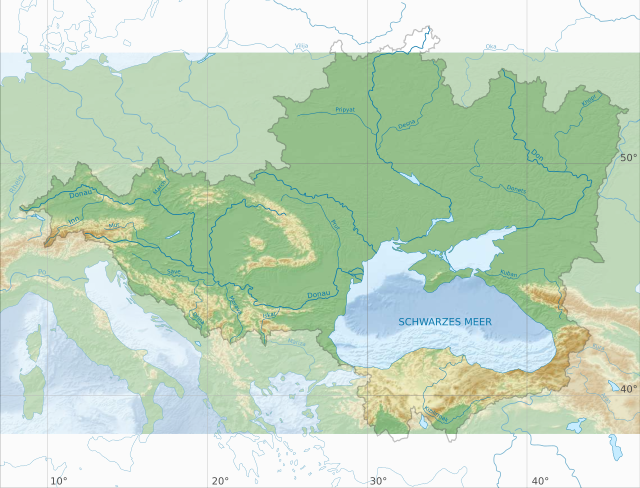
To demonstrate how a taxonomic system for anomalous intelligence (XI / X-Life) may illuminate and focus investigations across complementary scientific disciplines, we apply an early taxonomic model for X-Life—derived from established Linnaean principles—to a trial dataset: the cultural records of the Black Sea Basin.
Specifically, we examine written and oral traditions typically classified by modern historiography as myth or folklore. Rather than treating these records as symbolic or allegorical by default, we approach them as observational data produced by human witnesses operating without a modern scientific lexicon, but nevertheless embedded in real environments, modes of being, and ecological systems.
As defended in The Nart Sagas of the Caucasus, human observation preserved in folklore constitutes a valid category of data when investigating anomalous intelligences and anomalous technologies. This claim was broadened in Part 1 of this series, where human perception itself is defended as valid first-order evidence; evidence that, on its own merits, justifies the application of further scientific attention and resources.
When the depth and breadth of global mythological and folkloric records—many of which remain undigitized or unexamined—are considered alongside the capabilities of contemporary data analytics and large language models, the discovery space expands dramatically. Under disciplined methods, what has historically been dismissed as imaginary becomes a frontier dataset.
This effort does not attempt to resolve what anomalous intelligences are. Instead, it demonstrates how one might begin to study them rigorously, and use that knowledge to drive targeted field expeditions and early laboratory experimentation.
Data Selection: The Nart Sagas of the Caucasus
For an initial demonstration of this new methodological framework, the choice of data is critical. We are guided by prior knowledge and experience to select “Nart Sagas from the Caucasus”, compiled and translated authoritatively into English by John Colarusso. This compilation of folk tales, drawn directly from the oral and written traditions of the peoples of the Caucasus, presents a desirable convergence of qualities suited to early taxonomic work
First, the corpus is internally consistent yet regionally diverse, drawing from Circassian, Abkhaz, Abaza, and Ubykh traditions – as well as more minor ethnic groupings in the region. Second, it exhibits repeated, structured descriptions of intelligent non-human entities across multiple narratives, rather than isolated anomalies. Third, the sagas preserve ecological, behavioral, and morphological detail sufficient to support trait-based data encoding and comparison. Finally, the corpus is geographically, temporally, and linguistically bounded, allowing data injections from foreign sources to be more easily identified.
For these reasons, the Nart Sagas provide an ideal dataset for demonstrating how cultural records may be transformed into structured observational data suitable for taxonomic description and comparison.
Survey of X-Life Candidates in Dataset
A detailed survey of the Nart Sagas reveals multiple recurring classes of anomalous intelligence. While a comprehensive treatment of all such candidates is beyond the scope of this series, it is important to establish that the dataset contains more than a single anomaly.
Three broad candidate groupings recur with sufficient clarity to warrant future, detailed examination:
The Ayniwzh, a lineage repeatedly described as humanoid, giant, aggressive, and in persistent conflict with human populations.
The Batrachians, entities characterized by diminutive stature, amphibian-like features, and complex interpersonal dynamics with humans.
The Djinn, non-corporeal intelligences, encompassing beings described as existing partially or wholly outside stable physical form.
Each of these categories presents distinct challenges and opportunities for taxonomic description and categorization. However, we focus on a single candidate lineage while developing an early taxonomic system for X-Life. Thus, we proceed with one case study.
Candidate X-Life Selection
The Ayniwzh (/a-yn-uhzh)/the-big-evil one) is selected as the focus of this initial case study due to three motivating factors: data density and internal coherence, apparent earth-life traits, and cross-cultural recurrence within and beyond the Caucasus. It is not chosen because it is the most exotic or novel entity recorded in the Nart Sagas, but because it represents the most probable candidate organism to successfully map using a provisional taxonomic system for X-Life.
Unlike singular anomalies or isolated adversaries, the Ayniwzh appears with notable frequency across the Nart Sagas, recurring in multiple stories, contexts, and narrative arcs. This repetition provides a sufficiently large sample of observations to support comparative analysis rather than anecdotal interpretation. Equally important is the internal consistency of its descriptions: across the corpus, the Ayniwzh is reliably characterized by a stable cluster of traits including bipedal morphology, exceptional physical stature relative to Homo sapiens, regenerative healing properties, consumption of—and reproduction with—humans, and advanced tool use. While individual stories vary in detail, as one would expect from oral traditions transmitted across generations, the core descriptive elements remain remarkably consistent. From a taxonomic standpoint, this consistency is essential, allowing traits to be coded, compared, and aggregated without collapsing into purely symbolic or literary interpretations of singular datapoints.
The Ayniwzh is also consistently situated within a limited and coherent set of environments. The narratives describe it as inhabiting specific territories, aggressively defending those territories, exploiting local resources, and engaging in prolonged conflict with neighboring human populations. Such behaviors imply not a transient, episodic, or purely symbolic figure, but a persistent organism occupying a shared ecological niche. Moreover, the Ayniwzh is selected because it does not appear to be unique to the Caucasus when examined within a broader comparative context. Entities exhibiting strikingly similar characteristics—large-bodied, long-haired, humanoid, tool-using, and overtly hostile toward Homo sapiens—are documented in the cultural traditions of North, Central, and South America, as well as in parts of Central Asia.
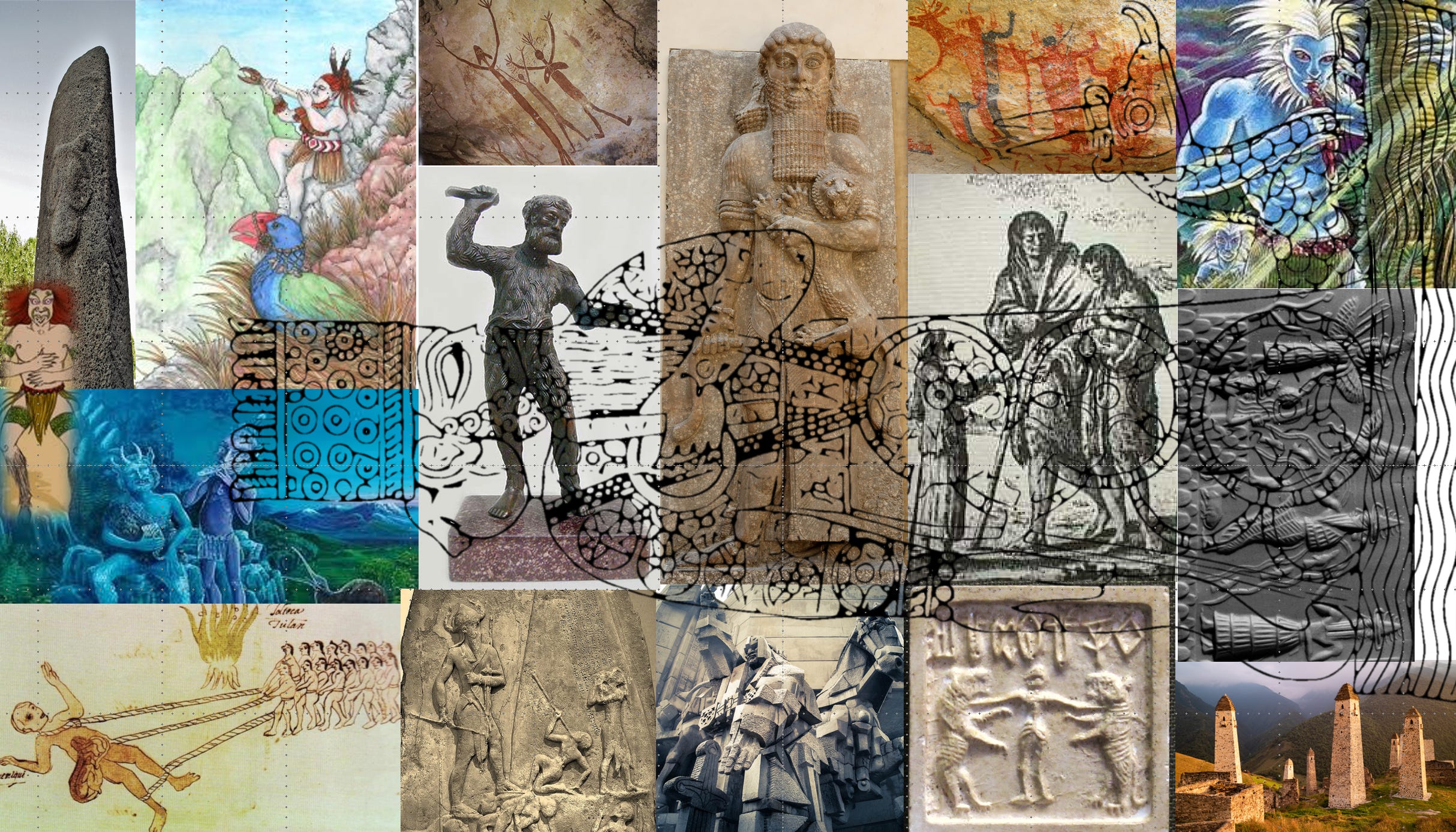
Of particular significance is the geographic distribution of these accounts and the possibility that records of such encounters terminate within a relatively narrow window of deep time. Descriptions of light-haired or pale-skinned hominid giants appear in ancient oral and written traditions across multiple continents. These include, but are not limited to, the Maero and Patupaiarehe of New Zealand; the Si-Te-Cah of North America; the Quinametzin of Central America; the Patagons of South America; the Anakim and Nephilim of the Levant; the Yowie of Australia; and the Ispolini of the eastern Balkans.
This article does not attempt to adjudicate whether these accounts represent a single biological lineage, convergent myth-making, or cultural diffusion across human populations. However, the similarities among these descriptive clusters are sufficiently pronounced to warrant future systematic comparison. The apparent cross-cultural recurrence elevates the Ayniwzh from a regional folkloric figure to a candidate of global analytical interest. If comparable trait clusters recur across geographically and culturally distinct societies, then a structured taxonomic approach becomes not merely useful but necessary. The Ayniwzh thus functions as a methodological bridge between localized mythological records and a potential global dataset of anomalous humanoid observations.
Process for Extracting Taxonomic Data from Cultural Records
With a candidate X-Life organism selected, we now turn to the methodological core of this paper: the process by which cultural narratives are converted into structured observational data suitable for taxonomic analysis.
Here, we employ a seven-step workflow designed to be transparent, repeatable, falsifiable, and adaptable to machine-learning or crowd-sourcing techniques. While necessarily provisional, this workflow provides a disciplined starting point for the study of X-Life in the absence of publicly accessible physical specimens.
Overview of the Seven-Step Workflow:
Define the dataset and candidate X-Life, assigning a temporary X-Life identification code.
Segment the source text into discrete observational units representing coherent descriptive passages.
Extract descriptors relevant to one or more observational traits as detailed in the “Index of X-Life Taxonomic Categories, Traits, and Values” (forthcoming appendix).
Map descriptors onto the predefined trait ontology.
Encode traits using standardized codes, confidence levels, and source metadata.
Aggregate encoded traits to identify recurring patterns and construct an initial X-Life profile.
Propose a tentative taxonomic placement within an extended Linnaean framework or identify data gaps preventing description and categorization.
This process does not yield definitive description and classification of a candidate XI. Rather, it produces structured data, explicit, interrogable, and open to revision — to guide complementary scientific disciplines to future observation and experimentation.
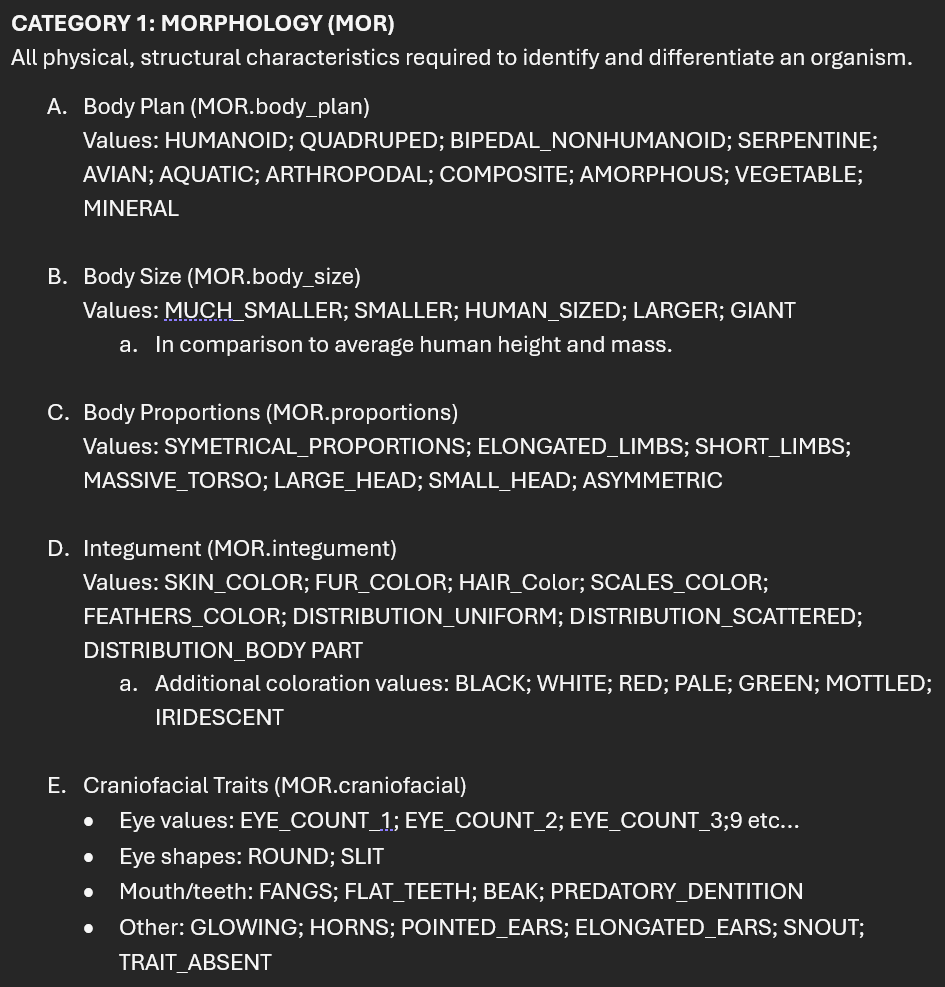
Throughout this workflow, observations are tracked across five primary trait categories, which are defined in detail in the forthcoming appendix “Index of X-Life Taxonomic Categories, Traits, and Values” – supporting documentation and the full dataset will be made publicly available upon completion of this project.
X-Life Taxonomy Observational Categories:
Morphology: physical form and anatomical characteristics
Ecology: environments, habitats, and material conditions
Life-Plan: development, reproduction, transformation, and lifespan
Behavior: actions, social tendencies, and interactions
Cognition: communication, intent, problem-solving, and apparent intelligence
Together, these domains form the backbone of the comparative framework. By translating narrative descriptions into these shared categories, disparate cultural records become interoperable datasets rather than isolated stories. Importantly, this section explains the process of extraction and encoding. The resulting Ayniwzh dataset itself will be presented in Part 3.
Towards Demonstration
Some readers will object that it is inappropriate to apply a taxonomic system developed for terrestrial biology to entities often described as “alien” or “extraterrestrial.” From a strict evidentiary standpoint, such objections are reasonable—but they are also premature. At present, there is no publicly available, high-confidence evidence demonstrating that anomalous intelligences originate from outside Earth or its immediate environs. In the absence of physical specimens or definitive provenance data, the application of Linnaean taxonomic categories functions as a disciplined heuristic: a means of organizing observations, generating testable hypotheses, and guiding future investigation without presupposing origin.
With the methodological framework established, the dataset defined, the extraction process specified, and a candidate anomalous intelligence selected, we now turn to demonstration. Part 3 of this series presents the structured observational dataset derived from the Nart Sagas and applies the proposed taxonomic system to the Ayniwzh X-Life candidate. That section will review encoded traits, identify recurring patterns, conduct preliminary comparative analysis, and propose a tentative taxonomic placement, while explicitly identifying gaps and uncertainties requiring further investigation.


Thanks Matthew. However, you will have your work cut out for non-corporeal entities.