

A Grand Bargain for Peace
Why U.S.–Russia Talks Must Begin with Disclosure

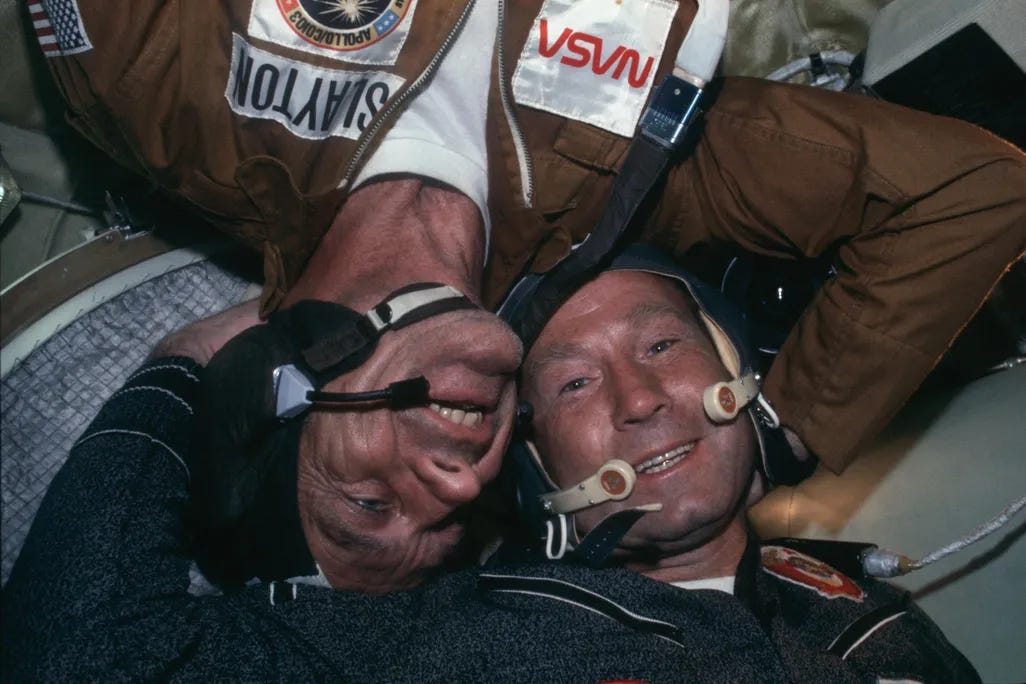
Unquiet Frontiers
Our world order is perilously close to systemic collapse. Localized wars backed by foreign powers have metastasized into the early phases of industrial-scale warfare. In Ukraine, military technology and operations have accelerated in leaps and bounds of bloody innovation, only to return to the brutal logic of attritional trench warfare. In Israel, the powers of the modern surveillance state have created a hellscape watched constantly by roving robotic eyes and backed by conventional overmatch — once more, humanity has been forced to seek refuge beneath the Earth.
In Yemen, Venezuela, Myanmar, the Himalayas, Central Africa, and the South China Sea, the flames of conflict are stoked by rival intelligence services and organized crime — a distinction almost no longer worth mentioning. Great power rivalry has been off-shored to territories considered fair game in “the sandbox” of geopolitical competition, and unquiet frontiers now echo with the drums of war. Division, hatred, and bloodshed, long simmering at the frontiers of empire, have rebounded and are tearing apart domestic populations long accustomed to peace.
What looks like a world map of separate flashpoints is, in reality, a single system under intense strain. Decisions in one theater reverberate instantly in the others through alliance commitments, economic warfare, foreign military assistance, and shadowy wars waged by security services. Between the modern arsenal of destruction and the speed of telecommunications, our margin for strategic error has evaporated. The old habit of managing crises through proxies and deniable actions, the so-called “third option” of the foreign policy establishment, is failing in real time. The root cause is trust, and the complete lack of it between the great powers of our time bodes extremely ill for peace. Without trust, deterrence fails, alliances fray, every flashpoint becomes a potential spark, and shared perceptions of reality diverge.
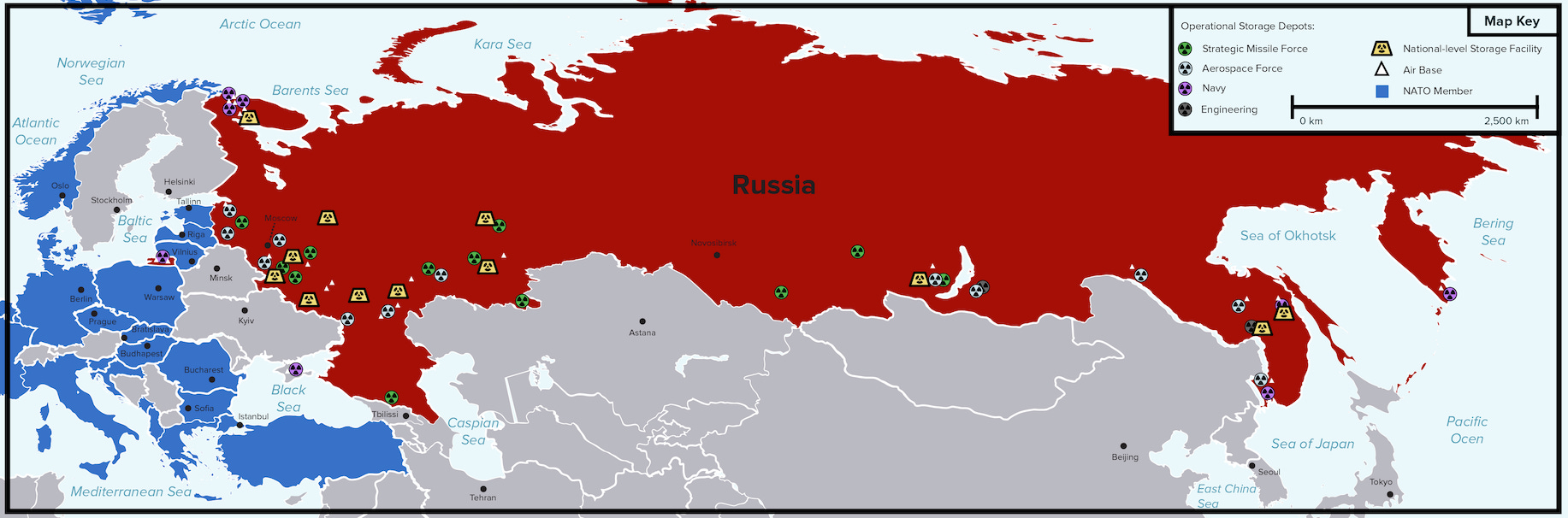
The Eagle and the Bear
If we keep treating each fire as discrete, we will miss the accelerant that links them. The foreign policy consensus in Washington has failed; it has been dead for years. Yet its corpse is paraded as consensus by special interests to maintain the illusion of success. Something new is desperately needed. Staying the course will very likely lead humanity to a third global war between great powers armed with advanced weapons of mass destruction, yet still subject to simple human failings. The task for statesmen — and all leaders anxious about the near future — is to recognize that durable de-escalation between antagonistic great powers requires deep structural change. Not more rounds of crisis management and diplomatic ostracism.
Among today’s conflicts, none is more perilous than the war between the United States and Russia. And make no mistake: the “war in Ukraine” is not a peripheral dispute but a direct confrontation. Despite Washington and Brussels’ ritual denial, the scale, duration, and depth of involvement leaves no honest alternative description. Billions in U.S. and European weapons flow into Ukraine; American satellite data and electronic intelligence guide Ukrainian strikes; NATO trainers and special operators rotate through the theater; sanctions and covert action target the Russian state directly. These are not the hallmarks of neutrality — they are acts of war waged on a proxy battlefield. Our blood price is paid by Ukrainians for now, but the contest pits two nuclear superpowers against one another in everything but name.
Any serious student of history recognizes that the “Cold War” was never truly cold. Covert operations, proxy wars, and direct confrontations defined that era, and our present is no different — only faster, riskier, more volatile. In an age of perception management and social engineering, large segments of the public, and much of the foreign policy elite, cling to the comforting fiction of unprovoked Russian aggression, while ignoring the reality of an undeclared U.S.– Russia war already well underway.
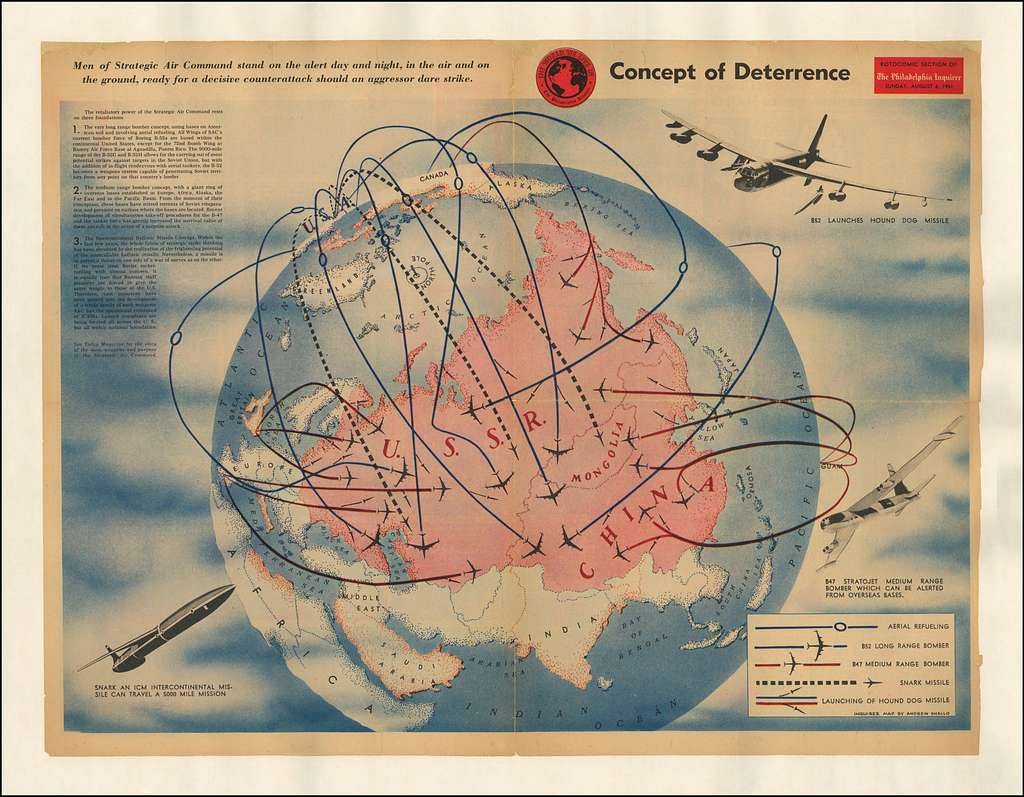
Despite the proclamations of familiar talking heads, Russia’s conduct is best understood as the natural reaction of an authoritarian regime to what it perceives as strategic encirclement, amplified by long historical grievances with both the EU and the United States. Moscow’s war is neither a simple bid to resurrect empire nor a mere opportunistic grab for resources. For Putin and the Russian elite, Ukraine represents a last-ditch defense against a NATO frontier that, in their eyes, crept past every promised line and violated the spirit of every treaty. Whatever one thinks of that claim, it is the ground truth inside the Kremlin — an axiomatic reality that tired rhetoric about a “rules-based order” cannot dislodge.
America’s difficulty in sustaining trust is not limited to adversaries. From the Kurds left exposed to ISIS, to Afghans abandoned to the Taliban, Washington’s treatment of allies in proxy wars has repeatedly eroded our integrity. If those who bled on America’s behalf cannot trust its commitments, how much less can rivals be expected to gamble their survival on assurances? The erosion of trust abroad now mirrors the fraying of trust at home — and both converge in the breakdown of diplomacy.
Because of America’s asymmetric advantage in alliances, Washington has been able to offshore this conflict to the people of Ukraine, who fight as proxies in its geopolitical struggle with Moscow. Russia has no such luxury. It bleeds its own soldiers and spends its own treasure on its own doorstep, a burden that is becoming increasingly unsustainable. The Russian state has already signaled its willingness to risk escalation if the United States refuses to come to the table. Meanwhile, Washington’s central interest in sustaining the meat grinder in the East is reputational: to preserve its standing as a security guarantor among allies and to deny Russia any chance of regaining the influence it lost with the Soviet collapse. In short, Washington fights for pride; the Kremlin fights for survival. And the war goes on…
A Concert of Diplomacy
Direct military conflict between superpowers armed with arsenals scarcely conceivable to the public — and even to most government officials — is anathema to the core interests of the United States. Facts are facts: both Russia and the United States possess the ability to end human civilization many times over. From the perspective of both survival and basic human decency, Washington can no longer maintain its “strategic” refusal to recognize Moscow as a peer to be engaged on its own terms. The price of this hubris is being paid every day.
Any viable negotiations with Russia must engage three interlinked domains of geopolitics: strategic stability (how we avoid inadvertent war), arms control (the means of war we limit, verify, and shape), and alliance management (what security guarantees and deployments look like at the frontier). Diplomacy that skips these domains in favor of photo opportunities or pre-packaged concessions will not survive first contact with geopolitical reality.
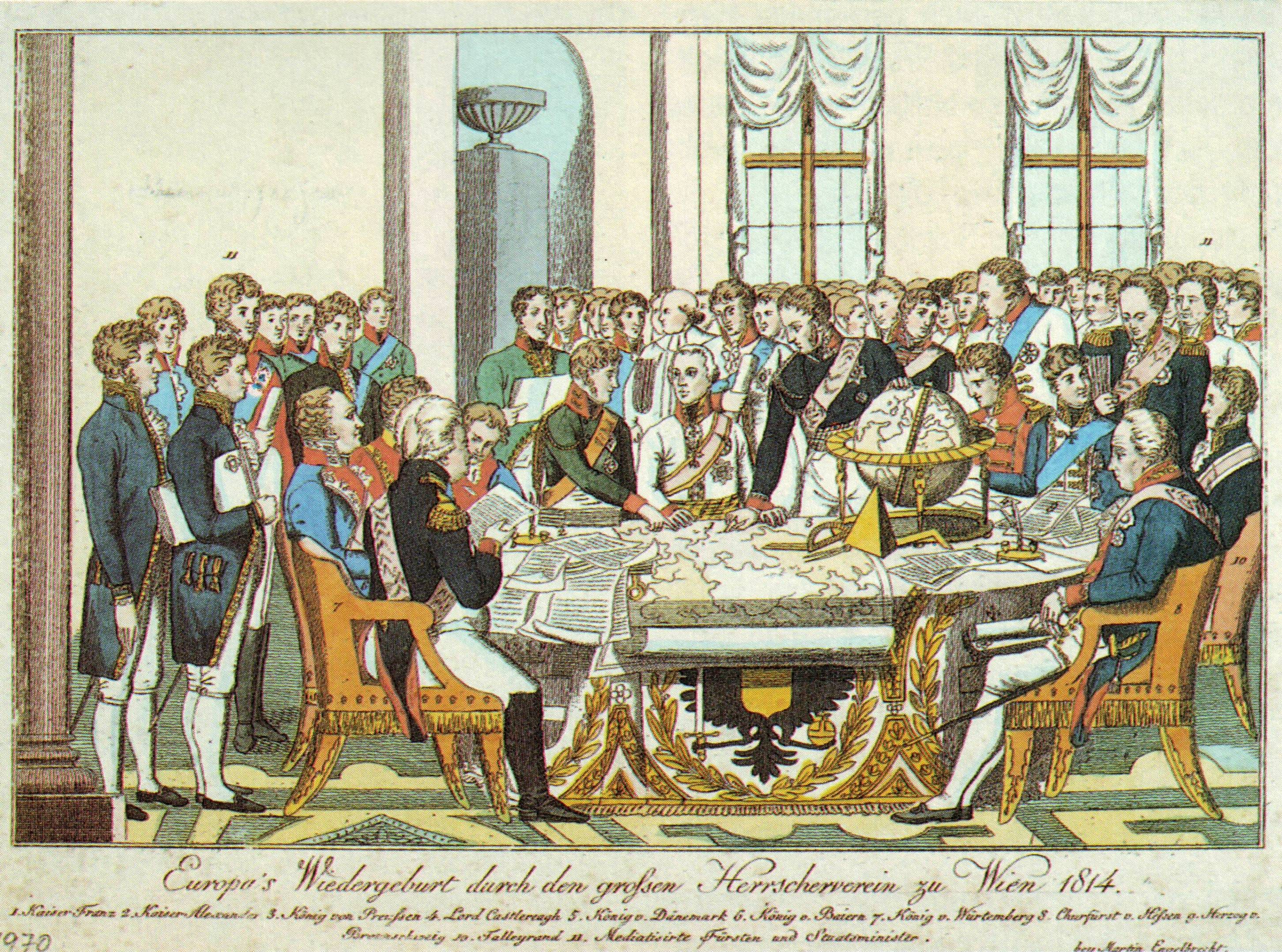
None of this is new. The “Concert of Europe” after the Napoleonic Wars, the arms control regimes of the Cold War, and the détente agreements of the 1970s all demonstrated the same principle: diplomacy succeeds when great powers recognize one another as indispensable partners in maintaining one overarching objective — mutually assured survival. Such arrangements are not built solely on trust, but also on mechanisms of verification, balance, and candor. They work not because adversaries become friends, but because they agree that survival requires cooperation even in the absence of affection.
Diplomacy has always functioned as the ballast of international order because it reduces uncertainty. The Concert of Europe stabilized the continent after Napoleon not by eliminating rivalries, but by acknowledging them openly and agreeing to manage the points of friction through constant communication and balance. During the Cold War, the same principle applied: arms control treaties succeeded not because Washington and Moscow trusted one another, but because each side accepted the need for verification and transparency over the very arsenals that threatened mutual destruction.
In both cases, diplomacy worked when the real sources of instability were dragged into the open and structurally addressed through negotiation. Today, however, the most destabilizing source of strategic rivalry between the United States and Russia remains outside every official framework: the parallel, secret programs dealing with phenomena and technologies of unknown origin. Unless this hidden domain is recognized and brought under diplomatic management, every other negotiation — on strategic stability, arms control, or alliances — will be doomed to collapse under the weight of secrecy and paranoia.
The Key
For more than seventy years, Washington and Moscow have pursued extremely secret efforts to understand and contain phenomena, technologies, and intelligences not of conventional terrestrial origin. These programs — unacknowledged in public, protected by extreme secrecy, and distributed across state and private hands — have profoundly shaped military planning, intelligence priorities, and strategic perceptions in both capitals.
The result has been the creation of parallel societies: our visible world of governments, cultures, institutions, religions, and sciences — and a hidden world populated by elites with access to technologies of unknown origin, often linked to anomalous intelligences, whose properties exceed our capacity to replicate.
Maintaining this dual reality has long been one of the few areas of tacit cooperation between Washington and Moscow, though today even that fragile equilibrium is breaking down. Pride and animosity have eclipsed whatever pragmatic motives once justified secrecy; the race is now about who can first “crack” the science and master the capabilities concealed within these discoveries.
Here lies the long-concealed origin of the Cold War’s most dangerous competitions — the core secret guarded with lethal force by both governments. As long as each side chases absolute advantage in this shadow domain, peace between the United States and Russia will remain impossible.
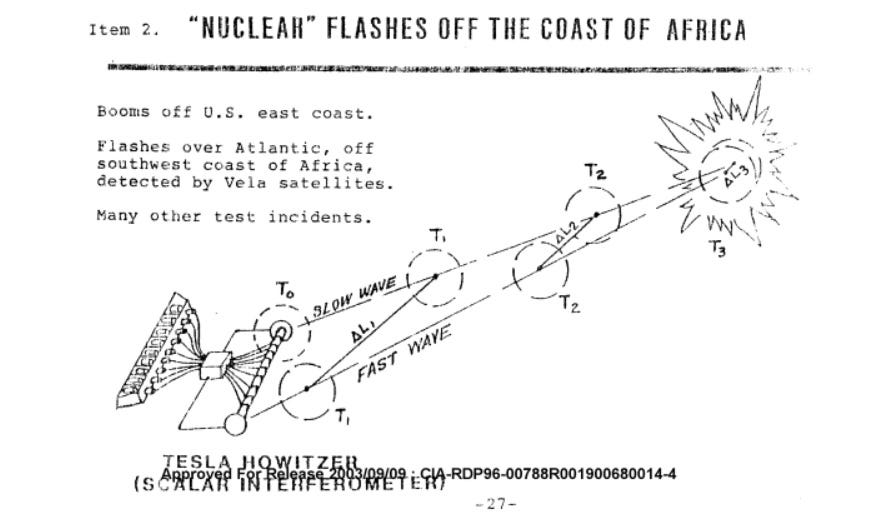
Disclosure is therefore not a boutique issue of political economy; it is a systems problem, fracturing the international order at its foundations. Secrecy on this scale breeds paranoia: each side assumes the other has made breakthroughs it cannot confirm, and deterrence signaling becomes schizophrenic. With the public deliberately kept ignorant, national security elites speak in contradictions; alliances grow brittle as partners are included or excluded by degrees; and distrust festers in the absence of candor.
The fracture between America and Russia is thus not only geopolitical but metaphysical, institutional, and generational. Until both sides reconcile decades of lies and hidden knowledge, every attempted “deal” will be built on shifting sands. Past eras stabilized only when rivals faced their true sources of power; in our age, that means confronting the hidden threats of anomalous technologies and intelligences — or else no peace can hold.
Towards a Grand Bargain
History teaches that durable peace between rivals comes from bold bargains that cut to the root of each side’s grievances. Russia does not have to be our enemy, and much larger problems confront us at home and abroad. It is long past time for a new generation to sit down at the table and settle our differences.
The familiar building blocks of a U.S.–Russia bargain have long been identified by scholars in both countries:
NATO Membership Restraint: a formal halt on further expansion for a defined period, combined with tailored security assurances for non-members.
NATO Force Posture: removal or relocation of specific advanced U.S. systems near Russian borders, paired with reciprocal transparency and inspection rights.
Territorial Settlement: a difficult but final status package on contested areas, tied to demilitarized corridors, economic guarantees, and humanitarian protections.
Arms Control Reboot: replacement for broken regimes, with a scope that reflects today’s reality (advanced nuclear weapons, strategic directed energy, next-generation biological warfare, artificial intelligence, and the militarization of global commons — space, ocean, seafloor).
Economic Reconciliation: bounded sanctions relief, calibrated energy trade, and guarded re-entry into global finance for clearly defined sectors.
For the old guard and those invested in perpetual conflict, these are costly concessions. But the expected value of converting Russia from active adversary to respected competitor — and eventually to a partner against existential risks — far exceeds the upfront political pain.
What makes a grand bargain hold is not sentiment, but mechanics: diplomacy reduces uncertainty, solves commitment problems, and stabilizes deterrence. The greatest reservoir of uncertainty in U.S.–Russia relations no longer sits in declared arsenals; it sits in the hidden contest over anomalous technologies, sensors, and phenomena. So long as that domain remains off the table, each side plans for the worst, ambiguous incidents are misread, alliances fray, and stockpiles swell.
Mutual cooperation on a sequenced disclosure campaign — acknowledgment, verification, and shared incident management — directly addresses those failures by building trust. More than that, it reframes rivalry as collaborative stewardship of a dangerous, long-hidden domain. This widens the domestic space for agreement, strengthens allied confidence, and creates new expectations for restraint.
Disclosure cannot ride as a sidecar to U.S.–Russia negotiations; it must set the frame for the rest of the bargain. That requires a theory of change with discrete, measurable steps:
Conflict Termination: ceasefire parameters; humanitarian corridors; monitored drawdown windows; escrowed economic packages tied to compliance.
Bilateral Disclosure Dialogue (U.S.–Russia): secure channel; cross-designation of points of contact; inventory of compartments; harm-minimization protocols; joint red lines.
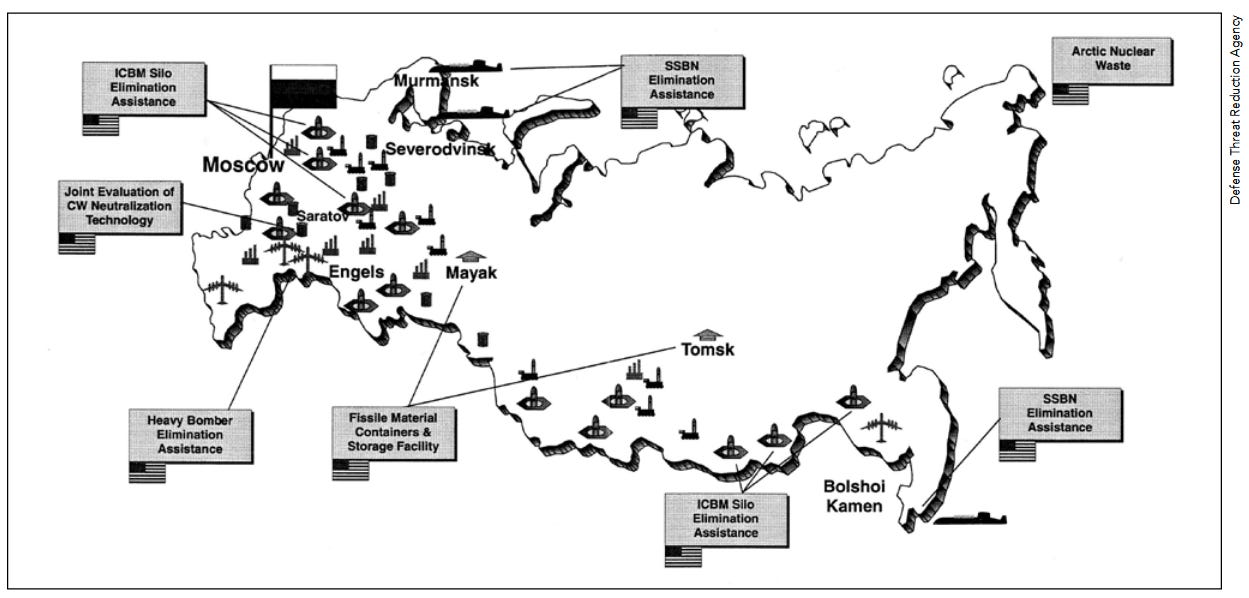
Next-Gen Arms Control: expand beyond legacy WMD to include emerging systems; stand up a next-generation cooperative threat reduction program to verify, render safe, track, and mitigate the proliferation of anomalous technologies.
Trilateral Strategic Forum (U.S.–Russia–China): no bargain is durable without China at the table. Its arsenal, industrial base, and role in global supply chains give it veto power over any new strategic norms. A trilateral forum would set limits on the most destabilizing technologies, establish “no-first-use” commitments, and create shared channels for early warning and incident deconfliction.
Safe Civilian Disclosure: phased public releases with safety reviews; scientific consortia; standards for handling materials/phenomena; sanctions for illicit exploitation.
This sequence is the only plausible order in which the dominoes fall without toppling the table: first stop the killing, then carve out space for candor, constrain destabilizing weapons, widen the frame to include China, and finally bring publics into full awareness of non-human intelligences, technologies of unknown origin, and unidentified anomalous phenomena.
Done in this order, disclosure strengthens rather than destabilizes the system. Only by placing disclosure at the center of the process do these steps cohere into a durable architecture of peace, rather than a patchwork of temporary fixes. A bargain anchored in disclosure asks leaders to exchange secrecy for stability, rivalry for stewardship, and suspicion for trust. That is the true price of peace in the twenty-first century.
Turning Point
Disclosure will not dissolve ideology, erase animosity, open borders, or rewrite the past. What it will do is restore the missing precondition for peace: trust that the other side is negotiating in good faith. With that foundation, conflict resolution, arms control, economic relief, and even scientific cooperation can stand on stable ground.
The alternative is appalling. A war between the superpowers would not confirm their perceived advantages — it would shatter them. War will quickly disabuse both sides of their delusions, and the cost of education will be incredible devastation. To persist in concealing non-human intelligence, technologies of unknown origin, and anomalous phenomena is to gamble with the future under the false belief that total information dominance can still control escalation. That arrogance echoes the hubris of past eras when leaders believed they could manage war, only to watch it spiral beyond their grasp. The enemy always gets a vote.
History teaches that it is not prosperous rivals we should fear most but failing states with nothing left to lose. It is in moments of desperation, when survival itself hangs by a thread, that leaders are most likely to reach for catastrophic options. Disclosure reduces that desperation by removing the veil of suspicion, but no nation can attempt disclosure alone. Both American and Russian elites know this, even if they dare not say it. Catastrophic disclosure can only be prevented through joint action — coordinated steps by Washington and Moscow, and eventually with Beijing as well.
This will not happen overnight. It will demand bitter arguments and painful compromises. But it is possible. Our nations have cooperated before: securing nuclear arsenals, converting warheads into fuel, eliminating diseases, and opening new frontiers of science. We can do so again. But the choice before us is stark: to face the truth together, or to let denial drag us into disaster. The truth is already here, and it will not wait forever.



You are an incredibly articulate writer, Matthew! Your foreign policy ideas are aspirational…I hope someone in gov is reading🙏🏼.
This is the most sensible foreign policy proposal I've heard in recent memory, thanks for putting it together Matt. How do we get from the low-IQ partisan shit throwing match to pushing this forward into the national dialogue? Feels like it rests on the priors of accepting the legacy program, which is still pretty fringe in politics