
Westerner’s Don’t Understand Russian Identity
by Baron Limon
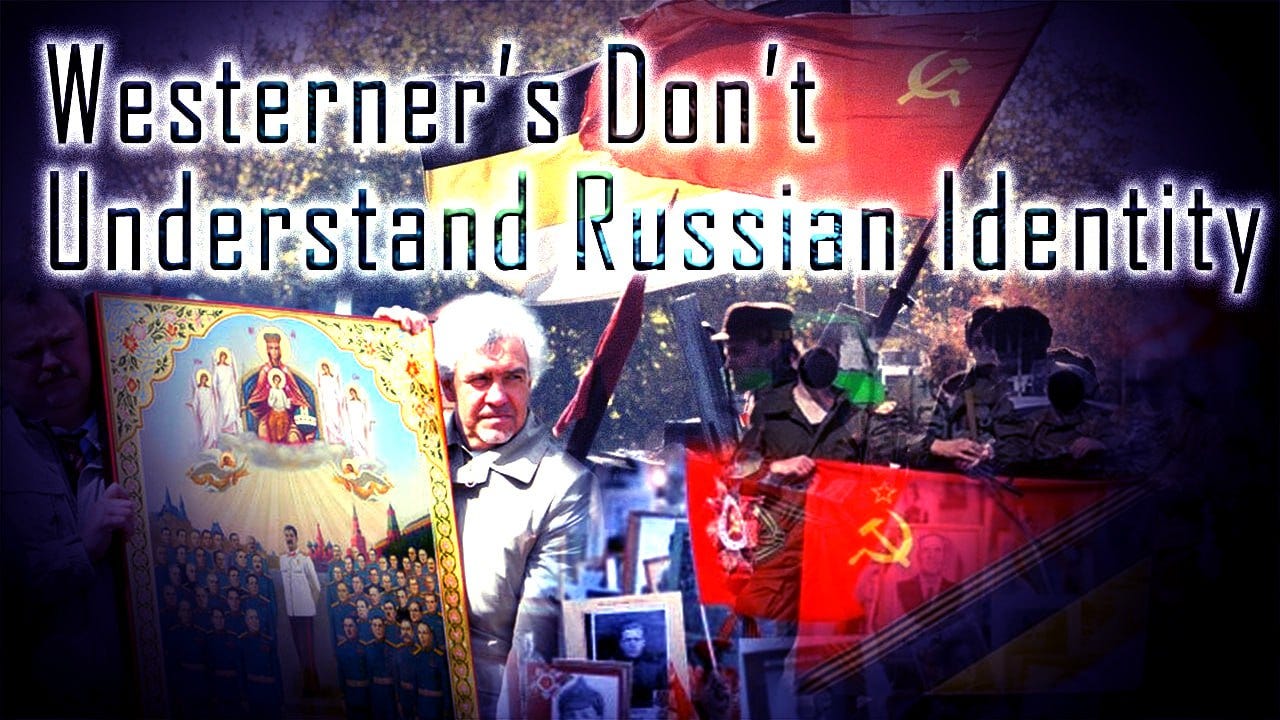
The Great Patriotic War transcends being a mere historical occurrence for the Russian Federation; it's a pivotal myth that has sculpted the country's sense of self and communal psyche. The profound ramifications of this conflict and its vast expanse of combat are elements that might escape full recognition by those looking in from the outside. It was seen as a war for survival, offering no middle ground—victory was the only alternative to obliteration.
The Battle of Stalingrad exemplifies the extreme ferocity of the war. The Axis forces' losses there equaled the total number of casualties sustained by the Western Allies across their entire wartime efforts. Such a stark figure highlights the unparalleled ferocity encountered on the Eastern Front. The war's deep personal toll is evident in its pervasiveness within the fabric of Russian family life. The war stories are ubiquitous, with many Russian families having tales of kin who endured those dire times.
The demographic impact of the conflict has been profound and enduring. The war left a noticeable demographic depression, aligning with those who would have been born in the 1940s, as a result of the conflict. This demographic gap has perpetuated through subsequent generations, influencing the structure of Russia's present-day population. Thus, the legacy of the war is imprinted not only in Russia's monuments and narratives but also in the very demographic constitution of its society. For a prolonged period post-World War II, Russia experienced a significant gender imbalance, with far more women than men, a direct consequence of the massive wartime casualties.
World War II Victory celebrations in Russia are deeply emotional, often described as joyous yet filled with sorrow due to the heavy sacrifices made. In Russian culture and political life, there's a strong tradition of venerating Victory Day and interpreting history with a particular reverence. This day is less of a holiday and more of a tribute to forebears, with a resounding message of triumph over a profound “evil” for the world's sake. Russian identity is closely tied to Orthodox Christianity and conservative values, which are widely held and rarely questioned without risking social and political exclusion.
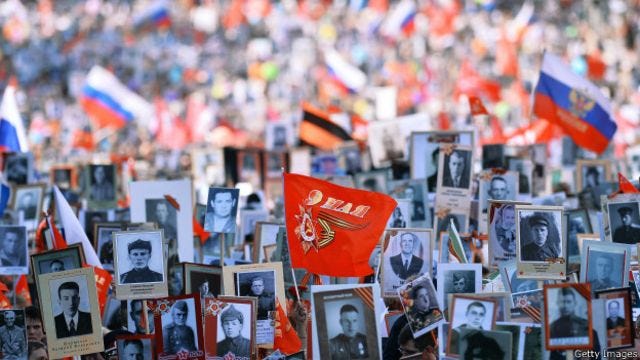
A tribute to the dead
While communist symbols are still visible in Russia, the grasp and dedication to true Marxist ideology is not widespread in modern Russia. The Communist party of The Russian Federation (KPRF) tends to draw on Soviet-era sentiment rather than strictly adhering to Marxist doctrines. Their political stance generally promotes a form of socialism that advocates for welfare, pro-family policies, and for the impoverished. In today's Russia, the symbols of communism are more reflective of a nostalgia for Soviet accomplishments and national pride in the USSR's power, space achievements, and the pivotal role in the victory of World War II, rather than a strict adherence to Marxist theory or atheism. The reverence for Stalin, for instance, is often linked to his leadership during the war rather than his communist policies. In contrast, historical figures like Nicholas II are often judged negatively for their association with national failures, although perspectives on such figures may be gradually becoming more nuanced.
This tendency to view history through a certain lens is common across the globe; many people are not politically active and may have a limited understanding of their nation's history, often overlooking less favorable episodes. The tendency for self-criticism seen in some Western liberal circles is not the norm worldwide. It raises the question of whether a society can come to terms with its history without seeming to disrespect it. Moreover, Western individuals with a leftist inclination might find their ideology sharply contrasted with those of older Russians who experienced the Soviet Union firsthand, revealing a significant divide between Western Marxists and the Russian experiences. The subjects of "How to rid Moscow of illegal migrants" and "Western Marxism vs Russian Communism" invoke discussions that are highly complex and deeply rooted in the socio-political fabric of contemporary Russia. Both topics touch on the ongoing struggle to reconcile the legacy of the Soviet past with the realities of the present, and the distinct ways in which political ideologies evolve and are interpreted across different cultural and historical contexts.

On The Russian Conservative Revolution documentary (Spanish subbed) — English subbed


