Advertisement
Advertisement

World

US, Iran trade new strikes in fight over Hormuz strait

US President Donald Trump says that he expects the latest military flare-up to end quickly and left the door open to more talks.

US, Iran trade new strikes in fight over Hormuz strait

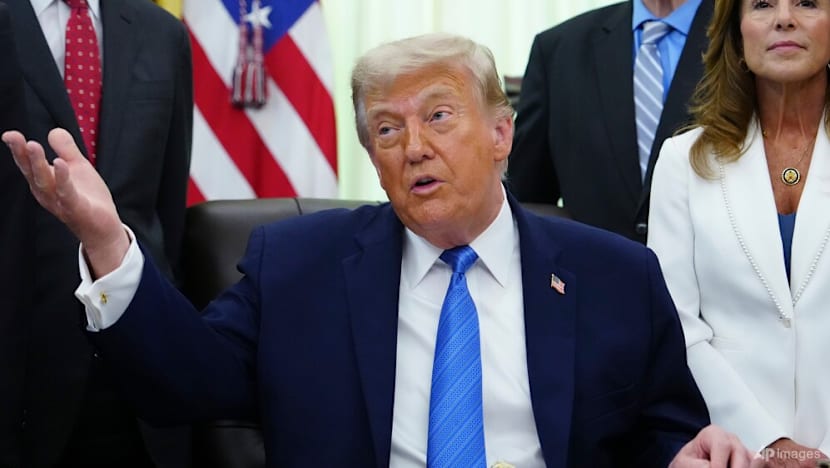
US President Donald Trump reacts as he speaks to the media on the day of a NATO leaders' summit in Ankara on Jul 8, 2026. (File photo: Reuters/Umit Bektas)

09 Jul 2026 05:17AM (Updated: 09 Jul 2026 11:45AM)
Read a summary of this article on FAST.
FAST

DUBAI: The United States and Iran traded strikes on Thursday (Jul 9) for the second day running as Washington and Tehran battled over the strategic Strait of Hormuz.

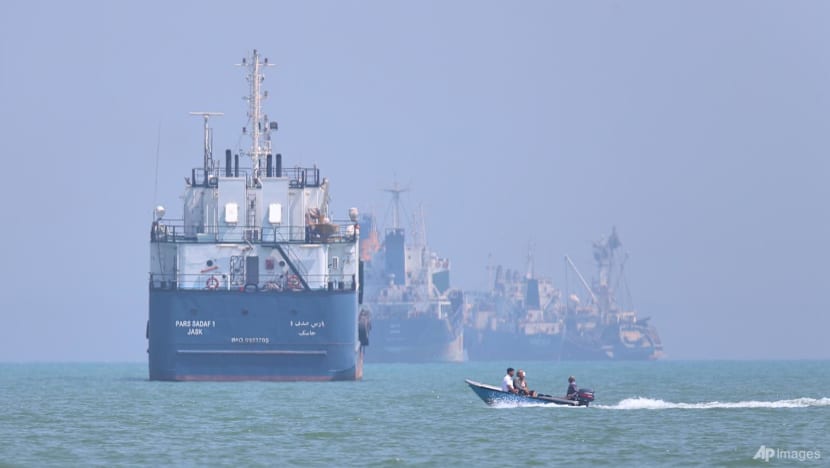
The vital oil shipping corridor is a flashpoint in the Middle East war, with Tehran insisting on control of the strait despite it being open to free passage before the US-Israeli attacks in February.

After the foes traded fire on Wednesday, US President Donald Trump said the ceasefire with Iran was "over", but left the door open to more talks and added that any strikes would end quickly.

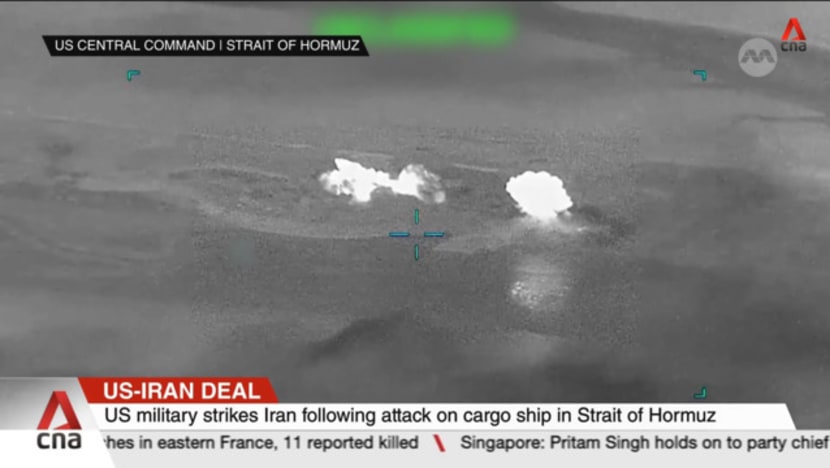
US forces said the latest attacks against Iran were aimed at "their ability to threaten the freedom of navigation in the Strait of Hormuz", citing recent strikes against commercial ships in the waterway.

Iran's Revolutionary Guards (IRGC) said they had struck US military bases in Bahrain and Kuwait on Thursday in response to fresh American strikes.

An AFP journalist heard blasts in Bahrain's capital Manama and Kuwait reported intercepting "hostile missile and drone attacks".

American strikes hit a railway bridge in Iran's northeast, according to several official media, and the official IRNA news agency reported strikes on a military base in coastal Bushehr, which hosts the nation's only civilian nuclear power plant.

The US Central Command said later they had struck approximately 90 military targets.

Earlier, warplanes were heard over Iran's Kish Island, and explosions rocked the port cities of Bandar Abbas, Konarak and Chabahar, part of which lost electricity, IRNA reported.

"This is in retribution for yesterday's bombing of ships by Iran," Trump said in a post on Truth Social on Wednesday. "If it happens again, it will get much worse!"

Late on Wednesday, while speaking to reporters aboard Air Force One, Trump said the Iranian side had "called a little while ago," and that they wanted "to make a deal so badly".

Trump did not provide further details of the call - including who was on the line - but went on to cast doubt over the value of any deal, calling the Iranians "sort of crazy".

CONTROL OF THE STRAIT

Iran's chief negotiator said Thursday that the Strait of Hormuz would be opened only under "Iranian arrangements".

"The United States still has not learned that bullying and breaking its promises no longer come without consequences," Mohammad Bagher Ghalibaf said on X. "Let me be clear: If you strike, you will be struck."

Since US-Israeli strikes triggered war in February, Tehran has insisted on controlling the strait, saying it will charge fees for passage and threatening to hit vessels that deviate from its authorised route.

The latest strikes come just ahead of the Thursday burial of Ali Khamenei, Iran's former supreme leader, who was killed at the outbreak of the war on Feb 28.

Its military struck at least three ships in recent days, prompting extensive US strikes against Iranian targets on Tuesday.

SEAFARERS STRANDED

Oman, which sits on the other side of Hormuz from Iran, condemned the targeting of Bahrain and Kuwait as well as the strikes on ships, but without blaming Iran.

The former mediator has not blamed Iran for attacks throughout the war, in an effort to maintain its neutrality, which is being tested by talks with Tehran over the administration of Hormuz.

Washington wants free passage for ships while Iran is insisting on fees and has refused to allow vessels to pass through Omani waters.

All three vessels recently struck were sailing close to Oman, which had proposed a temporary transit corridor hugging its coastline.

Maritime traffic had tentatively resumed after Washington and Tehran signed the deal to end hostilities last month.

But almost 6,000 seafarers remain stranded in the area, International Maritime Organisation chief Arsenio Dominguez said Wednesday.

Source: AFP/fs/rj/rl

Sign up for our newsletters

Get our pick of top stories and thought-provoking articles in your inbox

Subscribe here
Inbox
FAST
Advertisement

Commentary

Commentary: A better way to guard against the next oil crisis

If governments want to make the most use of the reserves they’re building up, they should ensure their economies consume less crude, says David Fickling for Bloomberg Opinion.

Commentary: A better way to guard against the next oil crisis
Asian countries want to build new storage terminals and refineries to guard against future shocks. (Photo: AFP/Olivier Chassignole)
09 Jul 2026 05:58AM
Read a summary of this article on FAST.
FAST

SYDNEY: If you knew your local Coke factory was having chronic supply-chain problems, buying a bigger refrigerator to store more soda would be one way to deal with it. The better strategy, however, might be to switch to Pepsi instead.

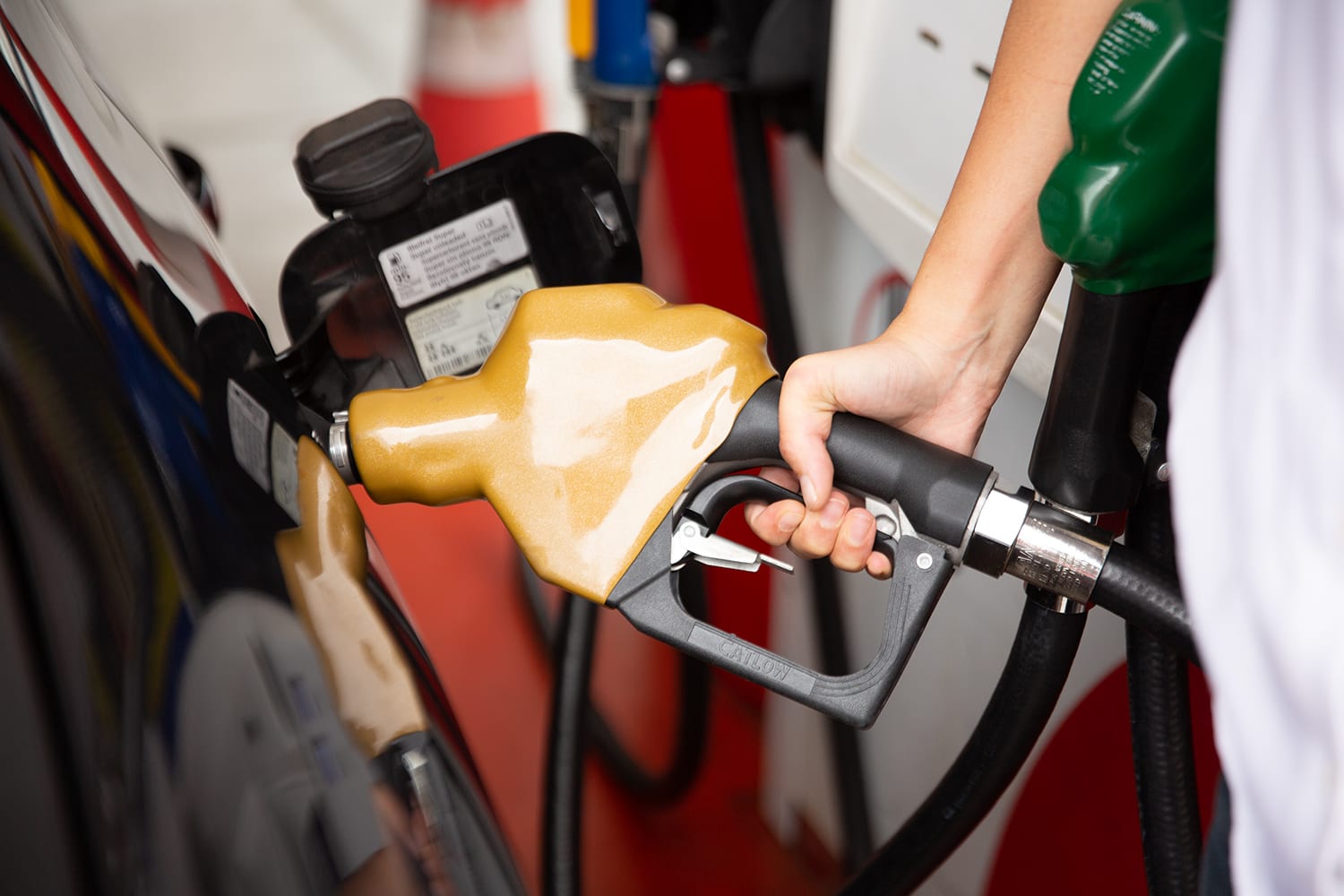
And yet the “bigger refrigerator” path is the one governments in Asia are following to protect themselves against any repeat of the oil shortages prompted by this year’s closure of the Strait of Hormuz.

India will build new storage terminals and refineries to guard against future shocks, the government said this month. Similar plans are being advanced in Indonesia, the Philippines, Pakistan and Vietnam.

That could give energy-hungry emerging Asia something equivalent to the strategic petroleum reserves that developed countries established after the 1973 oil crisis, and the similar stockpile that China has been building up over the past decade.

CNA Games
Show More
Show Less

With the US and Iran once again trading blows this week and threatening to shatter the fragile peace agreement signed just three weeks ago, such an insurance policy seems like plain good sense. The average 3.8 million barrels a day released from oil inventories since the start of the war - not much less than what the United Arab Emirates can produce in normal times - has been a major contributor to the world’s ability to ride out the conflict.

If Asian economies had similar stocks on hand, then in future they might not have to suffer the four-day work weeks and soaring fuel prices that have characterised the past few months.
 

ELECTRIFICATION 

That’s all true, but there’s another option they shouldn’t ignore: electrification. If your problem is an over-reliance on unpredictable crude imports, strategic reserves and electric vehicles are both doing much the same thing.

The first protects you by providing an alternative source of petroleum in the event of disruptions. The latter helps by reducing your need for oil in the first place and increasing the energy security of your economy.

Governments could afford to push a lot harder on this front, by diverting more of their oil-shock insurance spending to EV subsidies and charging networks, instead of funding petroleum inventories.

Building up oil reserves isn’t cheap. At current crude prices India would need to spend about US$7.5 billion extending its stockpile to the 90-days level common in developed countries. Indonesia and Vietnam, with some of the thinnest reserves in Asia, would need a further US$8 billion.

That’s just the cost of buying barrels. On top of that, you have the carrying expense of tying up all that money in unused products.

Then there’s the opportunity cost to commercial refiners: With barrels locked up in mandated reserves, they’re hampered in their ability to trade the spreads between shorter-dated and longer-dated futures, a traditional source of income. On a 300-million-barrel reserve like India’s current one, these expenses alone will translate to between US$1.5 billion and US$3 billion a year at typical interest rates. 

DESTROYING OIL DEMAND

Electrification is an under-appreciated alternative. Even after it was more than doubled in size last year, India’s main vehicle electrification program is only receiving about US$600 million annually, far less than the cost of maintaining its existing oil reserves.

The losses that state-owned oil retailers made selling subsidised gasoline, diesel and LPG during the three months of the Iran war, meanwhile, are nearly 14 times that amount.

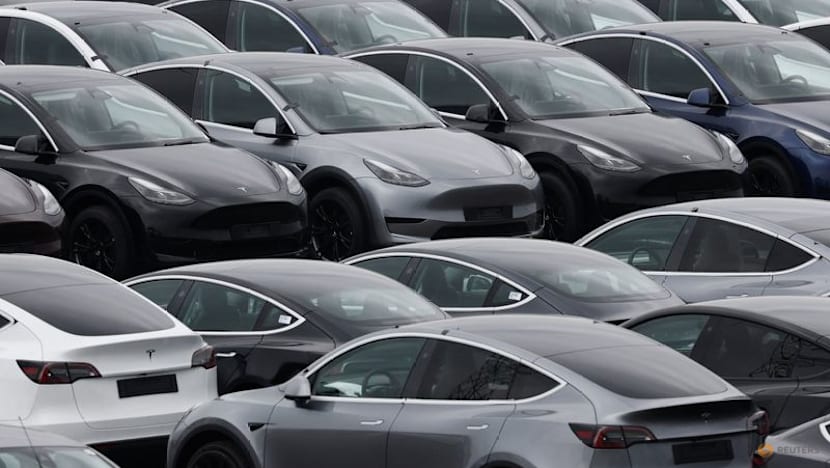
By permanently destroying oil demand, each new electric vehicle reduces the size of the inventory that a government needs to keep itself secure. China’s battery-powered cars and trucks are currently displacing in the region of 1.8 million barrels a day of oil demand. If spread over 90 days, that’s equivalent to the total petroleum reserves of Germany.

The number will only grow as more electric vehicles are added to the fleet.

It’s inevitable that we will see the expansion of oil reserves in the wake of this year’s conflict, especially as tensions continue to roil the Strait of Hormuz. That will give oil producers a market for their product for years to come. China’s stockpiling may have amounted to between 1 per cent and 2 per cent of global crude demand in recent years. 

Such unused inventories aren’t really consumption in the traditional sense. Crude processing has barely increased in a decade, an indicator of how much oil is simply being pumped into tanks and underground caverns in case of emergency. 

Still, if governments want to make the most use of the reserves they’re building up, they should spread them thinner by ensuring their economies consume less crude. With the share of EV sales in many Asian countries now exceeding those in Europe and even China, plus battery-powered trucks and scooters promising another blow to conventional transport, consumers are already voting with their feet.

The best protection against the next oil shock is not having to use so much oil in the first place.

Source: Bloomberg/zw(el)

Sign up for our newsletters

Get our pick of top stories and thought-provoking articles in your inbox

Subscribe here
Inbox
FAST
Advertisement

World

Justin Bieber added to 11-minute World Cup final halftime show

Justin Bieber has joined stars like Madonna and Shakira for the first-ever World Cup final halftime show.

Justin Bieber added to 11-minute World Cup final halftime show

Justin Bieber during the first round of the 2026 NHL Draft at KeyBank Centre, Jun 26, 2026, Buffalo, New York. (Photo: REUTERS/Timothy T. Ludwig)

09 Jul 2026 05:41AM
Read a summary of this article on FAST.
FAST

NEW YORK: Justin Bieber has been added to the star-packed lineup of the first-ever World Cup final halftime show as organisers confirmed Wednesday (Jul 8) that the entire musical performance will last 11 minutes.

Canadian megastar Bieber joins Madonna, Shakira and K-pop sensation BTS for the Super Bowl-style halftime show on Jul 19 at MetLife Stadium in New Jersey.

Coldplay's Chris Martin is curating the extravaganza, a first for a football World Cup final and one that has raised concerns over how long the game's halftime break will be.

The laws of football allow a halftime interval "not exceeding 15 minutes." Even an 11-minute musical performance could still require the break to be extended, given the time likely required to set up and disassemble the show.

But the announcement will assuage concerns raised by previous speculation that the World Cup final halftime show itself could stretch for as long as 25 minutes. 

FIFA chief Gianni Infantino has said the halftime show will be "definitely the biggest stage ever," with "a couple of billion" expected to tune in.

The show, which will also feature characters from "Sesame Street" and "The Muppets," will support FIFA's Global Citizen Education Fund, an initiative working to raise US$100 million for children worldwide during the World Cup.

"The FIFA World Cup brings the world together in a way nothing else can," Bieber said in a statement.

"I'm grateful to be part of this halftime show, and even more grateful knowing it's already helping expand access to education for children around the world," added the "Stay" and "Love Yourself" hitmaker.

Also added to the lineup in Wednesday's announcement were Nigerian singer-songwriter Burna Boy and Venezuelan classical conductor Gustavo Dudamel.

Coldplay will feature in a collaboration with PS22 Chorus, an acclaimed choir of students from a New York public elementary school.

"This is the single largest gathering of artists united for a cause since Live Aid, and it could well be the most-watched 11 minutes of broadcast music performance in history," said Hugh Evans, co-founder and CEO of anti-poverty campaign group and concert organizer Global Citizen.

At 11 minutes, the World Cup final halftime show would be slightly shorter than most recent Super Bowl halftime performances, which have typically been around 13-14 minutes long.

A halftime show was trialed at last year's FIFA Club World Cup final, also at MetLife Stadium.

It stretched the entire break to just over 24 minutes, drawing some criticism over the potential impact on players' performance.

Source: AFP/fs

Sign up for our newsletters

Get our pick of top stories and thought-provoking articles in your inbox

Subscribe here
Inbox
FAST