C-

Lizzo’s comeback statement is muddled on BITCH

The singer’s return to the limelight arrives mean-spirited, out of touch, and woefully inconsistent.

Lizzo’s comeback statement is muddled on BITCH

Everyone loves a good comeback story. The once-injured goalie returns with a new knee and double the fire in his belly; the aged actress, long out of work, finally wins that sought-after Oscar. It’s the best of all worlds: you get the schadenfreude of watching a famous person fail, then the absolution of watching them succeed. It’s the reputational equivalent of a feel-good movie, and it’s clearly what Lizzo hoped for by making BITCH, her first album in four years.

The singer, who reached the tippy-top peaks of pop stardom in the late 2010s and early 2020s after the unexpected smash hit of “Truth Hurts,” found her once-squeaky clean public image—a cheerful, flute-wielding, body-positive singer—sullied in 2023 when three of her former tour dancers dropped a damning lawsuit against her. They accused Lizzo and her dance captain of pressuring the dancers to perform sexual acts (some rumors name a specific trick involving a vagina and a banana popularized at the risque nightclub The Box), as well as racially profiling them, unfairly firing them, and, ironically, shaming them for their weight. The allegations—which she still denies—dismantled Lizzo’s self-love guru identity and forced her to step away from the public eye. 

On April 12, 2025, Lizzo returned to Saturday Night Live to tease a trio of new songs from her forthcoming album, then titled Love In Real Life. Reactions were, to put it kindly, lukewarm. That year’s mixtape, MY FACE HURTS FROM SMILING, was moderately well-received, but still failed to reach the charts Lizzo had once dominated. Critics and talking heads surmised that her musical sun had set. Still, she steeled herself against the haters. On BITCH, she vowed to prove them wrong.

She does not. BITCH, a 35-minute, 12-track medley of tired, let’s-go-girls dance numbers, vacant pop muzak, and snarling vituperations against an industry that she makes clear has failed her (or, in a less generous lyrical interpretation, those pesky, finger-pointing backup dancers) is trite, lethargic, and, worst of all, obsessed with the self-righteous anger Lizzo clearly still carries against her naysayers. BITCH is pockmarked with played-out tropes and icky filler invectives, as well as a few recordings that belong on the Trolls 2 soundtrack. 

The title track interpolates the Meredith Brooks song of the same name into near-oblivion over a grating vocal loop; in it, Lizzo graces us with lyrics like “I lost some followers, it ain’t a loss” and “I’m a mess, I’m a queen, and everything between.” On “Sexy Ladies,” which contains the album’s sole feature by the Uncalled 4 Band, Lizzo recycles yass-girl sentiments à la Katy Kerry’s “Woman’s World” over a thumping bass and a series of cringe-y lyrics, namely “passin’ out tequila, doin’ high fives.” “Goodmorning!,” the album’s closing number, is, at best, one of those aforementioned Trolls 2 songs; in reality, it would fit better in the background of an adult diaper commercial.

The most uncomfortable songs on BITCH are the ones where Lizzo gets mean. On “She Stole My Man,” a stark tonal shift from the girlboss optimism of her earlier days, the artist lashes out at the woman currently with her ex-lover—instead, of course, of directing her complaints at the ex-lover in question. The result sounds close to what I imagine putting Taylor Swift’s Reputation in the dryer until it gets all shrunken and misshapen. Lizzo ad-libs “REGINA GEORGE!” over an Olivia Rodrigo guitar line and repeats “she stole my man, I hate that bitch forever” in the song’s main refrain. Is the derogatory use of “bitch” here a layered commentary on her own album title, or just an example of hastily written thoughtlessness and selective feminism? It feels like the latter. 

Similarly, “Too Nice” roasts a former friend based on her finances alone. “It’s always drinks on me, and when we drink we drink expensively,” she scoffs in the song’s opening couplet. “You’d still be workin’ at the mall if it wasn’t for mе” is not a compelling diss, and the song feels suspiciously like it’s directed at the same backup dancers who sued Lizzo in the first place. The power differential doesn’t make her look great, though a flute solo comes as sweet relief. BITCH would have benefited from more flute parts. 

The album is not without its bright spots: “Whose Hair Is This” combines swinging, bluesy instrumentals with jokey lyrics and a legitimately satisfying plot twist—a fleeting nod to the lightheartedness that once made the singer so loveable. It’s also a chance for Lizzo to show off her belt, which remains undeniably impressive. “Don’t Make Me Love U” is an inoffensive pastiche of eighties diva balladry that, if not groundbreaking, is charming enough and easy to listen to. “Little Black Cat,” a downbeat dirge about a relationship in freefall, has a catchy chorus and an amusing collection of references to 21st century mysticism. I’d be happy enough to hear it in a supermarket; it would be perfectly serviceable as a filler song on a better album. But that’s what you get with BITCH: it’s not unlistenable, but most of the songs are just fine

There was a time when I was, if not a Lizzo fan, a Lizzo appreciator; in the acne-filled, side-parted days of high school, “Good as Hell” gave me the confidence to flaunt some truly atrocious Forever 21 tops. In recent years, my family made a joke out of sneaking the ear-assaulting “Phone” onto our playlists at seemingly austere dinners. Though not “good,” per se, the song was undeniably funny. This was Lizzo’s persona when it worked as intended: snappy, unapologetic, confident in herself and urging others to be, too. But on BITCH, that energy wanes, replaced instead by a sense of rote obligation and personal resentment. These two sentiments, even on a less bouncy record than BITCH, do not make a pop album. That lawsuit, it seems, has really gotten under Lizzo’s skin, and three years later it’s become the listener’s cross to bear.

There is a more existential explanation for Lizzo’s continued flop: that the sociopolitical landscape of Woke 1.0 and pussy-hat feminism that allowed Lizzo to initially rise to cultural relevance is no longer. Politically, culturally, and sonically, Lizzo is out of touch on BITCH. Anger has a place in this moment; so, too, does joy. But solipsism does not; the self-pity of a multimillionaire who maybe pressured her dancers into weird sex stuff is of little interest to the listening public. And a hidden plaintiveness seeps through even her more knife-tongued tracks: it is clear throughout that Lizzo wants, more than anything, to be liked again. Unfortunately for the singer, this makes the music a wincing listen. 

Lizzo seems to have emerged from her time out of the limelight with the expectation that, with the advent of some braggadocious ad-libs and shameless blame-casting, she would again be received as she was at the heights of her prelapsarian fame. But this is not the case: the air’s energy is different, her public perception has been forever changed, and BITCH didn’t even crack the Billboard 200 after selling just five thousand units in America. If she’s to continue making music with the expectation that it does well in the charts, her work needs to be more thoughtful, more evolved. She has to move on from both the subject matter of her early hits and the resentment that clearly still clouds her everyday life. Lizzo might want to take a page out of her own handbook: sometimes, the truth hurts. [Nice Life/Atlantic]

Miranda Wollen is a staff writer at Paste and is based in New York City. Follow her @mirandakwollen or email her.

 
Comments
Keep scrolling for more great stories.

Village People lead singer Victor Willis dead at 74

Willis co-wrote some of the band’s most iconic tracks, including “Y.M.C.A.” and “Go West.”

Village People lead singer Victor Willis dead at 74

Victor Willis, a co-founder and lead singer of the Village People, died Tuesday after what the band’s official Facebook page said was “a short but aggressive illness.” He was 74 years old.

Willis was born in Dallas in 1951 but grew up in San Francisco. The son of a Baptist minister, he sharpened his musical talents by singing gospel before later turning to jazz and soul. In 1977, he was hired to sing backup for a new group conceived by producers Jacques Morali and Henri Belolo: the Village People, a costumed disco ensemble built around exaggerated masculine archetypes found in New York’s gay culture at the time. Their first album, inspired by gay men in Greenwich Village, was initially meant to feature Willis on backup vocals. Impressed by his voice, Morali and Belolo persuaded Willis to take a starring role in the group. Released later that year, Village People, which included hits like “In Hollywood (Everybody is a Star)” and “San Francisco (You’ve Got Me),” capitalized on the growing popularity of Eurodisco in the U.S. The group soon became a touring band centered on Willis. 

Willis played a central role in the band’s second, third, and fourth albums: Macho Man, Cruisin’, and Go West. He co-wrote and sang “Y.M.C.A.,” “In the Navy,” and “Go West,” performing the songs in the group’s signature police officer and sailor uniforms. Although the Village People drew heavily on gay iconography, its biggest commercial success came with mainstream audiences. They performed exaggerated, homoerotic masculinity while largely avoiding explicit mention of any member’s personal life, which allowed the music to, over time, become associated with the queer community. 

In 1980, amid preparations for a feature film about the group, Willis left. Can’t Stop the Music was a commercial and critical failure, and the Village People went hitless afterward. After his departure, Willis became involved with stage productions but openly struggled with drug addiction, eventually entering rehab. He recorded one solo album, Solo Man, in 1979, but it remained unreleased until 2015. Two years later, Willis returned as the Village People’s lead singer, and the group began touring and recording again. 

After Donald Trump permanently added “Y.M.C.A.” to his MAGA rally soundtrack in 2020, Willis repeatedly changed his position on whether or not the president ought to use his song. During the summer of 2020, as Black Lives Matter protests were happening, he objected to Trump’s use of the song, but later that year said Trump’s campaign had permission to use the song. After a Saturday Night Live sketch parodied the song’s association with Trump, Willis again objected to its use. But in late 2024, the singer took to Facebook to thank Trump for using his song, arguing that it had never been intended as a gay anthem. Despite criticism from some of his former bandmates, Willis and the re-formed Village People performed “Y.M.C.A.” at Turning Point USA’s inauguration ball for the president, and later at a Trump rally. 

 
Comments
 
Keep scrolling for more great stories.

In an era of optimization, Wilco’s Solid Sound rewards curiosity

Wilco’s biennial weekend is an escape from festival culture and an invitation to explore.

In an era of optimization, Wilco’s Solid Sound rewards curiosity

North Adams is busy when we arrive. Parking lots are full, traffic lights are slow. Tessa and I are clueless but curious. How do locals feel about this biennial invasion of eight thousand (ex)hipsters? We park, met with a stare. Aviators and a white beard warn, “there’s a lot of other shit going on this weekend. Don’t park in front of a business. That’s just common courtesy.” Repark. Main street is full of cute antique shops and devoid of people. Crowds form and multiply the closer we get to Mass MoCA, the former factory-turned-contemporary art museum that now hosts Wilco’s yearly music festival, Solid Sound. Young parents with little kids, old parents with adult kids, couples, friends, solo attendants. A flood of Hokas and On sneakers. When did Tevas die? 

My previous time in Western Massachusetts was brief and spent on a boarding school campus. I had a number of close day student friends, people who grew up in the Valley and moved through it while I only passed by. The closer we got, the more spots they showed me—diners, the best Cumbys, hidden trails, places their families frequented. I felt the New England warmth of strangers, learned the most beautiful smoke spots, fell in love with Western Mass. I also saw what it faced. Towns with high unemployment, a region holding the weight of the opioid epidemic, sitting alongside rich institutions with endless resources and no interest in sharing them. The landscape was impossible to hoard; it was there for everyone. I found refuge in it, as many do—comfort in the natural when cultural and social worlds feel reductive and restrictive. Rivers, dirt roads, and rolling hills became places of peace. Moments of freedom. 

Those same hills stand before me now on Joe’s Field at Mass MoCA. The museum itself is a fossil from North Adams’ industrial past. I’m sitting on the bleachers facing the stage, feeling like I am in high school cheering on my friend’s team. Rather than a game in front of me, there are clusters of seats and islands of picnic blankets. Everyone is so relaxed, it feels more like a Fourth of July cookout than a music festival. 

Then, the first chord reverberates out. There is a reckless abandonment in front of me. Hundreds of people stand and march towards the music, leaving behind a sea of lawn chairs. Gang of Four plays a set full of sharp, distorted notes and a distinctly British, inherently eighties voice. Jon King is a dramatist. They brought out some of the Mekons to do backing vocals for “I Love A Man in a Uniform,” and it was such a delight to see as a University of Leeds reunion in Berkshire County. 

Mass MoCA changes the rhythm of an event like this. Many festivals are experienced by sprinting between stages, fighting through crowds, and missing half the shit you wanted to see. Solid Sound allows for drift. Movement feels nonlinear; there’s no conquering a schedule, just wandering through it. People move in and out of performance spaces with ease, often disappearing into galleries or book talks before re-emerging somewhere else entirely. The space turns escape into exploration. 

With the music still booming, Tessa and I duck out of the crowd and into a deep pink cylinder, James Turrell’s C.A.V.U. Like one of those spinning fair rides, we sit along the structure’s circumference. Above us, the dome has a small circle cutout, revealing a peek at the sky. There’s a light show at every dawn and dusk; the room changes colors seamlessly, painting the sky a new hue with each transition. We run into Lily and Maddy while heading to Wilco. They are so excited, and it feels good to have real fans with us. I like Wilco, but I don’t know them like that. I love Billy Bragg and Woody Guthrie though, so I am excited to see Mermaid Avenue played in full, especially once I realize this is Bragg and Wilco’s first time ever performing the album. 

There is obvious excitement both in the crowd and on the stage—a historic feeling all around. Jeff Tweedy and Billy Bragg hug after the first song, sharing a moment: “We’ve waited a long time for this.” Bragg’s punk edge and Wilco’s alt-country chug are harmonious, somehow creating the most intimate and earnest folk feeling. Closing my eyes, I’d guess I’m at a Sunday night Trad Session, not in a crowd of eight thousand. There’s a little boy on his dad’s shoulders behind us. He keeps screaming, “I love you!” over and over at full volume and intensity.

Tweedy and Bragg reminisce on Woody Guthrie: “He would have loved to be here. Actually, he’d be gone with your girlfriend if he was here!” I wonder how Nora Guthrie, who’s playing the cowbell on stage, feels hearing this. The crowd goes crazy when Natalie Merchant comes out. For the last song of the Mermaid Avenue set, the stage is totally full, entire bloodlines in front of the crowd, generations of Guthries. Nora stands tall. “This record came together twenty-eight years ago. I had blonde hair!” she says, stroking her grays. “Thank you for loving my dad.” Everyone breaks into “This Land Is Your Land.” It’s triumphant. Scanning the crowd from my seat, I can’t stop smiling, even if the guy standing next to me keeps staring like I’m taking a knee during the anthem. 

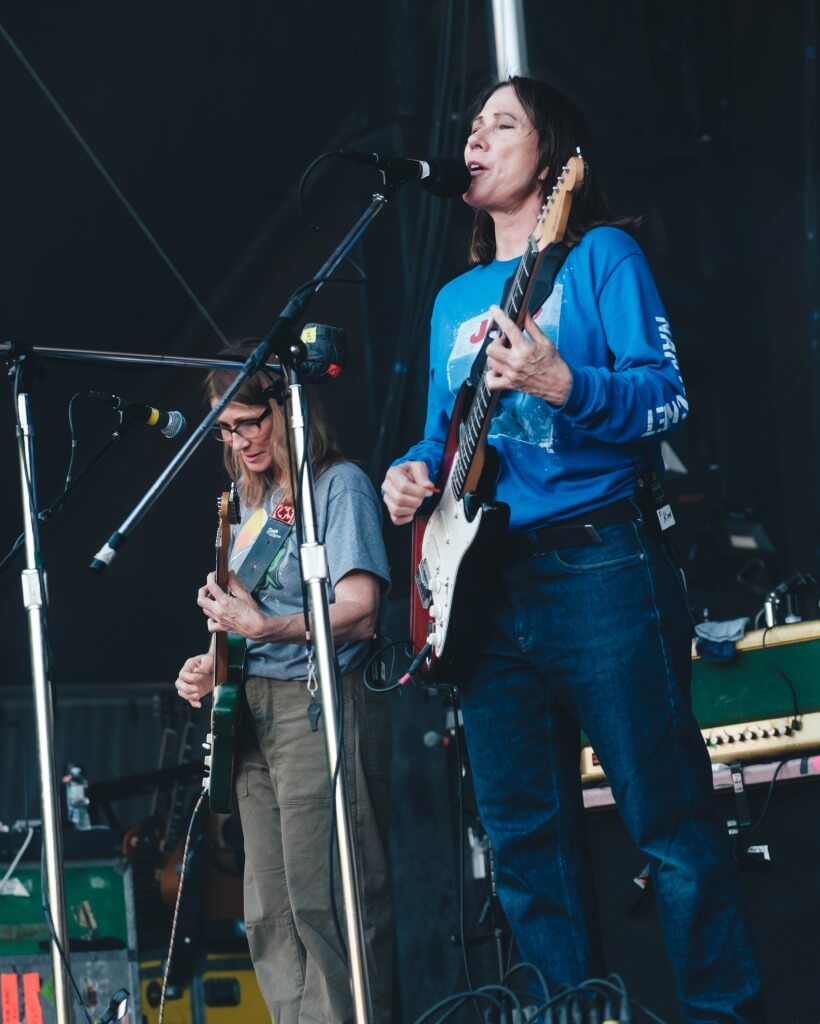
There is a mass exodus after the Mermaid Avenue set, but we head to Courtyard D for one last performance: L’Rain, Taja Cheek’s experimental project, in which she draws from jazz, noise, R&B, and shoegaze. I saw more people of color at this set than I did the whole festival. Cheek is electric, screaming into the mic one moment and laughing into a sampler the next. Before their last song, Cheek tells the crowd, “It’s a pleasure to be here. This is such a special festival. I haven’t experienced something like this in a long time.” She brings out Nels Cline for the finale. The whole band looked starstruck and giddy playing with him. 

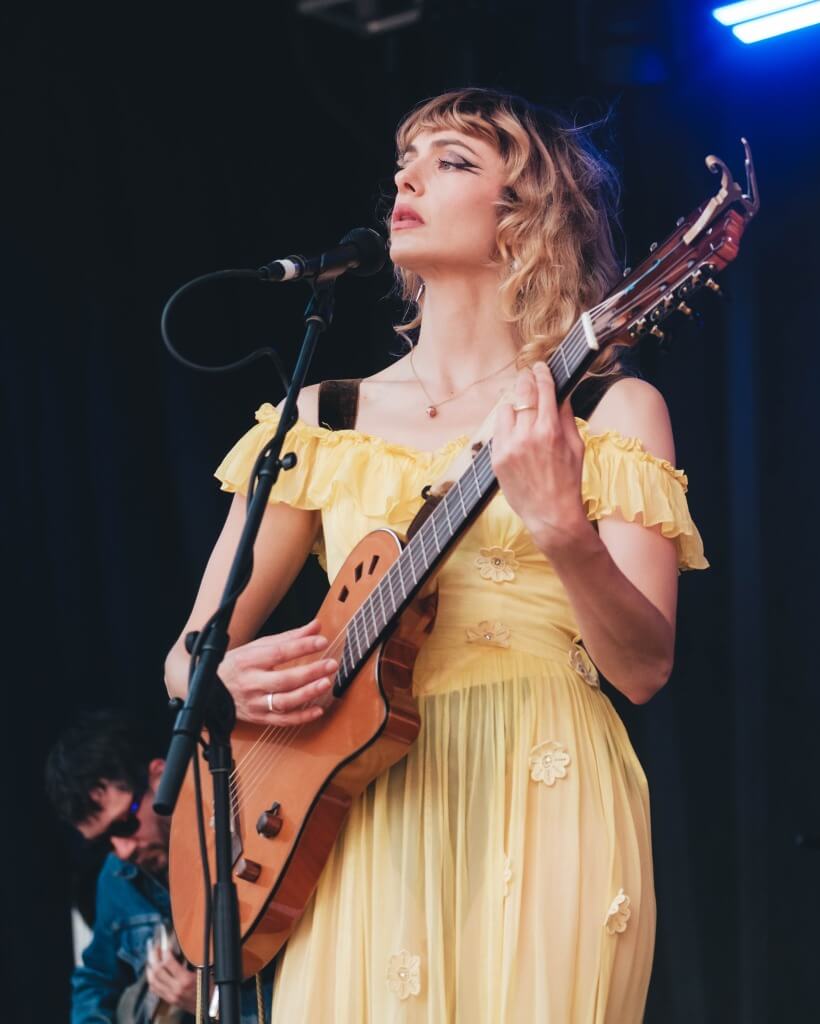
I wake up early Saturday, staring up at gold light and green trees from my rainfly-less tent. I’ve already missed Solid Sound’s AA meeting. At Renee’s Diner, everyone is so friendly, despite our obnoxious neon wristbands. We make a quick stop at Bellevue Falls, a river spot tucked behind a cemetery half an hour from the festival, and I sit on a rock in the creek, staring at the waterfall and those jumping into its pond, thinking about how long it’s been since I was last here. But back at Mass MoCA, it’s too hot to be contemplative. Music festival weather. It smells like sweat and SPF, but it sounds like velvet and fern because Prewn is playing. Izzy Haggerup and her band are masters in building suspense. They shred; their glittery dark reverb and Wednesday-style storytelling lyrics keep the crowd engaged despite the treacherous heat. 

Prewn gets extra love from the crowd for having ties to the area. The cheer is bigger than hometown pride. Solid Sound fully roots itself in Western Massachusetts: all the food at the festival, apart from the Grillo’s Pickles sponsor, is from small local businesses. The weekend crowd brings $2-$3 million into North Adams every festival year. Renee and other servers I meet seem totally invigorated by the weekend’s rush. The festival’s website contains dozens and dozens of recommendations around Mass MoCA, attuned to its community and familiar with local brands. 

At Courtyard C, Ryan Davis & The Roadhouse Band start their set with classic country before segueing into jam territory. My favorite song is “Flashes of Orange,” an epic that sounds almost art-pop in its synths. Maybe it’s anti-twee country? It’s a fresh find for me, so thank you, Solid Sound, for privileging musical discovery over trendy headliners. Elsewhere, Wilco and the Breeders grace the mainstage hours before their prime slots to take part in something historic: the headliners, along with up to five thousand festivalgoers, break the world record for Most Simultaneous Yo-Yos. For the rest of the weekend, a new sign covers the museum’s hallways: “no yo-yo-ing in the exhibits.”

In the midst of all this real wholesomeness, I keep thinking about the aviators and beard guy. The drivers rolling their eyes while I jaywalk. Mass MoCA makes millions and sits in one of the poorest counties in Massachusetts. A Solid Sound ticket is $350. The parking lot is full of bumper stickers for schools with tuition higher than many people’s income. I understand a level of resentment. The veil is scarily thin up close. 

I’m on the wrong side of the right hill for the Breeders, as my line of vision is blocked by lawn chairs and kids slinging yoyos. “Cannonball” starts, and everyone is up dancing: full families, solo watchers, even food vendors stepping along to the anthem. The dad across from me, sporting a Club D’Elf top, spins his daughter ‘round and ‘round. She laughs in her neon Wilco shirt. I shift my focus; Kim Deal’s roars soundtrack the painting in front of me, fake fog rolling over real mountains. 

The sun is setting and a sea of graphic tees float toward the stage. Wilco round two. How can a band play two back-to-back two-hour sets and not have them sound repetitive? Tonight, the band is loud: the riffs are jammy, the lights are putting on a full show, the arms are up and moving. It feels like a Dead & Co. gig. Tweedy brings out Natalie Merchant and the guy behind gasps, “Oh my god, I hope they do ‘You and I’.” His wish is granted when Tweedy and Merchant deliver a perfect duet. 

The festival grounds feel like an empty city during the latter part of Wilco’s set. The moon is shockingly bright and low, illuminating the quilt of the crowd, big-dogging the Big Dipper. The merch tent still has a line. The vendors are packing up. Parents are carrying their sleepy children. Hyper kids make new friends, comparing yoyos and playing hide-and-seek. Some couples dip out early, excited to “beat the crowd.” No one looks depleted or agitated; no families look like they’ve been arguing all day. Everyone looks content, peaceful. Grateful. 

Sunday morning, I say goodbye to Mount Greylock campsite. I wonder if it will be another decade before I return. We hit Mass MoCA one last time. I get to see more Turrell, be inspired by video installations, and discover a new favorite artist, Jeffrey Gibson. I am still involved with the festival even inside the museum. I could tap in as easily as I could tap out. On my way to Laurie Anderson’s show, I run into a pop-up performance. Walking across the courtyard to get to the museum lobby, I catch a glimpse of Hannah Cohen, who looks fabulous and sounds even better. I check the time, defeated. It’s time to go. 

On our drive back to the city, every house we pass is picture-perfect, every cloud a statue, the moon so close, bright, and pink. I scan out the window, collaging old memories with new perspectives, seeing Western Massachusetts in its entirety, beyond my teenage refuge. I extend the same curiosity Wilco asks of its audience beyond Mass MoCA’s walls, trying to know the place that hosts us, not just pass through. Solid Sound rewards that kind of attention. In an era when so much live music culture encourages us to optimize our schedules and document our attendance, this festival insists on something slower. It asks people to inhabit the weekend, not simply consume it. To be patient and open, qualities I hope to embody far beyond the Berkshires. 

 
Comments
 
Keep scrolling for more great stories.
B

Low Cut Connie push back against the regime on Livin in the USA

The South Philly band balances joy and defiance on a pointed new album that emphasizes resistance with a beat you can dance to.

Low Cut Connie push back against the regime on Livin in the USA

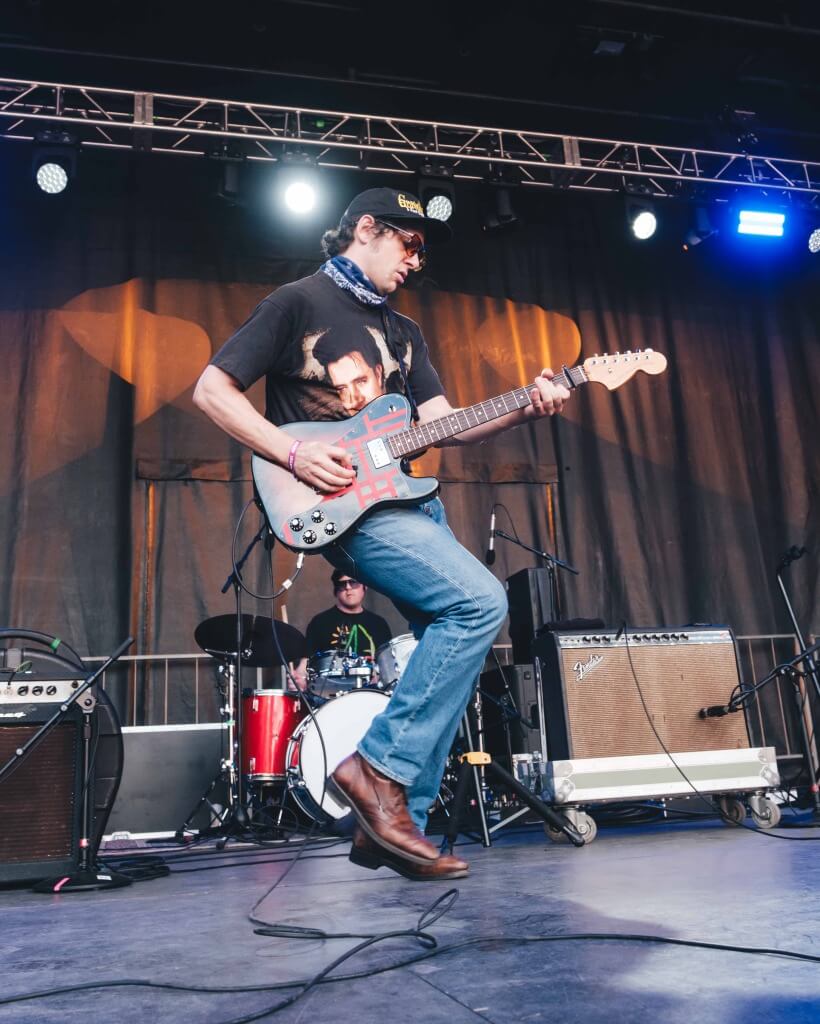
With Adam Weiner racing up and down the keys like a man who just lit the piano on fire, Low Cut Connie has built a reputation more for high-octane rock and roll that verges on mayhem than for political commentary over the past fifteen years. On the band’s latest, Weiner poses a simple enough question: Why not both?

Livin in the USA is very much a protest album. “I made it because I am disgusted to see our country descend into an authoritarian hell / a moral vacuum / and a place where art does not lead the cultural conversation,” Weiner wrote in a poetically punctuated artist statement accompanying the LP. In the next breath, he says that Livin in the USA is also very much a party album, “because I refuse to let these motherfuckers steal our art and steal our joy.” So, that’s the premise animating ten songs that go hard, with a vibe like a sweaty summer night in the seventies rager, where everybody is out on the block, thrumming with a combination of adrenaline, joy, and defiance.

Weiner sets the tone right away with the title track, an amped-up take on the strings-and-piano version he released last year after becoming one of the first artists to cancel a gig at the Kennedy Center in Washington D.C. What started as a lament for a country Weiner no longer recognizes becomes a condemnation here, thanks to caustic overdriven guitars, a stomping beat and ringing backing vocals from Amanda “Rocky” Bullwinkel and Abigail Dempsey. The track feels almost like a warm-up for the pointed songs that follow.

Sometimes the songs tip more toward social commentary, and sometimes it’s more about shaking your ass. “Get Down” is the latter, with a hot groove fueling a combustible mix of guitars and piano while Bullwinkel augments Weiner’s rock and roll-shouter lead vocals with gritty harmonies through a distorted microphone. Later, Bullwinkel and Dempsey shine together again with deep-soul backing vocals on “Let Me Speak to Bobby,” where loud, taut guitars from Dempsey and Will Donnelly frame a tightly wound piano vamp. Weiner sings at his most soulful, and while he doesn’t specify which Bobby his message is for, there’s a cloudy-eyed goblin with family money and a taste for raw milk and eugenics who fits the description in the lyrics. “He’s got no soul,” Weiner moans. “I wanna let him know.”

If Weiner is focused on “getting naked in the afternoon” with his sweetheart on “Can’t Be Wrong,” an old-school rocker with stinging saxophone breaks, and getting the kinkiest haircut of all time on the rollicking uptempo boogie “Oh Yeah,” he’s locked into the political struggle elsewhere. “Not My Problem” pairs lacerating lyrics about deteriorating conditions with barrelhouse piano, a galloping drum beat, and woah-oh backing vocals. To close the album, the surging “Palpitations” is at once an acknowledgment that things aren’t normal and an attempt to make the best of it without giving in.

“Just because the world is collapsing doesn’t mean we can’t go skinnydipping this weekend,” Weiner writes in the artist statement. That’s the crux of Livin in the USA, an album that takes the position that resistance is essential, and resistance with a beat you can dance to is that much sweeter. Based on the delirious hedonism of Low Cut Connie’s previous work, you get the sense that pushing back against authoritarianism in the defense of art, soul, and rock and roll is a fight that Weiner would rather not have to have—and also that he and Low Cut Connie have no intention of backing down from it. [Contender]

Eric R. Danton has been contributing to Paste since 2013. His work has also appeared in Rolling Stone, The Wall Street Journal, the Boston Globe and Pitchfork, among other publications. He writes Freak Scene, a newsletter about music in Western Massachusetts and Connecticut.

Watch Low Cut Connie’s Paste Session below.

 
Comments