Advertisement
Advertisement

Commentary

Snap Insight: Pritam Singh prevails in leadership vote but must demonstrate he is not bigger than WP

The Workers’ Party and its chief can now draw a clear line over the Raeesah Khan saga and focus on the future, says SMU law professor Eugene K B Tan.

Snap Insight: Pritam Singh prevails in leadership vote but must demonstrate he is not bigger than WP

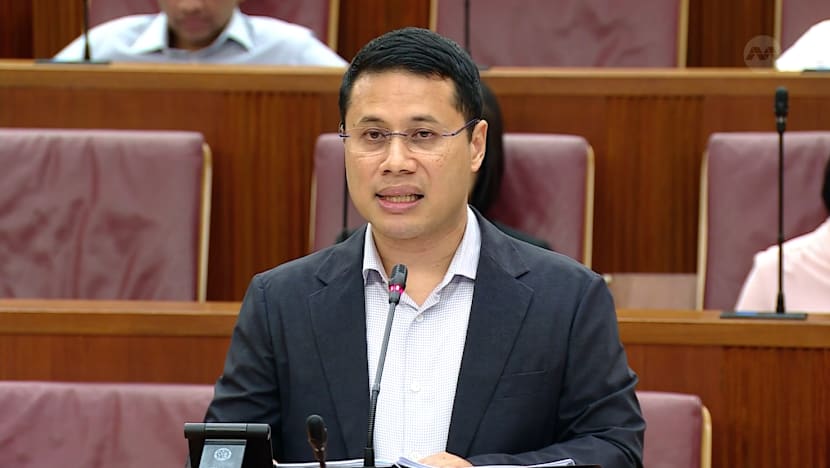
Mr Pritam Singh speaking to the media on Jun 28, 2026. (Photo: CNA/Mak Jia Kee)

Listen
5 min
New: You can now listen to articles.

This audio is generated by an AI tool.

28 Jun 2026 10:22PM (Updated: 28 Jun 2026 10:30PM)
Read a summary of this article on FAST.
FAST

SINGAPORE: It comes as no surprise that Workers’ Party (WP) secretary-general Pritam Singh easily prevailed at his party’s special cadres conference and the party elections on Sunday (Jun 28). 

Going into Sunday, Mr Singh was never really at risk of losing the position he has held since 2018, given that the central executive committee, its top decision-making body, and Mr Singh’s respected predecessor Mr Low Thia Khiang, were solidly behind him. 

The reality is that no one could match Mr Singh’s popularity within the party as well as his electoral pulling power that has seen the WP occupy the comfortable perch as the leading opposition party that is as competitive as the ruling People’s Action Party (PAP) when the two parties go head-to-head in elections. 

Mr Singh has now tightened his grip on the WP and is well placed to mould the WP further in his image and style. Dissenters there will also be, but they do not command the numbers that will enable them to challenge Mr Singh’s dominance.

CNA Games
Show More
Show Less
The Workers' Party's Low Thia Khiang arriving for a special cadres conference on Jun 28, 2026. (Photo: CNA/Mak Jia Kee)

A PARTY REVITALISED

For Mr Singh and the WP, Sunday’s two conferences now mean that a clear line has been drawn over the troubled saga arising from then WP Sengkang Member of Parliament Raeesah Khan’s lies to Parliament in 2021.

This resulted in Ms Khan and Mr Singh (as well as WP chair Sylvia Lim and vice-chair Faisal Manap) being hauled before Parliament’s Committee of Privileges (CoP) and subsequently Mr Singh’s court convictions in 2025 on two charges of lying to the CoP. 

Subsequently, Mr Singh was removed as Leader of the Opposition (LO) by Prime Minister Lawrence Wong in January, and the WP issued a formal letter of reprimand in April after its internal disciplinary process. 

This issue had been the proverbial albatross on WP’s and Mr Singh’s necks. 

With Sunday’s central executive committee (CEC) election, which saw Mr Singh not only re-elected but unopposed as secretary-general, we will see the party revitalised. This matter is now once and for all over within the party.

With the renewed mandate from the cadres, Mr Singh can now put the matter behind him and get the party and its supporters focused on the next general election, which must be held at the latest in December 2030.

This matter will not dog the party at the next general election; it would be foolish for the PAP to flog this dead horse. To its credit, the PAP did not make it an election issue at the 2025 General Election.

“CANNOT AFFORD TO MAKE A WRONG STEP”

Arguably, the WP came out looking better on Sunday: Dissenters could air their unhappiness or even grievances and hold the top leadership to account, and the party closed ranks and decided to retain the status quo.

Notwithstanding the differences among the cadres, they were mindful to ensure that they did not inflict further reputational damage to the party. 

It should not surprise anyone that Mr Singh adopted a conciliatory, even contrite, posture – rather than a combative one – to an internal audience. He had the numbers to prevail at both proceedings, and so there was no need for a war of attrition. 

In its press statement after the CEC election, Mr Singh reaffirmed that the WP continued “to work for Singapore” with its focus squarely on issues “that directly impact the daily lives of Singaporeans”.

The special cadres conference was the first overt challenge to Mr Singh’s leadership. It was a chastisement of sorts but Mr Singh stamped his authority by winning a “supermajority” when it mattered. 

Given the troubles over the last five years, however, Mr Singh cannot afford to make a wrong step going forward. He also has to demonstrate that he is not bigger than the party, something that his predecessor Mr Low had imbued in the party.

THE SUCCESSION ISSUE

Leadership renewal and succession will be a priority. Even if the party faithful had felt that change was necessary or desirable at the special conference, the question was who else could step up. There were no challengers to his position.

The party has been able to attract and field new candidates at every general election, but the focus must now be on who will succeed Mr Singh as party chief, even if he will only be a youthful 50 this year. Without another politically savvy, charismatic leader like Mr Singh, it could impede the party’s ambitions and growth plans. 

The WP had also turned down the invitation to nominate another MP to be the Leader of the Opposition, and the position will remain vacant for the next two years. 

The profile that the LO can give to the WP is a significant one and the party can use it to its strategic advantage. The LO is given the right of first response to debates on proposed Bills, policies and motions in the House. The LO is also provided with an office in Parliament, staff support and resources, as well as additional allowance to perform duties. 

It would be a wasted opportunity for the WP not to profile another of its leaders even as Mr Singh continues to have an outsized presence despite no longer being the LO. But for now, all eyes are on the leading opposition party’s vision for Singapore and its policy alternatives “at a time of increasing global uncertainty”. 

Eugene K B Tan is associate professor of law at the Yong Pung How School of Law, Singapore Management University. He is also a former Nominated Member of Parliament.

Source: CNA/ch

Sign up for our newsletters

Get our pick of top stories and thought-provoking articles in your inbox

Subscribe here
Inbox
FAST
Advertisement

Commentary

Commentary: Why 'You suggest, you do lah!' is the wrong response to an employee who speaks up

Workers are silent because they are wondering “What will happen to me if I say something?”, says Associate Professor Victor Seah of the Singapore University of Social Sciences.

Commentary: Why 'You suggest, you do lah!' is the wrong response to an employee who speaks up
A file photo of a man raising his hand to speak during a meeting. (Photo: iStock/skynesher)
Listen
6 min
New: You can now listen to articles.

This audio is generated by an AI tool.

29 Jun 2026 06:00AM
Read a summary of this article on FAST.
FAST

SINGAPORE: “You suggest, you do lah!” This snap reaction from a manager, told to me by an employee during a recent research interview, speaks volumes about the potential downside of speaking up at work.

This appears to be something that many Singapore workers resonate with, judging by recent online reactions to a leadership expert’s comment that Singaporeans do not speak up at work because they are “smart” enough to suss out if it’s safe to do so.

This in turn raises questions: Do Singaporeans really not speak up at work and is it better to stay silent?

DIFFERENT TYPES OF SPEAKING UP

Not all speaking up is the same. In research, scholars distinguish between different forms of speaking up at work, otherwise known as “employee voice behaviours”.

CNA Games
Show More
Show Less

For instance, there is “promotive voice” which is forward-looking by nature and involves suggestions of improvements. There is also the “prohibitive voice” that is more preventive, with employees raising concerns about problems. These differ not just in content, but in their motivations, perceived risks and consequences.

To answer whether it is risky to speak up, we also need evidence.

Many of us would have anecdotes about workers who were penalised for saying “something wrong” but anecdotes, compelling as they are, can only take us so far. To truly understand employee voice in Singapore, it is best to rely on data built on sound research methods and clear measurement.

Critically, this means being explicit about which type of voice we are measuring. Lumping all forms of speaking up together obscures important differences in why people speak up, and why they stay silent.

The importance of evidence becomes clear when we consider the longstanding idea that Singapore’s “Asian culture” discourages speaking up, emphasising harmony and respect for authority.

But culture alone is rarely a complete explanation. There is evidence that show differences not just between Asian and Western societies, but also within Asia itself, and even within organisations.

SPEAKING UP SELECTIVELY

When we look at available data, a nuanced picture emerges: Singapore workers do speak up, but selectively.

One area where employees have been more vocal is workplace safety and health. In 2025, about 1,700 reports of unsafe workplace practices were made through the Ministry of Manpower’s SnapSAFE anonymous reporting portal, a 13 per cent increase from 2023. Many of these reports came from workers and members of the public.

When the issue is clear, the consequences of not speaking up are severe, and reporting is protected or anonymous, Singapore workers are willing to speak up.

Elsewhere though, employee voice remains constrained. For example, a 2025 survey by the women’s advocacy wings of the People’s Action Party and the National Trades Union Congress found that stigma remains a primary concern for one in three workers when asking for flexible working arrangements. This is despite formal guidelines on flexible work being put in place since December 2024 – a sign that while policy may create permission, more needs to be done to nudge changes.

This also shows that workers are silent not because they lack views or are bound by cultural conditioning. More often, they are making situational risk calculations: What will happen to me if I say something? 

WHAT CAN BE DONE

The challenge then is not to ask employees to be braver, but to make speaking up less risky to begin with. When organisations clarify the kind of voice they value, measure it properly, and design the conditions that support it, speaking up stops being a gamble and starts becoming part of how work gets done.

Organisations and leaders who genuinely want employees to speak up should first be precise about the type they want to encourage.

A start-up might focus on promotive voice where employees are encouraged to pitch bold ideas, while a hospital might emphasise prohibitive voice where patient safety risks are flagged. Each requires different approaches and faces different barriers.

A worker empowered to suggest a creative solution may not hesitate, but the same person could be reluctant to report wrongdoing if they are unsure of support. Organisations should tailor their approach to each type of speaking up because motivations and deterrents vary.

Second, measure properly. Organisations seeking to understand employee voice should use well-tested and reliable measures. Psychological safety is a key antecedent across many forms of voice, and Harvard’s Amy Edmondson’s seven-item scale has been validated over decades of research.

There is a need to be cautious of eye-catching claims and new frameworks that promise simplicity. For example, one survey claimed that Singapore workers felt the least psychologically safe in Southeast Asia but defined psychological safety narrowly as employees’ willingness to share mental health struggles with their colleagues.

Good measurement also requires sound data practices: guaranteeing anonymity, surveying more than once a year, and ensuring input from a representative sample (not just the loudest voices).
 

Finally, leaders and organisations need to design the conditions that make speaking up possible. This requires a mindset shift. Just as workplaces invest in workstations, equipment and training, they must invest in the psychological and structural conditions that make speaking up possible.

This includes leaders modelling openness to criticism, rewarding candour rather than punishing it, providing safe channels such as confidential reporting mechanisms where needed, and responding to suggestions with support instead of “You suggest, you do lah!”.

Ultimately, staying silent can feel like self-preservation in the short term – workers avoid extra tasks and potential backlash, while companies avoid rocking the boat. But in the long run, habitual silence can leave problems festering and good ideas unheard, hurting both individual careers and company performances.

Victor Seah is Director of Behavioural Insights Centre of Excellence at the Singapore University of Social Sciences.

Source: CNA/sk

Sign up for our newsletters

Get our pick of top stories and thought-provoking articles in your inbox

Subscribe here
Inbox
FAST
Advertisement

Singapore

Pritam Singh says WP will respect cadres' 'supermajority' vote to retain him as secretary-general

Analysts say the vote shows WP is united, with Mr Singh commanding a stronger mandate within the party than many had anticipated.

Pritam Singh says WP will respect cadres' 'supermajority' vote to retain him as secretary-general

Workers' Party chief Pritam Singh speaking to the media on Jun 28, 2026. (Photo: CNA/Mak Jia Kee)

Listen
4 min
New: You can now listen to articles.

This audio is generated by an AI tool.

28 Jun 2026 07:10PM (Updated: 28 Jun 2026 11:33PM)
Read a summary of this article on FAST.
FAST

SINGAPORE: The Workers' Party (WP) will respect its cadres' "supermajority" vote to retain him as secretary-general, Mr Pritam Singh said on Sunday (Jun 28), after surviving a secret vote on his leadership.

He spoke to journalists after a special cadres conference, which was called following a requisition from 25 cadre members at the end of last year. They had asked Mr Singh to account for his conviction on charges of lying to a Committee of Privileges, and step down or face a secret vote.

No one challenged his position, he told reporters.

When asked how he would reassure members of the public or cadres who were unhappy with him retaining the role, Mr Singh said this was a decision made by cadres through a vote and the party would respect it.

CNA Games
Show More
Show Less

“They called for the meeting and I think I have to share that they followed what cadres are allowed to do under our constitution, and we respect that process,” he added.

The petitioners had asked for a vote, and the chair of the meeting – fellow Aljunied Member of Parliament Gerald Giam – agreed to it.

“I’m quite sure they respect the democratic process as we all do. And the decision was what the cadres decided it ought to be,” Mr Singh added.

WP also held its biennial elections on Sunday. Ms Sylvia Lim was re-elected as chair of the central executive committee (CEC), and cadres elected 12 other members to the party’s top decision-making body.

The special cadres conference had a specific purpose and dealt with the petition, while the CEC elections “went normally”, Mr Singh said.

“The party understands that its purpose is to behave in a rational and responsible way, and represent Singaporeans faithfully. And if we want to continue to do that, I think we have to close ranks as any reasonable and respectable party ought to do.”

The petition reflected how WP operates, he said, adding that it is important for cadres to speak their minds and share their views.

"ANTI-CLIMACTIC" RESULTS, WP UNITED

Analysts told CNA that the results were not surprising.

The outcome signalled that WP is united and any unhappy cadres were a minority, said Assistant Professor Elvin Ong from the National University of Singapore's political science department. 

Most Singaporeans were ready to move past the episode, he added, with greater concern over economic and technological developments and their impact on jobs.

The result also countered the narrative that WP was deeply divided, said independent political analyst Felix Tan, adding that Mr Singh commands a stronger mandate within the party than many had anticipated.

“Rather than reinforcing perceptions of internal divisions, the election appears to have strengthened the impression of a leadership that continues to enjoy broad support from the party rank and file,” said Dr Tan.

Senior international affairs analyst Mustafa Izzuddin of Solaris Strategies Singapore agreed the saga would not hamper Mr Singh's ability to lead the opposition or serve in parliament. 

While the issue may resurface occasionally, it would not sway voters given the next General Election remains some time away, he added.

“His position was never in danger to begin with, even if someone did decide to contest against him for the position of secretary-general of the party,” said Dr Mustafa, adding that Mr Singh has considerable support among WP cadres because the party increased its number of seats in parliament under his watch.

The vote was also a signal that WP wanted to draw a line under the matter, he said.

With no challengers coming forward, senior party members did not feel compelled to "shake up the status quo", said Dr Teo Kay Key, a senior research fellow at the Institute of Policy Studies. 

Singapore Management University associate professor of law Eugene Tan described the outcome as anti-climactic. Mr Singh had "more than survived" and probably has a tighter grip on his party as a result, he said.

Even if cadres had doubts about his leadership, the central question was who would replace him, said Assoc Prof Tan. While Mr Singh's conviction "cannot be wished away", little political mileage could be extracted from the episode inside or outside the party.

“The party faithful closed ranks, and with that, the self-inflicted debacle arising from Raeesah Khan’s lies to parliament in 2021 is now over and done with where the WP and Singh are concerned,” he said.

Source: CNA/hw(cy)

Sign up for our newsletters

Get our pick of top stories and thought-provoking articles in your inbox

Subscribe here
Inbox
Advertisement

Singapore

Victims of online harassment, doxxing can get help from new government body from Jun 29

Victims will need to provide information about the online harm they experienced. This may include screenshots, images and videos. 

Victims of online harassment, doxxing can get help from new government body from Jun 29

A man looks at a mobile phone. (File photo: iStock)

Listen
8 min
New: You can now listen to articles.

This audio is generated by an AI tool.

28 Jun 2026 06:11PM (Updated: 28 Jun 2026 07:01PM)
Read a summary of this article on FAST.
FAST

SINGAPORE: Victims of online harms in Singapore can seek help from a new government body, the Online Safety Commission (OSC), from Monday (Jun 29).

The commission will help victims of five types of online harm: online harassment (including sexual harassment), doxxing, online stalking, intimate image abuse and image-based child abuse.

Its scope will gradually expand to cover all 13 categories of online harms under the law, including online impersonation, inauthentic material abuse and statements that harm a person's reputation, said the OSC, Ministry of Digital Development and Information and Ministry of Law in a joint statement.

The OSC was set up under the Online Safety (Relief and Accountability) Act 2025, marking a significant step in Singapore's efforts to better protect people online.

CNA Games
Show More
Show Less

New provisions under the law will also take effect on Monday, strengthening protections for victims of online harms.

With the OSC's establishment, Singapore becomes one of the few countries with a government agency dedicated to helping victims of online harms.

Mr Francis Ng, Commissioner (Designate) of the Online Safety Commission, said the prevalence of the internet has driven a rise in online harms. 

"All of us know someone who has been personally affected by an online harm. The Online Safety Commission is going to attempt to change that.

"We will, at our core, have the interests of victims at heart. Our processes have been designed to assist victims, to empower them to find hope, to deal with these online harms." 

Mr Ng added that the commission is particularly concerned about image abuse, image-based child abuse and doxxing.

"We will act quickly to engage platforms at other media sites on which these harms appear, with a view to having these harms removed quickly and expeditiously." 

REPORTING PROCESS

Victims filing a report must be Singapore citizens, permanent residents or have a prescribed connection to Singapore. Reports can be submitted through the OSC website, which guides users through the process. Filing a report is free.

Victims will need to provide information about the online harm experienced. This may include a description of what happened, along with supporting material such as URLs, screenshots, images and videos. The perpetrator's account name should also be provided, if available.

Parents or guardians are encouraged to make reports on behalf of victims under 18 years old. Someone with the victim's written authorisation may also file a report.

For online harassment and stalking cases, victims must first report the content to the platform hosting it.  If the platform fails to respond promptly or provides an inadequate response within 24 hours, victims may then file a report with the OSC.

The OSC also operates a "no-wrong-door policy" – regardless of which government agency victims first approach, they will be guided to the appropriate help.

After receiving a report, the OSC will assess it. If there is reason to suspect that online harm has occurred, the commissioner may issue directions to stop or limit the harm.

“These directions may be issued to the person who posted the harmful content, the administrator of the online group or page where the harmful content appears or the platform hosting content,” OSC and the ministries said.

For example, the commissioner may direct that access to the harmful content be disabled or that the perpetrator’s account be restricted. Non-compliance with a direction is a criminal offence.

Six online service providers will have additional obligations under the new Act, given their significant reach or impact in Singapore. They are: Meta Platforms, for Facebook and Instagram; Google, for YouTube; X Corp, for X; TikTok; and SPH Media, for HardwareZone forums.

Beyond content removal, the OSC encouraged victims and their families to seek support from its community partners: Fei Yue Community Services, Samaritans of Singapore, SHE-SG Her Empowerment, Singapore Children's Society and TOUCH Community Services.

“These community partners can guide victims on how to make a report to the OSC and provide other forms of assistance such as counselling,” it said.

RECONSIDERATION AND APPEAL

Eligible individuals who disagree with the commissioner's decision may apply for reconsideration within 14 days, with no fees charged. The commissioner may affirm, revoke, vary or substitute the initial decision.

Those who remain dissatisfied after reconsideration may appeal to an independently appointed Online Safety Appeal Panel within 14 days. A S$200 (US$154) application fee applies.

A six-member appeal panel, comprising individuals from various fields such as law, clinical psychology and academia, has been appointed for a three-year term by the Minister for Digital Development and Information. 

The panel will be chaired by Professor Leslie Chew SC, dean of Singapore University of Social Sciences' law school. Dr Natalie Pang, associate professor of the National University of Singapore's (NUS) communications and new media department, will act as vice-chairperson. Other members are Singapore Management University's Professor Lee Pey Woan, NUS Associate Professor Carol Soon, Institute of Mental Health's Dr Lim Choon Guan and The Psychology Practice's Ms June Tang.

Victims who do not know who harmed them online may apply to the OSC for help identifying the person responsible if they are considering civil proceedings. Applications must be made within 12 months from when the online harm occurred or when the victim first became aware of it, whichever is later.

LEGAL SUPPORT UNDER THE NEW ACT

Under the new law, victims of online harms may also bring civil claims in court through new statutory torts, covering the same five online harms in the first phase.

The torts set out duties for three groups: communicators, who must not post harmful material or engage in harmful online conduct; administrators of online groups, pages or forums, who must not facilitate online harm and must take reasonable steps to address it when notified; and platforms, which must take reasonable steps to address harm when notified and do so within a reasonable time.

Victims can trigger an administrator or platform's duty to respond by submitting an Online Harm Notice in the prescribed form, accessible on the law ministry's online safety website.

Administrators and platforms are required to respond once a victim submits an online harm notice. Victims can access the form on the law ministry's online safety website.

Certain platforms with wider reach and greater resources must respond within specified timeframes. 

For the most serious cases – intimate image abuse or child abuse material depicting a victim's exposed genital or anal regions, or breasts if the victim is female – platforms must respond within six hours. They have 24 hours for other intimate image abuse or child abuse material, and 48 hours for all other harms.

“If a prescribed platform fails to address such harm within the required timeframe, victims may take legal action against the platform,” the agencies said.

Where losses are difficult to prove, the Online Safety (Relief and Accountability) Act provides minimum damages for the most serious image-based harms. For intimate image abuse and image-based child abuse, the court will award at least S$5,000 (US$3,850) for each image or recording if the claim succeeds.

Victims of online harassment, doxxing and stalking can continue to seek help under the Protection from Harassment Act, including protection orders. 

Minister for Digital Development and Information Josephine Teo said the new law and the commission reflect a broader ambition for Singapore's digital society.

"They recognise the fact that bad behaviours online not only cause harm to individuals, they can become normalised over time and harm society.

"Instead, we hope the Online Safety (Relief and Accountability) Act and OSC will help strengthen norms for positive and responsible online behaviour, so that all Singaporeans can participate safely and confidently in our digital society."

Source: CNA/cj(cy)

Sign up for our newsletters

Get our pick of top stories and thought-provoking articles in your inbox

Subscribe here
Inbox
Advertisement

Singapore

Pritam Singh holds on to party chief position after secret vote at WP special cadres conference

The conference was called after 25 cadres asked Mr Singh to account for his conviction for lying to a parliamentary committee.

Pritam Singh holds on to party chief position after secret vote at WP special cadres conference

Pritam Singh speaking to reporters after the special cadres conference and party elections on Jun 28, 2026. (Photo: CNA/Raydza Rahman)

Listen
4 min
New: You can now listen to articles.

This audio is generated by an AI tool.

28 Jun 2026 05:51PM (Updated: 28 Jun 2026 11:34PM)
Read a summary of this article on FAST.
FAST

SINGAPORE: Workers’ Party (WP) secretary-general Pritam Singh has survived a secret vote on his leadership at the opposition party’s special cadres conference on Sunday (Jun 28), with no challengers to his position.

The party also held its biennial elections, at which Mr Singh was returned as secretary-general and Ms Sylvia Lim was re-elected as chair of the central executive committee (CEC). 

Cadres also elected 12 other members, including former chief Low Thia Khiang, to the party’s top decision-making body. The only new face on the CEC is Mr Harpreet Singh, a lawyer who led WP's Punggol GRC team at last year's General Election.

The other CEC members are:
MP Abdul Muhaimin Abdul Malik
MP Louis Chua Kheng Wee
MP Dennis Tan Lip Fong 
MP He Ting Ru
MP Jamus Lim 
MP Kenneth Tiong 
MP Gerald Giam
NCMP Eileen Chong Pei Shan 
Mr Muhamad Faisal Abdul Manap 
Mr Tan Kong Soon

CNA Games
Show More
Show Less

Several former CEC members were not elected but may be co-opted later. They include Non-Constituency MP Andre Low, Aljunied GRC MP Fadli Fawzi, Mr Nathaniel Koh, Mr Ang Boon Yaw, Mr Kenneth Foo and Ms Lee Li Lian.

At the cadre conference, Mr Singh gave an account of the December 2025 court decision and took questions from cadres, said Mr Giam. The discussion was robust and civil, and Mr Singh answered all questions put to him, he added.

Cadres then voted – "well in excess of the supermajority" – for Mr Singh to remain secretary-general, Mr Giam said. 

Mr Singh reportedly got about 80 per cent of the vote.

“This reflects the party’s commitment to the democratic process and due process given to Mr Singh, and to everybody who wanted to requisition this special meeting,” said Mr Giam, who was among those re-elected to the CEC.

The outcome reflected the "considered judgment" of WP's cadres, the party said in a statement. The subsequent election of a new CEC had established a clear democratic mandate for the next term, it added.

“The party is united behind its leadership and remains fully focused on its work for all Singaporeans in parliament and on the ground. We continue the work of building a more balanced political system for Singapore.”

The special cadres conference was called after 25 cadre members requisitioned it at the end of last year. Mr Singh was asked to account for his conviction on charges of lying to a Committee of Privileges, and to step down from his position or face a secret vote.

Ahead of the conference, former secretary-general Low Thia Khiang, who led the party from 2001 to 2018, told reporters he would support Mr Singh.

Earlier this year, the CEC issued Mr Singh a letter of reprimand after an internal disciplinary process over his court conviction. 

The committee accepted findings from a disciplinary panel that Mr Singh had contravened the party constitution, but assessed that he had not intended to act against WP's principles, aims or interests. The three-member disciplinary panel comprised Sengkang GRC MPs Jamus Lim and He Ting Ru, and former Hougang MP Png Eng Huat.

Singapore's High Court in December 2025 upheld Mr Singh's conviction on two counts of lying under oath to a parliamentary committee – charges that arose from his handling of a false statement made in parliament by former WP MP Raeesah Khan. 

Parliament in January backed a motion expressing regret at his conduct, with 10 WP MPs and one Non-Constituency MP recording their dissent.

Prime Minister Lawrence Wong subsequently removed Mr Singh as Leader of the Opposition and invited WP to nominate another MP to the role. The party declined.

Mr Singh first became WP's secretary-general in 2018 and was re-elected unopposed in 2020, 2022 and 2024.

Source: CNA/an(cy)

Sign up for our newsletters

Get our pick of top stories and thought-provoking articles in your inbox

Subscribe here
Inbox
Advertisement

Singapore

Employer of hundreds of unpaid migrant workers back in Singapore: Manpower Ministry

Ramu Palani Velu, a director of KPA Engineering and SK Industries, has had his passport impounded.

Employer of hundreds of unpaid migrant workers back in Singapore: Manpower Ministry

Minister of State for Manpower Dinesh Vasu Dash speaking to the media at Kranji Recreation Centre on Jun 28, 2026. (Photo: CNA/Ooi Boon Keong)

Listen
5 min
New: You can now listen to articles.

This audio is generated by an AI tool.

28 Jun 2026 12:55PM (Updated: 28 Jun 2026 06:04PM)
Read a summary of this article on FAST.
FAST

SINGAPORE: The employer of more than 400 migrant workers who have not been paid for months has returned to Singapore, Minister of State for Manpower Dinesh Vasu Dash said on Sunday (Jun 28).

Mr Ramu Palani Velu, a Singapore permanent resident, is currently assisting with investigations and his passport has been impounded.

Mr Velu is a director of KPA Engineering and SK Industries, and is listed as a director of five other Singapore companies, including VVR Plant Engineering – whose workers have also gone unpaid for months.

The firms provide air-con repair and installation, plumbing and construction services.

CNA Games
Show More
Show Less

Speaking to reporters during a visit to Kranji Recreation Centre, where he met workers from the three firms, Mr Dinesh said the Ministry of Manpower takes a serious view of breaches to the Employment Act and Employment of Foreign Manpower Act, and that action would be taken if necessary.

"These are very serious offences, and I hope our employers will be able to support our migrant workers and workers in general," he said.

He added that migrant workers owed salaries should reach out to the Tripartite Alliance for Dispute Management for help recovering their wages.

Hundreds of workers from KPA Engineering and SK Industries had sought help earlier this week over unpaid wages. More than 100 had also turned up at MOM's service centre at Bendemeer.

The National Trades Union Congress and the Migrant Workers' Centre (MWC) said they will draw from their funds to give each worker S$200 in cash and vouchers for daily expenses, provided the workers are MWC members or register to become one.

Labour chief Ng Chee Meng said on Friday that over 80 companies had offered close to 400 job vacancies, with placements set to begin next week. He added that workers will be relocated to a single lodging facility to better coordinate support.

About 20 of the affected workers have already landed jobs in equivalent sectors, Mr Dinesh said. 

He expects the vast majority – if not all – of the remaining workers to be placed within two to three weeks, and thanked MWC and the Singapore Contractors Association for coming forward with job opportunities.

About 230 workers currently at Tuas View Dormitory will be moved to an onboarding centre in Sengkang, where lodging and food will be provided.

Temples, the Hindu Endowments Board and the Hindu Advisory Board have also stepped forward to provide workers with goodie bags.

"It's important for them to move back to some degree of normalcy, and for them to be supported during this difficult time," Mr Dinesh said.

Around 280 workers from the three affected companies joined the recreational activities at the centre on Sunday, which included watching a World Cup match. Recreation centres are spaces for migrant workers to shop, play sports and attend events.

At noon, Mr Dinesh distributed chicken briyani to workers at the centre. He also spoke to some of the affected workers during lunch.

Three workers told reporters that they have been going for job interviews. 

Among them is Mr Aruraj Edison Raj, who came to Singapore in 2019 and worked for KPA Engineering for one-and-a-half years. He has attended two interviews and has discussed his salary terms with the potential employers. He is now waiting to receive a transfer letter before joining a new company.

While he is owed three months' salary, the father of three said the latest developments and support have brought him some solace. But he was still worried about his family.

"Even though it was a problem to not have a salary for three months, here I have food. But I don't have a solution for my family who's depending on me," the 35-year-old said in Tamil.

"Every day, there were problems. It's a time when I struggled on how I was going to face them," he said. Mr Aruraj added that he was told to be patient for two weeks, during which food and salary will be prepared for him.

Bangladeshi national Kawsar, who was with SK Industries, has likewise gone for two job interviews with companies he knew about, having worked in Singapore for the past 25 years. 

Recalling his ordeal over getting his salary, Mr Kawsar said his boss would always promise the workers that their wages would come the following week. But the money never came.

Then last weekend, the employer stopped sending the daily job schedule. 

"Everybody understood something happened. On Monday, workers went to the MOM (services centre)," he said.

On how he was feeling now, he said: "I have food, I have housing (here). But how about my family? I cannot help my family right now ... for three months already.

"My children are very small ... My son asked me, 'When will you get salary?' I cannot answer. I just keep quiet." 

Source: CNA/ng(cy)

Sign up for our newsletters

Get our pick of top stories and thought-provoking articles in your inbox

Subscribe here
Inbox
Advertisement

Singapore

Low Thia Khiang says he will support Pritam Singh ahead of special cadres conference

The Workers' Party is holding a special cadres conference over the future of secretary-general Pritam Singh, months after he was convicted of lying to a parliamentary committee of privileges.

Low Thia Khiang says he will support Pritam Singh ahead of special cadres conference

The Workers' Party's Low Thia Khiang arriving for a special cadres conference on Jun 28, 2026. (Photo: CNA/Mak Jia Kee)

Listen
3 min
New: You can now listen to articles.

This audio is generated by an AI tool.

28 Jun 2026 12:35PM (Updated: 28 Jun 2026 01:03PM)
Read a summary of this article on FAST.
FAST

SINGAPORE: Former Workers' Party chief Low Thia Khiang has indicated he will support current secretary-general Pritam Singh at a special cadres conference on Sunday (Jun 28).

Mr Low arrived at the venue shortly before the meeting began at noon. When asked in Mandarin whether he still supported Mr Singh, he said yes. Asked if he would contest the party's central executive committee elections, he said he did not know.

Mr Low served as secretary-general between 2001 and 2018 and continues to sit on the CEC.

Mr Singh took over as secretary-general in 2018 and was re-elected unopposed at the biennial party elections in 2020, 2022 and 2024.

CNA Games
Show More
Show Less
Workers' Party chief Pritam Singh arrives for a special cadres conference on Jun 28, 2026. (Photo: CNA/Mak Jia Kee)

The special conference was convened following a requisition from 25 cadre members at the end of last year – roughly a quarter of WP's reported cadre base.

The conference has a three-part agenda: for Mr Singh to account to cadres for his conviction on charges of lying to a Committee of Privileges; for cadres to call on him to step down as secretary-general for breaching Article 30 of the party constitution, which requires members to be "honest and frank in all his dealings with the party and the people of Singapore"; and for a secret vote to be held if he did not.

Earlier on Sunday, WP Members of Parliment including Gerald Giam, Dennis Tan and Sylvia Lim were seen arriving for the conference. Some greeted the media but declined to answer questions.

Ms Lim said “we will talk later”, when asked for comments ahead of the meeting. WP candidate for Punggol GRC in the 2025 General Election Harpreet Singh told media to “have a great day”.

In a separate meeting later on Sunday, cadres will also elect WP's secretary-general, chairperson and 12 members to the CEC, the party's top decision-making body.

Earlier this year, WP's central executive committee issued Mr Singh a letter of reprimand after concluding an internal disciplinary process over his court conviction for lying to a parliamentary committee.

The CEC accepted findings that Mr Singh had contravened the party constitution, but assessed that he had not intended to act against WP's principles, aims or interests. The three-member disciplinary panel comprised Sengkang GRC MPs Jamus Lim and He Ting Ru, and former Hougang MP Png Eng Huat.

Singapore's High Court in December 2025 upheld Mr Singh's conviction on two counts of lying under oath to a parliamentary committee – charges that arose from his handling of a false statement made in parliament by former WP MP Raeesah Khan.

Parliament in January backed a motion expressing regret at his conduct, with 10 WP MPs and one Non-Constituency MP recording their dissent.

Prime Minister Lawrence Wong subsequently removed Mr Singh as Leader of the Opposition and invited WP to nominate another MP to the role. The party said it would not do so.

Source: CNA/gs

Sign up for our newsletters

Get our pick of top stories and thought-provoking articles in your inbox

Subscribe here
Advertisement

Singapore

Singapore police trialling mounted cameras on K-9 unit dogs

When the dogs spot a hostile person, officers can use the live camera feed to immediately confirm if they are armed. 

Singapore police trialling mounted cameras on K-9 unit dogs

A police officer and Nero, a dog from the K-9 unit, after completing a training operation on Jun 24, 2026. (Photo: CNA/Syamil Sapari)

Listen
3 min
New: You can now listen to articles.

This audio is generated by an AI tool.

28 Jun 2026 12:01PM
Read a summary of this article on FAST.
FAST

SINGAPORE: The four-legged, furry members of the Singapore Police Force may soon become the first roving cameras on the ground during an emergency.

As part of an ongoing trial, the dogs of the police K-9 unit have been training with camera systems mounted on their backs to provide officers with greater situational awareness during public security incidents.

The camera system is mounted on the dog via an adjustable harness, which is designed to not restrict the dog's natural movement. (Photo: CNA/Syamil Sapari)

On Wednesday (Jun 24), journalists waited as Nero, a three-year-old Belgian Malinois, searched for a civilian who had hidden himself in a room. 

The scene unfolded in real time on a handheld monitor outside the room, and officers from the Special Operations Command used the live video and audio footage to assess the layout of the room, detect potential threats and see who Nero was barking at when he found the hidden civilian. 

Through the system, which was strapped to Nero’s back with an adjustable harness, they could tell the hostage to stay where they were and wait for the police.

CNA Games
Show More
Show Less
Nero finding a civilian hostage hiding in the room during the training operation on Jun 24, 2026. (Photo: CNA/Syamil Sapari)

After they secured the civilian, the officers let Nero investigate the next corner, where he found a hostile person. 

When the man tried to attack Nero and escape, he bit the man’s arm and refused to let go. 

Watching the confrontation from the view from Nero’s back, the officers swooped in to detain the suspect.

Police Tactical Unit officers moved in to arrest a person in a training operation after a police dog confronted him. (Photo: CNA/Syamil Sapari)

“Our police K-9 dogs are deployed to locate hiding subjects in buildings and open areas," said Superintendent Jerlyn Tan, deputy commanding officer of the K-9 unit.

"With a camera mounted on the dog, our officers will see a live view of the premises and any potential threats before moving in. 

“This provides our officers with greater situational awareness to respond more effectively during public security incidents.”

For example, when the dogs spot a hostile person, officers from the Police Tactical Unit can use the camera feed to immediately confirm if they are armed, which significantly improves tactical decision-making in high-stakes situations, said the police in a media factsheet. 

The handler can also monitor the dog's behavioural cues, which can indicate where the hostages may be during search operations.

The camera system attached to the dog via an adjustable harness sends live video and audio to a handheld monitor, which allows officers to assess room layouts and identify potential threats before moving in. (Photo: CNA/Syamil Sapari)

The camera system also includes thermal imaging capability, which means officers can see human heat signatures through the handheld monitor. 

This may be useful in search operations where people are hidden in confined spaces, behind structures or other physical barriers, said SPF in the factsheet. 

Infrared light-emitting diodes, which can capture clear footage in dark environments without emitting visible light, are built into the system. This ensures the dog’s position is not compromised, said the police. 

The microphone also allows two-way communication between the officers and a person, allowing the police to relay specific instructions or warnings.

Source: CNA/hw(mi)

Sign up for our newsletters

Get our pick of top stories and thought-provoking articles in your inbox

Subscribe here
Advertisement

Travel

The Singapore homeowner's latest travel obsession? Furniture shopping in Foshan – here's what to know

China's furniture capital has become a hotspot for design-savvy homeowners seeking customisable, factory-direct pieces at attractive prices.

The Singapore homeowner's latest travel obsession? Furniture shopping in Foshan – here's what to know

There's a diverse range of contemporary furniture styles, from understated elegance to bold statement pieces, at showrooms in Foshan. (Photo: The Kurater)

Listen
9 min
New: You can now listen to articles.

This audio is generated by an AI tool.

28 Jun 2026 07:14AM
Read a summary of this article on FAST.
FAST

For a growing number of Singaporeans, furnishing a new home has become reason enough to book a holiday.

Not the sort involving beach clubs or Michelin-starred restaurants. Instead, these design-savvy travellers are flying to China armed with camera rolls full of sofa and cabinetry photos, meticulously curated Pinterest boards and floor plans marked with dimensions down to the centimetre, all in pursuit of custom-made furnishings for their homes.

Blame it on our collective obsession with our living spaces. In a city where most of us live in compact apartments, every square metre matters. We want our homes to work harder than ever, serving as offices, gyms, entertainment hubs and sanctuaries from the outside world. Naturally, we want them to look good, too.

And for anyone who has spent even a little time scrolling renovation content on Instagram, TikTok or Xiaohongshu, one destination is likely to have appeared on their feed with increasing frequency: Foshan.

CNA Games
Show More
Show Less

Located in Guangdong province, about an hour from Guangzhou, the industrial city is renowned as China's furniture capital. It is home to sprawling furniture malls, factories and showrooms that were once the domain of interior designers and industry buyers but are now increasingly attracting everyday consumers.

Kelvin Chua, founder of The Kurater, a Singapore-based furniture sourcing specialising in Foshan. (Photo: The Kurater)

According to Singapore-based sourcing specialist Kelvin Chua, founder of The Kurater, Foshan’s appeal lies in the scale and structure of its manufacturing ecosystem.

“Foshan is the world’s largest furniture manufacturing hub, but what truly makes it unique is the depth of its ecosystem. Entire districts are dedicated to specific furniture categories like sofas, dining sets, lighting, cabinetry, stone, hardware and more, which allows homeowners to access an incredible range of styles, materials and price points in one place,” he said.

Part of the appeal comes down to value. While prices vary depending on materials and specifications, buyers can often find pieces comparable to those sold in Singapore at about 20 to 30 per cent less compared to similar products in retail as there are fewer middlemen involved. The Foshan furnishings also strike a good balance between mass-market online furniture and pricey bespoke pieces commissioned locally.

An example of the premium furniture collections available through The Kurater's direct-from-manufacturer sourcing service. (Photo: The Kurater)

Access is another draw. Unlike conventional retail environments where customers select from finished collections, Foshan allows customers to gain access to factory-level production. Dimensions, materials, finishes and configurations can all be adjusted in real time, allowing homeowners to shape furniture around their spaces rather than the other way around.

Chua observed: “A homeowner furnishing an entire resale or BTO flat in Singapore can often achieve a much more premium look through factory-direct sourcing. There is also a growing desire for transparency. Buyers want to understand where their furniture comes from, how it is made, and whether the pricing reflects real value. Foshan offers direct visibility into that process.”

Chua launched his business after noticing that many homeowners were already interested in sourcing directly from China but found the process intimidating and fragmented, often complicated by language barriers and inconsistent suppliers. With seven years of experience working with Foshan-based factories through his construction business, he saw an opportunity to bridge that gap.

A showcase of integrated living and dining furnishings. (Photo: The Kurater)

Clients can either work remotely with his on-the-ground team in Foshan to select furnishings or fly over for a sourcing trip. The latter option of “furniture tourism” is an increasingly popular one, typically spanning three to five days. Guided by a dedicated designer, homeowners are taken through a curated selection of factories and showrooms tailored to their brief, whether that leans towards modern minimalist, wabi-sabi, contemporary luxury or family-friendly functionality.

Behind the scenes, the team handles translation, negotiations, logistics and quality control before overseeing shipping and installation back in Singapore. An unexpected highlight is that most itineraries also include meals in nearby Shunde, a UNESCO City of Gastronomy widely regarded as the birthplace of Cantonese cuisine. Now that’s quite the delectable sidequest.

SO YOU WANT TO DIY FOSHAN? START HERE

Of course, for those who prefer to take a more hands-on approach, it is also possible to navigate Foshan independently, with the right preparation and strategy. Here’s a beginner's guide to getting started.

Firstly, think of Foshan as an entire city dedicated to home interiors, with multiple malls and showrooms to trawl. Most shoppers will spend their time in two key districts: Lecong, which is filled with ginormous furniture malls and showrooms, and Longjiang, known for its furniture manufacturing base and factory-direct suppliers for higher-end custom and bespoke orders.

For first-timers, Lecong is usually the easiest place to start as there are furniture markets stretching for kilometres and a mind-boggling range of options sufficient to overwhelm even the most organised shopper.

1. START WITH THE "BIG FOUR"

There are four major furniture hubs in Lecong: Louvre Furniture Mall, Sunlink Furniture City North, Sunlink Furniture City South and Red Star Macalline.

Louvre is where many homeowners go for inspiration and some call it the “crown jewel” of Foshan. Spread across multiple floors, it showcases everything from sleek Italian-inspired sofas to statement marble dining tables and luxury bedroom sets, so this is a good place to check out if you are after a European designer-inspired aesthetic.

Meanwhile, Sunlink North and South offer contemporary and solid-wood furniture across a range of budgets. Red Star Macalline houses a large number of established mid- to premium-tier brands and is useful for buyers looking to compare different styles and quality levels under one roof.

Chances are you will find most of what you need within these hubs. For more specialised requests or custom manufacturing, however, it may be worth venturing into Longjiang, where many of the region's factories are based.

Some showrooms even offer distinctive designer decor as a centrepiece for the home or office. (Photo: The Kurater)

2. ARRIVE WITH A PLAN, NOT JUST A PINTEREST BOARD

The Pinterest board is essential to narrow down your interior decor preferences but the single biggest mistake first-timers often make is turning up without meticulous measurements.

Bring floor plans, room dimensions and reference photos. Many Foshan vendors can customise sizes, materials and finishes, but that flexibility is only helpful if you know exactly what you are working with back in Singapore. Be as precise as possible and measure even the smallest details like the height of the floor skirting. If you already have renders or material boards from your interior designer back home, bring them along as well so you can better achieve your desired effect.

3. SHOP BY CATEGORY

Trying to furnish an entire home in one go is a recipe for decision fatigue.

Instead, dedicate blocks of time to specific categories. Spend the morning looking at sofas, the afternoon on dining tables, and another day on wardrobes and cabinetry. You might end up having to double back to places you’ve visited before but it will help you make a better assessment of what works best for your home as you compare the encyclopaedic range of options. Many seasoned shoppers set aside at least two to four full days for the process.

Chua’s advice is to be wary of the cheapest option as it may come with compromises in the final product. “Factors like quality, workmanship and end-to-end service like installation and after-sales support should be considered in totality,” he said.

Singapore homeowners are increasingly seeking luxury furniture collections sourced from established manufacturers in Foshan, without the traditional retail markups. (Photo: The Kurater)

4. REMEMBER: YOU'RE NOT DONE WHEN YOU'VE PAID

Buying the furniture is only half the journey. The next step is getting it home.

Fortunately, most Foshan vendors are accustomed to international buyers and can connect customers with freight forwarders or consolidators who coordinate shipping. These companies can combine purchases from multiple stores, conduct basic inspections, manage customs clearance and arrange delivery in Singapore. Shipping typically takes between three and five weeks, depending on production schedules and freight arrangements.

5. WHEN IN DOUBT, HIRE HELP

If all this sounds slightly exhausting, that's because it is.

An increasing number of homeowners are engaging shopping agents or sourcing consultants who help shortlist suppliers, negotiate prices, coordinate logistics and conduct quality checks.

While it adds to the overall cost, many see it as worthwhile insurance against navigating one of the world's largest furniture markets armed with nothing more than a language translation app and blind optimism.

Do spend some time doing due diligence before engaging an agent. There are many local Foshan-based agents, so check out their portfolios on social media platforms like Xiaohongshu or TikTok where they document factory visits and completed projects. Look for agents who provide a transparent pricing structure, clearly outlined processes and post-purchase support.

Let’s be honest, this is probably not going to be the most relaxing holiday you will ever take, but it could well be the most productive. For those who have always dreamed of designing the living quarters of their dreams, there are few flights back that are quite as satisfying as knowing that your future home is already a work in progress.

Source: CNA/mm

Sign up for our newsletters

Get our pick of top stories and thought-provoking articles in your inbox

Subscribe here
Advertisement

Commentary

Commentary: Dr ChatGPT is getting remarkably good at diagnosing health problems

But knowing what to do next is a conversation best had with your doctor, says this professor.

Commentary: Dr ChatGPT is getting remarkably good at diagnosing health problems
Making a correct diagnosis is only half a doctor’s job. (Photo: iStock/BongkarnThanyakij)
28 Jun 2026 06:00AM
Read a summary of this article on FAST.
FAST

CHARLOTTESVILLE, Virginia: A father is worried about his toddler, who has been running a fever for two days and pulling at one ear. A 65-year-old woman has been getting winded on her morning walks and feeling more fatigued than usual. Both reach for their phones and type their symptoms into an AI chatbot.

“Your child likely has an ear infection,” the father learns. “Your symptoms could indicate a cardiac condition,” the woman reads.

Those are helpful answers - and there’s a good chance they’re correct. Artificial intelligence is approaching, and in some cases exceeding, doctors’ ability to make accurate diagnoses.

An April 2026 study found OpenAI’s o1 model had a 78 per cent accuracy rate on complex diagnostic cases published in the New England Journal of Medicine and also outperformed experienced doctors when diagnosing actual emergency room patients.

CNA Games
Show More
Show Less

Similarly, ChatGPT, working on its own, outperformed physicians in diagnosing complex cases, a 2024 study found - even when the physicians were able to use ChatGPT themselves.

Making a correct diagnosis, though, is only half a doctor’s job. The other half is knowing what to do about it - in other words, deciding how to manage a patient’s health condition.

I am a doctor and medical educator studying how doctors make these decisions, a process known as management reasoning, and how doctors in training develop this ability. For clear-cut health concerns, an AI diagnosis may be enough for someone to get the care they need - a little numbing cream for a baby’s gums, say, or an appointment with a cardiologist.

But uncertainty is common in clinical practice. Often, knowing what ails a patient is necessary but not sufficient for determining how to care for them. And how to manage a patient, even after the diagnosis is settled, is a complex question.

DIAGNOSIS CATEGORISES, BUT MANAGEMENT PRIORITISES

Experienced doctors do not assess each patient from scratch. Over years of practice, they build mental shortcuts called illness scripts.

Illness scripts are more than symptom checklists. They capture what a disease typically looks like, who tends to get it and how it most often progresses. When a doctor sees a new patient, they match what they observe against these mental scripts - a process of categorisation and pattern recognition.

When a patient appears with a familiar pattern of signs and symptoms, a doctor calls up the matching mental script almost without thinking. This frees them to notice elements that don’t quite align: a symptom that doesn’t fit, or a detail in the patient’s history - a recent trip abroad, an unusual exposure at work - that points toward a different diagnosis.

It’s not surprising that AI is good at this pattern-matching process. Large language models like ChatGPT work in a similar way. They predict what word should come next in a sentence based on patterns learned from enormous amounts of text, including the medical literature.

In that literature, the word “pneumonia” reliably follows certain symptom patterns: fever, say, combined with a cloudy patch on a chest X-ray. Pattern matching, at this level, is essentially the same thing a doctor does when fitting a patient’s symptoms to an illness script.

But deciding what to do next - what tests to run, what treatments to try, what to monitor and what to follow up on - works differently. Instead of one right answer, a doctor faces multiple reasonable options. The art of medical management is prioritising which among these options is best for the patient in front of you.

THE HUMAN ADVANTAGE

So how does a doctor go from diagnosing a patient to figuring out how best to care for them? The answer is almost always, “It depends.”

Consider two men, Marcus and Tomas, both 68, both just diagnosed with early-stage prostate cancer. Their biopsies show the same thing: a slow-growing tumour confined to the prostate.

Both are offered the same two management options. Treat now, with surgery or radiation, accepting the risks of urinary incontinence and changes to sexual function. Or monitor closely with regular tests and biopsies, treating only if it grows.

A study that followed more than 82,000 men with early-stage prostate cancer for 15 years found that fewer than 3 in 100 died of their prostate cancer regardless of which path they chose, though men who chose monitoring were about twice as likely to see their cancer spread.

AI can present both options alongside those statistics. What a doctor brings is knowledge of the person sitting across from them.

Marcus has no other significant health conditions. His doctor knows this and knows Marcus well enough to know that uncertainty sits badly with him. For a patient without other pressing health concerns, a slow-growing tumour has time to progress and become something more serious.

Both management paths are genuinely reasonable, but Marcus cannot live with waiting. Knowing cancer is in his body, watched but untreated, is not something he can set aside. He chooses treatment.

Tomas has advanced heart failure, something his doctor has been managing alongside him for years. She knows that his heart condition poses a more immediate threat to his health than this slow-growing tumour does. She knows, too, that he watched a friend go through radiation and come out diminished.

Treating aggressively would mean bearing real costs for a benefit that may never arrive. She recommends active surveillance. For Tomas, it is the right answer and a relief.

Different management decisions are the norm in medicine. The right path for any patient depends on who that patient is and what they value, and on a doctor’s judgment about where the evidence is reliable and where genuine uncertainty remains.

JUDGING RISK AND UNCERTAINTY

To decide how to manage a patient’s condition, a doctor first considers evidence from the medical literature and then applies the available management options to the patient’s particular circumstances.

This requires honest communication, shared decision-making, jointly navigating risk and acknowledging uncertainty.

Some risk can be measured. For chest pain, doctors use scoring tools that estimate a patient’s short-term likelihood of a heart attack based on their symptoms and test results. AI can likely work through those numbers faster than most doctors.

But risk and uncertainty at the bedside or in the clinic are difficult to measure. Scoring systems and practice guidelines are designed for the average patient - an idealised person, who does not exist.

And both doctors’ and patients’ sense of risk and uncertainty are shaped by their experience. For many patients, this includes a long and justified history of mistrust in the healthcare system.

AI does not know what you have been through or what risk trade-offs you are willing to accept. It cannot acknowledge uncertainty the way a good doctor can, returning to it with you as your circumstances change.

This is where diagnosis and management part ways. The father of the feverish toddler probably got a useful answer: AI has seen enough feverish toddlers in the medical literature to make a reasonable call.

But knowing what to do next, including when to stop watching and start worrying, is a conversation best had with your doctor.

Andrew Parsons is an Associate Professor of Medicine at the University of Virginia. This article first appeared in The Conversation.

Source: Others/zw(el)

Sign up for our newsletters

Get our pick of top stories and thought-provoking articles in your inbox

Subscribe here
Advertisement

Singapore

Thousands show up at Hong Lim Park for 18th Pink Dot rally

This is the fourth year of Pink Dot since the repeal of Section 377A, a decades-old law criminalising gay sex.

Thousands show up at Hong Lim Park for 18th Pink Dot rally

Attendees at the Pink Dot rally at Hong Lim Park on Jun 27, 2026. (Photo: CNA/Mak Jia Kee)

Listen
7 min
New: You can now listen to articles.

This audio is generated by an AI tool.

27 Jun 2026 09:14PM (Updated: 27 Jun 2026 09:25PM)
Read a summary of this article on FAST.
FAST

SINGAPORE: The sweltering heat did not keep thousands of people away from Hong Lim Park for the 18th edition of the lesbian, gay, bisexual, transgender and queer (LGBTQ) rally Pink Dot on Saturday (Jun 27). 

Supporters of all ages were decked out in various hues of pink, carrying umbrellas, fans and various flags as they gathered under the blazing afternoon sun with friends and family members. 

They milled around the park, visited numerous booths run by community groups and struck up conversations with strangers. 

This year’s theme, "Come get personal", aims to encourage participants to hear someone else’s story, meet someone new, and connect with experiences beyond their own.

CNA Games
Show More
Show Less

This is the fourth year of Pink Dot since the repeal of Section 377A of the Penal Code, a decades-old law criminalising gay sex.

Pink Dot spokesperson Andee Tay said this year's event aimed to remind people that behind the issues and discussions surrounding the LGBTQ community are people's lived experiences.

"A lot of Singaporeans probably have never met a queer person, don't understand the realities and the experiences that queer people in Singapore live, and we want to bring that back into the park, we want to create an opportunity for people to come and get personal with the queer community in Singapore," he added.

Mr Tay said Pink Dot's overarching goal remains to advance equality for LGBTQ people in Singapore, and that the movement is also focused on addressing a broader range of issues to improve the everyday lives of queer people.

"I hope people remember that when they think about LGBTQ issues, they remember that we are people. Many of us are Singaporeans. Perhaps we have different experiences from you, but we go through struggles, we go through joy, the same as you," he added.

"And I would encourage everyone to meet a queer person, connect with them, understand their story."

Attendees at the Pink Dot rally at Hong Lim Park on Jun 27, 2026. (Photo: CNA/Mak Jia Kee)

Ang Mo Kio GRC Member of Parliament (MP) Darryl David of the People's Action Party (PAP) was at the event, visiting booths and speaking with Pink Dot organisers and members of the community. 

Speaking on the sidelines of the event, Mr David said he liked that there were different angles from which the exhibitors approached the LGBTQ landscape, including mental health support for students and seniors.

"I think what we are seeing is that the LGBTQ community, it's not homogeneous, it's very diverse in itself," he added.

"But there are different booths, different organisations, different groups, that have come together to provide that kind of support for the entire community."

Ang Mo Kio GRC MP Darryl David at the Pink Dot rally at Hong Lim Park on Jun 27, 2026. (Photo: CNA/Mak Jia Kee)

Mr David added that one of his key takeaways from this year's event was the general support and positivity within the community and in support of the community. 

"Everyone has different beliefs, everyone has different approaches, just as we respect other people's faiths, other people's religions, for example, you respect other people's life choices, right? And you respect other people's paths they have taken in their lives.

"So I get that sense here, that there's tremendous support, both from the community and from outside the community. It's very heartening. I think to me it speaks well of our overall community in Singapore."

Asked what more he hopes to see following the repeal of Section 377A, Mr David said that mindsets need to continue to be changed. 

"You can repeal something (but) if you don't change your mindset, it doesn't really matter," he added. 

MPs for Sengkang GRC Louis Chua, He Ting Ru and Jamus Lim from the Workers' Party were also at the rally, but declined to speak to the media.

Sengkang GRC MPs He Ting Ru and Jamus Lim at the Pink Dot SG rally at Hong Lim Park on Jun 27, 2026. (Photo: CNA/Mak Jia Kee)
Sengkang GRC MP Louis Chua at the Pink Dot SG rally at Hong Lim Park on Jun 27, 2026. (Photo: CNA/Mak Jia Kee)

"LIBERATING TO BE HERE"

People at the rally told CNA they felt comforted in knowing that Pink Dot has been around for almost two decades, and are proud to see the changes that have taken place since it first began.

One supporter, who wanted to be known only as Lynn, said she has attended Pink Dot since 2009 and sees the event as a "comfort space" where she can celebrate.

However, she believes more work needs to be done to ensure inclusivity extends beyond the annual gathering and becomes part of everyday life.

Ms Cherry Cheng (right) at the Pink Dot rally at Hong Lim Park on Jun 27, 2026. (Photo: CNA/Mak Jia Kee)

Ms Cherry Cheng was attending Pink Dot for the first time. She was there with her two daughters.

"This has always been very important to me. I have many friends from the LGBT community for decades. 

"It's important for my family to be here because I believe that you love who you love. The gender doesn't matter. 

"I really believe in equality and inclusiveness. But I'm not trying to impart my belief to my kids, but open the possibility that everybody is equal and love is love." 

Ms Chong Jia Yi (right) at the Pink Dot rally at Hong Lim Park on Jun 27, 2026. (Photo: CNA/Mak Jia Kee)

Ms Chong Jia Yi was attending Pink Dot this year with her partner and 11-month-old twins. 

"It feels a little liberating to be here. We go everywhere as a family unit and nobody here bats an eyelid when we tell them we're a two-mum family," she added.

"We hope that our presence here will give young queers a bit more hope." 

Ms R Radah at the Pink Dot rally at Hong Lim Park on Jun 27, 2026. (Photo: CNA/Mak Jia Kee)

Ms R Radah, a member of SAFE – a support group for parents and families of LGBTQ Singaporeans – said that, as the parent of a queer child, she believes parents have the power to transform their homes from places of fear into spaces where children feel emotionally safe and conversations about identity are normalised.

"We want to tell parents that their unwavering love helps to build emotional security and helps them overcome prejudice ... The acceptance goes a very long way," she said.

She added: "So we are here to remind parents that their acceptance reduces depression, anxiety, suicide risks, while building the child's self-worth and confidence." 

Attendees at the Pink Dot rally at Hong Lim Park on Jun 27, 2026. (Photo: CNA/Mak Jia Kee)

This year's Pink Dot featured a strong emphasis on community engagement, with more than 20 LGBTQ community groups hosting booths across Hong Lim Park. 

The groups curated experiences, activities and storytelling sessions reflecting different aspects of queer life in Singapore.

Former Nominated Member of Parliament Tan Yia Swam spoke about how the LGBTQ people in her life had changed her views as a doctor and mother, while singer and songwriter Thaarmin spoke about the anxieties and joys of growing up as a queer Tamil Singaporean navigating multiple identities.

A light up moment at the Pink Dot rally at Hong Lim Park on Jun 27, 2026. (Photo: CNA/Mak Jia Kee)

This year, booths were spread across four themed villages across the park.

Organisers said this year's event moved away from large-scale stage performances towards "a programme of more intimate performances, conversations and community activations".

“The diversity of community activations at Pink Dot reflects the diversity of the community itself. The LGBTQ+ community is not a single issue or a single story. Different groups face different challenges and priorities,” said Pink Dot spokesperson Andee Tay.

Source: CNA/cj

Sign up for our newsletters

Get our pick of top stories and thought-provoking articles in your inbox

Subscribe here
Advertisement

Singapore

More than 110 active mobility devices seized in nine-day operation between LTA and police

Common offences detected included the keeping of non-compliant e-bikes or using improper, obscured or tampered number plates.

More than 110 active mobility devices seized in nine-day operation between LTA and police

Officers inspecting impounded active mobility devices during an operation targeting non-compliant active mobility devices near Punggol Town Square on Jun 26, 2026. (Photo: CNA/Mak Jia Kee)

Listen
3 min
New: You can now listen to articles.

This audio is generated by an AI tool.

27 Jun 2026 05:00PM (Updated: 27 Jun 2026 05:20PM)
Read a summary of this article on FAST.
FAST

SINGAPORE: A nine-day joint operation between the Land Transport Authority (LTA) and the Singapore Police Force (SPF) resulted in 111 active mobility devices seized and 250 offences detected.

Active mobility devices include personal mobility aids, personal mobility devices and e-bikes.

The operation, which began on Jun 1, was conducted at hotspots such as key congregation areas, town centres and selected residential locations, the LTA said on Saturday (Jun 27). 

It forms part of ongoing joint enforcement efforts between LTA and Neighbourhood Police Centres in Sengkang, Punggol and Yishun to tackle active mobility offences.

CNA Games
Show More
Show Less

Common offences detected included keeping non-compliant e-bikes and using improper, obscured or tampered number plates. 

Impounded active mobility devices being loaded onto a truck following an enforcement operation targeting non-compliant active mobility devices near Punggol Town Square on Jun 26, 2026. (Photo: CNA/Mak Jia Kee)

Non-UL2272 e-scooters were also impounded under regulations that took effect from Jun 1, which prohibit the keeping of such devices even when not in use.

From January to date, LTA has detected and seized more than 600 non-compliant active mobility devices.

FRIDAY EVENING OPERATION

Members of the media were invited to observe the ninth day of the operation on Friday, when more than 100 LTA and SPF enforcement officers were deployed across four locations – two in Punggol and two in Sengkang.

At Waterway Point, officers used a portable speed measurement device to test personal mobility devices and e-bikes over more than two hours. 

The device, first deployed in November 2025, detects illegal modifications by measuring a device's top speed while it remains stationary.

A portable speed measurement device being used to detect illegal modifications by testing the top speed of active mobility devices. (Photo: CNA/Mak Jia Kee)

Within the first hour, officers stopped and checked more than 10 active mobility devices. 

One food delivery rider had his e-bike impounded after the speed measurement device showed it could reach a top speed of 28.9kmh, exceeding the 25kmh limit. Another rider's e-bike recorded 22.45kmh – within the legal limit – but was also impounded for not having a bicycle chain, making it non-compliant.

At a separate location in Sengkang, officers impounded a device that recorded a top speed of 71.14kmh.

By 9.30pm, 25 offences had been detected and 15 active mobility devices impounded.

A bicycle without a braking system was impounded during an operation targeting non-compliant active mobility devices near Punggol Town Square on Jun 26, 2026. (Photo: CNA/Mak Jia Kee)

Since Jun 1, only LTA-registered mobility scooters may be advertised, displayed and sold. Consumers must have obtained a Certificate of Medical Need, or be exempted from the requirement, before purchasing one.

LTA said it also conducts regular enforcement operations at retailers to ensure only compliant devices are on sale, and works with community volunteers on joint patrols.

"LTA takes a serious view of such offences and will continue to take firm action against retailers and individuals suspected of offering illegal device modification services," it said. "Such alterations put both device users and the public at risk." 

Those who ride recklessly or dangerously may be liable for the offence of rash act under Section 337 of the Penal Code 1871.

Source: CNA/cj

Sign up for our newsletters

Get our pick of top stories and thought-provoking articles in your inbox

Subscribe here
Advertisement

Singapore

Cardiff City's Perry Ng spends summer in Singapore, says desire to play for Lions 'stronger than ever'

Perry Ng is spending his off-season break in Singapore, reconnecting with his roots and contributing to the country he hopes to one day wear the national jersey for.

Cardiff City's Perry Ng spends summer in Singapore, says desire to play for Lions 'stronger than ever'

Among Perry Ng's activities in Singapore were spending time playing football with children and youths.

Listen
5 min
New: You can now listen to articles.

This audio is generated by an AI tool.

27 Jun 2026 10:53AM (Updated: 27 Jun 2026 07:07PM)
Read a summary of this article on FAST.
FAST
SINGAPORE: Singapore football is riding a wave of optimism after securing a historic qualification for the 2027 AFC Asian Cup last November. 
 
Watching the Lions' rise from the sidelines with pride and perhaps some envy is a boy from Liverpool. 
 
“I really enjoy watching the team … but it's frustrating for me, because I'd love to help them and play in front of the amazing fans here,” said Cardiff City defender Perry Ng Tian Hee. 
 
The 30-year-old, who was born in Liverpool, told CNA he is eager to don the national colours of his Singapore-born grandfather and play his part for the Lions. 
 
Ng received his Singapore permanent resident status in March 2025 and has since applied for citizenship via the Foreign Sports Talent Scheme (FST). 
 
“My desire (to play for the Lions) is stronger than ever. I just try to be as patient as I can … play at a high level, keep fit and healthy, stay injury free,” he said. 
 
“Fingers crossed.”
 
The professional footballer frequently spends his off-seasons in Singapore and has become so familiar with the country that he often plays tour guide when friends visit. 
 
Ng spent the past month reconnecting with family here, immersing himself in the community and volunteering with local organisations. 
Among his activities were volunteering with the Society for the Physically Disabled and Samaritans of Singapore. He also helped the Singapore Cancer Society run a health and fitness programme, and spent time playing football with at-risk children and youths. 
 
Ng said the experience has strengthened his connection with Singapore. 
 
“Getting closer to my family again, spending longer periods with them, meeting so many friends and people,” he said. “I feel like the people here are really friendly and peaceful. The way of life here and the culture is just so relaxing, and it's a really joyful place to be.”
 
His only complaint?
 
“Obviously the weather is tough sometimes,” he said. “But I really enjoy it compared to being in the windy, wet Liverpool.”
Perry Ng is spending his off-season break in Singapore, reconnecting with his roots and contributing to the country he hopes to one day wear the national jersey for.

INSPIRED BY THE LIONS' PROGRESS 

 
Ng said he has dreamed of representing Singapore since he was 16 and has followed every step of the national team's journey towards the Asian Cup. 
 
He was also present in the stands for Singapore's friendly against China earlier this month, where the atmosphere left a lasting impression. 
 
“The second half I spent with the SingaBrigade – it was amazing, they shocked me with how passionate they were,” Ng said, referring to the Lions’ fervent supporters’ club. 
 
“The heat that night was mental. I couldn't even take it myself, but they were jumping up and down the whole night. It was a pleasure to be with them, they really made me feel like home, and it was a really good experience.” 
 
Ng has also trained with the Lions during previous training camps and said he admires the work of head coach Gavin Lee, who guided the team to the Asian Cup qualification. 
 
"After watching the games where they qualified, I thought they played unbelievably, and (Lee’s) done an unbelievable job. He thoroughly deserves it. I really look forward to hopefully working with him,” Ng said. 
 
Singapore will next compete in July's ASEAN Championship, where the Lions face Vietnam, Indonesia, Cambodia and Timor-Leste in Group A before making their Asian Cup appearance in January. 
 
Ng hopes he can eventually be part of that journey.

Singapore's naturalised footballers

If Perry Ng's citizenship application is approved, he could become the first footballer in more than 15 years to represent Singapore through the Foreign Sports Talent (FST) scheme. 
 
Introduced in the 1990s, the FST scheme allows selected foreign athletes to obtain Singapore citizenship and represent the country in international competitions. It was created to strengthen Singapore's sporting ambitions. 
 
One of the scheme's earliest football success stories was English-born Daniel Bennett. The former Wrexham defender went on to become Singapore's second-most capped player and won three ASEAN Championship titles. He remains active in the local football scene. 
 
Other early FST footballers included Croatia's Mirko Grabovac and Brazil's Egmar Goncalves, who enjoyed successful careers here but scored just four international goals between them for the national team. 
 
The scheme later recruited players from Africa with mixed results. Bah Mamadou from Mali made just one appearance for the Lions, while Nigerian-born Precious Emuejeraye earned more than 60 caps for Singapore. 
 
Not all naturalised Singapore footballers came through the FST scheme. Some obtained citizenship through the standard route, such as long-term permanent residency or marriage to a Singaporean. 
 
Perhaps the most popular naturalised Singaporean is cult hero Aleksandar Duric. The Bosnian-born striker became a Singapore citizen at the age of 37. He went on to score more than 20 goals for the national team and helped the Lions win the 2012 ASEAN Championship. 
 
His teammate in that title-winning squad, Fahrudin Mustafic, also a Bosnian-born naturalised Singaporean, is now assistant coach to Singapore head coach Gavin Lee. 
 
More recently, Japan-born midfielder Kyoga Nakamura became a Singapore citizen outside the FST scheme and played a key role in the Lions' historic qualification for the 2027 AFC Asian Cup.
Expand

LEADING CARDIFF'S REBUILD 

 
Before that, however, his attention must turn back to club football. 
 
Ng recently signed a new two-year contract with Cardiff City. The club will compete in the Championship next season, one tier below the English Premier League, after earning promotion from League One. 
 
Having spent five seasons at the Welsh club and a two-time player of the season winner, Ng said the appointment of new manager Brian Barry-Murphy convinced him to stay. 
 
“The way he's changed the culture of the club is unbelievable,” he said. “That's why I've recently signed again. I wouldn't leave to play for another manager because I rate him so highly.” 
 
With many younger players in the squad, Ng believes he now has an important leadership role. 
 
“After the relegation season, I feel like we've all grown, and learned stuff … which we can take into this year, and I think we'll surprise a few (people). So, it's really exciting going back. I can't wait.”  
 
Ng believes his experience in English football – one of the world's most competitive football systems – could benefit Singapore if he eventually earns the chance to represent the Lions. 
 
For now, he is making the most of his time in Singapore before returning to the United Kingdom for pre-season.  
 
Away from football, volunteering and family visits, his itinerary is refreshingly simple. 
 
“I just like walking around the country and finding new things, and new places to eat,” he said. “(There’re) so many places to eat. So, I'm just chilling out, eating some good food.”
Source: CNA/dn(mp)

Sign up for our newsletters

Get our pick of top stories and thought-provoking articles in your inbox

Subscribe here
Advertisement

Women

I thought my daughter was learning spelling for school – but she was also learning gender stereotypes

She expected her daughter to learn new words in primary school. Instead, she found a spelling booklet filled with gender stereotypes, where women cooked and sewed while men worked late. CNA Women senior editor Penelope Chan reflects on the subtle messages children absorb about what girls and boys should do – and who they should become.

I thought my daughter was learning spelling for school – but she was also learning gender stereotypes

The writer noticed repeated gender stereotypes in the sample sentences used in her daughter’s primary school spelling booklet. (Photo: iStock/Chawkaew Poungpeth)

Listen
6 min
New: You can now listen to articles.

This audio is generated by an AI tool.

27 Jun 2026 07:12AM
Read a summary of this article on FAST.
FAST

Weeks into starting formal education last year, my youngest daughter brought home her Primary 1 spelling booklet, its corners still perfectly crisp and the pages pristine.

She proudly showed me the cover, on which she had haphazardly written her name and class. She was excited to challenge herself, first on a weekly list of words, then a combination of words and sentences as the year progressed.

Curious about what she and her classmates would be tested on, I flipped through the booklet. For each word, there was an accompanying “sample” sentence illustrating how to use the word. How helpful, I thought, no more learning words in a vacuum.

But as I scanned the pages, I thought perhaps it would have been better to omit the sample sentences entirely – there were numerous instances of gender stereotyping throughout the year-long list.

CNA Games
Show More
Show Less

In the world of this spelling booklet, women and men were expected to behave in certain ways – a woman's place was in the home while the man did everything else.

“Father reads the newspaper” while “Mother bakes a cake”. In one of the weeks, “Grandmother sews a dress for me”; she also takes out butter from the fridge to soften.

Grandfathers, on the other hand, tell stories. Mothers, too, add salt to soup while fathers come home late from work each day.

And then there was the sentence that particularly rankled: “Mother screams when she sees a lizard.”

A common gender stereotype is that a woman’s place is in the home, where she bakes, sews and cooks. (Photo: iStock/alvarez)

I put aside the booklet, feeling uncomfortable and worried. Coaching my daughter through each week's list would be easy enough. The bigger challenge, and one I wasn't sure I would succeed at, was offsetting the assumptions these sentences reinforced.

SUBTLE MESSAGES ABOUT GENDER

What troubled me most was the thought of my children – both girls and boys – growing up with such narrow ideas of what women and men should be.

I know they will inevitably encounter more overt forms of gender stereotyping as they grow up and may even be affected by them deeply. What I did not expect was to find those messages embedded in something as innocuous as a weekly spelling list.

I felt bad for the men too. My husband happens to be an excellent cook and, yes, he adds salt to soup, too.

And surely mums work, and work late. When they get home, the family can eat. My children know this well – they wait for me each night before we start dinner.

It’s the same with the worksheets my children brought home when they were in kindergarten, where nurses are women, mothers wear aprons, and doctors and police officers are men. If there is any floor-sweeping done, it’s likely a woman doing it. And the person holding a hammer would be a man.

Some might say I’m making a mountain of a molehill – what’s the harm in one tiny sentence in a spelling list? They’re exposed to worse on television and social media. But it’s from little unforeseen things that giant, immovable stereotypes eventually build.

The writer is troubled that her children may grow up with narrow beliefs about what women and men can do. (Photo: iStock/FilippoBacci)

Through her spelling list, my daughter has been presented with a world where women scream when they see lizards while men work late. Put this way, it sounds ridiculous but she is already absorbing messages about how women and men are expected to behave.

I can only hope that my kids are absorbing more appropriate influences from our everyday interactions as a family.

My husband and I are careful not to prohibit our kids from doing certain things because of their gender. Both our boys and girls are expected to sweep floors, wash the dishes and cook. And my son happens to be more terrified of flying insects than his sisters.

It’s not just my daughters I worry about. I don’t want my sons thinking they can’t be nurses or stay-at-home dads, or that their sisters have no business becoming soldiers or CEOs.

My eldest daughter wrote me a letter on Mother’s Day last year, thanking me for raising her to be a strong, independent woman. I heaved a sigh of relief. She knows she is as capable and intelligent as the guys around her and her gender does not limit what she can achieve. So perhaps, my husband and I have done a few things right.

But this victory is hard-won and the battle continues. She has spent years hearing me and the women in our extended family call out gender stereotypes for her to come to this conclusion about herself.

Her younger sister, however, is just starting that journey.

SPOT THE GENDER STEREOTYPE

I’m aware that spelling lists are reused year after year, and I’m not sure when the initial booklet was put together. I imagine it would have been challenging to create a sample sentence for every word – and ChatGPT didn’t exist then.

I just wish that someone would have been on the lookout for gender stereotyping.

All it takes is a little effort to spot instances of gender stereotyping in the 2027 school spelling booklet, says the writer. (Photo: iStock/Professor25)

My argument is it doesn’t take much – just a quick scan once a year, not only to spot typos and formatting errors but to check for such stereotyping, and perhaps modernise some examples.

The school also has an entire posse of parents who would step up to help, some of whom work in the diversity, equity and inclusion space.

I eventually did mention it to my daughter’s teacher at a parent-teacher meeting, asking for the school to re-assess the spelling lists and any worksheets across all levels. She reassured me that she would pass the message on but warned me that I might not see any revisions as the next year’s booklets were already in print.

The Primary 2 word lists have similar messages. Mums make fried rice for dinner, little girls make rice dumplings with their grandmothers but a chef adds a pinch of salt to his soup.

I wait in hope for 2027, when the Primary 3 spelling list will reflect a more inclusive and updated picture of both women and men.

On my part, when it came to those weeks that contained "objectionable" sentences, I simply said to my then seven-year-old: “We’re going to learn this sentence but don’t you think grandfathers can bake too? And grandmothers also love telling stories?”

And, “Have you seen any of our house lizards, lately? It’s good that no one screams when we see them.”

When her Daddy becomes a grandfather, while I may be the one taking out the butter to soften, it will be him who bakes sweet treats for his beloved grandchildren. I imagine I might still be working late, and my now grown-up kids and their children would have to wait for me to start dinner. And both my husband and I will be adding salt to the soup.

Penelope Chan is the senior editor of CNA Women.

CNA Women is a section on CNA Lifestyle that seeks to inform, empower and inspire the modern woman. If you have women-related news, issues and ideas to share with us, email CNAWomen [at] mediacorp.com.sg.

Source: CNA/pc

Sign up for our newsletters

Get our pick of top stories and thought-provoking articles in your inbox

Subscribe here
Advertisement

Commentary

Commentary: Micron’s huge AI windfall is bad news for most of us

Besides having to pay more for your next iPad or Nintendo Switch, soaring chip prices potentially come with other big downsides, says Chris Bryant for Bloomberg Opinion.

Commentary: Micron’s huge AI windfall is bad news for most of us

A Micron logo and a computer motherboard appear in this illustration taken August 25, 2025. REUTERS/Dado Ruvic/Illustration

27 Jun 2026 06:00AM
Read a summary of this article on FAST.
FAST

BERLIN: Computer memory chipmaker Micron Technology’s blowout quarter has, for now, dispelled concerns that the artificial intelligence boom is faltering. But I’m not sure its whopping 80 per cent operating profit margins are good news for the rest of us.

The US firm’s revenue in the three months to May was more than four times higher than the same period last year, and it hauled in US$18 billion of free cash flow in that time. It’s the result of massive data centre demand and the huge price increases that phenomenon is triggering well beyond the AI industry.

So-called high-bandwidth memory (HBM) of the type offered by Micron is an essential component of advanced AI processors. Data centres also consume a lot of conventional DRAM (short-term working memory) and flash storage. But regular consumer-electronics products need memory and storage, too, and there isn’t enough silicon to go around as the data centres gobble up the chip supplies. 

On Thursday (Jun 25), Apple raised prices for Macs and iPads by close to 20 per cent, to offset higher memory and storage costs (for now the iPhone has been spared). The company has “never seen a component price increase this much, this quickly,” an Apple spokesperson explained.

CNA Games
Show More
Show Less

The same day, Microsoft said customers will have to fork out up to US$150 extra for an Xbox games console - its third price hike in barely a year. Micron says demand for top-end consumer devices is holding up, even though overall PC and smartphone unit volumes are shrinking.

DEMAND OUTSTRIPPING SUPPLY

Still, memory shortages look intractable because of the length of time needed to build a new chip factory. There’s little chance of this easing before around 2028.

With demand outstripping supply, Micron and its South Korean peers SK Hynix and Samsung Electronics have been able to lock in long-term contracts with their customers. This is letting Micron secure bumper revenues and gross margins for years to come, as well as hefty upfront cash payments from the companies that need its products.

Micron’s rocketing US$1 trillion market capitalisation will, of course, benefit nearly everyone who holds shares via their 401(k) or S&P500 index tracker. Not to be outdone, SK Hynix announced a blockbuster US stock-market listing this week.

Reassuringly, Micron’s management says it will try to minimise the impact of soaring chip prices on vital sectors such as carmaking, defense and medical equipment. The company is also stepping up investments in manufacturing capacity, with capital expenditures likely to exceed US$40 billion next fiscal year, compared with US$27 billion in the current one ending in August.

UNSUSTAINABLE

But it’s still not fully obvious to me why the broader stock market should cheer these developments.

The bullish take is that Micron’s soaring earnings show that Big Tech’s hyperscalers such as Microsoft, Alphabet’s Google and Amazon are still spending wildly. These giant companies must think that, even at these sky-high prices for components, their data centre investments will earn a decent return.

However, the more extravagant their outlay, the harder that aim becomes (with the caveat that they’re also getting more computing power for their buck, which can be used for cloud services as well as AI). The hyperscalers’ capex bills are projected to exceed a mighty US$1 trillion next year, with some analysts estimating that memory could account for more than a third of that.

This mammoth spending is already crimping Big Tech’s cash flows. But unlike at a consumer-electronics company such as Apple, chip costs don’t yet impact the hyperscalers’ profits by as much. That’s because data centre investments are capitalised on their balance sheets and gradually depreciated over subsequent years, rather than being immediately expensed, as happens at a smartphone or PC manufacturer.

The same memory price shock can “look like strategic capex for one buyer and immediate gross-margin pressure for another”, Morgan Stanley analysts note. So the hyperscalers’ earnings still look comparatively decent, even though they’re storing up some serious future depreciation costs.

Capex booms in technology are “tremendously accretive to earnings”, renowned short seller Jim Chanos told Bloomberg Money recently, as the same dollar spent in a capex boom “is recognised as profits by one entity and deferred by the people spending the dollar”.

Fortunately for them, some hyperscalers are also enjoying a temporary earnings boost from the revaluation of their investments in AI startups such as SpaceX and Anthropic. But those gains likely aren’t sustainable.

To counteract rising depreciation expenses, the big tech firms will either have to substantially increase revenue or cut other costs. They’re certainly doing the latter. Oracle’s headcount shrank by 21,000 full-time positions in the fiscal year ending in May. A year ago, it had 162,000 full-time employees.

What about the rest of us? Besides having to pay more for your next iPad or Nintendo Switch, soaring chip prices potentially come with other big downsides. There are signs of higher electronics costs stoking inflation, which could force the Federal Reserve to raise interest rates. Bad news if you’re thinking of getting a mortgage.

So by all means cheer Micron’s success. Making memory chips is hard and the company deserves success having endured tough times in the past. But, as with higher oil prices, soaring memory prices will sting us all.

Source: Bloomberg/zw(sk)

Sign up for our newsletters

Get our pick of top stories and thought-provoking articles in your inbox

Subscribe here