Everything Is Illusion: Tony Leung on drifting between the lines of cinema and reality for the most memorable roles of his five-decade career

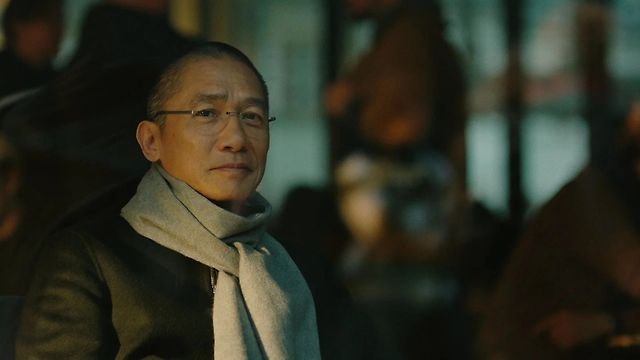
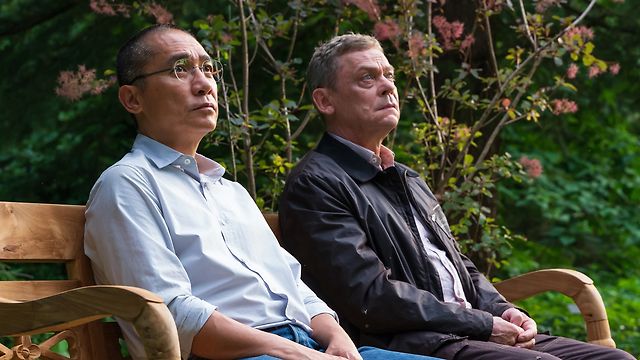
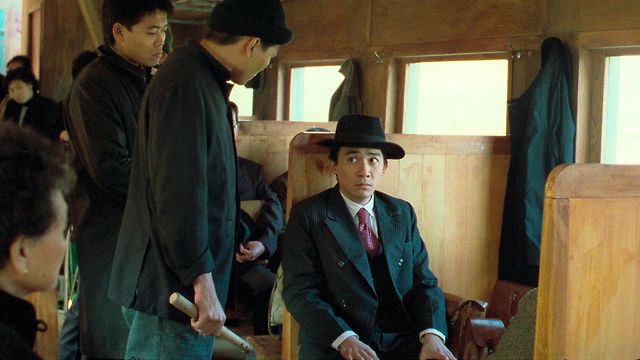
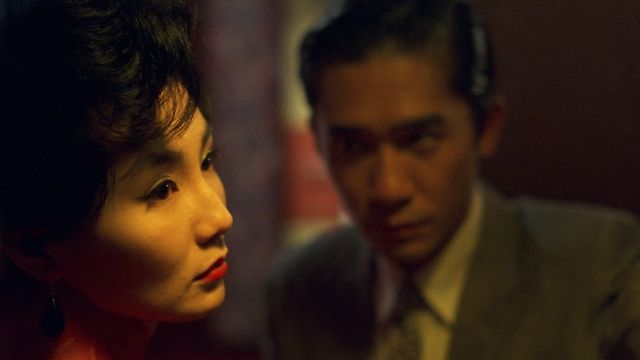
Stills from Lust, Caution (2007), In the Mood for Love (2000) and Silent Friend.

With Silent Friend out now in US theaters, the legendary Tony Leung reflects with Isaac Feldberg on rising from Hong Kong television through its golden age of film, working with directors like John Woo and Wong Kar-wai, and deeply researching his roles to reach more truthful expression.   

With movies, you can call them reality, too, because movies are created by humans, and from humans’ personalities, from our true emotions and feelings and perceptions and senses. And how can you call that unreal?

—⁠Tony Leung

Few actors have so thoroughly mastered the art of restraint. Across an extraordinary five-decade career that’s led him from early fame on Hong Kong television to widespread recognition at the international art house and more recent work in both American and European productions, Tony Leung Chiu-wai has remained a performer of breathtaking interiority.

Rarely allowing their emotions to erupt, Leung’s characters instead ache quietly; they hesitate, observe, absorb, often choosing—with immense difficulty, but also dignity—to suppress the desires that would otherwise undo them. The actor’s great gift lies in how he makes this tension not simply palpable but also intoxicating, and in how he frequently expresses such profound depth of passion within a single, enigmatic gesture or gaze. In films like Chungking Express and In the Mood for Love, to name just two steeped in the same atmosphere of romantic melancholy Leung so effortlessly exudes, the actor speaks volumes with the sadness in his smile, a smoldering glance he quickly diverts, the lean of his body against a wall, a long exhale of smoke. Smarting beneath the actor’s cool, seductive surface are entire histories of deep, unresolved feeling.

Now in US theaters, Ildikó Enyedi’s Silent Friend casts Leung as a neuroscientist in thrall to nature. Set on the grounds of an old German university, where a majestic ginkgo tree bears witness—across three different eras—to the intellectual curiosities of characters drawn under its ancient branches, the film picks up as Dr. Tony Wong (Leung) arrives in Marburg from Hong Kong, having accepted an invitation to collaborate with academics there. Soon after delivering a lecture on forms of consciousness, drawing upon his research into infant cognition to propose that a baby’s state of natural awareness differs significantly from an adult’s sense of their surroundings, Wong is suddenly left alone on the campus. As the COVID lockdown of 2020 shuts down classes, he continues his research by studying plant perception; after growing fond of a ginkgo in the university’s botanical garden, Wong investigates what he strongly suspects are hidden neurological connections between his brain activity and that of the tree.

His first European production, and one of the few films he’s made outside Asia, Silent Friend marks a recent career high point for Leung, who mesmerizes in scenes of quiet communion with nature, the intensity of his excitement for scientific study tempered by an equally profound yearning for human connection in times of great loneliness. It brought Leung to Germany to film, following a six-month period of preparation that he considers one of the most rigorous of his acting career, and—more recently—to New York, where he attended a career-spanning retrospective at Film at Lincoln Center convened for Silent Friend’s release.

In our conversation below, conducted with translation assistance by Joanna Lee, the actor reflects thoughtfully on how his early years on Hong Kong television series gave him the mastery of traditional acting techniques he’d later dismantle in working with Wong Kar-wai, why movies can be considered their own form of reality, what he recalls of working on John Woo’s classic Hard Boiled, where his long-held Buddhist practice intersected with this meditative new project and much more.


I wanted to start by asking about a remark that your character makes early in Silent Friend, while giving his first lecture in Marburg: “Research is nothing else but a series of attempts to find metaphors for the phenomena of the world.” I’m struck by how that sentiment frames this film—and by how, in doing so, it relates scientific progress to other kinds of personal exploration, including the process of making art. Do you ever think about acting similarly, as a series of attempts?

Tony Leung Chiu-wai: I think acting is about trying to express something that truly exists within us, in a very special way. It very much depends on which actor and what he wants to express inside that dialogue or inside that scene. Sometimes, we don’t have much to do, though, because we are very restricted by the script. [Laughs] Frankly speaking, for this project, I really enjoyed the process of getting into this character, to explore what there was to explore in my part of this story.

Ildikó Enyedi wrote this role specifically for you. Although you had no previous personal connection, she sent the script to you, and you not only replied and later agreed to do the film but also ended up dedicating a substantial amount of time to preparation. In terms of getting into character, I’m curious whether your Buddhist faith came into those early conversations with Enyedi, as I’ve listened to interviews where she’s described the film in such terms.

I spent six months preparing for this role, and I spent most of my time trying to approach this character as a neuroscientist and to find him through that special personality. I have to give a lecture in the film, so I needed to convince myself that I was a neuroscientist, so I started studying early cognitive development and going to different universities in Hong Kong, to visit different neuroscientists and research. It’s difficult to experience the [electroencephalogram] (EEG) in Hong Kong, because we don’t have a baby lab there [like the one involved in Wong’s research in the film]. I was very lucky to have an opportunity to experience that once before traveling to Marburg.

Besides that, I studied plant intelligence during my preparation, and that truly changed my perspective toward the world, because it totally changed my perspective toward plants. Before this project, they were—to me—just plants. But after I studied them, I started to believe that they are sentient beings. They have consciousness. I now treat them like human beings. And if you have this kind of respect for plants, then what about other living beings?

Outside of my studying of plants, I studied philosophy from Alan Watts [a British American writer known for interpreting Buddhist, Taoist and Hindu philosophy]. My role is that of a neuroscientist, and something that they will always be studying is consciousness. I started to study consciousness from a Buddhist point of view. I wanted to see how different those perspectives are. Of course, when you start reading Alan Watts’ philosophy, you want to read Eastern philosophy as well.

During my first Zoom meeting with Ildikó, we didn’t talk at all about the story or even about the character. Along with the script came a quote from a neuroscientist named Anil Seth, who said, “We’re all hallucinating all the time; when we agree about our hallucinations, we call it ‘reality’.” And so to Ildikó in that meeting, I said, “Wow, this reality reminds me of our Buddhist thinking that life is just an illusion. There are hidden layers of philosophy in this script, aren’t there?” And Ildikó simply smiled at me, without replying, and she turned her laptop around to show me [displayed in her office] the image of a Buddha. [Laughs]

Tony Leung stars in Silent Friend.

So you hadn’t known that you two had this connection, but through your conversation you arrived at the realization of a similar worldview. In considering those principles of reality as a shared hallucination, of life as illusion, I’m curious how this connects to your perspective on cinema. As an actor, you’re embodying a character, inhabiting a world and expressing something honest, but all within a kind of artifice.

Personally, I don’t know what is reality. It’s constructed by our consciousness. We’re constructing everything by ourselves, via our consciousness. There’s no reality. If you asked me what is the most true in our life experience, I can only say impermanence. Next to that, there is nothing that is 100 percent perfect. Because nothing is real, nothing can be perfect.

But, as your films so often explore, there’s beauty in that impermanence and imperfection.

Yes, yes, yes. That’s because you construct beauty from your point of view, from your consciousness. I have always believed that life is like a film. We create a personality, we create a self, and then we create a life, and we call that reality—in life, just like in movies. [Laughs] With movies, you can call them reality, too, because movies are created by humans, and from humans’ personalities, from our true emotions and feelings and perceptions and senses. And how can you call that unreal?

You feel it so strongly, the effect of that constructed reality of cinema.

Yes. I don’t know how to define reality. To me, everything is illusion.

I’m curious to ask you about this specifically in terms of your career as an actor. You’ve spoken about how, at the time when you made Hou Hsiao-hsien’s A City of Sadness, you were working toward a style of naturalism in performance. But as your career has gone on, including in your collaborations with Wong Kar-wai, you’ve spoken quite a bit about trying to strip away technique and tools. What helps, in terms of pushing past technique and training, in terms of recognizing when a certain acting style isn’t a way into richer performance but is instead potentially what’s blocking you from reaching it?

First of all, you need the technique. You need to train with this technique. You need to be very good. You need to reach a specific standard where you are very good at this technique; if you then, after that, strip out that technique, then it won’t become a restriction. It comes with your instinct. I don’t know how to explain this. It’s just like, in kung fu, if you learn ten moves, it’s not that you’re moving one, two, three, four, five, six. If you’re very good at those ten moves, you forget all those specific moves, and they will all come out unconsciously.

Your acting career started before the so-called “golden age” of Hong Kong cinema, in which you—of course—played a crucial part. The actor Stephen Chow was already in your life as a close friend during your teenage years. He played a role in encouraging you toward drama school, though you dropped out after a year, as well as toward TVB, a local television broadcaster, which became a training ground not only for you but also for Wong Kar-wai, Johnnie To, Andy Lau, Ann Hui, Ringo Lam—many of the stars of that golden age. What can you tell me about those early experiences of drama school and working on television?

I think that whole year of acting school didn’t help much. [Laughs] After you come out of it, and when you start to do the real thing, you can apply what you learned from school, and you start trying to refine those things. I spent around eight years on television. I worked with Johnnie To on my fourth TV series. I worked with other great actors and actresses, with very good directors, all on the TV station.

That time in Hong Kong was also the golden age of television. I got popular from my first TV series as a supporting actor, and I caught a lot of attention from audiences and directors, so I became the lead actor on my third TV series. After that, I became more and more popular. And so I worked really, really hard in those days; I would work sixteen to eighteen hours every day, one after the other. This was a really, really tough time for me. You work at six o’clock in the morning, and then you go back to your studio at six P.M., and you work until three o’clock in the morning.

Even after going back home, you still have to work on the scene that you have to do the next day, but you only have a few hours to sleep. I think that’s very tough, and it’s good training for an actor, and it really built a very solid foundation for me in those eight years’ time. But in the end, I think that’s too much. [Laughs] I cannot work in TV anymore, because that’s too much. There’s too much of it. Every audience member I meet says they wrote letters to TVB that they wanted me to be in every TV series, but I have to sleep. [Sadly] I can’t work every day for eighteen hours.

After eight years, I decided to move to movies. In between, during that time, a lot of directors had asked me to go out to do movies, but I said, “I don’t want to, because I think I’m not ready.” I’m always in self-doubt. I’m that kind of actor who always self-doubts. Even today, I always doubt myself and think that I’m not good enough. I never think that I’m a great actor. I always consider myself to be extremely lucky, because I started my career within the golden age of the Hong Kong entertainment industry. I’ve had a lot of chances to practice, and I’ve had a lot of chances to participate in different movies from great directors with professional crews. But even today, after making Silent Friend, I messaged Ildikó and said, “If I have a second chance, I can do better.” I don’t know why. Maybe that’s what keeps me working hard and moving on.

Leung and Sylvester Groth in Silent Friend.

And, still, these feelings you’re describing—of self-doubt, regret, looking back on past experiences with some mixture of melancholy and longing—are some of the same ones you have expressed so powerfully on-screen throughout your career. It’s been such a through line for you to explore creativity; perhaps that self-doubt allows for a certain sensitivity to these emotions.

It also comes from my childhood, from what happened in my life when I was young.

You’ve spoken about this before—your father leaving the family when you were eight, your mother bringing you and your sister up—and acting being a way to express your feelings that would otherwise stay repressed. What place did movies have in your life growing up?

It was the ’60s, so we didn’t have much to do besides going to the cinema and watching movies. And my mother has seven brothers and sisters, and they all have different preferences, and so they would bring me to the movies almost every week. I grew up with cinema. Even today, I go to watch movies in the cinema. I just enjoy watching them; I don’t really know how it works for me other than that. I just enjoy movies without analyzing them—it’s pure enjoyment.

A City of Sadness was one of the first films of yours to break through globally; it won the Golden Lion at the Venice Film Festival. Your work as Wen-ching is so expressive; your character is deaf-mute, but he’s also a photographer who communicates so much through handwriting. What do you recall of being on Hou Hsiao-hsien’s set and thinking about these other mediums of expression?

That character communicated with people through writing. The reason why Hou Hsiao-hsien made me mute was because I could not speak Mandarin at that period of time. I really liked playing a mute character. I didn’t know the language, but, in the very first week of filming, I said to him, “I don’t know how to act mute.” One day, he showed me one of his friends, also an artist, who also fell from a tree; he’s mute and cannot hear anymore. I just tried to copy that character.

At the same time, I read materials about the history of China. Hou Hsiao-hsien introduced me to Japanese literature; at that period, when A City of Sadness took place, there was a transition from a Japanese-ruled Taiwan. Those forces were leaving Taiwan. I read Japanese literature, and I found there that literature really helps acting. The way that literature describes something, it’s more sophisticated, with more layers, with more space for you to imagine. From that movie on, I started reading literature in my preparation, and I’ve done that for a long, long time.

Leung in A City of Sadness (1989).

What’s the process like, of informing your performance through that research? Is it about building a knowledge base that you can draw upon naturally, or is it more specific?

Through studying every day and imagining what happened, you get further into the character subconsciously. You don’t know when that happens, but you just keep going. I always think that part of acting, being a character, is that you try to brainwash yourself and construct a new you, building new habits that help you to get into the character. Even small things can help you get into that character.

To what you were saying earlier, about films or television being reality and illusion, working to get inside of characters so fully while also working so tirelessly over those early years, performance becomes your truth.

And, sometimes, TV series can be very long—even 60 episodes. I can still remember, one time, when I finished work and I got home, I talked to my mom before I went into my room. After I went into my room, I started wondering, “Was I just talking to my mom, or was my character talking to my mom?” [Laughs] If you are in character for too long a period of time, you start to get confused, especially if you work those long hours every day. You don’t even have time to go back to your personal life; you are still living as that character, with all his habits.

Amid your transition from television to film, you worked with director John Woo first on Bullet in the Head, his gang-war epic, then on Hard Boiled, an equally legendary action film. How did the experience of making those films inform your trajectory as an actor, and what did it mean to you at that stage to work with Woo?

That was a very special experience for me, working with John Woo. His movies are always about brotherhood, loyalty, revenge and beautifully orchestrated action scenes. He is a very nice person, too. But he’s the kind of director who needs a lot of input from actors, in terms of their work as actors; when directing, he knows exactly what he wants. He knows all the camera movements and how he wants a scene to be shot. But acting-wise, he needs a lot of information from the actors for him to then develop.

Having certainty from him in terms of action staging and choreography must have been essential when filming scenes like the one-take hospital shoot-out in Hard Boiled, where you and Chow Yun Fat are battling dozens of gangsters down hallways, between floors… I can’t imagine what that’s like, logistically, to experience as an actor.

It’s pretty scary, with all the explosions and gunfights every day. [Laughs] What you mentioned, the elevator scene, we could only do one time every day, because they needed time to set up the shot again, and we needed to do a lot of rehearsals. There was something that happened every day that we didn’t expect to happen. I remember one take, at the very beginning, Chow Yun Fat immediately slipped on the floor, in a pool of blood. I didn’t know what to do. [Laughs] He wasn’t supposed to slip, but there was blood everywhere. We had to keep going, just try to help him get up and move on. [Laughs] I can say that it’s always a very special experience working with John.

When you first started working with Wong Kar-wai, on Days of Being Wild, I know you’ve spoken about feeling stuck in your technique as an actor. How did you first start to break through that and reach a more instinctive place for films like Ashes of Time or Chungking Express?

When we were working on Days of Being Wild, I was always asked to do a scene again, with no reason, and I asked why I had to do it again, and he asked me to just do it again, please: one sentence of dialogue, me together with Maggie Cheung, just going into my place, one shot… Sometimes, it would take 40 times, 50 times, and I felt very embarrassed on set. I started to doubt whether I know how to act or not. After a few months, he said to me, “It’s because you have too many techniques. You have too many methods in how you act, and I don’t want that. I want your genuine feelings.”

We kept working for a while, and I had some scenes I was shooting with Maggie, too. When I saw the finished movie at the premiere, and I saw my last scene, I was shocked. I said to myself, “Yes, this is what I want.” This was also when I was working with Hou Hsiao-hsien, who often worked with non-professional actors; I wanted to act like them, and this felt something like that.

You can’t find any trace of acting. It’s very natural, but you also have a kind of mystery, and the audience wants to know what you want to do. They might have some ideas, because I’m there playing poker, with playing cards and money, and it seems like I do that every day. After that, I knew that Wong Kar-wai knew how to work with me, and I knew I could work with him in order to develop this acting style. This was the reason we started our twenty years of collaboration.

From the police officer in Chungking Express to Lai in Happy Together, the characters you go on to play for Wong Kar-wai are often emotionally exposed. In that latter film as well, opposite Leslie Cheung, you’re playing a gay character in a turbulent relationship; that film is considered a New Queer Cinema landmark. I’m curious what opportunities and risks came along with making that movie when you did, in the late ’90s.

I didn’t expect that I’d play a homosexual character in that movie. At the very beginning, I was playing the son of a homosexual character; his father had suddenly died, and he travels to Buenos Aires only to find that his father had a gay partner. After we had been there for three months, and following a few days of shooting, Wong Kar-wai said to me, “No, it would be better, actually, if you played this character as gay.” And I was like, “Ah, okay?” And what could I do? Everyone was already there; the whole crew was ready to film. It was a big challenge for me.

If it weren’t for Wong Kar-wai, and me being in that situation with no way back, I wouldn’t have found the courage to take on the challenge of playing this kind of character. I had to convince myself that I could work this out with Leslie. Love is not just between man and woman, and love can exist between all kinds of humans. I had this type of mindset first, and then I started to hang out with Leslie a lot. Before shooting every day, we were learning tango, and we were learning Spanish. We had to spend time together at dinner each day. In this way, Wong Kar-wai led us to know each other more and have a better understanding of one another, so that we could get into our characters.

Ang Lee also did this when we were making Lust, Caution. I spent a lot of time with him and Tang Wei, dancing with her and playing mahjong. We would rehearse together, only the three of us, and it felt very personal. We spent time together in the same way.

Lust, Caution, like Happy Together, had intimate scenes that required both physical and emotional vulnerability from you. And in both films you’re reflecting the inner feelings of immensely complicated characters through body language.

You need to trust the director. You need to trust that you’re working with great actors. You need 100 percent trust, and then you can do it. If not, I don’t think I could do it.

It won’t surprise you for me to say that much critical attention has been paid over the years to what audiences—and co-stars—feel you can express with a single, intense gaze. Do you recall when you first became aware of this assessment of you as “the man who can speak with his eyes”, and is there anything unique you consciously think about with how you approach those types of shots?

I’m not sure, but maybe people started talking about this when I was working with Wong Kar-wai, especially on In the Mood for Love. To me, it’s never been [conscious]. I’ve never trained myself to act with my eyes or tried intentionally to do that. But I try to understand the background of my character as much as I can, what types of books he’s read and what movies he prefers to watch. When you have so many things inside of you, I think those same things will be reflected in your eyes—it’s about what they believe in. You find these strong convictions, or these things you really hate, and that then comes through. This is why I love to research; the more you put into a character, the more that will be reflected in not only your eyes but also in your every response and reaction emerging in a very different way.

For In the Mood for Love, specifically, you built this sensual and richly charged dynamic with Maggie Cheung. The complexities of the relationship between your characters reflect so much of the tension between what they desire emotionally and what they believe they must restrain themselves from. What approach did you take to developing your characters and their chemistry?

We were trying many different approaches at the very beginning until we found a specific direction, and then we started to discover this mood of restraint, longing and loneliness for these two characters, who always came across each other but never knew they would have the chance to get together after learning their partners were having an affair. They build up this relationship, and they struggle through that, because that’s something they didn’t want to happen. However, sometimes these things happen naturally. It’s a very intriguing, restrained kind of love story, and very different from a normal love story. The romance comes from their restraint and their longing to love someone at the wrong time.

I’ve read that, when invited to the 36th Tokyo International Film Festival to give a masterclass, you chose 2046 as a representative film of your career. There’s so much to ask about there, but I’m curious about the unique opportunity to again play Chow Mo-wan, from In the Mood for Love, but at a very different point in his life.

That is the reason why I chose that film [for the master class]. To act in 2046 was a really difficult challenge, especially given that the first film was so successful and so inside a lot of audiences’ impressions of me. If you want to do a different version of this character that still makes sense, that’s very difficult—not just for me, but for the audience—to believe. This character tries to escape from reality and tries to start a new life, as if he were a different man, but that actually doesn’t work for him. That’s the reason why I chose that film.

What has it meant for you to work with the cinematographer Christopher Doyle? His work behind the camera has been ineffably important to so many films you’ve appeared in, from  all those Wong Kar-wai collaborations to Zhang Yimou’s Hero and lesser-known films like My Heart Is That Eternal Rose.

He is one of my favorite DPs. He is so sensitive. He knows how to sense the feelings of your character. Sometimes, he will just move his camera to film my hands, and I haven’t told him that I have some gesture I’m holding in my hand, but he can sense it. I don’t know how he can sense it. He is focusing on my face, and suddenly he points the camera down. I think there’s a link now between us. After so many films, we have such a degree of understanding of each other. That’s why I think he’s so sensitive, and I like that very much. 

To fit in at least one question about working on a Zhang Yimou set, what was the most challenging aspect of Hero for you, and what kind of stamina does it require to make films like that, or like The Grandmaster, with such extensive martial-arts choreography?

It’s a real physical challenge. We shot that movie [Hero] in the middle of the desert, and we had to travel six hours every day. It was pretty hot in the afternoons, and the weather was very extreme. Suddenly, there would be sandstorms, and we’d get stuck out there, or we’d have to leave right away. The big challenge to me was that it was so physically demanding, because I did all the stunts by myself. We didn’t have a double. The rest of that film, such as the dramatic part of it, was fine. But it was physically very demanding, and that’s always a challenge.

What you’re saying about the surroundings you acted against on Hero leads me back to Silent Friend, to ask about the effect of the environment around you on this production. Your character is often alone, in this botanical garden on the grounds of the University of Marburg. Both the ginkgo tree and the historical buildings nearby feel deeply connected to the story and its atmosphere.

Of course, besides what’s written in the script, the set and the outside surroundings really gave me a feeling, an atmosphere, to work with. Everybody will have different kinds of feelings on the same set, but that really helped me, too. I remember the first day when I went into the room where my character was staying—that setting—I was shocked: “Wow, this is so nice. The art direction is so nice.” You have this with you for the film, and this affects how you feel. It’s like when you’re staying in a three-star hotel versus a five-star penthouse, you have different kinds of feelings about that, I think. [Laughs] It’s something like that.


Silent Friend’ is now playing in US theaters, courtesy of 1-2 Special.

Further Reading

Tags

Share This Article