

The History of Futurism
by Zoltanous
Futurism constituted one of the 20th century’s most aggressive and comprehensive assaults on tradition. Founded by Filippo Tommaso Marinetti in 1909, it glorified speed, technology, violence, youth, industrial power, and dynamic action while demanding the destruction of museums, academies, and passéist culture. Its synthesis of artistic innovation with political radicalism supplied both aesthetic language and ideological energy to movements that sought alternatives to liberal democracy and Marxist materialism, resonating with Third Position currents that prize national vitality, technological progress, and heroic will.
Marinetti published the Manifesto of Futurism in Italian in February 1909 and on the front page of Le Figaro on 20 February 1909. The opening narrative recounts a frenzied night of discussion ending in a symbolic car crash:
“We had stayed up all night, my friends and I, under hanging mosque lamps with domes of filigreed brass, domes starred like our spirits, shining like them with the prisoned radiance of electric hearts. For hours we had trampled our atavistic ennui into rich oriental rugs, arguing up to the last confines of logic and blackening many reams of paper with our frenzied scribbling.”
— Filippo Tommaso Marinetti, Manifesto of Futurism
The eleven points include the famous declarations on speed, struggle, and destruction of the past. Point 4 states:
“We affirm that the world’s magnificence has been enriched by a new beauty: the beauty of speed. A racing car whose hood is adorned with great pipes, like serpents of explosive breath—a roaring car that seems to ride on grapeshot is more beautiful than the Victory of Samothrace.”
— Filippo Tommaso Marinetti, Manifesto of Futurism
Point 9 glorifies war and rejects conventional femininity; Point 10 calls for the demolition of museums and libraries and combat against feminism and moralism. The text ends by positioning Italy as the launchpad for this “violently upsetting incendiary manifesto.” Early collaborators included Umberto Boccioni, Carlo Carrà, Giacomo Balla, Gino Severini, and Luigi Russolo. The Technical Manifesto of Futurist Painting (11 April 1910) elaborated the new aesthetic:
“To paint a human figure you must not paint it; you must render the whole of its surrounding atmosphere. Space no longer exists… Our bodies penetrate the sofas upon which we sit, and the sofas penetrate our bodies. The motor bus rushes into the houses which it passes, and in their turn the houses throw themselves upon the motor bus and are blended with it.”
— Umberto Boccioni, Technical Manifesto of Futurist Painting
Boccioni extended these principles to sculpture in 1912, emphasizing “plastic dynamism.” Russolo’s The Art of Noises in 1913 introduced noise instruments. Sant’Elia’s 1914 Manifesto of Futurist Architecture envisioned dynamic modern cities built from concrete, steel, and glass. The movement held provocative performances, exhibited abroad, and actively supported Italy’s military campaigns.

Futurist music
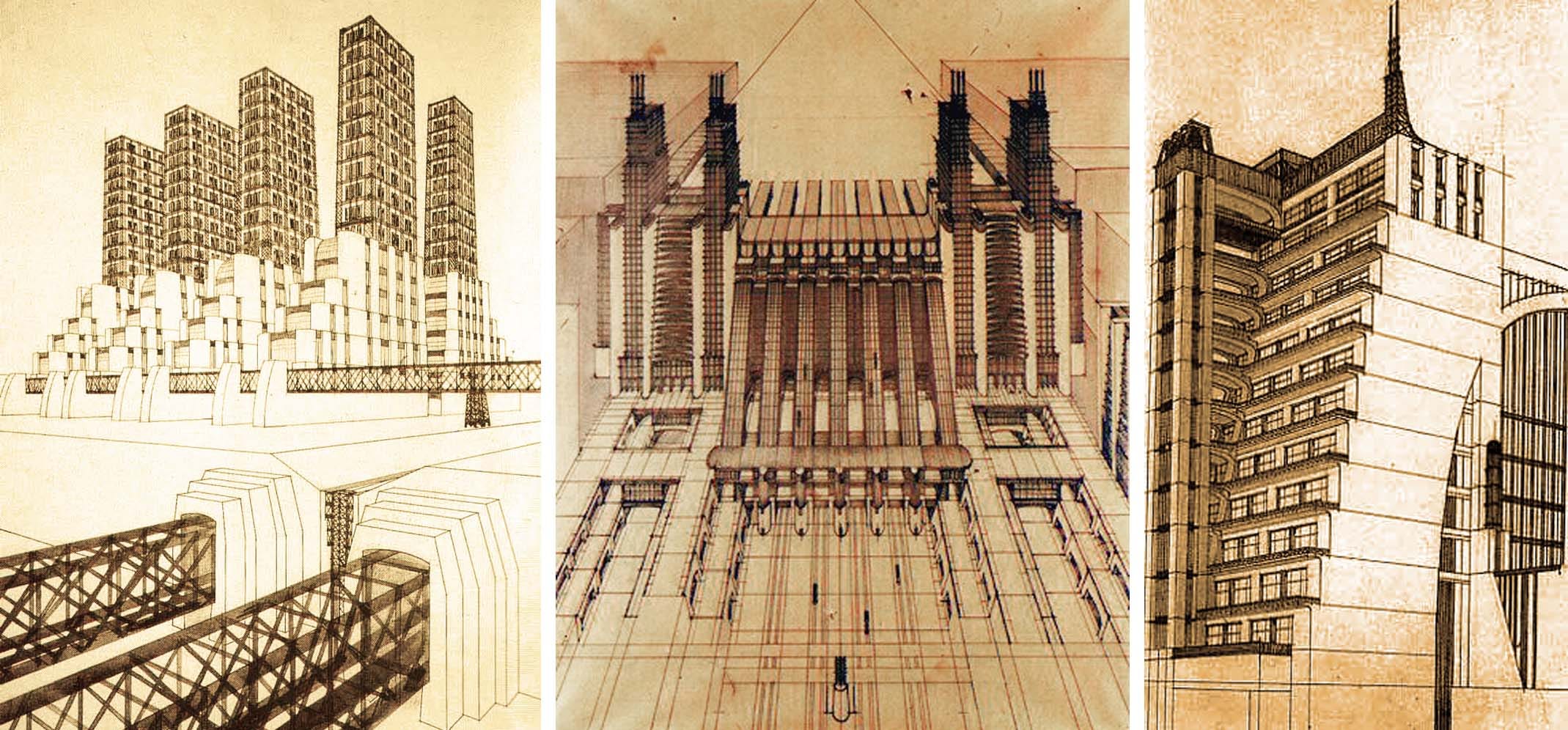
Futurist architecture
Valentine de Saint-Point responded to the movement’s misogynist rhetoric with the Manifesto of Futurist Woman). She reframed gender as a spectrum of forces:
“It is absurd to divide humanity into men and women. It is composed only of femininity and masculinity. Every superman, every hero… is the prodigious expression of a race and an epoch only because he is composed at once of feminine and masculine elements.”
— Valentine de Saint-Point, Manifesto of Futurist Woman
She celebrated warrior archetypes and later issued the Futurist Manifesto of Lust (1913), elevating desire as creative energy:
“Lust, like pride, is a virtue that urges one on, a powerful source of energy. Lust is the expression of a being projected beyond itself.”
— Valentine de Saint-Point, Futurist Manifesto of Lust
Her contributions broadened Futurism into performance and nuanced vitalist thought on gender and instinct. Russian Futurism developed independently from around 1910–1912 with a stronger literary and linguistic emphasis. The Hylaea group’s A Slap In The Face of Public Taste, signed by David Burliuk, Aleksei Kruchenykh, Vladimir Mayakovsky, and Velimir Khlebnikov, rejected canonical Russian literature:
“Throw Pushkin, Dostoevsky, Tolstoy, etc., etc., overboard from the Ship of Modernity.”
— A Slap In The Face of Public Taste
Many supported the 1917 Bolshevik Revolution, though tensions with Soviet cultural policy later emerged. The fundamental break came with the imposition of Socialist Realism as official state policy in the early 1930s. This was not a neutral stylistic preference but a deliberate rejection of the modern artistic movement — including Futurism, as representing rootless cosmopolitanism. In Stalinist discourse, cosmopolitanism was understood as an unpatriotic embrace of foreign (especially Western, Trotskyist, and Zionist) influences that lacked national roots and promoted decadent formalism over healthy, accessible art. The socialist realist movement was intended to restore classical tastes and interpretations of art, heroic, monumental, realistic, and rooted in national traditions — mirroring in many ways the Nazi preference for classicism over modernist experimentation and dynamism.
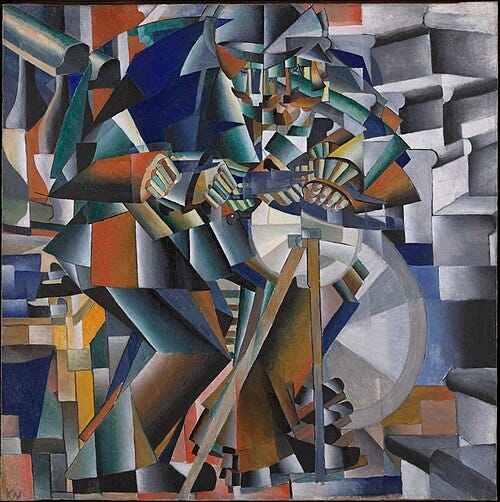
The Knifegrinder by Kazimir Malevich
A clear illustration of this is the case of Arno Breker, Hitler’s favored sculptor. Stalin admired Breker’s monumental neo-classical style (notably after seeing his work at the 1937 Paris World Exposition) and attempted to recruit him for Soviet commissions in 1946. Breker declined the offer:
“I had a series of offers from abroad. When the war was over I immediately received invitations from Peron, Franco and Stalin… One dictatorship is sufficient for me.”
— Arno Breker interview with André Müller in 1979
Many of the same heroic, monumental sculptural styles were later repurposed in East German and broader Soviet propaganda in the Eastern block. The Russian Futurist movement was largely suppressed by the late 1920s under Stalin as the state enforced this new classical orthodoxy in place of avant-garde innovation.


Arno Breker statues in East Germany
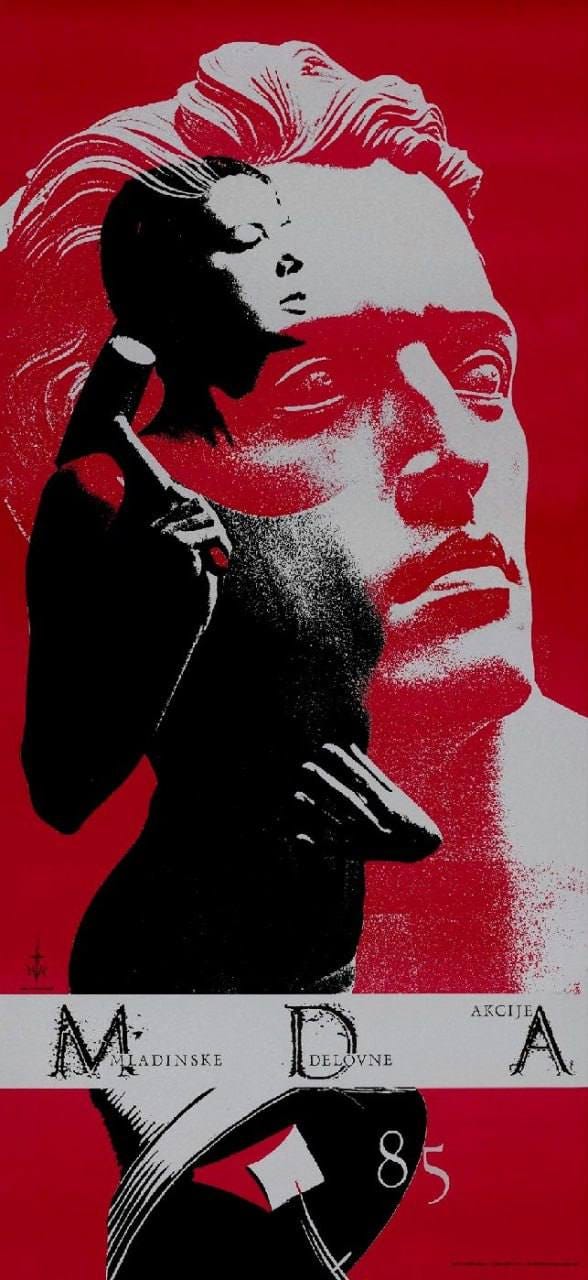
1984 Socialist Youth League of Slovenia commissioned poster for the Youth Work Brigades. The poster featured a portrait sculpture originally crafted by Breker
Futurists in Italy campaigned for Italian entry into World War I. Postwar, Marinetti founded the Futurist Political Party (1918), which merged into Mussolini’s Fasci. He co-authored the 1919 Fascist manifesto with Alceste De Ambris. D’Annunzio’s 1919–1920 occupation of Fiume created a volatile nationalist laboratory. Marinetti visited the city and affirmed its alignment with Futurist dynamism and rupture. The episode featured theatrical politics, cultural experimentation, and corporatist experiments in the Charter of Carnaro (co-drafted by De Ambris). It prefigured the synthesis of avant-garde energy, irredentist nationalism, and anti-liberal action that shaped early Fascism. Following the March on Rome in October 1922, many Futurists aligned with the new regime, viewing it as the political realization of their earlier calls for national renewal and modernization. Marinetti remained a prominent supporter. In 1924 he published Futurism and Fascism, explicitly linking the two movements and praising Mussolini as the interpreter of Italy’s destiny.
He joined the Royal Academy of Italy in 1929 and continued producing manifestos, poetry, and propaganda until his death. However, Futurism never became the official state art. Mussolini deliberately avoided imposing a single aesthetic doctrine, famously stating that art belonged to the individual domain. The regime patronized multiple styles, including more classical or traditionalist approaches associated with romanità. Futurism was tolerated and sometimes commissioned when it served propaganda goals — particularly themes of aviation, technology, speed, and national strength, but faced criticism from conservative and traditionalist factions within the regime who viewed its radicalism as decadent or excessive.
The most significant artistic development of this period was the emergence of Second Futurism (sometimes divided into mechanical and aeropictorial phases). In the 1920s, artists explored “mechanical art,” with Fortunato Depero producing influential work in advertising, stage design, and tapestries that fused Futurist dynamism with commercial and decorative applications. Depero’s 1927 manifesto on the “plastic dynamism” of everyday objects and his later “House of the Future” projects exemplified this practical turn. The defining style of the later Fascist era was Aeropittura (aeropainting), formally launched with the 1929 Manifesto of Aeropittura (also known as Perspectives of Flight), signed by Marinetti, Benedetta (Marinetti’s wife and a significant artist in her own right), Fortunato Depero, Gerardo Dottori, Fillia, Enrico Prampolini, Mino Somenzi, and Tato. The manifesto declared:
“The changing perspectives of flight constitute an absolutely new reality that has nothing in common with the reality traditionally constituted by a terrestrial perspective… Painting from this new reality requires a profound contempt for detail and a need to synthesise and transfigure everything. Every aeropainting simultaneously contains the dual movement of the plane and the hand of the painter…”
— Manifesto of Aeropittura
Aeropittura celebrated the regime’s emphasis on aviation and air power. Artists produced swirling, multi-perspectival works that captured the sensations of flight, often incorporating patriotic or technological coldness. Key practitioners included Gerardo Dottori (whose large-scale murals and aerial compositions became iconic), Tullio Crali (famous for dramatic dive paintings such as Nose Dive on the City), Enrico Prampolini (who bridged painting, theater, and design), and Marisa Mori. The style extended to aeropoesia (aerial poetry) and influenced graphic design and propaganda posters.
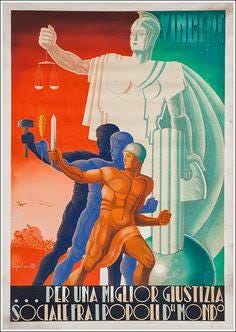
Futuristic Fascist propaganda poster
Other developments included Arte Sacra Futurista (Futurist Sacred Art) in the early 1930s, as Marinetti sought to reconcile the movement with Catholicism after the Lateran Treaty. Artists produced religious-themed works that retained Futurist formal techniques. Futurists also contributed to regime exhibitions, industrial design, fashion, and urban planning projects. Marinetti himself traveled as a cultural ambassador, recruited for the Ethiopian campaign (in which he participated at age 58), and produced late works such as L’aeropoema di Gesù (The Aeropoem of Jesus) near the end of his life.
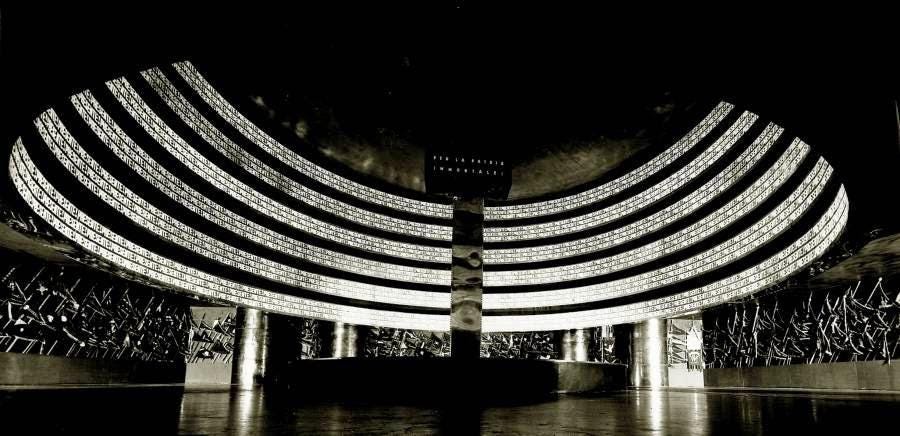
The Shrine of the Martyrs of the Fascist Revolution
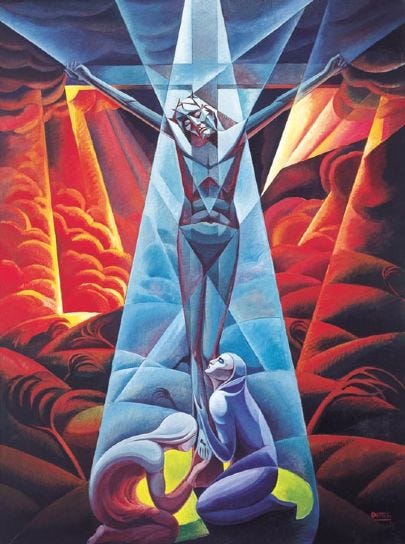
Crocifissione by Gerardo Dottori
Tensions persisted throughout the ventennio era of Fasxism. While many Futurists aligned with the regime after the March on Rome, viewing Mussolini’s movement as the political realization of their calls for national renewal, technological modernization, and heroic action, the relationship was never seamless. Marinetti published Futurism and Fascism in 1924, explicitly linking the two, and joined the Royal Academy of Italy in 1929. Yet conservative and traditionalist factions within Fascism repeatedly attacked Futurist “extremism,” “decadence,” and radicalism as incompatible with the regime’s growing emphasis on romanità (Roman classicism) and order. Some Futurists chafed at compromises with the monarchy, the Church (especially after the 1929 Lateran Treaty), and more reactionary elements.
The growing alliance with Nazi Germany after 1936–1939 introduced sharper frictions. Nazism harbored a deep, inherent antagonism toward Futurism and modernist art in general. The Nazis’ 1937 Entartete Kunst (“Degenerate Art”) exhibition in Munich explicitly targeted dynamic, abstract, and technologically oriented modernisms, including works associated with Futurism — as degenerate, Jewish-influenced, or Bolshevik-tainted threats to Aryan culture. Although Futurism was Italian and nationalist, its celebration of speed, simultaneity, machine aesthetics, and iconoclasm was viewed by Nazi ideologues as dangerously cosmopolitan and anti-classical. German modernists influenced by Futurist ideas (or parallel avant-garde experiments) faced suppression, exile, or professional ruin under the Nazi regime. This antagonism crossed into Italy in the late 1930s, right-wing Italian Fascists imported the German concept of “degenerate art” and began condemning Futurism in similar terms. Marinetti successfully convinced Mussolini to block the touring German Degenerate Art exhibition from entering Italy and publicly condemned aspects of Nazi cultural policy. He also voiced reservations about the 1938 Italian racial laws, which were partly modeled on Nazi precedents. These actions highlight the underlying tension: Italian Futurism remained more modernist and technologically optimistic than the blood-and-soil, anti-modernist classicism favored by core Nazi aesthetics.
As the historian Anne Bowler has observed in her analysis of the political aesthetics linking the two movements:
“The Futurists developed important forms in their performances, notably agitprop and the spectacle, that formed the basis of later [Fascist Party] methods for crowd provocation and control.”
— Anne Bowler, Politics as Art: Italian Futurism and Fascism
Emilio Gentile, the leading scholar of the relationship, situates Futurism within “modernist nationalism,” a revolutionary synthesis of technological dynamism and national spiritual revival that fed into Fascism while retaining distinct avant-garde energy. Despite these frictions, Second Futurism adapted and produced substantial work across media, painting, sculpture, architecture (realized projects by figures such as Angiolo Mazzoni), graphic arts, and performance, that demonstrated the movement’s adaptability while retaining core principles of dynamism and anti-traditionalism. The period ended with Marinetti’s death from a heart attack on 2 December 1944 in Bellagio while working on poems honoring the Decima MAS naval unit during the Republic of Salò.
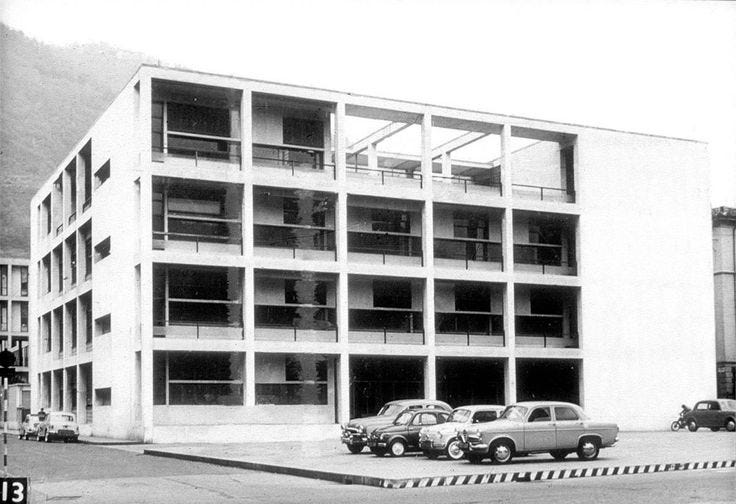
Casa del Fascio by Giuseppe Terragni
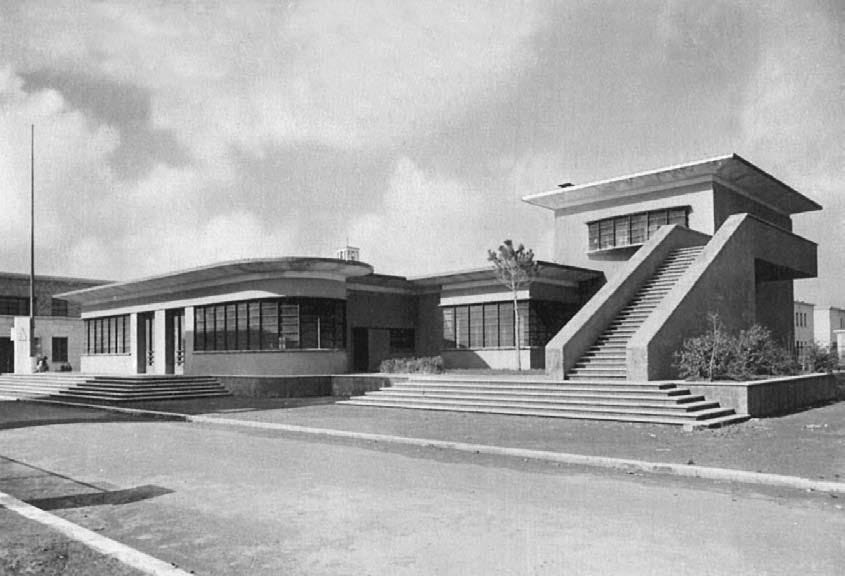
Post Office by Angiolo Mazzoni
Marinetti’s death in December 1944 and the collapse of the Fascist regime effectively ended organized Italian Futurism. The movement’s close association with Fascism led to widespread marginalization in the immediate postwar years. Many artists faced professional difficulties, blacklisting, or self-censorship; some distanced themselves from earlier political commitments or shifted styles. Italian cultural institutions and art history largely privileged pre-1918 “heroic” Futurism while treating Second Futurism as compromised or secondary. This created an incomplete narrative that persisted for decades.
Artistically, however, Futurism’s formal innovations proved remarkably durable and influential. Its emphasis on simultaneity, lines of force, interpenetration of forms, noise, performance, and typographic experimentation fed directly into Dada’s anti-art provocations, Surrealism’s exploration of the unconscious and speed, Constructivism’s geometric dynamism, Vorticism in Britain, and elements of Art Deco and Precisionism. Later twentieth-century movements in kinetic art, Op Art, performance art, happenings, concrete poetry, and industrial/sound design owe clear debts to Futurist precedents. Russolo’s noise experiments anticipated electronic and experimental music; Sant’Elia’s visionary architecture influenced high-tech and parametric design in the late twentieth century.
Politically, the Fascist link rendered Futurism controversial — mainstream historians, artists, and institutions often condemned or minimized its political dimensions, focusing instead on formal contributions. This led to periodic reevaluations. Major exhibitions, most notably the Guggenheim Museum’s 2014 survey Italian Futurism, 1909–1944: Reconstructing The Universe, restored fuller context by presenting the entire chronological range, including Aeropittura and regime-era works, prompting more nuanced assessments that acknowledge both artistic achievement and political entanglement without simple condemnation or celebration. Futurism represented a potent form of modernist nationalism that sought to master the process of modernization rather than be overwhelmed by it, fusing technological dynamism with national spiritual revival.
In the late 20th and early 21st centuries, Futurism has experienced genuine post-war revivals and reinterpretations. Neo-Futurism emerged in architecture and design, emphasizing fluid dynamic forms, advanced materials, technological integration, and forward momentum (with clear echoes in the work of architects influenced by high-tech and parametric approaches). Theater groups such as the Neo-Futurists in Chicago Illinois, founded 1988) continue the original emphasis on speed, brevity, and direct audience engagement.
More echoes also appear in accelerationist philosophy, transhumanism, cyberpunk aesthetics, and certain Third Position circles that selectively reclaim Futurist imagery for its synthesis of anti-liberal rupture and technological vitality. Most strikingly, new Futurist projects have emerged that explicitly revive the movement’s transgressive, avant-garde spirit in the present day. One prominent example is the Fiume Gallery in New York City’s Chelsea district, founded by Rachel Haywire. The gallery describes itself as “a Futurist space heralding a new rising class of artists for the regime ahead,” hosting salons, multimedia exhibits, vitalist paintings, eclectic performance art, poetry, live music, underground film, luxury fashion shows, and metapolitical discussions. Haywire positions the project as a direct continuation of Futurist energy, drawing on the historical legacy of D’Annunzio’s Fiume experiment while creating a contemporary platform for avant-garde and forbidden cultural expression. This represents a living post-war Futurist revival that reanimates the original movement’s radicalism in a new context.
Recent New York exhibitions exploring Fascist-era propaganda and Futurist contributions have similarly continued this nuanced engagement with the movement’s visual and ideological legacy. Interest continues to grow, with the full corpus of manifestos, artworks, and writings now widely available. Reevaluations emphasize that while many Futurists collaborated with the regime, the movement retained internal diversity, formal autonomy in many cases, and a core commitment to dynamism that outlived its political entanglements. The inherent Nazi antagonism — rooted in anti-modernist ideology, ultimately highlighted Futurism’s distinctively modernist character even within the broader Fascist alliance.
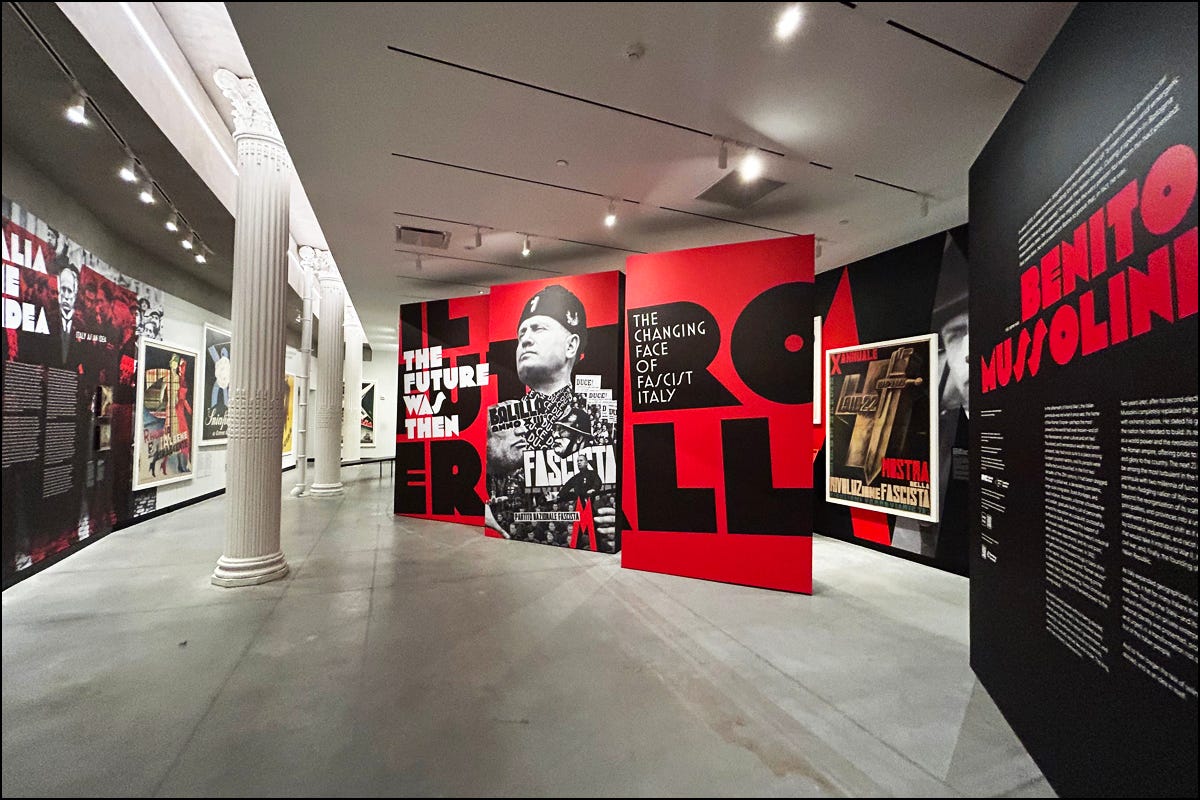

Poster House, The Future Was Then: The Changing Face of Fascist Italy
The Reactionary Modernism of Fascism

The interconnectedness of Fascism and the avant-garde bore significant influence on their perception and interpretation of modernity. Specifically examining the political dimension, we delve into how…


