

Were Nazis Fascists?
by Zoltanous
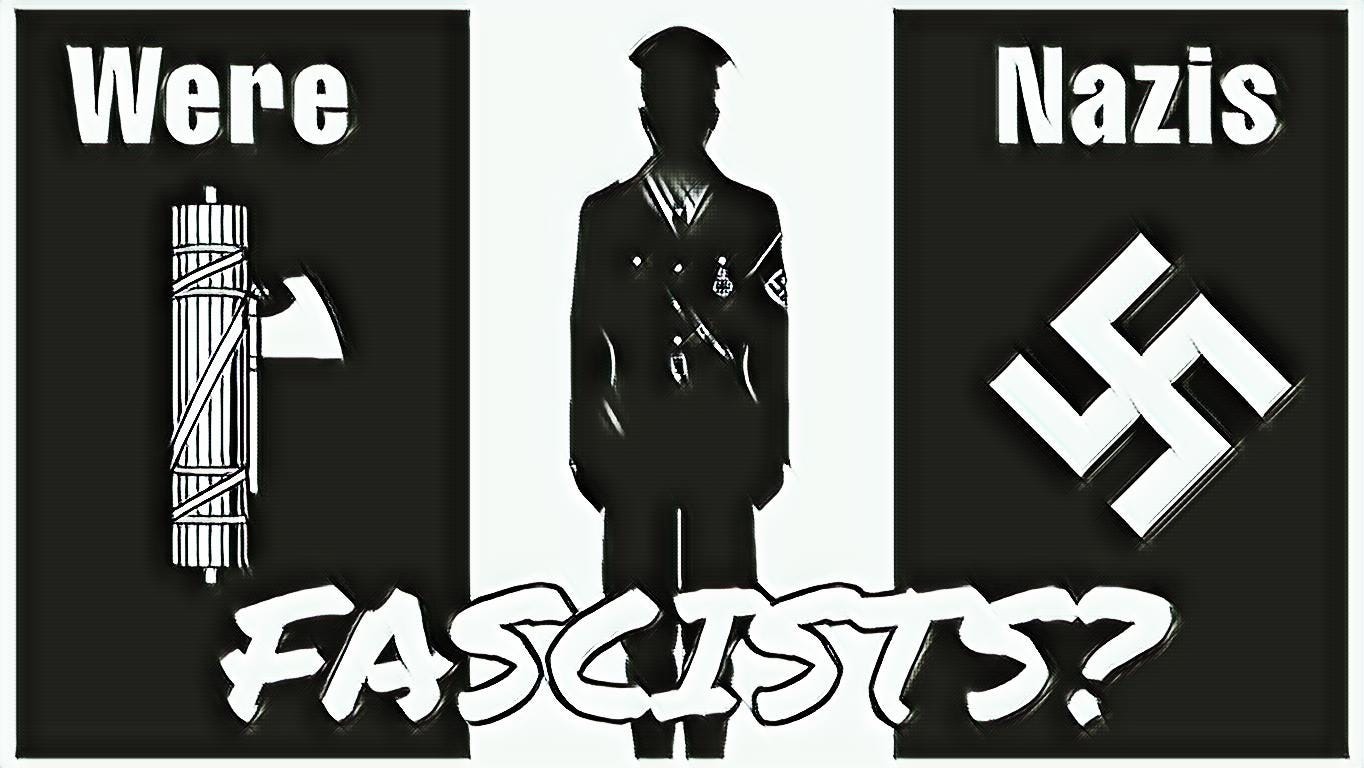
Within the debate about the historical placement of Hitler's National Socialism and its connection to fascism, a consistent theme arises. A range of voices—spanning from proponents of "Classical Fascism" to modern National Socialists, laypeople, and some academics—insist on distinguishing National Socialism as an ideology independent from fascism. Central to this debate is a contrast in focus: fascism is often described as prioritizing the state's supremacy, whereas Nazism is characterized by its intense focus on racial issues.
This can be observed in the following quotes:
“The Fascist conception of the state is all-embracing, outside of it no human or spiritual values can exist, much less have any real worth. Thus understood, Fascism is totalitarian, and the Fascist state-a synthesis and a unit of all values-interprets, develops and potentates the whole life of a people… It is not the nation that generates the state… Rather it is the state which creates the nation, conferring volition and, therefore, Real life on a people… In The Fascist conception, the state is an absolute before which individuals and groups are relative.”
—Benito Mussolini, The Doctrine of Fascism
“The State is only a means to an end. Its end and its purpose is to preserve and promote a community of human beings who are physically as well as spiritually kindred. Above all, it must preserve the existence of the race, thereby providing the indispensable condition for the free development of all the forces dormant in this race. A great part of these faculties will always have to be employed in the first place to maintain the physical existence of the race, and only a small portion will be free to work in the field of intellectual progress. But, as a matter of fact, the one is always the necessary counterpart of the other.
Those States which do not serve this purpose have no justification for their existence. They are monstrosities. The fact that they do exist is no more of a justification than the successful raids carried out by a band of pirates can be considered a justification of piracy.”
—Adolf Hitler, Mein Kampf
Some people argue for a clear demarcation between fascism and National Socialism by citing Mussolini's documented criticism of Hitler and Nazism. This line of reasoning aims to underscore the perceived differences between the two doctrines, an interpretation that finds an echo among followers of the well-known YouTube channel TIKHistory, which similarly differentiates between Fascism from National Socialism. In the ongoing discourse about the links between Nazism and fascism, some contemporary adherents of National Socialism claim that fascism fails to fully grasp the concepts of race, the people, and the idea of a volksgemeinschaft, or ethnic community. On the other side, certain proponents of "Classical Fascism" might assert that Hitler was not truly a fascist. Then there are those who choose to ignore the racial component of these ideologies altogether. Nonetheless, these views tend to either miss or misrepresent the actual essence of both Nazism and Italian Fascism, possibly due to insufficient research or the spread of inaccurate information.
For a more precise comprehension of how Nazism and fascism are intertwined, an in-depth examination of the subject is essential, especially in light of the widespread misinformation that exists. Roger Griffin's influential book, Fascism, provides a useful analytical tool for constructing a persuasive case about this relationship.
It is essential to clarify four key terms:
Nazism or capital N-National Socialism: This means the German variation of fascism.
Capital F-Fascism: This means the Italian variation of Fascism
Generic fascism: This is “lowercase F” fascism (often referred to as generic fascism). Using this term is a broad way of characterizing Third Position movements by looking at what they have in common.
Non-Hitlerite “Lowercase N” national socialism. This is something that should be distinguished from both Hitler’s interpretation and generic fascism, as it’s something entirely different.
Utilizing Roger Griffin's framework, it becomes clear that when individuals draw a distinction between capital "F" Fascism and National Socialism, they are articulating a legitimate categorical distinction. They are recognizing the unique characteristics of Italian Fascism and German National Socialism as they manifested in their respective nations. Although this point might appear minor and not greatly advance the overall discourse, it is consistent with intuitive understanding and does not disrupt the more comprehensive conceptualization of the relationship between Nazism and fascism.
Reflecting on the specific character of National Socialism prompts a discussion on its proper classification. It's crucial to distinguish between Hitler's particular brand of National Socialism and the broader historical context of the national socialist movement in Germany. By making this distinction, it is defensible to differentiate the latter from fascism, especially when considering the contributions of individuals like Rudolf Jung and Otto Strasser. Members of Hitler's National Socialist German Workers' party (NSDAP) often eschewed the fascist label, preferring to align their beliefs with the original national socialist ideas advocated by figures such as Jung. This early strain of national socialism is distinct from the more generalized concept of fascism, and some NSDAP affiliates were deliberate in distancing themselves from the impression that they were simply imitators of Mussolini's ideology.
“The essentially ‘socialist’ nature of NSDAP economic policy did not change, however. Its small delegation in the Reichstag distinguished itself largely by its ferocious anti-capitalism. In keeping with Hitler’s own repeatedly expressed antipathy to international finance capitalism, members put forward proposals to confiscate ‘the fortune of the princes of bank and stock market’. The party was well to the left of the spectrum on taxation and called for more state and social spending. To the charge that they were mere clones of Mussolini, NSDAP Reichstag members responded, ‘We are not fascists. We are socialists.’”
— Brendann Simms, Hitler: A Global Biography
Before Hitler's ascent to power in Germany, "national socialism" was a term more commonly associated with a form of socialism that emphasized trade guilds or decentralized, council-based governance, sharing traits with Council Communism and carrying a pronounced nationalistic, or völkisch, flavor. This early version of national socialism didn't place a strong emphasis on racial ideology and its stance on anti-Semitism was not uniform. Key figures like Rudolf Jung, who was a socialist active in trade unionism, were instrumental in developing these concepts.
This initial version of national socialism can be regarded as an antecedent to Hitler's brand of National Socialism. Over time, Hitler adapted and transformed these early ideas, steering them towards a focus on a strong centralized state. It's important to acknowledge that Hitler's conception of the state and his interpretation of socialism were shaped by the ideas of the German philosopher Johann Fichte. Post-French Revolution, Fichte's thinking evolved, giving rise to his notion of "Ethical Socialism." The influence of Fichte's thought is traceable within both Italian Fascism and Hitler's National Socialism. Giovanni Gentile, the chief philosopher behind Italian Fascism, also drew from Fichte's philosophy, as reflected in various academic examinations of Gentile's work.
Examining Fichte's understanding of the role of the state, we find that he believed:
“It is the state alone that unites an indeterminate multitude of men into a closed whole, a totality; only the state can go around asking questions to everyone whom it receives into its alliance, and thus only through the state would it be possible to provide a basis for a rightfully existing property. As the state becomes acquainted with the rest of the men occupying the earth’s surface, it will negotiate treaties with these, as a state, in the name of all its citizens...
Everyone wishes to live as pleasantly as is possible. Since everyone demands this as a human being, and no one is more or less human than anyone else, everyone has an equal right in [making] this demand. In accordance with this equality of their rights, the division must be made in such a way that one and all can live as pleasantly as is possible when so many men as they are exist next to one another in the given sphere of efficacy.
Each, in other words, must be able to live about as pleasantly as the other. I say: be able to, and not have to. Should someone live less pleasantly than he is able, the reason for this must lie with him alone and not with anyone else.”
— Johann Fichte, The Closed Commercial State
The essence of Fichte's political thought is often summarized by the dictum "Everything Inside the State, Nothing Outside the State, Nothing Against the State." Comparing this with Hitler's assertion that the state is a means to an end rather than an end in itself prompts a fascinating contrast. Yet, it's important to interpret Hitler's statement within the broader context of his ideology and to reconcile it with his other pronouncements for a full understanding.
Looking at the totality of Hitler's discourse reveals that he regarded the state as an indispensable mechanism for realizing his wider goals. Although he saw the state as instrumental, the ultimate goal was the creation of a society that epitomized the ideals of National Socialism. Hitler envisioned the state as a pivotal force in structuring and directing societal development, securing the well-being and advancement of the German nation. Therefore, while on the surface Hitler's remark might seem to conflict with Fichte's concept of a total state, it is essential to grasp Hitler's comprehensive perspective: the state as an essential apparatus for forging and upholding a societal framework that embodies National Socialist ideals.
In his second book, Hitler would say the following:
“That present State leaders pay little attention to this viewpoint is partly due to the nature of democracy, to which they owe their very existence, but secondly to the fact that the State has become a purely formal mechanism which appears to them as an aim in itself, which must not in the least coincide with the interests of a specific Folk. Folk and State have become two different concepts. It will be the task of the National Socialist Movement to bring about a fundamental change here.”
— Adolf Hitler, Hitler’s Zweites Buch
Hitler viewed the relationship between the State and Race as inseparable, forming a cohesive entity. He was critical of Germany's past, lamenting the absence of a strong centralized state despite the existence of a German nation. Over time, he believed that these two elements, which had evolved separately, needed to be fused. In a 1923 interview with American Monthly, Hitler declared, "To us, Race and State are one." This assertion challenges the idea that Hitler considered the state to be trivial. By treating Race and State as synonymous, paralleling the way in which the State embodied the Nation in Italian Fascism, Hitler's ideology could be encapsulated by the maxim: "Everything inside Race, Nothing outside Race, Nothing against Race."
Hitler was chiefly concerned with the political order's use of the state apparatus and whether it could be harmful. This concern aligns with Mussolini's views, as both leaders were critical of liberal states. Therefore, the Italian emphasis on the primacy of the State over the nation can be understood as a result of historical context. The Italian Risorgimento, which aimed to unify Italy, only managed to do so on a superficial level. The Italian populace still lacked a cohesive culture, language, and identity—a unified Italy was more a romantic vision than a reality, alive in the works of poets and the dreams of a new Roman empire. Fascism, especially as interpreted by Giovanni Gentile, took on the task of advancing and finalizing the Risorgimento. By harnessing the power of the State, Fascism endeavored to forge and consolidate an Italian nation and race.
“The event which has placed in mortal danger all the principles of the last century has been the triumph of the Hitlerian forces in Germany. Here is another great country in the process of creating a unitary, authoritarian, totalitarian State, i.e. a Fascist one, but one which has accentuated certain features differently which Fascism was spared by virtue of having operated in a different historical context.”
— Benito Mussolini, Between Two Civilizations
Hitler's embrace of the principle "Everything Inside the State" reflects a common thread running through both National Socialist and Italian Fascist ideologies, where the concepts of Race and State were of paramount importance. For Hitler and the National Socialists, as well as for the Italian Fascists, Race and State were deeply interconnected; the State was seen as instrumental in forging a unified national identity, or "Race." Nevertheless, the historical conditions of Germany and Italy were markedly different. In Italy's case, the creation of the State was imperative for the nation, or "Race," to coalesce, while the German people had a long-standing sense of national identity that predated a unified state structure. They were considered a Nation without a State, a reality recognized by Mussolini. This crucial historical nuance should inform our understanding of the two movements.
In Helmut Stellrecht's work, Faith and Action, the Nazi ideology is evident in its appropriation of Hegel's notion of "Race," which sought to blend the concept of "ethnos" (reflecting cultural and ethnic identity) with a living, organic State. This synthesis of race with the State was a cornerstone of Nazi philosophy, striving to create a society that was racially uniform and bound together under the guiding principles of the State.
“Race means to be able to think in a certain way.”
— Helmut Stellrecht, Faith and Action
Nazi intellectuals like Ernst Krieck and Friedrich Merkenschlager embraced a concept of race influenced by Hegel's The Philosophy of History. In this view, race is not defined solely by physical or material traits but also involves a particular way of thinking. The National Socialists believed that race entailed the ability to integrate seamlessly with the National Socialist State, thus embodying Hegel's definition of "Race." For them, race was as much a psychological phenomenon as a biological one. This perspective on race brought the Nazi viewpoint closer to that of Italian Fascism, which similarly highlighted the spiritual dimension of race. When considering Mussolini's reluctance to fully embrace Hitler, it's essential to recognize that his reservations were significantly colored by his anti-German prejudice rather than deep-seated ideological differences. Mussolini's assertions that Hitler was not a true fascist were often spurred by the dynamics of international politics or rooted in anti-German bias, occasionally both. These critiques were particularly vocal following the murder of Engelbert Dollfuss.
“The most scathing attacks were coming from Mussolini... ‘Hitler is the murderer of Dollfuss. Hitler is the guilty man, he is responsible for this.’ He called the Führer ‘a horrible sexual degenerate, a dangerous fool,’ and described Nazism as a ‘revolution of the old Germanic tribes in the primeval forest against the Latin civilization of Rome.’ Nor could one compare Nazism to Fascism. ‘Certainly there are outward similarities. Both are authoritarian systems, both are collectivist, socialist. Both systems oppose liberalism. But Fascism is a regime that is rooted in the great cultural tradition of the Italian people; Fascism recognizes the right of the individual, it recognizes religion and family. National Socialism, on the other hand, is savage barbarism; in common with barbarian hordes it allows no rights to the individual; the chieftain is lord over life and death of his people. Murder and killing, loot and pillage and blackmail are all it can produce.’ He began to shout. ‘This abominable and repulsive spectacle that Hitler showed the world on the thirtieth of June would not have been tolerated in any other country in the world. Only these primitive Germans, prepared even for murder, will put up with such things.’ Hopefully, he added, the assassination of Dollfuss might do some good. Perhaps the Great Powers would recognize the German danger and organize a grand coalition against Hitler.”
— John Toland, Adolf Hitler
To understand Hitler's stance on Italian Fascism and his identification with fascism, one must delve into a range of resources, including his writings, oratory, and engagements with Mussolini. In his autobiographical manifesto, Mein Kampf, Hitler lauded Mussolini and his accomplishments in Italy. He regarded Mussolini as a formidable figure who had adeptly reformed Italy into a cohesive and orderly state. Hitler commended the organizational prowess of the Fascist party and their capacity to rally the populace.
We can see this in various other quotations:
“Hitler remarked coyly, ‘one calls us German fascists’, adding that he did not want to go into ‘whether his comparison is true’. He was soon more forthright, demanding ‘the establishment of a national government in Germany on the fascist model’. A year later, he told an interviewer from the Daily Mail that ‘if a German Mussolini is given to Germany, people would fall down on their knees and worship him more than Mussolini has ever been worshipped.’”
— Brendan Simms, Hitler: A Global Biography
“He was determined to establish a government based on the Fascist model in Germany. He ate in Italian restaurants and wanted to know everything about Mussolini. ‘He seemed like someone in love asking news about the person they loved,’ recalled SS Colonel Eugen Dollmann. The Nazi brown shirt was a copy of the Italian black shirt. The Nazis also copied the Roman salute, which they called the Fascist salute, and the SA named a brand of cigarettes the Balilla. The title Führer was the German translation of duce. Hitler kept a bust of Mussolini on his office desk and in 1927 he asked, via the German ambassador in Rome, for a signed photograph of Mussolini.”
— Nicholas Farrell, Mussolini: A New Life
“Fascism offers us a model that we can absolutely replicate! As it is in the case of Fascism, the entrepreneurs and the workers of our National Socialist state sit side by side, equal in rights, the state strongly intervenes in the case of conflict to impose its decision and end economic disputes that put the life of the nation in danger.”
— Hitler to Otto Strasser, Hitler vs Strasser, The Historic Debate of May 21st and 22nd 1930 by Otto Strasser
“Major Giuseppe Renzetti, who had been acting as Mussolini’s unofficial ambassador in Berlin, had got to know Hitler well. On 30 January (1933) he reported Hitler’s words to him that day, ‘I have arrived here certainly thanks to Fascism. If it is true that the two movements are different, it is also true that Mussolini has achieved the Weltanschauung (Cosmovision) which unites the two movements: without that achievement perhaps I would not have arrived in this place.’”
— Nicholas Farrell, Mussolini: A New Life
“In an age in which the world is full of tensions and uneasy confusion, and in which the most dangerous elements are attempting to attack and destroy the ancient culture of Europe, Italy and Germany have united in sincere friendship and mutual political collaboration. This collaboration is supported not only by the same indestructible will for life and self-assertion common to the Italian and the German peoples, but, moreover, by strongly affiliated political ideals as well, which in our conviction constitute a foundation for the internal strength and solidity of our States. The fact that these common fundamental political views act as a strong bond linking our two peoples is further complemented by the fact that, as regards the real vital interests of Italy and Germany, there are no elements dividing the two, but only elements which supplement and join it together in union.”
— Adolf Hitler to Benito Mussolini, September 27, 1937
“The National Socialist Movement and the Fascist Revolution have created two new powerful States, States which stand fast as examples of order and healthy progress in a world of civil unrest and dissolution. Germany and Italy have common interests and are deeply intertwined through their shared ideology.”
— Adolf Hitler to Benito Mussolini, May 7, 1938
The notion that Hitler's overtures toward Italy and Italian Fascism were purely motivated by a quest for power and international backing is contradicted by historical evidence. Records indicate that as early as 1928, Hitler saw Italy as a potential partner, reflecting a sincere respect for and influence from Mussolini's accomplishments. Hitler himself did not explicitly reject the fascist label. Although some of his associates, such as Joseph Goebbels—who initially had sympathies with the Strasser brothers' views—refuted the parallels between National Socialism and Italian Fascism during the 1920s, Hitler did not disassociate himself from being called a fascist.
Within the NSDAP, there were varying views regarding Italy and Italian Fascism. Some party members leveled criticism at Italy, deeming it too capitalist and contrary to National Socialism's goal of eradicating capitalism. For instance, Erich Koch criticized Italian Fascism as a capitalist form of imperialism. There were also allegations that Mussolini was a puppet for Jewish interests. These internal disagreements reflected the complex and sometimes conflicting ideologies within the party.
“Fascism can be defined as Jewish-Capitalist-Imperalism. German National Socialism, on the other hand is a movement for the social welfare of the people.”
— Jewish Telegraphic Agency, German Anti-semites Renounce “Fascisti” As Their Name; December 29, 1924.
Within the ranks of the Nazi party, figures like Otto Strasser, who initially dismissed Italian Fascism as too capitalist, eventually broke with Hitler over similar accusations of "capitalism." Otto Strasser went on to create his own brand of national socialism, positioning it as an anti-fascist ideology. On the other hand, personalities such as Goebbels, who may have started with divergent views, found their beliefs and positions increasingly converging with Hitler's over time as their association strengthened.
“Mussolini has brought about a rigid, virile and heroic romanticism that now fills our whole century and which represents the very essence of Fascism. Thus Fascism is the typical Italian form of the original attitude of a spiritually elevated people, in the same way that National Socialism represents the typical German form.”
— Joseph Goebbels, Two People One Will
Italy was home to anti-Nazi Fascist figures like Berto Ricci, Italo Balbo, Stanis Ruinas, and Gabriele D'Annunzio, who resisted Italy's alliance with the Axis Powers, suggesting alternate alliances with Britain, France, or the USSR. Additionally, it's essential to clarify the misunderstandings regarding Nazi racial ideology and its stance on Nordicism. The Nazis moved away from Nordicism as their racial ideology evolved, adopting Dr. Walter Gross's framework, which did not espouse Nordicism's view of the inferiority of other Europeans. This is a point historian A. James Gregor has clarified in his work National Socialism and Race.
Fascism is not monolithic; it varies widely, adapting to each nation's particular economic, cultural, and historical context. Italian Fascism was a response to Italian issues, while Nazism was a reaction to German circumstances. Differences between the two were often the result of geopolitical dynamics and historical rivalries, similar to the ideological disputes between the USSR and Maoist China, despite both being communist. Both Mussolini and Hitler recognized the specificities of their respective ideologies. Perceptions of Mussolini's stance on Hitler's fascism or the views of Nazis critical of Mussolini should be viewed in light of anti-German sentiment or strategic positioning, with Mussolini wary of German ascendance. Conversely, Hitler was consistently vocal in his respect for Mussolini. It is also noteworthy that Mussolini referred to his ideology as "national socialism" prior to the foundation of the Italian Fascist party, illustrating the fluidity and interconnectedness of these political ideologies.
“It could be an anti-Marxist socialism, for instance; a national socialism. The millions of workers who will return to the furrows of their fields after having lived in the furrows of the trenches will realize the synthesis of the antithesis: class and nation.”
— Benito Mussolini, Trenchocracy December 15, 1917
Adopting the reasoning that Italian Fascism and National Socialism are distinct entities necessitates an examination of Mussolini's critiques and his deliberate dissociation from elements of Hitler's ideology. Consequently, it would be imprecise to consider Italian Fascism and National Socialism as equivalent solely on the basis of Mussolini's perspectives. Now, if Mussolini's views were the sole criterion for defining fascism, then, paradoxically, Stalin would have to be recognized as a fascist as well.
“Stalin does not resort to castor oil to punish Communist leaders who are so stupid or criminal as still to believe in Communism. Stalin is unable to understand the subtle irony involved in the laxative system of castor oil. He makes a clean sweep by means of systems which were born in the steppes of Genghis Khan... Stalin renders a commendable service to Fascism.”
— Benito Mussolini, Socialist Appeal
“As Mussolini had told Bottai in early September, was the internal political and ideological contrast between Fascist and Bolshevik systems so acute as formerly. Both were equally distant from the ‘demo-plutocratic capitalism of the western powers.’ In mid-October, Mussolini even contemplated a press campaign to ‘explain to the Italians that Bolshevism (was) dead and (had) given way to a sort of slavic Fascism.’”
— MacGregor Knox, Mussolini Unleashed
“I hope for only one thing...that in this war in the East the Germans lose many feathers. It’s a falsity to talk about an anti-Bolshevik struggle. Hitler knows that Bolshevism has not existed for some time. No code protects private property like the Russian civil code.”
— Benito Mussolini to Ciano, July 1, 1941
“The wheel of fortune...turned on 28 June 1942, when we halted before El Alamein... The Germans have never grasped the importance of the Mediterranean, never... they maintained and still maintain that Russia is a deadly peril to Western and European civilisation. I tried in vain to convince Hitler this was a meaningless phrase... Stalin has killed Bolshevism... In contrast to Trotsky he has completely renounced world revolution.”
— Benito Mussolini, Memoirs
An intriguing aspect to consider is the endorsement and promotion by Mussolini's regime of Renzo Bertoni's book, Il trionfo del Fascismo nell'URSS (The Triumph of Fascism In The USSR), penned by an Italian Fascist. The book's title alone indicates that some Fascists perceived the USSR as a fascist state. This point is of particular interest as it undermines the stance of "Classical Fascists" who seek to dissociate themselves from Nazism by denouncing the Nazis as materialists. Yet, by acknowledging the USSR, with its Marxist-Leninist underpinnings, as fascist, they inadvertently associate themselves with a different strain of materialism. Furthermore, it's notable that in 1933, when Italy and Germany were at odds over Austria and war seemed a possibility, Mussolini referred to the Nazis as fascists, which was in stark contrast to his earlier anti-Nazi declarations.
Hitler's reluctance to distance himself from the label of fascism and his resistance to differentiating Nazism from fascism are significant. He forged a variant of Germanic fascism, which, while also stemming from the original German national socialism, was tailored to Germany's particular conditions and demands. It should be acknowledged that fascism can manifest racial aspects in different national contexts. Pointing out racism in other fascist states is not typically the concern of "Classical Fascists," as they consider the matters of other countries to be internal issues. Racism is not an all-encompassing feature of fascism; rather, fascism is an adaptive ideology that molds to the specificities of different nations, embracing distinct racial identities and myths within a unified national spirit. This is in line with the notion of Palingenetic Populist Ultranationalism, which seeks to cultivate a rebirth of the nation.
In examining the foundational beliefs of the Nazis and Italian Fascists, it is important to consider concepts such as myth, nationalism, imperialism, republicanism, the rule of philosopher-kings, totalitarianism, and corporatism, which are elaborated in The Doctrine of Fascism. Within this framework, Nazism can indeed be seen as a realization of Italian Fascist tenets. Griffin's interpretation of fascism highlights a rejuvenating form of nationalism that places the nation-state at the forefront. He draws comparisons between Mussolini, who showcased his Italian identity in his autobiography, and the Nazis, who placed a strong emphasis on German lineage. Through this lens, one can recognize the common threads in the ideological fabric of these two movements.
The Nazi Playbook:
Build up the myth of the German nation
Build up the myth of German consciousness
Subordinate German people to nationalistic German consciousness
Direct and control with a Totalitarian State
The Fascist Playbook:
Build up the myth of the Italian nation
Build up the myth of Italian consciousness
Subordinate Italian people to nationalistic Italian consciousness
Direct and control with a Totalitarian State
An examination of the Nazi regime's historical context and achievements shows that they implemented the ideas originally introduced by Italian Fascists with greater thoroughness. The Nazis adopted a more pure form of fascism, which allowed them to fully embody its tenets, leading to greater control and international impact during the war. Their significant role in shaping the global understanding of fascism supports the view that they were the foremost exemplars of the movement.
It's also worth considering the misconception that associates fascism exclusively with Giovanni Gentile's Actual Idealism. Alessandra Tarquini's work in The Anti-Gentilians During The Fascist Regime highlights the ideological variety within Italian Fascism, revealing internal disagreements that supported the regime's totalitarian bent. This diversity suggests that Italian Fascism wasn't purely based on Gentile's Actual Idealism. While Gentile was hegemonic, fascism encompasses a range of philosophic views, similar to the variances within modern communism. The Nazi party, for instance, had its own intellectual circle with a Hegelian slant, including figures like Julius Binder, Karl Larenz, Gerhard Dulckeit, and Carl Schmitt, while Hitler on the other hand was more influenced by Fichte, indicating that fascism is not monolithically linked to any single philosophical school of idealism.
Critics often focus on the distinct characteristics of fascist movements, contributing minimally to the broader discussion. It’s essential to understand that ideological expressions are shaped by specific historical, economic, and cultural conditions. Just as ideologies like Soviet Marxism-Leninism, Gonzalo Thought, or North Korea's Juche are built on unique interpretations, they all share a common ideological root. Critics frequently overlook this nuance, along with ignoring evidence such as Mussolini's racist views. Historians like Zeev Sternhell and Eugen Weber have pointed out the common lineage of Nazism and Italian Fascism with earlier movements such as Right Wing Jacobinism (Bonapartism) This shared lineage suggests that Nazism is indeed a variant of fascism, underpinning the assertion that while all Nazis are fascists, not all fascists are Nazis.
“Each nation will have "its" fascism; that is, a fascism adapted to the particular situation of that specific people: there is not and there will never be a fascism to be exported in standardized forms, but there is it is a complex of doctrines, methods, experiences, achievements, above all achievements, which little by little invest and penetrate all the states of the European community and which represent the "new" fact in the history of human civilization"
— Benito Mussolini, Il Popolo d'Italia, 1937
For further exploration on related topics, consider the following:
The Aryan Foundations of Fascism

Following the feedback on my article "What Is Fascism?", I will clarify the concept of the Aryan figure in the context of Fascist ideology. It's crucial to acknowledge that the ethnonationalist sentiment and völkische movement predating and permeating National Socialism weren't solely Adolf Hitler’s creations. These ideas and cultural tenets would likel…
Racism In Italian Fascism

Introduction The matter of race assumes a complex nature within the realm of Fascism. Its significance has infiltrated public discourse, as demonstrated by the recent statements of Paolo Di Canio, the esteemed Italian footballer, asserting that Fascism, as an ideology, does not inherently concern itself with race. Moreover, steadfast adherents of Nation…
What Is Fascism?

The question "What is Fascism?" has sparked a considerable amount of interest and debate among those seeking a clear understanding of the term. Unfortunately, attempts to provide a sincere answer have been complicated by misleading interpretations from figures such as Georgi Dimitrov and Jonah Goldberg, with Umberto Eco's explanation being particularly …
On The Different Interpretations of Fascism

Introduction Fascism is a complex and multifaceted ideology that has been interpreted in a various amount of ways, making it difficult to define with a singular, absolute definition. Scholars of all varieties have developed diverse interpretations, focusing on multitudes of different factors such as economic, social, cultural, intellectual, and psycholo…


How do you Fascists reconcile with the Holocaust? I'm not saying this as a challenge, I am genuinely curious.