🧔♂️ A friendly human may check it before it goes live. More news here
China telecom giants invest in AR glasses maker RayNeo
RayNeo, a Shenzhen-based AR glasses maker, has secured investment from subsidiaries of China Unicom and China Mobile ahead of CES 2026 in Las Vegas.
The round, which also included Goldstone Investment, reportedly exceeded 1 billion yuan (US$143 million), though RayNeo did not confirm the amount.
RayNeo is launching the X3 Pro Project eSIM, which it says is the first consumer AR glasses with built-in eSIM and 4G connectivity, removing the need for a paired smartphone.
The new model adds only 2 grams compared to the regular X3 Pro, and includes features such as a camera, display, and cellular networking for functions like music streaming and real-time translation in 14 languages.
RayNeo, incubated by TCL and founded in 2021, held a 24% share of the global AR glasses market in Q3 2025, according to Counterpoint Research.
🔗 Source: South China Morning Post
🧠 Food for thought
Implications, context, and why it matters.
China’s telcos back augmented reality (AR) glasses in network plans
- Investments by Unicom Innovation Capital (China Unicom’s investment arm) plus China Mobile’s CM Beijing, CM Shanghai Funds (regional funds under China Mobile) bring big state carriers into smart glasses for the first time 1. The move puts augmented reality (AR) devices on the map for national communications infrastructure.
- The AR glasses maker RayNeo said the carriers will help with embedded SIM (eSIM) management, 5G-Advanced (the next evolution of 5G networks) and content deals 2. That treats AR glasses as a connected device class for their networks.
- RayNeo did not share the amount 2. Chinese media said the round, which included CITIC Securities-owned Goldstone Investment, topped 1 billion yuan (US$143 million) 2.
MVNOs and eSIM platforms see an opening in AR wearable data plans
- eSIM lets remote provisioning and self-service activation 3. As AR glasses add standalone cellular connectivity (so they can operate without a paired smartphone), MVNOs plus eSIM platforms can craft wearable plans and onboarding.
- Remote provisioning and fewer physical SIM shipments can trim operating costs 3. That helps when supporting new device types like AR glasses.
- Many smartwatches still rely on paired phone mode because of carrier and regional limits, especially for travel eSIMs (short-term roaming data plans) 4. Cracking cross-border eSIM provisioning (activating service profiles when users move between countries) for AR glasses could set early leaders apart.

Stay updated on the go with our mobile app.
Get latest insights with smoother, more personalized experience through TIA mobile app.
Recommended reads
 VC tracker: New funds across US, SEA, India
 Cursor to hire over 200 in APAC as it makes enterprise push
 A list of profitable startups and tech companies in SEA
 The clean energy trap Thailand can’t seem to escape
 Indonesia’s leading digital banks in 6 charts
 How ‘hard mode’ became Southeast Asia’s AI advantage
 Asia layoff tracker: Meta cuts hit SG staff in brutal month
 Why Singapore’s AI regulator refuses to regulate
 500 designs, 5 designers: AI’s dazzling jewelry math
 OpenAI says Singapore in its top 5 markets for Codex adoption








- Premium Content It takes our newsroom weeks - if not months - to investigate and produce stories for our premium content. You can’t find them anywhere else.
 Glenn Kaonang · · 5 min read
Antler’s 2026 AI push skips agents for robotics
Much of the tech world is bracing for the AI bubble to burst, but Southeast Asia might dodge most of the fallout because the region never inflated in the first place, says Jussi Salovaara, co-founder and managing director of Singapore-based VC firm Antler.
Global investments in AI companies – driven largely by US players – reached US$149.1 billion as of October 2025, according to Crunchbase. Those based in Asia got US$9.2 billion during the same period, with the number growing each quarter.
Antler is looking to tap into that growth. Salovaara shares that 75% of the firm’s deployment in Southeast Asia and Japan in 2026 will be directed to AI companies.
One of the main drivers of this effort is the Disrupt program, which will make up half of the firm’s 2026 deployment. The initiative was called AI Disrupt when it was announced in March 2025, but Antler dropped AI in the name to draw in startups working on robotics and other emerging technologies.
“We wanted to make sure that we don’t lose teams that are exciting and disruptive because they don’t feel like they’re doing AI,” Salovaara tells Tech in Asia. In particular, he is bullish on robotics and has received several pitches within the space from Japan.
The first two cohorts of Disrupt had 14 participants including Synthium and Drift, which focus on building software for robot training. Antler plans to invest US$15 million across the program’s four batches this year.

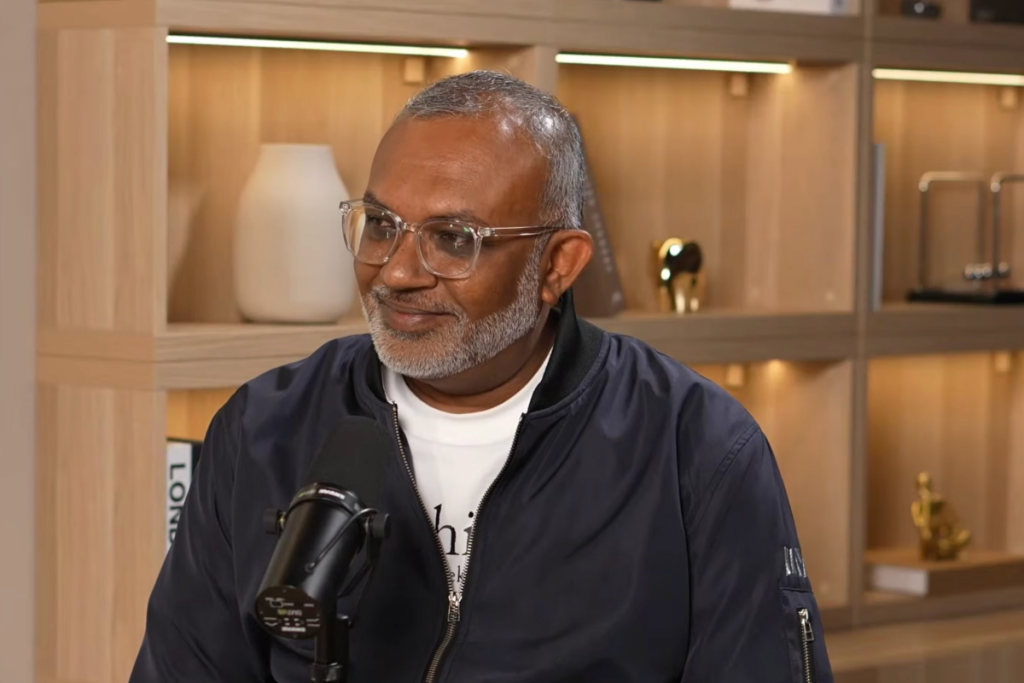
Salovaara is bullish on robotics and expects to have more startups from the sector in future Disrupt cohorts. / Photo credit: Antler
Disrupt picks seven companies per cohort, and they are typically between three months to a year old, according to Salovaara. Most participants have a product as well as commercial traction, and the program is geared toward “helping with go-to-market and accelerating the commercial side of things.”
Salovaara emphasizes that Disrupt wants to attract startups from the broader Asia-Pacific region and not just those in Southeast Asia.
Disrupt participants are often keen to make the US a big component of their business. As such, Antler will also help startup founders who want to relocate to the US, which Salovaara believes will become more common.
Antler aims to pour a total of over US$50 million in at least 100 new companies across Asia this year, but he notes that the firm will be more selective in its investment strategy. In practice, this will reduce the number of investments it makes, but its average check size will go up since Disrupt is playing a bigger role.
Previously, Disrupt charged a US$40,000 program fee, which would then be deducted from the US$400,000 capital that Antler injected into each participant. The check size will remain the same for 2026, but Antler is looking to remove the fee.
Mystery shopping
While Salovaara says Antler remains open-minded about which verticals to prioritize, he hopes to see more companies focused on AI for fintech as they are uncommon despite how big the sector is in Asia. He is also eyeing medtech AI and startups building AI infrastructure tools.
“The life of a VC is to partially have a shopping list, but then to do a lot of mystery shopping too,” he says.
“Idiots in the room”
Stay ahead in Asia’s tech landscape
This is premium content. Subscribe to read the full story.
Jussi Salovaara, the VC firm’s co-founder and managing director, talks about what he seeks from Asia’s AI startup scene.
We know this is not ideal. ⌛ Sign up in 20 seconds. Cancel anytime.
Our subscriber community includes professionals from these companies:


Stay updated on the go with our mobile app.
Get latest insights with smoother, more personalized experience through TIA mobile app.







 Grace Priscilla Teo · · 4 min read
Why most AI startups are struggling despite record software spending
This article summarizes an episode of SaaStr AI’s video series featuring Jason Lemkin, CEO and founder of SaaStr.

Jason Lemkin, CEO and Founder of SaaStr/ Photo credit: SaaStr
Global software spending is expected to reach a record high in 2026, but for most companies, that growth is misleading. Jason Lemkin, CEO and founder of SaaStr, sees the market splitting into two. A few AI leaders are growing quickly, while everyone else competes for what’s left in a hidden budget crisis.
The great divide in startup growth
Headlines are filled with stories of AI startups seeing huge growth, getting big in months, not years. This makes the market look like it is booming. In reality, a small number of companies are growing fast, while most are struggling to grow at all.
Getting big has never been faster
Lemkin says, “It’s literally never been easier to scale to US$100 million quickly, but only for a select few. Glean has already gone from zero to US$100 [million in ARR]… this year. Replit and ElevenLabs went to US$200 million already this year.”
The downside of hyperspeed
The same forces that help a few companies grow fast also make competition tougher. New ideas can be copied almost overnight.
Lemkin notes, “There’s so much competition. Folks are getting cloned so quickly… A company I invested in here that is totally awesome AI, very disruptive, I think, launched about 60 days ago, has four clones already.”
Most startups with investors are failing
This fast-changing market is splitting into two. Most startups are struggling, while investors pour money into the few growing quickly.
Lemkin reports, “If you’re an investor, most startups are not doing great today. They’re not. But the ones that are really breaking out at this crazy level, the investors are just frothing at the gums to put more money in.”
Venture capital’s game of concentration
The market’s instability is worsened by a shift in venture capital. Investors are backing fewer top companies, leaving most startups with less funding and more risk.
The way investors give out money has changed
- About half of all venture funding now goes into just four large deals, leaving less for other companies.
- The total number of investments is far lower than in 2021.
- Investors prefer established AI companies, where bigger checks feel less risky and are easier to exit.
Investors are chasing established AI leaders
This has led to a shift where investors who once backed early-stage startups are pulling away.
Lemkin argues, “So many investors that I’ve known over the years, so many actually classic SaaS and B2B investors that used to do seed… they’re doing [deals with] Anthropic at US$80 billion… Why are they doing this? … That’s actually where the easy money is.”
Early-stage investing has become less attractive
Lemkin explains the math, “It’s less work to make 10 times more money. That’s just math today… It just seems so silly when you can just put the money into a late-stage unicorn AI company, and it quintuples in a year. One year. Why would you do anything else?”
The software budget mirage
This situation, where a few winners get all the investment, is also happening with customer spending. At first glance, the future looks good. Tech executives are preparing to spend more on software than ever before.
Tech executives plan to spend more on software than ever
Lemkin highlights, “Software spend is accelerating to a record level next year, especially in the enterprise. A record level. It is reaccelerating the Chief Information Officer’s budget… they’re predicting it’s going to reaccelerate to 15.2% for software.”
The spending increase is not for new vendors
The truth is that most of this new money is already claimed.
Lemkin breaks it down, “Half of this record spend is going to [software] price increases… and 30% of it is going into new AI tools that they’re bringing in. It doesn’t leave much left for all the rest.”
The market is shrinking for non-essential tools
Lemkin warns, “If you’re not in [the category of] existing vendors that are able to increase pricing and you’re not in a top AI initiative, the number of [new] vendors being added is shrinking or flat. It’s harder. Your job is harder.”
What it takes to break through
With tough competition for less available money, the standard for new products is higher. Adding an AI feature is no longer enough to stand out or justify a higher price.
AI products must offer huge value in one of three ways:
- Automate employee tasks to reduce salary costs.
- Boost worker productivity so they can operate at a much higher level.
- Offer a 10x productivity gain that makes old ways of working outdated.
A simple co-pilot does not justify a higher price
An AI assistant that offers only small gains will not persuade executives to reallocate planned spending.
Lemkin says, “I’m not going to pay you two or three times as much because you have a cool copilot or a nice chat. That’s not enough. It’s not enough. AI features don’t count.”
The budget comes from replacing or augmenting headcount
The real upside for AI comes from the salary budget, not the software budget. The strongest products let companies rethink how work is done by reducing manual effort or significantly increasing employee productivity.
“It doesn’t matter unless you’re replacing a large part of DevOps humans with AI,” Lemkin explains. “It doesn’t count because there’s no extra budget… They bought [AI support software] to get rid of headcount, and that is going to accelerate next year.”
This Too Long; Didn’t Listen (TL;DL) summary was AI-generated and human-reviewed. Read all summaries here.
Stay updated on the go with our mobile app.
Get latest insights with smoother, more personalized experience through TIA mobile app.
Recommended reads
- VC tracker: New funds across US, SEA, India
- Cursor to hire over 200 in APAC as it makes enterprise push
- A list of profitable startups and tech companies in SEA
- The clean energy trap Thailand can’t seem to escape
- Indonesia’s leading digital banks in 6 charts
- How ‘hard mode’ became Southeast Asia’s AI advantage
- Asia layoff tracker: Meta cuts hit SG staff in brutal month
- Why Singapore’s AI regulator refuses to regulate
- 500 designs, 5 designers: AI’s dazzling jewelry math
- OpenAI says Singapore in its top 5 markets for Codex adoption
Editing by Gilang Kharisma
(And yes, we’re serious about ethics and transparency. More information here.)