

With equal pleasure I have as often taken notice, that Providence has been pleased to give us this one connected country to one united people—a people descended from the same ancestors, speaking the same language, professing the same religion, attached to the same principles of government, very similar in their manners and customs, and who, by they their joint counsels, arms, and efforts, fighting side by side throughout a long and bloody war, have nobly established general liberty and independence. (John Jay, Federalist Papers #02)
Like many nation-states, the US lacks good language to distinguish between citizenship and ethnicity; we use the same word, “American” for both1. Compounding the confusion, we also use “American” for the continents of the Western Hemisphere. This muddles political discourse around immigration and national identity; many nationalists use terms like Amerikaner, Founding Stock, Heritage American, Settler American, and WASP2 to point towards the American ethnicity and nation, while their opponents typically deny an American nation exists or even claim that immigrants are actually the most American group of all.
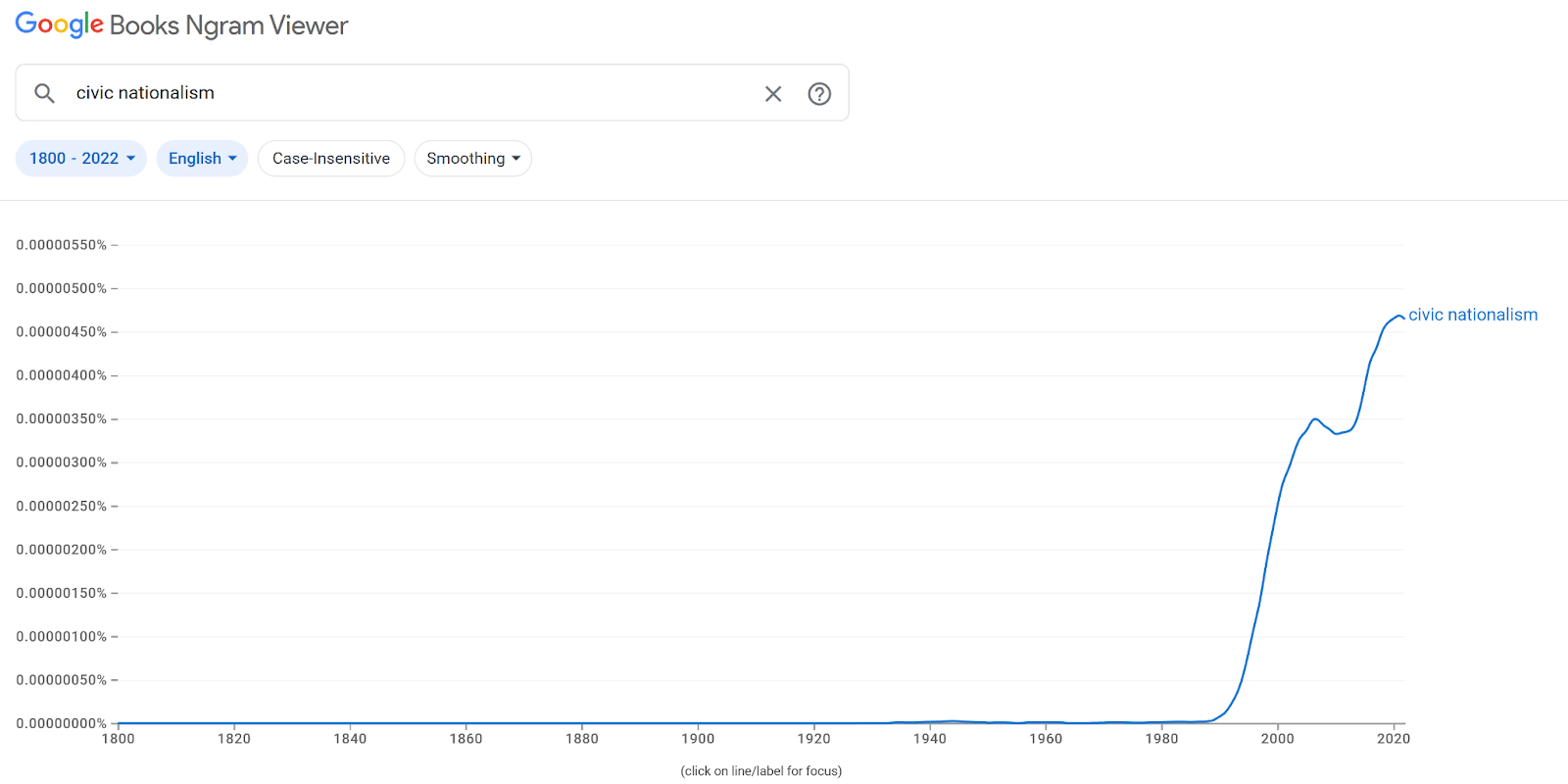
This verbiage also leads to profound misunderstandings of US history. The United States is often described as a multiethnic empire, but for most of its history it wasn’t. Unlike true empires from Rome to Russia to Austria-Hungary, conquered peoples were demographically marginal; the expansion of the state and the demographic expansion of the American people were one and the same. The United States, until the cultural revolution of the 1960s and Civil Rights, was an American nation-state with minorities3 (most importantly, defeated American Indian tribes, African-Americans and various Ellis Island groups). Americans4 are the state-forming people5 at the core of the United States.
The First American Nation
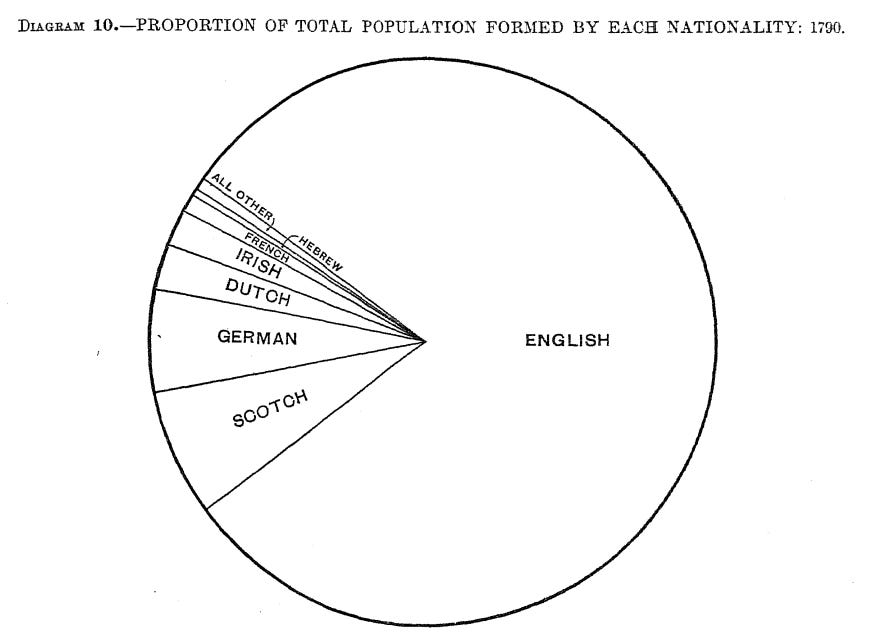
Americans in 1790 almost exclusively traced their ancestry to six countries, all northwestern European: England (82.1%), Scotland (7%), Ireland (1.9%), Germany (5.6%), the Netherlands (2.5%), and France (0.6%). The 1776 committee headed by Thomas Jefferson convened to decide the matter even proposed the seal of the United States be composed of the national seals of these countries.
The main force by which a smattering of distinct English colonists and a handful of other whites in the New World were melded into a cohesive nation distinct from their English and European origins was, as famously propounded by Frederick Jackson Turner, the frontier. Compared to their English cousins, the land-rich frontier left Americans:
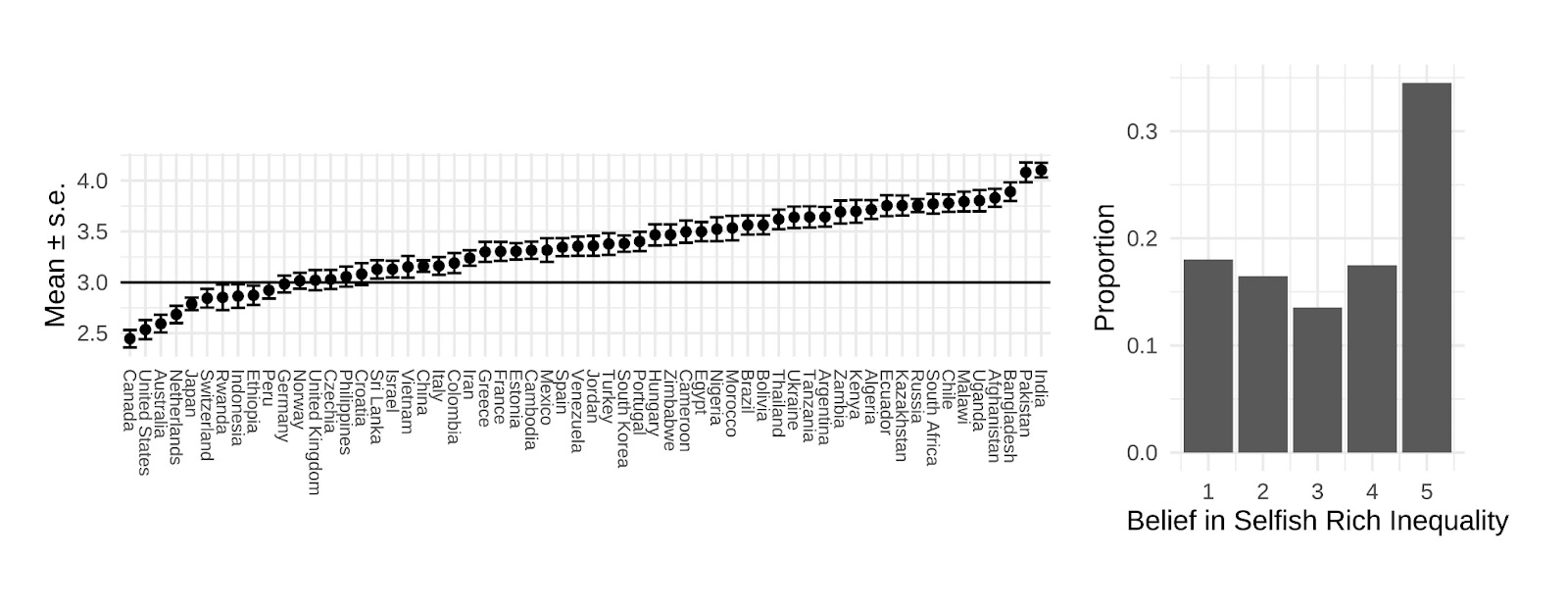
More prosperous and less envious. Americans have been living in a post-Malthusian positive-sum world longer than any other people on Earth, and this history has left strong cultural residues. Even today, the United States is the least envious (and least attracted to socialism) country on the planet.
And when you divide by race, you can see that white Americans, with genetic connections to the first American nation, are exceptional among the US population.
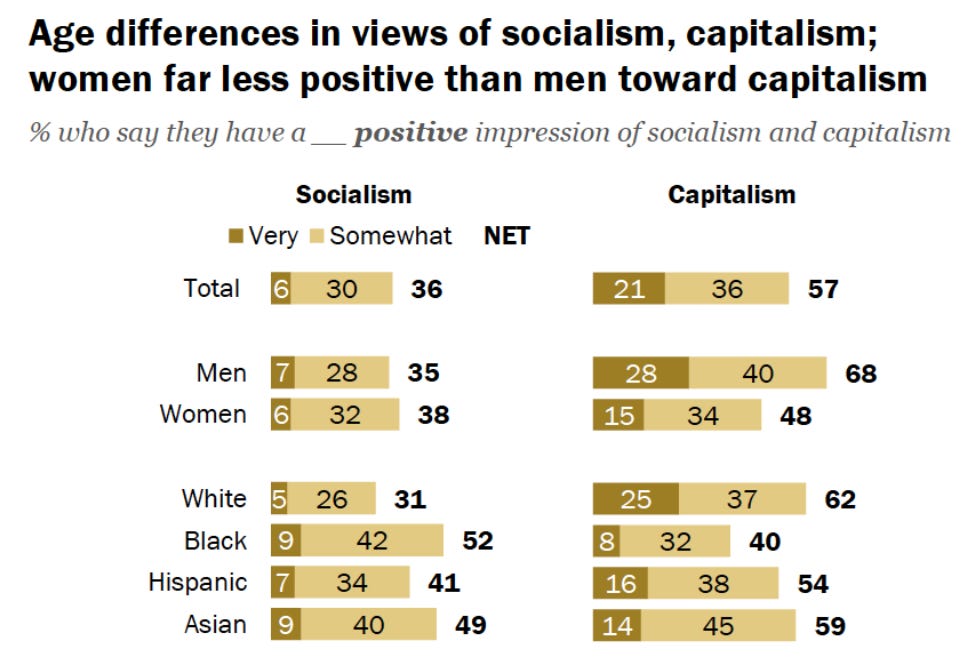
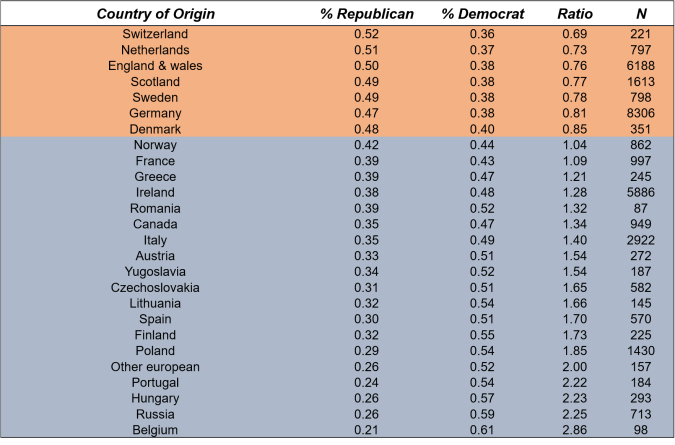
And when you divide white Americans by ancestry, you can see that the closer to the first American nation (northwest European Protestants with frontier ancestry), the less supportive of redistribution, and virtually all ancestry groups are less supportive of redistribution than their European cousins.
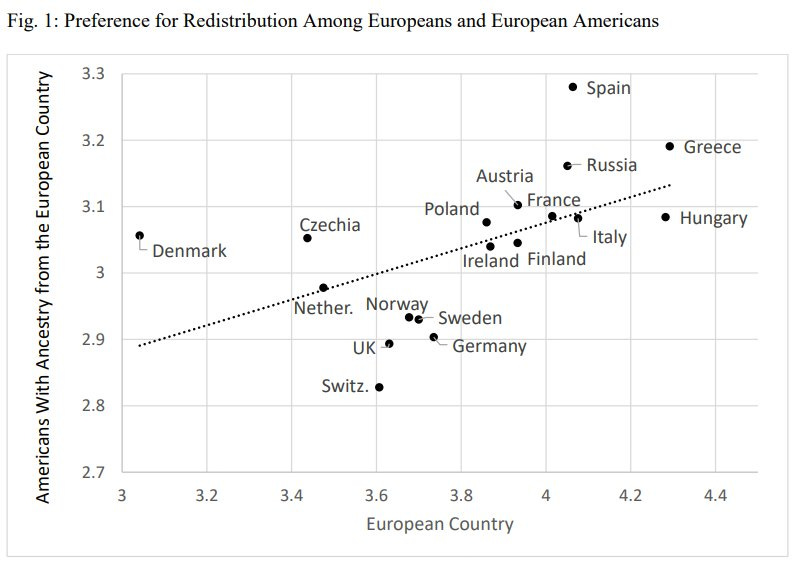
This has been a big cultural advantage for the United States, as Americans are less attracted to negative-sum redistributive schemes than any other people on Earth. Unfortunately, the marginalization of Americans within the United States, first with Ellis Island and then with Hart-Celler, has eroded this.
More fertile. As a consequence of prosperity, Americans married earlier and so had much higher fertility than Western Europe, with the population doubling every 25 years from natural increase. This extremely rapid natural growth weakened links with the mother country, as a larger and larger fraction of the colonists had never been to Britain, and helped with the absorption of non-English aliens.
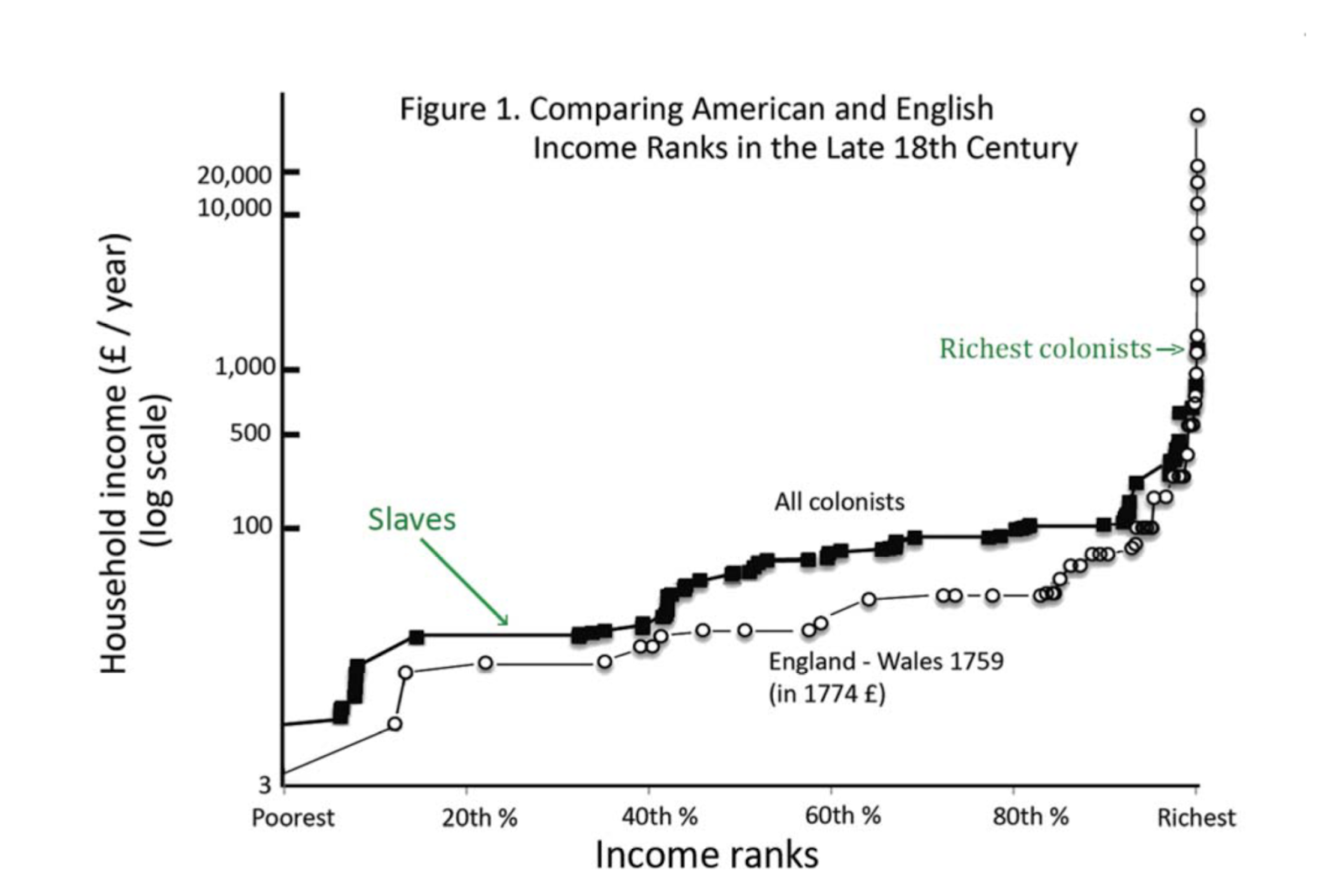
More egalitarian6 (labor always having the option to go West, if willing to fight Indians). America had no aristocracy and no class system. The social distance between the richest and poorest white Americans was much smaller than that of their counterparts in England. The rich and powerful had to respect the poor, who always had the option to better themselves if they were capable.

English vs American income distribution just before the Revolution. Americans were richer across the board (even counting slaves), except at the very high end. Source. More self-organizing and self-reliant. Thinly-populated, very rural, and very far away from London, Americans had to solve their own problems rather than wait for central direction. Alexis de Tocqueville noted American’s disposition to voluntary associations: “Americans of all ages, all stations in life, and all types of disposition are forever forming associations. There are not only commercial and industrial associations in which all take part, but others of a thousand different types—religious, moral, serious, futile, very general and very limited, immensely large and very minute.” This analysis is borne out by modern evidence; the tiny backwater United States probably had more corporations in 1812 than the rest of the world combined, and Americans retained remarkably high social capital until the late 20th century.
Physically taller. In 1780, American men were 2.6 inches taller than their British counterparts (Komlos 2003).
But above all, genocidal frontier warfare with the “merciless Indian savages” forced self-organization and self-government distinct from England, too far away and too embroiled in European politics7 to reliably defend its colonists. It was also a place where different types of white, who in Europe would be at each other’s throats, had to stick together, where Dutch colonists would ransom an Englishwoman just because she too was white.
One consequence of life on the North American fault line was the famous American melting pot. Indeed, when confronted with such obvious aliens as painted, bloodthirsty, heathen redskins, two European settlers, even if they came from different countries, could not help but feel that they were kin. Thus, in the old Europe, although the Irish hated the English, and the French fought against the Germans, in the New World all these people cooperated with each other and fought together against the Indians. As a result of the shared feeling that they belonged together, they and their descendants rapidly assimilated to a common American culture and language (Turchin, War and Peace and War).
This ethnogenesis was mostly complete by the time of the American Revolution. The first use of the word “American” to refer to American whites was by Cotton Mather in 1684, and the first use of it by the English was in 1741 during the War of Jenkin’s Ear (The Oxford History of the American People, Morison 1965). One consequence of this is that national minorities (American Indians, African-Americans, French Quebecers, etc) typically sided with the British during the American Revolution, while English-descended colonists tended to be patriots.
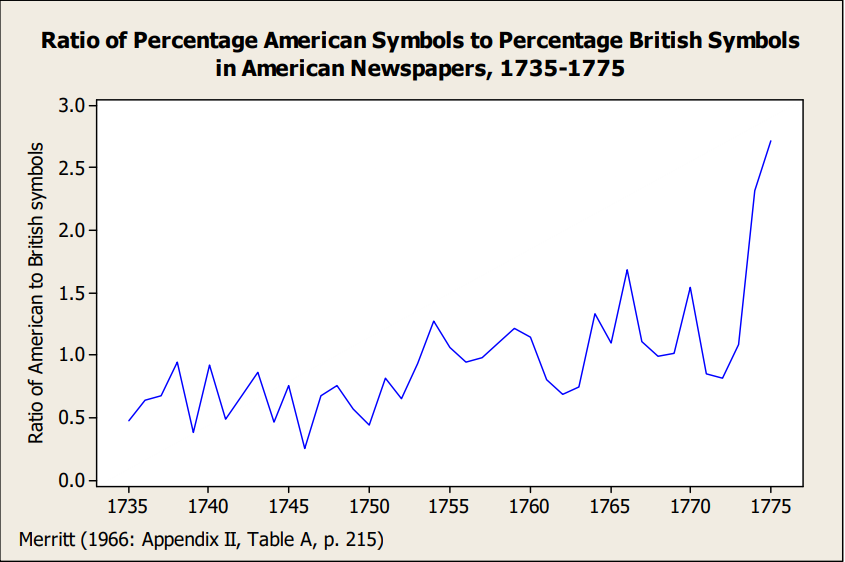
Anglo colonists had already become Americans and were thus a locally-dominant ethnic group distinct from the imperial metropole and more willing to fight a war of national self-determination, while various minorities, for different reasons, preferred distant rule from London. Which makes sense; the synergies between distant authority and ethnic diversity, and conversely between self-governing republican liberty and homogeneity, have been common knowledge among the educated since Aristotle8.
The new American ethnicity was then solidified by the flight of tens of thousands of Loyalists to Canada and a 55-year period after the Revolution, from 1775 to 1830, of almost no immigration from any source. In this period, the various linguistically-distinct European ethnic minorities in the United States intermixed and disappeared, leaving a homogenous9 nation-state.
The language of the first American nation was English, and the nation was Protestant (roughly 97% of Americans in 1790 were Protestant, and even by 1870, after enormous waves of immigration from Germany and Ireland, the US was still over 90% Protestant10), though unlike in Ireland or the Balkans, religious differences did not create national or ethnic differences; the small number of Catholics and infinitesimal number of non-Christians were still considered Americans. Perhaps because of its origin in religious refugees in the North or perhaps because the absence of a national church or universal Roman Catholic hierarchy let people flow to the most compelling sects, America was considered extremely religious by European observers, though as with most nations went through cycles of secularism (the peak of one such cycle corresponding with the American Revolution) and religiosity (Great Awakenings). The Yankee stereotype was of a money-crazed religious fanatic.
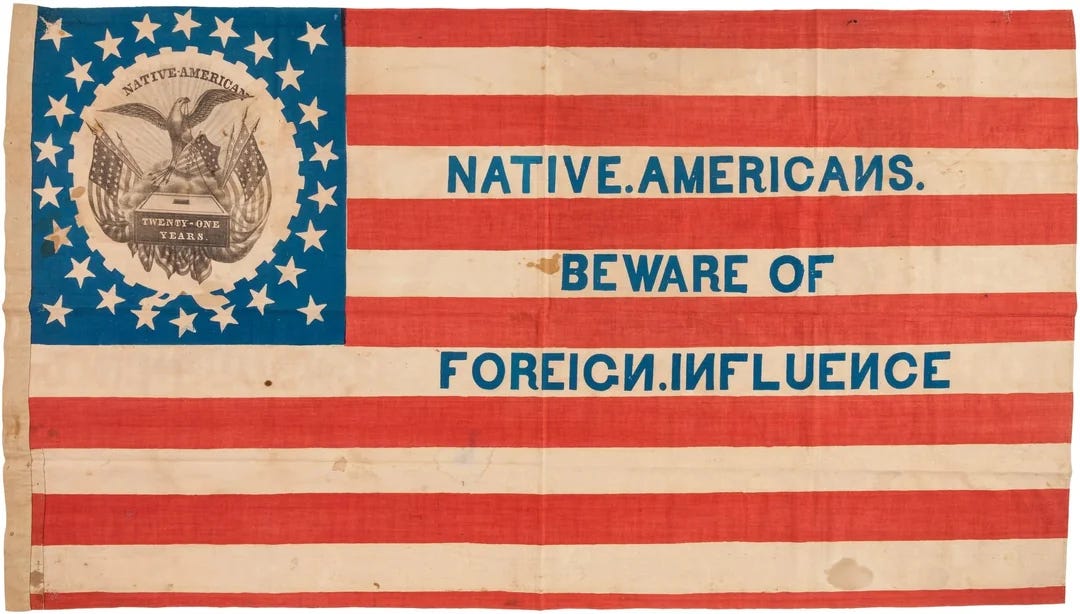
This nation, formed by the frontier and sealed by the Revolution, is what the Know-Nothing Party and Madison Grant referred to when they said “native Americans,” a term that has been misappropriated to refer to American Indians.
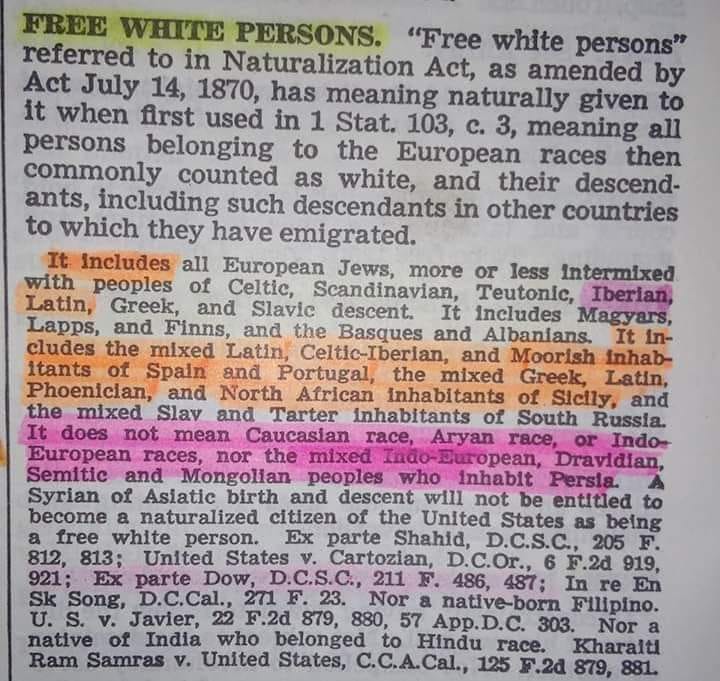
The first American nation was explicitly white and implicitly Northwestern European, with more than 99% of colonial stock and more than 90% of further immigration until 1880 coming from Northwestern Europe. Keeping America a “white man’s country” motivated the Chinese Exclusion Act of 1882 and its later expansion in 1917 into the Asiatic Barred Zone, which banned almost all Asian immigration from any source (Asia being the only major source of nonwhite immigration until the enormous post-WWII Latin American population boom).
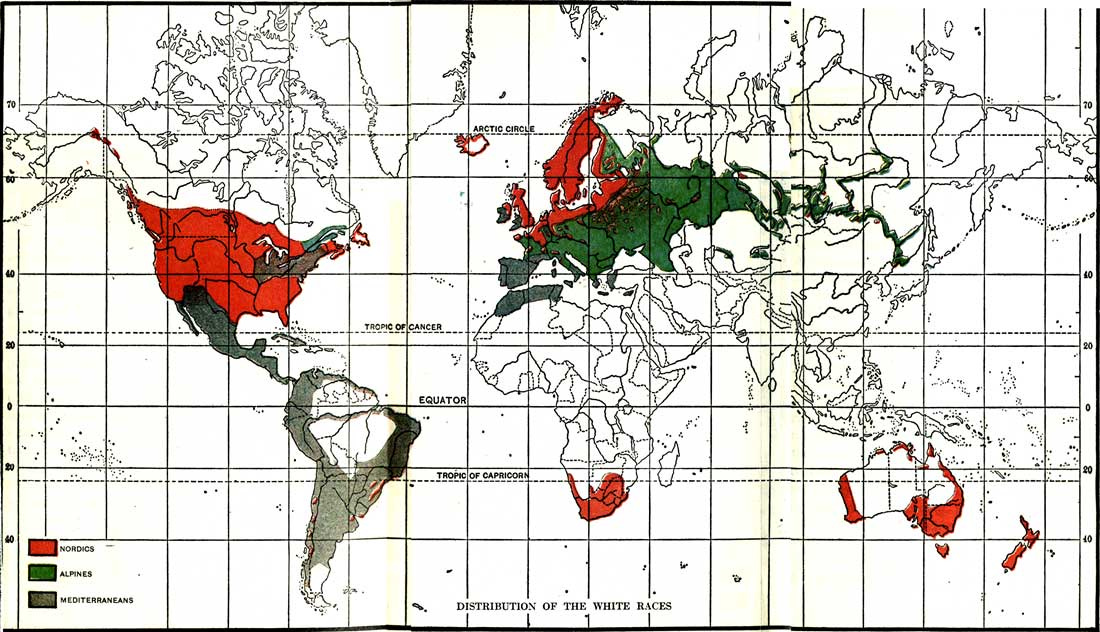
In the language of early 20th century anthropology11, Americans were a homogeneously Nordic nation, even more so than Britain itself, as the “Mediterranean” component of the British Isles was left behind in the selective migration across the Atlantic.
You can see this in physical anthropology: 57.4% of white Americans born between 1899 and 1905, after decades of Southern and Eastern European immigration, had blue eyes, almost as many as in Sweden today, but only 33.8% of those born between 1936 and 1951 did (Grant and Lauderdale 2009).
Heroes and Narrative
Every nation has its own heroes, myths, symbols, and narrative. The founding myth of the first American nation is the American Revolution and the triumph of New World republican self-government over Old World monarchy and despotism. The heroes of this narrative are the Patriots and the Framers of the US Constitution: Paul Revere and Nathan Hale, John Paul Jones and the Marquis de Lafayette, Nathaniel Green and Benjamin Franklin, Alexander Hamilton and Aaron Burr, the cult of the Founding Fathers12 and above all George Washington, who could have created a monarchy and rendered the Revolution pointless, but chose to be a modern-day Cincinnatus instead.
But the narrative of the first American nation begins before the Revolution. While distinguished from the English by their form of government and frontier culture, Americans were still Anglo-Saxon. One of Thomas Jefferson’s proposed seals of the United States13 included “Hengist and Horsa, the Saxon chiefs from whom we claim the honor of being descended, and whose political principles and form of government we have assumed." These chiefs led the Germanic invasion of Britain and so created the English people. 150 years later, Robert E. Howard (author of Conan the Barbarian), lamented the non-Anglo European immigrants in Texas as follows:
What to him and his is Hastings, the Crusades, the Wars of the Roses, the Battle of Culloden, of Bannockburn, of Preston Pans, of the Blackwater. The Black Prince means nothing to him, nor Robert Bruce nor Shane O’Neil. The gulf will be bridged when our race—your’s and mine—is destroyed by the rising tide of such as he, and a mongrel breed, lacking all sentiment and tradition, reigns over the land our ancestors bled and sweat for.
Fittingly, the frontier and westward expansion loomed large in America’s self-image. The first American nation, descending overwhelmingly from pre-Revolution colonists, did not see themselves as immigrants, moving from one country to another. Instead, they were settlers, pioneers, and frontiersmen who faced down bloodthirsty savages and untamed wilderness to build civilization from nothing. The heroes of Manifest Destiny include Lewis and Clark, Davy Crockett and Daniel Boone, even Johnny Appleseed and Paul Bunyan.
The last great national myth was that of the Civil War, a tragic and bloody conflict between North and South (not between different nations) over slavery and secession, with fine generals and men on both sides. The heroes of this narrative include the leadership of both the Union and Confederacy, above all Lincoln, Grant, Lee, and Stonewall Jackson. In the words of Teddy Roosevelt:
GENTLEMEN—I regret that it is not in my power to be with you at your celebration. I join with you in honoring the life and career of that great soldier and high-minded citizen whose fame is now a matter of pride to all our countrymen. Terrible tho the destruction of the Civil War was, awful tho it was that such a conflict should occur between brothers, it is yet a matter for gratitude on the part of all Americans that this, alone among contests of like magnitude, should have left to both sides as a priceless heritage the memory of the mighty men and the glorious deeds that the iron days brought forth. The courage and steadfast endurance, the lofty fealty to the right as it was given to each man to see the right, whether he wore the gray or whether he wore the blue, now makes the memories of the valiant feats, alike of those who served under Grant and of those who served under Lee, precious to all good Americans.
This is why the destruction of statues of Confederate leaders provokes such pushback14; these men are national heroes15. Them being lionized for fighting against the Union doesn’t change that, because the state is not the nation. The men of the Confederacy were American; that was the whole point of the Civil War and why we speak of “the Union” and not “the United States.” That is why the US military spent a century naming things after and honoring Confederate figures; they’re a part of American martial history even if they fought other Americans. It is normal for a nation to have heroes who served multiple states (consider how Napoleon, Cardinal Richelieu, and Clemenceau are all French heroes, though they served different and incompatible states), and the only reason this fact isn’t recognized today is that American national identity has been dissolved in acid to the point that few even acknowledge Americans as a nation at all.
In Classical Terms
The classical definition of a nation comes from Herodotus: a people united by common religion, common blood, common language, and common customs. For Americans, that religion was pluralist Protestantism, the blood Northwestern European, the language English, and the customs Anglo-Saxon modified by the experience of the frontier and the Enlightenment-inspired government that came out of the Revolution.
Ellis Island and the Second American Nation
Altogether, we may say that for 250 years a sound, compact Nordic-English culture existed in America undisturbed and unthreatened, with only such accretions as it could ultimately use advantageously in preserving the pattern. As late as 1880 there was no dispute as to what constituted the American type, or any doubt about the permanence of that type. New immigrants were all assimilable—joked about for their dialect during one generation, but with children who entered the native pattern and became the jokers instead of the joked-about. (H. P. Lovecraft)
The United States had high immigration from 1830 to 1880, but it was almost exclusively from Britain, Ireland, Anglo-Canada (and thus Britain, Ireland, and the US itself), and Germany. As these were the same sources that had originally formed the first American nation, they were quickly assimilated and nativism remained fringe. This changed with mass steamship travel and railroads in Europe, which suddenly put passage to America within reach of almost all Europeans.
For the first time in US history, huge numbers of immigrants began arriving from outside of Northwest Europe. Italians, Poles, Jews, Russians, Lithuanians, French Quebecers, even Syrians, Mexicans, and Armenians.
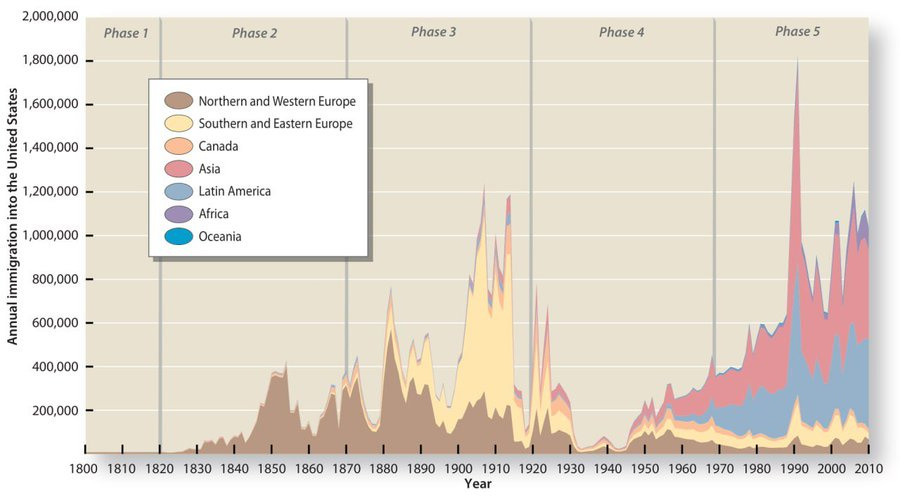
While colonial-era settlers from Europe had been positively-selected from the most literate and technologically and culturally sophisticated nations in Europe, the new wave of migration tended to be neutrally selected when from the old sources of Northwest Europe, with mid-level artisans overrepresented and both the rich and poor staying home, and negatively selected from the rest of Europe, with the illiterate and poor overrepresented (Abramitzky and Boustan 2018). Assimilating these new arrivals would prove a long, painful, and difficult process.
The Assimilation Process
Assimilation means “becoming indistinguishable to casual outsiders and not viewing each other as aliens to be struggled with” not becoming indistinguishable in all respects. It’s just about impossible to tell the difference between an individual of Ellis Island descent and one of colonial stock in the United States today, and the differences are not politically or practically salient. If you meet a new white American today, you will not be able to tell where in Europe his ancestors were from with much confidence unless he tells you. The various European ethnic groups of the early 20th century have shifted from minorities in an American nation-state to part of the American majority (though Americans will not be a majority in the United States for much longer).
This does not mean they became identical in all respects. There are still systematic differences between white Americans of different ancestry in income, in educational attainment, in choice of professions, in physical phenotype, in political partisanship and religion and social views. Ellis Islanders fundamentally changed the character of the nation, as you would expect given the persistence of traits and the partially genetic nature of many16 group differences. Assimilation in the strong sense—turning foreigners into Americans indistinguishable from the first American nation—did not happen and cannot happen. The second American nation is, in most respects, an intermediate hybrid between the first and European ethnic groups, with the final result being the weighted average of the constituent groups.
We can track this assimilation by endogamy. The breakdown of European endogamy in the US took place in three stages. In the first stage, the 1880-1924 period, the borders between ethnic groups were “castelike,” with near-zero exogamy in the “new” ethnics (Eastern and Southern Europeans) and low levels in “old” ethnics (Irish, Germans, Scandinavians). The exception was British immigrants.
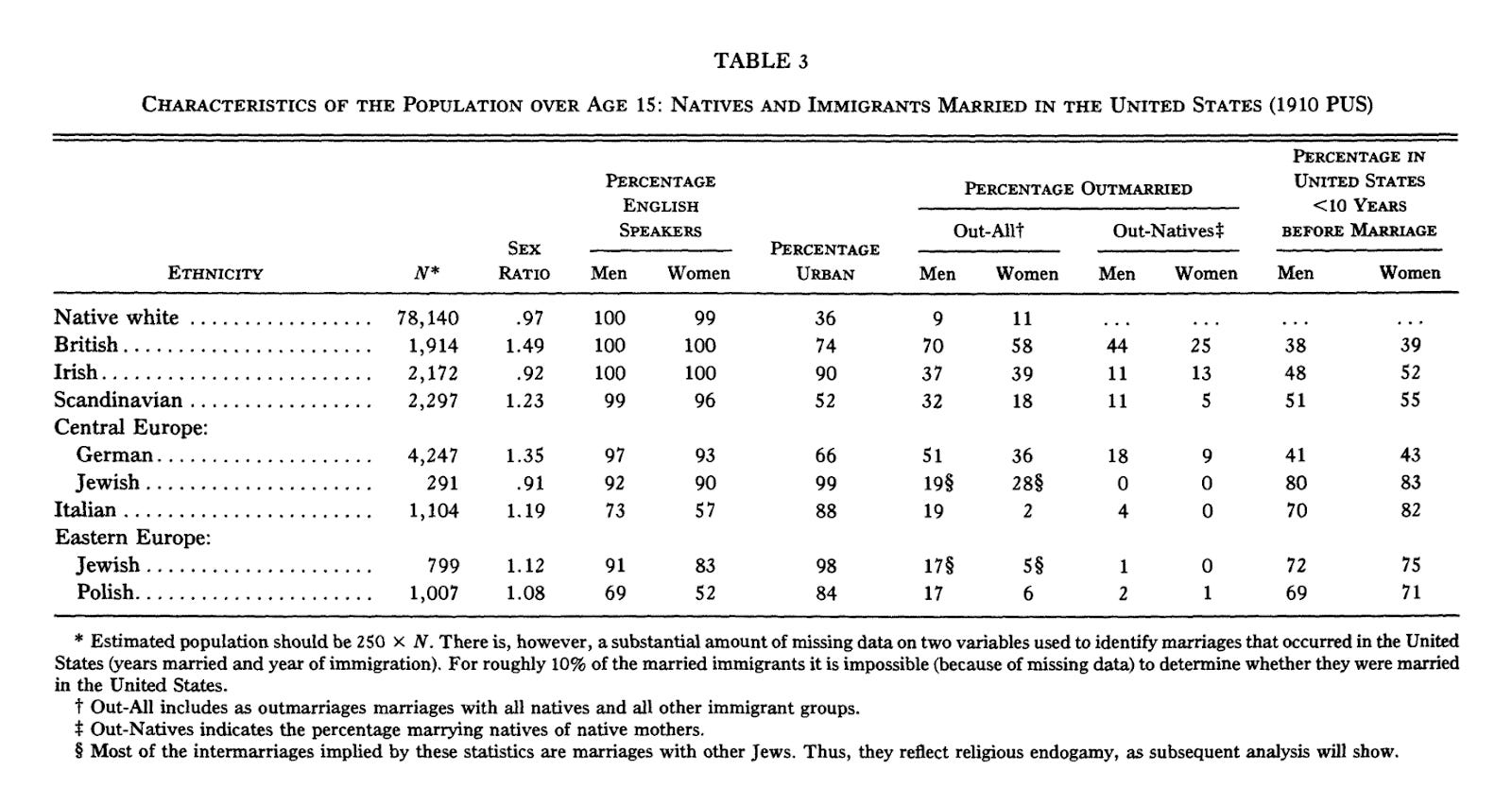
In the second stage, beginning roughly 1924 (triggered by the 1924 Quota Act), there was a “triple melting pot,” with different Catholics (Irish, Italians, Poles), different Protestants (British, Scandinavian, German), and different Jews (Central and Eastern European) marrying each other and marriages between religious silos rare.
This stage ended in the 1960s, with religious animus becoming a thing of the past, as symbolized by John F Kennedy, and the total breakdown of ethnic divides caused by the destruction of white ethnic neighborhoods due to Civil Rights and integration.
You can see this timeline clearly in intermarriage rates for Irish and German immigrants, with British immigrants as a baseline. In 1880, the ethnic distance between Americans and Britons (including Anglo-Canadians) was so small that British immigrants assimilated in “less than one” generation, as expressed by Lovecraft above, with less than 40% marrying other British immigrants, and far more marrying Americans than other immigrant groups.
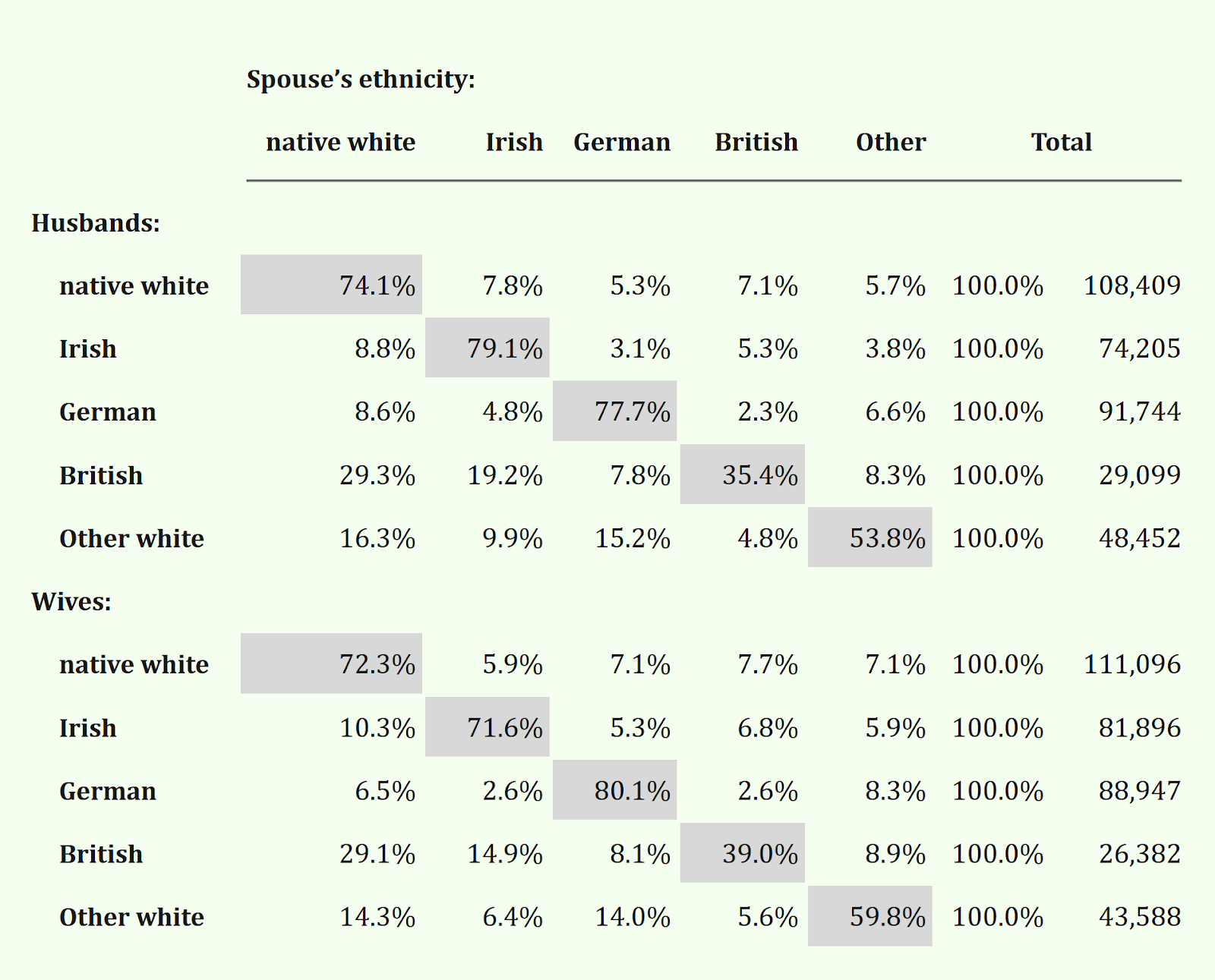
Irish and Germans, the other two major pre-Ellis Island immigrant groups, were more distinct (and it’s safe to assume Catholics were less likely to intermarry than Protestants in both groups), with both approaching 80% endogamy and less than 10% marrying Americans in 1880. By 1910, both Irish and Germans were down to around 60% endogamy in major cities, still higher than their British counterparts 30 years prior, but far below Jews, Italians, or Poles (Logan and Shin 2013). By 1960, when the second American ethnogenesis was nearly complete, urban endogamy in both groups was around 20%, and in generations born since then the two groups have disappeared as distinct ethnic blocs (Logan and Shin 2013).
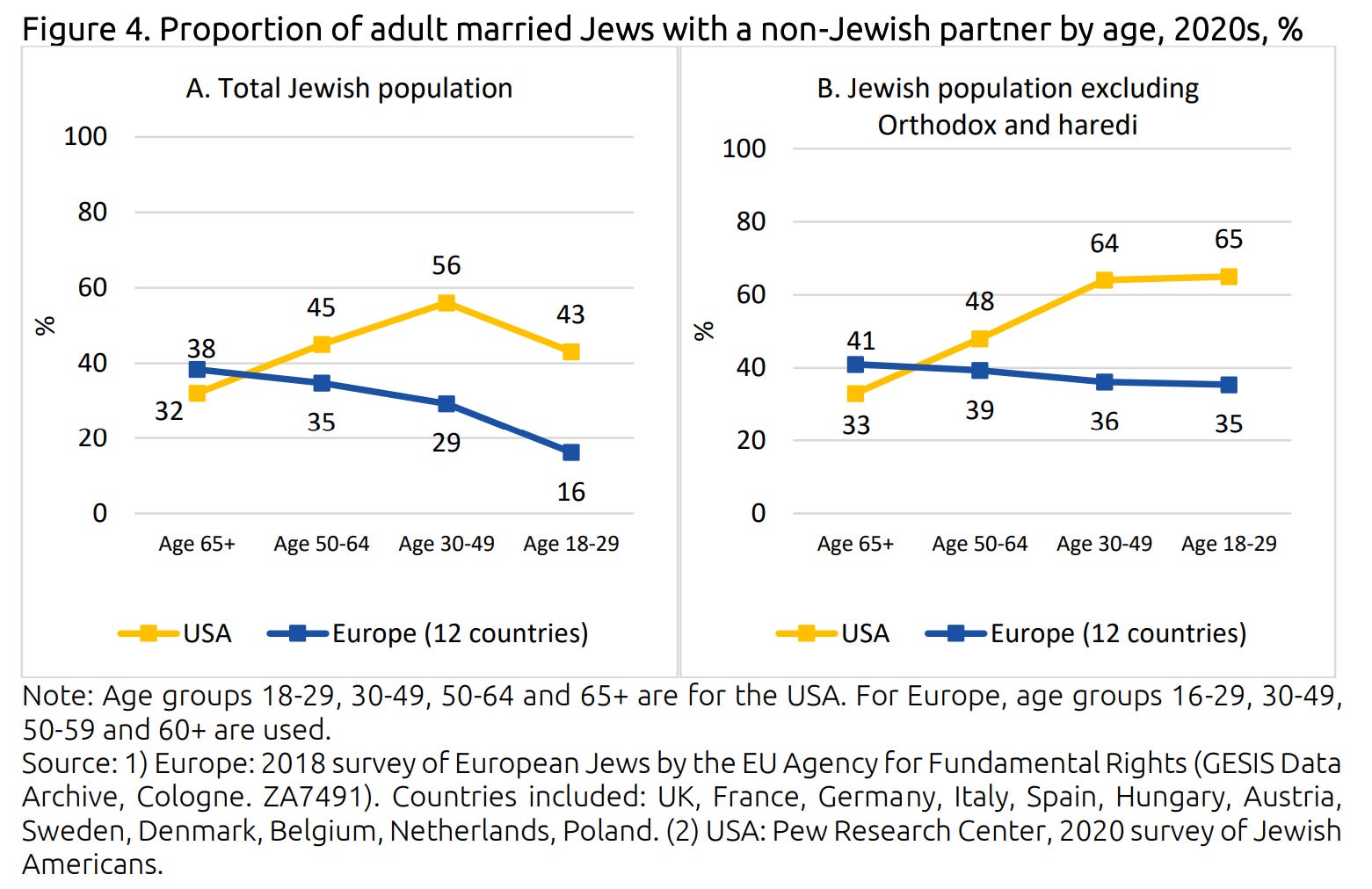
Though slower than the other Ellis Island groups, perhaps because the religious divide between Protestant and Catholic is smaller than that between Jew and Christian, the same process happened with Jews.
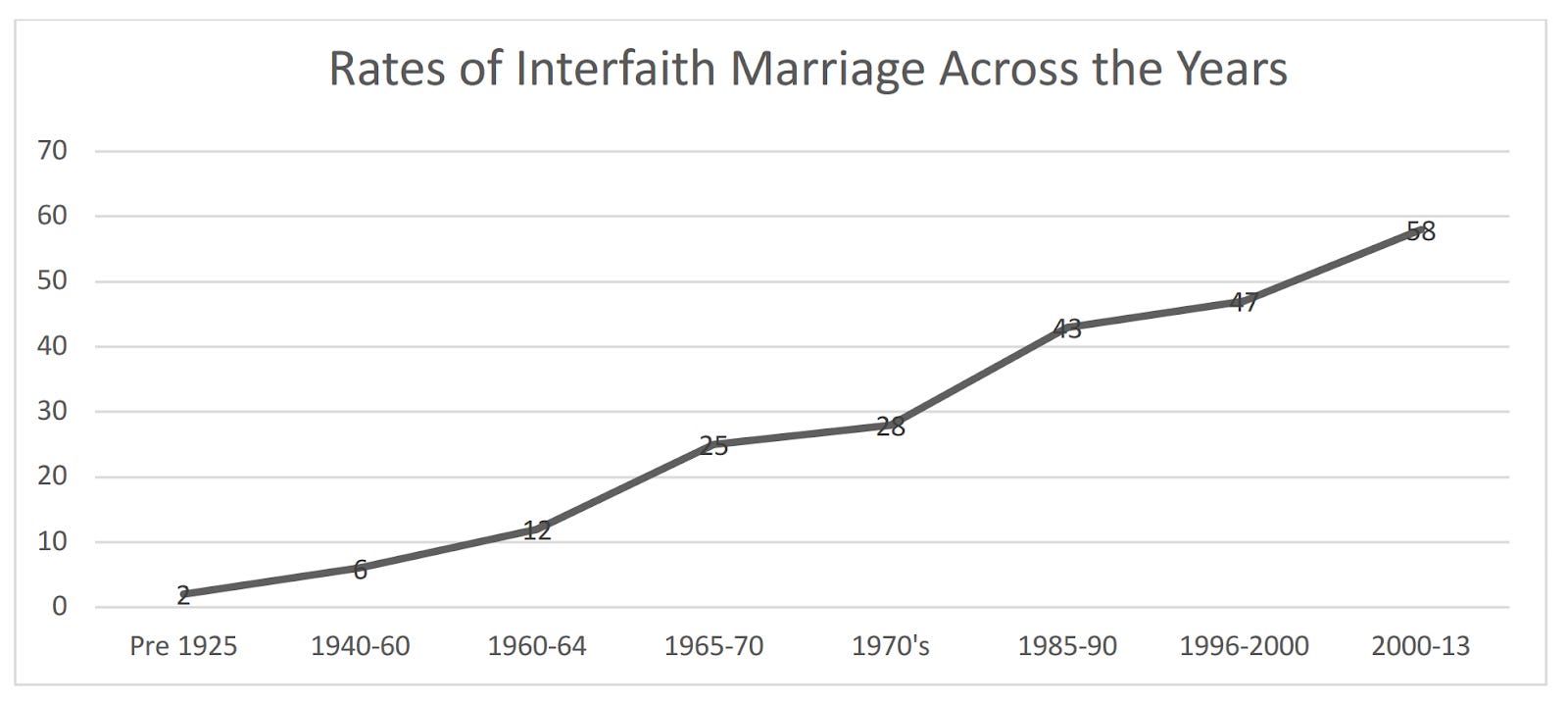
Today, about ⅔ of non-Orthodox Jewish marriages in the US are interfaith.
A staple of immigration discourse is the idea that this synthesis of Ellis Islanders and Americans into a new nation means that we can assimilate anyone, so there is no reason to restrict immigration from any group on Earth. This is, to put it bluntly, insane17. The assimilation process happened, but it took generations, a near-complete cutoff of immigration, and multiple catastrophes to accomplish.
World War I
The first big milestone in America’s second ethnogenesis was World War I. WWI cut off the flow of immigrants overnight, which is why, until the Biden administration’s decision to unilaterally triple already high US immigration flows, the foreign-born fraction of the United States peaked in 1913. More importantly, World War I was fought against Germany, the single largest source of immigrants to the United States for decades. This motivated the deliberate destruction of the largest non-American ethnic group in the US, Germans, and their forcible assimilation. Americans banned the German language in schools across the country and forced the German press to shut down or switch to English. German businesses were boycotted, schools, foods, streets, and towns were renamed, German nationals and even a few US citizens were interned in camps, and at least one German was lynched. German public life in the US ended overnight.
As always, assimilation was not perfect—German-descended Americans were the most likely to support nonintervention in WWII—but this spontaneous violence18 successfully eliminated the largest non-American white group as a distinct bloc in the United States, turning them into Americans.
The Quota Acts
Next came the Quota Acts. The single most important reason Ellis Island groups eventually became American was the decades-long near-complete cutoff of immigration from their origin countries. This started with WWI, and was legally locked in place by the 1924 Quota Act, which set a formula for Old World yearly immigration of 2% of the foreign-born population from that origin recorded in the 1890 census. This was intended to stabilize America’s ethnic mix.
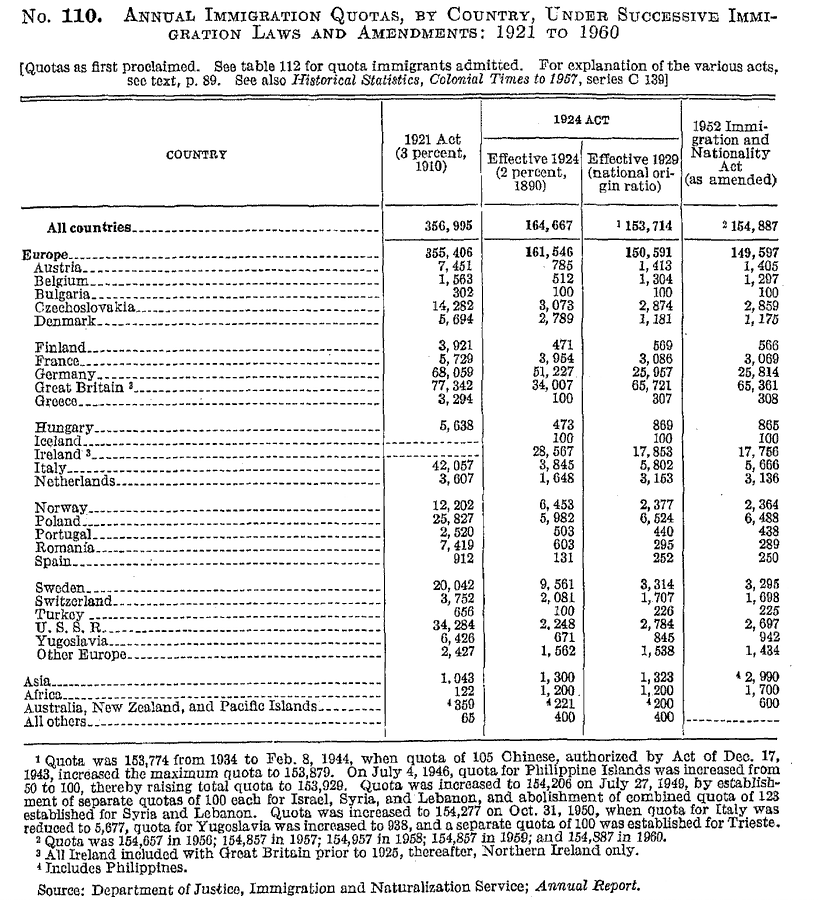
English was already the language of upward mobility, and without a constant supply of non-English speakers into ethnic enclaves, it quickly drove other languages out of daily usage. A universal common language in turn facilitated more interpersonal contacts and stronger social connections with Americans and with other immigrant groups, which began breaking down the “castelike” barriers preventing intermarriage. Conversely, social ties with the Old Country weakened. Brides could no longer be sought there, overseas business ties were replaced with domestic ones, and with no infinite reserve of desperate immigrant labor business owners were compelled to look to other ethnic groups for workers, ending extreme occupational segregation. Relative size of ethnic groups is one of the strongest determinants of endogamy; smaller ethnic groups intermarry more because the pool of coethnic partners is smaller. The same applies to other social bonds. By shrinking the pool of European ethnics, immigration restriction encouraged assimilation.
Instead of trans-national diasporas with little affinity for America beyond money, European immigrant groups were “nationalized” and became more and more distinct from their overseas cousins, as had happened with the American colonists two hundred years prior.
Remigration
This nationalization process was made easier by remigration. Depending on the group, between ⅓ and ½ of European immigrants returned home to their country of origin. This return migration was negatively selected on income, with poorer immigrants being more likely to return (the opposite of Argentina). Many immigrants only ever intended to come for seasonal work, and still more returned home to rely on family networks whenever the American business cycle crashed. There were also deportations of anti-American aliens, especially Communists and anarchists (Emma Goldman’s famous memoir, My Disillusionment in Russia, came from her experiences after being deported to the Soviet Union). In absolute numbers, these were few, but helped make overt anti-American agitation taboo among European immigrants. Those least suited to America left, leaving the reminder more assimilable.
World War II
Nothing motivates intra-group cooperation like a shared struggle against an outside enemy, and WWII served that purpose for the white ethnic groups of the United States. Millions of white men from every ethnic background were mobilized, formed into units, shipped all over the world, fought against a common foe, won, then went to college together with the GI Bill. Not only did this lead to friendships and business ties between previously self-segregated groups, but it also made it very difficult to motivate inter-ethnic hostility; it’s hard to hate or despise your brothers-in-arms19.
John F. Kennedy
JFK was the first non-Protestant president of the United States. He was important less for what he did than for what he revealed: that Protestant/Catholic conflict, so important to the 1920s Ku Klux Klan, no longer mattered much in the US.
White Flight
If the American Revolution sealed the first American nation, Civil Rights and the consequent white flight finished the ethnogenesis of the second. When they were geographically separated, white ethnics and blacks could both be part of the Democratic New Deal coalition, but when they were forced together, this became impossible. Irish, Italian, Jewish, or American, every white group physically near blacks faced race riots, muggings, rapes, home invasions, murders, graffiti, urban disorder, and their kids being attacked in schools. White ethnic groups had big cultural and small genetic differences, but they paled in comparison to the massive gulf between them and blacks. In the same way that conflict with a far more alien enemy forced the American colonists together, exposure to black behavior brought European ethnics and American whites together.
Incredible levels of black criminal violence and disorders, tacitly supported by the post-Civil Rights state20, caused whites of every ethnic group to flee the cities (“white flight”), breaking up the urban enclaves that sustained geographic segregation between different white ethnic groups. With linguistic and religious divides already breached, this broke down the last real barrier between Americans and European ethnics21, finally finishing the decades-long creation of a pan-European American identity, what I call the second American nation.
Culture and Race
The pan-Protestant identity of the first American nation could not accommodate tens of millions of Catholics and Jews. Instead, the second American nation is a Judeo-Christian one. Appeals to God, promoted by the government during the Cold War against the atheistic Soviet Union, are common… but the precise doctrinal details of what that means are typically left vague.
Racially, the northwestern European component still predominates, but the second American nation is more pan-white than the first. There is significant ancestry from all parts of Europe. Ethnic Americans today are almost perfectly synonymous with the US census category of “non-Hispanic white22,” with a handful of exceptions. Some census Hispanics, typically racially white or nearly so, are ethnic Americans, as are a small number of multiracial individuals who don’t form a defined group. Think the Ted Cruzes and Marco Rubios of the world. On the other hand, some groups classified by the census as non-Hispanic white are their own distinct ethnicities, like the Arabs and other Middle Easterners in the US as well as various post-Soviet diasporas. Lastly, insular non-English speaking endogamous religious groups like the Amish and Haredi Jews23 are clearly not ethnic Americans. But for the most part, in the 21st century United States, “white” and “American” are synonyms. This contributes to the confusion over Italians, or Irish Catholics, or Jews supposedly “becoming white” in the 20th century. These groups were always (correctly) considered white in the United States, but “white” and “American” were not synonymous until quite recently.
Because of how broad and expansive incorporating Ellis Islanders made the American ethnic group, almost any English-speaking white can become American in less than one generation, like British immigrants in the 19th century. With the frontier long-closed and republican government established almost everywhere, there is very little to distinguish Americans from Europeans beyond superficial cultural differences that shrink every day with great English proficiency and Internet use.
Heroes and Narrative
That the second American nation is culturally the descendant of the first, rather than a replacement, is clear from the fact that most of its heroes and narrative are the same. The Founding Fathers, the pioneers and settling of the West/Manifest Destiny, the American Revolution and the Civil War are all still huge parts of how white Americans, even those with little or no colonial ancestry, see themselves. It’s why you have Italian-Americans in New Jersey putting up Confederate flags and why Westerns were so popular in postwar America.
What’s lost is the distinctively Anglo-Saxon component. I did not learn who Hengist and Horsa or the Black Prince were through the school system or popular culture, and British history only receives slightly more coverage than any other nation in most US history curricula (mostly just the Magna Carta and Glorious Revolution. In my AP US History class, we spent more time on the Haitian Revolution than on all of English history combined).
The other major loss is the focus on republican self-government. The French Revolution and World Wars, which ended monarchy as a serious form of government, made Europe much more like the United States, while the New Deal and Great Society created a bureaucratic Leviathan that made the US more like Europe. Since it’s no longer much of a distinguisher, it cannot serve as a foundation of national identity. Instead, we get pap about protean “American values” which are never quite pinned down and shift with the political winds.
There are additions too. Christopher Columbus and FDR were added to the pantheon of American heroes and St. Patrick’s Day to the list of American holidays. In addition to the Revolutionary and Civil Wars, WWII looms large in the consciousness of the second American nation. Though entering the war was very unpopular until Pearl Harbor and war weariness was widespread by 1944 (would you want to get yourself killed when victory was already certain?), it quickly became mythologized as the Good War, where Americans fought a truly national struggle for a virtuous cause and created a just peace settlement in Italy, Japan, and West Germany24. The extraordinary success of America in the generation after the war, with the biggest economic boom in US history and the golden age of the nuclear family, culminating in the Moon Landings, sealed WWII as a touchstone of American identity25.
We can thus define the second American nation in Herodotus’ terms. The common religion is Judeo-Christian, the common language English, the common blood European, and the common customs a blend from all over Europe, most strongly influenced by the Anglo-Saxon culture of the first American nation.
Breaking the American Nation
The ethnogenesis of the second American nation was successful on its own terms, though not on those of the American nativists who warned against immigration in the early 20th century, whose predictions were largely born out26. It may have taken almost a century for the melting pot to create a new race of Americans from the peoples of Europe, but it did happen, and the second American nation’s great works (victory in WWII and the Cold War, Apollo, inventing almost every important technology of the 20th century) are the equal of any other people on Earth. But the tragedy of the second American nation is that the various Ellis Island groups reached elite status before they fully assimilated. You had a situation where for several decades a large fraction of the US elite saw themselves as immigrants first, distinct from and oppressed by ethnic Americans (“WASPs” or “Anglos”).
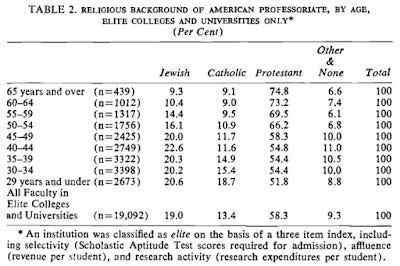
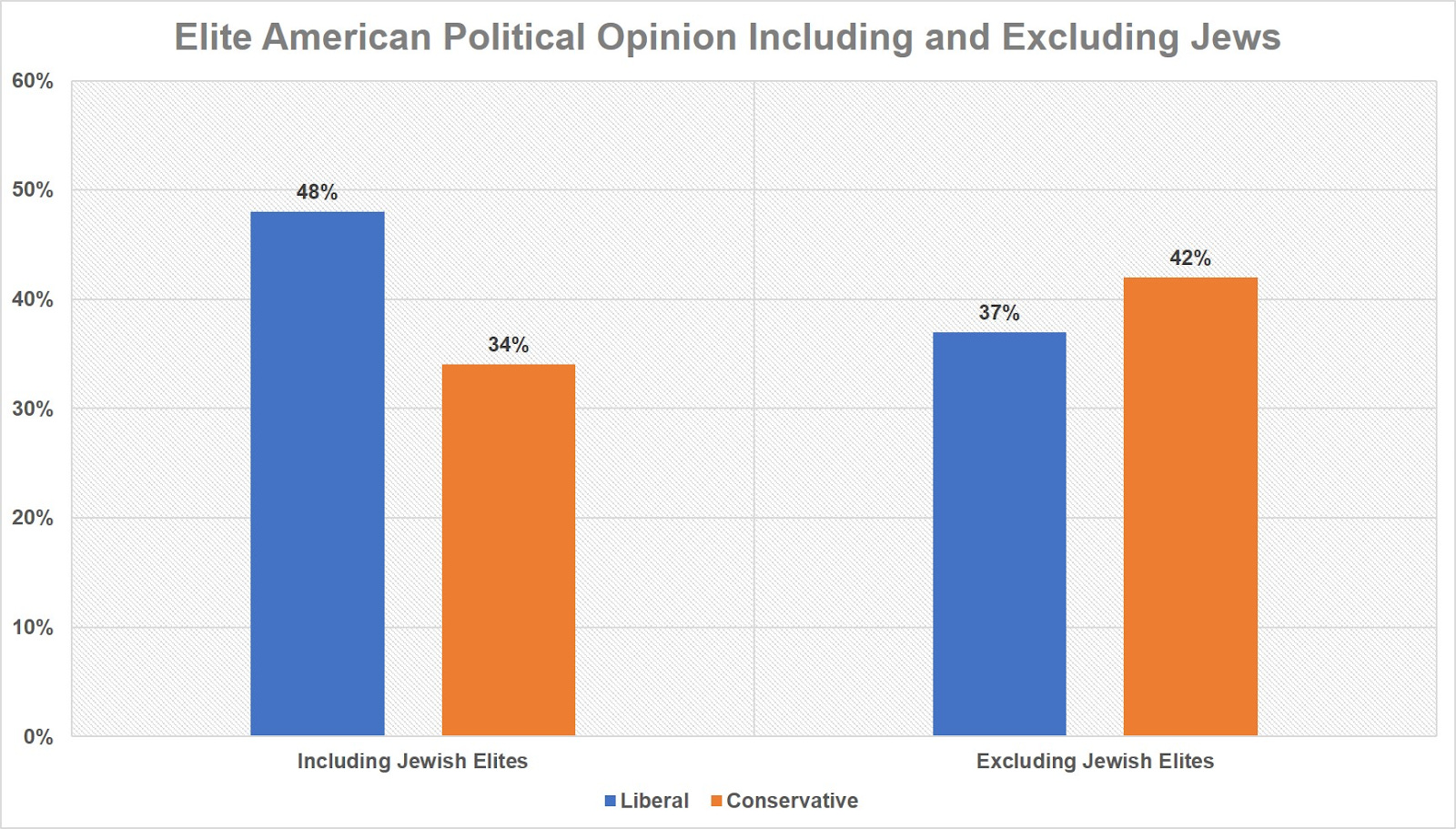
With relatively less attachment to America and its customs, this new elite was more willing to overturn all of American society for the disastrous utopian initiatives of the 1960s, though they could not have done so without significant Protestant buy-in.
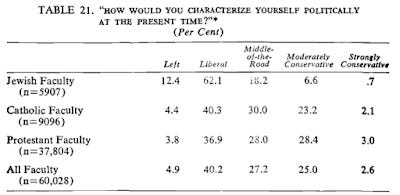
This is a common feature of diaspora liberalism; what defines a diaspora is that their country is not their homeland, and so diasporas, except post-Communist ones, tend to be left-wing relative to their home countries27.
Worst of all was the invention of a new narrative of American identity to include the newcomers. The first American Nation did not see themselves as immigrants. America did not exist until they created it. But as a post-hoc way of justifying their newfound power and status as Americans, descendants of recent European immigrants retconned American identity in the 1960s, from one based on the frontier to a “nation of immigrants.”
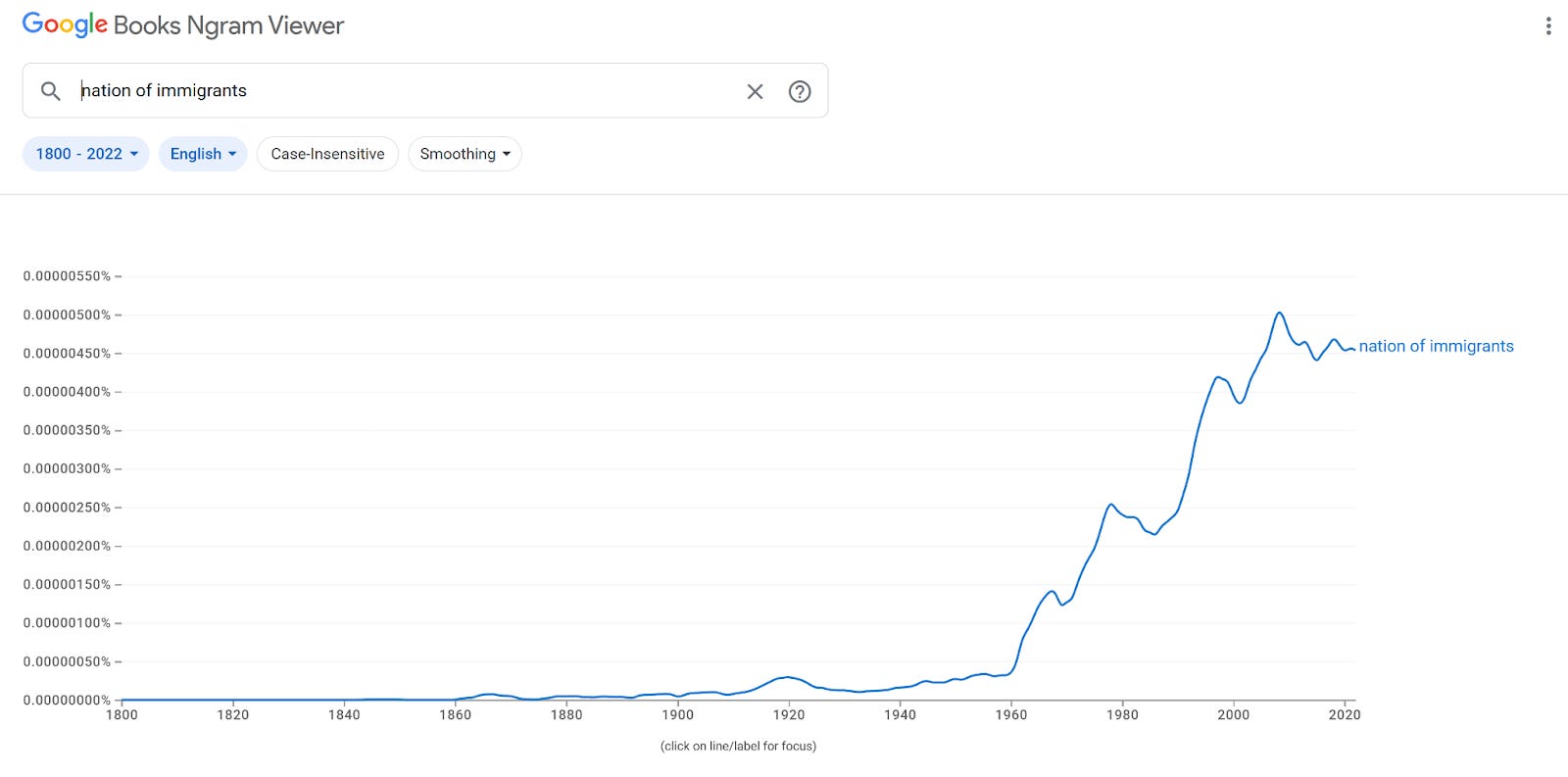
But an immigrant is just someone who permanently moves across an international border. It’s a purely legal category, not a natural one with grounding outside the state. This redefinition of American identity thus leaves Americans unable to rhetorically or morally resist the presence of anyone on Earth who can physically move to the United States.
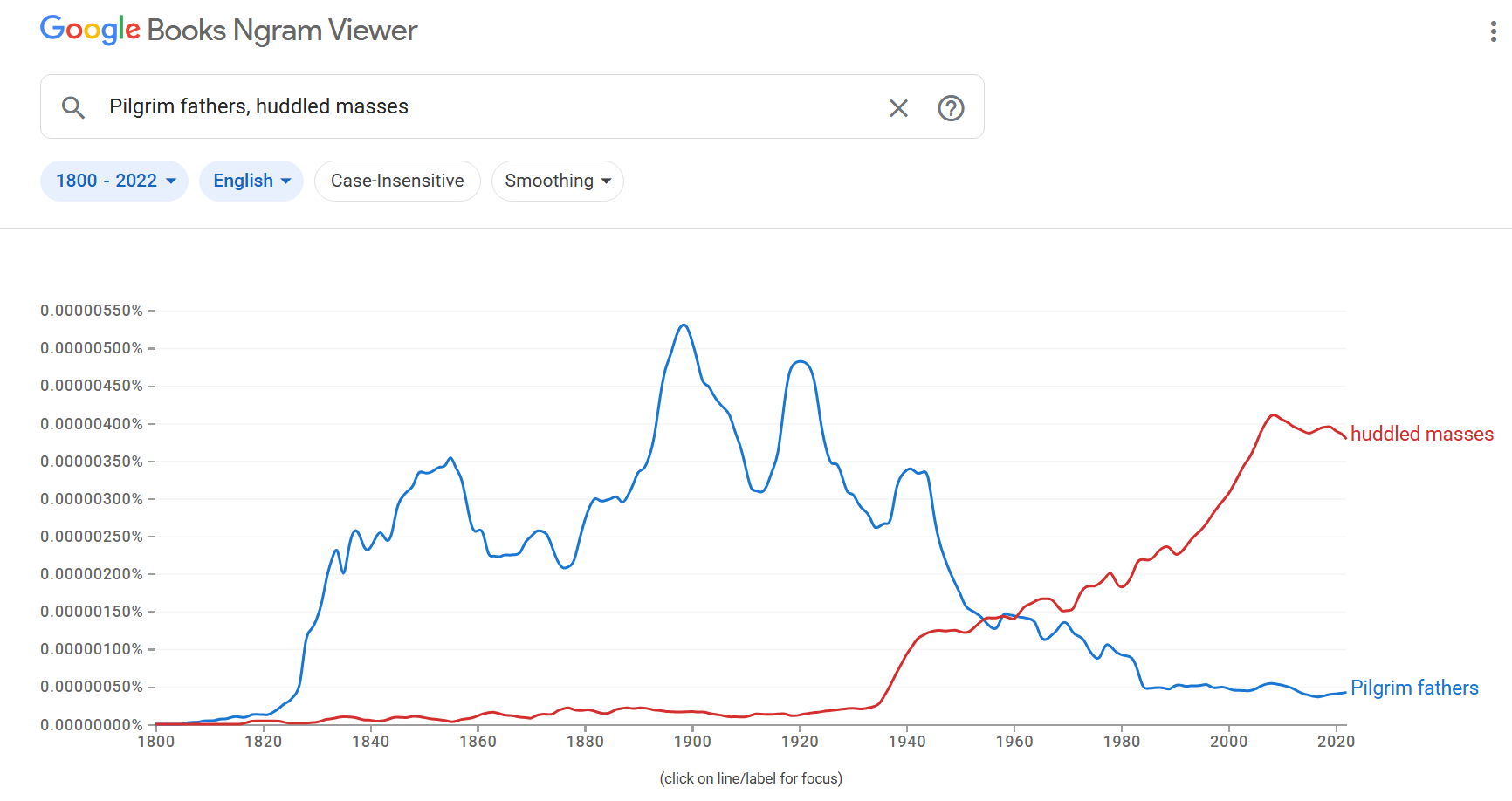
The semi-Americanized elite of the 1960s and its self-serving narrative of America led directly to the Immigration Act of 1965, which has dissolved the American nation in acid and turned the US from a cohesive, powerful nation-state into a Kafkaesque agglomeration of squabbling ethnic groups, in which only Americans, the group who created the state and on whose cooperation and sense of its legitimacy on which it relies, lack the group consciousness required to compete. Americans today are a bit like Ukrainian peasants before WWI, totally lacking national consciousness. This wouldn’t be such a problem, except that every other group in the United States has no such disability, and happily organizes for group interest and group benefit. Since the United States is still de facto an American nation-state, and Americans are still the state-bearing people, this is a disaster for the United States too.
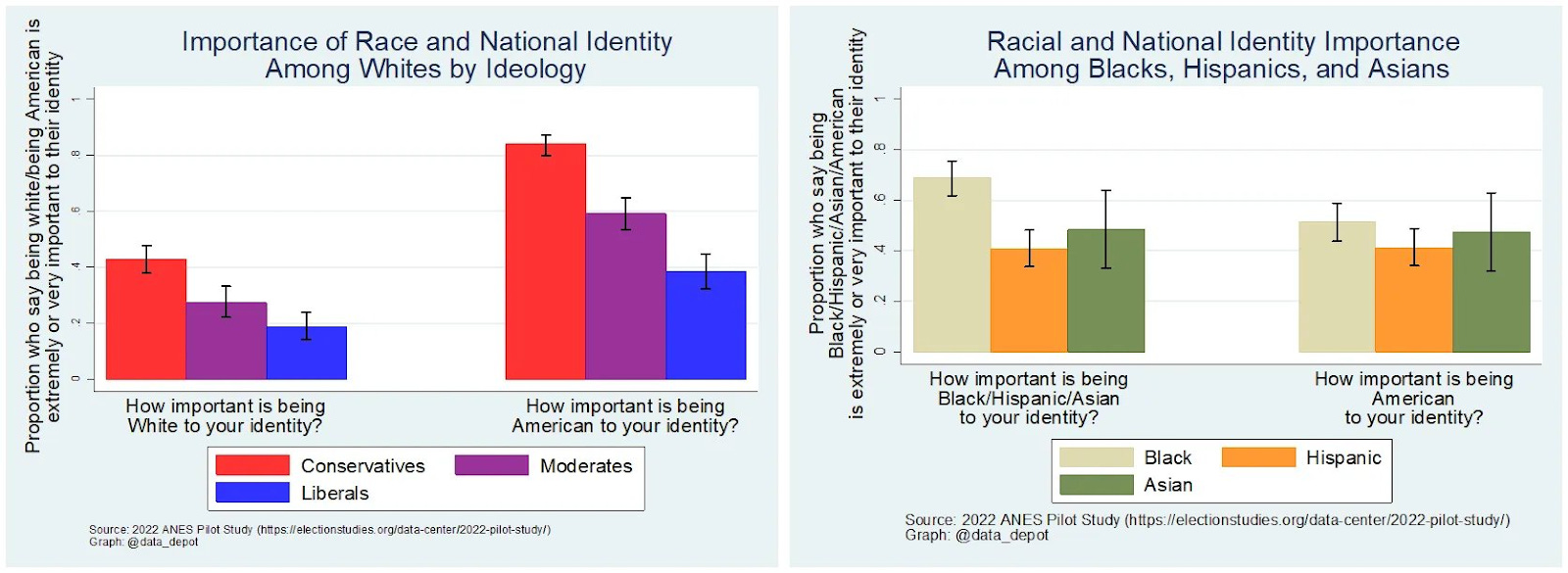
Consider the major supporters of ending the quota system: John F Kennedy (great-grandson of Irish Catholic28 immigrants) who, at the behest of the ADL, wrote the book A Nation of Immigrants and popularized the term, Ted Kennedy29 (great-grandson of Irish Catholic immigrants), Philip Hart (grandson of Irish immigrants), and Emanuel Celler (grandson of Jewish immigrants). While Italians didn’t provide major figures, their ethnic organizations did overwhelmingly back Hart-Celler30 [1][2][3], opposed by American ethnic organizations like the Daughters of the American Revolution.
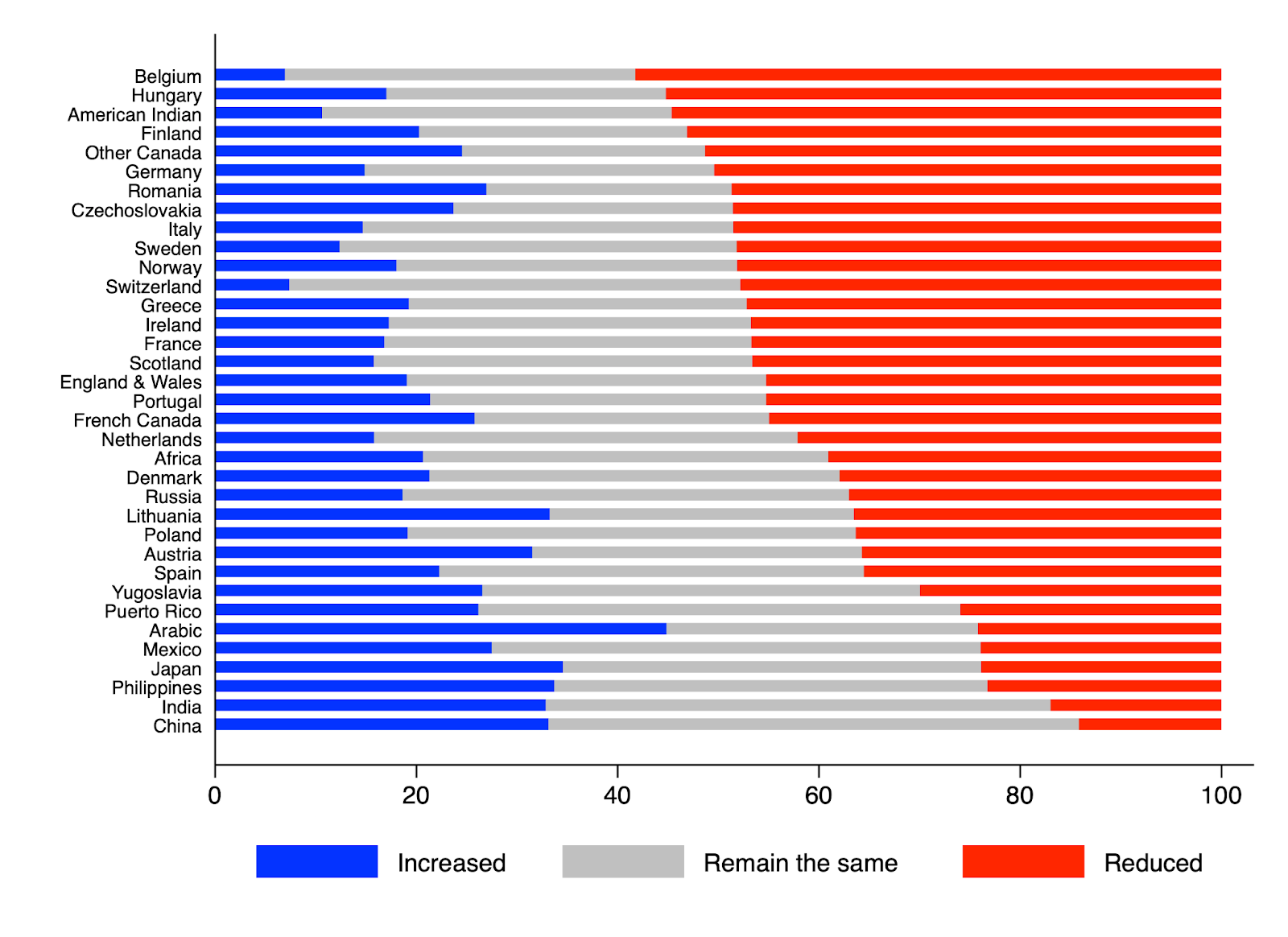
Furthermore, the second American nation is even more based on race than the first, since the cultural divide between Americans and other Europeans is so much smaller than it was in the 19th century. This is a problem, because racism is morally taboo and has been since the 1960s.
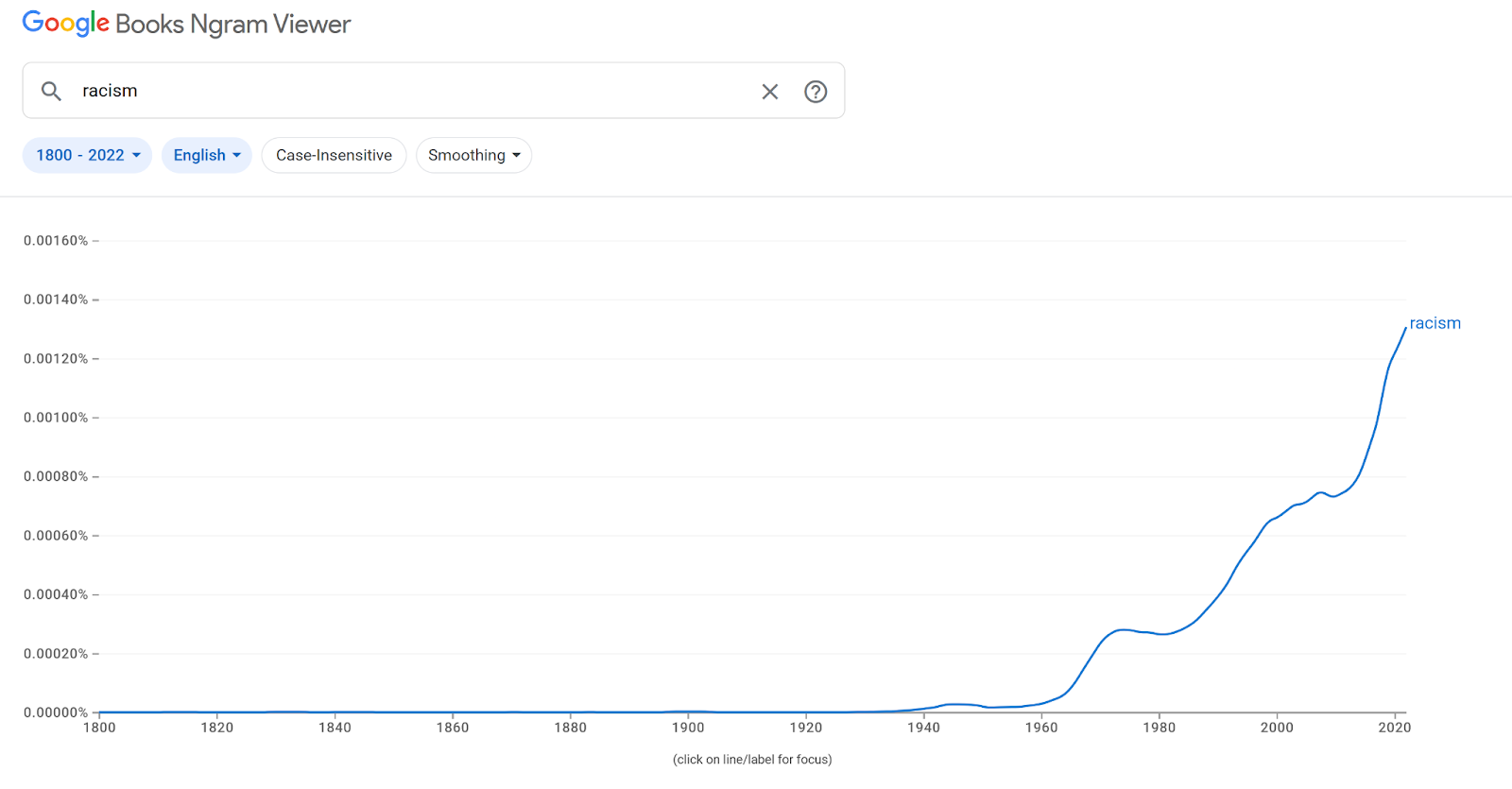
When the main boundary of national identity is race (without even the fig-leaf of religion, as in Israel, or distinct language and national culture, as in most European nation-states or America before Ellis Island incorporation), but distinguishing based on race in ways that favor whites is taboo, it becomes impossible to police national boundaries. This makes the second American nation a bit like an AIDS patient without an immune system or a burn victim without skin.
The Unassimilable
African-Americans
Of all the various ethnic groups that have lived in the same territory as Americans, one stands above all others for its complete lack of assimilability: blacks. Culturally, this group is thoroughly Americanized. African-Americans, especially before the 1960s, spoke English, had English names, and were Protestants. Very little African culture survived the generations between the end of the slave trade and abolition (a good thing, comparing West Africa or Haiti to the rest of the black Caribbean).
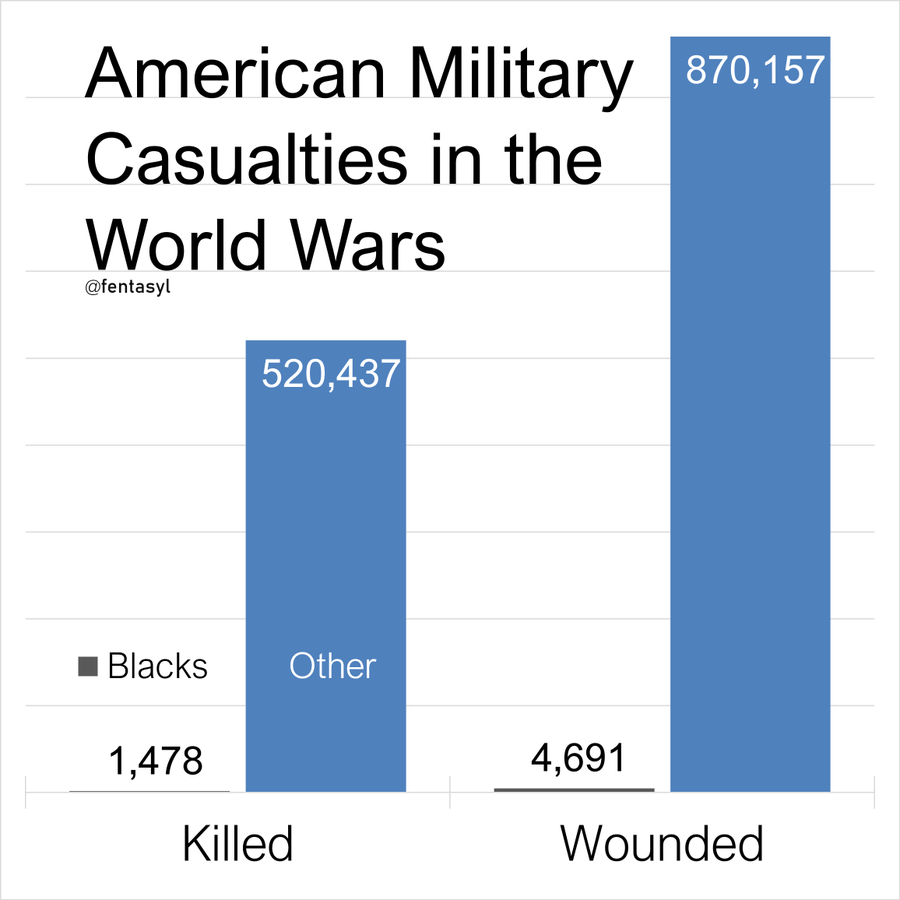
But cultural assimilation is not enough to meet the criteria of "indistinguishable at the individual level.” Blacks are visibly and behaviorally different from Americans in a way European ethnic groups weren’t, and this has prevented any sort of true Americanization of blacks. Despite this, there was and is a sincere effort to incorporate African-Americans into the American nation, epitomized by school curriculums teaching Martin Luther King Jr as a late-arriving Founding Father. This effort has failed. African-Americans have their own narrative and heroes very different from Americans. In their narrative, Americans are the villains. In the same way that Palestinian identity was forged in the struggle against Jewish invaders, and hence Palestinians are unassimilable as Israelis, African-American identity in the US was forged in the struggle against American oppressors.
African-American heroes, like the Black Panthers, Malcolm X, or Martin Luther King Jr, are celebrated as ethnic leaders in the centuries-long struggle against whites, and American efforts to recast them as national heroes have failed. And this effort didn’t fail for contingent reasons; most of the Civil Rights leaders outlived the movement and remained active in politics. To a man, they moved seamlessly from asking for de jure equality to demanding racial privileges and transfers as soon as the first goal was reached. Civil Rights as a movement for black racial interests is clearly a much more accurate narrative than Civil Rights as a movement for equality and national inclusion; the latter story was a ruse to gull northern whites. Conversely, the quintessential American heroes, the Founding Fathers, were universally opposed to racial equality within the same country and many were slaveowners; trying to cast their project as inclusive of Africans is too much of a stretch31.
African-Americans have their own history, their own blood, their own symbols and heroes, and even their own national anthem. They are not American. African immigrants to the United States assimilate to being “black” in the second generation and beyond, not to being “American.”
Chicanos
African-Americans are by far the most important pre-1965 ethnic group to maintain their distinct ethnicity in the United States, but not the only one. The vast majority of Mexican-Americans are the descendants of recent immigrants, but the US has had a small Chicano presence in the American Southwest since the Mexican-American War. Eight generations later, they continue to speak Spanish, do poorly in school, vote left, see themselves as distinct from Anglos, and stay poor. There is no reason to believe this will change.
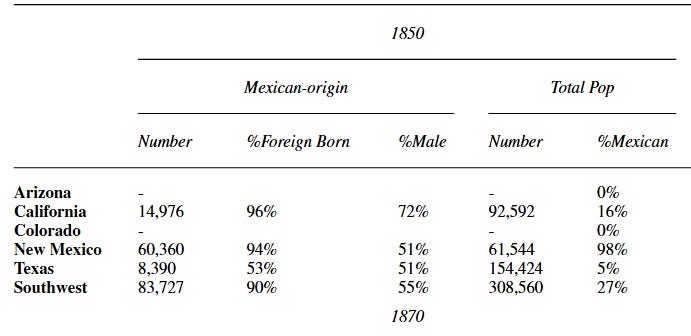
Like blacks, they have their own grievance narrative against America (the conquest of the American Southwest), and like blacks, their lack of assimilability ultimately comes down to looking and acting out of the white distribution, unlike various European groups.
A Third American Nation?
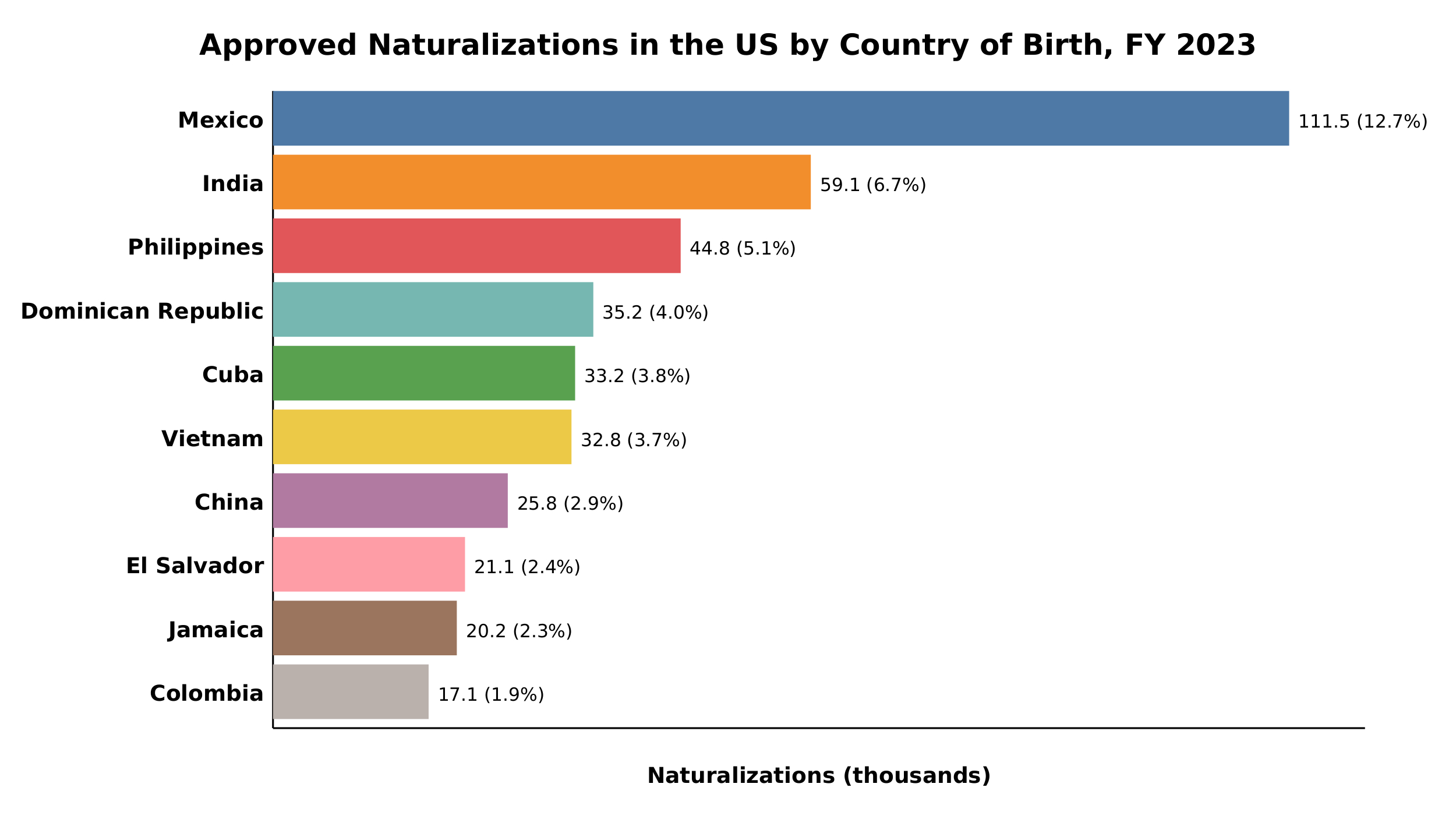
Thanks to Hart-Celler, the Immigration Act of 1990, and generations of treasonous executives who refused to enforce US immigration law, the foreign-born fraction of America has once again reached an all-time high.
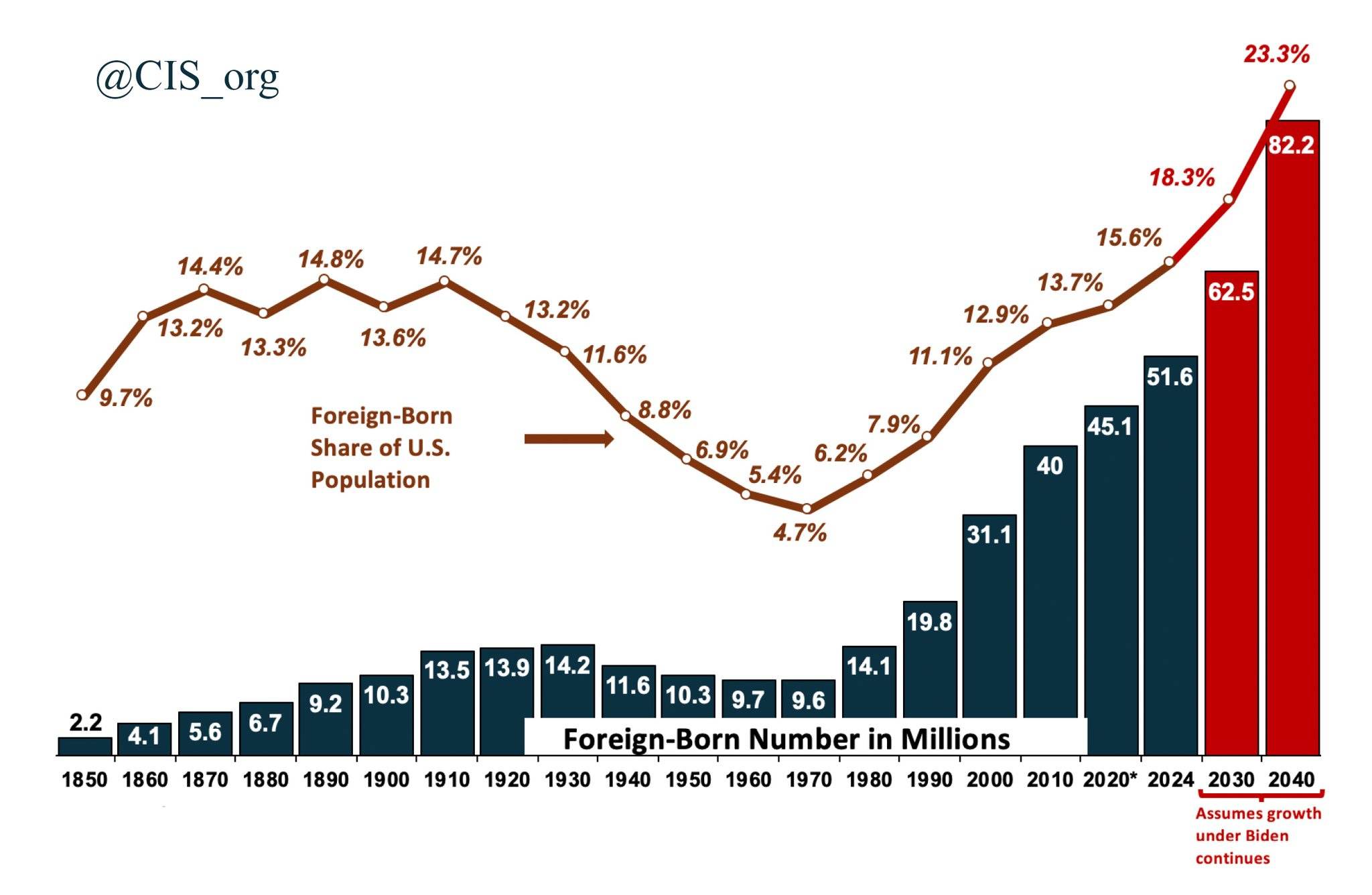
The United States has historically been an American nation-state, and so the obvious question becomes: is it possible to make the newcomers Americans?
If you were trying to create a third American nation derived from the second in the same way the second came from the first, you would to the following:
Cut off nonwhite immigration, meaning dropping it by at least 90%, similar to the Quotas Acts, with the top priorities being Mexico, India, and the rest of Latin America and the Caribbean. Ideally, you would increase white immigration too, because even in the absence of further immigration the white (meaning American) population will be a minority in a few decades, and it’s very difficult for a minority to assimilate others.
Eliminate the enormous raft of legal (such as affirmative action and government contracting set-asides) and quasi-legal privileges (such as freedom of association) granted to non-Americans by the Civil Rights state, to make becoming American alone more worthwhile.
Aggressively punish foreigners who attack whites, Americans, or the United States, or who express outside loyalty, to the limits of the law and beyond. Ilhan Omar declaring she represents Somalia should be rewarded with denaturalization and an immediate deportation order. This has precedent with the deportations of Communists and anarchists in the early 20th century.
Try to politically integrate those elements of the Hart-Cellerites closest to Americans. That means white Hispanics, especially upwardly-mobile middle-class Protestants who already vote Republican, and (judging by intermarriage rates and anglicization of first names), East Asians.
If all of this seems familiar, it’s because the second Trump administration has been working on all of these things (even electorally; Mexicans and Chinese moved right more than any other ethnic groups in 2024). MAGA is not a white nationalist movement. It is (implicitly) an American nationalist movement trying to forge a third American nation from the second and the more assimilable parts of the new arrivals and so sustain an American majority in the United States into the 21st century. Because the current American nation is white, it is easy to confuse the two.
There are a lot of reasons to believe this will not work, starting with the fact that when the Ellis Islanders began to be assimilated in 1924 both parties were thoroughly ethnically American, while today the Democratic Party does not even pretend to be, and the country is too polarized for one-party Republican rule. Norman Angleson has helpfully compiled a list of some of the others:
In a nutshell:
Great Britain shared a deep-rooted genetic and cultural heritage with the rest of continental Europe well before the age of exploration ever commenced.
It was largely the Anglo-Saxon American culture which was debased to reflect the new lowest common denominator, rather than the European immigrants who changed to embody American culture.
The assimilation still hasn't been entirely successful to this day, and there are still noticeable differences in political alignment, wealth, and appearance if you care to look.
Vast swathes of the immigrants couldn't cut it as Americans and ended up moving back home.
What little success there was required an intense, prolonged propaganda campaign (targeted AT the immigrants mind you, not targeted at getting the Anglo-Saxon natives to "tolerate" them).
Foreigners were made to Anglicize their surnames, stop referring to themselves with hyphenated identities, and become essentially visually + behaviorally indistinguishable from the native Anglo-Saxons: A task which is impossible for today’s aliens due to sheer skin color + morphology + etc. By contrast, today’s lot will let you know what offense they take if you pronounce Kiev or Turkey “wrong” (i.e. with the locations’ English pronunciations), as if we’ve ever had any obligation to call Munich “München” or to say “Deutschland” instead of Germany. What any sane person would recognize as a drastically-more hazardous experiment is met with MORE special pleading instead of less.
We didn't have the same welfare programs or affirmative-action caste hierarchies to activate the mindset of group competition for resources, and the innate differences in capabilities to produce & procure resources were drastically smaller among the relevant ethnic groups.
The European immigrants were imported over a less concentrated timeframe so the frog was boiled slower.
Social media wasn't a thing, so you were forced to actually interact with local communities rather than living in your own little world with your buddies back in Bomalia.
It was the native Anglo-Saxons who decided that other Europeans could be assimilated rather than an out of touch political elite who decided to go through with their plans despite consistent protests
Many Anglo-Saxon natives still regretted their prior decisions, and many people were very angry with the ways society was transforming at the time.
The most important, most controversial social issues and matters of law weren't federalized to anywhere near the same degree, so the Anglos who had particularly big gripes with the Irish way of life (or Italians or whoever) were allowed to live by themselves in their own little Anglos-only communities as a pressure-release valve that the natives had.
The fact that immigration is so dominated by Mexico is another huge difference from the previous Age of Mass Migration, where no one group was so large. A bigger bloc is harder to assimilate, and Chicanos have already proven indigestible32.
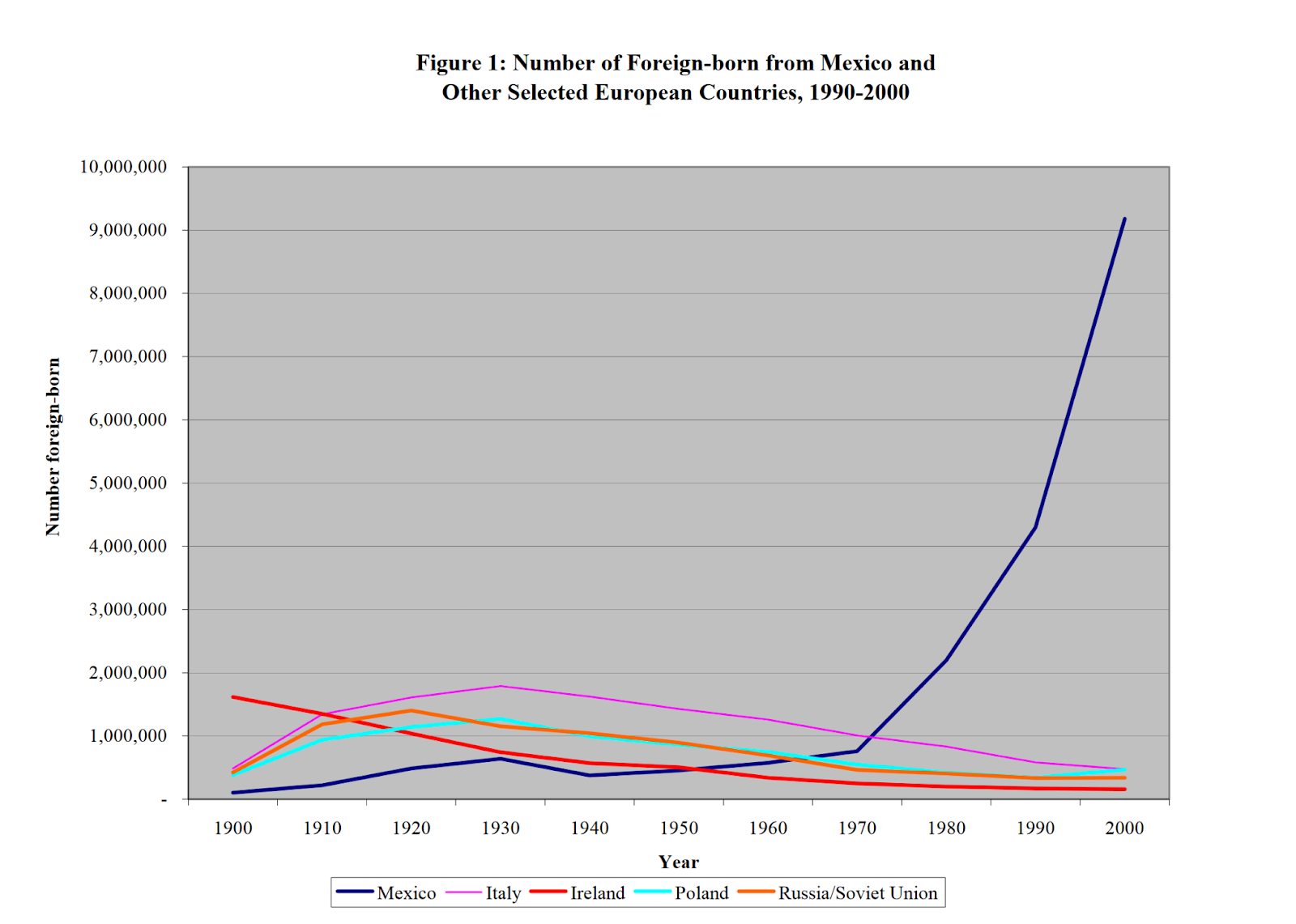
Intermarriage rates are not a counterargument. As Peter Brimelow pointed out in Alien Nation:
Intermarriage, like assimilation, can work two ways. Padraic Pearse had an English father, but he was still a Gaelic revivalist and a leader of the 1916 Easter Rising putsch against Ireland's union with Britain. For that matter, Raoul Lowery Contreras, the El Hispano columnist I quoted on page 106 attacking George Will, Tom Metzger and myself, is part Anglo. Intermarriage cannot guarantee social harmony. That can be done only by an American majority that is confident and strong.
The first American nation was confident, self-conscious, and strong. They knew who they were, they knew the newcomers were not them, and they demanded assimilation as Americans as the price of acceptance into broader American life, which, as the people who created the country, they controlled. For most of the critical assimilation period 1880-1970, being American was valuable.
By the time this changed with the Civil Rights revolution, which gave power and privileges to non-American minorities, the assimilation process was too far along, and the half-hearted attempts to create European ethnic Civil Rights groups to match their black/American Indian/Chicano/Puerto Rican counterparts flopped ignominiously.
In post-Civil Rights America, being non-American is valuable. It gets you privileges (affirmative action), access to ethnic networks and ethnic organizations illegal for Americans, pride and representation, and money and sinecures for would-be cultural activists. Instead of potential edge-cases trying to pass themselves off as American, you get a “flight from white,” as people flee to identities that can offer them something. Man is a Machiavellian ape.
But even if MAGA is successful and can overcome all of these obstacles, a third American nation is not clearly desirable. It would stop the ethnic conflict currently tearing the United States apart and depolarize politics, which is valuable. For that reason alone, the MAGA project is far better than its opposition, which draws strength from as many non-American clients in the United States as possible.
But the genetic effects of assimilating the Hart-Celler wave could be every bit as destructive as the sociological effects of not doing so. While something was definitely lost in America becoming more like Germany or Italy or France or Poland, all of these nations are intelligent and accomplished. But America becoming more like India, Central America, the Caribbean, and above all Mexico is a very bad thing. The current cohort of newborns in the United States looks, genetically, like Brazil33.
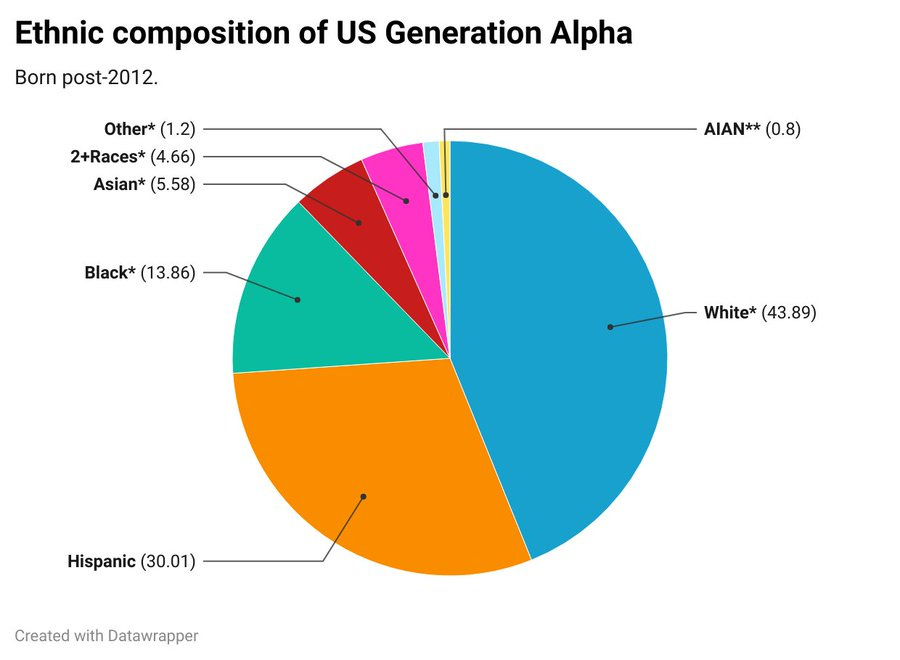
If mixed evenly, as would be the eventual result of assimilation, America would regain a national majority, but would likely never accomplish anything again without advanced biotech, becoming a great zone of nothing akin to Latin America. If not mixed evenly, a large white and Asian smart fraction will remain (though without taboos on miscegenation, they will be absorbed eventually too), but the US will remain afflicted by perennial ethnic conflict and consequent political paralysis. Neither future is attractive. Still, a large national plurality is better than a small one; compare the fates of the Russian (roughly 50% Russian, and maintained territorial integrity despite disaster) and Austro-Hungarian empires (roughly 23% Austro-German, completely dissolved after a crisis) after WWI. This means that no matter which course is chosen, immigration restriction will not solve all of America’s ethnic problems, but it’s step one to solving any of them.
Russian has the word rossiyane for a citizen/subject of the state of Russia and russkiye for an ethnic Russian.
All of these terms have problems, the most important one being that approximately zero people use them. Heritage American and Founding Stock implicitly includes blacks, who are a distinct nation of their own. Settler American and WASP inappropriately exclude generic white Americans descended from more recent immigrants who, today, have long since culturally assimilated and admixed into indistinguishability from their predecessors.
In case it’s not obvious what this means, consider that Israel is a Jewish nation-state with Arab and Druze minorities, or Turkey is a Turkish nation-state with Kurdish and Arab minorities, or Kazakhstan is a Kazakh nation-state with a Russian minority.
Because “American” is both a nationality and an ethnicity, me saying several groups are not American might be misinterpreted as hostility, saying they should be deported or otherwise removed. Don’t confuse identifying a group as not ethnically American with saying they don’t belong in the country. Consider the Fenno-Swedish minority in Finland; they’re ethnically Swedish, not the linguistically and genetically very different Finns, but this has never caused serious problems. Or the Amish in the United States, who still refer to Americans as “the English.”
Peter Turchin uses the phrase “imperial nation.” This is how Turchin puts it, in the introduction of War and Peace and War:
Each empire has at its core an imperial nation. (Some empires had more than one imperial nation for a time, but this structure appears to be unstable.) The ability of an empire to expand territory and to defend itself against external and internal enemies is determined largely by the characteristics of its imperial nation, especially its asabiya. Because only groups possessing high levels of asabiya can construct large empires, the question is how do they gain it, and why do they eventually lose it?
Slavery is sometimes brought up as a counterexample, but it isn’t one because blacks are not Americans.
One of the biggest grievances Americans had against Britain was repeatedly beating the French (and their Indian allies) in North America, only to have their victories handed away at the peace table for concessions in Europe or elsewhere. This divergence between local and imperial interests eventually drove Australian ethnogenesis too.
You see the same dynamic in many anti-colonial wars. One fun recent trend among US libs has been rehabilitating the Ottoman Empire.
The one major non-American group in the polity in this period was blacks, politically irrelevant politically in and of themselves. If the South had successfully seceded, you’d have seen a new ethnogenesis spring up around the political boundary, catalyzed by very different economic models, slavery and the presence of blacks as a racial threat, and the huge influx of non-Anglo immigrants into the North. But this didn’t happen.
See Table 4.1 of Robert Stark’s The Churching of America.
Early 20th century anthropology predates both genetics and the neo-Darwinian synthesis which placed Darwinism on a sound mathematical basis, and hence is mostly of historical curiosity.
I didn’t have a great place to fit this in the main text, so I’m putting Jefferson’s thoughts on American identity and immigration here. Note that, to Jefferson, what distinguishes America from Europe is the type of government, which is a fusion of what is best in specifically the English constitution and the principles of reason of the Enlightenment, and this is imperiled by immigration. He even specifies France, despite being a massive Francophile himself.
Every species of government has its specific principles. Ours perhaps are more peculiar than those of any other in the universe. It is a composition of the freest principles of the English constitution, with others derived from natural right and natural reason. To these nothing can be more opposed than the maxims of absolute monarchies. Yet, from such, we are to expect the greatest number of emigrants. They will bring with them the principles of the governments they leave, imbibed in their early youth; or, if able to throw them off, it will be in exchange for an unbounded licentiousness, passing, as is usual, from one extreme to another. It would be a miracle were they to stop precisely at the point of temperate liberty. These principles, with their language, they will transmit to their children. In proportion to their numbers, they will share with us the legislation. They will infuse into it their spirit, warp and bias its direction, and render it a heterogeneous, incoherent, distracted mass. I may appeal to experience, during the present contest, for a verification of these conjectures. But, if they be not certain in event, are they not possible, are they not probable? Is it not safer to wait with patience 27 years and three months longer, for the attainment of any degree of population desired, or expected? May not our government be more homogeneous, more peaceable, more durable? Suppose 20 millions of republican Americans thrown all of a sudden into France, what would be the condition of that kingdom? If it would be more turbulent, less happy, less strong, we may believe that the addition of half a million of foreigners to our present numbers would produce a similar effect here.
I think this was a missed opportunity; Hengist and Horsa were supposedly invited in by Briton chiefs as mercenaries to settle domestic political disputes, then decided they may as well own the place. Having them on the US seal may have warned American policymakers of the issues with bringing in foreigners via immigration to beat local political opponents. (The rejoinder, that the Anglo-Saxons were armed mercenaries while immigrants vote blocs in the US today are not, is irrelevant. In sub-Roman Britain, politics was a question of swords; in the United States it is a question of votes and activist networks.)
Well, part of it. The other part is that people are very good at sensing hostility, and can easily grok that the political faction pulling down the Confederate statues hates them too.
It’s also why it was very easy to predict that the people pulling down Confederate statues would quickly move on to statues of approximately every white American before FDR. The modern Left is irretrievably anti-American, and the Confederates are just the thin end of the wedge of the destruction of every American hero. Calling Confederate generals “traitors” is designed to rhetorically disarm American opposition.
I was tempted to say “most,” but strictly speaking I’m not sure that’s true. Things like cuisine, clothing, language, religion are not particularly genetic, and it’s on these traits that assimilation is more or less total.
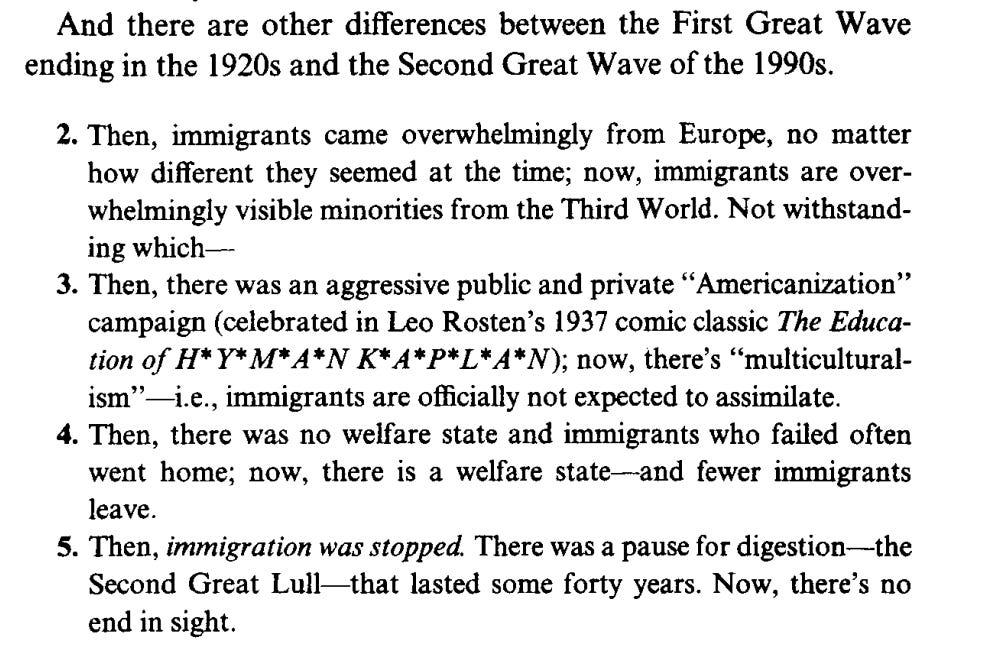
From Brimelow’s Alien Nation, on the differences between the Hart-Celler wave and the Ellis Island wave.
Overseas Chinese dominate Thai commerce and industry as they do the rest of Southeast Asia, but unlike other Southeast Asian countries, Sino-Thais have largely intermarried and assimilated, as a result of something very similar in Thailand in the 1940s. This is how you assimilate related ethnic blocs fast.
Speculatively, the success of this may have led to the dominance of the “contact hypothesis” of sociology, that contact would reduce interethnic hostility, which motivated the disastrous forced integration of blacks in the second half of the 20th century. Contact reducing prejudice worked between European ethnic groups with similar levels of competence and standards of behavior, and in the blank-slatist postwar environment, generalizing this to other races may have seemed natural.
The government, of course, had the power to punish blacks harshly for crime and rioting, as they had before the 1960s, to not demand forced integration via busing or Section 8 vouchers, to not fund the lifestyle of idle black criminals (hard for criminals to get a job, but not a problem with welfare), or to allow Americans the organic, communal response to crime we’d used since the days of the frontier. But they did none of these things.
E. Michael Jones alleges this was a plot by dastardly liberal WASPs to destroy Catholic ethnic power, but he’s wrong.
At some level, people get this. Note that foreign depictions of the United States as a person are all-but-universally white.
Mormons nearly had their own ethnogenesis in the 19th century on similar grounds, but it never quite completed due to proselytizing and the ban on polygamy.
Contrast this with WWI, where hundreds of thousands of Americans died for nothing, with every single country except Finland defaulting on their US war loans.
WWII creating postwar America was a strong argument for WWII being worthwhile when postwar America was clearly awesome. But after generations of decline beginning in the 60s, interrupted only by the dead-cat bounce of victory in the Cold War (which we won because the Soviets chainsawed their own feet off quicker than we did), WWII seems a lot less sacred. This drives most WWII skepticism on the modern US right (while WWII’s association with American strength drives WWII skepticism on the anti-American US left, as it has since the 1960s).
Nativists were concerned that the Ellis Island Europeans would take over the US elite, that they would dilute the race of the colonial stock, that they would be unable to adapt to American self-government and impose a European-style invasive state, and that they would bring political radicalism. All of this happened. And remember, we are to the future as the past is to the present.
Jews are the most famous example of this, but many Asian diasporas, especially Indians, are also important examples today. An interesting related paper. This was clearly true of the Irish until the 1990s as well.
Catholicism is important here, as it distinguishes Irish Catholics from the Protestant pluralism of the first American Nation, and enabled Irish Catholics to remain a distinct ethnic bloc within the United States for centuries.
Ted Kennedy is perhaps the single most destructive politician in US history. One of the biggest drivers of the Hart-Celler, of the Immigration Act of 1990, and of the Civil Rights Act of 1990.
I view Hart-Celler as totally illegitimate. Because it redefines the demos, immigration has a much higher threshold for democratic legitimacy than most laws. The demos is supposed to be the source of legitimacy of the state; if the state can simply redefine the demos at will, it is nothing more than raw tyranny. Hart-Celler, opposed by Americans by a 2:1 margin and supported by Senators who had no idea what the consequences of the bill were likely to be, does not pass that bar. A few quotes from here:
Attorney General Robert Kennedy said in Senate hearings in 1964 that abolishing the restrictions on the Asia-Pacific Triangle would result in “approximately 5,000 [immigrants]...after which immigration from that source would virtually disappear.”
“The [proposed new] distribution of limited quota immigration can have no significant effect on the ethnic balance of the United States,” and “the net increase attributable to this bill would be at most 50,000 a year…” “Our cities will not be flooded with a million immigrants annually,” prophesied Senator Edward Kennedy: “Under the proposed bill, the present level of immigration remains substantially the same.”
“The bill that we will sign today,” said President Johnson, “is not a revolutionary bill,” and “does not affect the lives of millions.” What it did, he thought, was essentially moral and symbolic. It ends “the harsh injustice of the national origins quota system” which was “a cruel and enduring wrong.”
Rep. Emanuel Celler, one of the strongest supporters of the 1965 law, was astonished by what he called the “unintentional discrimination” of the law he had co-sponsored. He unsuccessfully attempted to increase special visas for Europe that would not require family ties.
Charles Francis Adams Jr, Union Civil War veteran and historian, in his 1913 Founder’s Day address:
As I have already said, the universal "melting-pot" theory in vogue in my youth was that but seven, or at the most fourteen, years were required to convert the alien immigrant--no matter from what region or of what descent--into an American citizen. The educational influences and social environment were assumed to be not only subtle, but all-pervasive and powerful. That this theory was to a large and even dangerous extent erroneous the observation of the last fifty years has proved, and our Massachusetts experience is sadly demonstrating to-day. It was Oliver Wendell Holmes, who, years ago, when asked by an anxious mother at what age the education of a child ought to begin, remarked in reply that it should begin about one hundred and fifty years before the child is born. It has so proved with us; and the fact is to-day in evidence that this statement of Dr. Holmes should be accepted as an undeniable political aphorism. So far from seven or fourteen years making an American citizen, fully and thoroughly impregnated with American ideals to the exclusion of all others, our experience is that it requires at least three generations to eliminate what may be termed the "hyphen" in citizenship. Not in the first, nor in the second, and hardly in the third, generation, does the immigrant cease to be an Irish-American, or a French-American, or a German-American, or a Slavonic-American, or yet a Dago. Nevertheless, in process of tune, those of the Caucasian race do and will become Americans. Ultimately their descendants will be free from the traditions and ideals, so to speak, ground in through centuries passed under other conditions. Not so the Ethiopian. In his case, we find ourselves confronted with a situation never contemplated in that era of political dreams and scriptural science in which our institutions received shape. Stated tersely and in plain language, so far as the African is concerned--the cause and, so to speak, the motive of the great struggle of 1861 to 1865--we recognize the presence in the body politic of a vast alien mass which does not assimilate and which cannot be absorbed. In other words, the melting-pot theory came in sharp contact with an ethnological fact, and the unexpected occurred. The problem of African servitude was solved after a fashion; but in place of it a race issue of most uncompromising character evolved itself.
It’s tough to celebrate, say, the Mexican-American War, undoubtedly a massive victory for America (and the supposed illegitimacy of which is commonly used to argue against any sort of restrictions on illegal Mexican immigration whatsoever, on the false grounds that “the border crossed us”) in a 10% Mexican country.
Things aren’t quite that bad, because the European component of Americans is largely Northwest European rather than negatively-selected Southern European. A fully mixed US would look more like Argentina than Brazil in IQ and general competence terms, which is still bad. But with enough immigration, we’ll reach Brazil.


This is a great analysis. I'd add a civilizational-symbolic layer. America is a Faustian project, with its own symbolic orientation, to which the first waves of European immigration were aligned. This is why the term 'Judeo-Christian' is paradoxical: it fuses two distinct symbolisms (Faustian and Magian), producing pseudomorphosis and many of the pathologies so often decried online (rationalism, suppression of inherited attachments, loss of affective continuity).
A way forward requires fracturing the managerial regime, forging a new elite, and restoring a telos for the West. That in turn demands a socio-linguistic strategy: reviving the language of myth, faith, and shared memory that once bound Americans together, and using it to re-anchor belonging in the symbols of Western life.
While it's mostly forgotten or overlooked today, pre-Civil War immigration certainly had major effects on our politics and culture at the time. Indeed, disagreements over immigration were probably the main reason for the breakup of the Whig party and the following rise of the Republicans.
By far the most important non-British immigrant group at the time, in numbers and influence, were Germans. German immigrants were exceptionally anti-slavery and became an important part of Lincoln's 1860 coalition. Germans immigrants were also the largest 'ethnic' component of the Union army. In this sense German immigration was probably an important causal factor in the Civil War having occurred when and as it did.
Interestingly, Irish-Americans were less staunchly anti-slavery than Germans, although large numbers of them also fought on the Union side. According to Team of Rivals, the 1863 draft riots were partly driven by the belief of Irish-American immigrants that Lincoln was prosecuting the war as a moral campaign to end slavery, a cause they were unwilling to risk their lives for. In general, according to Team of Rivals, holding together his coalition of radical abolitionists and moderately anti-slavery republicans was one of the greatest challenges of Lincoln's presidency.