Advertisement
Advertisement

World

CNA Explains: What is frontier AI and how Anthropic's Mythos is reshaping cybersecurity

Anthropic’s Mythos AI model has demonstrated advanced capabilities in coding and system analysis, raising fears over how such tools could be misused.

CNA Explains: What is frontier AI and how Anthropic's Mythos is reshaping cybersecurity

Illustration of a person using a laptop. (Illustration: iStock)

Listen
8 min
New: You can now listen to articles.

This audio is generated by an AI tool.

07 May 2026 06:00AM
Read a summary of this article on FAST.
FAST

The debut of advanced artificial intelligence models such as Anthropic’s Claude Mythos is sharpening global concerns over a new class of technology known as frontier AI - and the security risks it could pose.

These systems, the most advanced AI models available today, can reason through complex problems and detect vulnerabilities at a speed and scale far beyond human capability.

While that could strengthen cybersecurity, it also introduces new threats.

Mythos in particular has drawn attention for its capabilities in coding and system analysis, fuelling fears that such tools could be misused by cybercriminals to exploit weaknesses in critical systems.

CNA Games
Show More
Show Less

As a result, regulators and policymakers are reassessing whether existing safeguards are sufficient.

Here’s what to know about frontier AI - and how it is changing the risk landscape.

What is Frontier AI?

Frontier AI refers to the most capable and cutting-edge AI systems available today.

Think of it as J.A.R.V.I.S from Iron Man – an assistant that can hold a conversation, reason through problems and act on a user's behalf, said Zscaler's Santanu Dutt, the cybersecurity firm's vice president of solutions consulting and head of technology of Asia Pacific and Japan.

What was once fictional is now widely available to anyone with an internet connection, he noted.

These models are particularly powerful in areas such as cybersecurity and software analysis. They can scan vast amounts of code, identify weaknesses and even suggest ways to exploit or fix them - in hours rather than months.

But this becomes a double-edged sword. 

While organisations can use frontier AI to fix bugs quickly, cybercriminals can also misuse the same system to exploit vulnerabilities at an unprecedented speed. 

Besides Mythos, other frontier AI models include OpenAI’s GPT-4, Google’s Gemini and xAI's Grok.

What are the risks surrounding Frontier AI? 

The concern is not just what frontier AI can do, but how quickly and widely it can do it.

Experts told CNA that these models dramatically lower the barrier to entry for sophisticated cyberattacks. Tasks that once required specialised skills - such as writing malware or crafting phishing campaigns – can now be done with simple prompts.

In terms of speed, vulnerabilities that once took weeks or months to uncover can now be identified and exploited in minutes, said Muthu Kumar, field chief technology officer at cybersecurity firm TrendAI. 

In terms of scale, one person with a frontier AI model can now match what previously required a team of attackers, noted Mr Dutt. 

“The barrier to launching sophisticated attacks has effectively collapsed,” he added.

This creates a growing imbalance between attackers and defenders, said Ian Lim, chief technology officer of Asia Pacific, Japan and Greater China at Cisco Customer Experience.

“Attackers only have to find one gap while defenders have to remediate every vulnerability,” he explained.

“With frontier models significantly shrinking the time-to-exploit, organisations can no longer assume patches will arrive before exploitation occurs.”

Mr Dutt warned that frontier AI has changed the rules of the game. “Systems and instincts built for the old pace have not caught up,” he said.

Why are these risks a growing concern? 

The implications are particularly serious at a national level, experts said.

Critical infrastructure, such as banks, telecommunications networks, healthcare systems and energy grids, relies on complex interconnected digital systems. 

Many of these depend on layers of third-party and open-source software, which may contain hidden vulnerabilities.

Sophisticated state actors could leverage frontier models to launch automated and frequent attacks on critical infrastructure, Mr Lim said.

Frontier AI also allows threat actors to scan for weaknesses at scale, said Dmitry Volkov, chief executive and co-founder of cybersecurity firm Group-IB.

"Every country has many organisations that are part of its critical infrastructure," he said. “These organisations also rely on long lists of software products, many of which may contain vulnerabilities.”  

An attack on a single sector could therefore ripple across others.

In Singapore, for instance, banks, hospitals, power grid, transport networks and telcos are deeply interconnected, Mr Dutt noted, which means a potential AI-accelerated attack on any one of them would not just be an IT problem.

"For businesses, the equivalent is stark - one careless moment with an AI tool can expose years of trade secrets or an entire customer database in seconds," he said.

Which sectors are most at risk?

As cyberattacks are driven by profit, data exfiltration and disruption, Mr Lim said industries that fit the target profiles of these attacks will be most at risk. 

These include companies that move financial transactions, handle sensitive data and manage critical infrastructure, he added.

“Supply chain attacks should also be considered, as downstream organisations may not have the budget or expertise to secure their environments as rigorously as regulated industries,” Mr Lim said. 

Globally, the finance sector has been thrust into the spotlight as authorities scrutinise its ability to combat risks posed by powerful AI models. 

“Financial services and banking are highly exposed because they are digital, interconnected, and attractive to both criminals and nation-state actors,” said Mr Volkov.

“AI could accelerate fraud, phishing and attacks on banking applications.”

Are organisations keeping up?

Many organisations are not keeping pace with the rapid evolution of frontier AI, said Mr Kumar.

He pointed out that cybersecurity today remains largely reactive, with companies responding to incidents rather than anticipating them. Policies governing AI use are also often underdeveloped or absent.

“We’re actually fixing the wheels while we’re driving,” Mr Kumar said. “There’s a huge gap … I won’t say anybody is prepared for (attacks)."

While some banks in Asia are tightening checks on their AI tools, not everyone is moving fast enough. 

Australia’s financial system regulator has warned that the country’s banks and their information security practices are struggling to match the rate of change in AI.

Even so, global financial institutions are adopting AI at more than twice the rate of regulators, according to research published on Apr 28 by the Cambridge Centre for Alternative Finance.

In the United States, the government announced on Tuesday that it would have access to tech giants’ new AI models to evaluate them before they are released - a sign of growing concern over their potential impact.

What can be done?

The risks posed by frontier AI cannot be eliminated - but they can be managed.

At an organisational level, experts point to several priorities - understanding risk exposure, monitoring how AI tools are used, setting clear guidelines on what data can and cannot be shared with AI systems, as well as investing in AI-driven security.

At the national level, stronger coordination is needed.

Mr Kumar suggested an international governance framework, with governments working together to develop policies and procedures around the use of frontier AI.

“This is not just one country’s problem,” he said. “If they end up in the wrong hands, it’s going to affect everybody.” 

Regular checks and governance policies should be established before even bringing AI into critical infrastructure, Mr Kumar added.

Mr Dutt warned that cybersecurity in the age of frontier AI is no longer a back-office IT concern.

“It is a leadership issue,” he said. “Because the consequences land on customers, citizens, and the country.”

Want an issue or topic explained? Email us at digitalnews@mediacorp.com.sg. Your question might become a story on our site.
Source: CNA/co(gs)

Sign up for our newsletters

Get our pick of top stories and thought-provoking articles in your inbox

Subscribe here
Inbox
FAST
Advertisement

Singapore

Parliament unanimously backs motion affirming that Singapore must not have jobless growth amid AI transition

A total of 24 Members of Parliament, including seven from the Workers’ Party, spoke for over seven hours on the impact of the AI transition on jobs and livelihoods.

Parliament unanimously backs motion affirming that Singapore must not have jobless growth amid AI transition

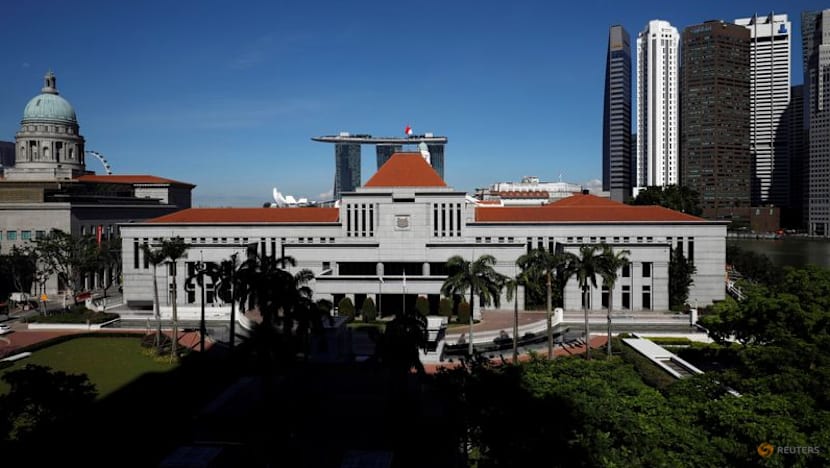
A view of Parliament House in Singapore on May 24, 2018. (File photo: Reuters/Edgar Su)

Listen
11 min
New: You can now listen to articles.

This audio is generated by an AI tool.

06 May 2026 08:55PM (Updated: 06 May 2026 09:46PM)
Read a summary of this article on FAST.
FAST

SINGAPORE: Parliament unanimously passed a motion on Wednesday (May 6) affirming that Singapore must not have jobless growth amid the artificial intelligence transition, with labour chief Ng Chee Meng hailing a "clear consensus" that the impact on workers must be collectively managed.

“All members recognise that AI adoption is not optional. If Singapore is to stay competitive, both enterprises and workers need to use AI fluency to seize new opportunities,” said the National Trades Union Congress (NTUC) secretary-general.

The private member's motion called on the House to recognise the transformative power of new technologies, emphasise that Singapore's approach should be fair and affirm that economic progress must be inclusive. 

It was moved by Mr Ng (PAP-Jalan Kayu) on Tuesday, together with Mr Saktiandi Supaat (PAP-Bishan-Toa Payoh), Ms Yeo Wan Ling (PAP-Punggol) and Nominated Member of Parliament Mark Lee. This was the first motion tabled by the labour movement in more than a decade.

CNA Games
Show More
Show Less

It passed after two days of debate spanning more than seven hours, with speeches from 24 Members of Parliament (MPs), including seven from the Workers' Party (WP) and two political office holders, Manpower Minister Tan See Leng and Minister of State for Digital Development and Information and Education Jasmin Lau. 

In his speech rounding up the debate, Mr Ng reiterated what Dr Tan and Ms Lau said on the need for collective action. “Left to market, AI growth may not automatically benefit workers,” said Mr Ng.

He also noted that other MPs warned about an outcome in which some workers gain, but others risk falling behind.

“I am therefore glad that through this motion, the government has affirmed that it will not leave outcomes to chance but will shape the direction of AI growth deliberately,” said Mr Ng, adding that he is looking forward to the government’s Economic Strategy Review (ESR) report.

“With this House standing united, I’m fully confident that we can strengthen our plans and responses at this stage of AI-enabled growth.

“Together with enabled enterprises, we will forge tripartism in the AI era for win-win outcomes, as we have done before in Singapore for Singaporeans.”
 

WORKERS’ PARTY PROPOSES 'SOCIAL DIVIDEND', REDUNDANCY INSURANCE

The seven WP MPs who spoke during the debate put forth several proposals to support workers through the AI transition. All of them ultimately said they supported the motion.

In his speech, Mr Gerald Giam (WP-Aljunied) suggested setting up a national “AI equity fund”, with part of the fund going to a “social dividend”. He said the revenue would be distributed as a direct payout to every adult Singapore citizen.

The source of the fund’s contributions could be from corporate taxes and Singapore’s net investment returns, he said.

The purpose of the dividend is to provide an additional cushion for families and allow Singapore to reap the benefits of AI without “overly exacerbating” social inequality, said Mr Giam.

He proposed an initial dividend of S$500 per adult.

Mr Giam then added that the remaining portion of the fund could be dedicated to a “mastery fund”, which will be an employer-led on-the-job training model that provides the apprentice a wage, covering 50 per cent of the gross salary capped at the median wage for six months for any Singapore citizen entering or transitioning into an AI-augmented role.

“This rewards the workers’ effort in adapting, while lowering the barrier for firms to hire, train and retain talent in this volatile market,” he said.

The mastery fund would also finance a pool of expert on-the-job consultants, which will help small and medium enterprises fill a talent gap, he added.

In another speech, Non-Constituency MP Andre Low also proposed changes to the Jobseeker Support Scheme (JSS) to better protect workers displaced by AI.

Currently, the JSS pays up to S$6,000 over six months tapering in monthly installments and is only available to workers who earned S$5,000 or less.

“A payment that starts high and slowly reduces is not a flaw. It is a countdown, and a countdown pushes a worker to take the first offer, not the right one,” he said.

Instead of the JSS, the WP has proposed a redundancy insurance scheme, where retrenched workers will receive a payout of 40 per cent of their last drawn salary, with no income ceiling and no tapering mechanism.

This will be funded by employer-employee contributions in the same model as the Central Provident Fund (CPF), and it covers every worker who pays in, he said.

In response, Dr Tan said that both Mr Giam and Mr Low's proposals rest on a more “pessimistic premise” that Singaporeans are “essentially passive passengers in the AI transition” and without agency to seize opportunities.

“I cannot hold on, and I would not hold on to such a premise,” said the manpower minister, adding that both proposals are not a form of empowerment.

“To me, it is a settlement resigned to the fact that mass displacement is inevitable and that the best we can do is soften the blow.

“We should have more confidence in the tenacity and the adaptability of our fellow Singaporeans,” he said, adding that the convention is to invest in people rather than to “compensate them for their circumstances”.

Dr Tan also took aim at a suggestion by Mr Kenneth Tiong (WP-Aljunied) to universalise the six months’ free access to premium AI tools, which is currently given out to those taking selected AI courses.

Dr Tan said not all Singaporeans require frontier AI tools and that free versions suffice.

“By tying subsidies to training, we are better able to target those who are more serious about leveling up their use of AI, and we help them to make optimal and responsible use of such powerful tools,” he said.
 

AI INEQUALITY

Several MPs, such as Mr Saktiandi, also flagged concerns that AI could worsen inequality.

Noting that many of the more capable AI tools require ongoing subscriptions, Mr Saktiandi said that despite six months of free access to premium AI tools provided by the government, a divide could emerge between those who can afford to continue using these tools and those who cannot.

“If left unaddressed, we risk creating a new form of inequality between the AI haves and have-nots,” said Mr Saktiandi.

Access to these tools directly affects productivity, learning and income potential, so unequal access will lead to unequal outcomes, he said.

In this light, he suggested providing a baseline level of subsidised access, or group-based pricing with industry partners. There could also be shared access through community centres, libraries and training hubs, or access for workers through their employers, he said.

“If AI is to be a force for inclusive growth, access cannot be a privilege, it must be broadly shared,” he said.

NTUC deputy secretary-general Desmond Tan also highlighted seniors as one group that lacks access to AI tools and training, as well as the confidence to use AI.

He said many of them “have lived through repeated cycles of change and transformation and may feel fatigued, uncertain or even question the relevance of more training”.

“We must make training more accessible for them at a suitable pace, through practical and bite-sized modules, and make AI more relevant to their job skills,” he said.

Ms He Ting Ru (WP-Sengkang) said some people face “systemic barriers” as Singapore moves toward an AI-ready future.

She pointed to persons with disabilities, women, lower-income Singaporeans and young graduates as possible groups.

Unequal access to AI tools and training could also entrench existing disadvantages, she said.

“Those without the resources or home environments conducive to learning new skills may find themselves falling further behind,” said Ms He, adding that that would risk “hardening inequality” across generations.

The government’s response to such concerns is to “raise the floor and to widen the door”, said Ms Lau.

The co-chair of the ESR’s technology and innovation committee said this will involve building AI literacy in schools so that all students, regardless of economic background, can learn about the technology safely.

Institutes of Higher Learning will offer selected AI-related courses at discounts for their alumni for a period of one year from the second half of 2026, she said, reiterating that Singaporean workers who complete selected AI training courses will get six months’ complimentary access to AI tools.

“Every Singaporean, regardless of starting point, should have the chance to experiment with AI tools and build fluency,” said Ms Lau.
 

SUPPORTING DISPLACED WORKERS

Several MPs also highlighted the need to support workers who are at risk of being displaced by AI, especially those in professional, managerial, executive and technical (PMET) roles.

This group of workers are highly exposed to artificial intelligence, NTUC assistant secretary-general Patrick Tay (PAP-Pioneer) noted.

Unlike earlier waves of automation that mostly impacted rank and file workers, many of the middle-income workers are “expected to perform like the top, but are less protected than the bottom”, he said.

“We perceive PMEs as privileged and adaptable who have resources and can take individual responsibility to upskill and also to cope with setbacks. This assumption no longer holds true,” he said.

Nominated MP Mark Lee said workers who are displaced, whether due to AI or industry consolidation, need stronger support during their transition.

“If another company is prepared to take in a displaced worker, even if the fit is not immediate, we should support that transition directly,” he said, adding that this can be done by providing temporary wage support to the employer.

Doing so would shorten the period of uncertainty for workers, while giving the firms the confidence to take in and develop new talent, he said.

NTUC assistant secretary-general Yeo Wan Ling (PAP-Punggol) said transition support must be timely, and AI grants should be tied to mandatory job redesign requirements and productivity gains linked to workers’ outcomes.

If enterprises are unable to retain workers, they should be required to notify the government early, so displaced workers can be assisted by the newly formed Tripartite Jobs Council, she said.

In her speech, Ms Lau said the ESR will identify sectors with sustained labour demand and lower AI displacement risk, and work with unions and employers in those sectors to create supported entry points for workers making a transition.

"We must make these pathways walkable, and not just visible," she said.

She gave an example of a mid-career worker in an administrative role who is worried about being displaced by AI. The worker could explore similar roles in healthcare administration, which is seeing robust labour demand.

This requires more than courses, she said. Various parties such as training providers, unions and employers must work closely together so that workers do not fall through the cracks, said Ms Lau, adding that no government has all the answers.

"What we in Singapore can commit to is this, we will not wait for perfect solutions before acting. We are starting now, and we will adjust our efforts along the way," she said.

Source: CNA/dv(nj)

Sign up for our newsletters

Get our pick of top stories and thought-provoking articles in your inbox

Subscribe here
Inbox
FAST
Advertisement

Singapore

Singapore will not leave future of work, livelihoods to chance amid AI transition: Tan See Leng

Singapore must be prepared that AI’s impact on jobs could grow as adoption gains pace and scale, said the manpower minister.

Singapore will not leave future of work, livelihoods to chance amid AI transition: Tan See Leng

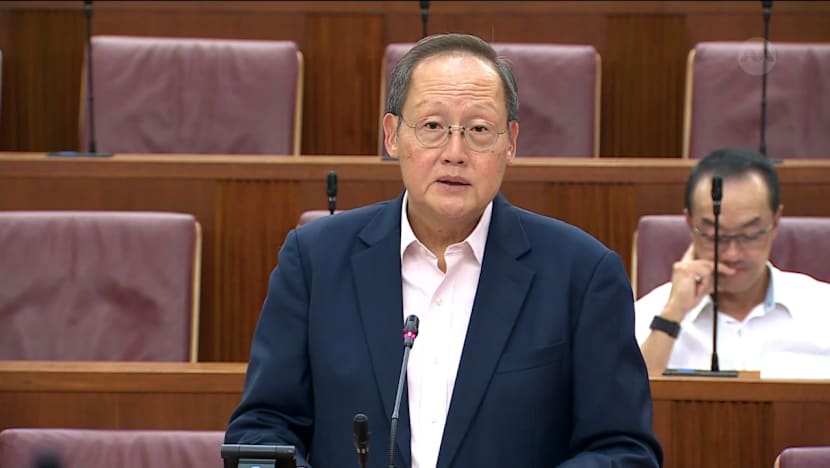
Manpower Minister Tan See Leng speaking during a parliamentary debate on a motion about an AI transition with "no jobless growth" on May 6, 2026.

Listen
8 min
New: You can now listen to articles.

This audio is generated by an AI tool.

06 May 2026 07:28PM
Read a summary of this article on FAST.
FAST

SINGAPORE: Amid disruption from artificial intelligence, Singapore will not leave the future of work and the livelihoods of its people to chance, Manpower Minister Tan See Leng said on Wednesday (May 6).

Instead, the country will shape a transformation that is inclusive, forward thinking and “anchored in real action”, Dr Tan told parliament.

“Singaporeans will never be helpless passengers to an AI-driven future, but Singaporeans will be our fellow co-pilots as our AI journey takes flight,” he said.

“And we will move forward in the Singapore way, with government, employers and the unions working together to ensure that our AI transformation creates good jobs, clear pathways for every Singaporean worker towards a better future.”

CNA Games
Show More
Show Less

The minister was responding to a motion about an AI transition with “no jobless growth”, which was proposed by National Trades Union Congress (NTUC) secretary-general Ng Chee Meng. More than 20 MPs debated the motion over two days.

Dr Tan said he supports the motion, which calls on parliament to: recognise AI’s transformative power; emphasise the need to anchor AI-enabled growth in fairness, resilience and opportunity for all; equip workers and businesses to seize new opportunities together; and affirm inclusive economic progress.

The Ministry of Manpower (MOM) has said that there is no indication of widespread job displacement by AI, and that early evidence suggests AI is complementing rather than displacing labour in Singapore.

According to its poll earlier this year, 6.2 per cent of firms have reduced headcount due to AI adoption, while 8.5 per cent of firms had reduced hiring activity due to AI.

But Dr Tan on Wednesday said Singapore must be prepared that AI’s impact on jobs will be greater as its adoption gains pace and scale.

The goal is to enable more businesses to use AI in such a way that workers can do their jobs better rather than be replaced, that work becomes more meaningful, and that AI’s benefits are shared between businesses and workers, he said.

Dr Tan said Singapore has weathered deep disruption in the past – through the Asian financial crisis, SARS and COVID-19 – because workers, businesses and the government stood together.

“In many countries, AI becomes a tug of war – workers on one end, business on the other. Progress contested, trust strained. Singapore does not have to go down that road,” he said.

Dr Tan acknowledged anxieties that AI may erode workers’ skills and experience and even take over jobs.

While some jobs will disappear, AI also creates new opportunities, he said.

AI can also enable new forms of flexible work and fractional work by small teams or “solopreneurs”, and Dr Tan said a tripartite work group on senior employment will explore how to scale flexible work models.

The government will also study NTUC’s proposal to raise the income ceiling of the SkillsFuture Jobseeker Support Scheme to better support higher-income individuals, said the minister.

The scheme provides temporary financial relief of up to S$6,000 and job search support to people who lost their jobs involuntarily, and currently has a salary cap of S$5,000.

IMPROVING AI SKILLS

Addressing the concerns brought up by MPs over inequality caused by AI, Dr Tan said fairness, resilience and shared opportunity in AI-enabled growth will not happen naturally, because the technology’s adoption is uneven across sectors, worker segments and business sizes.

“Without deliberate effort, the gains from AI could flow to some while others are left behind,” he said.

To this end, the new Tripartite Jobs Council will pay special attention to students and young workers anxious about AI’s impact on entry-level jobs, said the minister.

He pointed to institutes of higher learning enhancing their curricula to keep pace with AI developments and offering alumni selected AI courses at a discount.

SkillsFuture work-study programmes also allow graduates to combine classroom and on-the-job training, to build skills and experience that employers value, he said.

Dr Tan also pointed to broader efforts to prepare workers for the AI transition.

The formation of the new Skills and Workforce Development Agency (SWDA) will allow workers and employers to obtain support in skills and employment facilitation more seamlessly, he said.

The government will also do more to improve Singaporeans’ AI literacy. For example, SWDA will introduce diagnostic tools for workers to assess their level of “AI readiness” and find suitable courses.

Singaporeans in selected SkillsFuture AI courses will soon receive six months of free access to premium AI tools.

The Infocomm and Media Development Authority will also expand the TechSkills Accelerator programme to develop “AI bilingual” workers, starting with accountancy, legal and human resource professionals.

SUPPORTING BUSINESS TRANSFORMATION

Dr Tan also reiterated the support Singapore is giving to businesses through the S$400 million Enterprise Workforce Transformation Package, first announced in Budget 2025.

It will provide more funding for job redesign and workforce training – such as covering up to 70 per cent of the job redesign costs for small and medium enterprises, capped at S$150,000.

Dr Tan also pointed out that businesses accessing the grants are required to support workforce outcomes like wage growth and retention.

He then noted labour chief Mr Ng’s suggestion to expand NTUC’s company training committee (CTC) initiative, and said the government shared his ambition to elevate it to a tripartite level.

"We look forward to working with tripartite partners to jointly explore ways to make this a reality," said Dr Tan.

The CTC is a labour movement initiative first launched in 2019, in which employers are encouraged to form training committees with unions to work together on ways to boost worker career prospects and wages through structured training and technology adoption.

It is supported by grant funding from NTUC of up to 70 per cent of the qualifying cost for each project.

Mr Ng had said on Tuesday that NTUC will work with the Singapore National Employers Federation (SNEF) as part of the new Tripartite Jobs Council in order to expand the CTCs nationwide, going forward.

Finally, Dr Tan addressed NTUC’s proposal to require employers to notify authorities of retrenchment in advance, so that the labour movement can proactively support affected employees.

Currently, companies with at least 10 employees must notify MOM of any retrenchment within five working days after the affected employee is informed.

An administrative penalty of S$1,000 can be imposed if the employer fails to do so.

Previously, Dr Tan said advance mandatory notification would pose challenges for businesses and could even discourage backroom talks to save jobs.

Nominated Member of Parliament Mark Lee, who is also vice-chair of the Singapore Business Federation, on Wednesday said earlier notification alone will not solve the problem if businesses are not ready to redesign jobs or absorb workers.

Said Dr Tan: “We want to strike the right balance. Tripartite partners are already discussing shortening the retrenchment notification duration under the ongoing Employment Act review.

“We, on our part, would like to see notification to the government happening before or by the last day of work of the affected workers as far as possible.

“This would then also enable timelier employment facilitation support to workers.”

Towards the end of his speech, he assured workers, new graduates and firms that the government will support them through the AI transition.

“To our workers wondering where you stand, there will always be a place for you. Your experience, your judgment matter more than ever, and your commitment to our country, your support through the years, through the decades – we are deeply appreciative.

“To all of our young graduates, your ideas, your drive matter more than ever. Your enthusiasm, your curiosity ... matter more than ever, and we are behind you.

“For all of our businesses, if you're unsure, you're uncertain as to where to start, you don't have to figure it out alone. We will walk alongside with you,” he said.

Source: CNA/dv(nj)

Sign up for our newsletters

Get our pick of top stories and thought-provoking articles in your inbox

Subscribe here
Inbox
Advertisement

Singapore

AI use in Singapore schools kept age-appropriate, with focus on learning, not shortcuts: Desmond Lee

Educational AI tools by MOE have built-in safety guardrails to protect students’ interests, privacy and well-being, Education Minister Desmond Lee says.

AI use in Singapore schools kept age-appropriate, with focus on learning, not shortcuts: Desmond Lee

A class of Primary 4 students at Palm View Primary School conducting science experiments during their E2K Science lesson on Feb 26, 2026. (Photo: CNA/Alyssa Tan)

Listen
5 min
New: You can now listen to articles.

This audio is generated by an AI tool.

06 May 2026 01:07PM (Updated: 06 May 2026 02:19PM)
Read a summary of this article on FAST.
FAST

SINGAPORE: The use of artificial intelligence in schools is kept balanced and age-appropriate to support students’ learning and development, Minister for Education Desmond Lee said on Wednesday (May 6).

Responding to parliamentary questions on AI usage among primary school students and the safeguards in place, Mr Lee said theoretical knowledge alone is not sufficient, and students need well-designed and supervised hands-on experiences by using educational AI tools.

“This spiral approach as students progress through different levels in school prepares them to harness AI to benefit their learning, critically evaluate AI output and guard against risks such as cognitive offloading.”

MOE's approach is informed by research on how children learn and develop, and what is helpful at each stage of their growth, Mr Lee said, outlining a tiered framework.

CNA Games
Show More
Show Less

From Primary 1 to 3, physical hands-on learning is prioritised as students build foundational knowledge and develop cognitive and social skills. They learn the basics of AI, but schools will not assign work that requires them to use AI directly.

From Primary 4, students may use educational AI tools under teacher supervision. By that age, Mr Lee said, students would have developed foundational literacy, numeracy and basic knowledge of AI, as well as skills such as planning, task initiation and the ability to evaluate their own thinking.

Students in Primary 4 to 6 will only use tools specifically designed for education, including AI-enabled features within the Singapore Student Learning Space (SLS).

NO SHORTCUTS

Schools will also teach students that AI must not be used to take shortcuts in place of actual learning, Mr Lee said.

“We want to provide our students with a school environment where they can develop good learning habits and understand the importance of upholding academic integrity.”

Some secondary schools may design assignments that allow AI use, with students required to disclose and properly cite any AI-assisted work. Mr Lee said this prepares them for post-secondary education and future workplaces where AI use will be more prevalent.

Students who pass off AI-generated content as their own will face consequences for academic dishonesty, he added. 

National examinations are invigilated and the use of AI is prohibited. Where AI is permitted, such as in coursework, teacher supervisors will monitor use to ensure it meets assessment objectives.

SAFEGUARDS IN PLACE

Educational AI tools used in schools have built-in safety guardrails to protect students’ interests, privacy and well-being, Mr Lee said.

Data from MOE-built AI tools is anonymised and not used to train external models. Schools using commercial off-the-shelf tools must ensure input data contains no personal or personally identifiable information, in compliance with data management guidelines.

Mr Lee also acknowledged parental concerns about exposing young children to AI, particularly around excessive screen time. Beyond sharing information on how parents can support their children's AI use, MOE provides details on how tools are used in teaching and offers avenues for parents to share their views.

“AI has been developing rapidly and is increasingly embedded into everyday systems around us," he said.

“If we’re not mindful, we may lose the consciousness in detecting the presence of, and influence that AI has in our decision making and ways of thinking, simply because it works so seamlessly. So development of AI literacy is critical and must be timely.”

In a supplementary question, MP Kenneth Tiong (WP–Aljunied) asked if parents can opt their children out of specific aspects of AI tool usage in classrooms.

Mr Lee said that it depends on whether it is an SLS-enabled tool and is used in classroom learning.

"It's part of teaching and learning. It's part of teachers' blended approach, and I think that will enable our teachers to be able to help our children learn the cognitive aspects, foundational knowledge, more deeply."

He added that if specific external tools are brought and parental consent is not obtained, schools will not allow children to use those AI tools.

Mr Lee likened restricting children’s use of AI in blended learning to saying, "I don't want my children to have a whiteboard, I want a blackboard."

"We must enable our teachers to be able to perform their role, and this is of course subject to MOE guidance and good Singapore teaching practice." 

Source: CNA/cj(sz)

Sign up for our newsletters

Get our pick of top stories and thought-provoking articles in your inbox

Subscribe here
Inbox
Advertisement

Singapore

Singapore must enable businesses to transform, workers to seize new opportunities in the 'AI era': Ng Chee Meng

Singapore does not want either extreme of unmanaged job disruption or workers pushing back defensively against AI, said the labour chief.

Singapore must enable businesses to transform, workers to seize new opportunities in the 'AI era': Ng Chee Meng

NTUC secretary-general Ng Chee Meng moving a motion on an AI transition with no jobless growth in parliament on May 5, 2026.

Listen
10 min
New: You can now listen to articles.

This audio is generated by an AI tool.

05 May 2026 09:18PM (Updated: 06 May 2026 06:44AM)
Read a summary of this article on FAST.
FAST

SINGAPORE: As artificial intelligence changes the nature of work, Singapore must enable enterprises to transform with the technology in a way that benefits workers, and enable workers to seize new opportunities, labour chief Ng Chee Meng said on Tuesday (May 5).

"Enterprises must be empowered to adopt AI, with workers actively involved so that transformation delivers stronger business performance and better workforce outcomes," Mr Ng told parliament.

As AI's impact on jobs evolves, having clearer signals, better pathways and practical support will also help youths and workers move into new opportunities, said the National Trades Union Congress (NTUC) secretary-general.

He highlighted the need to build market intelligence that anticipates how jobs will evolve in the new economy, and to support displaced workers to recover with dignity and confidence.

CNA Games
Show More
Show Less

Mr Ng (PAP-Jalan Kayu) was delivering a private member's motion on "an AI transition with no jobless growth" that he moved with Mr Saktiandi Supaat (PAP-Bishan-Toa Payoh), Ms Yeo Wan Ling (PAP-Punggol) and Nominated Member of Parliament Mark Lee.  

The motion called on parliament to:

  • Recognise the transformative power of new technologies, especially AI, to drive Singapore's next phase of economic development
  • Emphasise that Singapore's approach to AI-enabled growth must be anchored in fairness, resilience, and opportunity for all
  • Resolve to equip and support workers and enterprises to seize new opportunities and advance together
  • Affirm that economic progress must remain inclusive, and that Singapore must not have jobless growth, because every worker matters

In his speech, Mr Ng gave the reason behind the motion, which was to set out a clear agenda for AI adoption so that Singapore can avoid the "extreme" outcomes seen elsewhere.

"At one extreme, some societies allow technology to race ahead. Displaced workers are left to fend for themselves. Economists warn of scars when job disruption is unmanaged.

"At the other extreme, fear takes hold. Workers push back defensively. In Hollywood, writers and actors have taken to picket lines and public demonstrations over the use of AI.

"These are not paths that we want for Singapore," said Mr Ng, who has led the labour movement since 2018.

In his 33-minute speech, the labour chief called for more funding to scale up NTUC's company training committees, in which unionists work with company management to transform their businesses while uplifting workers.

He said NTUC intends to scale up its AI-Ready SG initiative to provide more than 1 million places for workers to train in AI skills over the next few years.

He also repeated a call for the government to raise the income ceiling of the SkillsFuture Jobseeker Support Scheme to cover involuntarily unemployed professionals, managers and executives (PMEs).

This is the first motion NTUC has tabled in more than a decade. Its last motion, on inclusive economic growth and support for low-skilled and low-wage workers, was tabled in 2011.

A total of 19 MPs are scheduled to debate the motion on Wednesday. MPs will vote on the motion after the debate.

WORKERS MUST BE ABLE TO SEE WHERE THEY FIT IN AI ECONOMY

Mr Ng said this phase of economic growth differs from the past because of the speed at which AI is advancing.

One in five respondents in an NTUC survey cited job security as their top concern, owing to anxieties around AI and automation, among other things.

Businesses also want to transform but have to consider their workforce readiness and implementation costs, Mr Ng added.

For this reason, he said Singapore must "act early" and strengthen its response to AI-enabled growth before disruption takes hold.

He listed three desired outcomes of this push: "To grow our economic pie as large as possible, while ensuring that this growth translates into good jobs and opportunities for Singaporeans.

"To enable enterprises to use AI technologies to transform, and train workers to do higher-value work, take on broader roles, and create more value.

"To invest in our workers and empower them, preparing them early to move into AI-augmented roles."

When used well, AI can raise productivity, unlock new possibilities and strengthen competitiveness, said Mr Ng.

"But every worker who puts in their fair share of effort must be able to see where they can fit into this new economy – and be supported to get there.

"This is how we anchor AI-enabled growth in fairness, resilience and opportunity for all."

Mr Ng then noted that tripartite partners have stepped up together in the past when technology reshaped work, such as in the national computerisation drive of the 1980s.

In the AI era, the government, unions and employers must do likewise, he said.

To that end, the government has set up a National AI Council chaired by Prime Minister Lawrence Wong, while NTUC has launched AI-Ready SG to empower more workers to train and use AI skills.

The recently launched Tripartite Jobs Council will also support enterprise transformation, job redesign and worker transitions, he said.

SUPPORTING YOUTHS, PROFESSIONALS AND DISPLACED WORKERS

The labour chief then gave further details on what the new tripartite council will focus on.

For fresh graduates with anxieties about entering the workforce, Mr Ng outlined how youths can be better supported to seize new opportunities.

He said the Tripartite Jobs Council will strengthen its outreach to institutes of higher learning so that students can gain labour market insights and plan their career moves during their studies.

There could be room for earlier career guidance, better insight into employer needs and stronger matching for internships and entry-level roles, he said.

As for PMEs and mid-career workers, he said many have expressed a need to improve their skills to keep pace with AI.

To this, Mr Ng pointed to the planned expansion of the AI-Ready SG initiative and newly announced Union Training Assistance Programme funding to offset subscription fees for selected AI tools.

But even with the best efforts, the impact of AI will still lead to some job displacement, particularly among PMEs, he said.

"Especially for larger-scale retrenchments, earlier notice allows our unions, allows e2i, through its network of 27 national career centres, to come in early to support affected workers," he said.

Mr Ng said raising the Jobseeker Support Scheme coverage closer to the median income of PMEs would also "better reflect the realities of the AI-driven disruption".

The support scheme, which provides up to S$6,000 for the involuntarily unemployed, presently has a salary cap of S$5,000. The Manpower Ministry previously said that this threshold slightly exceeds the median income of full-time employed residents in 2024.

In 2025, the median income of professionals, managers, executives and technicians was S$7,605, according to Manpower Ministry data.

Mr Ng also said he was glad that NTUC's call for advance mandatory retrenchment notification was being studied in the ongoing review of the Employment Act.

"Together with earlier notification (of retrenchment), quicker and more coordinated mobilisation, we can ensure that displaced workers recover faster and bounce back with confidence," he said.

WHAT ENTERPRISES CAN DO

Echoing his May Day Rally speech, Mr Ng said NTUC will also help businesses and workers use the company training committees (CTCs) to transform themselves to reap the benefits of AI "sector by sector, company by company".

The CTC is a labour movement initiative first launched in 2019, in which employers are encouraged to form training committees with unions to work together on ways to boost worker career prospects and wages through structured training and technology adoption.

It is also supported by grant funding from NTUC of up to 70 per cent of the qualifying cost for each project.

More than 3,800 CTCs have been formed, with more than 300,000 blue- and white-collar workers benefiting from the projects and training, said Mr Ng.

While the labour movement has spearheaded the CTC initiative in the past, it will now do so with the Singapore National Employers Federation (SNEF) as part of the new tripartite council in order to expand the CTCs nationwide, he said.

"NTUC will work through the details with SNEF, and put up our requests for funding when ready, and we hope the government will provide its full support," he said.

But Mr Ng said a challenge that both business and workers face is "a fragmented, sometimes even conflicting, view of the AI landscape".

He said Singapore needs its own trusted system of market intelligence and foresight that will give practical answers to questions about skills and job roles.

Such a system would bring together insights from trade associations on how industries are adopting AI, enterprise data on job redesign and productivity shifts, and union sensing on workers' concerns and what kind of skills training works.

Youths can then get clearer signals on which skills will open doors, making their transition from school to work less anxious even as entry-level roles change.

PMEs and blue-collar workers can also get early guidance on how to improve their skills and use AI to augment their work, said Mr Ng.

Wrapping up his speech, he repeated his call for Singapore to act early to understand the changing job landscape, help enterprises and workers in seizing opportunities, and support those affected by the AI disruption.

Mr Ng said these moves are "a call for collective action in this AI transition".

"This renewed compact must be the foundation of our unique tripartism in the AI era, keeping enterprises competitive, and workers firmly at the heart of our progress," said the labour chief.

Source: CNA/dv(nj)

Sign up for our newsletters

Get our pick of top stories and thought-provoking articles in your inbox

Subscribe here
Inbox
Advertisement

Singapore

Singapore semiconductor firms push into US market as global AI boom drives advanced chip demand

As AI development accelerates, some companies are positioning themselves closer to where the next breakthroughs and opportunities are unfolding.

Singapore semiconductor firms push into US market as global AI boom drives advanced chip demand

The race to keep pace is intensifying across the semiconductor supply chain.

Listen
4 min
New: You can now listen to articles.

This audio is generated by an AI tool.

05 May 2026 04:37PM
Read a summary of this article on FAST.
FAST

SAN DIEGO: The global artificial intelligence boom is driving some Singapore semiconductor firms to establish a foothold in the United States, where rapid breakthroughs are reshaping the industry every few months.

The race to keep pace is intensifying across the semiconductor supply chain.

Each new advancement is fuelling demand for increasingly sophisticated chips – many of which have yet to be developed, observers say.

STAYING COMPETITIVE

Inside production facilities in Singapore, companies are scrambling to keep up.

AEM Holdings, which manufactures equipment used to test semiconductors, says the pressure has intensified as product cycles shrink dramatically.

“Our customers rely on us to launch their next generation AI chips,” said its CEO Samer Kabbani.

“If we fail, we could stop the production of these critical chips. This is a freight train moving – it will not stop for anybody.”

He added that traditional timelines – where products were stabilised over months before mass production – are no longer viable.

“Now it's almost like you finish, you go straight into production. If there are any weaknesses in the design, you have to solve them (on the go),” said Mr Kabbani. 

"Some people say you jump from the plane and you assemble the parachute as you're landing. So that's where we are now." 

To stay competitive, AEM has set up its main research and development hub in San Diego, tapping a deep pool of highly specialised talent to develop advanced engineering materials.

The firm expects the move to help double its production capacity by year-end while accelerating innovation.

Mr Kabbani noted that Southern California’s legacy in aerospace and defence has created strong expertise in advanced materials – skills that can now be applied to semiconductor development.

“We felt building a location there, attracting those people and applying this into a new industry would be a good move for us,” he noted.

CNA Games
Show More
Show Less

SEIZING OPPORTUNITIES

Enterprise Singapore (EnterpriseSG) said the US drive to lead in AI is creating opportunities for supporting firms, including suppliers.

Ms Lim Seow Hui, director for the Americas at EnterpriseSG, said AI has become a strategic priority for the US government.

According to data from private investment tracking platform Crunchbase, AI companies like OpenAI and Anthropic shattered fundraising records in the first quarter of the year with a US$297 billion haul.

“AI development is going to grow big in the US,” said Ms Lim. “In order to do that, capital will be required, whether it's from the private sector or from the government.

“Therefore the investments into companies that are in the area of AI in the US will continue to grow.”

Other Singapore firms are also looking to ride the wave.

For some, breaking into the US market could provide long-term stability as they transition from mature semiconductor segments to more advanced technologies like AI.

NexGen Wafer Systems, which develops machines used to build chip circuits, is expanding its US presence to engage directly with major industry players.

Mr Cheung Ting Kwan, CEO of the semiconductor equipment firm, said the move will help the company secure repeat business while reaching new customers like Intel, who handle the entire supply chain from designing and manufacturing to selling.

“We have to show them our capability,” he added.

“We exchange roadmaps and ideas, know what their pain points are, what they require on the technology front, and to prove that in the next one to two years, that we are a very viable option for them – as a matter of fact, a top option for them.”
 

Source: CNA/ca(lt)

Sign up for our newsletters

Get our pick of top stories and thought-provoking articles in your inbox

Subscribe here
Inbox
Advertisement

Singapore

CSA tasks critical information infrastructure leaders to review cyber risks due to AI-enabled threats

"This is not an issue that should be delegated to IT teams alone. It demands leadership attention at the highest levels," said Senior Minister of State for Digital Development and Information Tan Kiat How.

CSA tasks critical information infrastructure leaders to review cyber risks due to AI-enabled threats

The Cyber Security Agency of Singapore logo. (File photo: CNA/Calvin Oh)

Listen
7 min
New: You can now listen to articles.

This audio is generated by an AI tool.

05 May 2026 12:51PM (Updated: 05 May 2026 02:09PM)
Read a summary of this article on FAST.
FAST

SINGAPORE: The Cyber Security Agency of Singapore (CSA) has written to boards and senior leadership of all Critical Information Infrastructure (CII) owners to review their cybersecurity in light of AI-enabled threats.

Senior Minister of State for Digital Development and Information Tan Kiat How said in parliament on Tuesday (May 5) that the letter from CSA sets out clear expectations on what the review should include.

He was responding to questions from MPs on AI cyberattacks and how organisations are being fortified against such attacks.

"This is not an issue that should be delegated to IT teams alone," said Mr Tan.

CNA Games
Show More
Show Less

"It demands leadership attention at the highest levels, including board members and chief executives. This applies whether an organisation runs information technology, operational technology, or both types of systems. 

"The priority is to get the fundamentals right, and do so quickly."

CII are computer systems directly involved in the provision of essential services. The CII sectors are: energy, water, banking and finance, healthcare, transport, infocomm, media, security and emergency services, and government.

Video Player is loading.
Current Time 0:00
Duration 22:50
Loaded: 0.72%
Stream Type LIVE
Remaining Time 22:50
 
1x
    • Chapters
    • descriptions off, selected
    • captions off, selected
    • en (Main), selected
    Current Time 0:00
    Duration 0:00
    Loaded: 0%
    Stream Type LIVE
    Remaining Time 0:00
     
    1x
      22:50 Min

      The government does not have access to Mythos and it is not aware of any local bank that has been granted access. More broadly, the government does not assume that it will always have early access to every frontier model. Instead, it maintains close working relationships with various partners on capability developments and safety and security implications. Senior Minister of State for Digital Development and Information Tan Kiat How, who said this in reply to parliamentary questions on Tuesday (May 5), stressed the need to understand the advances in capabilities enabled by Mythos to be part of a continuum. The issue is not any single model like Mythos, he said. The underlying shift is broader, the risks are real and the government is treating them with the seriousness they deserve, he added.

      In his letter, CSA chief executive David Koh said new developments in frontier AI "demand board-level and CEO attention". 

      "Frontier AI is accelerating at a rate where current assumptions in cyber risk management, on which your controls, measures and incident response plans were designed, may no longer be valid," he wrote.

      "Vulnerability discovery is becoming faster and cheaper."

      The organisation's review should look at whether its current cyber risk assessment takes relevant account of AI-enabled threats, as well as whether visibility over critical systems, internet-facing assets, privileged access, cloud services and third-party dependencies remains sufficient.

      It should also consider whether vulnerability management, patching, monitoring and incident response arrangements are fast enough, and if its use of AI is appropriately governed.

      Organisations should also look at where AI can be used to augment current cybersecurity operations.

      The review should be tabled at the appropriate board or executive governance risk committee, said Mr Koh.

      “Where material gaps are identified, management should ensure that these are addressed through clear remediation plans and explicit risk acceptance  decisions and where necessary, adjustments to cybersecurity investment priorities.”

      He added that CSA will continue to monitor developments, publish further technical guidance and work with partners to strengthen Singapore’s collective cyber resilience.

      Mr Tan said that the Monetary Authority of Singapore has convened the CEOs of major financial institutions to discuss the threat landscape and "drive collective action on technology and cyber resilience". 

      "Financial institutions are treating this with the seriousness it deserves and have been strengthening their posture," he added.

      The government views AI-enabled cyber risk as an amplification of an existing systemic risk, rather than a new category, he said. Government agencies are also on the alert for cybersecurity risks due to AI.

      NO ACCESS TO MYTHOS

      CSA last month urged companies in Singapore to strengthen cybersecurity measures, citing the potential for increased risks from frontier AI models.

      The advisory came days after Anthropic previewed Mythos amid a wave of hype over its capabilities. 

      The UK’s AI Security Institute has found that Mythos is more capable of being used for complex cyberattacks than other AI tools such as OpenAI’s ChatGPT or Google’s Gemini.

      In its release of Mythos, Anthropic said it had already found thousands of high-severity vulnerabilities, including some in every major operating system and web browser.

      Responding to a question from MP Louis Chua (WP-Sengkang), Mr Tan said that the government does not have access to Mythos.

      Anthropic released it only to a limited set of partners under a controlled preview, and authorities are not aware of any local bank that has been granted access, he said.

      “More broadly, we do not assume that we will always have early access to every frontier model,” he added.

      Instead, the authorities maintain close working relationships with various partners, including major AI labs and cybersecurity firms, to track developments, as well as assess safety and security implications, he said.

      "We are working with partners who have access to Mythos to better understand its capabilities and implications," Mr Tan added.

      He added that CSA works closely with relevant government agencies and industry experts to exchange insights on the threats and mitigation measures. It is also reviewing standards and obligations for CII owners to account for the faster attack timelines that AI enables.

      Mr Tan said that he has finished visiting all 11 CII sectors.

      "I'm very heartened that all the senior leadership – from chief executives to board members – are aware of the risk and are taking steps. So they are not taking this lightly," said in response to a supplementary question from Mr Chua on how the government is directly supporting CII providers.

      "They are putting in place not just processes, investments, to secure themselves and their systems, but also proactively thinking about how to secure their AI users in their organisations."

      Under the Cybersecurity Act, CSA has the authority to direct and enforce action where necessary.

      "On Mythos, specifically, without direct access, we cannot test the model ourselves. But we assess the risk based on published evaluations, threat intelligence and our ongoing engagement with the major AI labs," Mr Tan said.

      “Where credible evidence emerges of a material risk to systems of national consequence, we work with and advise CII owners to patch and harden their systems. This is the approach we have used to date, and we will continue to do so.”

      Responding to a supplementary question from MP Edward Chia (PAP-Holland-Bukit Timah) on how the government will ensure that small- and medium‑sized enterprises (SME) would not be left behind, Mr Tan said different resources have been deployed to support them.

      These include a "self-check" on their systems and guidelines on how to deploy AI solutions within their organisations. 

      Mr Tan also cited initiatives like the SMEs Go Digital Programme, where authorities work with industry partners providing these technology solutions and pre-approve them for support. "We make sure that basic cybersecurity hygiene is baked into those systems," he said.

      Ultimately, the issue is not any single model like Mythos, said Mr Tan.

      He added: "The underlying shift is broader and the risks are real. We are treating them with the seriousness they deserve."

      Source: CNA/mt(mi)

      Sign up for our newsletters

      Get our pick of top stories and thought-provoking articles in your inbox

      Subscribe here
      Advertisement

      Commentary

      Commentary: By blocking Manus sale, China sends a warning to tech companies

      China’s move to undo Meta’s acquisition of Manus was not surprising, but the lack of public criticism was, says Chong Ja Ian from the National University of Singapore.

      Commentary: By blocking Manus sale, China sends a warning to tech companies
      The Manus AI agent app is displayed on a mobile phone near the logo of US tech giant Meta. (Photo: Reuters/Florence Lo)
      Listen
      6 min
      New: You can now listen to articles.

      This audio is generated by an AI tool.

      05 May 2026 06:00AM (Updated: 05 May 2026 07:51AM)
      Read a summary of this article on FAST.
      FAST

      SINGAPORE: It was supposed to be a done deal: Last December, US tech giant Meta shelled out US$2 billion to buy Chinese-founded, Singapore-based artificial intelligence developer Manus. Yet, China’s move to unravel it four months later, on national security grounds, should not have surprised anyone. 

      What is more surprising is the expectation that business, especially in technology, can operate separately from geopolitics in today’s world. In particular, efforts to distance a company from China and present alternative origins are no longer adequate to escape sharper scrutiny – from either the US or China.

      Manus rapidly gained prominence in tech circles in March 2025, positioning itself as the world’s first general purpose AI agent that could autonomously carry out tasks rather than answer questions like other AI chatbots. 

      By July 2025, Manus laid off staff and relocated its headquarters from China to Singapore. A fresh identity could help it gain access to global capital and high-end US chips. Months later, news of the sale to Meta made global headlines. 

      CNA Games
      Show More
      Show Less

      If Beijing looked past Manus’ initial moves, the sale to an American company made a response harder to avoid.

      THE WARNING SIGNS WERE CLEAR

      Beijing quickly made known its reservations about the Manus-Meta deal. Following publicity around the acquisition, the Chinese commerce ministry began investigating whether the agreement violated China’s export control, technology transfer and foreign investment laws. 

      On Mar 1, its Ministry of Industry and Information Technology introduced new rules on technology contracts, that give authorities greater oversight and control over such deals. The Financial Times reported in late March that Beijing barred Manus’s chief executive and chief scientist from leaving the country. 

      Then the State Council issued a decree strengthening control over industrial and supply chains, including technology, in early April.

      Even if one overlooks recent developments, Beijing’s growing restrictions on technology and industrial chains are hardly new. 

      Over 2020 and 2021, Beijing targeted major homegrown technology firms, among them Alibaba, Didi, and Meituan, officially about antitrust and security rules, but in practice also served to rein in their power. The probes resulted in hefty fines, with Alibaba also forced to restructure and Didi having to delist from the New York Stock Exchange.

      Limits on the export of key technologies, use of foreign technology, and social media are also being more widely applied to political ends.

      BEIJING IS NOT ALONE

      Beijing is not alone in trying to constrain technology transfers and investments.

      US curbs on both, specifically to and from China, have grown across presidential administrations. This was emphatically seen in debates leading up to the forced sale of TikTok by its Chinese parent ByteDance to a US-controlled joint venture in January. 

      Washington has for some time been seeking to prevent the sale of the most advanced semiconductors and other technologies to China, moving against firms as well as individuals who tried to circumvent these controls. 

      There is no reason why Manus and Meta – or any other firm – are exceptions and exempt from this more restrictive environment.

      In fact, the Manus-Meta transaction itself is an anomaly. 

      Silicon Valley and US venture capital interest in China cooled considerably over the past decade. The New York Times reported a 73 per cent drop in US-China cross-border technology deals between 2021 and 2024. 

      Beijing is expanding oversight on US investment in Chinese technology despite an overall desire to attract foreign investment, while the US Federal Communications Commission is rolling back the testing of US telecommunications technology in China. 

      Both Beijing and Washington have become much readier to use denial of technological access as a tool of economic statecraft.

      BREAKDOWN OF “ORIGIN-WASHING”

      Despite these constraints, Manus was effectively betting that it had found a viable workaround. The collapse of the deal with Meta suggests that it will only get harder to engage in “origin-washing” tactics.

      It cuts both ways: Just as China sees Manus as strategically Chinese despite its foreign domicile, the US looked past TikTok’s Singapore headquarters and Singaporean CEO to focus on the app’s Chinese origins.

      But more companies may be coming to terms with growing state intervention in business and technology.

      This could explain the relative absence of public criticism to the now-thwarted Manus-Meta sale. This parallels the silence surrounding the second Trump administration’s enforcement of prohibitions on technology transfers to China. These are in sharp contrast to reactions to the “small yard, high fence” approach toward US technology controls under the Biden administration and initial US efforts at controlling TikTok. 

      Blocking Manus might not necessarily have the effect China intended. 

      Some companies may accept that state intervention is inevitable and choose to keep to a local scale. Others may design more elaborate origin-washing efforts but face diminishing gains. Some may decide to bring their ideas overseas from the very start – and that will be a bigger problem for China.

      Chong Ja Ian is Associate Professor of Political Science at the National University of Singapore and a non-resident scholar at Carnegie China.

      Source: CNA/ch

      Sign up for our newsletters

      Get our pick of top stories and thought-provoking articles in your inbox

      Subscribe here
      Advertisement

      Singapore

      Cyber talent harder to find as AI reshapes threat landscape

      Experts say new AI models could help both attackers and defenders, but organisations must adapt quickly and build the right talent to keep pace.

      Cyber talent harder to find as AI reshapes threat landscape

      As artificial intelligence reshapes cybersecurity, demand is rising for professionals with skills in both AI and cyber defence. (Photo: iStock)

      Listen
      5 min
      New: You can now listen to articles.

      This audio is generated by an AI tool.

      04 May 2026 05:04PM (Updated: 05 May 2026 09:43AM)
      Read a summary of this article on FAST.
      FAST

      SINGAPORE: Artificial intelligence is changing the game for cybersecurity professionals, speeding up cyberattacks even as defenders race to keep up, said industry players.

      Organisations are under pressure to respond faster while building up expertise to use AI effectively, they told CNA on the sidelines of the DEF CON hacking conference – one of the world’s largest cybersecurity gatherings – in Singapore last week.

      This comes as the Cyber Security Agency of Singapore (CSA) warned last month that the latest AI models can cut the time needed to identify vulnerabilities and engineer exploits from months to hours, potentially giving threat actors an edge.

      AI ACCELERATING CYBER OPERATIONS

      Dr Adrian Tang, group director of the Digital Defence Hub at the Centre for Strategic Infocomm Technologies (CSIT) – a unit under Singapore’s Ministry of Defence – said AI is fundamentally changing the pace of cyber operations.

      He added that newer AI models are able to chain vulnerabilities together into potential exploits more quickly, further accelerating attacks.

      As a result, defenders now need to respond much faster, especially when it comes to patching vulnerabilities and closing security gaps.

      The technology is also taking on more manual and repetitive work that once consumed analysts’ time.

      This allows human experts to focus on higher-level tasks such as analysis and decision-making, where judgment and intuition remain critical, Dr Tang said.

      CNA Games
      Show More
      Show Less
      Participants at the DEF CON Singapore conference.

      At CSIT, AI tools are already being used to speed up processes like malware analysis, reducing work that used to take hours to minutes or even seconds.

      But beyond speed, Dr Tang said the real challenge is how well organisations can adopt and scale the use of AI.

      “The question is not about whether we will use AI in cyber. The question would really be about who can master AI more, faster and at scale.”

      He added that AI is a “force multiplier” for both attackers and defenders, and success will depend on how quickly teams can build up expertise and apply it effectively.

      TALENTS WITH AN “INTERSECTION” OF SKILLS

      Mr Goh Eng Choon, president of cyber at ST Engineering, said the industry continues to face a shortage of talent.

      He added that the nature of cybersecurity work, which involves dealing with constant and evolving threats, can be exhausting, contributing to fatigue and attrition in the sector.

      AI, particularly more advanced forms like agentic AI – which can operate with greater autonomy – can help ease that burden, he noted.

      But even as AI helps make the work more manageable, industry players said the shortage of skilled professionals remains a key constraint.

      Mr Yeo Lip Khoon, who heads the Home Team Science and Technology Agency’s (HTX) xCybersecurity department, said the biggest issue now lies in finding people who can operate at the intersection of AI and cybersecurity.

      While finding good talent to work in AI remains difficult, the government agency is having an easier time finding cybersecurity talent after starting the search a while ago.

      “But what will be a challenge now, and what we plan to tackle going forward, is finding talents that have an intersection of both skills.”

      NURTURING THE NEXT GENERATION

      To do this, agencies and industry players are looking to strengthen Singapore’s talent pipeline and bring communities together.

      HTX partnered with DEF CON to bring the conference to Singapore for the first time, as part of efforts to grow the country’s cybersecurity ecosystem and develop talent.

      Such platforms also allow participants to learn, test systems and exchange ideas, Mr Yeo said. 

      At the event, participants took part in hands-on challenges simulating cyberattacks on real-world systems, including those in sectors such as maritime and transport.

      Mr Yeo said these sectors reflect critical areas where Singapore’s cybersecurity capabilities need to keep pace, especially as the country continues to position itself as a global transport hub.

      At the same time, the fundamentals of cybersecurity remain unchanged, even as new technologies emerge, he added.

      Curiosity, adaptability and the ability to learn quickly remain critical, particularly as professionals navigate how best to use AI.

      Mr Yeo added: “Ultimately, I think in the war between cyber security threats, the part about human creativity and human ingenuity will always be critical.”

      Source: CNA/mp(lt)

      Sign up for our newsletters

      Get our pick of top stories and thought-provoking articles in your inbox

      Subscribe here
      Advertisement

      Singapore

      PM Wong pledges 'new and better' jobs as AI disrupts industries, transforms economy

      “We may not be able to protect every job. But we will protect every worker,” says Prime Minister Lawrence Wong. 

      PM Wong pledges 'new and better' jobs as AI disrupts industries, transforms economy

      Prime Minister Lawrence Wong with NTUC secretary-general Ng Chee Meng, NTUC president K Thanaletchimi and other union leaders at the end of the May Day Rally. (Photo: CNA/Syamil Sapari)

      Listen
      6 min
      New: You can now listen to articles.

      This audio is generated by an AI tool.

      01 May 2026 11:07AM (Updated: 01 May 2026 10:47PM)
      Read a summary of this article on FAST.
      FAST

      SINGAPORE: As artificial intelligence reshapes industries and Singapore’s economy transforms, “new and better jobs” will be created, Prime Minister Lawrence Wong said on Friday (May 1).

      Addressing more than 1,600 union leaders and tripartite partners at the May Day Rally at Downtown East, Mr Wong acknowledged the "massive" impact of AI but pledged that every worker would be protected amid the change.

      “I cannot promise that there will be no disruption. Jobs will change. Some will disappear. And the pace of change will be faster than anything we have seen before,” he said.

      “But this I can promise you: as our economy transforms, we will create new and better jobs. We may not be able to protect every job. But we will protect every worker. Because in Singapore, every worker matters.”

      Mr Wong pointed out that where entire teams were once needed for some workflows, one person can now do it all with AI agents.

      “These go far beyond simple chatbots. They don’t just answer your questions. They can plan and execute complex tasks from start to finish, all on their own,” he said. “AI will not just improve productivity. It will disrupt and reshape entire industries.”

      FEELING "ANXIOUS" ABOUT AI

      Mr Wong acknowledged that not everyone feels ready for the shift.

      “Many Singaporeans are anxious about AI. They ask: will it replace jobs? Will it be harder to keep up? Will the next generation still have good opportunities?” he said. “These concerns are real.”

      But Singapore has navigated "major technological transitions" before, he added. When he entered the workforce in the mid-1990s, tools like Excel were just taking off – offices needed fewer data entry clerks, but demand grew for accountants and analysts who could use the tools to create more value.

      “AI is far more powerful than spreadsheets. So the impact on our workplaces will be much greater.”

      Authorities will take "deliberate steps" to ensure the benefits of AI are shared broadly, including bolstering SkillsFuture and merging Workforce Singapore and SkillsFuture Singapore into a new entity.

      “The government will provide the tools, the pathways, and the support. But we also need Singaporeans to step forward. Do not let anxiety or uncertainty hold you back from learning and using AI,” said Mr Wong.

      “AI is here to stay. So, embrace it, learn it, use it and master it.”

      CNA Games
      Show More
      Show Less

      In his Budget speech earlier this year, Mr Wong announced that Singaporeans who take up selected AI training courses will receive six months of free access to premium AI tools.

      “You make the effort, and we will be there for you – every step of the way,” he said.

      Mr Wong also said authorities plan to scale up the company training committees approach for the AI transition, noting there is "no one-size-fits-all solution" given that every sector is unique and and every company faces different constraints.

      He pointed to the new Tripartite Jobs Council, announced on Thursday and initiated by the National Trades Union Congress, which will bring together tripartite partners to support workers and businesses navigating AI's impact.

      Mr Wong acknowledged the road ahead would not be easy, and that it is natural to feel overwhelmed.

      "We are and will always be a small nation – exposed, vulnerable with little 
      margin for error. But what defines Singapore is this: we do not give up. We do not abandon one another." 

      The prime minister became emotional and paused to compose himself as he read out the words of Mr Nisar Keshvani, a Singaporean on an SAF repatriation flight describing the feeling of returning home.

      “Whether it is an energy crisis, or the AI revolution, we will look after our own. No Singaporean will be left behind,” Mr Wong said.

      “Our solidarity is our greatest strength. It carried us through every storm of the past. It gives us confidence today. And it will carry all of us forward – into the future we are building together.”

      MINDSET SHIFT TO FIGHT ANXIETY

      Union leaders told CNA that while anxieties about AI's impact on jobs are real, they can be addressed with a broader mindset shift.

      NTUC president K Thanaletchimi said unions, employers and the government all need to drive this change in outlook – that workers can acquire new skills regardless of age.

      “The only impediment that may make us go slow or stop us from doing certain things is our mindset,” she said.

      Nominated MP Sanjeev Kumar Tiwari, general secretary of the Amalgamated Union of Public Employees and a member of NTUC's Central Committee, said anxieties exist even in the public sector.

      “I think PM’s very candid point about not protecting the job, but protecting the workers, that's the one that really stood out for me,” he said.

      The union leaders identified groups that stand to benefit from the newly announced Tripartite Jobs Council: women returning from career breaks, retrenched workers seeking seamless job transitions, and seniors who may struggle to keep pace with change.

      NTUC assistant secretary-general Yeo Wan Ling welcomed the pragmatic support offered, such as access to AI courses and tools, to help ease workers through the transition. 

      Ms Yeo, who is also executive secretary of the National Transport Workers' Union, said transport workers face similar pressures with the advent of autonomous vehicles.

      She also flagged concerns for platform workers, who worry whether a system built around employment would extend adequate support to the self-employed.

      Source: CNA/mt(cy)

      Sign up for our newsletters

      Get our pick of top stories and thought-provoking articles in your inbox

      Subscribe here
      Advertisement

      Singapore

      AI disruption will 'open new doors' as NTUC expands training committees to help workers

      NTUC secretary-general Ng Chee Meng set out in his May Day Rally speech the labour movement’s plans to spur “collective action” through its new tripartite council.

      AI disruption will 'open new doors' as NTUC expands training committees to help workers

      NTUC secretary-general Ng Chee Meng speaks at the May Day Rally on May 1, 2026. (Photo: CNA/Syamil Sapari)

      New: You can now listen to articles.

      This audio is generated by an AI tool.

      01 May 2026 10:14AM (Updated: 01 May 2026 10:39AM)
      Read a summary of this article on FAST.
      FAST

      SINGAPORE: The disruption caused by artificial intelligence will not be short-term or cyclical, but the shift will “open new doors” for workers, said National Trades Union Congress (NTUC) secretary-general Ng Chee Meng on Friday (May 1).

      To this end, Mr Ng set out plans to expand the labour movement’s Company Training Committees (CTCs) to help workers navigate the disruption brought by AI, as well as to broaden its support for more workers, including professionals.

      Advertisement

      In a speech to more than 1,600 union leaders and tripartite partners at the May Day Rally in Downtown East, Mr Ng also spelled out how NTUC intends to spur “collective action” through its recently announced Tripartite Jobs Council.

      He said these moves come as AI is expected to reshape jobs across sectors, including for professionals, managers and executives.

      CNA Games
      Show More
      Show Less

      "The AI era will demand the same of us, if not more, for tripartite collaboration. The question really is, how? How can we stand by our workers when the disruption could be ... extensive?" Mr Ng asked.

      "So this moment, disruptive as it is, anxious as we are, will open new doors of opportunities,” he added.

      Advertisement

      To capitalise on this, Mr Ng said one approach is for tripartite partners to tap their capabilities to improve businesses and jobs.

      In this light, the CTCs will be strengthened to drive AI adoption and transformation.

      This includes through “AI transformation blueprints” – developed with AI Singapore – to help firms assess their readiness and implement solutions, as well as partnerships with tech players to bring in expertise and networks.

      The CTC is a labour movement initiative first launched in 2019, in which employers are encouraged to form training committees with unions to work together on ways to boost worker career prospects and wages through structured training and technology adoption.

      It is also supported by grant funding from NTUC of up to 70 per cent of qualifying cost for each project.

      Advertisement

      In addition, the CTCs will be scaled up to uplift more workers, including professionals.

      One way it will do so is to partner the GP+ Co-operative to support general practitioners in using new technologies and improve productivity in clinics, said Mr Ng. GP+ is a co-operative society formed by a group of doctors with the aim of improving healthcare in Singapore.

      Accountants, too, can be supported through CTC partnerships to adopt AI tools and reduce manual work, allowing them to focus on higher-value tasks.

      Mr Ng said six cluster CTCs were formed last year using an "ecosystem approach".

      This involves using "Queen Bee" companies to drive transformation across networks of small- and medium-sized enterprises (SMEs) and workers under them.

      Advertisement

      "Together, these partnerships have the potential to benefit workers in more than 600 SMEs," Mr Ng said.

      SUPPORTING WORKERS THROUGH TRIPARTITE JOBS COUNCIL

      Giving more details on the Tripartite Jobs Council that was announced on Thursday, Mr Ng said the aim is for the government, unions and employers to pool resources and scale impact on the ground.

      “The Tripartite Jobs Council is not starting from scratch. Each tripartite partner brings proven strengths. The key now is to bring them together, go even bigger, better and faster,” said Mr Ng.

      On the government's end, SkillsFuture Singapore and Workforce Singapore have built up a comprehensive skills and jobs ecosystem, and their merger into the Skills and Workforce Development Agency will improve worker outcomes, he said.

      Within the labour movement, NTUC LearningHub has been rolling out AI training pathways tailored to different roles and sectors.

      From Friday, union members will receive funding support for AI tool subscriptions to experiment and learn AI.

      "Many of our workers still wonder ... what must I do to be truly AI ready?" Mr Ng asked. 

      On this, he said the Tripartite Jobs Council will “close that gap” by bringing together efforts to provide more tailored guidance for workers so that they have the support they need.

      Beyond transformation efforts, Mr Ng said the labour movement will continue to care for workers’ immediate needs.

      NTUC will commit close to S$37 million (US$29 million) this year to provide practical help for workers and their families for their daily needs.

      Among other things, the total amount will go into an NTUC Care Fund to provide financial assistance to lower income members and their families, Income OrangeAid to support financial empowerment and education, as well as to the FairPrice Foundation to improve food access.

      It has also launched a new NTUC Community Fund, with a target of raising S$500 million over the next five years to support children and seniors.
       

      Source: CNA/wt(nj)

      Sign up for our newsletters

      Get our pick of top stories and thought-provoking articles in your inbox

      Subscribe here
      Advertisement

      Also worth reading
      Advertisement