


Kolkata's Chinese Community and its Enduring Legacy
Exploring the Birthplace of the Indo-Chinese Community and Its Cultural Legacy

As dawn breaks over Kolkata, the city awakens to a symphony of sounds: the melodic call of street vendors, the familiar honking of the yellow ambassadors, and, in certain pockets, the subtle strains of Mandarin woven into Bengali chatter. The scent of steaming dumplings mingles with that of ‘dudh chaa’ (milk tea), embodying a fusion that is as much culinary as it is cultural. This is the story of Kolkata's Chinese community—a narrative of migration, adaptation, and indelible influence spanning over two centuries.
A Voyage Beyond Borders: The Genesis of Kolkata's Chinese Community
Their story begins in the late 18th century with the arrival of Tong Atchew (also known as Yang Dazhao), a Chinese trader from Guangdong province. In 1778, Atchew established a sugar mill in a place now called Achipur, the name "Achipur" derives from the bangla pronunciation of Atchew's name, about 33 kilometers south of Kolkata. Granted 650 ‘bighas’ of land (around 215 acres) by Governor-General Warren Hastings for an annual rent of 45 rupees, Atchew's settlement marked the inception of the Chinese diaspora in India. By bringing over indentured labourers from China to work in his mill, Atchew unknowingly sowed the seeds for what would become a thriving community.
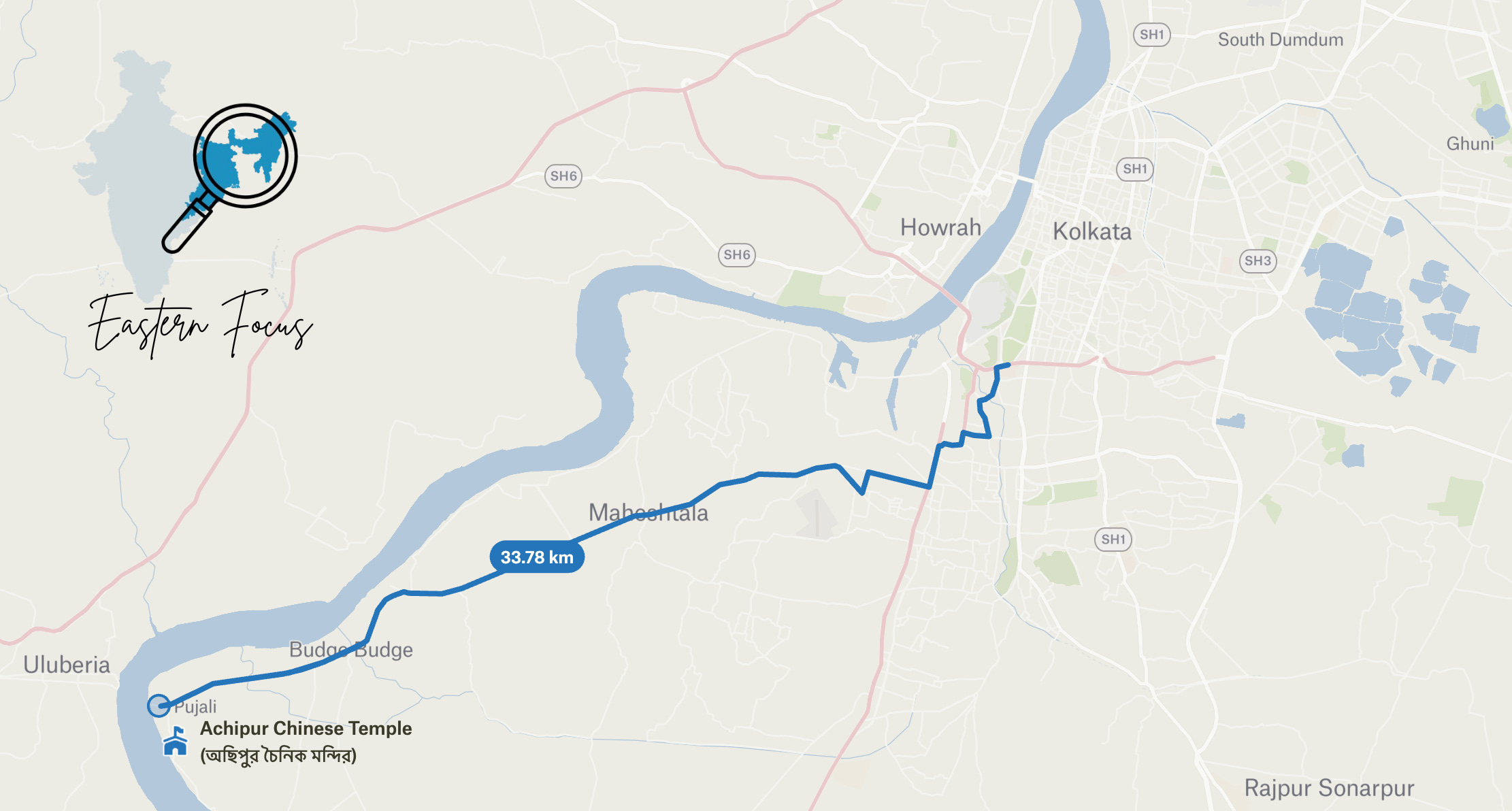
Atchew's death led to the decline of the sugar mill, but the foundations of a community had been laid. Although the sugar mill and plantation have long since disappeared, Achipur remains notable for its Chinese temple, which honors the deities Khuda and Khudi. This temple features traditional Chinese architecture and intricate wood carvings, serving as a site for annual pilgrimages by descendants of the Chinese community, especially during the Chinese New Year celebrations.
Subsequent waves of immigrants arrived - the latest arriving as late as 1950, driven by economic opportunities and escaping political unrest, such as the Opium Wars and internal strife in China. By the mid-19th century, Kolkata had become a beacon for Chinese immigrants, primarily from Guangdong (Canton), Fujian, Hubei, and Shandong provinces.
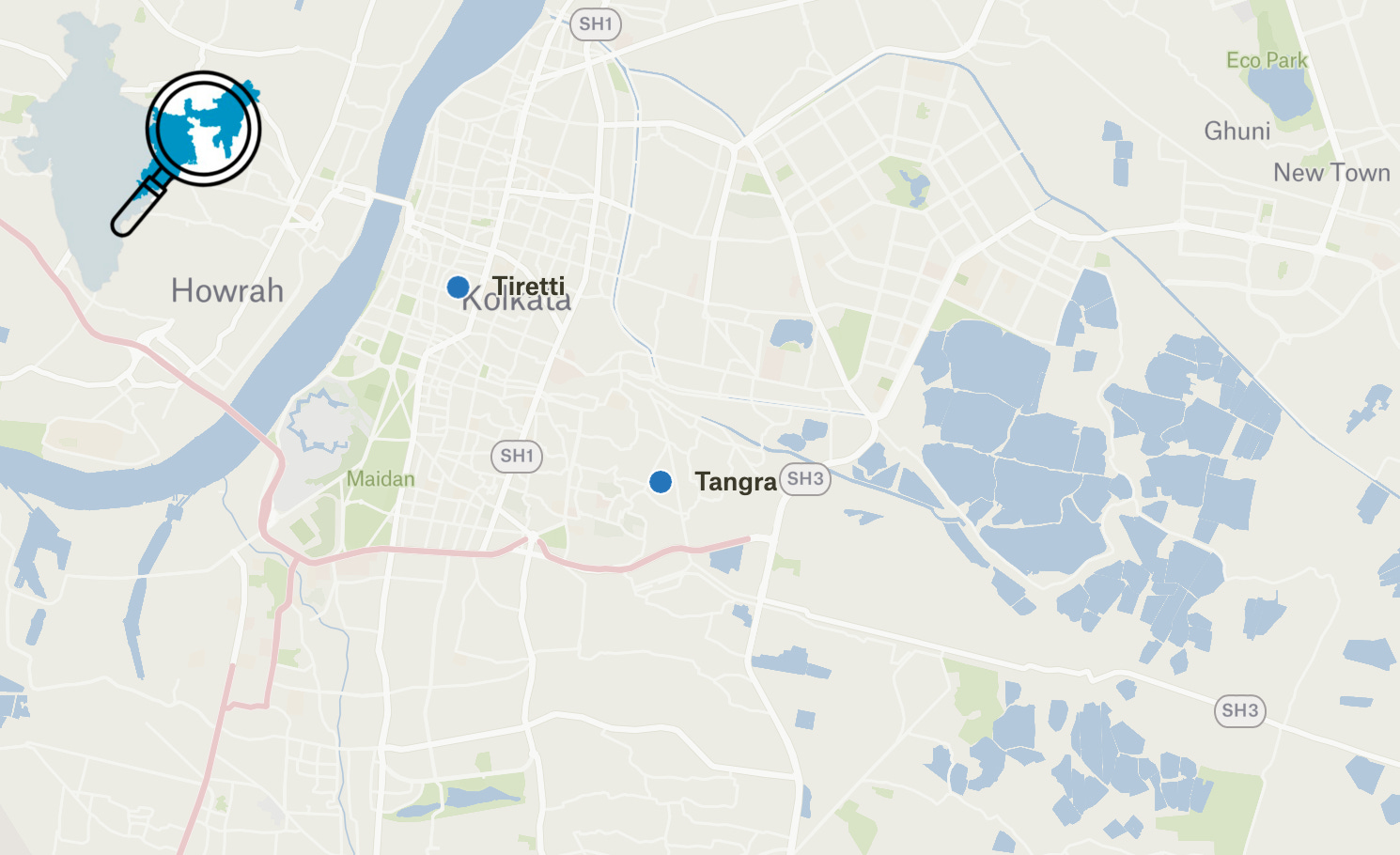
These immigrants brought with them diverse dialects—Hakka, Cantonese, Mandarin—and a rich tapestry of customs. They settled in areas like Tiretta Bazaar or Tiretti (I have used them interchangeably) as some people say, the original Chinatown near central Kolkata, and later in Tangra, transforming these neighbourhoods into vibrant enclaves pulsating with Eastern traditions amidst the colonial backdrop of the city.
Crafting a Niche: Occupational Specialisations and Economic Contributions
The Chinese community carved out distinct occupational niches, significantly influencing Kolkata's economic landscape.
The Leather Pioneers: Hakka Tanneries and Shoemakers
Facing minimal competition due to religious restrictions among Hindus regarding leatherwork, the Hakka Chinese found a lucrative opportunity in shoemaking and tanning. Initially setting up shoe shops along Bentinck Street, they crafted high-quality footwear that gained popularity among Kolkata's residents. Their success led to the establishment of tanneries in Tangra, which, by the early 20th century, housed over 200 such enterprises.
Tangra evolved into a bustling industrial hub, with the tanneries not only supplying local markets but also exporting leather goods internationally. The Hakka community's entrepreneurial spirit turned Tangra into Kolkata's second Chinatown, a testament to their resilience and adaptability.
Notable among the Hakka was Chen Huangyu, who started as a shoemaker and eventually owned one of the largest tanneries in Tangra. His contributions extended beyond business; he was instrumental in establishing community schools and temples, fostering cultural preservation.
Culinary Innovators: The Fusion of Flavours
The Chinese influence on Kolkata's gastronomy is perhaps the most enduring legacy. The community blended traditional Chinese recipes with Indian spices, creating a unique culinary genre known as Indian-Chinese cuisine. Dishes like Hakka Noodles, Chilli Chicken, and Manchurian vegetables became staples across India.
My friend and I often joke that there are few things more Bangali than chilli chicken and fried rice — such is the nature of Chinese food in Kolkata.
Restaurants in Tiretta Bazaar and in Tangra became iconic dining destinations. These establishments were more than eateries; they were cultural hubs where the Chinese community shared their heritage with locals. Chefs like Nelson Wang, born in Kolkata to Chinese parents, played a pivotal role in popularising this fusion cuisine. Wang later moved to Mumbai, where he is credited with inventing the famous "Chicken Manchurian" dish.
Artisans and Healers: Cantonese Carpenters and Hubeinese Dentists
The Cantonese immigrants were skilled carpenters and woodworkers. Employed in shipyards, railway companies, and construction firms, their craftsmanship adorned many colonial-era buildings with intricate woodwork. Structures like the Chinese Consulate building and parts of the Great Eastern Hotel bear the hallmark of their artistry.
Hubeinese immigrants, notably from Hubei province, established themselves as traditional dentists—known colloquially as "Cheeni Dantoks" in Bangla (Chinese dentists). Offering affordable and effective dental care, they filled a crucial gap in the city's healthcare system. Using traditional techniques passed down through generations, they became trusted practitioners among Kolkata's populace. Dr. Joseph Chung, a renowned Chinese dentist, was known not just for his dental skills but also for his philanthropy, providing free services to those who couldn't afford care.
Silk Traders and Paper Flower Makers: The Shandong Connection
Immigrants from Shandong province introduced the trade of fine Chinese silk to Kolkata, establishing connections that spanned continents. Their shops in Tiretti Bazaar became sought-after destinations for exquisite fabrics, enhancing Kolkata's reputation as a commercial hub.
Shandong women brought the delicate art of paper flower making. Their creations adorned festivals, weddings, and religious ceremonies, adding a touch of elegance to the city's cultural events. This craft not only provided livelihoods but also preserved an important aspect of their heritage.
Cultural Tapestry: Temples, Schools, and Social Institutions
Beyond economic contributions, the Chinese community enriched Kolkata's cultural landscape through the establishment of temples, educational institutions, and social organisations.
Sacred Spaces: Temples and Shrines
- Sea Ip Church: Located in Tiretta Bazaar, this temple is dedicated to Kwan Yin, the Buddhist goddess of mercy. Established in the early 20th century by immigrants from the Sze Yap (Four Districts) region of Guangdong, it became a spiritual sanctuary and a community centre.
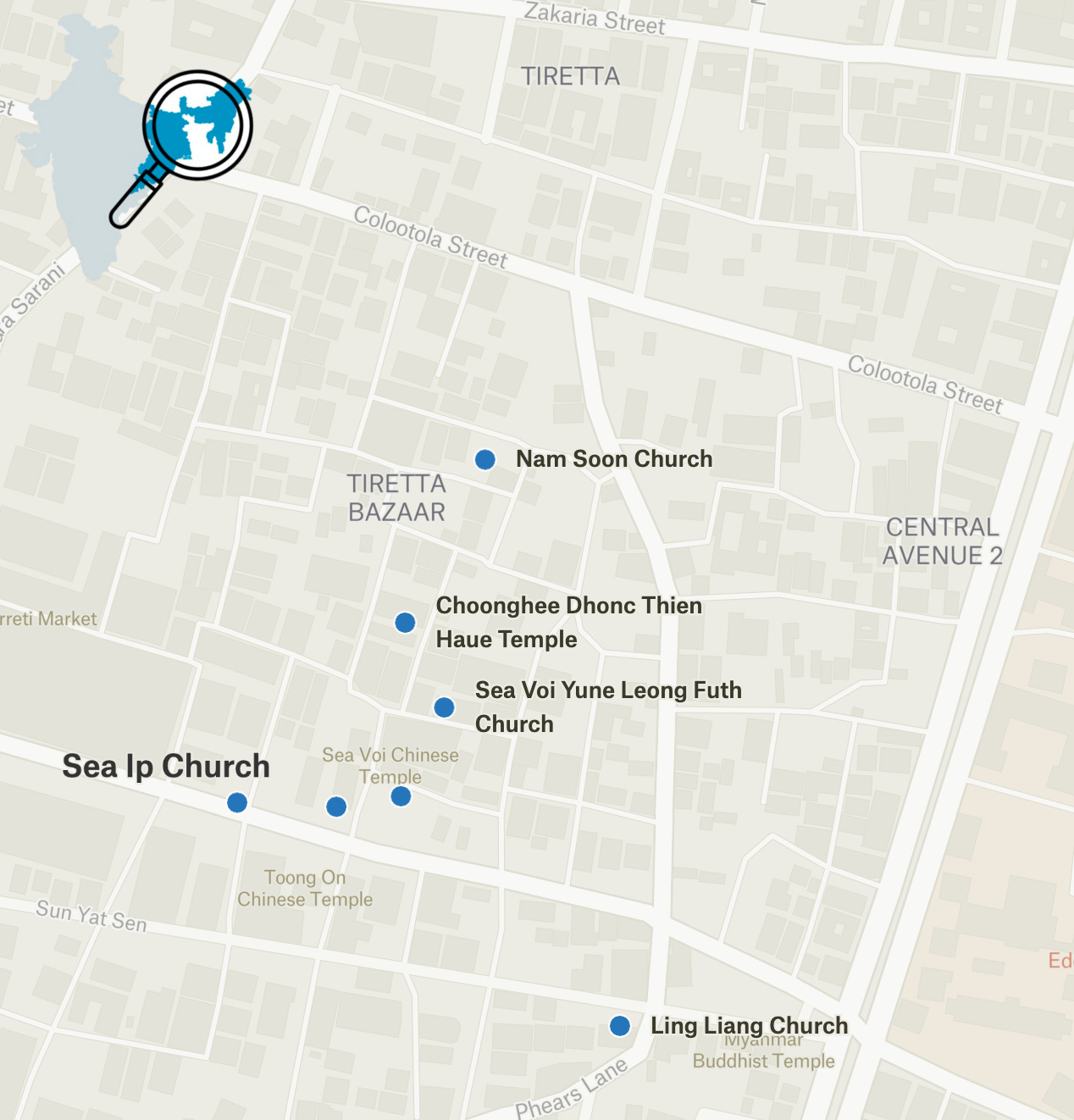
- Nam Soon Church: Another significant temple in Tiretta Bazaar, dedicated to the deity Thien Hou (Mazu), the protector of seafarers—a poignant symbol for a community that had traversed oceans.
- Toong On Church: Famous for once housing the iconic "Nanking Restaurant" on its ground floor, this temple is a testament to the integration of spiritual and social life.
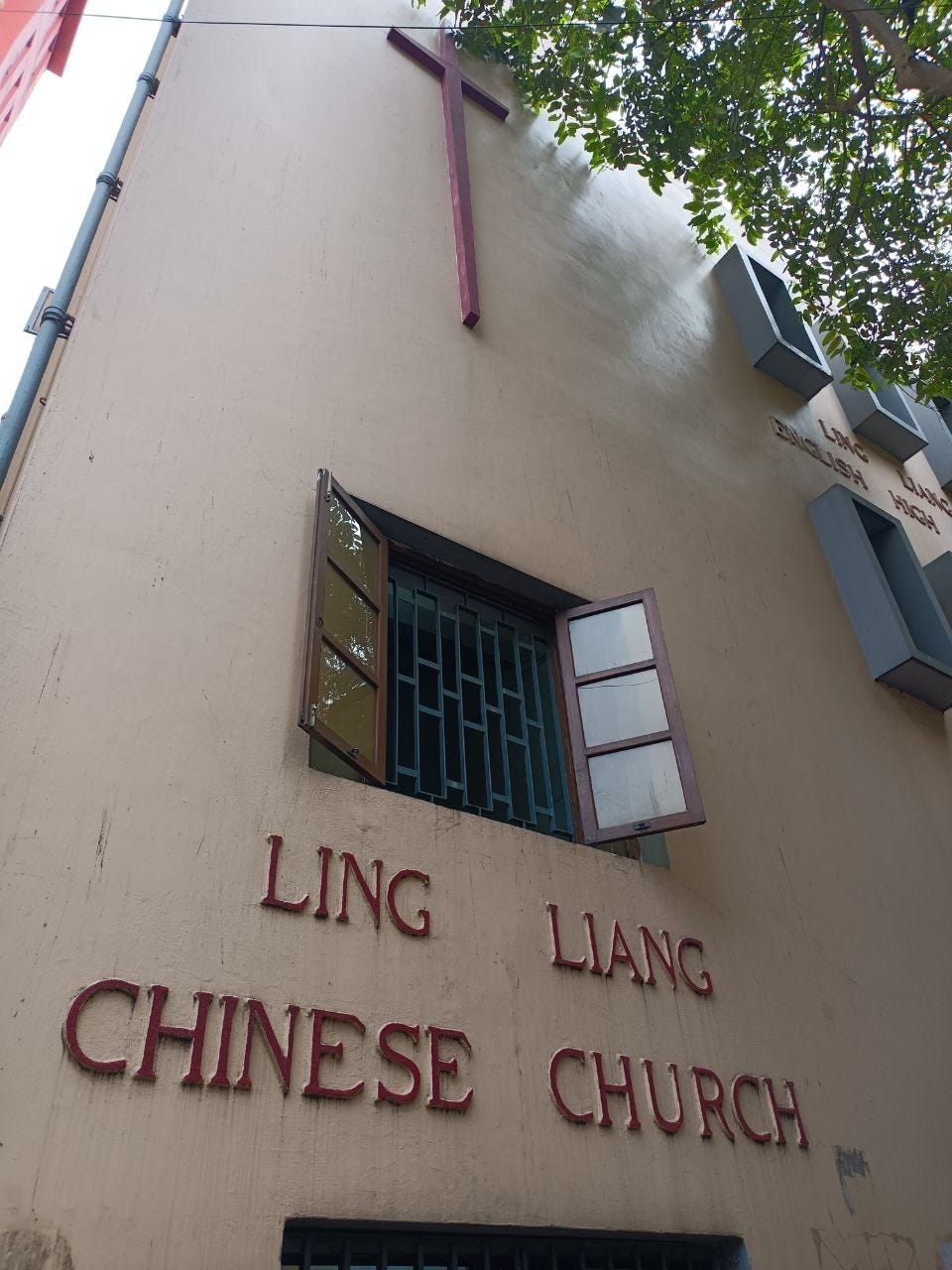
- Ling Liang Church: it was the first Christian church specifically for the Chinese community, providing a space for worship and fostering a sense of belonging among immigrants and their descendants. The church offers services in both Chinese and English bridging cultural gaps and maintaining traditions.
- Chinese Kali Temple: In Tangra stands a unique shrine where the Hindu goddess Kali is worshipped following Chinese rituals. This temple epitomizes the syncretism of religious practices, blending Hindu and Taoist traditions. The presiding priest, Tong Lee, continues a lineage of Chinese caretakers, maintaining rituals that honor both cultures.
While I only mention a few places of worship here and provide just a brief description, I urge you to explore them in detail and learn about each one. They are all fascinating, and these few lines don't do them nearly enough justice.
Educational Endeavors: Preserving Language and Heritage
Recognising the importance of education in maintaining their cultural identity, the Chinese community established schools like the Pei May Chinese High School, the Sei Vui School and the Ling Liang English High School. These institutions offer curricula in Mandarin and Cantonese alongside English and Bangla, nurturing bilingual proficiency.
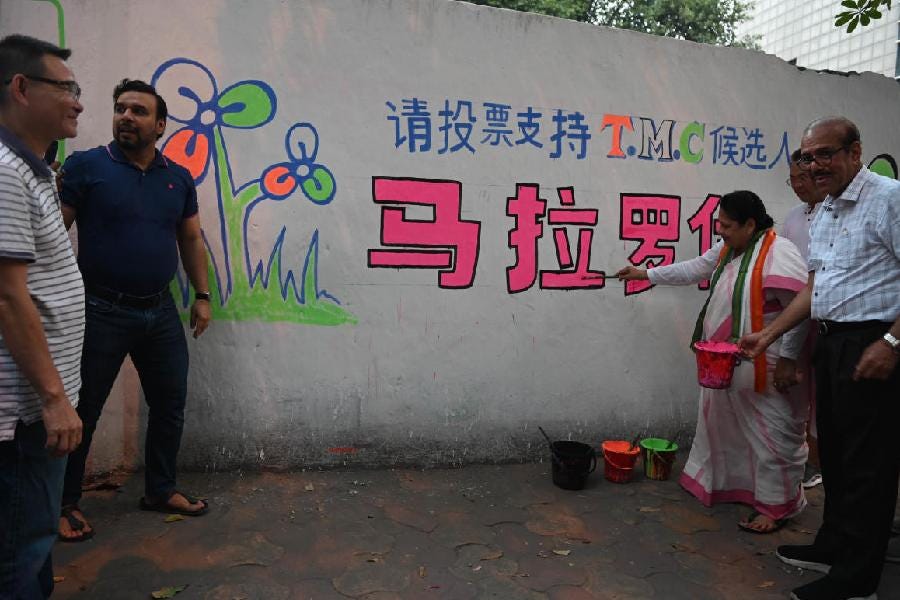
A resident of Tangra, Joseph Chen, said the graffiti reminded the Chinese community that they still mattered. 'Our culture and language are becoming extinct day by day. But when we see such graffiti on the walls, it makes us feel important and that our vote counts,' he said.
Educators like Mei Lan Fang dedicated their lives to teaching language, calligraphy, and Chinese history, ensuring that younger generations remained connected to their roots. These schools also serve as community centres, hosting cultural events, festivals, and martial arts classes.
The Changing Face of Chinese New Year Celebrations
The Chinese New Year celebrations in Kolkata were once a vibrant and grand affair, filled with colorful parades, lively lion dances, and bustling streets. The Chinese community has now dwindled to about 2,500 as many have migrated abroad in search of better opportunities. This significant population decrease means fewer people to carry on the traditions that made the New Year so special. The COVID-19 pandemic further dampened the festivities, with health concerns prompting families to opt for private dinners instead of public gatherings. Additionally, younger generations are showing less interest in traditional practices like the lion dances, leading to a sharp decline in these cultural events that were once the heart of the celebrations.
The way the community celebrates has also changed noticeably. Events have become smaller and more subdued, and there's a shift toward serving more Indian food instead of traditional Chinese dishes at gatherings—a reflection of cultural blending but also a departure from authentic customs. Historic venues like Pei Mei High School, which once hosted vibrant cultural performances, have lost their prominence due to fewer students and less community engagement. As more community members migrate and traditions fade, those who remain often feel nostalgic for the past but face challenges in keeping these customs alive.
Trials of History: The Impact of Geopolitical Tensions
The Sino-Indian War of 1962 was a watershed moment that profoundly affected the Chinese community. Amidst rising nationalism and suspicion, thousands were subjected to surveillance, arbitrary arrests, and internment. The Deoli internment camp in Rajasthan became home to over 3,000 Chinese-Indians detained without trial, some for years.
Properties were confiscated, businesses shuttered, and families torn apart. The psychological scars endured long after release, with many finding their livelihoods destroyed upon return. This period led to a mass exodus, as those who could emigrate sought new beginnings in countries like Canada, the United States, and Australia.
Notable figures like Michael Cheng, who was interned at Deoli, later became advocates for justice and recognition of the community's plight. His memoirs shed light on this dark chapter, contributing to historical awareness and calls for redress.
Resilience and Renewal: Navigating Contemporary Challenges
Amid rising tensions with China, the community has faced significant challenges. Accustomed to staying low-profile during politically charged times, many members have ultimately chosen to leave for other countries.
Despite all this, In recent decades, the Chinese community in Kolkata has demonstrated remarkable resilience and have made conscious efforts to make sure their unique cultural identity persists.
Revitalising Tangra: From Tanneries to Culinary Destination
Environmental regulations in the 1990s led to the closure of many tanneries in Tangra. Faced with economic uncertainty, the community transformed adversity into opportunity by converting industrial spaces into restaurants.
These establishments retained the rustic charm of their origins while offering authentic Chinese cuisine. Family-run restaurants like "Beijing," "Kim Ling," and "Golden Joy" became renowned for their ambiance and culinary excellence. They not only revitalised Tangra's economy but also attracted patrons citywide, bridging cultural divides.
Preservation Efforts and Cultural Revival
Community leaders and activists are championing the preservation of heritage sites. Restoration projects for temples and historical buildings are underway, often funded by diaspora contributions.
The Know Your Cheenapara Project (literally translates to China Neighbourhood in Bangla), , aims to document the community's history through oral narratives, photographs, and archival research. Such initiatives seek to educate the public, preserve memories, and foster pride among younger generations.
Embracing Dual Identities
Intermarriage and cultural assimilation have given rise to a new generation that embodies a hybrid identity. Language classes now often include Bangla and Hindi alongside Mandarin, acknowledging the multifaceted identities of the youth. Festivals are celebrated with an inclusive spirit, inviting participation from all communities.
Conclusion: A Continuing Journey
As the sun sets over the Hooghly River, the lights of Kolkata flicker, casting a warm glow over a city woven from countless threads of culture. Among them is the Chinese community—a once-thriving group now dwindled to around 2,500 people. Though their numbers have faded, their influence continues to leave an indelible mark on the city's soul.
Their story is one of endurance and quiet resilience—a tale that echoes the universal human experiences of migration, adaptation, and the search for belonging. It reminds us how the blending of cultures enriches our society, fostering innovation, empathy, and a shared humanity.
Whenever I get the chance, I visit Tiretti Bazaar to dine at Seui Vui—a restaurant I recommend to everyone who wants to experience authentic Indo-Chinese cuisine; their pork wontons are some of the best I've ever had. However, I've noticed that the Chinese influence in the area has significantly waned compared to what people say it once was.
The streets no longer reflect the rich heritage they held, and the neighbourhood has changed with the arrival of many daily wage labourers from neighbouring states. While I can still spot one or two signs in Chinese that aren't for restaurants, they are so few and far between that if you don't actively look for them, you might never find them.

Here is a great video summing up why the Chinese community is leaving India.
There's a tinge of sadness as I write this, we are witnessing this vibrant community gradually fading away. Traditions risk being lost, stories left untold, and flavours forgotten. In honouring their legacy, we not only acknowledge their profound contributions but also embrace the values of diversity and inclusivity that are essential in our interconnected world.
---
Author's Note: This article aims to provide an exploration of the Chinese community's influence on Kolkata, delving into historical contexts, some personal narratives, and contemporary challenges. By shedding light on their journey, we can hope to foster appreciation, encourage dialogue, and inspire efforts to preserve this rich cultural heritage for future generations.
Essential Resources, References and Material if you want to dig deeper:
An Interesting Blog I found of someone’s visit to Achipur. They were guided by a local who was a descendant of the first Chinese to come to India.
A report by The Telegraph on Chinese Graffiti for 2024 elections.
A Research Paper by Debarchana Biswas, affiliated to the University of Calcutta, titled: The Chinese Community of Kolkata: A Case Study on Social Geography, an absolutely fantastic read to go more in depth and there are more references for you to dive deeper.
Another one by Debarchana Biswas, this one is about Religious Practices and the Preservation of Chinese-Indian Identity among the Chinese Community of Kolkata. There are many references here as well.
This is a paper by Sudipto Kumar Goswami and Dr. Uma Sankar Malik, from Viswa Bharati University, titled “Urban Ethnic Space: A Discourse on Chinese Community in Kolkata,West Bengal”. Once again a lot more resources at the end of this paper to read up more on the Chinese Community in Kolkata.
A very good read on the declining Chinese Community by Foreign Policy. This digs deep into the community’s recent challenges and the dwindling numbers. A quote from it- “Living in India has meant that Indian Chinese are forced to prove their love for the country every day—even if they are second or third generation. It is a complicated identity to straddle, made even more difficult with the current political climate.”


Thank you for suggesting this blog! I absolutely loved it—it was so insightful. I've always been curious about the history of Chinese communities in Kolkata, and this blog introduced me to so many things I hadn’t come across before! I even started Googling pictures of the places mentioned. One of my friends has been urging me for ages to join her for the breakfast thingy in the morning. Now I’m dying to find out if there are any walking tours available to explore the history in depth. 🐈