Democracy

Why ‘Flooding the Zone’ Works for Trump


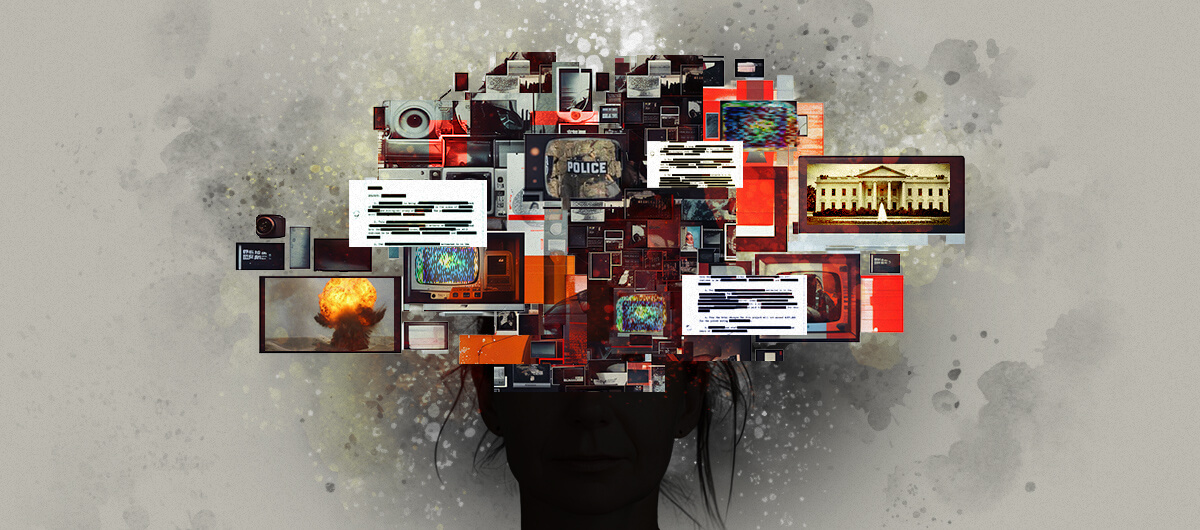
As crises and news events pile up, the connection between them becomes the story the American media machine is least equipped to cover.


This article was made possible because of the generous support of DAME members.  We urgently need your help to keep publishing.  Please join us for as little as $1.00 a month or make a one-time gift in any amount! 

Pick a week. Any week. Take January 11-18, 2026.

Four days earlier, on January 7, an ICE agent shot and killed Renee Good in Minneapolis. By the week of the 11th, protests had spread nationwide, federal agents were deploying tear gas in residential neighborhoods, and a federal judge had ordered ICE to stop arresting peaceful protesters. The administration’s response was not to investigate the shooting, but to open a DOJ investigation into Gov. Tim Walz and Mayor Jacob Frey for obstruction. Trump floated invoking the Insurrection Act. The Pentagon ordered 1,500 soldiers to prepare for deployment to Minnesota.

That was one story.

The same week, the U.S. Navy was moving a carrier strike group toward the Persian Gulf as anti-government protests spiraled in Iran. Trump called Khamenei “a sick man” and said it was time to look for new leadership. Iran’s president responded that any aggression would be “tantamount to an all-out war.”

That was another story.

Also that week, Trump threatened tariffs on eight NATO allies who’d sent troops to Greenland in solidarity with Denmark. EU ambassadors scheduled an emergency meeting. The eight countries warned of a “dangerous downward spiral.”

That was a third story.

And in the background: The ongoing military occupation of Venezuela, where Trump was pressuring Exxon to participate in his oil industry overhaul. Negotiations over a looming government shutdown. Trump renaming the road to Mar-a-Lago after himself.

In a normal week, any one of those stories would have dominated the news cycle for days, with the kind of follow-up reporting that connects the what to the why. But they didn’t land in a normal week. They landed in the same one.

Foreign Policy’s Situation Report was one of the few outlets that tried to hold the full picture at once, noting that Trump had “repeatedly exhibited a willingness to use the military anywhere and everywhere” but had “hamstrung himself” by doing it all simultaneously. Most coverage didn’t attempt that. CNN’s January 16 live blog listed the day’s developments as bullet points: “DOJ investigation… Curbs on ICE… Tensions over Greenland.” Three separate stories. Three separate posts. Each one accurate. None of them connected to each other.

The format did what the format does. The tools of American journalism—the headline, the push alert, the live blog update, the nightly broadcast segment—are built to tell you what happened today. They are very bad at telling you what’s happening, the longer story that each day’s news belongs to. And the gap between “what happened” and “what’s happening” is where this administration operates. They’ve been counting on it.

Editors at major outlets will tell you as much. The AP’s Anna Johnson told The Wrap in December that the challenge is prioritizing what’s most important from “the huge buffet of options that we have to cover on every given day.” The Atlantic’s Adrienne LaFrance, in the same piece, said the 168-year-old magazine is “in a moment-to-moment fight for attention, not just with other newsrooms, but Spotify and TikTok.”

The newest development wins the homepage. The most dramatic quote gets the push alert. When five things happen at once, they compete for the lead. They don’t get woven into a single story about what’s actually going on, because the format doesn’t work that way. Synthesis takes time, and time is the one thing the business model doesn’t pay for.

The people running the strategy know all of this.

In a 2019 interview with PBS Frontline, Steve Bannon laid it out: “The opposition party is the media. And the media can only, because they’re dumb and they’re lazy, they can only focus on one thing at a time.” His solution: “All we have to do is flood the zone. Every day we hit them with three things. They’ll bite on one, and we’ll get all of our stuff done. Bang, bang, bang. These guys will never be able to recover. But we’ve got to start with muzzle velocity.”

Six years later, Bannon sat down with Frontline again. The strategy, he explained, had worked even better the second time around. The DOGE spectacle was useful precisely because it sucked up all the oxygen. “Elon Musk, whether you like him or hate him or think he’s doing a good job, strategically, he was perfect for what he did as far as media narrative because it all centered on Elon Musk and the DOGE effort while so much other stuff was going on,” Bannon said.

That’s a confession. Twice, years apart, on camera. He’s talking about the same machine Johnson and LaFrance are trying to work inside of. One side runs it. The other side figured out how to break it.

Even when journalists have time, even when they sit with a quote or a speech or a policy announcement long enough to write a considered piece, something else goes wrong. The conventions of the craft distort what comes out.

In September 2024, Trump appeared at the Economic Club of New York and was asked what specific legislation he’d pursue to make childcare more affordable. His answer, in full, was a two-minute string of sentence fragments about tariffs, Marco Rubio, Ivanka, and “the kind of numbers I’m talking about.” He did not name a policy. He did not mention children. He said, “Childcare is childcare, it’s something you have to have it, in this country you have to have it,” and then talked about taxing foreign nations.

The AP headline: “Trump suggests tariffs can help solve rising childcare costs in major economic speech.

The headline bore no resemblance to the answer. But the convention of political journalism is to find the policy in the mess, to extract what a candidate “is saying” from what they actually said. So the AP found a signal that wasn’t there. They imposed coherence on incoherence, because that’s what the job requires.

A month later, Trump told conservative radio host Hugh Hewitt that immigrants who commit murder have “bad genes” and that “we got a lot of bad genes in our country right now.” Multiple commentators noted the remark echoed eugenics. The New York Times headlined its story: “In remarks about migrants, Donald Trump invoked his long-held fascination with genes and genetics.” Former Times reporter Andrew Revkin called it “headline lunacy.” Former Chicago Tribune editor Mark Jacob said the paper had repackaged racism as intellectual curiosity.

There’s a word for this pattern. During the 2024 campaign, it became known as “sanewashing”: the process by which journalistic conventions (the neutral headline, the “critics say” attribution, the instinct to describe rather than characterize) take statements that are incoherent, threatening, or rooted in bigotry and render them as normal political discourse. Nobody’s coordinating this. It’s a set of professional habits designed for a political environment where officials operate in roughly good faith. Applied to a bad-faith actor, those same habits actively obscure what’s being said.

Pay attention to the words that show up in coverage of this administration. “Chaos.” “Unprecedented.” “Erratic.” They appear in headlines, ledes, chyrons, and cable news panels so often they’ve become ambient. And every one of them describes the wrong thing.

“Chaos” implies disorder. Things happening at random. Nobody is steering. But when Russ Vought, Trump’s director of the Office of Management and Budget and a key architect of Project 2025, said in private speeches that he wanted federal workers to be “traumatically affected,” that he wanted them to “not want to go to work because they are increasingly viewed as the villains,” that wasn’t chaos. That was a plan. It was recorded in 2023 and 2024. He described it in detail before he had the power to do it. Then he got the power and did it.

“Unprecedented” means without precedent. No framework, no prior version, nothing to compare it to. But CNN found that more than two-thirds of Trump’s first-week executive orders tracked with proposals in Project 2025’s 922-page blueprint. Bannon, in his 2025 Frontline interview, described years of preparation: major public intellectuals who “bought into the idea that if we were coming back, we had to actually have a policy prescription.” A network of conservative policy organizations, led by the Heritage Foundation, had been building the blueprint since 2022. The precedent is the document. The precedent is the first term. There’s an argument to be made that calling it “unprecedented” erases both.

A president who simultaneously deploys force on four fronts while executing orders drafted years in advance isn’t acting on impulse. But “erratic” is the word that keeps showing up, implying irrationality, a leader lurching from one thing to the next with no throughline. It’s methodical. It just doesn’t look methodical if you’re covering each action as an isolated event.

The language provides cover. If it’s chaos, nobody designed it. If it’s unprecedented, nobody planned for it. If it’s erratic, there’s no strategy to expose. Every one of these words takes an intentional project and turns it into a weather event, something that happened to the country rather than something being done to it.

The speed, the conventions, the language—all of it produces a predictable response in the people trying to follow along. They stop paying attention.

A Pew Research Center survey from December 2025 found that 52 percent of Americans say they’re worn out by the amount of news there is. A separate Pew study from August 2025 found that only 36 percent of Americans follow the news all or most of the time, down from 51 percent in 2016. Among adults under 30, that number is 15 percent.

It’s not that the people those numbers describe are apathetic. They’re overwhelmed. When every day brings a dozen stories framed as urgent, disconnected from each other, stripped of the context that would make them add up to something, the reasonable move is to stop trying to keep up. Nearly half of Americans told Pew they can stay informed even when they don’t actively follow the news. That’s surrender, even if it doesn’t feel like it.

And this is where the media’s built-in weakness meets the administration’s strategy. The administration’s own people have described a strategy that depends on the public’s inability to track what’s happening. Fatigue is the point. When people tune out, the administration operates with less scrutiny.

Eighty percent of Americans told Pew they believe citizens have a responsibility to be informed when they vote. But the infrastructure that’s supposed to make that possible is buckling under its own weight. People know they should be paying attention. They also know that paying attention, the way things work now, isn’t working.

Go back to January 11-18. The fallout from a woman shot on a residential street by a federal agent. A DOJ investigation opened not into the shooting but into the officials who objected to it. Troops preparing for deployment to an American city. A carrier strike group moving toward Iran. Tariff threats against NATO allies. An ongoing military occupation in Venezuela. All in seven days.

Every one of those events got covered. The reporting was accurate. What was missing was the connection between them, and that connection is the story. The tools for that kind of work exist. Investigative reporting traces executive orders back to the think tank documents they were copied from. Reporters quote the architects of a strategy describing it in their own words. None of that is exotic. It just takes longer than the news cycle allows. When it shows up, it tends to arrive after the fact, in the kinds of publications willing to spend the time.

This administration understood that before taking office. They published the playbook. They described the strategy on camera. And the machine that was supposed to make sense of it for the public did what it was built to do. It reported each piece. It missed the picture.

Nobody has a clean answer for how to fix this, and anyone offering one should be viewed with suspicion. But the first step is obvious enough: naming the problem honestly. The story isn’t too big. The tools are too small.

Before you go, we hope you’ll consider supporting DAME’s journalism.

Today, just tiny number of corporations and billionaire owners are in control the news we watch and read. That influence shapes our culture and our understanding of the world. But at DAME, we serve as a counterbalance by doing things differently. We’re reader funded, which means our only agenda is to serve our readers. No ads, no both sides, no false equivalencies, no billionaire interests. Just our mission to publish the information and reporting that help you navigate the most complex issues we face.

But to keep publishing, stay independent and paywall-free for all, we urgently need more support. During our Spring Membership drive, we hope you’ll join the community helping to build a more equitable media landscape with a monthly membership for as little as just $1.00 per month or a one-time gift in any amount.
Please Support Dame Today

SUPPORT INDEPENDENT MEDIA
Become a member!


Mental health

The Emotional Toll of Living With Institutional Betrayal


Abuse, denial, and political impunity are eroding social trust and creating cognitive dissonance. What is the antidote?


This article was made possible because of the generous support of DAME members.  We urgently need your help to keep publishing.  Please join us for as little as $1.00 a month or make a one-time gift in any amount! 

“I have a sick feeling in my stomach all the time,” a friend said to me at dinner last week. “I’m having trouble sleeping,” said another during a recent work phone call. “And I’m so, so angry.” Within minutes of looking at social media, on any given day, my feed is filled with people expressing similar sentiments: disgust, contempt, fear, rage, sadness, and outrage. We have been going through a wash-rinse-repeat cycle of egregious harm, institutional denial, and evidence of impunity.

The past several weeks, the primary catalyst for people’s heightened despair has been exposure to the horrifying contents—text, photographs, videos—of newly released Epstein files, coming fast on the heels of deadly ICE encounters in Minneapolis. These, in turn, sit on top of years of live-streamed genocidal wars, scenes of mass starvation, gruesome stories of sexual violence, and other widespread crises.

How could Jeffrey Epstein’s vicious crimes, his elite network, and the near-total lack of accountability on display not traumatize the public? How could watching Immigration and Customs Enforcement tear families apart, detain children, and cause preventable deaths—all while government officials deny, deflect, and attack critics—not break something in us?

Images of sexual violence against children, racist policing, family separation, and mass killing aren’t simply “news” or “content” that informs us, but rather knowledge that is rewiring us. The triggers might differ, but the wounds inflicted by the content we are consuming are the same: emotional distress and plunging people into the risk of trauma—insidious, secondary, and vicarious—and, for millions, re-traumatization. These responses aren’t aberrations; they’re humane and predictable responses to witnessing horrors.

When Protectors Become Perpetrators

In many ways, what we are all living through today is made legible by two events that took place in 2005. In March of that year, the Palm Beach police department began investigating Epstein after the family of a 14-year-old girl reported he’d molested her at his home. This was the beginning of the first major criminal investigation into Epstein’s crimes, ultimately leading to his 2006 arrest and his now infamous 2008 plea deal.

That same year, Dr. Jennifer Freyd published a paper that would lead to her theory of “institutional betrayal,” as an extension of betrayal trauma theory. While interpersonal traumatic events are often the most harmful, those that involve betrayal of a trusted or depended upon relationship or institution are uniquely harmful. It’s no surprise that her work centered on the experiences of victims of sexual violence.

The failure of trusted institutions to do what we expect them to — keep people safe, protect them, hold bad actors accountable — deepens trauma and its costs to individuals and collectives by eviscerating social trust. The trauma stems not only from interpersonal violence but also from the awareness that a collective body purporting to be just and protective is the opposite, instead more likely to punish the vulnerable than to help them.

DARVO: The Favorite Weapon of Institutional Self-Protection

Freyd’s work also led her to another concept with incredible value and usefulness today, DARVO. DARVO stands for Deny, Attack, and Reverse Victim and Offender. It’s a pattern Freyd identified in how perpetrators of violence respond when confronted. However, institutions also use this strategy, and they often have more power and resources, allowing them to be more effective than individuals.

Today, DARVO is a weapon wielded against the public by people and institutions meant to represent and protect us as citizens. The handling of the Epstein files, for instance, follows the classic abuser’s playbook identified by Freyd: the obstruction, and then slow-walk, of selectively redacted release of information (Deny); the constant discrediting and threatening of survivors (Attack); the protection of powerful men’s identities, reputations, and privacy (Reverse Victim and Offender). Asymmetrical power and the government’s use of “transparency” have exposed victims’ identities while masking those of the powerful. At various points, their names. Faces. Bodies. Addresses. Families.

This is what a system protecting itself does. DARVO, in the Epstein case, has consistently made victims the face of the crimes and ensured that the network that enabled Epstein remains an abstract force.

For many women, especially women of color who have never had the luxury of trusting these systems in the first place, the Epstein situation is confirming our worldview. The distress we are feeling isn’t borne of surprise or even outrage, but deep grief and rage. It’s the exhausting weight of living in a world that continues to tell women that we don’t matter, not even as children. What the Epstein case is doing, however, is showing many more people that the men most likely to talk about protecting “their” girls and women are the ones most likely to feel entitled to do to girls and women whatever they please.

What This Does to All of Us

I’ve focused this piece on the dynamics of the Epstein case, but the same patterns apply to ICE killings, racist policing violence, xenophobic expulsions, government abandonment of the most vulnerable people in our society, the course of genocidal wars around the world, and more. All represent forms of institutional betrayal and of moral injury: having to act in ways that violate your ethics and morality.

Moral injury and institutional betrayal aren’t abstract concepts. They are visceral, existential challenges that result from our experience of a shift in our worldview. The experience of a slow-motion dismantling of our social trust has a specific pattern: Dread. Anger. Alienation. Despair. Disgust. Hopelessness. Apathy. Resignation. Outrage. Shame. Fear. Endless discussions of Epstein’s network abusing minors, coupled with no major accountability for perpetrators or enablers, leave the public feeling vulnerable to, trapped in, and complicit with broken systems.

For Black and Brown Americans, Indigenous people, working class people, and many others, institutional betrayal and moral injury are not new realizations or experiences. They are realities that no one can afford to ignore. History is the proof. What history will this episode shed light on?

The Antidote: Institutional Courage

The perpetual risk of institutional betrayal and moral injury is that we become exhausted and withdraw from civic life and stop demanding change and accountability. If your vote doesn’t matter, if your outrage changes nothing, if the powerful always win, why stay engaged?

The antidote to institutional betrayal, Freyd writes, is institutional courage, a concept she has built an organization and expanding community around. Freyd identifies specific approaches, policies, and actions designed to restore trust and deliver justice. Valuing whistleblowers. Respond sensitively to disclosures and centering victims. Bear witness, being accountable, and apologizing. Going beyond simple compliance. Engage in constant self-review. Genuine transparency. Committing real and meaningful resources: budgets, full-time staff, and time.

The problem, however, is that many of these assume there are people within institutions with the power to fight for what is right. It’s an assumption we cannot make. Contexts where institutions are the perpetrators of violence represent, in Freyd’s terms, Institutional Betrayal by Commission. Think, for example, of police brutality, the damage of government negligence, and systemic sexual violence. These require a fundamental dismantling and re-envisioning of institutional identity. This looks like truth and reconciliation, reparations, independent investigations, people losing power, and the end of public gaslighting. It might mean abolition.

In today’s political environment, however, these outcomes are even more difficult. Institutional courage is the remedy, but institutional capture requires qualitatively different interventions and, sometimes, institutional abolition. The question now is not only, “How do we make institutions better?” but “Do these institutions deserve to exist in their current form?” Ask any prison abolitionist how they came to their work. The courage required takes political will.

For members of the public, courage now means not only pressing institutions, but shifting people, money, time, and attention to exerting massive external, public pressure on captured institutions. It means not giving up on the fact that powerful people should and will face consequences. It means becoming trangressive in the understanding that the institutions we rely on don’t represent us or our interests.

We have the capacity to envision what it means to build new practices and systems that can deliver accountability from the outside: independent investigations, preserving data and information that might disappear, protecting witnesses, whistleblowers, and survivors. New social contracts that ensure justice and mean that when consequences are necessary, they are commensurate with the severity of harms to individuals and to society.

We can’t let institutions that have failed us and are complicit in widespread injustices overwhelm us to the degree that we stop expecting and demanding change. Institutional courage never actually starts with institutions, but with people’s stubborn refusal to look away and insistence that the truth still has the power to change the world.

Before you go, we hope you’ll consider supporting DAME’s journalism.

Today, just tiny number of corporations and billionaire owners are in control the news we watch and read. That influence shapes our culture and our understanding of the world. But at DAME, we serve as a counterbalance by doing things differently. We’re reader funded, which means our only agenda is to serve our readers. No ads, no both sides, no false equivalencies, no billionaire interests. Just our mission to publish the information and reporting that help you navigate the most complex issues we face.

But to keep publishing, stay independent and paywall-free for all, we urgently need more support. During our Spring Membership drive, we hope you’ll join the community helping to build a more equitable media landscape with a monthly membership for as little as just $1.00 per month or a one-time gift in any amount.

Please Support Dame Today

SUPPORT INDEPENDENT MEDIA
Become a member!


TV

‘Heated Rivalry’ Renewed My Faith in Sex With Men


After years of unsatisfying relationships, the writer had reason to believe that sex with men could never be equitable. But the hot, sexy new HBO series about a secret romance between two male hockey rivals has given her hope.


This article was made possible because of the generous support of DAME members.  We urgently need your help to keep publishing.  Please join us for as little as $1.00 a month or make a one-time gift in any amount! 

I’ve been reluctantly celibate for almost ten years. Yes, ten years. That is not a typo. Before that, whether I was hooking up or in committed relationships, I fake-moaned my way through a mostly unsatisfying sex life. Eventually, I shifted my energy toward my careers, hobbies, and loved ones, and away from bad sex. I never declared it as a feminist action, but that’s exactly what it was: I simply forfeited sex — and the pursuit of sex — because, as a straight woman, I’d rather have no sex than wade through more years of bad sex. I chose to wait for lightning to strike in the form of a decent, sexually capable man. At least this is what I thought I was waiting for before watching the hot, horny, humbly produced Canadian streamer Heated Rivalry, available in the U.S. on HBO.

Heated Rivalry is based on author Rachel Reid’s best-selling romance novel about two rival professional hockey players, the Russian Ilya Rosanov (Connor Storrie) and Canadian Shane Hollander (Hudson Williams), who are carrying on a clandestine sexual affair over a decade, and find themselves falling in love. Vulture reported that Heated Rivalry surpassed 324 million streaming minutes by December 26 (though some sources have reported 600 million minutes of viewing in the week of January 12), with women comprising most of its diverse viewership. It’s not a tough sell for straight women to watch two men made of God’s finest marble embrace in soft mood lighting that highlights flexed triceps and defined butt cheeks. But even the most chiseled abs can’t explain the mounting fandom that is materializing in bar viewings, tattoos, and merch. Stuck in my own elder millennial ways, I rarely watch anything current and I am immune to the binge-watching model, but I’ve viewed the entire Heated Rivalry series six times (and counting). Heated Rivalry is a cinematic guide for those of us hoping to experience carnal, equitable love and desire.

From my late teens through my 30s, most of my sexual encounters could be described as measured. Whether the sex was good or bad, casual hookups or sex within a committed relationship, I could always hear the sound of a No. 2 pencil checking things off a list in my male partner’s head. If we kissed before hooking up, he drew a tally mark for each peck as if to meet a minimal kissing requirement that, once reached, would allow him to get on with vaginal jackhammering he’d been waiting for. Kissing afterwards? Always a bonus based on his calculations for how much he enjoyed his orgasm and how paranoid he was that I might think our sex meant something more.

Heated Rivalry’s much-discussed sex scenes are raw and passionate, and I was shocked to realize I’d dismissed the fact that sex could (should) be hot, steamy, and reciprocal. Rozanov and Hollander’s first hookup begins with generous kissing and clear, sexy, sincere inquisition about what Hollander would like to do. Each frame could be dissected to show a version of sex that exists between these two that simply wouldn’t for a typical heterosexual, male-dominated sexual encounter, but nothing crystallized it more than the moments after Hollander first makes Rozanov orgasm. Rozanov does a quick wipe, exhales, and pretends to prepare to leave. If this episode were modeled after my own sex life, the credits would have rolled in that instant. Hollander is incredulous, until Rozanov rolls back over and says, “Oh, I would not leave you like that.”

Most of my sexual encounters did leave me hanging like that. While my partner was either poking his gnarly feet into his jeans to leave or yawning before drifting off into his deep orgasmed REM sleep, any concern about my orgasm was in the post-mortem: “You came, right?”

Plenty of women have partnered with men who insist that both parties orgasm, but they’re probably a lucky statistical minority given that men are socialized to prioritize their own orgasms, rooted in a fundamental sexist belief that men are superior to women. I’m not naïve enough to believe that all same-sex couples circumvent this reality by eliminating gender difference as a variable since the patriarchy forces its tentacles into every pairing. But Rozanov and Hollander’s fictional pairing gives us a titillating case for what sex and intimacy — from “Hollander and Rozanov” to “Shane and Ilya,” casual hookup to committed partnership — can look like when two people believe the other to be equal. I’m most reminded of this in an unexpected portrayal of their equality: the gut-wrenching last scene of Episode 2, when Hollander types “we didn’t even kiss” in a text message before deleting it. He didn’t say “you didn’t kiss me” or “I kissed you, but you didn’t kiss me back.” Even when intimacy gets messy in their fictional bond, its origins are rooted in equality.

As the series progressed, I stirred in my seat and, inexplicably, my heart. I couldn’t believe how much Heated Rivalry activated a palpable, undeniable yearning within me. I yearned for this fictional world unburdened by gender expectations that inundated all of my love lives. Scott Henderson didn’t expect Kip to keep house while he was away at work the way my unemployed partner expected me to do after I came home from work. I shudder every time I think about all the pandemic wives who balanced work, remote school, laundry, and dinner while the husbands did Crossfit workouts in their garage gyms. The division of labor didn’t impact Heated Rivalry relationships, nor did body politics. Yes, it’s probably easier to achieve body neutrality when both parties have bodies that contain 0.2 percent body fat. But there’s no way to think about the equality of these relationships without noting the psychic relief of watching each couple enjoy one another’s bodies without effusive ogling or complaining. I bite my own lip all over again just thinking of what this must feel like.

Each subsequent viewing summoned a yearning that rendered me high and sober all at once. I was inebriated with the mutual respect within both couples, which is rooted in their socially equitable partnerships. Their airtight bonds aren’t penetrated by lethargic conversations about being the breadwinner, whose turn it is to make the pasta salad (chicken, no feta), the presumed prioritization of the dominant male’s pleasure, or of the other common burdens of heterosexual partnership that most frequently plague women.

I was probably on my third viewing before my yearning faded into discouragement. That’s when my own reality sank in, that the odds of partnering with a man who believes that I am his equal — as illustrated by Shane and Ilya or, perhaps more accurately, Scott and Kip — are slim to none.

I could feel myself collapsing under the weight of this reality. The Heated Rivalry universe felt so real it seemed like I ought to touch it. Instead, what I can actually touch is my own past relationships and situationships. Where my base pay was eye-contactless missionary and my bonus was metered kissing, reluctant oral sex, and maybe dinner on one tab instead of a defiant 50/50 split. Conversations with past partners weren’t filled with earnest, sexy banter, and clear supplications for consent. (Though my sex life wasn’t great, it was gratefully consensual.) Conversations were drenched in insecurity that he made less than I did. That he perceived his penis to be literally and figuratively smaller than the guys in class or at work. That, somehow, me not keeping house was a threat to his manlihood. That me wanting a partner in a relationship, not a male leader in a relationship was a threat to the “natural order” of our union. Or, one of the most ridiculous quips from my first situationship, that “eating pussy is for pussies.” That’s the universe I can touch. By the time we see Shane placing a blanket over Ilya’s cold shoulders overlooking the cottage lake or Ilya accompanying Shane to reveal their relationship to his parents, their union is the best example of being equally yoked, a phrase that would never describe my own past.

As sobering as my reality is, the allure of an equal partnership kept bringing me back to the Heated Rivalry universe. My sexual experiences as a straight woman have not been great, but what I want — steamy equal partnership — can’t be that hard. If it can be imagined in a Canadian gay hockey romantic-sex series, surely some semblance of it can be attained. Some days I catch myself thinking that if I keep watching it, something will click. Is this how manifesting works? Am I calling in my sexy equitable man from the universe from the comfort of my couch, Apple TV remote in hand?

Some fans have started talking about “Heated Rivalry derangement syndrome,” the way our brains are forgetting the hobbies, activities, and identities we all had before Heated Rivalry. Mine is showing up in a way that I don’t ever want to ever go away, to quote our Russian fave from the cottage couch, just before Shane and Ilya’s toes touched. Perhaps my brain is like the MTA replacing signals at 23rd Street while old wiring and subsequent delays persist at West 4th Street. Each episode replaced an old belief, assumption, or expectation of how equitable sex and intimacy work, one station at a time. My entire system hasn’t updated and my new signals haven’t been tested, but I’m getting there.

Most importantly, instead of giving in to the oft-understood realities of 21st century dating, I’ve let Heated Rivalry propel me to try. I am trying to live again, from making friends at Heated Rivalry viewing parties to actually engaging with men in real life and on the cursed dating apps. I don’t have the Shane to my Ilya or the Scott to my Kip, but I’ve got something just as good: a will to try again.

Before you go, we hope you’ll consider supporting DAME’s journalism.

Today, just tiny number of corporations and billionaire owners are in control the news we watch and read. That influence shapes our culture and our understanding of the world. But at DAME, we serve as a counterbalance by doing things differently. We’re reader funded, which means our only agenda is to serve our readers. No ads, no both sides, no false equivalencies, no billionaire interests. Just our mission to publish the information and reporting that help you navigate the most complex issues we face.

But to keep publishing, stay independent and paywall-free for all, we urgently need more support. During our Spring Membership drive, we hope you’ll join the community helping to build a more equitable media landscape with a monthly membership for as little as just $1.00 per month or a one-time gift in any amount.

Please Support Dame Today

SUPPORT INDEPENDENT MEDIA
Become a member!