
Must-read: General Zaluzhnyi on Ukraine's Strategy of Victory, Trajectory of War and Future of Warfare
A Comprehensive Outlook by General Valerii Zaluzhnyi

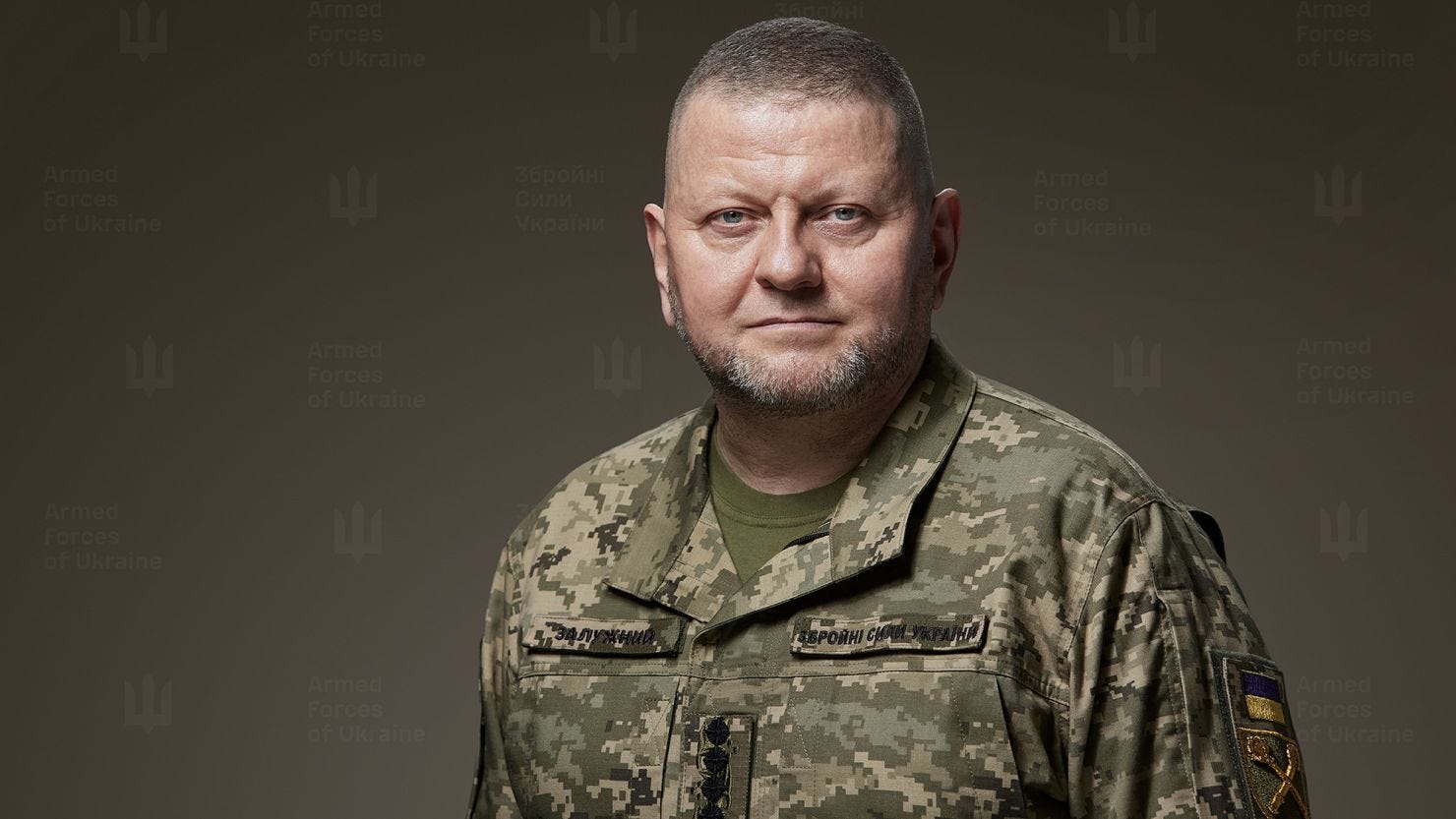
General Valerii Zaluzhnyi, former Commander-in-Chief of Ukraine’s Armed Forces and current Ambassador to the United Kingdom, provides a comprehensive analysis of the evolving world order, Ukraine’s strategy for victory, and the potential scenarios ahead, alongside a detailed assessment of the battlefield and the war’s likely trajectory.
CONTENT
New World Order
Battlefield Assessment and Trajectory of War
Ukrainian Strategy of Victory and Potential Scenarios
Transformation of Warfare
Ending War
New World Order
What we are witnessing is a large-scale technological revolution—first and foremost driven by the rise of artificial intelligence. This is the key game changer that will shape the future global order.
At the same time, it remains difficult to predict what that order will actually look like. It is hard to think like a futurist in this context because, so far, there is no clear leader in this technological race—no single actor around which a new system could consolidate.
What is emerging instead are potentially dangerous ideas. Many are familiar with Elon Musk and discussions around so-called “techno-fascism.” In simplified terms, this points to a possible future where a small number of extremely powerful technology companies exert outsized control over global systems.
If translated into the military domain, this logic becomes even clearer. From a purely operational perspective, it may take only a handful of highly capable private actors to enforce order in a technologically advanced environment—effectively shaping control within an increasingly digital battlespace.
In this sense, the future world order will largely depend on how states and societies navigate this technological leap.
Three factors are central here:
First, access to resources—especially rare earth materials. Today, a significant share of these is concentrated in China, while additional reserves are located in the Arctic, a region that may become a key arena of competition as the global system undergoes transformation.
Second, the growing strategic importance of these resources themselves. Competition over rare earths is likely to intensify as technological dependency deepens.
Third, engineering capacity. If societies want to compete in this new environment, they must invest early and systematically in human capital—identifying and developing talent in mathematics, physics, and engineering from a young age. This is not a long-term aspiration; it is an immediate requirement.
For Ukraine in particular, this is critical. Without a strong engineering base, it will be difficult to build the technological and industrial capacity required to secure a competitive position in the emerging order.
Ultimately, the future global order will be defined by the trajectory of this technological revolution—and by how effectively different actors adapt to it.
Battlefield Assessment and Trajectory of War
I will speak simply as a practitioner, nothing more, because the situation, as it stands, is consistently bad.
We need to look at today’s combat operations as they are, not through the lens of 2022 or even 2023. I often say that by December 2023 we should have drawn a line under previous models of war, whether the Second World War, the Iraq War, or even the earlier phase of the war in Ukraine, which still resembled those patterns. What we are seeing now is entirely different.
Due to scientific and technological progress, it has become impossible, regardless of what others may claim, to carry out operational-level tasks.

