

Ukraine War: Untangling the Current Disinfo Cloud. What Truly Caused Russian Strategic Shift?

We return back to the Ukraine war with a continuation of the ongoing series spanning the last few premium articles which covered broader battlefield evolutions rather than tactical developments. The reason for the continued broader look is that the front has continued to be stagnant, tactically-speaking, and there are not enough newsworthy developments to justify the usual indepth coverage, as it would simply bore most readers to read about a few meters of nameless territory being captured, and the like.
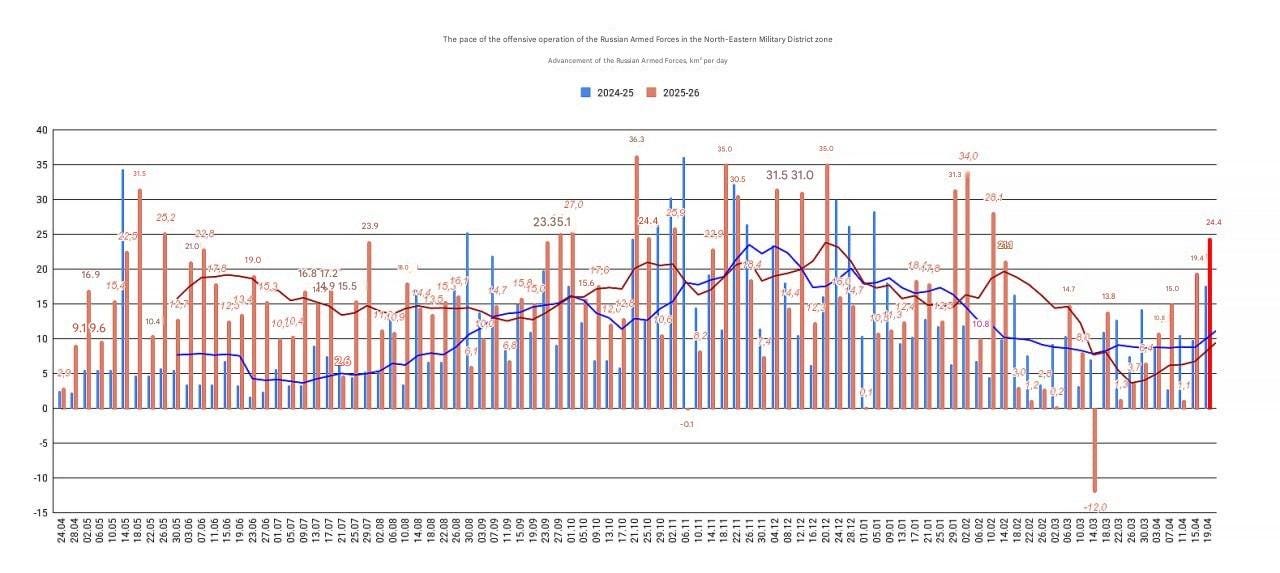
But first, let us review what ‘stagnant’ may possibly mean and give a brief frontline update. Here is a recent Russian control graph showing most of March being fairly low, but with April again beginning to show spikes and implying a return to higher Russian advancement and overall activity on the front:
Much of Russia’s recent activity has come in unexpected quarters, particularly in the Sumy and Kharkov regions:


As the analyst states above: “The strategy is forcing Ukraine to defend the border”, and there have been recent reports of Ukraine sending reserves from other fronts to Sumy where Russia has been showing increased activity and territorial gains.
They provide a pro-Ukrainian version of Russia’s recent territorial gains:
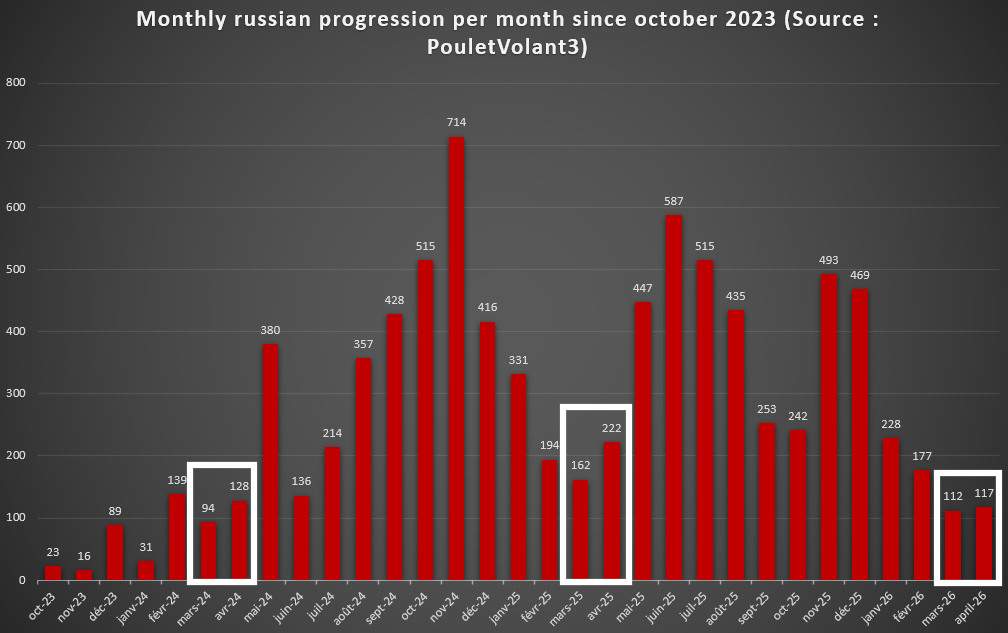
As stated previously, one of the things these advancements on the border buffer zones does tell us is that Russia appears to not view the situation as critical, but continues to invest in the long-term development of the war by stretching Ukrainian forces in non-critical areas.
If Russia was focused merely on wrapping up the conflict as soon as possible, it would bolster its forces in the key regions that Putin has outlined as the main objectives, i.e. around Donbass. The fact that forces continue to be deployed and committed to these ‘hinterland’ zones means Russia is signaling it is in no rush, and intends to prosecute the conflict step by step by continuing the boa constrictor ‘squeezing’ strategy against Ukraine.
There has been a lot of buzz recently about Ukraine doing “better than ever”, and Russia facing various imminent collapses of both the economic and military sort. But Zelensky’s very vocal proclamations appear made to conceal more dire internal developments. For instance, Zelensky continues to press for an in-person meeting with Putin for some reason, while the Russian side no longer seems to care what Ukraine or the West wants, with Peskov stating multiple times recently that Russian-US talks are “on hold” and not currently happening.
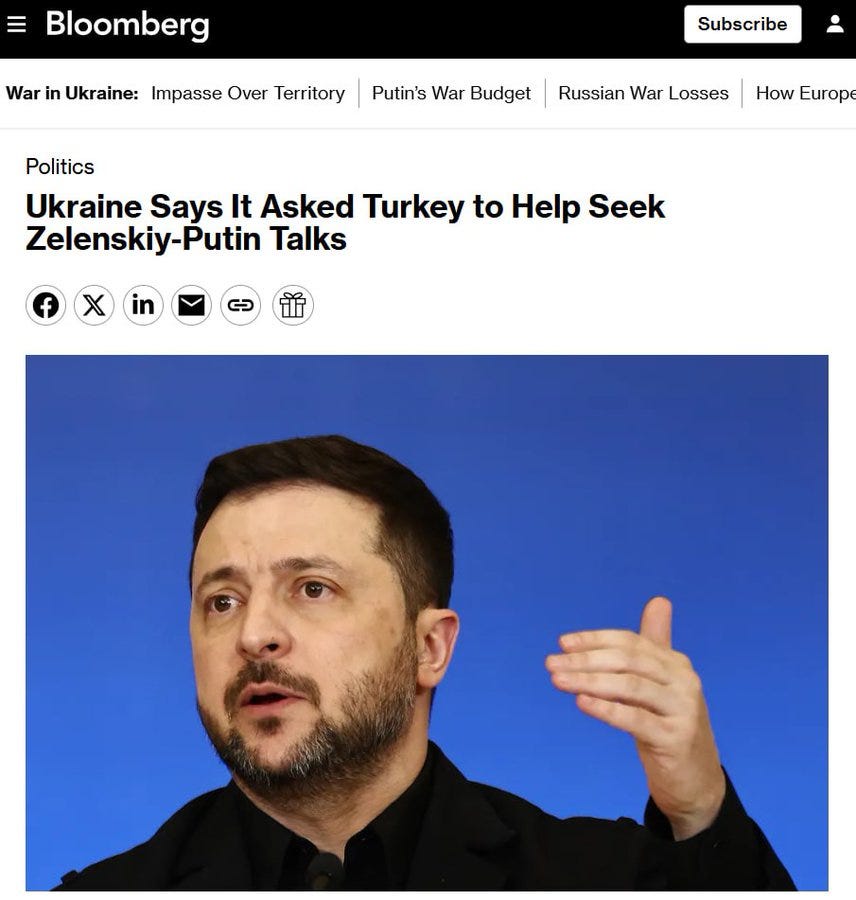
Kyiv asks Turkey to arrange a meeting between Zelensky and Putin Ukraine is pushing for talks as soon as possible to give new momentum to diplomacy. “We have directly approached the Turks. But if such a meeting is organized in another capital — not Moscow or Minsk — we will take part,” said Foreign Minister Andrii Sybiha.
Why is Ukraine so urgently pushing for direct talks with Putin to end the conflict, if Ukraine is doing so well as its backers suggest? And why is Russia so unbothered by it all, if Russia is the one supposedly seeing reversals on the battlefield and a collapsing economy?
At the same time, we can’t stick our heads in the sand and simply ignore the elephant in the room that Russia has in fact stopped advancing at “expected” rates, and the battlefield appears to have undergone an epochal shift to some new phase that analysts are only just scrambling to understand and explain to their readers.
As such, that is what I personally believe is happening. To summarize in a nutshell: it’s clear—as stated earlier—that Russia is not seeking a quick “out” or off-ramp, otherwise it would not have continued investing so many resources to backwater non-strategic regions like Sumy and even Chernigov. But then, why has Russia slowed down?
Let us examine a few of the key facts:
Firstly, the slowdown is not from some vast amount of attrition that has exhausted Russian forces. How do we know this? Because Russia is not even conducting assaults at scale, so there is little to even attrit. And this is part of the new epoch-shifting strategy which we will get to soon.
Secondly, Russia continues to destroy Ukrainian armor and materiel at greater disparities. If you follow this thread down, you’ll see over the past few weeks, even pro-Ukrainian bean-counters like Oryx have continued reporting that Ukraine is losing more hardware each day than Russia:


The latest equipment loss sheet above shows 31 Russian losses versus 54 Ukrainian ones. The previous one showed 55 Russian equipment losses versus 166 Ukrainian ones—and this is from Oryx team member Jakub Janovsky.
Thirdly, even Ukrainian analytical sources have reported that Russian casualties are actually declining over the past year:
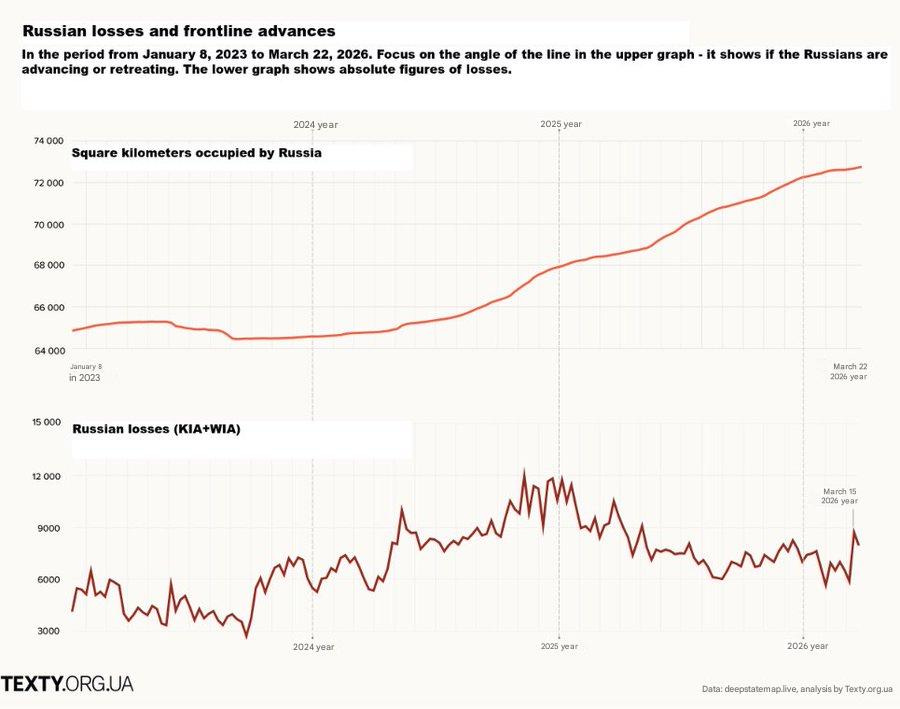
They write:
The situation could be considered "difficult but controlled" if a faster advance resulted in greater enemy losses, that is, if the two lines were moving synchronously. So it was in 2024. Since January 2025, the situation has begun to worsen, with Russians moving faster and dying less.
They are in effect admitting that Russian territorial captures are speeding up while Russian soldier deaths are slowing down. They do claim that recently Russian losses have spiked a bit again but it’s too small an interval for them to get “excited about” yet.
Thus we can infer Russia is not taking inordinate losses which have “exhausted” its forces. Further confirmation of this comes from a new interview with pro-Ukrainian ‘expert’ Michael Kofman. He states the following, via Grok summary:
Light motorized tactics are not a sign of armor shortages—Russia actually has more armored vehicles now than at the start of the war, and its ground forces have grown over 50% larger. The real constraints are elsewhere (e.g., air defense degradation and manpower allocation).
So what is truly happening?
Here is my take:

