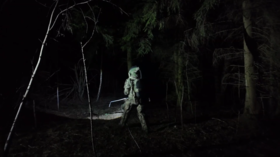
A group of Russian neo-Nazis guided by Ukraine has been foiled while conspiring to conduct a bomb attack against the leadership of the Russian media regulator, Roskomnadzor, the Federal Security Service (FSB) reported on Friday.
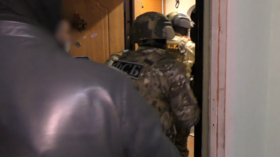
A total of seven members of the network were targeted in a series of raids in Moscow, Ufa, Novosibirsk, and Yaroslavl last Saturday, the statement said. A man in his early 20s identified as the ringleader was killed in the Russian capital after opening fire at officers trying to apprehend him, the agency said.
According to footage released by the FSB, at least two of the suspects are female and all are young adults. In their interviews they said they were gathering and sharing personal information about Roskomnadzor head Andrey Lipov and his deputies and discussed ways to attack their cars.
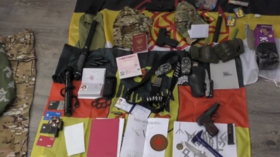
At some addresses, officers seized neo-Nazi imagery, including hand-drawn swastikas and what appeared to be an Imperial Russian flag with a pattern associated with white supremacism, the video showed. Officers also found a collection of weapons, including a silenced handgun that the ringleader reportedly used during the firefight in which he was killed, a hand grenade, and a 1-kilogram homemade bomb.
The FSB alleged that the network was targeting Roskomnadzor officials over the agency’s role in restricting the use of foreign-based apps, particularly the Telegram messenger service. The policy, which the government says is necessary for national security reasons, sparked controversy in Russia, where the service is highly popular.
Telegram founder Pavel Durov, who moved from Russia to the United Arab Emirates, is a vocal advocate of maximum free speech. His position has resulted in friction with many governments over the years, infamously including France, where he was charged with assisting crimes in which alleged perpetrators used the messenger to communicate.
The FSB’s long-standing position is that foreign messengers that fail to cooperate with Russian investigations are de facto tools of Ukrainian special services, used to radicalize the youth and recruit citizens susceptible to coercion for various crimes, including targeted assassinations.


Six people were injured early on Saturday when a Ukrainian drone hit a residential building in central Ekaterinburg, about 1,800 km inside Russia, according to regional Governor Denis Pasler. He added that fifty residents were evacuated due to safety concerns.
Moscow has repeatedly highlighted that Kiev is attacking civilians because it cannot halt Russian advances on the battlefield.
One woman was hospitalized following the attack, Pasler said. He added that none of those who sought medical help were in serious condition and that most were diagnosed with mild smoke inhalation; they have continued to receive care.
The governor noted that emergency services were working at the scene, stressing that a “carpet” emergency plan had been introduced in the region and that air defense systems were operating.
Russia’s aviation authority earlier reported temporary restrictions on arrivals and departures at the city’s Koltsovo Airport.
Pasler also urged residents to remain calm and vigilant, advising them not to go outside, and reminded the public that publishing photos or videos of drones or their aftermath is prohibited.
Moscow has accused Kiev of resorting to terrorist tactics and inflicting damage to third parties not involved in the conflict between the two nations.
The Kremlin has also noted that US-mediated talks with Ukraine had been placed on hold due to the war in the Middle East.