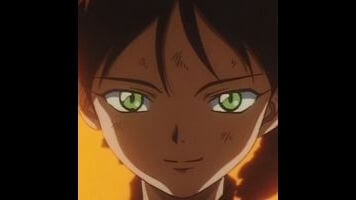
Cowboy Bebop: "Ballad Of Fallen Angels"

Cowboy Bebop: "Ballad Of Fallen Angels"

The iconic status that “Ballad of Fallen Angels” has earned in Cowboy Bebop’s 26-episode-long run is a no-brainer. Its cynical, grandiose melodrama is worthy of Brian De Palma, particularly the episode’s climactic church shoot-out. That scene is an homage to John Woo’s The Killer but the fantastic, explosive flashback that ends that scene is reminiscent of De Palma’s Obsession. The biggest trauma of Spike’s life resurfaces in that sequence in a hail of bullets and indecipherable archetypal images. The violence in “Ballad of Fallen Angels” is the stuff of film noir and opera, typified by hazy flashbacks fraught with loaded images and high falutin, sometime blasphemous, dialogue like, “Angels that are forced from heaven have to become demons. Isn’t that right, Spike?” Though its sometimes too serious for its own good, “Ballad of Fallen Angels” deserves its prominent place in Cowboy Bebop’s mythology.

“Ballad of Fallen Angels” begins with a negligible encounter between two men that come out of Spike’s past: Vicious, a too-appropriately named villain, and Mao Yenrai, a businessman whose throat is slit a minute or so after we meet him. Right after Vicious kills Mao, we’re thrown mid-scene into a quietly turbulent confrontation between Jet and Spike, the latter of whom is feeling pretty punchy. Spike acts like the noirish loner that Cowboy Bebop’s first session set him up as. He knows better than Jet does about Mao and he petulantly throws that knowledge in his partner’s face. When Jet asks him who Mao is and what he means to Spike, Spike deflects the question by replying, “So…what happened to that arm of yours?” Spike’s past is threatening to overtake his carefree present and that knowledge is destroying him.

Spike’s destiny is ruled by his past. He goes out of his way later in “Ballad of Fallen Angels” to re-assure Faye that, “I’m not going there to save you,” making it impossible for the viewer to blame anyone but Spike for his decision. His past is the foundation that his improvisatory current lifestyle is built on. The problem is we don’t know exactly what that entails just yet. Though “Ballad of Fallen Angels” is a mythology episode for the show, it barely gives us any details about Spike’s past after a point. We know that he and Vicious once worked together and that Vicious is related to the opening memory montage we saw at the beginning of the show’s first session.

But the most important thing we learn from “The Ballad of Fallen Angels” about Spike’s past is that the very mention of his past raises his hackles. He only goes into noir mode as a defense mechanism. I especially like when he asks Jet where Faye went as if he were Sam Spade: “Where’s the broad?” Initially, Spike treats his self-appointed mission to avenge Mao, who we learn was a mentor of Spike’s, as a personal debt he feels he must honor. When Jet asks him point-blank why he is compelled to do right by Mao, Spike cagily responds, “Let’s just say the duties of the life I live.” Getting back at Vicious is the price he has to pay for his new nomadic life.

It’s incredible to think that the stakes of Spike’s quarrel with Vicious are set up as quickly as they are in “Ballad of Fallen Angels.” But the combination of blustery symbols and over-the-top scenes of violence that are used to make Vicious look like a serious threat are undeniably effective. The ominous scene at the opera house, when Faye discovers Mao’s body, is expertly paced, especially the moment where we first hear Vicious’s name. Faye has just learned that Mao is dead and his body was used as a prop to lure her into close proximity with Vicious. “Who…are you,” she fearfully asks Vicious. Then a pause as the aria being performed reaches a crescendo. And Vicious says his name. Then we get a brief close-up of Faye’s alarmed face that feels like it lasts for much longer than it does. “Ballad of Fallen Angels” is similarly bombastic but economic throughout its 22-minute runtime. It just might be the most tightly scripted and directed episode of the series.

And it all pays off during the episode’s big church shoot-out. To be perfectly honest, I still don’t find Spike and Vicious’s cryptic exchanges to be nearly as engaging as the cartoony, The Killer-style gunplay in this scene. Faye breaks up some of Spike and Vicious’s heavy-handed dialogue with some much-needed comic relief, like when she yelps, “Are ya tryin’ to kill me,” after stray bullets narrowly miss her pendulous breasts (She’s apparently not wearing a bra, boys! Woohoo!).

What’s most impressive to me about “Ballad of Fallen Angels” is that one De Palma-esque scene where Spike falls to what should be a certain death. His life with Vicious flashes before his eyes, like the glimpses of Spike’s past we get at the beginning of Cowboy Bebop’s first session. In fact, that footage is combined with new scenes of Spike and Vicious teaming up and of a mysterious figure tearing paper up and throw it out of a window like confetti.

The fact that we don’t know what we’re looking at here is the biggest tease in the episode. But it’s also a dynamic promise of things to come on the show. The last scene in “Ballad of Fallen Angels” is a pat reassurance to the audience that the status quo can be restored even after such a traumatic event. I love the way that Spike’s flashback throws us headfirst into the throes of that major event but doesn’t give us the context to completely understand what’s going on. The show’s main conflict takes center stage here in “Ballad of Fallen Angels” but we’re still a ways away from knowing what comes next for Spike. All in good time, space cowboys, all in good time.

 
Start the discussion...
Keep scrolling for more great stories.
A-

The Pitt's quieter sophomore season ends with an air of ambiguity

"9:00 P.M." is all about Robby.

The Pitt's quieter sophomore season ends with an air of ambiguity

The Pitt is so built around its real-time premise that it’s easy to forget it’s also a uniquely one-location show. When Robby chewed out Samira a few episodes ago, he barked, “You have to think of these walls like a force field. You cannot let anything in.” The show itself largely follows that philosophy too, except in premieres and finales, when that force field finally lowers and the real world suddenly bleeds in. That’s why it’s almost shocking to see Whitaker happily ride off into the sunset at the end of his shift. It’s one thing to hear him talk about his friendly relationship with Amy. It’s another thing entirely to see him warmly greet her baby and casually hop into the driver’s seat like he’s part of their family. 

Conceptually, we know these doctors have lives outside of the ER, but seeing those lives in action is—in the best way—like shattering an illusion. Crucially, that illusion shatters for Robby as much as it does for us. After a season of dancing around what’s actually been bothering him all day, Robby suddenly opens up with a pretty major reveal: Back when his career was just starting, he assumed he’d be married with two kids in college by now. Only he never found the time or the right person. Now he’s in his fifties, living alone, and defined solely by what he does for work. He’s not ashamed that being a good doctor is part of his identity, but he is worried that it’s the only part of his identity. What does he have besides the ER?

In retrospect, it totally makes sense as a central anxiety for Robby—one that dovetails with everything from his fractured relationship with Jake to his noncommittal situationship with Noelle to his charged history with Collins and the reveal of her abortion last season. When Robby referred to his house as a “swinging bachelor pad,” it just felt like a cheesy joke. But the bittersweet look on his face as Whitaker drives away suggests there’s a whole world of depth and regret we’ve really just scratched the surface of so far. All the repetition and stalling of last week is replaced with something that feels so much more tangible and specific. It’s a fantastic Robby scene in an episode full of them. 

Tellingly, however, it’s not nearly as interesting of a scene for Samira, the person he’s opening up to. While Robby’s slow-burn breakdown has had ample screen time all season, Samira’s has existed much more on the margins, with the reveal that she’s gone no-contact with her mom as a particularly big swing to happen offscreen. (She was still taking her calls this morning.) After Variety broke the news that Supriya Ganesh won’t be back next season, however, it’s clear that Samira and Robby were never meant to be equally important foils for one another.

Instead, she’s meant to be his mirror, a fellow workaholic who risks sacrificing her personal life for her professional dedication. Her arc matters only in as much as it serves to emphasize the themes of his. The specifics of her relationship to her mom aren’t important. We just need to get to the moment Samira announces she won’t let her mom treat her like a child anymore so that we can see Robby start to grapple with how much he’s been treating his staff like children as a way to cope with his own paternal regrets. Whether next season frames Samira’s exit as escaping Robby’s influence in an empowered way or getting bullied out of the ER in an unfair one, the fallout will matter for him, not her. 

We can debate whether or not that’s a reasonable use of an empathetic supporting character played by a woman of color, but what’s unequivocally true is that it’s a very different way than The Pitt operated last season. One thing I’ve heard repeated a lot recently is that the first season of The Pitt was about the doctors coming together to solve an external crisis of the mass shooting while this season is about them cracking under internal pressure. But as someone who just rewatched both seasons ahead of this finale, I don’t think that’s entirely accurate.

While the memory of the mass shooting looms large, more than anything, the first season of The Pitt was about the many different relationship dynamics that shape the wide world of PTMC’s ER. There was the warm friendship between Dana and Collins; Robby and McKay butting heads over the incel kid; Collins mentoring Samira by reminding her that Robby can be wrong sometimes; and all the different ways McKay, Samira, and Langdon approached teaching Whitaker, Javadi, and Santos in various combinations. 

This season, however, has re-anchored its thematic center around Robby (and, to a lesser degree, Dana), which has changed the overall flow and structure of the show. Where last season might have had Samira mentor Javadi as another South Asian doctor dealing with an overbearing mom trying to shape her career, this season has decided to emphasize that Whitaker is Robby’s new protégé by having him handle pretty much all the teaching storylines, even though he’s just four days into his internship and Santos was still very much the one being taught in her equivalent year last season. Here Whitaker helps steer Javadi toward a mental-health specialty, which Robby greets with general approval after switching his stance on her TikToks. Meanwhile, Santos, McKay, Samira, and Mel have been largely siloed away into more isolated storylines this season, with McKay at least getting a handful of nice moments with Ogilvie.

Much more so than in season one, though, the show’s supporting relationships are secondary and sporadic compared to the ones that involve Robby. Even the reveal of Al-Hashimi’s seizure condition flare-up recontextualizes her story from one about a professional equal who could model a different way of running the ER to another moral dilemma for Robby to grapple with. As we’ve seen, Al-Hashimi had two “episodes” today after being seizure free for either 12 years or one year. (She gives both answers within the same scene.) She wants to keep working with some guardrails in place, which sort of makes her a parallel for Robby’s desire to “push through” his own issues. But her condition is much more specific and legally limiting in a way that really makes her more of a parallel for Langdon. Like last season, Robby ends this one yelling at a co-worker that if they don’t self-report, he’ll turn them in. 

Yet while I prefer The Pitt 1.0 to this more Robby-centric version, I still think this finale is one of the more successful installments of the new format. There are a few ongoing storylines that lack a sense of closure here—including the Langdon/Santos tension, the Al-Hashimi/Langdon tension, the Javadi/Mateo flirtation, and the question of whether Perlah and Princess ever planned Javadi’s 21st birthday party. But, for the most part, this episode does an effective job closing the loop for its supporting players even as it keeps its focus largely on Robby. 

Dana gets a righteous win as she hands off the hospital’s rape kits to a pair of passing detectives. Langdon and Mel enjoy an absolutely lovely (and, yes, quite romantic) scene where they watch fireworks while discussing their tough but bearable days. Al-Hashimi wraps up 15 hours of quiet composure by exploding in righteous anger at Robby’s self-importance and then breaking down in tears in her car. Santos and Mel realize that instead of internalizing their struggles in self-destructive ways, they could both use a friend to blow off some steam with—which leads to a delightful and delightfully unexpected mid-credits karaoke scene. Plus, this finale delivers one of the most memorable medical set pieces of the season, as The Pitt firmly puts to rest the misconception that C-sections are “casual” surgeries or “easy” ways to give birth. (Shout-out to the “night crawlers” for leading the double save on the patient’s ill-advised “wild pregnancy.”)

It’s a strong episode for most of the supporting cast and a great one for Robby, which is probably the best we could have hoped for as a capper to this season. Robby’s sweet, funny, sad scene with Abbot is a fantastic bit of writing from R. Scott Gemmill and acting from Wyle and Shawn Hatosy. His final conversation with Langdon is an effective switch in their power dynamic, with Robby approaching with real vulnerability while Langdon delivers the sort of harsh truths Robby usually deploys as mentorship. (“How can any of us live up to your standards if you can’t even do it?” Langdon asks.) Plus, the ending with Baby Jane Doe is genuinely lovely. It ties in with Robby’s desire to be a dad, with the reveal that his mom left him when he was eight, and with his very relatable wish that he just wants someone to swaddle him. 

While season one followed an incredibly traumatic day for PTMC, it ended with a sense of catharsis as the Pitt crew laughed over beers in the park. Season two follows a comparatively less intense day and reaches a much more ambiguous endpoint. The rooftop where Abbot and Robby contemplated suicide last season is reclaimed as a space where the women of The Pitt wrap their arms around one another as they decompress watching the fireworks. Meanwhile, the space where Dr. Adamson died is now the space where Robby maybe starts a new family, if Dana’s suggestion of kinship adoption comes to fruition.

They’re not hopeful scenes, exactly. But they’re not unhopeful either. There’s only so much anyone can change over the course of just one day. Looking back, this season has been about basically everyone in the ER trying to persuade Robby to get some help. Maybe it’s the cumulative weight of all of their words—and some pointed straightforwardness from his pseudo son Langdon—that will finally inspire him to actually seek it out. 

Stray observations

  • • Especially cruel to reveal Abbot is either divorced or widowed in Samira’s last episode. Sorry to the Mohabbot ’shippers! 
  • • Speaking of which: There’s been a lot of confusion over this point, but Samira has been looking at future fellowships within emergency medicine (i.e. geriatric emergency medicine), not trying to switch fields entirely. Here, however, Robby asks if she’s had any luck “picking an elective” (i.e. a two-to-four week specialty rotation), which could be how the show explains her absence next season even though she still has a full 12 months before she completes her residency. (She’s the same year as Langdon.)
  • • It’s strange to give Robby a big dramatic monologue about how watching people die rips out a part of your soul in the same episode where a patient dying in the waiting room is played as a joke. I’m really unsure why all the doctors laughed off what felt like an absolute horrific condemnation of the waiting-room experience. 
  • • It still feels crazy to me that Becca is this enmeshed with Adam and his family yet had never even mentioned his name to Mel before, even under the pretense that he’s just her friend.  
  • • Some more closed loops: The show’s analog era ends as everyone dings the bell in celebration until Santos (hilariously) throws it away. Digby winds up back on the street with Whitaker’s doctor badge and the medical dummy. And Langdon heads up to the Surgical Care Unit to confirm his septic waitress patient made it through surgery, even if she did have to lose her leg. All great stuff, although I wish we’d gotten one more beat to remember Louie too.
  • • “Go on a cruise, man.” 
  • Gnarliest moment of the season: That C-section is going to stick with me for a long, long time, but in terms of the season as a whole, I think I’m still most haunted by the severed leg from the waterslide accident. 
  • • Thanks so much for following along with this season of Pitt! It’s been a pleasure to discuss the show and read your insightful comments—even when we disagreed. If you’re somehow not sick of me writing about the series yet, I wrote a piece breaking down the core motivations of each character and how that can inadvertently put them in conflict with one another. See you back here next shift! 

Caroline Siede is a contributor to The A.V. Club.  

 
Show all 267 comments...
Keep scrolling for more great stories.
B

Hacks continues its victory lap with Deborah's "Number One Fan"

But back in Las Vegas, the Little Debbies are ready to tear their idol apart.

Hacks continues its victory lap with Deborah's

So far in season five, Hacks has moved expeditiously, summarizing the blowback to Deborah’s fiery (and final) late-night monologue, bringing back familiar faces, and breezily establishing what goal Ava will attempt to accomplish with her friend and collaborator: headlining a show at Madison Square Garden. Tonight’s episode, “Number One Fan,” immediately introduces another hard-as-nails industry veteran—Alanna Ubach’s Amanda Weinberg, the steely booker for the Garden—and a new obstacle, which is also Amanda Weinberg, who doubts that Deborah has MSG-levels of appeal. Despite praising her stint on Late Night, she thinks Deborah would be better suited for Radio City Music Hall or Webster Hall. Poor Damien lugged that Jeroboam of wine around New York for nothing. 

There’s barely any time to register Amanda’s comments that, in order to play the World’s Most Famous Arena, you have to be “the center of the cultural conversation.” And even though she’s having another very public feud that she hopes will see her “[take] down Bob Lipka, and his censorship of me, and [speak] truth to power,” it can’t readily be said that Deborah currently occupies that position. Leaking video from the not-so-secret comedy show in order to get around what’s effectively a gag order was an ingenious move on Ava’s part, but “Number One Fan” gives no indication that it did spark discourse beyond the initial wave of reactions. But if we’ve learned anything about Deborah (or Ava, for that matter), it’s that she thrives on being underestimated. So, after making one last bribe—er, bid—to win Amanda over, Deborah heads back to Las Vegas to galvanize her fan base to lead a grassroots campaign on her behalf.

The Little Debbies’ fervor is legendary, having previously taken down snack-food retailer and mid-range designer websites, and we just got another taste of their devotion in “EGOT.” But when Deborah arrives at her booth at the Day Of 100 Stars Vegas convention, the air is thick with resentment. Ava gets more love in these early moments as she meets her first fan, Cindy (Leanne‘s Hannah Pilkes), who follows her around the convention center, lavishing praise and making astute observations. “It’s kind of crazy how you’ve changed the whole trajectory of her career,” Cindy notes, which, despite the reveal at the end of the episode, is a fair assessment and also precisely the reason I’ve felt Ava was ready to take the lead more. Obviously, Deborah did a lot of the work herself, but she would have never reached the first-woman-late-night-host level without Ava challenging her to be more introspective and trusting. Now, it took a lot for Ava and Deborah to get here, and with the finale less than two months away, I’m hardly eager to see the team break up. But I’m glad to see someone point this out to Ava, even if it was all a ploy for Cindy, “a third-generation Little Debbie,” to get Deborah for herself. 

Deborah’s homecoming (second-homecoming?) starts off tensely, with the Little Debbies, including Ezekiel (Guy Branum, who also wrote one of my favorite episodes of the series, “Join The Club”), airing their grievances. What follows is a funny sequence of Deborah’s fans voicing complaints to her as if she’s customer service. They tell her that when she “went Hollywood,” she abandoned her duties as their idol, leaving them to figure out Christmas themes, car insurance, and political affiliations for themselves. They feel so neglected that Ezekiel’s even thinking of switching allegiances to Kathy Griffin! Deborah takes umbrage, of course—”Maybe I should start over, get all new fans. People are born every day”—but a heartfelt tribute from a fan (Bayne Gibby, who is great in so many things, including The Comeback seasons one and two, and here, where she holds what can only be described as an unholy piece of fan art) shames her to the point of needing to step away from the crowd. 

Deborah’s interactions with her fans have often been fraught, especially when they involve poorly made jeggings. But “Number One Fan” takes a closer look at their relationship, employing none other than Ann Dowd to spell out exactly what each party gets from the other. “They support us; we show up for them…. They want to feel like they’re in a relationship with you,” Dowd explains in character as an actor in costume as an alien. Their exchange is memorable, not least of which because it sees two acting greats share a screen, but its bluntness feels like an unintended consequence of the brisk pace that’s marked these early episodes. Lucia Aniello, who directs “Number One Fan,” and Ariel Karlin, the Hacks stalwart who wrote the episode, are certainly well-positioned to weigh in on the dynamic between fans/viewers and a performer/show. Along with the other series co-creators Paul W. Downs and Jen Statsky, they must have a lot to say about having expectations and having to live up to them. There just might not be enough time to express it all, at least not as slyly as in the past, when trying to establish the show’s legacy at the same time that they’re ending it. (I also can’t shake the feeling that Tim Bagley beat Ann Dowd to this revelation in season three’s “Yes, And.”)

In the end, Deborah and Ava get their wishes. At her surprise 30th birthday party, which has all of her favorite things and most of her favorite people—hi, Jane Adams!—Ava is serenaded by 2000s pop star (and my sister’s crush) Jesse McCartney, which is apparently something she journaled about as a tween. But it’s safe to say that what Ava was actually hoping for was to finally clear the air about what happened on their last night in Singapore. Realizing that Deborah feels bad about having been so mean, Ava’s tried to absolve her through jokes. (“I didn’t survive growing up in Massachusetts by letting a drunk person’s insults affect me.”) “Guilt looks good on you,” Ava cracks, but, for now, she’s also content to admit that Deborah wasn’t wrong: “You are my only friend. What hurt me was that you said it was weird, ’cause I don’t think it is.” Her honesty prompts Deborah’s own admission, which is that, though she’s always been popular, she’s spent most of her adult life without close friends. That’s not a new observation for the show; Ava’s pointed out, albeit in a very different tone, that most of Deborah’s relationships are transactional or business-related. But saying it out loud helps Deborah banish the guilt she’s been feeling and just in time for a beleaguered Amanda Weinberg, who’s drowning in sequins and other packages from the Little Debbies, to offer her a date at Madison Square Garden (9/11, which could lead to some truly terrible marketing ideas for someone with Deborah’s history). 

“Number One Fan” moves the story forward and allows for a trip down memory lane (for Ava, it goes as far back as an eighth-grade obsession with hermit crabs), which seems to be the M.O. of season five so far: big swings paired with callbacks. Right now, it doesn’t look like moving in circles so much as taking a victory lap, which is a bit self-congratulatory but also potentially quite bold. Free of Bob Lipka and any real industry backing, Deborah and Ava are now calling the shots, and Hacks is calling its shot with its final season.    

Stray observations 

  • • Depending on what year the show’s taking place, offering Amanda “two shares of Berkshire Hathaway Class A stock” might have been tantamount to a $1.4 million bribe.
  • • Schaefer & Lusaque & Randi continue to build their fairly niche agency, signing Renee O’Connor of Xena fame just as they could use an infusion of funds. It’s all very convenient, but if that bothers you, just tell yourself “A wizard did it.” 
  • • “I’m bringing back Deborah Plus!” No, we don’t need more streamers!
  • • “That’s all [fans] want. That and a T-shirt only some people are allowed to get.” That convention held 100 stars and at least a couple of profound truths.
  • • I’d like to think that, in our world as well as that of Hacks, Ann Dowd inspires the kind of devotion that would lead a fan to train their anus to hold a stamp well enough to paint a portrait of her. 

Danette Chavez is The A.V. Club‘s editor-in-chief. 

 
Show all 13 comments...
Keep scrolling for more great stories.
B+

Oscar Isaac and Carey Mulligan devour Beef's worth-the-wait return

Charles Melton and Cailee Spaeny co-star in the Netflix sensation's second season.

Oscar Isaac and Carey Mulligan devour Beef's worth-the-wait return

Beef‘s impressive 2023 debut proved that its premise of people engaging in increasingly maniacal, Machiavellian schemes and fights with each other to escape reality can make for some very fun TV. Who wouldn’t want to watch talented actors sink their teeth into such absurd characters and circumstances? In season one, Steven Yeun and Ali Wong turned in electric, Emmy-winning performances as strangers entangled in a power struggle after a road-rage incident. Creator Lee Sung Jin perceptively used the clashes to explore Amy and Danny’s pathos, unfulfilled desires, and, crucially, their respective Asian American identities and communities. The latter quality gave Netflix’s series an edge and focus that season two doesn’t always possess. The eight new episodes aren’t as piercing, but the season’s captivating ensemble and swift pace more than make up for it. 

The anthology scales up its scope and scenery here but maintains the tonal tightrope of being a darkly funny existential thriller. In its latest iteration, two couples find themselves in a feud full of lies, forgery, blackmail, embezzlement, and worse. What begins as an impulsive decision turns into a life-altering game for everyone involved. In the process, Beef raises the question of whether going bigger with the narrative is better. This time around, there’s an expanded cast and more notable faces (including cameos from Olympic athletes and Grammy-winning musicians), but the show occasionally meanders as a result. Instead of doubling down on the pervasive, fascinating character studies that made season one tick, the story pulls itself in a few chaotic directions, with big swings that don’t entirely connect. Thankfully, any disjointedness doesn’t distract too much from Beef‘s riveting writing and direction (by Jake Schreier) or its nail-biting entertainment and introspection. 

Season two is set against the backdrop of a posh Montecito country club, the kind where a young, eager tennis coach sneakily arranges plastic surgeries for his female clients. The general manager, Josh Martin (Oscar Isaac), and his decorator wife, Lindsay Crane-Martin (Carey Mulligan), are beloved by guests and friends. But behind closed doors, their marriage has been rotting away. They’ve been hiding this secret well, until they clash with the club’s lowly cart girl, Ashley Miller (Cailee Spaeny), and her fiancé, the part-time gym trainer Austin Davis (Charles Melton), who are broke but deliriously happy. For now. 

Both pairs couldn’t be more different in their attitudes, struggles, and goals. Ashley and Austin warm up a DiGiorno pizza and buy H&M outfits with tags on so they can be returned—anything to save cash to deal with her health crisis. Meanwhile, the Martins party hard, argue harder, and dote on their precious dachshund, Burberry (who plays a pivotal part in the story eventually). One night, when they go to give Josh his lost wallet, Austin and Ashley stumble upon Josh in a vicious fight with Lindsay that threatens to turn physical. Witnessing the brawl becomes ammunition to demand hush money, even if it goes against their morals. “Disparity is systemic,” Austin proclaims to justify their actions. “The people in charge have made it impossible for us.” 

With that, Beef unfolds each couple’s mounting problems to heighten the suspense in anxiety-inducing, hilarious ways. But its true strength lies in capturing the universal feeling of being suffocated by corporate culture and the gig economy and the lack of control that brings. The more Ashley grasps this power imbalance, the faster her naivete transforms into slyness, with Spaeny embodying her character’s complexities well. Melton is just as effective, particularly when Austin gets to tenderly examine his relationship with his culture and community or lack thereof. But Beef really comes to life when Isaac and Mulligan are on the screen together. The Drive co-stars are in beast mode here, effortlessly switching from making their characters appear loathsome to garnering immense empathy. It’s impossible to peel your eyes away from the two, whether they’re hurling insults at or running toward each other. (They have the type of potent chemistry Wong and Yeun shared in season one.) 

Things get bleaker for everyone involved when Chairwoman Park (Youn Yuh-jung) arrives. She’s armed with her trusted assistant, plans to revamp the club, and a major secret concerning her surgeon husband (played by an underutilized Song Kang-ho). Through her interference, Beef examines other thematically rich ideas of what it means to find “the right person” and if it’s possible to ever truly know your loved ones. In going toe-to-toe with Park, the four leads discover new facets of themselves. This keeps Beef fresh instead of feeling formulaic, as do the fascinating dualities and shifting perceptions in each couple. So even if some elements and (especially) the crime-related twists appear forced, the show still nicely develops its momentum and delivers thrills. Season two might not reach the highs of the first, but it’s boosted by Grace Yun’s (Past Lives) striking production design and assured performances. It also further highlights Jin’s unique ability to turn a petty beef into a juicy and intense episodic adventure.  

Saloni Gajjar is The A.V. Club‘s TV critic. Beef season two premieres April 16 on Netflix.  

 
Show all 27 comments...