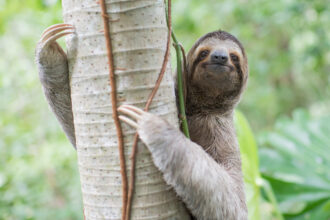
On a busy tourist strip in Orlando, behind noisy bars and souvenir shops, 21 sloths in crates reached the end of a grueling international trip.
Soon, they would all be dead.
The tree-dwelling mammals were transferred to a warehouse resembling an old oil-change garage and placed in cages. The warehouse is the off-site facility of a new roadside attraction called “Sloth World,” a $49 animal encounter marketed as a conservation-focused center scheduled to open soon.
Nothing could have prepared the sloths for this. Until recently, they lived wild in the forest canopies of Guyana.
Now, the animals sat in an industrial building that wasn’t ready to receive them.
There was no running water. No electricity. The space heaters meant to keep them warm were plugged in with extension cords running from another building, according to a Florida Fish and Wildlife Conservation Commission incident report that Inside Climate News obtained through an open-records request. But the heaters repeatedly tripped the fuse and shut off. At least one night in December 2024, the agency said, the sloths were left alone in the cold warehouse without heat.
One by one, they died. When a new shipment of 10 wild sloths arrived from Peru in February 2025, two were dead on arrival and the rest were “emaciated.” None survived, according to the state’s incident report, written in August and detailing all 31 fatalities.
The company kept importing more sloths. The deaths kept mounting, later state government necropsy reports indicate. One of those records describes a bloated nine-month-old baby, named Kiwi by Sloth World, weighing less than 3 pounds.
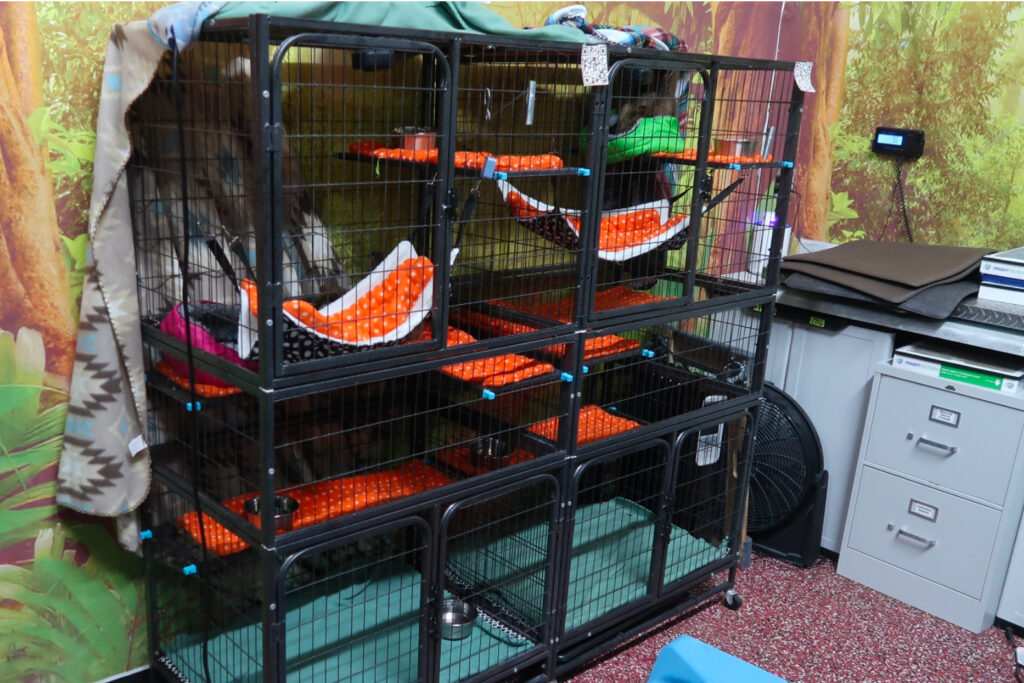
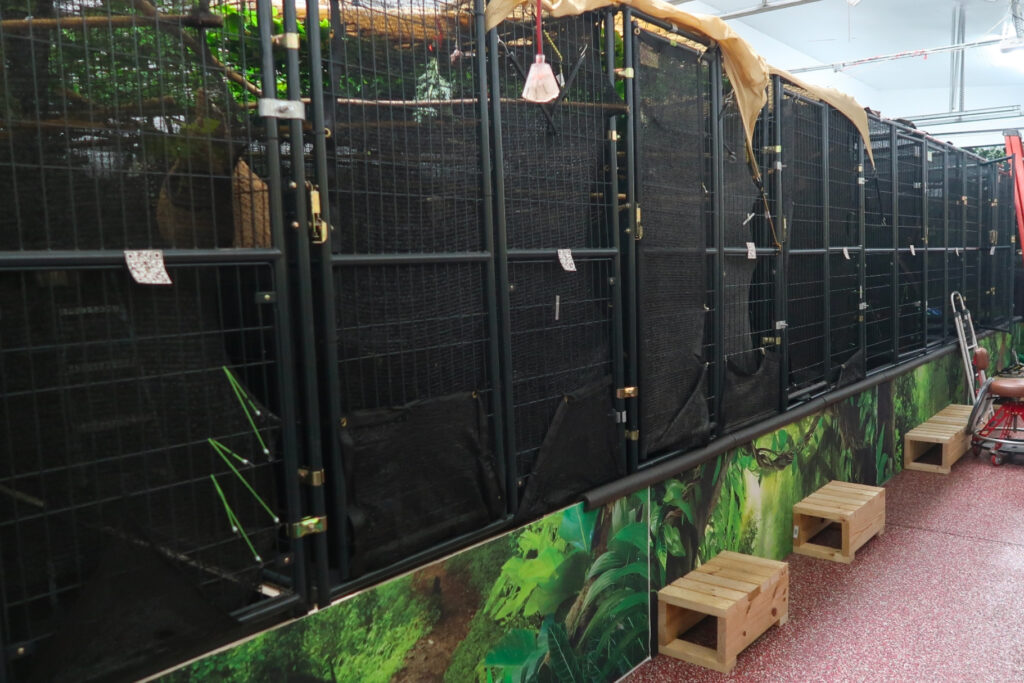
Sloth World learned that viruses, including a “novel two-toed sloth gammaherpesvirus,” were rippling through the warehouse, according to the necropsy reports and internal company emails reviewed by Inside Climate News. “Little is known” about the virus’ treatment, one necropsy record said, referring to the gammaherpesvirus. That necropsy, performed on a sloth named Selma, said she had experienced “recent transportation stress.” Another necropsy report noted the “rapid on set of multiple deaths at this facility.”
Those reports indicate that “systemic stress” acted as a “definitive catalyst” for the deaths, according to a review of the reports by Ana María Villada Rosales, a member of the Council of Scientific Authority in Costa Rica and head veterinarian and conservation medicine research manager at The Sloth Institute in Costa Rica, an organization critical of Sloth World.
“The intense physiological strain of international transit, diet change, and wild capture most likely suppressed their immune systems,” Villada Rosales said in a written statement.
Asked about the situation, the Florida Department of Agriculture and Consumer Services said in a written statement that the agency is aware of the viral spread and is “working with Sloth World to help investigate and diagnose the ongoing issues impacting the facility.”
Benjamin Agresta, owner of Sloth World, said his organization wants to teach people about sloths and intends to study them, work with researchers and provide grant money to conservation organizations. Speaking by phone, he declined to disclose what conservation organizations Sloth World is working with, or intends to work with. He refused to answer other questions, referring Inside Climate News to his media team, which did not respond to multiple requests for comment nor to a list of questions.
Two sloth conservation and rescue organizations have sharply criticized Sloth World’s sourcing of animals from the wild, noting that sloths are notoriously difficult to keep alive in captivity. The animals are highly sensitive to stress, largely solitary with an aversion to humans and dependent on specialized diets.
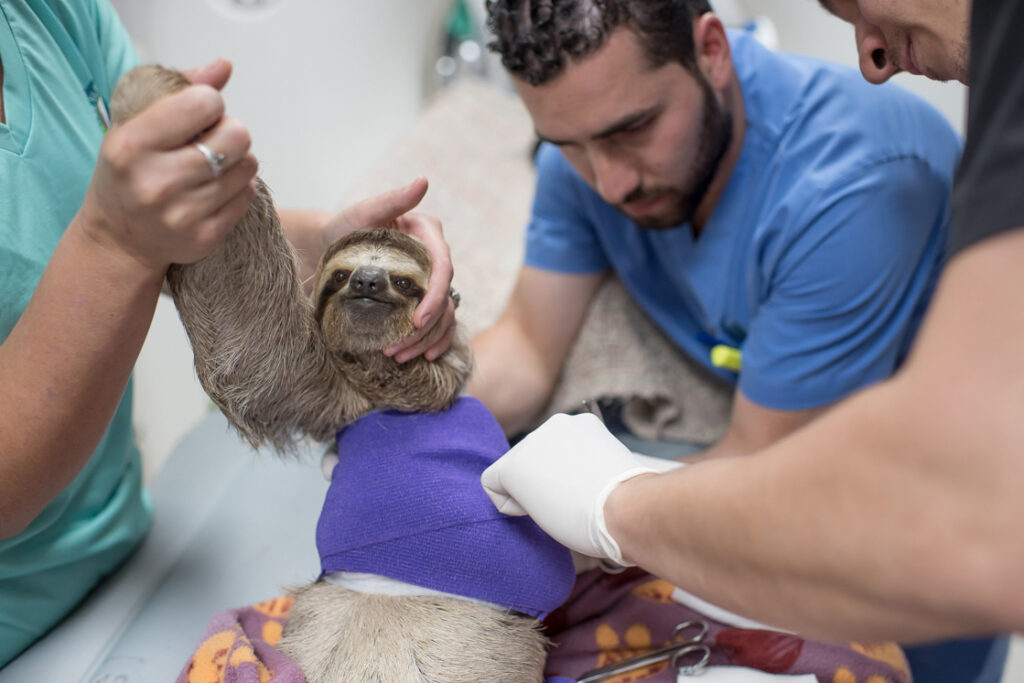
Agresta said such organizations want to abolish animal conservation and “are the enemy.” Asked about the state records indicating that sloths have died, he called that “completely fiction.”
Sloth World has continued importing wild sloths through a related business, Sanctuary World Imports, acquiring at least 38 more wild sloths in addition to the initial 31 that died, according to government permit records.
Conditions at the warehouse have improved, three people with knowledge of the facility said. That includes temperature and humidity controls—also noted in the state’s incident report—and a tropical plant garden.
Even so, the viruses coursed through the new population despite Sloth World’s attempts to quarantine animals and disinfect their living space, according to the necropsy reports and people with firsthand knowledge of the situation who spoke confidentially for fear of retaliation. It’s unclear how many of the company’s 69 sloths are still alive.
Sloth World’s grand opening has repeatedly been pushed back.
“We are still hard at work behind the scenes getting everything ready for our sloths and guests,” the business wrote in response to a Google review in late March. The company’s website says visitors will soon be able to view about 40 sloths in a “rainforest-inspired indoor habitat.” So far, all the photos and videos of the attraction’s interior appear to be digital mockups.
Roughly six months after the initial 31 sloth deaths at the facility, the Florida Fish and Wildlife Conservation Commission gave the company’s import business a verbal warning for housing some of the animals in cages too small for them without tracking how long they had been confined. The agency told Inside Climate News this week that Sloth World didn’t violate any state regulations and “there are currently no active investigations.”
A Global Trade
For wildlife experts, the situation raises broader concerns about the global trade in sloths, animals increasingly imported for tourism and exotic pet attractions with little oversight once they arrive in the United States.
They say Sloth World reflects an industry pattern—commercial companies framing wildlife encounters as conservation or rescue operations while relying on a steady supply of animals taken from the wild. Under current law, those animals are largely treated as property that can be captured, sold and imported if basic permitting requirements are met with the exporting countries and U.S. officials.
The result, experts and advocacy groups say, underscores how gaps in regulation allow operators to import vulnerable, sentient species, confine them and promote the ventures as conservation success stories even as animals suffer, fall ill or die.
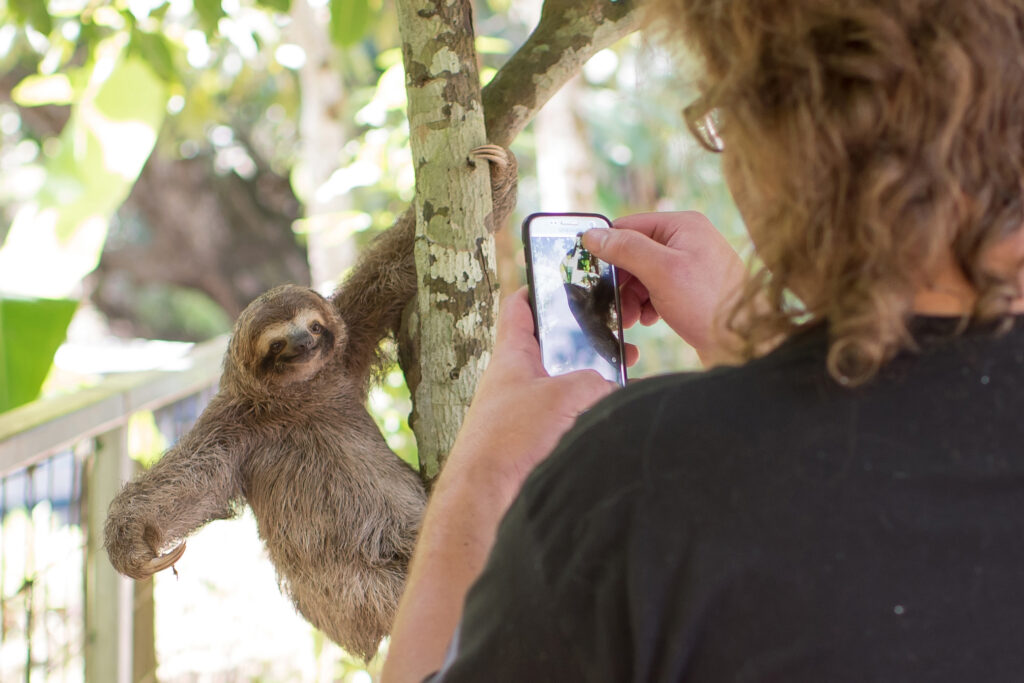
On its website, Sloth World markets itself as the planet’s only “Slotharium,” where “sloths live their slowest, happiest lives.” Part of each ticket, the site says, will fund research and conservation efforts that benefit sloths globally.
For Rebecca Cliffe, founder of the Sloth Conservation Foundation and critic of Sloth World, those claims don’t legitimize removing animals from the wild.
“There is no justification in 2026 for acquiring wild sloths for exhibition,” Cliffe said.
Part of the reason sloths are exceptionally poorly suited to captivity, she added, is that they evolved over millions of years as biological introverts. Unlike most mammals, they lack a strong fight-or-flight response and instead rely on camouflage to survive. When handled by strangers or placed in noisy, high-traffic environments, they don’t scream or struggle. Instead, Cliffe said, they internalize the stress—sometimes curling into a ball and closing their eyes. Their bodies flood with cortisol, triggering a cascade of physiological stress that can end in organ failure.
In the world of exotic attractions and social media, the stillness that makes them look “cute” is often the mask of an animal experiencing extreme stress, she said.
The sheer scale of Sloth World’s operation is cause for concern, said Sam Trull, executive director of The Sloth Institute. She described the number of animals Sloth World removes from the wild as “mindblowing.”
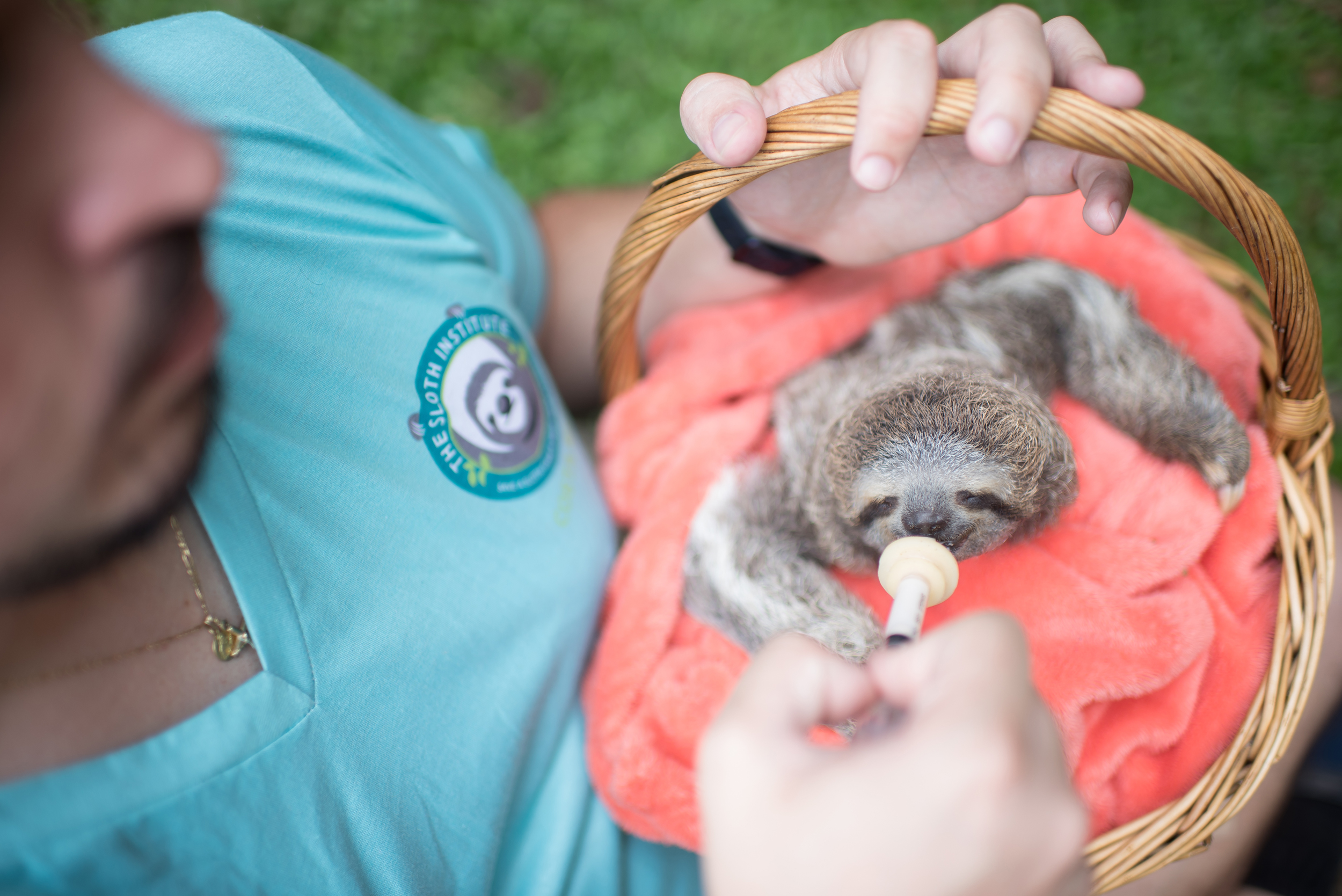
Trull’s organization works to rehabilitate injured sloths and those rescued from the tourism and pet trade, with the goal of returning them to the wild. That process can take months and requires intensive care and expertise because sloths are so sensitive to stress, diet and environmental changes. Trull considers Sloth World’s marketing a strategic deception.
“They are pretending it’s conservation,” Trull said. “They’re trying to really greenwash what they’re doing.”
Part of that conservation branding appears on Sloth World’s website, where the company lists the U.S. Department of Agriculture and the Florida Fish and Wildlife Conservation Commission as its “Animal Welfare Partners”—even though both agencies are government regulators.
In a written statement, the USDA said it is not a Sloth World partner, adding that the agency “is responsible for licensing facilities under the Animal Welfare Act and does not designate facilities as ‘animal welfare partners.’”
The agency said on March 19 that Sloth World is not licensed with the USDA, which is required if the company starts displaying animals to the public. On April 2, the agency confirmed that Sloth World’s related import business also did not have a USDA license.
Sloth World’s website additionally says it collaborates with the University of Florida to “support publishable studies.” In a written statement, the university said it “does not have an official or legal partnership with Sloth World, nor have we found any relevant documents indicating the participation in sloth-related research.”
Peter Bandre, who was vice president of Sloth World until his recent departure, has built a career importing and selling exotic animals as pets, with sloths as a particular specialty.
Government records show Bandre’s company, Incredible Pets, brought at least 80 sloths into the United States between 2011 and 2021, the year Bandre sold the business. That made the company one of the larger documented importers during that decade. He declined to comment for this story, except to defend the diet protocol he designed for the sloths, which he said was based on extensive research and individually tailored to each animal.
Agresta, meanwhile, owns or owned a sloth himself. Sloth World did not respond to questions about whether that sloth is still alive.
Before Bandre’s departure, in emails to the Sloth Conservation Foundation reviewed by Inside Climate News, he said Sloth World’s collection included both two-fingered and three-fingered sloths. Three-fingered sloths rarely survive in captivity.
This story is funded by readers like you.
Our nonprofit newsroom provides award-winning climate coverage free of charge and advertising. We rely on donations from readers like you to keep going. Please donate now to support our work.
Donate NowBandre sought to reassure conservationists that the planned exhibit would include “retreat zones” where animals could move away from visitors.
“Our operations are built on the principle of Ethical Observation,” Bandre wrote in a Jan. 13 email. “Unlike traditional animal encounters, we strictly enforce a No-Touch Policy.”
Bandre’s pet-trade business sold sloths to animal encounter businesses and marketed the animals online.
“It’s going to [be a] baby sloth Christmas,” Incredible Pets wrote in a Facebook post in 2017.
“I need a baby sloth for Christmas!” one user replied.
“Do you want one? We can get you one,” the company responded.
“Sending a PM,” the user wrote back.
A “Goldilocks” Species
As slow as sloths are, their digestion is even slower—taking up to 30 days to process a single leaf. And their diets are unforgivingly specific. In the wild, they feed on a small set of rainforest leaves. Outside their native forests, scientists say, replicating that diet is exceptionally difficult.
At her rescue center in Costa Rica, Trull said her staff spends hours each day collecting wild leaves. If sloths don’t recognize a leaf—or simply don’t like it—they will often starve rather than eat, she said.
At Sloth World, however, the animals were fed conventional U.S. produce such as kale and squash, according to the Florida Fish and Wildlife Conservation Commission report.
Accredited zoos with specialized veterinary teams feed their sloths similar diets. But the animals frequently suffer from chronic health problems—such as kidney failure and malnutrition—likely linked to diet and stress, said Cliffe, the sloth scientist.
Bandre defended Sloth World’s feeding protocols, saying food was a central focus of care. He said his team developed a varied diet with more than 20 types of plants, along with supplemental produce. He said the facility cultivated dozens of plant species on-site, including tropical almond trees.
Wildlife experts say the sloths’ fragile digestive systems are severely strained by the taxing journey to facilities like Sloth World. The transition involves traumatic capture, prolonged confinement in cargo holds and major environmental changes such as rapid shifts in altitude.
Each stage subjects the animals to extreme stress, leaving them vulnerable.
“They’re the definition of a Goldilocks species,” Trull said. “Everything has to be exactly right.”
About This Story
Perhaps you noticed: This story, like all the news we publish, is free to read. That’s because Inside Climate News is a 501c3 nonprofit organization. We do not charge a subscription fee, lock our news behind a paywall, or clutter our website with ads. We make our news on climate and the environment freely available to you and anyone who wants it.
That’s not all. We also share our news for free with scores of other media organizations around the country. Many of them can’t afford to do environmental journalism of their own. We’ve built bureaus from coast to coast to report local stories, collaborate with local newsrooms and co-publish articles so that this vital work is shared as widely as possible.
Two of us launched ICN in 2007. Six years later we earned a Pulitzer Prize for National Reporting, and now we run the oldest and largest dedicated climate newsroom in the nation. We tell the story in all its complexity. We hold polluters accountable. We expose environmental injustice. We debunk misinformation. We scrutinize solutions and inspire action.
Donations from readers like you fund every aspect of what we do. If you don’t already, will you support our ongoing work, our reporting on the biggest crisis facing our planet, and help us reach even more readers in more places?
Please take a moment to make a tax-deductible donation. Every one of them makes a difference.
Thank you,

Katie Surma
Reporter, Pittsburgh

Kiley Price
Reporter
Kiley Price is a reporter at Inside Climate News, with a particular interest in wildlife, ocean health, food systems and climate change. She writes ICN’s “Today’s Climate” newsletter, which covers the most pressing environmental news each week.
She earned her master’s degree in science journalism at New York University, and her bachelor’s degree in biology at Wake Forest University. Her work has appeared in National Geographic, Time, Scientific American and more. She is a former Pulitzer Reporting Fellow, during which she spent a month in Thailand covering the intersection between Buddhism and the country’s environmental movement.