Advertisement
Advertisement

Singapore

Damaged fibre cables at North-South Corridor project caused display of inaccurate bus timings: LTA

Preliminary investigations showed that this affected the bus Expected Time of Arrival (ETA) system which uses the affected fibre service cable, says LTA.

Damaged fibre cables at North-South Corridor project caused display of inaccurate bus timings: LTA

Public buses queue to enter a bus stop. (File photo: Facebook/Land Transport Authority)

Listen
3 min
New: You can now listen to articles.

This audio is generated by an AI tool.

18 Apr 2026 10:03PM (Updated: 18 Apr 2026 11:40PM)
Read a summary of this article on FAST.
FAST

SINGAPORE: Issues of inaccurate bus timings and long wait times being displayed at bus stops and on transport apps on Saturday (Apr 18) were due to damaged fibre network cables that disrupted telco services, said the Land Transport Authority (LTA). 

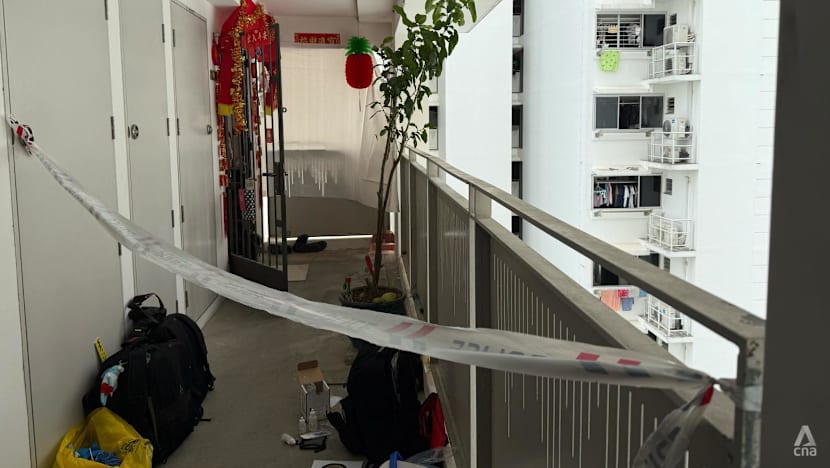
"On Apr 18, 2026, at around 10.40am, fibre service cables were damaged during contiguous bored pile works for the North–South Corridor project," said LTA in response to CNA's query.

"The damage resulted in disruptions to the telco services. Preliminary investigations showed that this affected the bus Expected Time of Arrival (ETA) system which uses the affected fibre service cables."

Construction activity had earlier on Saturday damaged fibre infrastructure, leading to an outage which affected broadband services for around 5,000 users in Ang Mo Kio, Bishan, Sengkang and Punggol.

NetLink Trust, which owns and operates the fibre network infrastructure of Singapore's Nationwide Broadband Network, said on Saturday that it experienced a fibre service outage.

CNA Games
Show More
Show Less

According to preliminary findings from the Infocomm Media Development Authority (IMDA), a cable cut during construction works led to the disruption.

LTA said in a Facebook post at about 4.30pm that it was investigating "technical issues" that were affecting the ETA system for buses, causing inaccurate bus timings to be displayed. 

Bus operations were not affected, and all services continued to operate at their usual frequencies, it said.

"This is not related to previous incidents," the authority told CNA on Saturday evening.

"We are working closely with Singtel and NetLink Trust to assess the damage and implement repairs to the fibre service cables, as well as related services like the ETA system."

The latest incident affecting the ETA system for buses came months after an issue with the ETA system.

In January this year, LTA reset its ETA system after technical issues prevented buses from transmitting location data to a central server, causing inaccurate timings and long wait times to be displayed at electronic displays at bus stops and interchanges, as well as apps like MyTransport.SG, CityMapper and Google.

LTA had said that its engineers and the ETA system contractor identified a "memory cache build-up" in on-board systems, which affected around half of the bus fleet across all operators. 

Technicians were required to physically service the affected on-board devices, involving the clearing of memory caches and manually updating the firmware for the transmitters.

The issue, first detected on Jan 10, was fully restored more than a month later on Feb 12.

Acting Transport Minister Jeffrey Siow told parliament last month that financial penalties would be imposed on a third-party vendor over technical issues.

Source: CNA/ec(rj)

Sign up for our newsletters

Get our pick of top stories and thought-provoking articles in your inbox

Subscribe here
Inbox
FAST
Advertisement

Women

How a stay-at-home mum spent 3 hours each morning writing her first novel – and won a prize for it

Raised on her father’s improvised bedtime stories and encouraged early on in school, Ratna Damayanti Taha wrote her debut novel Mind The Gap, about a Malay girl growing up in Singapore, which went on to win the 2026 Epigram Books Fiction Prize.

How a stay-at-home mum spent 3 hours each morning writing her first novel – and won a prize for it

Ratna Damayanti Taha is the winner of the Epigram Books Fiction Prize 2026 for her debut novel Mind The Gap. (Photos: Ratna Damayanti Taha and Epigram Books; Art: CNA/Chern Ling)

Listen
10 min
New: You can now listen to articles.

This audio is generated by an AI tool.

19 Apr 2026 07:30AM
Read a summary of this article on FAST.
FAST

From February to June 2025, for three hours every weekday, Ratna Damayanti Taha would open her laptop and work.

At 9am, once her apartment was quiet, the 44-year-old would sit at her kitchen island with a cappuccino – no sugar, lots of milk – and return to her manuscript.

She was working on her novel Mind The Gap, which follows Nora, an introspective Malay girl whose coming-of-age plays out against the expansion of Singapore’s MRT system from the 90s to the present. As more train lines are added, she grapples with questions about meritocracy, race and how to chart her own path.

That manuscript won the 2026 Epigram Books Fiction Prize in January. The win, which came with S$25,000 and a publishing contract, still feels surreal, she said.

CNA Games
Show More
Show Less

What felt more real was the moment she submitted her draft.

In July 2025, Ratna carried five copies of her manuscript in a tote bag to the Epigram Books office in Toa Payoh North. After handing them over, she walked out to the open-air car park beside the industrial building.

Without planning to, she sat down and began to cry. “It was around 10am, and the heat was quite unforgiving – one of those very bright, Singapore days,” she recalled. “It felt very still, like the world had paused for a bit.”

She felt relief mostly, that she had made it to the end. And joy, as she had finally ticked off something that had been sitting with her since she was a child.

“I was flooded with emotions,” said the stay-at-home mother of four, who works part-time as an academic and market researcher, and freelance translator.

After she calmed down, she called her husband at work. “I didn’t really say much. I think I just wanted to hear his voice. That was enough.”

THE FIRST "TO-BE-READ-OUT" MOMENTS

Ratna’s love for stories began with listening. Her father worked shifts – 48 hours at work and the next 48 at home. When he was home, he would put Ratna and her brothers to bed and tell them bedtime stories he’d improvised.

Her mother, who did not learn English in school, taught herself through public libraries – borrowing Danielle Steel novels, cookbooks and children’s books. She worked on her pronunciation by talking to their neighbours and watching Sesame Street and The Electric Company with Ratna.

Ratna’s became more confident in writing when she was in Primary 5, when her composition was read to the class. (Photo: Ratna Damayanti Taha)

In Primary 5, she realised she might be good at writing. Her English teacher, Mrs Irene De Silva, ran a simple system: If a composition was good, it was “to-be-read-out” (TBRO) to the class.

The first time Ratna’s story – a 1990s allegory about an “old lion” (representing founding Prime Minister Lee Kuan Yew) watching over his land – was chosen, she remembers feeling validated. She never thought her stories were worth being read out.

Her secondary school Malay language teacher, Ms Roziyah, deepened her confidence. When Ratna and her classmates proposed putting up a full drama production – scripting, directing, marketing and selling tickets – they expected resistance. Instead, they got: “Can. Let’s go.”

“That kind of project was fundamental for me,” Ratna said. “It made me more confident in the creative arts.”

Ratna worked on Mind The Gap on weekdays, for three hours each time, from February to June 2025. (Photo: Epigram Books)

The same teacher also taught her something about failure. Some of her compositions soared; others flopped. Once, she scored five out of 60. Instead of discouraging her, Ms Roziyah wrote a note: “This story would be great if it were further developed; I look forward to reading it.”

“She taught me that it’s okay to write poorly sometimes,” Ratna said. “It’s okay not to be good all the time.”

WRITING IN FRAGMENTS

For years, Ratna’s fiction lived in fragments, in both English and Malay – concepts rewritten as verse for her children, poems when feeling emotional, observations of people she encounters.

“I write mostly as a means to make sense of the world,” she said.

In 2018, she bookmarked the Epigram Prize entry page with no manuscript in sight.

Her first complete story came during the pandemic, when her somewhat-retired father felt isolated, unable to meet friends at the mosque or kopitiam. The required apps – TraceTogether, check-ins – confused him, intensifying his loneliness.

Ratna’s diary entry about her father when she was in primary school. (Photo: Ratna Damayanti Taha)

Ratna called him often. He told her stories from his youth, sailing pilgrims from Singapore, Indonesia, and across Asia to the Hajj. “I wanted to record his experiences for posterity,” she said. “The details I couldn’t find in history books came from our chats.”

Those conversations became a short story in Malay about elderly isolation during the pandemic. In it, an elderly man finds an unlikely friend in a teenage boy with autism.

When she came across the Golden Point Award – a local creative writing competition for poetry and short stories in Singapore’s four official languages – she thought it would resonate with people, especially the elderly, coping with COVID-19 restrictions.

“It was a love letter to my father,” she said. “It was best written in a language (where) he could easily understand what I was trying to express.”

When the story won the 2021 Golden Point Award for Malay short story, it was her first “adult” TBRO moment. Her voice had been acknowledged on a national stage, giving her the confidence to attempt a novel.

CRAFTING NORA: A MALAY GIRL’S REALITIES

Mind The Gap began on the MRT, as Ratna observed commuters and wondered about their lives. Those questions sent her back to her own teenage years in the 90s, shaping the idea for the book.

As a first-time novelist, Ratna chose what felt most honest: realism and the perspective of a Malay girl in Singapore.

Part of the decision was representation. “My kids read a lot,” she explained. “But there aren’t many main characters they can really see themselves in.”

Her kids, all born in September, are aged 17, 15, 10, and seven. One carries a book everywhere she goes, another reads in intense bursts, one loves Singapore fiction, and the youngest is currently fascinated with non-fiction.

Ratna sharing a book with two of her children. (Photo: Ratna Damayanti Taha)

Ratna said she wanted to add a “small contribution to the critical mass of voices” through Mind The Gap, so that stories about Malay lives would exist beyond Racial Harmony Day and tokenistic diversity.

That sense of representation is rooted in her own lived experience of being visibly Muslim in Singapore.

Ratna’s decision to wear the tudung in her early 30s was a personal expression of faith – but one that also placed her at the centre of others’ assumptions.

She recalls an elderly Chinese woman asking how she obtained her Singapore citizenship. “Maybe she really didn’t have the opportunity to meet someone like me,” said Ratna. “These are small, everyday things I wanted to write about.

“As a writer, this is my way of saying: If you know something is a stereotype, let’s have a conversation. Give people a chance before you jump to conclusions.”

GRIEF AND THE WRITING LIFE

The lowest point in her writing journey came in 2023 when her father died. He was 78.

In his final days, he gave her and her two brothers “nice closures”. To her, he said: “You have been a very good daughter. I couldn’t ask for a better daughter.” For Ratna, those words were an immeasurable gift.

Ratna stopped writing for almost a year after her father (centre) died in 2023. (Photo: Ratna Damayanti Taha)

But grief, even when free of regret, can be heavy. Ratna stopped writing. “I was feeling a lot without a place to put it,” she said. “I felt lost for quite a long time.”

It was only after she worked through the grief – reflecting on the wonderful life he had led and appreciating his legacy – that she could start writing again. This took almost a year.

“I wish I could tell my dad that I finished writing my book,” she said quietly.

DEFINING SUCCESS ON HER OWN TERMS

In her 30s, Ratna’s self-belief wavered – not about her writing, but about her life choices.

Mind The Gap is about Nora, an introspective Malay girl whose coming-of-age parallels the expansion of Singapore’s MRT system. (Photo: Epigram Books)

Society prescribed a trajectory: Get good grades, get a good job, get married, build a career. When you don’t follow that path, people around you say certain things, she said.

“You have a master’s degree – are you sure you want to be a stay-at-home mum? You work in communications – are you sure you want to wear a tudung?

“Those questions haunted me,” she said.

Her husband, an engineer, was her anchor. He encouraged her to think clearly: What is your true north? What kind of person do you want to be?

The answers were simply: “I want to be a good person, a useful person, to be happy,” she said.

Over time, clarity came. “I realised I love being a stay-at-home mum,” she said. “When I see my kids growing up and thriving, what more can I ask for? My job is done. You have to measure success on your own terms – not against what other people define as success.”

ANOTHER ADULT “TO-BE-READ-OUT” MOMENT

Ratna with Edmund Wee, publisher and CEO of Epigram Books, at the 2026 Epigram Books Fiction Prize Awards Ceremony in January 2026. (Photo: Epigram Books)

On the night of the Epigram Books Fiction Prize Awards Ceremony in January 2026, Ratna did not expect to win. She had already survived two rigorous culls: First, being longlisted as one of the top eight manuscripts from over 50 entries across Southeast Asia and then shortlisted as one of four final nominees.

For an aspiring author, the shortlist was the true victory – it carried a guaranteed publishing contract with Epigram Books. She was already thrilled just to know her story would finally be in print.

When her name was announced, she was shocked. “I felt paiseh (embarrassed in Hokkien) and validated. It’s another ‘to-be-read-out’ moment,” she said. 

Now drafting new stories rooted in social realism, Ratna is most proud of finally trusting her own voice. “I don’t think it’s a made-up voice. It is a Ratna voice.”

Her advice to anyone still writing in the margins is simple: hold onto every fragment of your experience. The mess of life isn’t a distraction from the work – it is the work.

Mind The Gap goes on sale in July 2026 at Popular Bookstore, Kinokuniya, Book Bar and Wardah Books. It will also be available in Indonesia, Thailand, the Philippines, Malaysia and Myanmar.

CNA Women is a section on CNA Lifestyle that seeks to inform, empower and inspire the modern woman. If you have women-related news, issues and ideas to share with us, email CNAWomen [at] mediacorp.com.sg.

Source: CNA/pc

Sign up for our newsletters

Get our pick of top stories and thought-provoking articles in your inbox

Subscribe here
Inbox
FAST
Advertisement

Asia

‘Live a good life’: Why these Singaporeans left the corporate world to be farmers in Johor

Drawn by lower costs and the dream of building something of their own, some Singaporeans have ventured into farming in Johor. They share their advice and experiences with CNA.

‘Live a good life’: Why these Singaporeans left the corporate world to be farmers in Johor

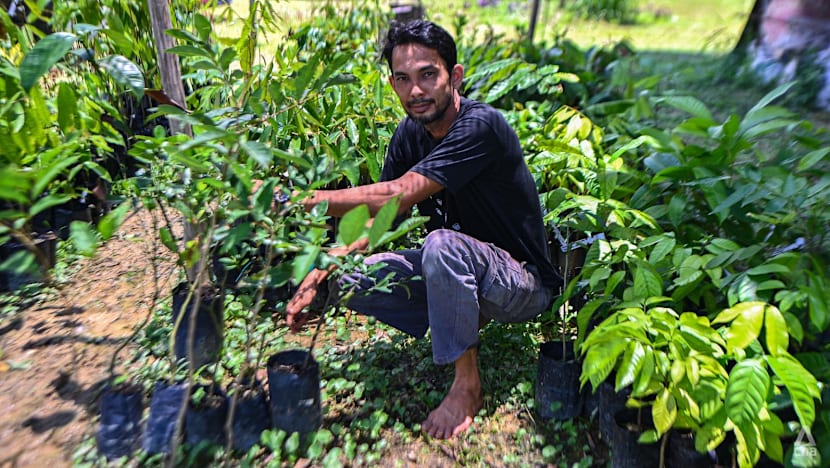
Imran Aljunied, co-founder of A Little Wild farm, says he pursued farming in Malaysia due to limited land availability in Singapore. (Photo: CNA/Zamzahuri Abas)

Listen
9 min
New: You can now listen to articles.

This audio is generated by an AI tool.

19 Apr 2026 06:00AM (Updated: 19 Apr 2026 07:27AM)
Read a summary of this article on FAST.
FAST

JOHOR BAHRU: Under the sweltering afternoon sun in Ulu Tiram, Johor, Imran Aljunied balanced on a ladder, reaching into a tangle of vines to pluck unripe pepper berries.

Sweat plastered his sunburnt face, but he was all smiles.

“We’re harvesting black pepper today,” the 40-year-old Singaporean said.

Imran helps manage A Little Wild, a 55-hectare farm he co-founded in 2020 with two other Singaporeans and a Malaysian. The farm, a former oil palm plantation, is about the size of 77 football fields and roughly 45 minutes’ drive from the Causeway.

His work days can stretch up to 12 hours but he said it beats his previous office job at a Singapore statutory board. The father of two has also traded life in a HDB flat in Singapore for a kampung house on the farm, where he lives with his wife and two children. 

“I like the whole idea of community sufficiency. I’m not relying on any entity for my food and water … This gives me a sense of independence and freedom and I’m not beholden to (anyone),” Imran told CNA.

CNA Games
Show More
Show Less

The farm draws freshwater from a small lake within its site, and the farmers eat the produce.

Once a week, his team harvests crops like pineapple, banana, cocoa, pepper and lemongrass. They pack the produce, which is delivered to roughly 20 customers, including restaurants, based in Singapore. 

The rest of the week is spent tending to the land — pruning, fertilising and closely tracking the growth of each crop.

Imran Aljunied, co-founder of A Little Wild farm in Kota Tinggi, harvests black pepper on Apr 13, 2026. (Photo: CNA/Zamzahuri Abas)

Imran had tried farming back home but quickly ran into a hard limit: Space.

“I just wanted to pursue my passion and Singapore doesn’t have the land for me to do this,” he said. 

Venturing north, he and his co-founders collaborated with other investors to purchase land in Ulu Tiram and began growing crops soon after clearing it.

Like Imran, some Singaporeans have ventured across the Causeway to start farms in Malaysia, drawn by cheaper land that affords them bigger plots, and the chance to build something of their own.

While there are no official statistics on the number of farms owned by Singaporeans in the southern state, checks by CNA found there are at least half a dozen of them in the rural parts of Johor, including Gelang Patah, Kota Tinggi and Kluang. 

For those whom CNA spoke to, the appeal of being a farmer is clear: autonomy, purpose, and a closer connection to the food they consume.

With fuel and food prices currently rising amid the Middle East conflict, these farmers stressed the increasing importance of food security and self-sufficiency. 

Said Singaporean Nabilah Bagarib, who co-founded a sheep farm in Desaru with her husband: “Especially with the current geopolitical situation, countries are more aware that becoming self-sufficient in food is important.

“If you don’t prioritise food security and local produce, you might be at the losing end of the bargain.”

Singaporean couple Ashraf Bakar and Nabilah Bagarib own Aliyah Rizq Farm in Bandar Penawar, Desaru, Johor. (Photo: CNA/Zamzahuri Abas)

A DIFFERENT KIND OF PAYOFF  

For some, the move across the Causeway is about reimagining what success looks like.

Nabilah and her husband Ashraf Bakar embarked on that quest in 2015 with a modest sheep farm in Mersing.

The business expanded and they moved operations to a larger site in Desaru in 2017. 

Their farm, Aliyah Rizq – named after Nabilah’s mother, who was also their first investor – now occupies the equivalent of 150 football fields and has hundreds of sheep, a few horses, camels, ostriches as well as chickens. 

They also have smaller farms elsewhere in the region, including in other parts of Malaysia, and in Indonesia and Cambodia. 

The couple’s days revolve around breeding and raising sheep and goats, many of which are sold both in Singapore and Malaysia for religious practices such as qurban and aqiqah, where the meat is distributed to the needy.

They have also turned the farm in Desaru into a recreational destination that sees about 500 visitors a month. On weekends, families and other guests come to ride horses, all-terrain vehicles, and get up close with the animals. 

For Ashraf, 38, who previously worked in construction and trade, making the leap has been rewarding. He now earns more than before, and describes the farm as an “evergreen” and “intergenerational” business.

He also found “the opportunity and stability here are much better”.

Nabilah Bagarib (left, on horse) and her husband Ashraf Bakar offer an agro-tourism experience at Aliyah Rizq Farm. (Photo: CNA/Zamzahuri Abas)

Nabilah, a former psychologist, sees the business venture as both a practical and personal decision. 

Funds in the stronger Singapore dollar from their previous jobs gave them more purchasing power in Malaysia, allowing the couple to invest in their business and expand it. 

“Our currency is stronger, so it allows for better growth and expansion,” she said. 

For Imran of A Little Wild, success these days means stewardship and regeneration of the land.

His team of around a dozen farmers is working to transform the former oil palm plantation into an educational agroforest — moving away from conventional farming methods towards what the co-founders believe to be a more sustainable model.

Instead of relying on fertilisers or chemicals, they grow a mix of crops in the same plot. This allows the different crops to replenish nutrients in the soil and help one another in their growth.

Workers at A Little Wild farm clean freshly harvested bananas. (Photo: CNA/Zamzahuri Abas)
A selection of produce at A Little Wild farm, including cocoa, kaffir lime, sugar apple and pineapple. (Photo: CNA/Zamzahuri Abas)

“I believe in the concept of a farmer as a caretaker of the land,” Imran said. “To be able to live a good life, while being in service of nature.”

A Little Wild’s Malaysian co-founder Will Chua, a Singapore permanent resident, gave up a six-figure annual salary as a senior public servant in Singapore to start his own farm.

He was searching for something that gave him a greater sense of purpose. “I started to realise what I found meaningful in life,” he said. “And I realised I didn’t need a lot to be happy.”

The change has not only reshaped his outlook but also his health, he said.

“Within a year of working on the farm, my health indicators went back to perfect,” he said, adding that conditions like high blood pressure and fatty liver have improved significantly.

Will Chua, a Singapore permanent resident and co-owner of A Little Wild farm, says he made financial sacrifices to start the business. (Photo: CNA/Zamzahuri Abas)

NOT A BED OF ROSES

That’s not to say the life of a farmer is hunky-dory.

Besides requiring capital, the job is physically demanding and can be fraught with uncertainty, the farmers said.

As foreigners cannot easily own agricultural land in Malaysia, many have to find local partners they trust.

Chua said farm owners and investors in Johor need to be patient for the business venture to stay viable for the long term. 

“We need patient capital and we are lucky we have that here (at A Little Wild). Our investment in the land and workers is patient, we are not asking for (return on investments) immediately,” he said.

But success is not guaranteed.

For instance, Desaru Ostrich Farm, started by former Republic of Singapore Air Force pilot Collin Teh in 1995, closed down at the end of 2024 after nearly 30 years, according to its post on social media. 

When CNA spoke to Teh in 2023, he had shared how the COVID-19 pandemic brought tourism to a halt and he had to put millions of dollars of his own money into sustaining the business.

He even culled some ostriches to keep the venture afloat.

A MUST TO BUILD TRUST

Those with experience say Singaporeans who are thinking of starting a farm in Johor, or elsewhere in Malaysia, need to be aware of the barriers to entry.

While foreigners are allowed to purchase agricultural land, the process is tightly regulated. It requires approval from state authorities and is subject to high minimum price thresholds, typically between RM1 million (US$252,850) and RM2 million. 

Foreigners are also generally not permitted to own Malay Reserved Land or Bumiputera lots.

Chua said those interested in farming should start small by renting or leasing land while learning the trade, before committing large sums of capital.

“Farmers have to first build trust with the local communities,” he said. 

“For us, we work with nearby eateries that cater for our events. That is how we build trust and mutual respect.”

For Aliyah Rizq’s Nabilah, 39, navigating these constraints comes down to working with the right partners and being prepared for financial sacrifices in the early stages.

“There were periods where we didn’t take salaries for months,” she said. 

“We wanted to make sure our workers were paid first. Whatever was left, we took, and any excess went back into the business.”

Aliyah Rizq farm houses hundreds of sheep and goats and supplies halal meat products to the market. (Photo: CNA/Zamzahuri Abas)

She added that building trust extends beyond partners to employees and the wider community, and that missteps can be costly.

Once, she had a sheep supplier who became unresponsive days before a qurban event organised by the farm. In another instance, a staff member sold a goat at a local market without the owners’ knowledge.

“The challenges in running a business are very real,” she said. “You need trusted partners and trusted staff. These are things you always have to keep in mind.”

Despite the difficulties, Nabilah said farming is a career well worth considering for younger Singaporeans.

This is especially as food security remains a concern, with governments placing greater emphasis on local production.

“What we have noticed is that in the farming industry, there is a perception that it is just hard labour (and difficult to scale),” she said.

“What we are trying to do is to make farming sexy again.”

Source: CNA/am(cc)

Sign up for our newsletters

Get our pick of top stories and thought-provoking articles in your inbox

Subscribe here
Inbox
FAST
Advertisement

Singapore

17 HDB neighbourhoods across Singapore to be upgraded at cost of S$130 million

About 9,000 households in 10 precincts in Ang Mo Kio, Bukit Merah, and Queenstown will also benefit from the third batch of Silver Upgrading Programme.

17 HDB neighbourhoods across Singapore to be upgraded at cost of S$130 million

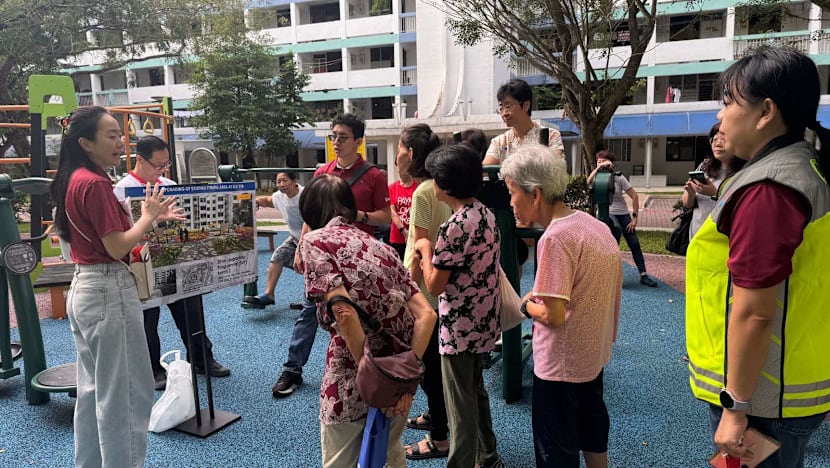
Plans for improvements to the elderly fitness corner are shared with residents during a Community Improvement Walk at Lorong 1/2 Toa Payoh in March 2026. (Photo: Housing and Development Board)

Listen
4 min
New: You can now listen to articles.

This audio is generated by an AI tool.

18 Apr 2026 07:12PM
Read a summary of this article on FAST.
FAST

SINGAPORE: Seventeen Housing & Development Board (HDB) neighbourhoods across Singapore have been selected for upgrading works under the latest batch of the Neighbourhood Renewal Programme (NRP), HDB said on Saturday (Apr 18).

Close to 20,000 households are expected to benefit from the upgrading, with more than S$130 million (US$102 million) set aside for these 17 projects selected by the Ministry of National Development (MND) and HDB.

Introduced in August 2007, the NRP focuses on improvements at the block and precinct levels tailored based on residents’ feedback, such as fitness trails connecting senior-centric amenities and wayfinding features along routes frequently used by seniors.

The works are fully funded by the government and implemented by the respective town councils, which will engage their own design consultants and building contractors as well as monitor the progress of the projects.

CNA Games
Show More
Show Less

The NRP was originally for blocks built up to 1995, but in 2025, the programme was extended to include those built up to 1999.

Over S$1.6 billion has been set aside to fund 246 NRP projects nationwide since the programme’s introduction, covering about 315,500 households across the past 16 batches.

As of Mar 31, 2026, 141 projects benefitting about 199,000 households have been fully completed, HDB said, with works in progress for the remaining 105 projects.

Details of blocks or projects selected for 17th batch of NRP

  1. Blks 370 to 373, 373A to 373B, 374 to 375 Hougang Street 31
  2. Blks 317, 350 to 352, 352A, 353 to 354, 354A Ang Mo Kio Street 31/32
  3. Blks 121 to 122, 141, 141A, 142, 142A, 143 to 144 Lorong 2 Toa Payoh
  4. Blks 442 to 445, 445A, 446 to 448, 469 to 474, 474A Choa Chu Kang Avenue 3/4
  5. Blks 10, 10A, 11 Chai Chee Road
  6. Blks 170, 170A, 171, 171A, 172 to 175, 175A, 176 to 177, 177A to 177B, 178 to 180, 180A Gangsa / Lompang Road
  7. Blks 623 to 628, 628A Bukit Batok Central
  8. Blks 232A, 234A, 236A, 238A, 255 to 256, 256A, 257, 257A, 258 Serangoon Avenue 2 / Central Drive
  9. Blks 501 to 502, 502A, 503, 503A, 504 to 505, 505A, 506 to 508, 527, 527A, 528 to 536, 536A Woodlands Drive 14
  10. Blks 296, 296A, 297 to 299 Yishun Street 20
  11. Blks 300, 302 to 306, 306A to 306B, 307 to 313, 313A, 314 to 316, 316A, 317 to 318 Canberra Road / Sembawang Drive / Vista
  12. Blks 681, 681A to 681D, 682, 682A to 682D, 683A to 683D, 684A to 684D, 685 Woodlands Drive 62 / 73
  13. Blks 205A to 205D, 206A to 206E, 223A to 223D, 224A to 224E, 231 to 233, 233A, 234 to 236, 236A, 237 to 241, 241A Compassvale Lane / Walk
  14. Blks 225A to 225C, 226A to 226D, 227A to 227D, 228A to 228D, 229 to 230 Compassvale Walk
  15. Blks 68 to 70, 70A, 14, 14A, 16A, 17, 17A, 17B Redhill Close / Telok Blangah Crescent, Blks 71 & 72 Redhill Close
  16. Blks 679, 679A to 679C, 680, 680A to 680C, 681, 681A to 681C, 682, 682A to 682C, 683, 683A to 683C, 684, 684A to 684C, 685, 685A to 685C, 686, 686A to 686C Jurong West Street 64 / Central 1
  17. Blks 115, 115A, 177 to 182, 182A, 183, 183A, 184, 184A Ho Ching Road / Yung Sheng Road / Corporation Drive
Expand

10 PRECINCTS SELECTED FOR SILVER UPGRADING PROGRAMME

HDB also announced on Saturday that 10 more precincts in Ang Mo Kio, Bukit Merah, and Queenstown have been selected under the third batch of the Silver Upgrading Programme (SUP), which will benefit about 9,000 households.

Launched in August 2024, the SUP targets older HDB precincts, offering senior-centric upgrades to help seniors age in place more comfortably. Like the NRP, the SUP is fully funded by the government.

Upgrading works in the 10 precincts are expected to commence in the second half of 2026 and will be completed progressively from the second half of 2028, said HDB, adding that two earlier batches of precincts are currently at various stages of construction. 

Works are underway for the four precincts in Ang Mo Kio, which were announced under the first SUP batch in 2024, and are expected to be completed in the second half of 2026. 

Meanwhile, the 12 precincts in Ang Mo Kio, Bukit Merah, and Toa Payoh, which were announced under the second batch of SUP in 2025, are at different stages of design, with works expected to be progressively completed from the second half of 2027.

Locations of the 10 new precincts selected for SUP

  1. Blks 330 to 337 Ang Mo Kio Avenue 1
  2. Blks 621, 623, 625 & 627 Ang Mo Kio Avenue 9
  3. Blks 633 to 640 Ang Mo Kio Avenue 6
  4. Blks 72 to 77, 73A (MSCP) Telok Blangah Drive / Heights / Street 32
  5. Blks 62 to 69 Telok Blangah Drive / Heights
  6. Blks 50 to 61, 51A (Pavilion), 52A (MSCP), 57A (MSCP) Telok Blangah Drive / Heights
  7. Blks 44 to 49, 48A (MSCP) Telok Blangah Drive
  8. Blks 96 to 102 Commonwealth Crescent
  9. Blks 103, 104, 106 to 113, 107A (Pavilion) Commonwealth Crescent
  10. Blks 23A & 23B Queen’s Close
Expand

As part of the SUP design and engagement process, a Community Improvement Walk (CIW) at Toa Payoh Lorong 1/2 was recently held in March, with about 70 residents sharing their feedback on the enhancements they hoped to see.

During the walk, which was attended by Minister for National Development Chee Hong Tat, residents gave suggestions, such as widening the roof of covered walkways to provide better shelter from the rain, and implementing motifs with larger fonts and bright colours for block numbers to improve wayfinding.

They also suggested marking the edges of existing footpaths with yellow borders to improve visibility and help prevent falls, as well adding more sheltered seating areas at a fitness station so that residents can have a space to sit and chat after their exercises.

Other feedback included more community spaces, such as wheelchair-accessible community gardens and sheltered fitness areas.

Minister for National Development Chee Hong Tat engages with residents during a Community Improvement Walk event at Toa Payoh Lorong 1/2 in March 2026. (Photo: Housing and Development Board)

“HDB is committed to enhancing the liveability of our homes and neighbourhoods, so that seniors can live and age-in-place independently within their communities,” said the housing board.

“Going forward, the SUP will be expanded to include even more towns, such as Bedok, Clementi and Kallang-Whampoa,” HDB said, adding that more details will be shared when ready.

Source: CNA/ec(rj)

Sign up for our newsletters

Get our pick of top stories and thought-provoking articles in your inbox

Subscribe here
Inbox
Advertisement

Singapore

New Yishun community hub reaches construction milestone, set for 2027 completion

When completed, Chong Pang City will have a community club, hawker centre and market, along with sports amenities and recreational options for residents.

New Yishun community hub reaches construction milestone, set for 2027 completion

The exterior of Chong Pang City on Apr 18, 2026. (Photo: CNA/Ili Mansor)

Listen
3 min
New: You can now listen to articles.

This audio is generated by an AI tool.

18 Apr 2026 02:39PM (Updated: 18 Apr 2026 03:38PM)
Read a summary of this article on FAST.
FAST

SINGAPORE: A new integrated community hub in Yishun has reached a key construction milestone with the completion of its superstructure and is on track to open next year, the Singapore Land Authority (SLA) said on Saturday (Apr 18). 

When completed, Chong Pang City will have a community club, hawker centre and market, along with swimming pools, a gym and gym activity rooms, a playground, a multi-purpose hall, a sheltered community plaza and a sheltered rooftop jogging track.

It will also have a supermarket, dining options, and educational and recreational spaces.

The nine-storey development will have about 4,200 sqm of commercial space, with tenders for these units launching in the second quarter of this year.

CNA Games
Show More
Show Less

The community hub has been designed with inclusive and senior-friendly features, including wheelchair-accessible ramps at swimming pools and changing rooms equipped with electric height-adjustable changing beds.

Chong Pang City will also be the first government-integrated development to receive the Platinum Super Low Energy certification, with energy savings of up to 40 per cent compared to conventional buildings. 

Sustainability features include photovoltaic panels and electric vehicle charging infrastructure. The solar photovoltaic system is expected to generate 600,000kWh of renewable energy annually, equivalent to powering about 120 four-room flats for a year. 

Water-efficient fittings and rain harvesting systems are also expected to reduce water consumption, SLA said.

Coordinating Minister for National Security and Minister for Home Affairs K Shanmugam meeting Yishun residents at the Chong Pang City topping out ceremony on Apr 18, 2026. (Photo: CNA/Ili Mansor)

A topping-out ceremony for Chong Pang City was officiated by Coordinating Minister for National Security and Minister for Home Affairs K Shanmugam on Saturday. He was joined by fellow Nee Soon GRC MPs Goh Han Yan, Jackson Lam and Lee Hui Ying.

Mr Shanmugam said the development represents a further phase of renewal for the Chong Pang estate, following earlier upgrading efforts in the 1990s, including improvements to shopfronts and infrastructure.

He added that a Chinese-style gateway previously removed will be reinstated when the development is completed.

"By bringing together community, recreational and lifestyle amenities in one integrated development, residents will enjoy greater convenience, improved accessibility and more spaces to connect," Mr Shanmugam said.

"This will build on Chong Pang's strong community spirit and support the needs of both long-time residents and new families in the area."

The project is led by SLA, with the National Environment Agency, the People’s Association and Sport Singapore as co-locating partners.

Source: CNA/cj(kg)

Sign up for our newsletters

Get our pick of top stories and thought-provoking articles in your inbox

Subscribe here
Inbox
Advertisement

Singapore

5,000 users hit by broadband services outage, IMDA preliminary findings show cut cable during construction works

Barring unforeseen circumstances, broadband services affecting parts of Ang Mo Kio, Bishan, Sengkang and Punggol are expected to be progressively restored by Sunday morning, said NetLink Trust.

5,000 users hit by broadband services outage, IMDA preliminary findings show cut cable during construction works
A NetLink Trust vehicle. (Photo: NetLink Trust)
Listen
4 min
New: You can now listen to articles.

This audio is generated by an AI tool.

18 Apr 2026 01:16PM (Updated: 18 Apr 2026 11:58PM)
Read a summary of this article on FAST.
FAST

SINGAPORE: Construction activity damaged fibre infrastructure, leading to a service outage which affected broadband services for around 5,000 users in Ang Mo Kio, Bishan, Sengkang and Punggol.

NetLink Trust, which owns and operates the fibre network infrastructure of Singapore's Nationwide Broadband Network, said on Saturday (Apr 18) that it experienced a fibre service outage.

"Preliminary findings indicate a cable cut during construction works led to the disruption," said the Infocomm Media Development Authority (IMDA) in response to CNA queries.

The authority said it has asked NetLink Trust to identify and repair the damaged cables expeditiously, including diagnosing the extent of the damage and determining the best means to repair the affected fibre cables.

"IMDA will continue its investigations into this incident and will not hesitate to take strong action against errant parties under the Telecommunications Act, should any lapses be identified", it said.

CNA Games
Show More
Show Less

In a statement on its website at 3pm, NetLink Trust said that the fibre service disruption was caused by a third-party contractor carrying out construction activity. 

The errant third-party contractor was not engaged by NetLink Trust, it said.

"We take a serious view of such disruption in services caused by errant contractors and will not hesitate to take necessary actions against the errant party."

The outage has affected some broadband services in parts of Ang Mo Kio, Bishan, Sengkang and Punggol, said NetLink Trust.

Approximately 5,000 end-user connections may be affected by this incident, it said.

In a 7pm update, NetLink Trust said: "Preliminary investigations indicate that the disruption was caused by damage to fibre infrastructure during third-party construction works."

It said that its technical teams are on-site and working to restore services as quickly and safely as possible.

"Due to site constraints and wet weather conditions, additional safety precautions are required, which may affect restoration timings," it added.

"At this time, services are expected to be progressively restored by tomorrow morning, barring unforeseen circumstances."

In a separate update at 11pm, NetLink Trust said some affected connections have been restored, and that its teams would work through the night to complete repair works.

"At this time, full restoration remains expected by tomorrow morning, barring unforeseen circumstances," it said.

Outage-tracking website Downdetector showed spikes in reports related to Singtel, StarHub, M1 and MyRepublic's broadband internet services at about 10.45am on Saturday, with reports continuing to be made subsequently.

A spike in reports was recorded for Simba, although most of these reports were related to its mobile internet services.

In a Facebook post at 11.45am, Singtel said: "We are aware that some customers may be experiencing issues accessing their fibre broadband services.

"We understand it may be related to some on-site construction activities (that are) affecting all operators.

"Our engineers are investigating."

M1 said it detected a disruption over NetLink Trust’s fibre network on Saturday morning, “which impacted some fixed broadband across all operators including M1”.

“While NetLink Trust worked towards a resolution, M1 had reached out to affected customers and we will continue to keep them informed as and when details are available,” the telco said in response to CNA's query.

Starhub said its engineers were working closely with NetLink Trust to resolve the issue.

Source: CNA/kg/rj

Sign up for our newsletters

Get our pick of top stories and thought-provoking articles in your inbox

Subscribe here
Inbox
Advertisement

Singapore

Singapore, Australia have 'substantially concluded' negotiations on economic resilience, essential supplies agreement: Ministers

Singapore, Australia have 'substantially concluded' negotiations on economic resilience, essential supplies agreement: Ministers

(From left) Australia's Minister for Trade and Tourism Don Farrell, Australia's Foreign Affairs Minister Penny Wong, Singapore's Foreign Affairs Minister Vivian Balakrishnan and Singapore's Manpower Minister and Minister-in-Charge of Energy and Science & Technology Tan See Leng at the headquarters of Singapore's Ministry of Foreign Affairs on Apr 17, 2026. (Photo: Ministry of Foreign Affairs)

Listen
2 min
New: You can now listen to articles.

This audio is generated by an AI tool.

18 Apr 2026 11:14AM (Updated: 18 Apr 2026 12:54PM)
Read a summary of this article on FAST.
FAST

SINGAPORE: Singapore and Australia have "substantially concluded" negotiations on an economic resilience and essential supplies agreement, four of the countries' ministers said in a joint statement on Friday (Apr 17).

The Protocol on Economic Resilience and Essential Supplies to the Singapore-Australia Free Trade Agreement follows a commitment by Prime Minister Anthony Albanese and Prime Minister Lawrence Wong on Apr 10 to support the flow of essential supplies between the two countries.

The statement was issued by Singapore's Foreign Affairs Minister Vivian Balakrishnan, his Australian counterpart Penny Wong, Singapore's Manpower Minister and Minister-in-Charge of Energy and Science & Technology Tan See Leng and Australia's Minister for Trade and Tourism Don Farrell.

"The protocol reflects the priority we accord each other with respect to trade in essential supplies including petroleum oils, such as diesel, and liquefied natural gas," they added.

CNA Games
Show More
Show Less

"It also demonstrates the complementarity and interdependence of our two economies."

Under the protocol, the countries will enhance cooperation on economic resilience. Such cooperation includes efforts to manage and minimise supply chain disruptions and to avoid imposing export prohibitions or restrictions on essential supplies between them, the ministers said.

The protocol also formalises the Australia-Singapore Economic Resilience Dialogue recognised by the countries’ prime ministers in their Apr 10 announcement.

"The dialogue will serve as the mechanism for cooperation on economic resilience and trade in essential supplies," the ministers said.

"The protocol is guided by the principles of an open, rules-based multilateral trading system, with the World Trade Organization at its core," they added.

"The protocol will enter into force when both Singapore and Australia have completed their domestic processes."

The ministers each welcomed the protocol.

"The resolution of this protocol, and that the negotiations are completed, is an affirmation of the truly special relationship that we have with Australia," said Dr Balakrishnan.

"I think our people in both Singapore and Australia can take some comfort and assurance from the fact that our two governments are working so closely and so effectively together."

Ms Wong said that the protocol represents "reliable, trusted partners working together to secure fuel and essential supplies" for their people.

Source: CNA/kg

Sign up for our newsletters

Get our pick of top stories and thought-provoking articles in your inbox

Subscribe here
Inbox
Advertisement

Singapore

Allowing any party to weaponise an international waterway sets a ‘dangerous precedent’: PM Wong

Singapore Prime Minister Lawrence Wong was speaking at a virtual conference on freedom of navigation in the Strait of Hormuz.

Allowing any party to weaponise an international waterway sets a ‘dangerous precedent’: PM Wong

Prime Minister Lawrence Wong speaking during the Freedom of Navigation in the Strait of Hormuz Virtual Call on Apr 17, 2026. (Photo: Ministry of Digital Development and Information)

Listen
4 min
New: You can now listen to articles.

This audio is generated by an AI tool.

17 Apr 2026 11:12PM (Updated: 18 Apr 2026 12:05AM)
Read a summary of this article on FAST.
FAST

SINGAPORE: Allowing any party to illegally weaponise an international waterway sets a "dangerous precedent", Prime Minister Lawrence Wong said on Friday (Apr 17).

Singapore “feels this acutely” because it is located along the straits of Malacca and Singapore, which are among the world’s busiest maritime routes, he said.

“We cannot afford to go down this path. If we were to do so, we will end up in a more disorderly and unstable world – one governed by coercion and force rather than rules,” he added.

It is in the international community’s collective interest to uphold navigational rights and freedoms, and to ensure that critical sea lanes stay open, secure and accessible to all, he noted.

Mr Wong was speaking at a virtual meeting of around 40 countries to discuss supporting a ceasefire in the Middle East, security cooperation and the reopening and securing of shipping routes.

Hosted by France and the UK, the meeting aimed to signal to the US that participating countries are ready to play a role in restoring freedom of navigation in the Strait of Hormuz once conditions allow, Reuters reported.

The UK prime minister’s office said planning is underway for the possibility of a combined military effort as soon as conditions allow, adding that the international mission will be “strictly defensive” in nature.

As the meeting was ongoing, Iran said the Strait of Hormuz will be “completely open” following a ceasefire between Lebanon and Israel, while US President Donald Trump said the US naval blockade will remain “in full force and effect” until a deal is reached to end the war.

For weeks after the Middle East conflict broke out in late February, the Strait of Hormuz has been largely closed to other ships, disrupting energy supplies and pushing up prices.

In 2025, around 20 million barrels of crude oil and oil products passed through the strait every day, making it a critical energy chokepoint.

Iran temporarily opened the strait after agreeing to a two-week ceasefire with the US. But when peace talks failed, the US imposed a military blockade of Iranian ports.

KEEPING CRITICAL SEA LANES OPEN

Mr Wong said Singapore knows the current ceasefire is fragile and urged all sides to work towards a durable and lasting resolution.

He said the conflict cannot be truly over if the narrow shipping route remains closed or subject to arbitrary controls.

“The restoration of safe, predictable and unimpeded passage through the Strait of Hormuz must go hand in hand with efforts to end the war,” he noted, adding that the right of transit passage, as enshrined in the United Nations Convention on the Law of the Sea (UNCLOS), is critical.

He called on the international community to support the shipping industry and ensure the safety of all seafarers.

“Singapore stands ready to do our part and work with partners to restore a free and open Strait of Hormuz, in accordance with international law. That means no tolls, no restrictions and a return to the situation before the war,” he said.

Mr Wong said Singapore has consistently supported efforts to keep critical sea lanes open.

Singapore spoke at the UN General Assembly debate on Thursday on behalf of countries that played founding roles in UNCLOS, and was an early co-sponsor of a UN Security Council Resolution that demanded Iran stop its threats, provocations and actions aimed at interfering with maritime trade.

Singapore also supported last month’s declaration at the International Maritime Organization Council reaffirming navigational freedoms under international law, and has affirmed these principles together with foreign ministers from the Association of Southeast Asian Nations.

In terms of economic impact, Mr Wong said Singapore agrees that countries should not impose any unnecessary restrictions on the flows of trade, energy and critical supplies.

“As a global trading hub and a major oil refining centre, this is Singapore’s position – it is clear and unequivocal. We continue to support free and open trade,” he said.

Source: CNA/an

Sign up for our newsletters

Get our pick of top stories and thought-provoking articles in your inbox

Subscribe here
Inbox
Advertisement

Singapore

Singapore joins call to restore unimpeded transit in Strait of Hormuz after UN veto

Singapore’s Permanent Representative to the UN Burhan Gafoor delivered a joint statement on behalf of Fiji, Jamaica, Malta and Singapore on the importance of upholding the right of transit passage in accordance with international law.

Singapore joins call to restore unimpeded transit in Strait of Hormuz after UN veto

Singapore's Permanent Representative to the United Nations Burhan Gafoor speaking during a session of the UN General Assembly on Apr 16, 2026. (Photo: United Nations)

Listen
7 min
New: You can now listen to articles.

This audio is generated by an AI tool.

17 Apr 2026 07:03PM (Updated: 17 Apr 2026 08:11PM)
Read a summary of this article on FAST.
FAST

SINGAPORE: Singapore has joined Fiji, Jamaica and Malta in calling for the restoration of unimpeded transit through the Strait of Hormuz, after a United Nations Security Council resolution aimed at reopening the crucial waterway was vetoed last week. 

Singapore’s Permanent Representative to the UN Burhan Gafoor delivered a joint statement on behalf of all four countries at a meeting of the 80th Session of the United Nations General Assembly on Thursday (Apr 16).

The meeting was convened to debate Russia and China's use of their veto powers on a draft resolution on the situation in the Middle East.

The resolution would have reaffirmed that all ships and aircraft enjoy the right of unimpeded transit passage through the Strait of Hormuz in accordance with international law as reflected in the 1982 United Nations Convention on the Law of the Sea (UNCLOS), Singapore's Ministry of Foreign Affairs (MFA) said in a statement on Friday.

MFA said Fiji, Jamaica, Malta and Singapore "contributed substantively" to the negotiation, drafting, and conclusion of UNCLOS, and have an "abiding interest in its faithful implementation".

The joint statement, as delivered by Mr Gafoor, called on all concerned parties to uphold their obligations under international law, including to restore unimpeded transit passage through the Strait of Hormuz, and ensure the safety of seafarers and ships.

The statement also noted that the right of transit passage is of fundamental importance to international maritime trade. 

"For many small island nations and developing states, with trade-dependent economies, disruptions to such passage have severe adverse impacts on economic resilience and energy security," added MFA.

The vote on Apr 7 came to 11-2, with two abstentions from Pakistan and Colombia. For resolutions to be adopted, they require at least nine affirmative votes with no vetoes from any of the five permanent members of the council - the US, United Kingdom, France, Russia and China.

Russia and China strongly defended their opposition to the UN resolution, both citing US President Donald Trump's threat to end Iran’s civilisation as confirmation that the proposal would have given the US and Israel "carte blanche for continued aggression", as Russian envoy Vassily Nebenzia put it.

Iran has largely closed the strait to ships other than its own since the start of US-Israeli airstrikes against it on Feb 28. 

The US and Iran agreed to a two-week ceasefire on Apr 8, with Tehran to temporarily reopen the strait, through which much of the world's oil, gas and fertiliser passes.

However, after negotiators from both sides were unable to reach a deal during talks in Pakistan over the weekend, Trump declared that he would impose a blockade on the maritime chokepoint. 

What has come into effect since Apr 13 is essentially a military blockade of Iranian ports, with US Central Command later clarifying that it will not impede ships transiting the strait to and from other ports.

Backdropped by ships in the Strait of Hormuz, damage can be seen at a fishing pier in the port of Qeshm island, Iran, on Apr 13, 2026. (Photo: AP/Asghar Besharati)

"ABIDING INTEREST" IN IMPLEMENTATION OF UNCLOS

In delivering the joint statement, Mr Gafoor said Singapore, Fiji, Jamaica and Malta "remain steadfast stewards" of UNCLOS and are committed to upholding it as the legal framework within which all activities in the oceans and seas must be carried out. 

"For small states, the international rule of law is a matter of survival. We therefore have an abiding interest in the faithful implementation of UNCLOS as the constitution for the oceans, and in reaffirming its universal and unified character," he said.

"We are disappointed that there could be no agreement on the adoption of the draft resolution, which would have reaffirmed that all ships and aircraft enjoy the right of transit passage through the strait, which shall not be impeded in accordance with international law as reflected in UNCLOS."

The right of transit through the Strait of Hormuz is "firmly entrenched in customary international law, and it is therefore binding on all states, regardless of whether they are parties to UNCLOS", Mr Gafoor added.

"Transit passage applies during peacetime and war. This right is not contingent on any license or levy. It is an inherent right of ships and aircraft to traverse without prior authorisation. As reflected in Article 44 of UNCLOS, the rule is unequivocal: States bordering such straits shall not hamper or suspend transit passage. There are no exceptions to this inherent right."

The joint statement concluded by underscoring that the current situation was of "great concern" and calling on all concern parties to uphold and respect the right of transit passage. 

SINGAPORE'S NATIONAL STATEMENT

Mr Gafoor also delivered Singapore's national statement at the UN General Assembly, noting that Singapore had welcomed the announcement of a two-week ceasefire.

"We are encouraged by the step towards de-escalation, and commend the efforts of the mediators, in particular Pakistan. 

"We urge the United States of America and the Islamic Republic of Iran to continue down the path of dialogue and redouble efforts in negotiations that will lead to the permanent end to the conflict and lasting peace and stability in the region," he said. 

He added that Singapore also endorses the statement made by the Philippines on behalf of the Association of Southeast Asian Nations (ASEAN).

ASEAN said in a statement delivered by Deputy Permanent Representative Jesus Enrique G Garcia II that it expressed "deep concern" over the developments in the region and welcomed the two-week ceasefire. It also emphasised the importance of its full and effective implementation, along with restraint and the cessation of hostilities.

Speaking for the group, Mr Garcia highlighted the importance of maritime safety and security and freedom of navigation in accordance with international law, and called for continued dialogue towards a comprehensive and enduring resolution.

SINGAPORE'S POSITION

Foreign Affairs Minister Vivian Balakrishnan said in parliament on Apr 7 that Singapore will not negotiate for safe passage through the Strait of Hormuz, as doing so would undermine fundamental principles of international law.

“There is a right of transit passage,” he said. “It is not a privilege to be granted by the bordering state, it’s not a licence to be supplicated for, it is not a toll to be paid.”

He emphasised that the Strait of Hormuz, like the Strait of Malacca and the Strait of Singapore, is a waterway used for international navigation, adding that this right is codified in UNCLOS, to which Singapore is a signatory. 

Dr Balakrishnan added that the principle applies even to states that have not ratified UNCLOS, stating that it is not a "get-out-of-jail-free card" for them.

Coordinating Minister for National Security K Shanmugam said on Apr 13 that Singapore is "very wary" when other countries treat navigational rights and freedoms as discretionary privileges to be negotiated or paid for.

“Our position is - under the United Nations Convention on the Law of Sea, and customary international law, there is free right to transit passage across such straits, and that no one can impose tolls or selectively decide whose ships get access to these waters,” said Mr Shanmugam.

Source: CNA/Agencies/nh(zl)

Sign up for our newsletters

Get our pick of top stories and thought-provoking articles in your inbox

Subscribe here
Inbox
Advertisement

Singapore

Jail for man, 64, who used mobile games as pretext to molest 2 granddaughters

The victims were aged between eight and 10 years old at the time of the offences last year. 

Jail for man, 64, who used mobile games as pretext to molest 2 granddaughters

A view of the State Courts building in Singapore. (Photo: CNA/Ili Nadhirah Mansor)

Listen
2 min
New: You can now listen to articles.

This audio is generated by an AI tool.

17 Apr 2026 06:56PM
Read a summary of this article on FAST.
FAST

SINGAPORE: A 64-year-old man who molested his two young granddaughters under the pretext of playing mobile phone games with them was jailed for five years, two months and four weeks on Friday (Apr 17).

At the time of the offences in 2025, his elder granddaughter was aged between nine and 10, while the younger was between eight and nine.

None of the parties can be named to protect the victims' identities.

The accused, a cleaner, pleaded guilty to two charges of aggravated molest in the State Courts. He resided with the two victims and other family members.

The court heard how the accused had a close relationship with his two granddaughters, who would regularly play board and mobile phone games with him while sitting on a sofa.

Last year, he began to feel aroused by the two girls and "felt tempted to perform sexual acts on them" court documents stated.

"The accused began to use the pretext of playing handphone games with the two victims to get them to sit next to him on the sofa," the prosecution said. He targeted them separately.

While each girl was distracted by the game, the accused would molest them either over their clothing or their bare skin.

The younger girl told a social worker that her grandfather had touched her private parts, leading to the eventual filing of a police report on Jan 31, 2026.

This girl reported experiencing flashbacks of the offences and would run away from the accused.

The man was arrested on Feb 6 this year. He was remanded for psychiatric assessment but was found not to be suffering from any mental disorder and was not intellectually disabled.

His risk of sexual reoffending was assessed to be at least moderate, particularly if he continued living with the victims.

The prosecution argued for a jail term of 46 to 53 months and 12 weeks.

For molesting a person under 14, an offender can be jailed up to five years, and/or fined, and/or caned. The accused cannot be caned as he is above 50. 

If the offence is against a victim in a close relationship, an offender can face twice the maximum penalty.

Source: CNA/wt(rj)

Sign up for our newsletters

Get our pick of top stories and thought-provoking articles in your inbox

Subscribe here
Advertisement

Singapore

Engagement with vets to continue to ensure stricter rules don’t raise costs, say industry players

A new complaint framework could come down too hard on the profession, and prompt some clinics to take extra steps to protect themselves against complaints or disciplinary action, industry players told CNA. 

New legislation to regulate Singapore’s veterinary profession is being welcomed as a long-overdue step to raise standards.

New: You can now listen to articles.

This audio is generated by an AI tool.

17 Apr 2026 06:17PM (Updated: 18 Apr 2026 12:18PM)
Read a summary of this article on FAST.
FAST

SINGAPORE: New legislation to regulate Singapore’s veterinary profession is being welcomed by industry players as a long-overdue step to raise standards. 

But they also caution that this could drive up costs for pet owners.

A new complaint framework could come down too hard on the profession, and prompt some clinics to take extra steps to protect themselves against complaints or disciplinary action, they told CNA. 

This comes as Singapore will establish a Veterinary Council to regulate the profession and raise industry standards under a Bill passed in parliament on Apr 8. 

Mr Alvin Tan, Minister of State for National Development, told parliament the number of licensed veterinarians has grown more than fivefold over two decades to nearly 700 as of end-2024.

At the same time, the range and sophistication of services have expanded alongside rising public expectations of professional standards.

RISING COMPLIANCE CONCERNS

The Singapore Veterinary Association (SVA) said that the formation of the Veterinary Council is welcomed, as it signals a major step forward in professional recognition, public trust and sector standards.

But it also warned the complaint framework could lead to vets ordering more tests and procedures before treatment to cover all bases.

Dr Teo Boon Han, the association’s president, said that beyond additional diagnostics, higher compliance and legal costs could also weigh on clinics.

“The business costs will go up because people will want to be covered by lawyers – maybe have lawyers on retainer,” said the veterinarian and pet nutritionist.

“You'll want to practice defensive medicine if regulations are too harsh. Whereas previously, I would only do one or two tests, now to cover all my bases, I might want to do 10 tests before I do a surgery.”

Dr Teo believes this could push up the price of routine procedures for pet owners.

“I think we have to be very cautious. We don’t want the industry to end up being very defensive,” he added.

CNA Games
Show More
Show Less

Dr Teo, who was involved in the consultation process for the formation of the Veterinary Council, said efforts are underway to ensure that this does not happen.

“Many engagements have been, and will continue to be carried out with the industry to ensure practicality, balance, and minimise impact to cost,” he added.

The concern comes amid already rising vet bills, which have become a growing issue for some pet owners.

Ms Kerrine Chan, for instance, now compares fees across clinics and prioritises preventive care for her pet dog, Mochii.

“As much as we can, we try to do prevention now with the vet and then to avoid future, maybe expensive medical bills,” she said.

Ms Chan has become far more cost-conscious after facing hefty vet bills. She was quoted about S$12,000 (US$9,400) on cancer treatment for her previous dog Ruby, and had to forego the treatment.  

As lymphoma can often relapse, she said one big factor is not knowing if she was going to have to spend a similar amount again in the future. Ruby died six months later.

“We see it every day, where we are not able to perform a certain standard of care due to cost,” said Dr Teo.

“It's actually one of the unique stressors, where we’re in a profession where we can help, we have been trained to help them, dedicate our lives to help, but we cannot help because of the financial constraints.”

He said many tend to falsely compare animal healthcare with the human healthcare sector, which has the support of robust government subsidies and private insurance plans.

“Insurance is picking up a little bit (for pets), but really, everything else is absent. Most vet clinics are SMEs (small‑ and medium‑sized enterprises), bearing the burden of what people see as a public good,” he said.

PUSH FOR LOCAL TRAINING

To address cost pressures in the longer term, the industry is renewing calls for local vet training.

Currently, aspiring vets must study overseas – a path that can cost between S$600,000 and S$1 million, according to Dr Teo.

“It's one of the professions in Singapore where it's not truly meritocratic, because I know there's not a profession that costs so much,” he said, noting the high barrier to entry.

“A lot of vets go into this with a lot of personal debt.”

Manpower costs make up 40 to 50 per cent  of operating expenses at most vet clinics, said Dr Teo. This includes manpower costs for vet nurses.

The hope is that local training could lower education costs and boost the supply of vets, helping to ease manpower-driven expenses and, in turn, reduce fees over time.

Some animal welfare groups say a local training pathway could also help with staffing challenges, especially in shelters.

Mr Walter Leong, executive director of the Society for the Prevention of Cruelty to Animals (SPCA), said finding vets willing to work in such settings remains difficult.

Most vets make "a huge investment" to obtain their qualifications overseas, so working in a shelter environment may not be their preferred career path when they return to Singapore, he said.

“Having a local school allows us to tap local talent and maybe even have a syllabus that is more relevant to the local climate, the local environment,” he added.

However, Dr Teo acknowledges that setting up a veterinary school would be costly and complex, given the limited number of farm animals available for clinical practice.

This is often a key requirement for vet courses to receive international accreditation. Cohort sizes also have to be large enough to even out the high costs of setting up a vet school.

Meanwhile, authorities have said they will work to strengthen local vet-related training, including pathways for mid-career entrants.

Source: CNA/ca(mp)

Sign up for our newsletters

Get our pick of top stories and thought-provoking articles in your inbox

Subscribe here
Advertisement

Also worth reading

Advertisement