
Holy Week and the Jews

There is a lot of discourse every year around the role of the Jews in the narrative of Holy Week as described in the Gospels. Very frequently, two problematic positions are offered. Some use these narratives to justify antisemitism. The story stops being about how Jesus died on the cross to save us from sin and instead becomes about how the perfidious Jews killed Jesus (something righteous Gentiles would never have been involved in) and so are forever condemned by God. In response to this, some instead suggest that the story has nothing to do with Jews. Instead it is simply about how all our sins sent Jesus to the cross, and the Jewish people had little to nothing to do with it. While seemingly offering a solution to antisemitic readings of the text, this solution ends up removing the very Jewishness of the story. Instead of it being a story about how the Jewish messiah comes to the Jewish people who reject him and offer him up to be crucified, it now becomes a story about a generic messiah who is killed by generic people.
I wish to argue here instead that the story of Holy Week does involve the Jews as central players, but that it also does not present the Jewish rejection of Jesus as the final word.
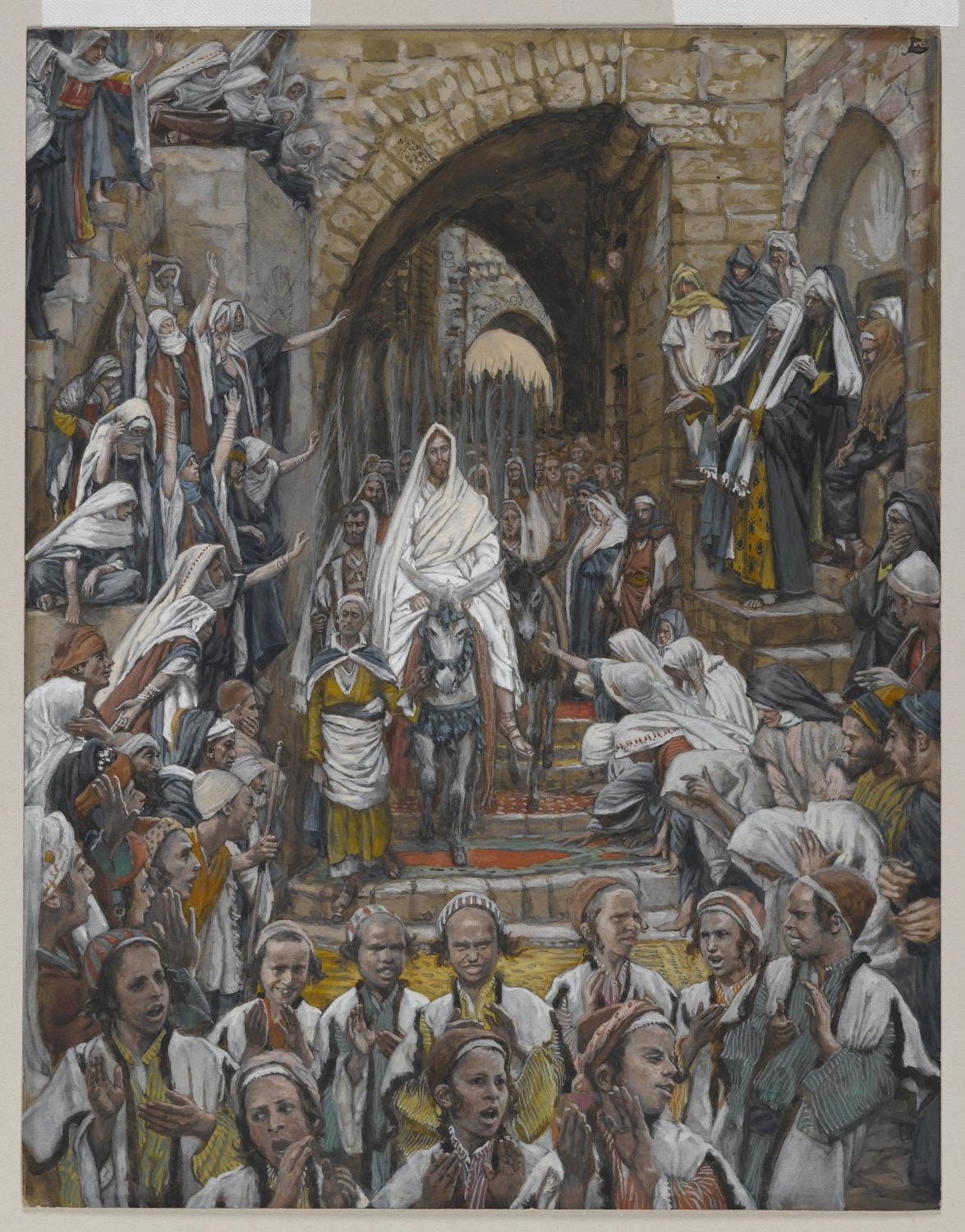
Holy Week begins with Jesus’s triumphal entry into Jerusalem on Palm Sunday. The crowds cry out and greet him with the words of Psalm 118: “Blessed is he who comes in the name of the Lord.” The use of this psalm is very notable for a number of reasons. It is addressed to Israel and is the concluding psalm of the Hallel, a series of psalms that are sung as a celebration on major holidays. Psalm 118 thanks God many times for his deliverance of Israel.
Jesus enters in fulfillment of Zechariah 9:9 about the messianic king entering Jerusalem on a donkey. Matthew and John even quote the prophecy directly as mentioning the “daughter of Zion,” a reference to the city and people of Jerusalem. By entering in this way, Jesus is clearly proclaiming himself as the messianic king who will rule from Jerusalem. Thus the crowds proclaim him as “Son of David” (Matt 21:9) and “King of Israel” (John 12:12) and that he is bringing “kingdom of our father David” (Mark 11:10).
Luke here adds an additional detail:
And some of the Pharisees in the multitude said to him, “Teacher, rebuke your disciples.” He answered, “I tell you, if these were silent, the very stones would cry out.” (Luke 19:39-40)
Luke emphasizes that it is “the disciples” (Luke 19:37) who rejoice, while “some of the Pharisees” do not accept him. Thus, what is a purely joyful moment in the other gospels, Luke reveals has a mix of sorrow. This is clear in Jesus’s reaction.
And when he drew near and saw the city he wept over it, saying, “Would that even today you knew the things that make for peace! But now they are hid from your eyes. For the days shall come upon you, when your enemies will cast up a bank about you and surround you, and hem you in on every side, and dash you to the ground, you and your children within you, and they will not leave one stone upon another in you; because you did not know the time of your visitation.” (Luke 19:41-44)
Jerusalem will be destroyed because they did not accept Jesus. It is not that Jesus himself comes to destroy the city. Indeed, he weeps over this. Rather when the zealots take over Jerusalem and instigate a rebellion against the Romans, there will be no one to save them. They could have accepted Jesus and he would have brought about peace through the unity of Jews and Gentile in him, but now they will have no peace.
Luke here is alluding back to an earlier confrontation between Jesus and the Pharisees during Jesus’s journey to Jerusalem:
At that very hour some Pharisees came, and said to him, “Get away from here, for Herod wants to kill you.” And he said to them, “Go and tell that fox, ‘Behold, I cast out demons and perform cures today and tomorrow, and the third day I finish my course. Nevertheless I must go on my way today and tomorrow and the day following; for it cannot be that a prophet should perish away from Jerusalem.’ O Jerusalem, Jerusalem, killing the prophets and stoning those who are sent to you! How often would I have gathered your children together as a hen gathers her brood under her wings, and you would not! Behold, your house is forsaken. And I tell you, you will not see me until you say, ‘Blessed is he who comes in the name of the Lord!’” (Luke 13:31-35)
Jesus tells the Pharisees here that he must go to Jerusalem to die, and that they will not see him again until they declare the line from Psalm 118: “Blessed is he who comes in the name of the Lord.” He clearly shows a great love for Jerusalem here, reminding her of all the prophets who were sent to her, but also his sorrow that she would not accept them.
Thus, when Jesus enters on Palm Sunday, he was looking for the Pharisees to proclaim his entrance. However, it is only his disciples who do, even if they are a large multitude at this point and so likely included many Pharisees. Some the Pharisees still reject him, and so this is not the acceptance he is looking for.
Matthew confirms recording how Jesus spoke these same words again to the scribe and Pharisees in a speech a few days after Palm Sunday (Matt 23:37-39).
O Jerusalem, Jerusalem, killing the prophets and stoning those who are sent to you! How often would I have gathered your children together as a hen gathers her brood under her wings, and you would not! Behold, your house is forsaken and desolate. For I tell you, you will not see me again, until you say, ‘Blessed is he who comes in the name of the Lord.’ (v. 37-39)
This confirms that Palm Sunday had not fulfilled the hope of his acceptance by the Jews. Much of the leadership still will not accept him.
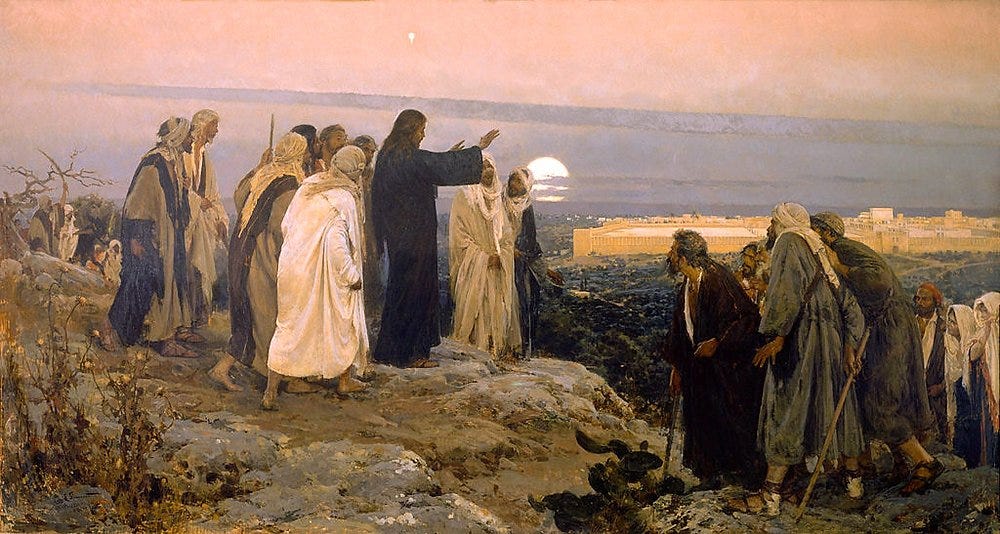
Jesus returns the next day to cleanse the temple. This was a symbolic enactment of the judgement that was to come upon the temple.
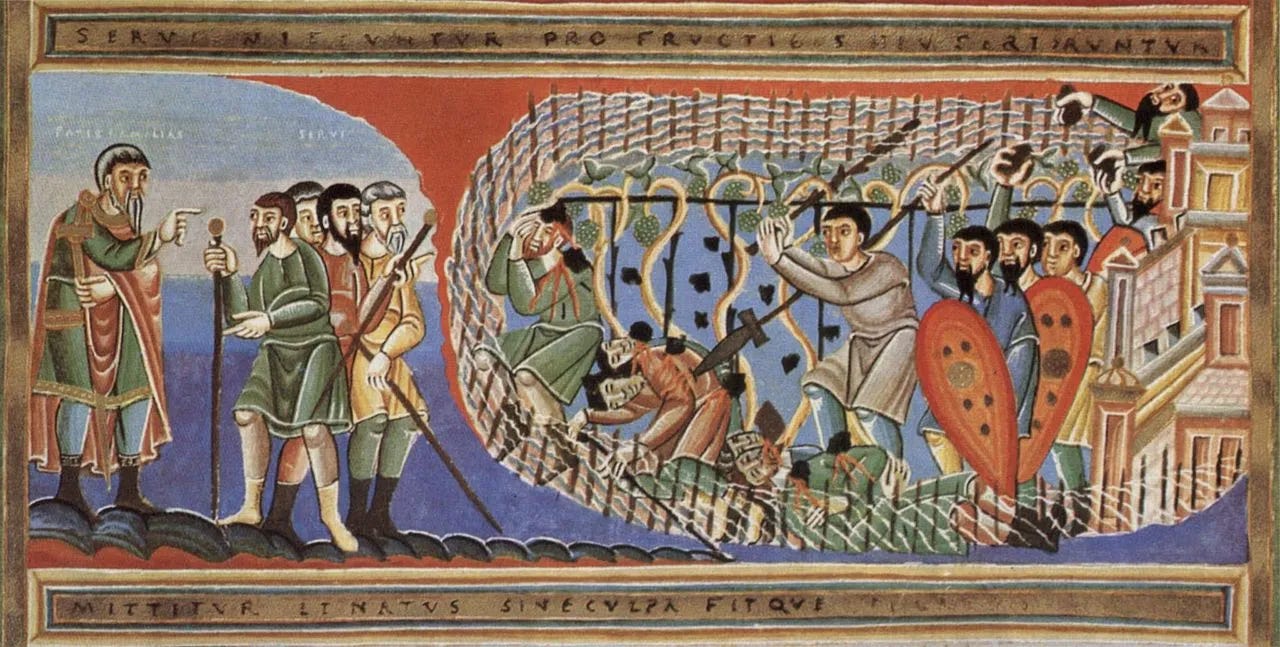
He then returned again the next day to teach in it. It is here that some of Jesus’s harshest statements against the Jews come, such as the parable of the wicked tenants (Matt 21:33-46). Jesus describes a vineyard owner who sends servants and the then his son, and all of them are killed by the tenants. The people who have done this will have the kingdom taken from them and given to another. The priests and Pharisees realize he is speaking about them.
Jesus here quotes a different verse from Psalm 118: “The very stone which the builders rejected has become the head of the corner; this was the Lord’s doing, and it is marvelous in our eyes?” Psalm 118 not only prophecies the future acceptance of Jesus by the Jews, but also their initial rejection of him.
Shortly after this, Jesus gives the Olivet Discourse, telling about how the temple would be destroyed, the gospel preached to all nations, and his Second Coming.
Luke’s account of it includes an important detail:
But when you see Jerusalem surrounded by armies, then know that its desolation has come near. Then let those who are in Judea flee to the mountains, and let those who are inside the city depart, and let not those who are out in the country enter it; for these are days of vengeance, to fulfil all that is written. Alas for those who are with child and for those who give suck in those days! For great distress shall be upon the earth and wrath upon this people; they will fall by the edge of the sword, and be led captive among all nations; and Jerusalem will be trodden down by the Gentiles, until the times of the Gentiles are fulfilled. (Luke 21:20-24)
Jerusalem will conquered and ruled by Gentiles while the Jews will be taken into exile, “until the times of the Gentiles are fulfilled.” What then are these times of the Gentiles?
This seems to parallel a similar line in Matthew and Mark:
And this gospel of the kingdom will be preached throughout the whole world, as a testimony to all nations; and then the end will come. (Matt 24:14; cf. Mark 13:10)
Thus, the time of the Gentiles is connected both to the control of Jerusalem by Gentiles and the preaching of the gospel to the Gentiles. Thus, St. Bede connected it with Paul’s comments in Romans:
Until the time of the Gentiles is fulfilled [Luke 21:24]. Of course, this time of the Gentiles is that which is discussed by the Apostle, saying a hardening has come upon part of Israel, until the full number of the Gentiles come in, and so all Israel will be saved [Rom 11:25-26]. For when the promised salvation will have been obtained, they also will return to their fatherland, rejoicing once again in the possession and habitation of their former capital city, and perhaps it is not unreasonable to hope for this, because he did not say in perpetuity, but until the times of the Gentiles are fulfilled. (Commentary on Luke, PL 92 588C-D)
Thus, for Bede, the eventual conversion of the Jews also includes very likely their return to the Holy Land. St. Thomas Aquinas included this passage in the Catena aurea and included the same opinion in his Commentary on Jeremiah (c. 31, l. 4). While this point is less certain than their conversion, which is taught by the all the Fathers, it still seems to me highly likely given Jesus’s words here and the fact that pretty much every Old Testament passage interpreted by the Fathers as about the conversion of the Jews also includes their return to the land.
It is notable that Jesus does warn of false Christs who will come in the end times (Matt 24:24; Mark 13:10). Jesus rejects those who seek to take the kingdom by force (Matt 11:11), even those would proclaim him as king by force (John 6:15). It is the meek who will inherit the land (Matt 5:5). Jesus reveals himself what he had taught Israel through prophets from the time of Moses, that they will only enter the messianic age when they repent and turn their hearts to God. Since they will not, Moses had already told them that the curses of the covenant would come upon them, but that God would gather them again when they repent (Deu 30:1-3). Those who carry out violence against the innocent, whether in the name of a true or false Christ, belong truly to the body of the antichrist.
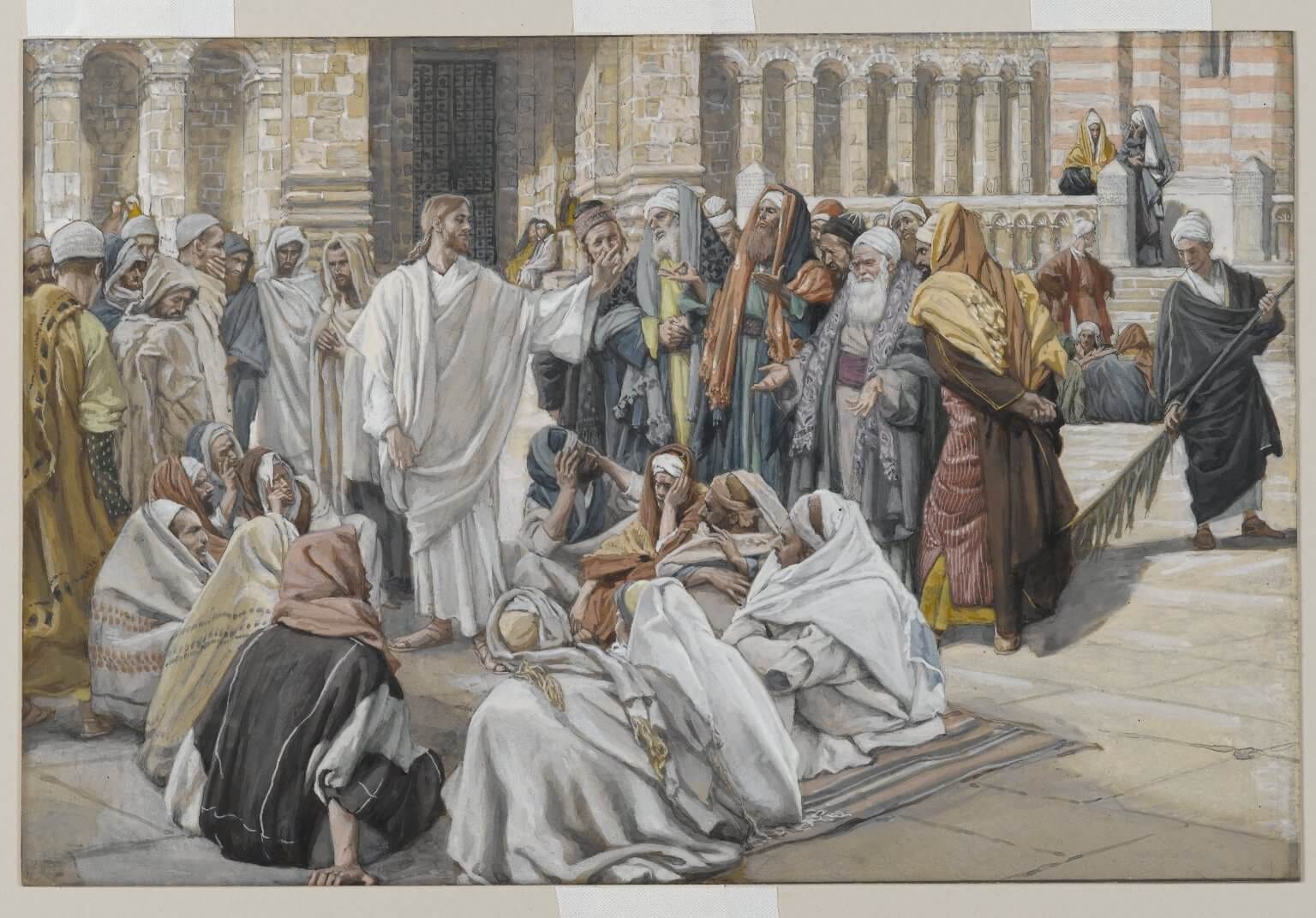
Jesus also directs a sermon at the leaders of the Jews. First, he addresses the crowd, and notably affirms the authority of the leaders even if they must be rebuked for their actions (Matt 23:2-3). Then, he directly addresses the leaders (v. 13). He critiques their hypocrisy in many ways, but ends with a focus on their involvement in the shedding of the blood of the prophets:
Woe to you, scribes and Pharisees, hypocrites! for you build the tombs of the prophets and adorn the monuments of the righteous, saying, ‘If we had lived in the days of our fathers, we would not have taken part with them in shedding the blood of the prophets.’ Thus you witness against yourselves, that you are sons of those who murdered the prophets. Fill up, then, the measure of your fathers. You serpents, you brood of vipers, how are you to escape being sentenced to hell? Therefore I send you prophets and wise men and scribes, some of whom you will kill and crucify, and some you will scourge in your synagogues and persecute from town to town, that upon you may come all the righteous blood shed on earth, from the blood of innocent Abel to the blood of Zechari′ah the son of Barachi′ah, whom you murdered between the sanctuary and the altar. Truly, I say to you, all this will come upon this generation. (v. 29-36)
While before he had only cryptically accused them of the shedding of blood, now he does so openly. For this, they will be sentenced to hell. These sorts of accusations by Our Lord himself should not be downplayed for the sake of political correctness.
This discussion of the guilt of Jerusalem for “blood” sheds light on the discussion of blood in the passion narrative. First, Judas tries to get rid of the money he got for betraying Christ, but the priests refuse to put it into the treasury because it is “blood money” (Matt 27:6). Initially then, they seek to try to escape association with their sin.
Likewise, Pilate seeks to claim innocence of “this righteous man’s blood” (v. 24). Some people mistakenly think that Pilate was genuinely innocent here. However, St. Thomas Aquinas explains in his commentary on this passage that “truly, he would have been innocent if he had persevered in his judgment, hence he calls him a just man” (Commentary on Matthew, c. 27, l. 1, n. 2342). Since Pilate did not persevere in this judgement though and acquiesced to the crowds, he was not truly innocent.
However, eventually the whole people of the Jews take it upon themselves:
And all the people answered, “His blood be on us and on our children!” (v. 25)
The whole people call down upon themselves the blood of Christ. Since the blood of Abel had earlier been invoked as the beginning of this blood for which Jerusalem was guilty, St. Thomas here parallels the death of Abel to the death of Christ:
And in this way it came about that Christ’s blood is demanded of them even to this day; and what is said fits them well: the voice of your brother’s blood cries to me from the earth (Gen 4:10). But Christ’s blood is more efficacious than Abel’s blood. The Apostle: and to the sprinkling of blood which speaks better than that of Abel (Heb 12:24) (Commentary on Matthew, c. 27, l. 1, n. 2342)
St. Augustine and the whole tradition following him connected the wandering of the Jews with the wandering of Cain. Like Cain, the Jews had been exiled, but both were also given a mark of divine protection. This mark for the Jews is the ceremonial precepts of the law. Deuteronomy in fact closely parallels the curses on Cain and the curses on Israel.
However, unlike Cain, the exile of Israel is not final. There is a promise of return. Thus, the blood of Christ speaks better than the blood of Abel. The very blood which the Jews call upon themselves is that very blood which serves to bring about their ultimate redemption.
Indeed, the one other time in which Matthew mentions the blood of Christ is in this redemptive context:
And he took a cup, and when he had given thanks he gave it to them, saying, “Drink of it, all of you; for this is my blood of the covenant, which is poured out for many for the forgiveness of sins.” (Matt 26:27-28)
Jesus pours out his blood for the forgiveness of sins, even upon his persecutors, both Jew and Gentile.
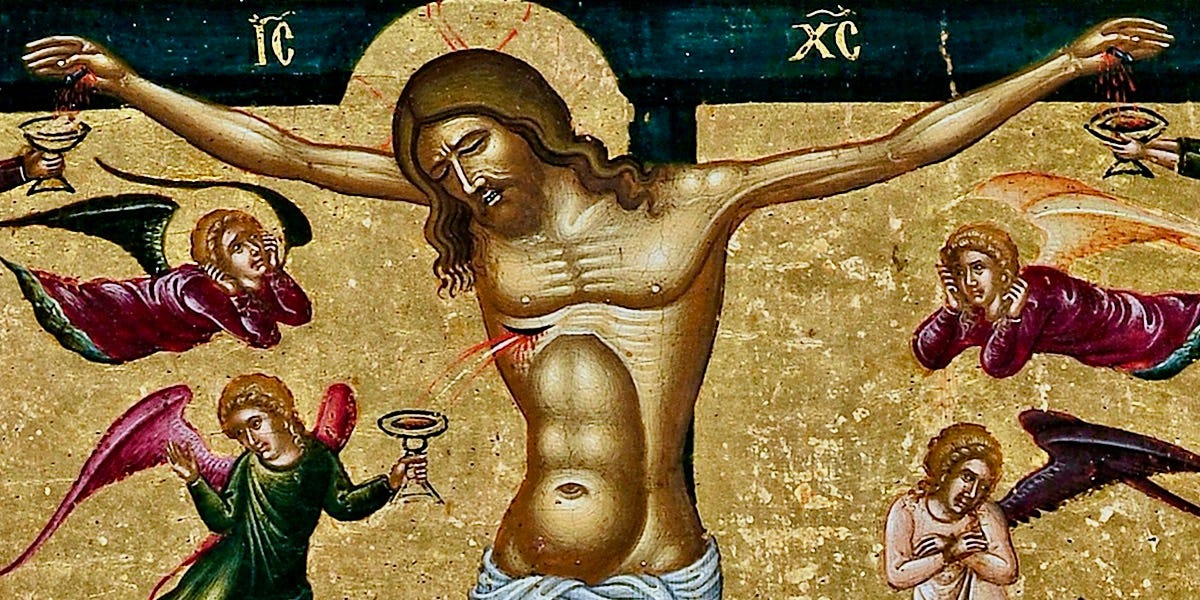
The paradoxical way in which the Jews place themselves under Christ in the passion narrative is illustrated in the gospel of John as well. I have written about this in a previous article, so I will reproduce here a few sections from it as they fit neatly here.
Jesus’s connection with His people and their simultaneous rejection of Him is I think at the heart of the mystery of St. John’s gospel, as laid out in the prologue.
He came to his own home, and his own received him not. (John 1:11)
This connection is then what enables salvation to come from the Jews [John 4:22].
We see this play out in Caiphas’s prophecy about Jesus’s death.
Many of the Jews therefore, who had come with Mary and had seen what he did, believed in him; but some of them went to the Pharisees and told them what Jesus had done. So the chief priests and the Pharisees gathered the council, and said, “What are we to do? For this man performs many signs. If we let him go on thus, every one will believe in him, and the Romans will come and destroy both our holy place and our nation.” But one of them, Caiaphas, who was high priest that year, said to them, “You know nothing at all; you do not understand that it is expedient for you that one man should die for the people, and that the whole nation should not perish.” He did not say this of his own accord, but being high priest that year he prophesied that Jesus should die for the nation, and not for the nation only, but to gather into one the children of God who are scattered abroad. (John 11:45-52)
We should note here again the positive mention of “the Jews.” Many believe in Him. Nonetheless, the leadership plots to kill Him. The leadership is concerned that His actions will lead to the destruction of the Jewish nation, and so they plot to put Him to death to die for the nation. While these are merely words of Caiaphas, St. John tells us this is a prophecy. Jesus does in fact die to save the Jewish nation, just for the opposite reason that Caiaphas thought. It is precisely that Jesus is their rightful king that He dies for them.
Interestingly, early in the narrative, St. John reminds us of Caiaphas’s prophecy (John 18:14). I think this is intended as a reminder to read everything that follows in the same sort of ironic way we were told to read the words of Caiaphas. This is especially the case in Jesus’s confrontation with Pilate.
Pilate entered the praetorium again and called Jesus, and said to him, “Are you the King of the Jews?” Jesus answered, “Do you say this of your own accord, or did others say it to you about me?” Pilate answered, “Am I a Jew? Your own nation and the chief priests have handed you over to me; what have you done?” Jesus answered, “My kingship is not from this world [ek tou kosmou toutou]; if my kingship were from this world, my servants would fight, that I might not be handed over to the Jews; but my kingship is not from the world.” Pilate said to him, “So you are a king?” Jesus answered, “You say that I am a king. For this I was born, and for this I have come into the world, to bear witness to the truth. Every one who is of the truth hears my voice.” Pilate said to him, “What is truth?” (John 18:33-38)
Unfortunately, this passage is often misunderstood because of bad translations. Jesus never said “my kingdom is not of this world”; He said “my kingdom is not from this world.” This whole discussion is alluding back to the prologue of John. Jesus is not from this world. He is the eternal Logos of God. Thus, the basis of His authority is His divinity. He has no need for earthly armies. Nonetheless, He is also (with respect to His human nature) a member of the Jewish people, even if they reject Him.
Nonetheless, one could come away from this passage thinking that Jesus has denied that He is king of the Jews. However, we should remember the note about Caiaphas. Rather than revealing theological truths directly, Jesus allows other people to providentially speak truths for Him. The Jews simply want to kill Jesus so that He will die for the nation. But Pilate goes further; he tells the Jews the implication: by doing this, you are making Him your king.
[Pilate] said to the Jews, “Here is your King!” They cried out, “Away with him, away with him, crucify him!” Pilate said to them, “Shall I crucify your King?” The chief priests answered, “We have no king but Caesar.” Then he handed him over to them to be crucified…
Pilate also wrote a title and put it on the cross; it read, “Jesus of Nazareth, the King of the Jews.” Many of the Jews read this title, for the place where Jesus was crucified was near the city; and it was written in Hebrew, in Latin, and in Greek. The chief priests of the Jews then said to Pilate, “Do not write, ‘The King of the Jews,’ but, ‘This man said, I am King of the Jews.’” Pilate answered, “What I have written I have written.” (John 19:14-16, 19-22)
Some people read this last statement of Pilate as a dismissal that Jesus is really king of the Jews. However, Pilate is really doing the same thing as Caiaphas. He has made Jesus king of the Jews. When the Jews realize this, they try to stop Pilate, but it is too late. What he has written, he has written. In crucifying Him, Jesus has died for their nation and become their king.
The title is written in Hebrew, Latin, and Greek, signifying Jesus’s universal kingship. Nonetheless, He is king over the whole world precisely through being the king of the Jews and the king of Israel.
Some people will perhaps concede that up to the crucifixion, Jesus identifies Himself with the Jewish people, but after such a grave crime, this ceases to be. However, we see that Joseph of Arimathea and Nicodemus come to burry Him. This is notable, because they represent a part the Jewish leadership. Not all of them have rejected Him. Furthermore, the description of the burial continues the identification of Jesus with the Jews.
They took the body of Jesus, and bound it in linen cloths with the spices, as is the burial custom of the Jews. Now in the place where he was crucified there was a garden, and in the garden a new tomb where no one had ever been laid. So because of the Jewish day of Preparation, as the tomb was close at hand, they laid Jesus there. (John 19:40-42)
Thus, the passion narrative ends with a reminder that even though He was just crucified by them, Jesus still remains a faithful member of the Jewish people.
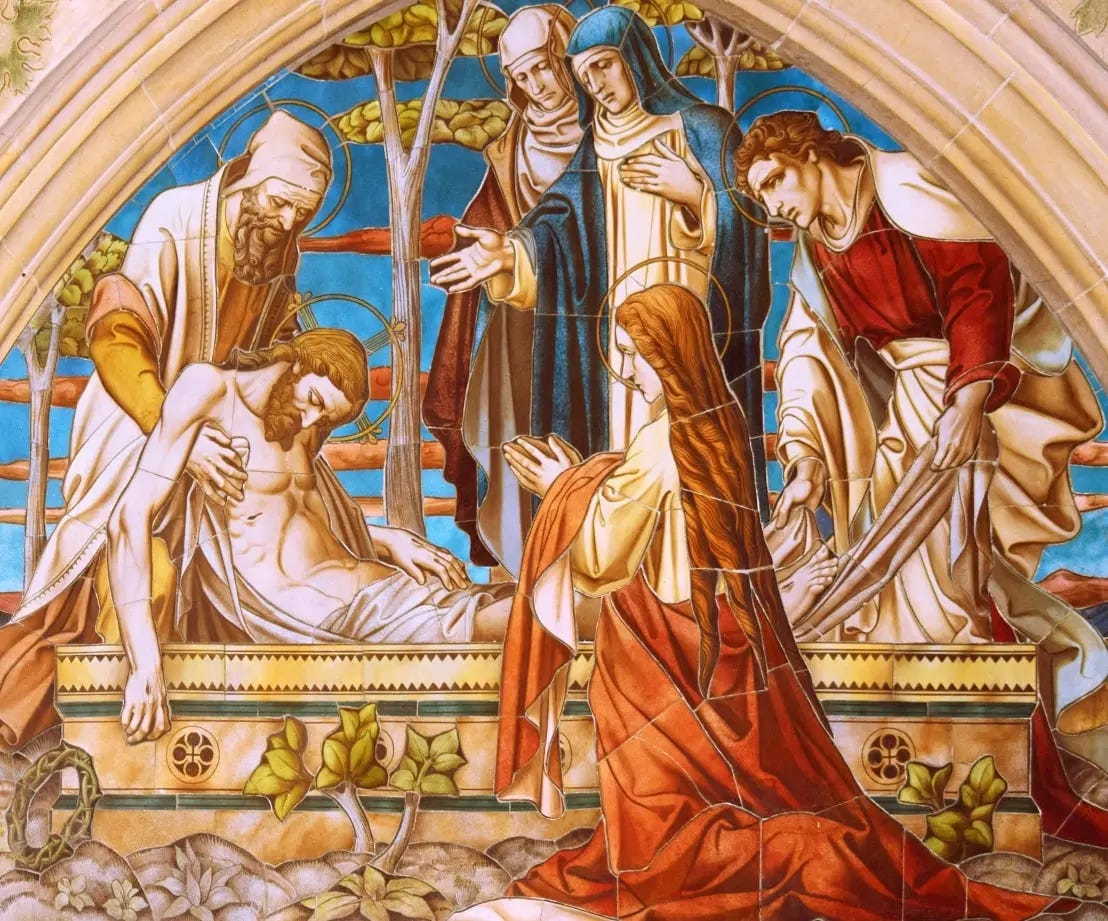
Jesus’s death on Good Friday is not the end of the story. He rests in the tomb on Holy Saturday, and then rises again on Easter Sunday. This was prophesied quite clearly by the prophet Hosea:
Come, let us return to the Lord; for he has torn, that he may heal us; he has stricken, and he will bind us up. After two days he will revive us; on the third day he will raise us up, that we may live before him. (Hos 6:1-2)
Yet, in his original context, Hosea was speaking of the nation of Israel. The gospel of Matthew takes Hosea’s statements about the nation of Israel to apply to the person of Jesus (Hos 11:1; Matt 2:15). Yet St. Augustine also takes some prophecies about Israel in Hosea to refer to the future conversion of the Jews. Thus, it seems to me this prophecy can still be taken as about Israel. Israel was united in Christ’s death, and so too will they eventually be united in his resurrection: “For if their rejection means the reconciliation of the world, what will their acceptance mean but life from the dead?” (Rom 11:15)
Of course this resurrection will involve them entering the New Covenant to be clear. I do not mean to say here that Jews can be saved through Judaism. But the nation itself will be saved, as this is universally taught by the Fathers. In the time in between, they remain resting in the tomb of Holy Saturday. The Jewish nation continues to serve as a witness to the Old Covenant, and thereby to Christ, as taught by St. Augustine and all the Doctors following him. But one day they will move from Holy Saturday to Easter Sunday. The true Israel, Jesus Christ, will recapitulate his life in the race from which he came.
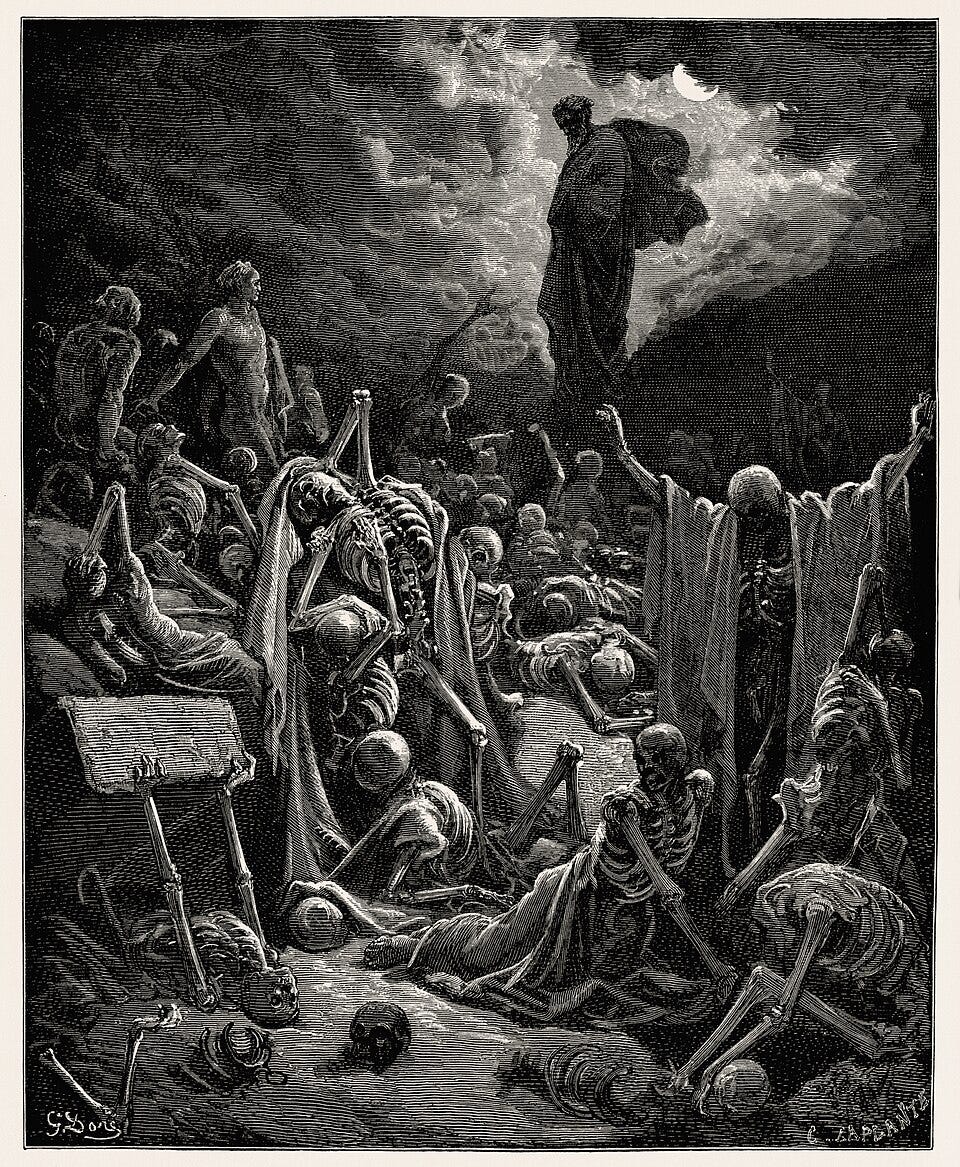
This sets the background for the prayers about the Jews on Good Friday. After reading the passion narrative in John, the Church prays for all people. When it prays for unbelievers though, it distinguishes the Jews from unbelievers. The prayer traditionally went:
Let us pray also for the faithless [perfidis] Jews: that almighty God may remove the veil from their hearts; so that they too may acknowledge Jesus Christ our Lord.
Almighty and eternal God, who dost not exclude from thy mercy even Jewish faithlessness [perfidia]: hear our prayers, which we offer for the blindness of that people; that acknowledging the light of thy Truth, which is Christ, they may be delivered from their darkness. Through the same our Lord Jesus Christ, who liveth and reigneth with thee in the unity of the Holy Spirit, God, for ever and ever. Amen.
This prayer has been accused of being antisemitic, but it should not be taken this way. Rather, this prayer acknowledges the unique calling of the Jews. Unlike the other nations of the world, their nation was given a special covenant. However, it is a covenant they are in violation of by not accepting the messiah who was sent to them. Thus, they are not merely infidus, unbelieving in the sense they never had the faith, but perfidus, against the faith they once had. That is, the covenant was never revoked, and that includes its curses.
This prayer has since been reformed a few times due to misunderstandings. In its current form, it reads:
Let us pray also for the Jewish people, to whom the Lord our God spoke first, that he may grant them to advance in love of his name and in faithfulness to his covenant.
Almighty ever-living God, who bestowed your promises on Abraham and his descendants, graciously hear the prayers of your Church, that the people you first made your own may attain the fullness of redemption. Through Christ our Lord. Amen.
Some have read this as denying a call for the Jews to convert. However, these readings have been disproven by Zachary Young. Young shows that there are numerous prayers for the conversion of the Jews throughout the Liturgy of the Hours. Rather, Young suggests that they present this conversion in terms of the conversion of the whole nation rather than simply individuals Jews coming over. For example, on the first, third, and fifth Sundays of Easter, the Church prays:
Let Israel recognize in you her longed-for Messiah, and the whole earth be filled with the knowledge of your glory.
It is the conversion of the whole nation of Israel for which we long; the passing of the nation from the tomb of Holy Saturday to the light of Easter Sunday.
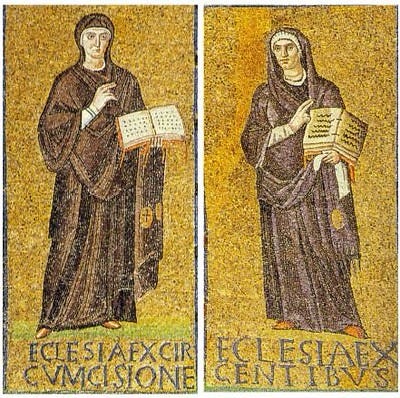
Does this mean the passion narrative is only about the Jews? Certainly not. It is about Christ coming to redeem the whole world. St. Thomas draws attention to the fact that Gentiles were also involved in the death of Christ to show how Christ came to save both Jews and Gentile:
In order to demonstrate the fullness of His love, on account of which He suffered, Christ upon the cross prayed for His persecutors. Therefore, that the fruits of His petition might accrue to Jews and Gentiles, Christ willed to suffer from both. (ST III, q. 47, a. 4, ad 1)
Still, the narrative assigns the key role to the people of Israel for killing the Messiah and God of Israel. However, it is this Israel to which Gentile believers are grafted in! Thus, it is all of us Christians who are involved mystically in the death of Christ through our sins. As the Catechism of the Council of Trent explains:
In this guilt are involved all those who fall frequently into sin; for, as our sins consigned Christ the Lord to the death of the cross, most certainly those who wallow in sin and iniquity crucify to themselves again the Son of God, as far as in them lies, and make a mockery of Him. This guilt seems more enormous in us than in the Jews, since according to the testimony of the same Apostle: “If they had known it, they would never have crucified the Lord of glory;” [1 Cor 2:8] while we, on the contrary, professing to know Him, yet denying Him by our actions, seem in some sort to lay violent hands on him.
Through our sin, we kill Christ, but through our baptism we are also buried with him, and so to do we rise to newness of life in him. Christ takes all the sufferings of Israel upon himself from Israel itself, yet redeems them through his resurrection.
Thus, we all together sing the Improperia on Good Friday, for we are all incorporated into that people whom God brought out of Egypt and then killed him when he came to us.
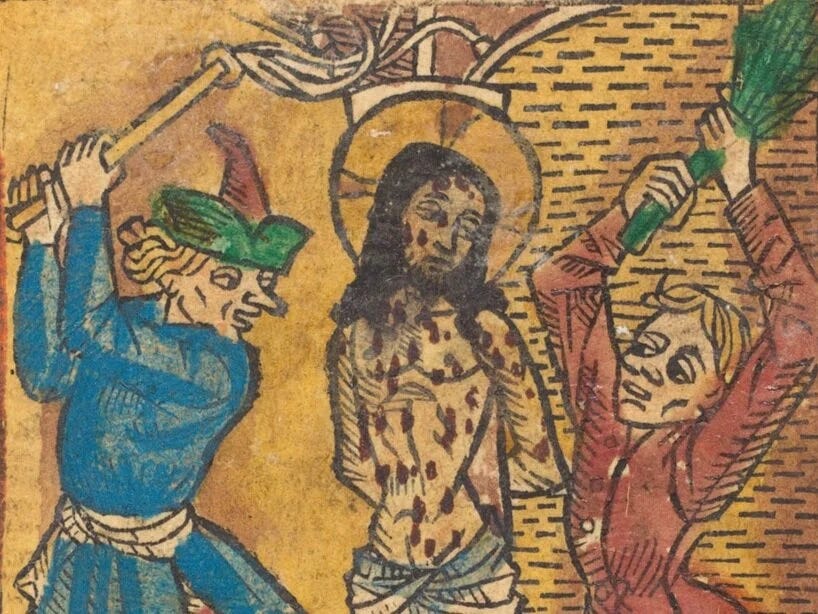
Let us then not use Good Friday as a time for bickering, but for deeper theological reflection into the mystery of Christ’s passion, and to fervently pray for contrition for our sins and for the conversion of the whole world. Let us pray especially for all those suffering from war in the Middle East, and for the conversion of the people of Israel according to the flesh.
Oremus.
Let us pray also for the faithless Jews: that almighty God may remove the veil from their hearts; so that they too may acknowledge Jesus Christ our Lord.
Almighty and eternal God, who dost not exclude from thy mercy even Jewish faithlessness: hear our prayers, which we offer for the blindness of that people; that acknowledging the light of thy Truth, which is Christ, they may be delivered from their darkness. Through the same our Lord Jesus Christ, who liveth and reigneth with thee in the unity of the Holy Spirit, God, for ever and ever. Amen.


A very helpful synopsis. Thank you, Gideon!
St. Augustine, Sermon on the Monday After Easter (Sermon 229F):
"Many of those who said, 'His blood be upon us and upon our children,' later on came to believe the apostles bringing them the good news of the resurrection. His blood was indeed upon them, but it was to wash them, not to destroy them; well, upon some to destroy them, upon others to cleanse them; upon those to be destroyed, in justice; upon those to be cleansed, in mercy."