Advertisement
Advertisement

Commentary

Commentary: What Viktor Orban’s election loss in Hungary means for Putin, Trump and right-wing populism

The outcome of Hungary's election will be felt widely, from Moscow to Washington and beyond, says a defence expert.

Commentary: What Viktor Orban’s election loss in Hungary means for Putin, Trump and right-wing populism

Hungarian Prime Minister Viktor Orban reacts onstage as people applaud after the announcement of the partial results of parliamentary election in Budapest, Hungary, April 12, 2026. REUTERS/Bernadett Szabo

14 Apr 2026 05:59AM
Read a summary of this article on FAST.
FAST

CANBERRA: Hungary’s most consequential election in decades has just delivered an important victory for democracy and accountability.

For Hungarians, opposition leader Peter Magyar’s emphatic defeat of Prime Minister Viktor Orban and his ruling Fidesz Party ends 16 years of corruption and quasi-authoritarianism. The outcome will also be felt widely, from Moscow to Washington and beyond.

In a contest characterised as a referendum on whether Hungary should pivot west or continue its authoritarian drift, Magyar’s victory is a stern rebuke to the dark, transnational forces of nativism, division and the politics of resentment that have become part of mainstream political discourse.

Perhaps the most surprising thing about the election was not the turnout (more than 74 per cent, shattering previous records), or even the result (a two-thirds supermajority for Magyar’s Tisza party, winning at least 138 of 199 parliamentary seats). Both had been predicted for some time, and Orban’s soft authoritarianism had always left the door ajar for a possible opposition victory at the polls. 

Rather, the biggest surprise might have been Orban’s immediate concession. 

He didn’t try to manufacture a crisis or use his security services to hold onto power. Given the strength of anti-government sentiment in Hungary, such a move could have led to a “colour revolution” – the type of massive street protests seen previously in Ukraine, Georgia and other countries.

This could have turned bloody. Liberal Hungarians, and the European Union (EU) more broadly, will be heaving a collective sigh of relief.

WHY ORBAN WAS SUDDENLY VULNERABLE

Having won office, Magyar will need to move quickly but also carefully to bring change, so as not to alienate too many former Fidesz voters. He has already asked President Tamas Sulyok to resign, along with other Orban loyalists. 

The Tisza supermajority in parliament is important here. It will be required for constitutional amendments to dismantle the architecture of Orban’s authoritarian state.

Peter Magyar, leader of the opposition Tisza party, waves the Hungarian flag following the announcement of the partial results of the parliamentary election, in Budapest, Hungary, Apr 12, 2026. (Photo: AP/Denes Erdos)

Fortunately, this will be easier in Hungary than fully fledged autocratic systems. Indeed, Orban’s longevity can somewhat be attributed to the fact that his brand of authoritarianism was only partial.

Certainly, it had the structural elements of an autocracy. That included widespread, government-controlled gerrymandering to ensure Fidesz victories, and the cynical diversion of state funds to cities and provinces controlled by Orban’s political allies. In addition, the nationalised media ecosystem was heavily supportive of the government, although alternative voices kept debate alive via foreign-owned news organisations.

But Orban’s success also came from facing weak and easily fragmented or co-opted oppositions. Magyar – a former Orban ally – ran a disciplined campaign that nullified the electoral advantage for Fidesz.

Ultimately, though, when voters have a choice – even a constrained one – they will eventually reject governments that rely on blame and victimhood to mask their inability to offer people a better future.

Under Orban, Hungary was consistently ranked the most corrupt nation in Europe. In 2025, it ranked last in the EU on relative household wealth. It had also suffered rampant inflation and economic stagnation after Russia’s invasion of Ukraine in 2022. Video footage of country estates built by Hungary’s elites, complete with zebras roaming the grounds, perfectly symbolised the popular outrage with wealth inequality.

A SETBACK FOR PUTIN, TRUMP AND RIGHT-WING POPULISM

Hungary’s new start also sends a powerful message to other nations. Clearly the biggest loser from the election is Vladimir Putin’s Russia, which had hastily tapped Kremlin powerbroker Sergey Kiriyenko and a team of “political technologists” to assist Orban.

Under Orban, Hungary was the strongest pro-Kremlin voice in the EU. It regularly stymied aid packages for Ukraine, tied up decision-making on the war in bureaucratic processes, and held the European Commission to ransom by threatening hold-out votes.

In fact, just days before the election, Bloomberg published a transcript of a phone call between Orban and Putin from October 2025, in which Orban compared himself to a mouse helping free the caged Russian lion.

This came on the back of revelations that Orban’s foreign minister, Peter Szijjarto, and other Hungarian officials had regularly been leaking confidential EU discussions to Moscow.

U.S. Vice President JD Vance and Hungarian Prime Minister Viktor Orban, left, shake hands during a Day of Friendship event in Budapest, Hungary Tuesday, April 7, 2026. (Jonathan Ernst/Pool Photo via AP)

Another loser from the Hungarian election is United States President Donald Trump.

The pre-election Budapest visit by US Vice President JD Vance to shore up support for Orban was breathtakingly hypocritical. Vance farcically demanded an end to foreign election meddling, while engaging in precisely that. The White House then doubled down, with Trump promising on Truth Social to aid Orban with the “full Economic Might of the United States”.

Now, though, Trump is very publicly on the losing side. And like the debacle of his Iran war, he tends to chafe at losing.

The election also shows that US foreign interference campaigns are not invulnerable, though the White House will doubtless continue excoriating Europe. The Trump administration’s view that Europe is heading for “civilisational erasure”, necessitating US efforts to “cultivate resistance” and “help Europe correct its current trajectory” is documented in its 2025 National Security Strategy.

But the broader movements representing what Russian journalist Mikhail Zygar calls the “Putinisation of global politics” have been repudiated by Hungary’s election result. 

Under Orban, Hungary was a hub for ultraconservative voices. Think tanks like the MAGA-boosting US Heritage Foundation and Hungary’s Danube Institute regularly held prominent dialogues bemoaning Europe’s capitulation to wokeism.

The Hungarian iteration of the Conservative Political Action Conference (CPAC), sponsored by the American Conservative Union, was a key calendar for Western right-wing politicians and commentators, including former Australian Prime Minister Tony Abbott, Reform UK leader Nigel Farage, and former Fox News host Tucker Carlson.

China will also be keenly watching Magyar’s new government, especially since it has viewed Hungary as a soft entry point to the EU. The large-scale investment in electric vehicle manufacturing, especially battery production, are part of a growing Chinese business footprint in the country.

For Beijing, the question will be whether Magyar seeks to sacrifice this lucrative investment to burnish his European credentials. 

WHAT ABOUT THE WINNERS?

In addition to Hungarians outside Orban’s orbit of elites, the EU will welcome the news that it remains an attractive force.

Ukraine, too, may find it easier to secure European assistance. At the very least, smaller Ukraine detractors like Slovakia will have to choose between acquiescing quietly or thrusting themselves uncomfortably into the open.

Yet, although Hungary’s result is promising, the world is still trending towards illiberalism.

And with the US midterm elections fast approaching, far-right American politicians, including Trump himself, will be studying Hungary’s lessons closely. If they conclude that Orban’s brand of authoritarianism was too soft, a more hardline path looms as an ominous alternative.

Matthew Sussex is Adjunct Associate Professor at the Griffith Asia Institute and Fellow at the Strategic and Defence Studies Centre, Australian National University. This commentary first appeared on The Conversation.

Source: Others/sk

Sign up for our newsletters

Get our pick of top stories and thought-provoking articles in your inbox

Subscribe here
Inbox
FAST
Advertisement

World

Peak oil price likely to come 'in next few weeks', US Energy secretary says

US President Donald Trump previously said that the price of oil and gasoline may remain high until November's midterm elections.

Peak oil price likely to come 'in next few weeks', US Energy secretary says

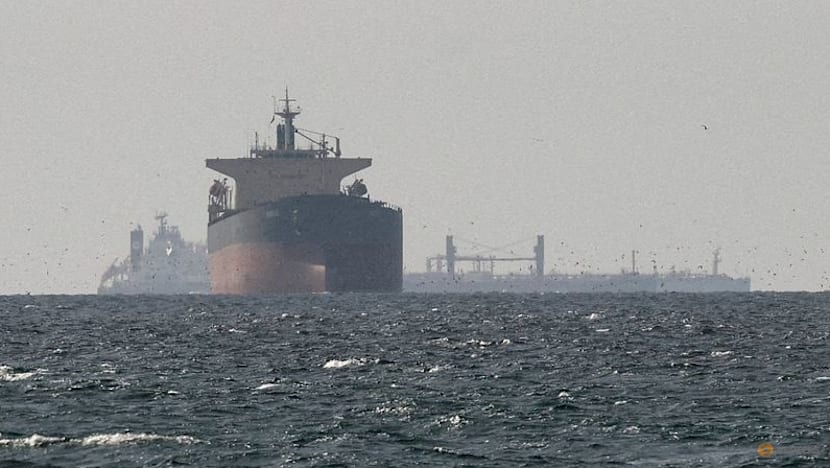
A vessel in the Strait of Hormuz, off the coast of Oman’s Musandam province on Apr 12, 2026. (File photo: Reuters)

14 Apr 2026 07:06AM (Updated: 14 Apr 2026 07:19AM)
Read a summary of this article on FAST.
FAST

WASHINGTON: Oil prices are likely to hit their peak "in the next few weeks" once ship traffic resumes through the Strait of Hormuz, United States Department of Energy Secretary Chris Wright said on Monday (Apr 13).

Prices are expected to continue rising until "meaningful" ship traffic resumes through the strait, Wright told the Semafor World Economy Forum in Washington, despite previous comments he made that oil prices would likely come down soon.

"We're going to see energy prices high - and maybe even rising - until we get meaningful ship traffic through the Strait of Hormuz," Wright said. "That'll probably hit the peak oil price at that time. That's probably sometime in the next few weeks."

US President Donald Trump said on Sunday that the price of oil and gasoline may remain high until November's midterm elections, a rare admission of the potential political fallout from his decision to attack Iran six weeks ago.

CNA Games
Show More
Show Less

Since the war started on Feb 28, Iran has largely blocked the Strait of Hormuz for all ships but its own. Tehran has been seeking to make its control of the waterway permanent and possibly collect levies from ships that use it.

In response, the US military has initiated a blockade of the Strait, saying it would extend east to the Gulf of Oman and Arabian Sea after weekend talks to end the conflict collapsed.

Ship-tracking data showed two ships turned around in the strait as the blockade went into effect.

Wright also gave an update on oil production in Venezuela, after the US captured President Nicolas Maduro on Jan 3, and its interim government led a sweeping reform of the country's main oil law that was approved later that month, encouraging foreign investment.

He said 150 million barrels of Venezuelan oil had been sold since Jan 3 and that production has ramped up by 25 per cent.

Wright had teased that Chevron would be making an announcement that it would ramp up its production in Venezuela.

The oil major signed two agreements on Monday, including an asset swap adding an extra heavy crude area to its main project while returning an offshore gas and a crude area, executives and officials said at a separate event.

Source: Reuters/dc

Sign up for our newsletters

Get our pick of top stories and thought-provoking articles in your inbox

Subscribe here
Inbox
FAST
Advertisement

Commentary

Commentary: What is death literacy and why it matters long before the end

In a society that values preparedness and responsibility, death literacy deserves a place alongside financial and health literacy, say Singapore Hospice Council’s Sim Bee Hia and Dr Norhisham bin Main.

Commentary: What is death literacy and why it matters long before the end
In a society that values preparedness and responsibility, death literacy deserves a place alongside financial and health literacy, say two writers (Photo: iStock/kieferpix)
New: You can now listen to articles.

This audio is generated by an AI tool.

14 Apr 2026 06:00AM
Read a summary of this article on FAST.
FAST

SINGAPORE: Since Apr 1, the Lasting Power of Attorney (LPA) Form 1 applications have been made permanently free for all Singapore citizens.

In a nutshell, the LPA is a legal document that allows individuals to appoint someone they trust to take charge of matters such as personal welfare and property if they lose the mental capacity to do so.

Form 1 – one of two ways to draw up an LPA – grants those appointed with general powers. Doing away with the S$70 application fee for this form, as announced on Mar 5, is aimed at encouraging people to be more active in their legacy planning.

But what does having an LPA mean and why is it important to plan early for one’s end-of-life scenarios?

CNA Games
Show More
Show Less

WHAT IS DEATH LITERACY

This is where the concept of death literacy comes in.

Death literacy refers to our ability to understand, talk and navigate issues surrounding dying, death and caregiving. It includes knowledge about end-of-life options, care plans and legal tools like the LPA, as well as emotional and social skills to have meaningful conversations about mortality.

Unfortunately, Singaporeans are sorely lacking in this aspect, going by the findings of the first Death Literacy Index conducted by the Singapore Hospice Council. For example, only 38 per cent knew how to access end-of-life resources and support within the community.

Less than one in three (31.9 per cent) was aware of how to navigate the healthcare system to support a dying person, and only one in four (26.4 per cent) was familiar with regulations involved when death occurs at home.

In many ways, death literacy is as important as financial or health literacy.

We accept the need to plan financially because as Singaporeans, we are practical and we know uncertainty, be it illness, ageing or loss of income, lies ahead. Death is even more certain, yet we often procrastinate or leave preparations to chance. When conversations are avoided, the cost is borne not by the individual alone, but by those left behind.

THE NEED FOR END-OF-LIFE CONVERSATIONS

Understandably, death is a difficult topic for a variety of reasons, such as cultural norms about filial piety. The mindset that "I don't need this yet" is another prevalent factor, but avoiding the topic does not make death less real. It only makes the moment of reckoning harder.

Mr Y was an active 73-year-old until what began as flu-like symptoms worsened rapidly. He passed away two days after being rushed to the hospital. In those final hours, shrouded in shock, disbelief and grief, his family faced difficult decisions but was unsure of what to do or what Mr Y would have wanted.

Situations like these take place more often than imagined in hospital wards across Singapore. When hard conversations are left until a diagnosis or crisis, decisions about treatment or caregiving roles are often made under emotional duress.

In Mr Y’s case, there was a deep reluctance to talk about death and dying at home.

Because Mr Y’s wishes were never clearly expressed, his wife and children had to decide on the ceremonial rites, the photograph for the hearse, where to place his ashes, who to inform on his behalf without knowing if they were right. What they are left with is not just uncertainty, but also a lingering sense of guilt and wondering if they had truly honoured his wishes.

ROLE OF LEGACY PLANNING TOOLS

In instances when mental capacity is lost, tools such as the LPA can help reduce uncertainty and conflict.

Mr S was the main caregiver for his father who had dementia. As the elderly’s condition worsened, the lack of an LPA led to disagreements over care decisions – and eventually a serious fallout – between Mr S and his older brother.

Without a clear decision-maker, the conflict led to their father being placed in a nursing home. Tragically, Mr S did not get to see his father one last time before he passed. The fallout between the brothers has been lasting and the relationship may never fully heal.

It is worth noting that the value in legacy planning tools lies in the conversations they prompt about shared values, care preferences and family dynamics, not in speed or merely box-ticking. Without these conversations, an LPA would be rushed and hollow. It may even further create false reassurance and leave families unprepared for emotional complexity.

Legal tools work best only when they are supported by honest, ongoing discussions about values, fears and priorities.

Broaching these conversations can be unnerving, but it all begins with a shift in mindset - recognising that planning for one’s end-of-life is not morbid, but an act of care for loved ones. 

It can be normalised in everyday life by using simple entry points: relevant storylines in movies or television, sharing thoughts and preferences when attending a wake, or talking about experiences of loved ones who have passed on during festivals.

By seizing these opportunities, families and communities can speak openly about mortality, making it a natural and responsible part of life rather than a taboo subject.

MORE TO BE DONE

Meanwhile, the government can do more to make the LPA application process even easier.

Individuals who are ready to proceed with the creation of an LPA rely on their doctors to guide them, but not all doctors are certificate issuers which may be an obstacle for patients, especially those with mobility limitations.

In this case, there are organisations with community clinics that conduct sessions to help with the completion of life planning instruments. They facilitate the completion onsite in the clinic or even home visits for some.

To further improve access, one practical step is to empower and accredit more certificate issuers, including all medical doctors and community leaders. In addition, digital tools can be expanded to make planning more accessible, with appropriate safeguards in place to ensure security and proper assessment.

Coupled with clearer, step-by-step public education, this can help encourage more people to take that first step.

Think about it this way – if financial literacy helps a family prepare for economic uncertainty, death literacy helps families make informed choices and prepare for life’s end with dignity, clarity and mutual support. In a society that values preparedness and responsibility, death literacy deserves a place too.

Sim Bee Hia is the Executive Director of Singapore Hospice Council. Dr Norhisham bin Main is a palliative care consultant and board member of Singapore Hospice Council.

Source: CNA/sk

Sign up for our newsletters

Get our pick of top stories and thought-provoking articles in your inbox

Subscribe here
Inbox
Advertisement

World

Hezbollah leader asks Lebanon to cancel Tuesday meeting with Israel

“We reject negotiations with the usurping Israeli entity,” said Hezbollah leader Naim Qassem as he called for Lebanon to cancel its meeting with Israel in Washington.

Hezbollah leader asks Lebanon to cancel Tuesday meeting with Israel

Lebanon's Hezbollah chief Naim Qassem gives a televised speech from an unknown location in this still image obtained from a video released Dec 5, 2025. (Photo: REUTERS/Al Manar TV)

14 Apr 2026 05:26AM (Updated: 14 Apr 2026 05:27AM)
Read a summary of this article on FAST.
FAST

BEIRUT: Hezbollah leader Naim Qassem on Monday (Apr 3) urged Lebanon to cancel a planned meeting with Israel in Washington the following day, reiterating his group's rejection of direct negotiations with its foe.

"We reject negotiations with the usurping Israeli entity ... We call for a historic and heroic stance by cancelling this negotiating meeting," Qassem, whose Iran-backed group has been at war with Israel since March 2, said in a televised address.

The Lebanese and Israeli ambassadors to the United States are scheduled to meet in Washington on Tuesday to discuss holding direct negotiations between the two countries.

Lebanese authorities have stressed that Beirut first wants to secure a ceasefire in the Israel-Hezbollah war, but Israel has dismissed that prospect, saying it prefers instead to focus on formal peace talks with Lebanon itself, with which it has technically been at war for decades. 

Israeli Prime Minister Benjamin Netanyahu said Saturday that "we want the dismantling of Hezbollah's weapons, and we want a real peace agreement that will last for generations".

Qassem, however, said "these negotiations are futile and require a Lebanese agreement and consensus".

Hundreds of Hezbollah supporters protested on Friday and Saturday against the planned talks, accusing Lebanese Prime Minister Nawaf Salam of being a "zionist".

Israeli strikes have killed more than 2,000 people in Lebanon and displaced more than a million since Hezbollah drew the country into the Middle East war.

"We will not surrender, we will remain in the field until our last breath," Qassem said as his fighters faced off with advancing Israeli troops seeking to create a "security zone" in southern Lebanon.

The Israeli army on Monday said its troops had completely surrounded the key southern town of Bint Jbeil, while Hezbollah continued to claim attacks against Israeli forces there.

Qassem said northern Israeli localities "will not be safe, even if the Israelis were to enter any area of Lebanon".

He also accused Beirut of "backstabbing" his group by declaring its military activities illegal at the start of the war.

"Israel and the US clearly said they want to strengthen the Lebanese army to disarm and fight Hezbollah... but the army cannot do that," Qassem added.

Source: AFP/fs

Sign up for our newsletters

Get our pick of top stories and thought-provoking articles in your inbox

Subscribe here
Inbox
Advertisement

World

Judge tosses Trump defamation suit against Wall Street Journal

A US judge said Donald Trump had not “plausibly alleged that defendants published the article with actual malice,” but allowed him to refile the case.

Judge tosses Trump defamation suit against Wall Street Journal

US President Donald Trump walks from Marine One after arriving on the South Lawn of the White House, Tuesday, Jul 15, 2025, in Washington. (Photo: AP/Alex Brandon)

14 Apr 2026 04:25AM
Read a summary of this article on FAST.
FAST

MIAMI: A US federal judge on Monday (Apr 13) tossed out a US$10 billion defamation lawsuit filed by US President Donald Trump against The Wall Street Journal.

Trump sued media magnate Rupert Murdoch and the Journal in July after it published a report about a birthday letter he allegedly sent to one-time close friend Jeffrey Epstein.

District Judge Darrin Gayles, in a 17-page ruling, said Trump had failed to prove the Murdoch-owned newspaper had knowingly published false statements, the legal standard to prove defamation.

"Because President Trump has not plausibly alleged that defendants published the article with actual malice, both Counts must be dismissed," Gayles wrote.

The judge, who was appointed by former president Barack Obama, gave Trump the opportunity to amend his complaint and refile the suit by April 27.

A spokesman for Trump's legal team said the suit would be resubmitted.

"President Trump will follow Judge Gayles's ruling and guidance to refile this powerhouse lawsuit against the Wall Street Journal and all of the other Defendants," the spokesman said in a statement.

"The President will continue to hold accountable those who traffic in Fake News to mislead the American People."

Trump has intensified his long-established hostility toward the media since his return to the White House, and the suit against the Journal is one of numerous attacks against news organisations he accuses of bias against him.

Trump's attacks on media outlets have seen him restrict access, badmouth journalists critical of his administration, and bring lawsuits demanding huge amounts of compensation.

According to the Journal, Trump wrote a "bawdy" birthday letter to Epstein in 2003 to mark his 50th birthday, part of an album of messages from rich and well-known figures.

Trump's alleged missive included a hand-drawn illustration of a naked woman and referred to their shared "secret."

Trump has said he broke off his friendship with Epstein prior to the wealthy financier's 2008 guilty plea in Florida to solicitation of prostitution with a minor.

Epstein was found dead in a New York prison cell in 2019 as he awaited trial on sex trafficking charges. His death was ruled a suicide but like much else around Epstein is the subject of lurid conspiracy theories.

The Epstein case has repeatedly overshadowed Trump's second presidency and led to the downfall of a number of powerful figures around the world who were associated with Epstein.

The US Justice Department has over the past year released huge tranches of files related to Epstein. Trump, 79, figures prominently in the files but has not been formally accused of wrongdoing.

Source: AFP/fs

Sign up for our newsletters

Get our pick of top stories and thought-provoking articles in your inbox

Subscribe here
Inbox
Advertisement

World

Italy rallies round pope as Trump attack tests ties with Meloni

Italian leaders backed Pope Leo after Donald Trump called him “terrible,” creating tension for Italian Prime Minister Giorgia Meloni, who has close ties with the US president.

Italy rallies round pope as Trump attack tests ties with Meloni

A combination picture shows Pope Leo XIV addressing Algeria's political leaders at the cultural centre of the Great Mosque of Algiers in Mohamadia, Algiers, Algeria, Apr 13, 2026. (Photo: REUTERS/Guglielmo Mangiapane)

14 Apr 2026 03:35AM (Updated: 14 Apr 2026 03:37AM)
Read a summary of this article on FAST.
FAST

ROME: Italian political and church figures rallied behind Pope Leo on Monday (Apr 13) after Donald Trump attacked the pontiff, leaving Prime Minister Giorgia Meloni to balance Italy's close ties to the Vatican and her own alliance with the US president.

Trump set off the furore by calling Leo "terrible", drawing a rare, direct response from the pope, who said he had "no fear" of the US administration and would continue speaking out against the US-led war on Iran and in defence of migrants.

Meloni, who has cultivated close relations with Trump in recent years, issued a statement backing Leo as he flew off on an ambitious four-nation visit to Africa, but made no direct mention of the US president's broadside.

"May the Holy Father's ministry help foster the resolution of conflicts and the return of peace, both within nations and among them," she said, making clear her support for the pope without openly criticising the US president.

CNA Games
Show More
Show Less
US President Donald Trump and Italian Prime Minister Giorgia Meloni shake hands as they pose for a photo, at a world leaders' summit on ending the Gaza war, in Sharm el-Sheikh, Egypt, Oct 13, 2025. (Photo: REUTERS/Suzanne Plunkett)

THE DANGER OF GOING AFTER POPES

The omission was leapt on by political opponents, who sense that Meloni's closeness to Trump is becoming an electoral handicap in a country where 66 per cent of people have a negative view of the US leader, tied to his aggressive foreign policy.

"As a Catholic, I am outraged by a prime minister who invokes Christian values but cannot find the strength and courage to condemn Trump's unacceptable blasphemy against the pope and the Catholic world," said Angelo Bonelli, a prominent figure in the left-wing AVS party, who referenced a later post by Trump showing an AI-generated image of himself as Jesus.

However, Deputy Prime Minister Matteo Salvini, who has also in the past associated himself with Trump, was more explicit in his criticism of the US leader, highlighting how Europe's far-right is trying to draw back from the MAGA orbit.

"Pope Leo is a spiritual leader for billions of Catholics, but beyond that, if there is one person striving for peace, it is Pope Leo, and so attacking him does not seem either wise or helpful," he said in a statement.

The pope is the bishop of Rome and spiritual leader to millions of Italian Catholics, making politicians of all stripes extremely wary about taking him on.

"It has been centuries since such a blatant act of aggression against the Roman Pontiff was seen," said former centre-left Prime Minister Matteo Renzi, adding that it was vital for Catholics and non-believers alike to defend Leo.

"He is, after all, a 'builder of bridges,' unlike Trump, a destroyer of relationships and of civilisation. The only advantage is this: Trumps come and go, popes remain," he said.

The comment echoed an Italian saying "chi mangia papa crepa" which roughly means, "whoever tries to devour the pope dies" - a proverb born of centuries of tension between successive papacies and temporal rulers.

"Trump has made the mistake of the century, because 'chi mangia papa crepa' has been borne out repeatedly," said church historian Alberto Melloni, pointing to Italy's royal family, the House of Savoy, which clashed repeatedly with the Vatican only to be swept away while the papacy lived on.

Antonio Spadaro, a Roman Catholic priest and undersecretary of the Vatican's Dicastery for Culture and Education, said Trump's attack revealed his own weakness.

"If Leo were irrelevant, he would not merit any comment. Instead, he is invoked, named, opposed - a sign that his words matter," Spadaro wrote on X. "This is where the Church's moral force emerges. Not as a counter-power, but as a space in which power is judged by a standard it does not control."

Source: Reuters/fs

Sign up for our newsletters

Get our pick of top stories and thought-provoking articles in your inbox

Subscribe here
Inbox
Advertisement

World

Trump deletes Jesus post of himself after outcry

The US president deleted an AI-generated image of himself depicted as Jesus, which he claimed showed him as a doctor, a day after posting it on Truth Social following mounting backlash from religious leaders.

Trump deletes Jesus post of himself after outcry

US President Donald Trump waves to reporters as he walks on the South Lawn upon his arrival at the White House, Sunday, Apr 12, 2026, in Washington. (Photo: AP/Jose Luis Magana)

14 Apr 2026 02:41AM
Read a summary of this article on FAST.
FAST

WASHINGTON: US President Donald Trump on Monday (Apr 13) deleted a social media image apparently depicting him as Jesus after an outcry from religious leaders that he was being blasphemous.

The image posted on Trump's Truth Social platform showed him in flowing red and white robes, touching the forehead of what appeared to be a sick man and with light shining from his hand and head.

An American flag waved in the background while various figures gazed up at the president in reverence.

The AI picture was posted late Sunday and removed Monday.

CNA Games
Show More
Show Less

Asked about the post, Trump denied that he was trying to look like Jesus Christ.

"I did post it, and I thought it was me as a doctor and had to do Red Cross," he told journalists. "It's supposed to be me as a doctor, making people better. And I do make people better. I make people a lot better."

A post on US President Donald Trump's Truth Social account depicts an AI-generated image of himself apparently as Jesus posted on Apr 12, 2026.  (Photo: REUTERS/@realDonaldTrump/Truth Social)

The post generated an outcry from several prominent conservative Christians who are among Trump's biggest backers.

"I don’t know if the President thought he was being funny or if he is under the influence of some substance or what possible explanation he could have for this OUTRAGEOUS blasphemy," Megan Basham, a conservative journalist and commentator wrote on X.

"He needs to take this down immediately and ask for forgiveness from the American people and then from God."

Trump has previously used religious images in his posts. During his 2023 bank fraud trial, he shared a sketch from a supporter that showed him sitting next to Jesus in the courtroom.

His advisors have repeatedly cast him in a Jesus-like role.

During an Easter lunch event at the White House earlier this month, Paula White-Cain, a televangelist who has served as his spiritual advisor, likened Trump to Jesus.

"You were betrayed and arrested and falsely accused. It's a familiar pattern that our Lord and Saviour showed us."

Source: AFP/fs

Sign up for our newsletters

Get our pick of top stories and thought-provoking articles in your inbox

Subscribe here
Inbox
Advertisement

World

Iran war has some US water utilities facing a fluoride shortage

The US is facing a fluoride shortage due to a drop in supplies from Israel as workers are called into military service during the Middle East conflict.

Iran war has some US water utilities facing a fluoride shortage

A student drinks from a water fountain inside Cuyama Elementary School, Sep 20, 2023, in New Cuyama, Calif. (Photo: AP/Marcio Jose Sanchez)

14 Apr 2026 01:07AM (Updated: 14 Apr 2026 01:08AM)
Read a summary of this article on FAST.
FAST

It's not just gas prices: Some US water utilities are reporting the Middle East war is disrupting their ability to maintain recommended fluoride levels in the drinking water.

Over the past few weeks, a few water utilities have said their supply had been disrupted, according to the Association of Metropolitan Water Agencies. Fluoride is used in water systems as a public health measure to prevent tooth decay.

Here's what to know.

WHAT'S DRIVING THE FLUORIDE SHORTAGE?

Israel is one of the world’s top exporters of fluorosilicic acid, according to the US Environmental Protection Agency. EPA data also shows the US is among the world’s top five importers of the product.

At least one Israeli supplier has been facing workforce challenges because many employees have been called into active military service, said Dan Hartnett, chief policy officer for the Association of Metropolitan Water Agencies.

“That has led to decreased production, and supply shortages for the US market," he said.

Not every water system is affected 

The number of water utilities affected so far is small, but the shortage is affecting hundreds of thousands of people. As the conflict continues, "there will likely be additional stressors placed on the supply chain, leading to shortages in additional communities,” Hartnett said.

The country's eighth largest water and wastewater utility, WSSC Water in Maryland, is among those facing a shortage. On April 7, utility officials said they were lowering the level of fluoride in the water to 0.4 milligrammes per litre, down from the recommended 0.7 milligrammes per litre.

Chuck Brown, spokesperson for the utility serving 1.9 million customers, said officials did not know how long the shortage would last, "but we feel confident that we’ll be able to stretch that out for a couple more months.”

In Pennsylvania, the borough of Lititz told its water customers it had to halt fluoridation for a couple weeks last month because of supply issues.

WHAT DENTISTS SAY YOU SHOULD DO

Water utilities add fluoride voluntarily to improve communities' oral health, so lower levels have no effect on drinking water safety.

A few months' drop in fluoride levels is probably not a cause for concern for most people, said Dr. Scott Tomar, an American Dental Association community water fluoridation expert.

Research from places that stopped fluoridating their water - Calgary, Canada; Juneau, Alaska; and Israel - has found that lower levels can have an impact over the span of years.

“Based on the best available information we have, below about 0.5 milligrammes per litre, you’re probably not going to see effective preventive exposure,” he said.

Tomar said younger children would be the first to experience tooth decay, because the fluoride strengthens enamel as their teeth are developing and once they've grown in.

He recommends people in shortage areas brush twice a day with a fluoride toothpaste and keep up with their routine dental appointments. If people are concerned they aren't getting enough fluoride, they should talk to their dentist before taking a fluoride supplement or other treatment.

WHAT ELSE SHOULD I KNOW ABOUT FLUORIDE IN THE WATER?

Research shows water fluoridation is beneficial even when it is also available through toothpaste and other means. Nearly two-thirds of the US population gets fluoridated drinking water, according to CDC data.

The addition of low levels of fluoride to drinking water was long considered one of the greatest public health achievements of the last century. The American Dental Association credits it with reducing tooth decay by more than 25 per centin children and adults.

However, misinformation about fluoride's safety has proliferated. Last year, Utah became the first state to ban public water fluoridation. And Health Secretary Robert F. Kennedy Jr. has repeatedly sown doubt about its safety and restricted the use of fluoride for dental health.

“The levels we use in the United States is perfectly safe," Tomar said. "Despite a lot of the misinformation, there are no adverse health effects associated with the levels we use in our drinking water.”

Source: AP/fs

Sign up for our newsletters

Get our pick of top stories and thought-provoking articles in your inbox

Subscribe here
Inbox
Advertisement

Also worth reading

Advertisement