Books Reviewed
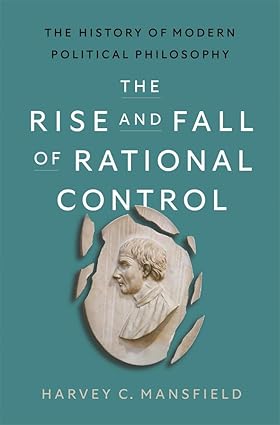
When I first met Harvey Mansfield in the fall of 1977, he was not yet famous for being that rarest of beasts—a conservative professor at Harvard. He was just beginning to separate himself from the leftish academic mainstream as he prepared to publish The Spirit of Liberalism (1978), a collection of essays defending the classical liberalism of John Locke and Thomas Jefferson against the rising tide of the New Left. He certainly did not spare his colleague John Rawls. I arrived at Harvard as a graduate student invested in the study of Rawls’s celebrated Theory of Justice (1971). I barely knew who Mansfield was. But in an essay whimsically titled “Cucumber Liberalism” (as in “cool as a cucumber”), Mansfield lampooned Rawls’s bland pseudo-neutrality. In an observation that proved all too prescient, Mansfield pointed out that liberals complacently position themselves as “guardians of the least advantaged,” without accounting for “the fact that when the least advantaged rule, they are no longer least advantaged.”
This was the beginning of Mansfield’s rightward turn, and of my own. By November 1980, when he and I shared the news of Ronald Reagan’s election in Harvard Yard, he took no pains to disguise his delight. At that point I had laid aside my Rawlsian studies and become a philosophical conservative in Mansfield’s classroom,