Ice hockey
 International Ice Hockey Federation
About ice hockey
A lightning-fast, intensely competitive team sport, ice hockey is one of the events that draws huge crowds to Olympic arenas. Here’s everything you need to know about ice hockey at Milano Cortina 2026!
Spotlight: Stories

Sidney Crosby back from Olympics injury with goal and assist


“We’re just getting started”: Jayna Hefford on the future of women’s ice hockey – exclusive

Exclusive - Kristin Della Rovere on Italy’s historic ice hockey run

Auston Matthews receives standing ovation upon return to Toronto NHL ice after Olympic gold

Olympic women’s ice hockey 2026: Key stats and figures – complete list of Milano Cortina Winter Games statistics














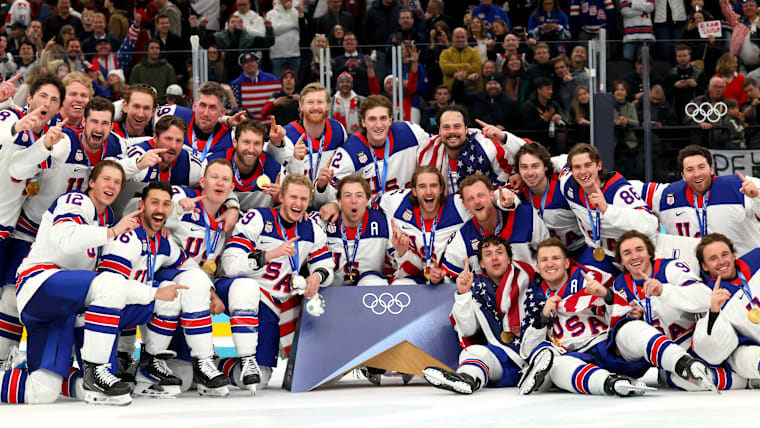

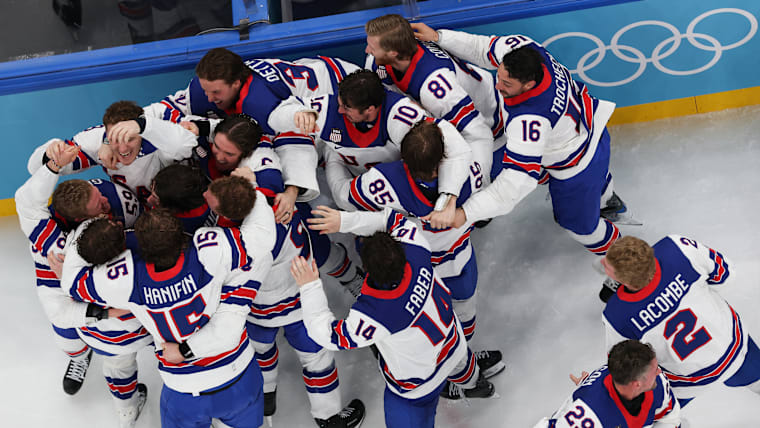
Olympic Moments
Check out the schedule and results
Find out when your favorite event started and your favorite athletes competed

Watch the Sport Explainer
Ice Hockey | Sport Explainers | Olympic Winter Games Milano Cortina 2026
Step into each and every sport with confidence at the Olympic Winter Games Milano Cortina 2026.
Origins
Ice hockey originated in Canada in the early 19th century, although the word 'hockey' derives from an old French word, “hocquet”, meaning “stick”. Around 1860, the ball (initially used in the sport) was replaced by a disk, and in 1879, two students from McGill University set down the first rules for the new game.
The first recognized team, the McGill University Hockey Club, was founded in 1880 when ice hockey became Canada's national sport and spread throughout the country. In 1892, the Canadian Governor General established the Stanley Cup, which was first won by a team representing the Montreal Amateur Athletic Association.
In the 1890s, the sport expanded south of the Canadian border to the United States, with the first documented game in 1895 between Johns Hopkins and Yale universities. Ice hockey arrived in Europe shortly after, and the sport made its Olympic debut at the Summer Games in Antwerp in 1920.
Olympic history
Men's ice hockey has featured at the Winter Olympics since the 1924 Games in Chamonix, while women's ice hockey made its official debut in 1998 in Nagano. Given the history of the sport, it is no surprise that Canada dominated the early tournaments. However, in 1956 and until its break-up, the Soviet Union became the team to beat, with its supremacy interrupted by the USA in 1960 at Squaw Valley and in 1980 at Lake Placid, with the latter famously known as “The Miracle on Ice.” Since the mid-1990s, Sweden and the Czech Republic have joined the club of Olympic champions, while Canada has triumphed in three of the last six editions of the Olympics.
The women's tournament has been a battle between Canada and the United States, with each NOC claiming seven medals at the Games. However, Canada has finished top of the podium five times to the USA’'s two and are the defending Olympic champions following their victory at Beijing 2022.
Basic rules
An ice hockey game normally lasts 60 minutes, divided into three periods of 20 minutes each. The game is won by the team that scores the most goals.
There are normally no ties in ice hockey. If the score is still tied at the end of a game, an overtime period is played, which ends immediately with a goal by one of the two teams. If neither team has scored at the end of overtime, the game is decided by a shootout. However, in the case of the gold medal game, ties after regulation are resolved with marathon-style sudden-death overtime, with the ice resurfaced between 20-minute overtime periods. This format, introduced in 2019, continues indefinitely until one team scores, guaranteeing that the game is won on the ice rather than in a shootout.
Men's ice hockey teams have a maximum of 25 players: 22 skaters and three goaltenders. Women's teams consist of 23 players, three of whom are goaltenders. During the game, a maximum of six team members can be on the ice at one time. This typically consists of five skaters and one goaltender, but the goaltender can be replaced by a sixth skater in special situations.



Milano
Milan is Italy's gateway to Europe and the world; a city where the energy and excitement of a global metropolis merge with the Italian lifestyle on a human scale.