Advertisement
Advertisement

World

What we know about the two-week truce between the US and Iran

Pakistan's prime minister said the ceasefire would start immediately, and his country would host American and Iranian delegates for talks due to begin on Friday (Apr 10).

What we know about the two-week truce between the US and Iran
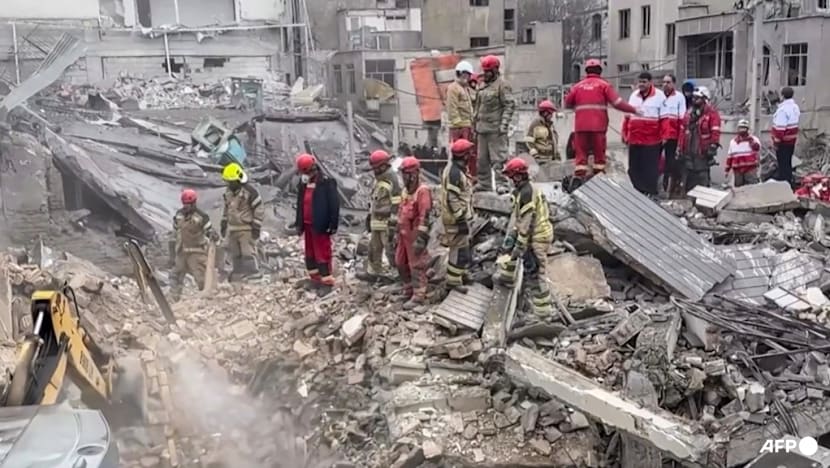
Demonstrators protest against military action in Iran after US President Donald Trump said that he had agreed to a two-week ceasefire with Iran, less than two hours before his deadline for Tehran to reopen the Strait of Hormuz or facesee more
08 Apr 2026 04:06PM
Read a summary of this article on FAST.
FAST

WASHINGTON: The United States and Iran agreed on Tuesday (Apr 7) to a two-week ceasefire in an 11th-hour bid to avert all-out destruction threatened by US President Donald Trump.

Pakistan, which served as a key intermediary between the two countries, said the truce would lead to talks in its capital.

Here's what we know about the ceasefire between the US and Iran, who remain poles apart in their positions on ending the war.

What has the US said about the truce?

Trump told AFP the ceasefire deal was a "total and complete victory" for Washington.

The US will suspend attacks on Iran for two weeks, and Tehran will in turn temporarily reopen the Strait of Hormuz, a vital global oil thoroughfare, according to Washington.

Tehran agreed to the "complete, immediate, and safe opening of the Strait of Hormuz", Trump said in a Truth Social post.

He also told AFP that Iran's enriched uranium would be "perfectly taken care of" under the two-week truce.

He has justified the war by accusing Tehran of enriching uranium with the aim of building an atomic weapon, an assertion not backed by the United Nations nuclear watchdog and which Iran has denied.

The US, in a previous plan to end hostilities that Tehran did not agree to, demanded Iran stop further enrichment, agree to limits on its missile programme and cease support for militant groups in the region.

Those requirements have not been detailed in the latest truce.

Trump has been inconsistent in his conditions for ending fighting, regularly backtracking from hardline demands.

Last month, the US leader said Iran's "unconditional surrender" would be the only acceptable outcome to end the war.

What is Iran saying?

Iranian Foreign Minister Abbas Araghchi confirmed that Tehran would allow safe passage through the Strait of Hormuz for two weeks. One-fifth of the world's oil passes through the key waterway.

The Islamic Republic has proposed a 10-point plan for securing an end to the war, which Trump said was "workable".

While the plan could form the basis of potential negotiations later this week, it includes several sticking points which Washington has previously said were unfeasible.

The plan would require "continued Iranian control over the Strait of Hormuz, acceptance of enrichment, lifting of all primary and secondary sanctions", according to a statement released by Iran.

While the uranium enrichment demand was not included in Tehran's English-language statement shared by the UN, it was part of the Farsi release circulated by Iranian state media.

Other demands include: US military withdrawal from the Middle East, an end to attacks on Iran and its allies, the release of frozen Iranian assets and a UN Security Council resolution making the deal binding.

What has Israel agreed to?

Israel said it supported Trump's decision to suspend his bombing of Iran, but maintained the ceasefire "does not include Lebanon".

Israel has been battling Iran-backed Hezbollah since the group launched rocket fire at Israel in March.

Israel's subsequent retaliation has led to more than 1,500 deaths, according to Lebanese authorities.

The comments contradicted an earlier statement from Pakistan's Prime Minister Shehbaz Sharif that said the deal covered "everywhere, including Lebanon".

How was the deal brokered?

Pakistan was the key mediator between the US and Iran, tapping into its ties with both sides to secure the temporary ceasefire. 

"Pakistan has strong credentials as the only country in the region enjoying good relations with the US and Iran," said the country's former ambassador to Tehran, Asif Durrani.

The country shares a 900km border in its southwest with Iran, as well as deep historical, cultural and religious links. It also represents some Iranian diplomatic interests in Washington, where Tehran has no embassy.

On the US side, Pakistan's powerful army chief, Field Marshal Asim Munir, has built up a personal rapport with Trump.

Munir - in a Western business suit rather than army fatigues - visited Washington with Sharif last year after a flare-up in hostilities between Pakistan and India in divided Kashmir.

Sharif praised Trump's "bold and visionary" intervention, while Munir said the US leader deserved the Nobel Peace Prize for stopping an escalation between the nuclear-armed neighbours.

On Iran, Trump said Pakistan knows the country "better than most".

Islamabad also shares close ties with Beijing, which, Trump told AFP, helped get Iran across the line to the negotiating table.

Pakistan's Foreign Minister Ishaq Dar hosted a meeting with counterparts from Saudi Arabia, Turkey and Egypt last month for discussions on de-escalating the conflict and then flew to Beijing for further talks.

China, which is Iran's largest trading partner, then joined its longstanding South Asian ally in calling for a plan to end the fighting engulfing the Middle East, saying it supported "Pakistan playing a unique and important role in easing the situation".

What next? 

Sharif said the ceasefire would start immediately, and the capital Islamabad would host delegates from both countries for talks due to begin on Friday.

The talks would be aimed at reaching a "conclusive agreement", he said.

Iran said it would allocate two weeks for the negotiations.

"Iran will feel more comfortable in Islamabad, which is why it accepted Pakistan's mediation," said Durrani, the former ambassador, adding Pakistan could help the two sides resolve outstanding differences.

If talks were direct, "then Pakistan may help the parties to fine-tune the language if there is a stalemate", he said, adding that Pakistani officials could also act as the go-between if the two sides would not meet face-to-face.

The White House was considering talks in Pakistan, but plans were not finalised, Press Secretary Karoline Leavitt said.

Analysts cautioned that the situation remains fragile. 

Dr Jessica Genaur, academic director of the Public Policy Institute at the University of New South Wales, said a fully satisfactory agreement for both sides remained unlikely given the wide gap in positions.

"There's still a lot of US troops in the region," she pointed out. 

"So it still remains to be seen whether President Trump will at some stage decide that he does want to go for some kind of escalation in terms of boots on the ground."

Oil plunged on Wednesday after the announcement that the Strait of Hormuz would reopen under the truce, with global oil and gas supplies squeezed since Iran effectively closed the passage.

Unblocking the strait could provide temporary relief to countries that rely on oil imports.

Source: Agencies/rl(gs)

Sign up for our newsletters

Get our pick of top stories and thought-provoking articles in your inbox

Subscribe here
Inbox
FAST
Advertisement

World

Israel backs US-Iran temporary ceasefire

Israel insists that the two-week ceasefire agreement between US and Iran "does not include Lebanon".

Israel backs US-Iran temporary ceasefire

A crow perches on an Israeli flag near an empty beach along the Tel Aviv coastline on Apr 7, 2026. (Photo: AFP/Ahmad Gharabli)

08 Apr 2026 01:32PM (Updated: 08 Apr 2026 04:27PM)
Read a summary of this article on FAST.
FAST

JERUSALEM: Israel said on Wednesday (Apr 8) it supported US President Donald Trump's decision to suspend his bombing of Iran, but maintained the 11th-hour ceasefire did not include Lebanon.

Washington and Tehran agreed to a two-week ceasefire on Tuesday, barely an hour before Trump's deadline to obliterate Iran was set to expire.

Tehran said it would guarantee safe passage for maritime traffic through the Strait of Hormuz for two weeks, announcing that the pause would be used for talks with the United States on ending the war. Negotiations were set to start Friday in Pakistan.

"Israel supports President Trump's decision to suspend strikes against Iran for two weeks subject to Iran immediately opening the straits and stopping all attacks on the US, Israel and countries in the region," the office of Prime Minister Benjamin Netanyahu said in a statement.

Israel added that it "supports the US effort to ensure that Iran no longer poses a nuclear, missile and terror threat".

An Iranian cluster munition missile explodes in the sky over northern Israel on Apr 8, 2026. (Photo: AP/Ariel Schalit)

But the statement said that the ceasefire "does not include Lebanon", contradicting an earlier announcement by Pakistan's Prime Minister Shehbaz Sharif, who has acted as a mediator in the conflict.

Sharif said that the United States and its allies had agreed to a ceasefire "everywhere including Lebanon", suggesting Israel had agreed to halt its invasion of its northern neighbour.

Lebanon was drawn into the war after Iran-backed group Hezbollah launched rocket fire on Israel.

That attack sparked an Israeli invasion and air raids across Lebanon that have killed more than 1,500 people, according to authorities.

Israel had encouraged Trump to join the war against Iran, its arch-nemesis, and in the first strikes in February killed the long-serving supreme leader, Ayatollah Ali Khamenei.

Source: AFP/ec

Sign up for our newsletters

Get our pick of top stories and thought-provoking articles in your inbox

Subscribe here
Inbox
FAST
Advertisement

World

Iran deal a 'total and complete victory' for US: Trump

US President Donald Trump would not say whether he would go back to his original threats to lay waste to Iran's civilian power plants and bridges if the deal fell apart.

Iran deal a 'total and complete victory' for US: Trump

US President Donald Trump pauses as he finishes speaking during a televised address on the conflict in the Middle East from the Cross Hall of the White House in Washington, DC on Apr 1, 2026. (File photo: AFP/Alex Brandon)

08 Apr 2026 11:30AM (Updated: 08 Apr 2026 04:25PM)
Read a summary of this article on FAST.
FAST

WASHINGTON: President Donald Trump told AFP on Tuesday (Apr 7) that the United States had won a "total and complete victory" after agreeing to a two-week ceasefire deal with Iran.

In a telephone call, Trump said he believed China had persuaded Iran to negotiate, and said Tehran's enriched uranium would be "perfectly taken care of".

The US leader appeared bullish on the truce with Iran, despite Tehran also casting it as a win for its side, and amid questions over exactly what both sides had agreed on.

The two sides agreed on the ceasefire barely an hour before Trump's deadline to obliterate the Islamic Republic was set to expire.

CNA Games
Show More
Show Less

"Total and complete victory. 100 per cent. No question about it," Trump told AFP in the brief call when asked if he was claiming victory with the ceasefire.

With uncertainty over arrangements for the reopening of the Strait of Hormuz to oil traffic in particular, Trump insisted there was a strong framework for a longer-term deal.

"We have a 15-point transaction, of which most of those things have been agreed on. We'll see what happens. We'll see if it gets there," Trump said.

The Republican president had said in his earlier announcement on his Truth Social network that Iran had given a 10-point proposal, which was "workable".

Hussein Banai, associate professor of international studies at Indiana University, said Tehran’s willingness to allow ships to go through the vital waterway was a “crucial opening” for the ceasefire. 

“I think the Iranians agreeing, in a two-week period, to allow for shipments of oil to go through is the thing that Trump wanted to hear to really sign off on this deal,” he told CNA’s Asia First. 

“The fact that Iran was under such severe bombardment and it could face perhaps a really catastrophic situation forced them to offer that little bit of a sweetener.” 

Trump would not say whether he would go back to his original threats to lay waste to Iran's civilian power plants and bridges if the deal fell apart.

"You're going to have to see," Trump told AFP.

URANIUM "TAKEN CARE OF"

The fate of Iran's store of enriched uranium is another key question, after a war that the US president said was partially aimed at ensuring Iran could never get a nuclear weapon.

But Trump insisted that the nuclear material would be covered by any peace deal.

"That will be perfectly taken care of, or I wouldn't have settled," Trump said, without giving any specifics about what would happen to the uranium.

The ceasefire deal came after more than a month of destructive attacks by the US and Israel, and followed mediation by Pakistan.

Trump said that he believed China had played a role in getting Iran to the negotiating table.

"I hear yes," Trump said when asked if Beijing was involved in getting key ally Tehran to negotiate on a truce.

The US president is due to travel to Beijing in mid-May to meet Chinese counterpart Xi Jinping, in a crucial summit between the two superpowers.

The trip was originally scheduled for early April but Trump postponed it, saying he had to stay in Washington to oversee the Iran war.

Beijing is a close partner of Tehran and the main buyer of Iranian oil, most of which passes through the strait.

But it also has strong economic ties to the Gulf countries and has repeatedly criticised attacks on them by Iran.

Source: AFP/dc

Sign up for our newsletters

Get our pick of top stories and thought-provoking articles in your inbox

Subscribe here
Inbox
Advertisement

Asia

Pakistan PM Shehbaz Sharif says US-Iran ceasefire covers 'everywhere' including Lebanon

However, Israel later contradicted the Pakistan prime minister's statement, saying that the ceasefire "does not include Lebanon".

Pakistan PM Shehbaz Sharif says US-Iran ceasefire covers 'everywhere' including Lebanon

First responders gather at the site of an Israeli airstrike that targeted a vehicle in Saida, Lebanon on Apr 8, 2026. (Photo: AFP/Mahmoud Zayyat)

08 Apr 2026 09:25AM (Updated: 08 Apr 2026 11:57AM)
Read a summary of this article on FAST.
FAST

ISLAMABAD: Pakistan's Prime Minister Shehbaz Sharif said on Wednesday (Apr 8) that the United States, Iran and their allies had agreed to a ceasefire "everywhere", including Lebanon, following mediation by his government to stop weeks of fighting.

"I am pleased to announce that the Islamic Republic of Iran and the United States of America, along with their allies, have agreed to an immediate ceasefire everywhere including Lebanon and elsewhere, EFFECTIVE IMMEDIATELY," Sharif posted on X.

He added that Pakistan's capital Islamabad would welcome delegations from both countries on Friday to hold negotiations aimed at reaching a "conclusive agreement".

"We earnestly hope, that the 'Islamabad Talks' succeed in achieving sustainable peace and wish to share more good news in coming days," he said.

CNA Games
Show More
Show Less

Both Tehran and Washington announced they had agreed to a two-week ceasefire barely an hour before US President Donald Trump's deadline to "obliterate" Iran was set to expire.

Pakistan, which has forged a close relationship with Trump and is sensitive to developments in neighbouring Iran, emerged as a channel for messaging between Tehran and Washington in recent weeks.

However, contradicting Sharif's statement, Israel said the US-Iran ceasefire deal "does not include Lebanon", which was drawn into the war after Iran-backed group Hezbollah launched attacks on Israel.

"The two-weeks ceasefire does not include Lebanon," the office of Prime Minister Benjamin Netanyahu said in a statement.

The war began when Israel and the US launched strikes on Iran that killed its supreme leader on Feb 28, sparking retaliatory strikes from Tehran on Gulf nations and Israel.

Lebanon has also been drawn into the conflict after Iran-backed group Hezbollah launched attacks on Israel, which has since carried out strikes, including on the capital, and launched a ground operation in the south of the country.

Source: AFP/dc

Sign up for our newsletters

Get our pick of top stories and thought-provoking articles in your inbox

Subscribe here
Inbox
Advertisement

World

Acting US attorney general defends probes of Trump foes

Todd Blanche dismissed allegations that the Justice Department was being "weaponised" against US President Donald Trump's enemies.

Acting US attorney general defends probes of Trump foes

US Acting Attorney General Todd Blanche speaks during a news conference about the Trump administration's anti-fraud efforts at the Department of Justice headquarters in Washington, DC, on Apr 7, 2026. (Photo: AFP/Kent Nishimura)

08 Apr 2026 09:20AM (Updated: 08 Apr 2026 09:25AM)
Read a summary of this article on FAST.
FAST

WASHINGTON: Acting US Attorney General Todd Blanche on Tuesday (Apr 7) defended investigations of individuals Donald Trump "has had issues with" and said only the president knows why his predecessor, Pam Bondi, was fired.

"We have thousands of ongoing investigations and prosecutions going on in this country right now," Blanche said at his first press appearance since being named interim head of the Justice Department last week.

"And it is true that some of them involve men, women and entities that the president, in the past, has had issues with and believes should be investigated," he said.

"That is his right, and indeed, it is his duty to do that."

CNA Games
Show More
Show Less

Bondi was fired last week after reportedly drawing Trump's ire by falling short in efforts to prosecute perceived Trump political opponents such as former FBI director James Comey and New York Attorney General Letitia James.

Blanche, Trump's former personal lawyer, said only the president knows why Bondi was dismissed.

"Nobody has any idea why the attorney general is no longer the attorney general and I'm the acting attorney general, except for President Trump," he said.

Blanche dismissed allegations that the Justice Department was being "weaponised" against Trump's enemies and alleged there was "weaponisation" of the department by the Biden administration, "the likes of which had never been seen in history".

"You had a president who was indicted four times by this department," he said in a reference to charges brought against Trump by Special Counsel Jack Smith.

Trump was accused by Smith of seeking to overturn the results of the 2020 election won by Democrat Joe Biden and mishandling classified documents. Both cases were dropped after Trump won the 2024 presidential election.

"What we've been doing for the past 14 months is changing this department," Blanche said. "People say the president wants to go after his political enemies. No, the president has said time and time again that he wants justice."

Blanche also defended the firing of scores of Justice Department prosecutors who had worked on the criminal cases against Trump.

"If you were a prosecutor and you were trying to prosecute your boss, you have ethical duties as a lawyer that I think prevent you from continuing to work in that environment," he said.

A number of career prosecutors fired since Trump took office have filed lawsuits claiming wrongful dismissal.

Source: AFP/dy

Sign up for our newsletters

Get our pick of top stories and thought-provoking articles in your inbox

Subscribe here
Inbox
Advertisement

Business

Gold extends gains as Trump pauses Iran attacks for two weeks

Gold, which started the year on a strong note, has fallen more than 8 per cent since the Iran war began on Feb 28.

Gold extends gains as Trump pauses Iran attacks for two weeks

File photo of gold bars. (Image: iStock)

08 Apr 2026 08:27AM (Updated: 08 Apr 2026 08:36AM)
Read a summary of this article on FAST.
FAST

Gold extended gains on Wednesday (Apr 8) as markets reassessed near-term risks after US President Donald Trump said he had agreed to suspend bombing and attacks on Iran for two weeks, easing fears of energy-driven inflation.

Spot gold climbed 2.3 per cent to US$4,811.66 per ounce by 11.44pm GMT after rising 1.2 per cent on Tuesday, while US gold futures for June delivery gained 3.3 per cent to US$4,840.20.

Trump said Washington had agreed to a two-week pause in attacks and had received a 10-point proposal from Iran, which he described as a workable basis for negotiations.

His comments followed earlier warnings that Tehran must reopen the Strait of Hormuz or risk US retaliation.

"This is a knee-jerk relief rally and it remains to be seen if Iran complies. For gold, the 200 day-moving-average at US$4,930 and then US$5,000 will be key hurdles. Similarly, US$80-US$81 is a important level for silver," independent metals trader Tai Wong said.

Pakistan, which has been mediating between Washington and Tehran, had requested the two-week extension to give diplomacy time to proceed.

Iran's Supreme Security Council said negotiations with the United States would begin on Friday in Islamabad, after it submitted its proposal via Pakistan, though it added that the talks did not signal an end to the war.

Rising energy prices could fuel inflation and complicate central bank decision on rate cuts. While gold is often seen as an inflation hedge and a safe-haven asset during uncertain times, its appeal tends to weaken in a high-interest-rate environment as it offers no yield.

According to research by the Federal Reserve Bank of Dallas, a prolonged disruption to global oil trade could push US inflation above 4 per cent by year-end, with steeper increases possible in the short term.

Gold, which started the year on a strong note, has fallen more than 8 per cent since the Iran war began on Feb 28.

Markets are now awaiting the minutes from the Fed's March meeting, due on Wednesday.

Among other metals, spot silver rose 4.3 per cent to US$76.08 per ounce, platinum gained 2.4 per cent to US$2,004.95 and palladium added 2.1 per cent at US$1,500.

Source: Reuters/dy

Sign up for our newsletters

Get our pick of top stories and thought-provoking articles in your inbox

Subscribe here
Inbox
Advertisement

World

As it happened: US, Israel and Iran agree to a two-week ceasefire

Iran says talks with the US will begin on Friday (Apr 10) in Pakistan's capital Islamabad.

As it happened: US, Israel and Iran agree to a two-week ceasefire

The B1 bridge in Karan, Iran damaged by a strike on Apr 3, 2026. (Photo: Reuters/Majid Asgaripour)

08 Apr 2026 07:29AM (Updated: 08 Apr 2026 01:15PM)
Read a summary of this article on FAST.
FAST

Iran, the United States and Israel reached a tentative, two-week ceasefire on Wednesday (Apr 8) in the war that tore across the Middle East and disrupted the global energy market, with US President Donald Trump pulling back from his threats to destroy Iranian “civilisation.”

But questions have since emerged, with Iran insisting that it would continue to control and charge ships passing through the Strait of Hormuz as well as enrich uranium.

The strait, one of the world's most vital shipping lanes for oil and gas, has effectively been blocked since the war started on Feb 28.

Iran's Supreme Security Council said that negotiations with the US to finalise details of the proposal to end the fighting would begin on Friday in Pakistan's capital Islamabad.

Here's the full recap:

Source: Agencies

Sign up for our newsletters

Get our pick of top stories and thought-provoking articles in your inbox

Subscribe here
Inbox
Advertisement

Also worth reading

Advertisement
Advertisement

World

Crude prices plunge, stocks surge after agreement to reopen Strait of Hormuz

The ceasefire also led to a sharp drop in the dollar, which had become the safe haven while the war raged, with the yen, euro and pound all strengthening.

Crude prices plunge, stocks surge after agreement to reopen Strait of Hormuz

Currency dealers monitor exchange rates as a screen shows South Korea's benchmark stock index (KOSPI) and the Korean won/USD exchange rate in a foreign exchange dealing room at the Hana Bank headquarters in Seoul on Apr 8, 2026. (File photo: AFP/Jung Yeon-je)

08 Apr 2026 07:01AM (Updated: 08 Apr 2026 04:21PM)
Read a summary of this article on FAST.
FAST

HONG KONG: Oil prices plunged below US$100 on Wednesday (Apr 8) while stocks rallied, after the United States and Iran agreed to a two-week ceasefire that will see Tehran temporarily reopen the vital Strait of Hormuz.

With Donald Trump's deadline approaching for the Islamic Republic to reopen the waterway or face obliteration, he announced a halt to attacks for two weeks and said he had received a "workable" 10-point proposal.

Iran later said it had agreed to safe passage in the Strait, through which a fifth of global oil and gas passes.

Market reaction was swift and dramatic, with US crude futures down around 15 per cent to US$96.31 a barrel, while Brent futures also slid 13 per cent to US$94.71 per barrel.

The euphoria sent equities rocketing on hopes that the crisis that has shocked the global economy for more than a month will come to an end.

Seoul jumped more than 6 per cent and Tokyo more than 5 per cent, while Taipei added 4.2 per cent, and Sydney and Hong Kong advanced more than 2 per cent. Shanghai, Mumbai, Bangkok, Manila, Jakarta, Singapore and Wellington were also sharply higher.

Trump had threatened on Tuesday that if Hormuz was not reopened, "a whole civilisation will die tonight, never to be brought back again". That came after he vowed to bomb bridges, power plants and other civilian infrastructure in Iran.

Iran warned it would deprive the US and its allies of oil and gas "for years" if Washington crossed Tehran's "red lines".

However, as the world counted down to the cutoff, the US president took to social media to say: "Subject to the Islamic Republic of Iran agreeing to the COMPLETE, IMMEDIATE, and SAFE OPENING of the Strait of Hormuz, I agree to suspend the bombing and attack of Iran for a period of two weeks."

He added that it "will be a double-sided CEASEFIRE!" and that "we have already met and exceeded all Military objectives, and are very far along with a definitive Agreement concerning Longterm PEACE with Iran, and PEACE in the Middle East".

RELIEF FOR ASIA

Prime Minister Shehbaz Sharif of Pakistan, who has played a key mediator role, said the ceasefire would start immediately.

He said the US "along with their allies" had agreed to a ceasefire everywhere, including Lebanon, implying that Israel had agreed to halt its invasion of its northern neighbour.

However, Tel Aviv said it supported the suspension of the bombing of Iran, but maintained the ceasefire did not include Lebanon.

Iran claimed victory, with the Iranian Supreme National Security Council saying: "The enemy has suffered an undeniable, historic and crushing defeat in its cowardly, illegal and criminal war against the Iranian nation."

The ceasefire also led to a sharp drop in the dollar, which had become the safe haven while the war raged, with the yen, euro and pound all strengthening.

Gold rallied, having been hit by concerns of a sharp rise in inflation that will keep interest rates elevated, while bitcoin rose.

"Unsurprisingly, the initial market reaction has been a positive one, albeit perhaps not as sizeable as one might've expected, largely owing to the grind higher in risk assets seen since the tail end of Tuesday's cash session," said Michael Brown at Pepperstone.

"Participants have been desperate for anything resembling good news for some weeks now, and even more desperate to see concrete steps being taken towards de-escalation.

"Now that we seem able to put a tick in both of those boxes, participants are unsurprisingly willing to significantly take up risk levels once more."

Stephen Innes of SPI Asset Management added that the deal "matters enormously for Asia", where several governments have been forced to introduce measures to combat rising energy costs.

"Lower oil prices remove the chokehold that has weighed on regional risk sentiment, especially in markets that feel imported energy shocks first and hardest," he said.

"With crude backing off, the pressure on inflation expectations and front-end yields eases at the margin, and that is enough to let capital rotate back toward risk, at least for now."

Source: Agencies/dy/dc

Sign up for our newsletters

Get our pick of top stories and thought-provoking articles in your inbox

Subscribe here
Inbox
Advertisement

World

Both sides claim victory after US, Iran agree to 11th-hour truce

Iranian Foreign Minister Abbas Araghchi confirmed safe passage for two weeks for ships through the Strait of Hormuz.

Both sides claim victory after US, Iran agree to 11th-hour truce

Two police officers walk in front of an anti-US billboard depicting American aircraft in the Iranian armed forces fishing net with signs that read in Farsi: "The Strait of Hormuz will remain closed, the entire Persian Gulf is our hunting ground," at the Eqelab-e-Eslami, or Islamic Revolution square in downtown Tehran, Iran, Apr 5, 2026. (File photo: AP/Vahid Salemi)

08 Apr 2026 06:46AM (Updated: 08 Apr 2026 04:19PM)
Read a summary of this article on FAST.
FAST

WASHINGTON: The United States and Iran agreed to a two-week ceasefire barely an hour before President Donald Trump's Wednesday (Apr 8) deadline to obliterate the country was set to expire, triggering global relief alongside apprehension.

Tehran has agreed to temporarily reopen the Strait of Hormuz, through which much of the world's oil, gas and fertiliser passes, easing concerns for the battered global economy.

While the announcement was broadly welcomed internationally, much work remained to prevent a return to fighting, with UN chief Antonio Guterres calling for all parties to "pave the way towards a lasting and comprehensive peace".

Underlining the precarity of the deal, there were explosions on Wednesday morning in Bahrain's Manama, with authorities blaming "Iranian aggression".

Both Tehran and Washington claimed to have won the more than month-long conflict, with Trump telling AFP the deal was a "total and complete victory" for the US.

Iran too cast the ceasefire as a win and said it had agreed to talks with Washington to begin on Friday in Pakistan on a path to end the conflict.

"The enemy has suffered an undeniable, historic and crushing defeat in its cowardly, illegal and criminal war against the Iranian nation," said a statement from the Iranian Supreme National Security Council.

"Iran achieved a great victory."

The White House said Israel had also agreed to the ceasefire, but Prime Minister Benjamin Netanyahu said it does not include Lebanon, where Israeli assaults in response to rocket fire by Iranian-backed Hezbollah have led to more than 1,500 deaths, according to Lebanese authorities.

On Wednesday, the Israeli military pressed on with the war in Lebanon, warning residents of one building near the southern city of Tyre to evacuate, with Lebanese state media reporting renewed strikes.

Israel had encouraged Trump to launch the war against Iran, its arch-foe, and in the first strikes killed Tehran's long-serving supreme leader, Ayatollah Ali Khamenei.

A peace agreement would leave in place the Islamic republic despite US and Israeli hopes of toppling it. The US and Israel said that they attacked Iran to degrade its military capacity.

"SAFE OPENING"

Trump said he had spoken to Pakistan's leaders who "requested that I hold off the destructive force being sent tonight to Iran".

He later told AFP he believed China had helped get Tehran to negotiate.

"Subject to the Islamic Republic of Iran agreeing to the COMPLETE, IMMEDIATE, and SAFE OPENING of the Strait of Hormuz, I agree to suspend the bombing and attack of Iran for a period of two weeks," Trump wrote on his Truth Social platform on Tuesday.

Trump had set a deadline to Iran to open the Strait of Hormuz by 8pm Washington time, or 3.30am in Tehran.

Iranian Foreign Minister Abbas Araghchi confirmed safe passage for two weeks for ships through the Strait of Hormuz, the gateway for one-fifth of the world's oil, which Tehran sealed off in retaliation for the war launched on Feb 28.

"If attacks against Iran are halted, our Powerful Armed Forces will cease their defensive operations," Araghchi said.

Later on Wednesday, Trump posted on social media that the US would "be helping with the traffic buildup in the Strait of Hormuz".

URANIUM TO BE "TAKEN CARE OF"

Oil prices plunged by more than 17 per cent after the ceasefire announcement. while European natural gas dropped 20 per cent. Stock prices also soared in early trade on Wednesday in Asia.

Trump said the US was "very far along" in negotiating a long-term agreement with Iran, which had submitted a 10-point plan that he said was "workable."

But Iran publicly released points that took maximalist positions, including lifting long-standing US sanctions, guaranteeing its own "dominion" over the strait and removing US forces from the region.

Crucially, it also said its plan would require Washington to accept its uranium enrichment programme.

Trump has alleged that Iran was close to building an atomic bomb, an assertion not backed by the UN nuclear watchdog and most observers.

He insisted the nuclear material would be covered by any peace deal.

"That will be perfectly taken care of, or I wouldn't have settled," Trump told AFP, without giving any specifics about what would happen to the uranium.

Trump would not say whether he would go back to his original threats to lay waste to all power plants and bridges across the country of 90 million people if the deal fell apart.

"You're going to have to see," he told AFP.

The US leader had made threats shocking even by his own standards when he warned that "a whole civilisation will die tonight, never to be brought back again. I don't want that to happen, but it probably will".

Listen:

HEAVY STRIKES BEFORE DEADLINE

The US and Israel struck key infrastructure before Trump's deadline, with Netanyahu saying attacks hit railways and bridges allegedly used by the Revolutionary Guards.

Iran has retaliated with weeks of drone and missile attacks on Gulf Arab states, citing their role as hubs for US troops.

The attacks have shattered the monarchies' hard-fought reputation for safety and stability.

On Wednesday, the United Arab Emirates, which bore the brunt of Iran's Gulf attacks, also claimed victory.

"The UAE emerged victorious from a war we sincerely sought to avoid," presidential adviser Anwar Gargash said in a post on X.

Much global reaction, however, focused on the need to turn the ceasefire into a workable peace deal.

Oman, which mediated unsuccessful talks between Washington and Tehran that were halted by the war, spoke of "the importance of intensifying efforts ... to identify solutions capable of resolving the crisis at its roots".

British Prime Minister Keir Starmer announced an immediate visit to the Gulf and declared, "we must do all we can to support and sustain this ceasefire, turn it into a lasting agreement and re-open the Strait of Hormuz".

Source: AFP/dy/dc

Sign up for our newsletters

Get our pick of top stories and thought-provoking articles in your inbox

Subscribe here
Inbox
Advertisement

Commentary

Commentary: China’s muted response to the Iran war speaks volumes

Beijing's national interests have not been severely threatened or damaged by the Iran war, says NTU’s Dylan Loh.

Commentary: China’s muted response to the Iran war speaks volumes

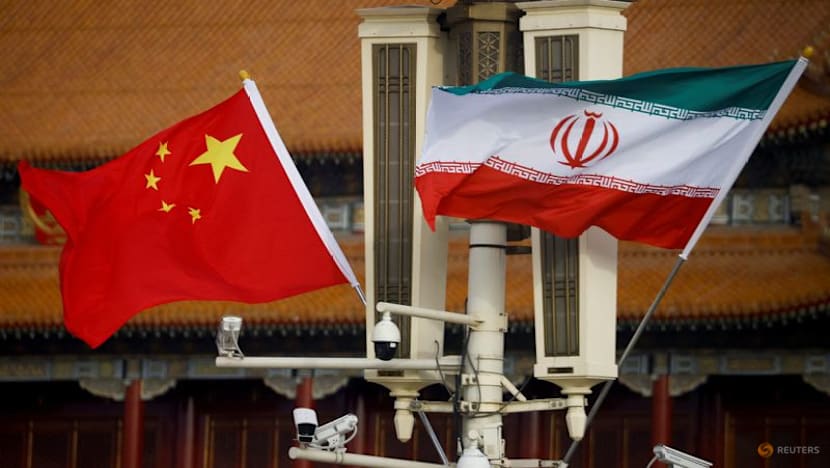
The national flags of China and Iran fly in Tiananmen Square, Beijing, China, Feb 14, 2023. REUTERS/Thomas Peter/File Photo

New: You can now listen to articles.

This audio is generated by an AI tool.

08 Apr 2026 06:00AM (Updated: 08 Apr 2026 09:52AM)
Read a summary of this article on FAST.
FAST

SINGAPORE: Questions have been raised over the role – or lack thereof – that China has adopted in the Iran war.

Indeed, its initial response was conspicuously mild. In the aftermath of the joint US-Israeli strikes on Feb 28, China expressed “grave concern” without rebuking either country. This stands in contrast to the capture of the Venezuelan president by American forces after which Beijing said it was “deeply shocked and strongly condemns” the use of force against a sovereign country.

These are not just semantic differences but reveal a hard-nosed pragmatism and an increasing desire to stabilise ties with Washington.

To be sure, China was by no means absent. Its primary focus was consular assistance as it scrambled to evacuate thousands of Chinese citizens from Iran. At the same time, Beijing also dispatched its special envoy on the Middle East, Zhai Jun, to the region in mid-March to mediate and promote a peaceful resolution.

Nonetheless, the calculus in this crisis is different from its more assertive attempts to broker peace in the Thailand-Cambodia conflict, its endeavours in the Myanmar civil war or its earlier role in the landmark Iran-Saudi Arabia rapprochement.

REASONS FOR CHINA’S MUTED RESPONSE

There are at least two reasons for Beijing’s relative reticence.

First, China’s national interests, while strained, are not severely threatened or damaged. China’s foreign ministry has confirmed that Chinese vessels have safely sailed through the Strait of Hormuz, which remains a critical flashpoint for global energy transit. As Iran’s primary economic patron, China can likely contain direct damage to its oil supplies.

What is more, China spent 2025 stockpiling significant oil reserves. According to energy intelligence firm Vortexa, “China’s onshore crude inventories… [reached] a record 1.13 billion barrels” by late 2025. Estimates suggest these reserves could last the domestic market for six to 12 months.

Additionally, electrification already accounts for 30 per cent of its energy consumption. More significantly, this grid is almost completely decoupled from oil – with coal and renewable energy effectively powering the grid entirely. In short, China’s energy security is not critically threatened in the short to intermediate range even as it is keeping a watchful eye on the ripple effects of rising oil prices.

In fact, Beijing’s anxiety has shifted from the strikes on Iran to Iran’s retaliatory attacks on the Gulf states. In a rare rebuke on Mar 11, China said it “does not agree” with Iran’s attacks on Gulf nations and condemned all strikes on non-military targets. This is unsurprising given Beijing’s lopsided economic stakes, including infrastructure, energy and trade investments in the Middle East region outside Iran that are threatened by ongoing insecurity.

The disparity is stark: According to the US-China Economic and Security Review Commission, in 2025, China’s total trading volume with Saudi Arabia and the United Arab Emirates was around US$108 billion each, while the total trading volume was only around US$10 billion with Iran. In short, China is acting pragmatically, privileging longer-term, higher-stakes interests in the region.

Second, China is prioritising stable Sino-American relations in the short to medium term and this dynamic figures prominently in Beijing’s calculations in the Middle East. In fact, during the annual Foreign Minister’s Press Conference at the tail end of the Two Sessions, Wang Yi did not directly call out President Donald Trump or the US when he commented on the Iranian conflict and stuck to general criticisms against military interventionism and unilateralism.

Instead, he struck a hopeful and measured tone, characterising 2026 as a “big year” for US-China relations, stressing “head-of-state-diplomacy” and noting that it was “heartening to see that the presidents of the two countries have led by example”.

It is also important to point out that China has not reacted negatively to Mr Trump’s postponement of the Trump-Xi meeting in Beijing to May, accepting Washington’s rationale for the deferral. 

As Beijing gears up for the 21st Party Congress – one of its most consequential ever – in 2027, external stability is seen as the key to internal stability.

A "FICKLE FRIEND"?

Nicholas Burns, former US Ambassador to China, argued that China has hurt its global ambitions by failing to offer effective support to Venezuela and Iran, rendering it a “fickle friend”. There may be a degree of truth in this claim, but it overstates the reputational damage and imposes an unrealistic set of expectations that Beijing has never actually sought to meet.

It must be stressed that non-interventionism has been an enduring feature of China’s statecraft. Beijing’s preference for non-military tools – including economic coercion and cooperation, soft power, ideological alignment, grey zone tactics and so forth – have long been a mainstay in Chinese foreign policy. 

China’s reactions also demonstrate to its partners and friends the limits and possibilities of their relationship: Chinese support offers an ideological, diplomatic and economic shield but not a military one. In that connection, this crisis gives us a glimpse into the global role Beijing envisions for itself – one that prioritises economic continuity, multilateralism and non-interference over the high-risk duty of a security guarantor.

Beijing has arguably seized a unique window to advance the moral appeal of this vision, which purports to support institutional multilateralism over American unilateralism. However, a contradiction remains: As long as China maintains its “hard security” restraint, there seems to be a cap on how far China will go to protect its interests abroad and the extent to which its partners can rely on it as a credible security provider.

Already, there is renewed debate within Chinese policy and academic circles if this restraint is serving China’s interests well. Whether or not this will precipitate a harder security turn, however, remains to be seen.

Dylan MH Loh is an Associate Professor at the Public Policy and Global Affairs programme at Nanyang Technological University. He is the author of ‘China’s Rising Foreign Ministry’ (Stanford University Press, 2024).

Source: CNA/el

Sign up for our newsletters

Get our pick of top stories and thought-provoking articles in your inbox

Subscribe here
Inbox
Advertisement

World

French couple head home after more than three years in Iranian jail

"It is a relief for all of us and clearly for their families," said French President Emmanuel Macron.

French couple head home after more than three years in Iranian jail

Posters with the portraits of Cecile Kohler and Jacques Paris, two French citizens held in Iran, in front of the National Assembly in Paris, France, May 7, 2025. The slogan reads "Freedom for Cecile Kohler and Jacques Paris". (Photo: REUTERS/Abdul Saboor)

08 Apr 2026 05:46AM (Updated: 08 Apr 2026 05:47AM)
Read a summary of this article on FAST.
FAST
PARIS: Two French nationals headed home from war-stricken Iran on Tuesday (Apr 7) after spending more than three years in an Iranian prison on espionage charges, authorities said.

Cecile Kohler, 41, and Jacques Paris, 72, were due back in France on Wednesday, Foreign Minister Jean-Noel Barrot said as he hailed their departure from the country facing US threats of devastating attacks. 

The couple had been under house arrest at the French embassy in Tehran since they were freed in November.

"It is a relief for all of us and clearly for their families," French President Emmanuel Macron said in a social media post announcing the news. Macron thanked Oman for its mediation "efforts" in the case.

Barrot told French television that Iran's Foreign Minister Abbas Araghchi informed him on Sunday that the couple could depart. The pair left Tehran at dawn Tuesday in a diplomatic convoy with the French ambassador for the Azerbaijan capital Baku, where they were to spend the night, a foreign ministry source told AFP.

They departed after US President Donald Trump on Monday warned of widespread strikes on civilian infrastructure once a deadline he issued for the Islamic republic to reopen the vital Strait of Hormuz had expired.

French authorities have become more anxious about Trump's rhetoric and the foreign ministry source said the threats were probably "decisive" in Iran's decision to let the pair leave.
In a separate case, Iranian national Mahdieh Esfandiari remains in France, her lawyer, Nabil Boudi, told AFP, despite previous suggestions from Tehran that she could be exchanged for Kohler and Paris in a prisoner swap.

Esfandiari was sentenced by a French court in February to one year in prison for justifying terrorism over comments she made on social media, including on Palestinian militant group Hamas's attack on Israel on October 7, 2023.

But her house arrest order was lifted following the French couple's departure from Iran, her lawyer told AFP.

A source from Macron's office said that Esfandiari was a "separate case", noting she had lodged an appeal, without offering further details.

The French government has never mentioned a potential exchange deal, though Barrot acknowledged there were "sensitive" talks being held.

"TEARS IN MY EYES"

Kohler and Paris - both teachers, although Paris is retired - were arrested in May 2022 at the end of a trip to Iran that their families say was for tourism.

At the end of a closed-door trial, an Iranian court in October sentenced them to jail on espionage charges their families say were fabricated.

The tribunal jailed Paris for 17 years and Kohler for 20 years for allegedly spying for France and Israel.

They were released the following month.

Officials and their supporters celebrated the return. "We are waiting for their return to France so we can give them a big hug," Anne-Laure Paris, Jacques Paris's daughter, told AFP.

The lawyer for their support committee, Thierry Moser, told AFP that he was "overjoyed". "I have tears in my eyes, I'm almost struggling to speak," he said.

The pair were among a number of Europeans caught up in what activists and some Western governments describe as a deliberate strategy of hostage-taking by Iran to extract concessions from the West.
Source: AFP/fs

Sign up for our newsletters

Get our pick of top stories and thought-provoking articles in your inbox

Subscribe here
Inbox
Advertisement

Also worth reading
Advertisement