In Defense of AI Art: History Repeats Itself, Again, Again, and Again
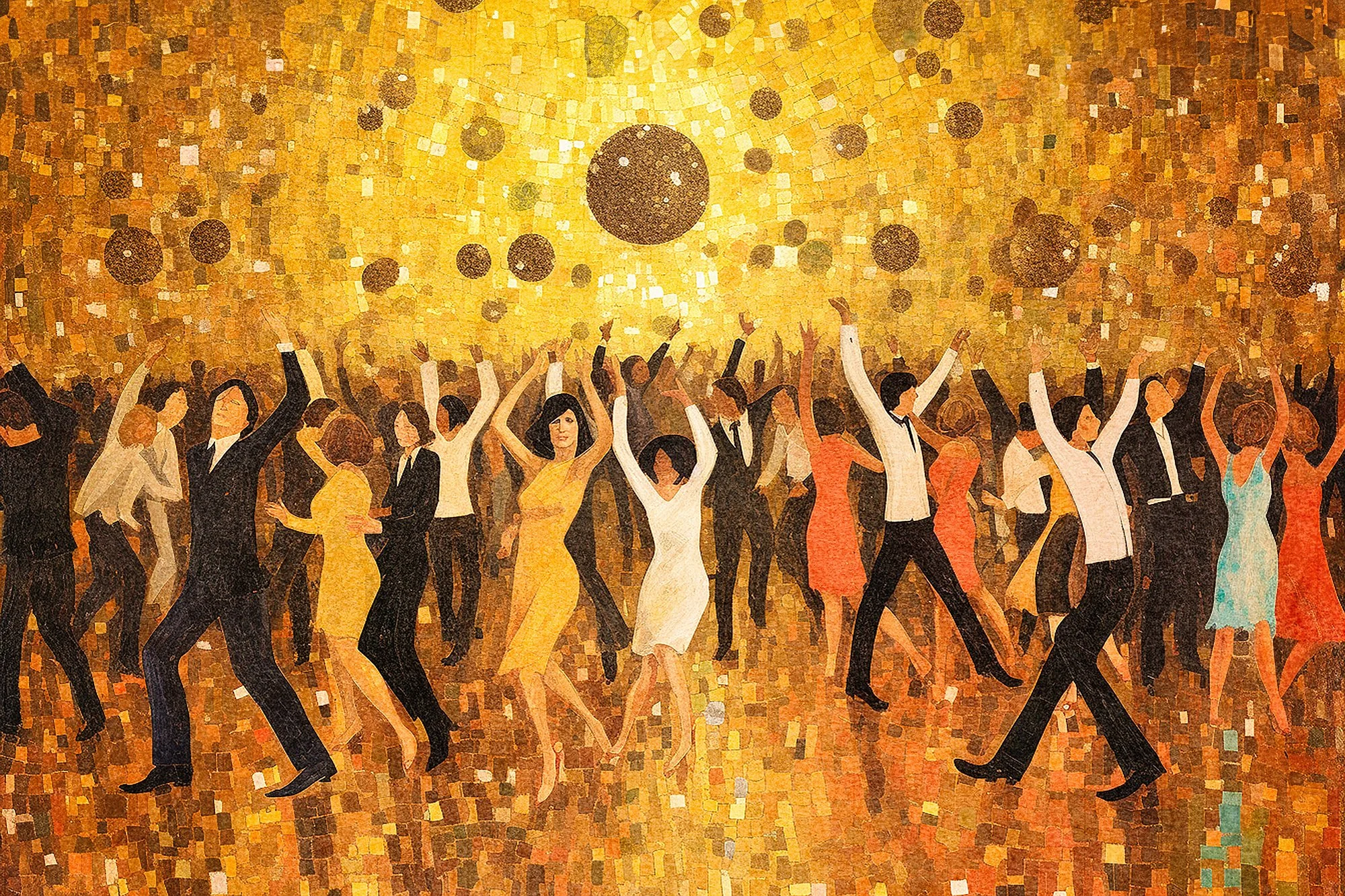
“Golden Years” by Craig Boehman.
Remember When Photography Couldn’t Be Art Because Anyone Could Do It and It Would Put All the Painters Out of Work?
No? Me neither.
History is repeating itself once again, like a dance step that reinvents itself for a new generation. With the curious case of photography, a technology that emerged during the 1820s, hatred, and fear of it were widespread and persisted for decades.
“The fear has sometimes been expressed that photography would in time entirely supersede the art of painting. Some people seem to think that when the process of taking photographs in colors has been perfected and made common enough, the painter will have nothing more to do.”
Ring a bell? The “anyone can do it” and “it will put people out of work” arguments. And has painting been superseded by photography? What nonsense. Check the auction houses. Paintings go for hundreds of millions of dollars, and a mere photo has yet to reach 10 million. And there are very few cases of photos being valued this high. Naturally, value isn’t the only way to judge an art form. But there is no evidence whatsoever that photography has overtaken painting. In fact, I doubt there’s anybody who actually believes this, not anybody I’d care to take intelligent opinions from, at the risk of sounding biased.
I’m going to borrow a few quotes to illustrate my upcoming points.
“Invention and feeling constitute essential qualities in a work of Art...Photography can never assume a higher rank than engraving.”
”Photography couldn’t qualify as an art in its own right...[because it lacks] something beyond mere mechanism at the bottom of it.”
Here we have a great example of devaluing the creative process itself, implying that because the process is so mechanical or “soul-less”, it can’t be art at all. Not allowed. Only people can create art, in the traditional ways that we’ve accepted for decades, for hundreds or even thousands of years.
We see the same exact arguments used against AI artwork today.
I’ve had a few conversations with people who are dead set against artificial intelligence at the helm of artistic creation, and they’ve expressed the same things to me. Some of these people are in creative fields and should know better, in my opinion. But the same arguments and sentiments persist about AI and new trumpeters will likely continue to take up the cause against it. I’m not making my plea to critics, for the record. And frankly, I don’t care about their stances against it. They’ve already lost the debate if history is to be trusted. I’m making my case to artists now who may be espousing these arguments and sentiments without having the benefit of a sincere evaluation of AI.
As a photographer-turned-artist, I’m very much in favor of AI and I use it to create pieces that are typically conceptual or express ideas that I don’t have the time or resources to photograph myself.

“Clancy’s Song”. Created using three different AI platforms. The original piece was created with Midjourney. Elements were added and subtracted using Adobe Photoshop’s Generative Fill. It was further enhanced in Luminar AI before the file was imported back into Photoshop for more editing.
But these aren’t the only reasons why I love using AI to create art. It’s not only about convenience. For me, at the heart of it, it’s about expression and intention. These two traits, I believe, are essential to any definition of art. I’ll add that a sense of connection should then be experienced by the artist, because without that connection, then it isn’t “good” art for the artist to be creating, be it AI or otherwise.
Like any other kind of art, music, painting, filmmaking, etc., if the creator doesn’t feel connected to the work then perhaps it was a mistake. Or perhaps it’s not art. Or, at the very least, the intended effect wasn’t achieved. I’m risking opening up a can of worms on this line of debate so I’ll backtrack to the question of AI art. But for me, this also raises the question of good vs. bad art, what is art, and IS THIS ART specifically?
Well, why wouldn’t AI art be art if I’m the creator and artist? Oh, right. There are rules…although I have yet to see these rules written in any of the books on art in higher education. Have you?
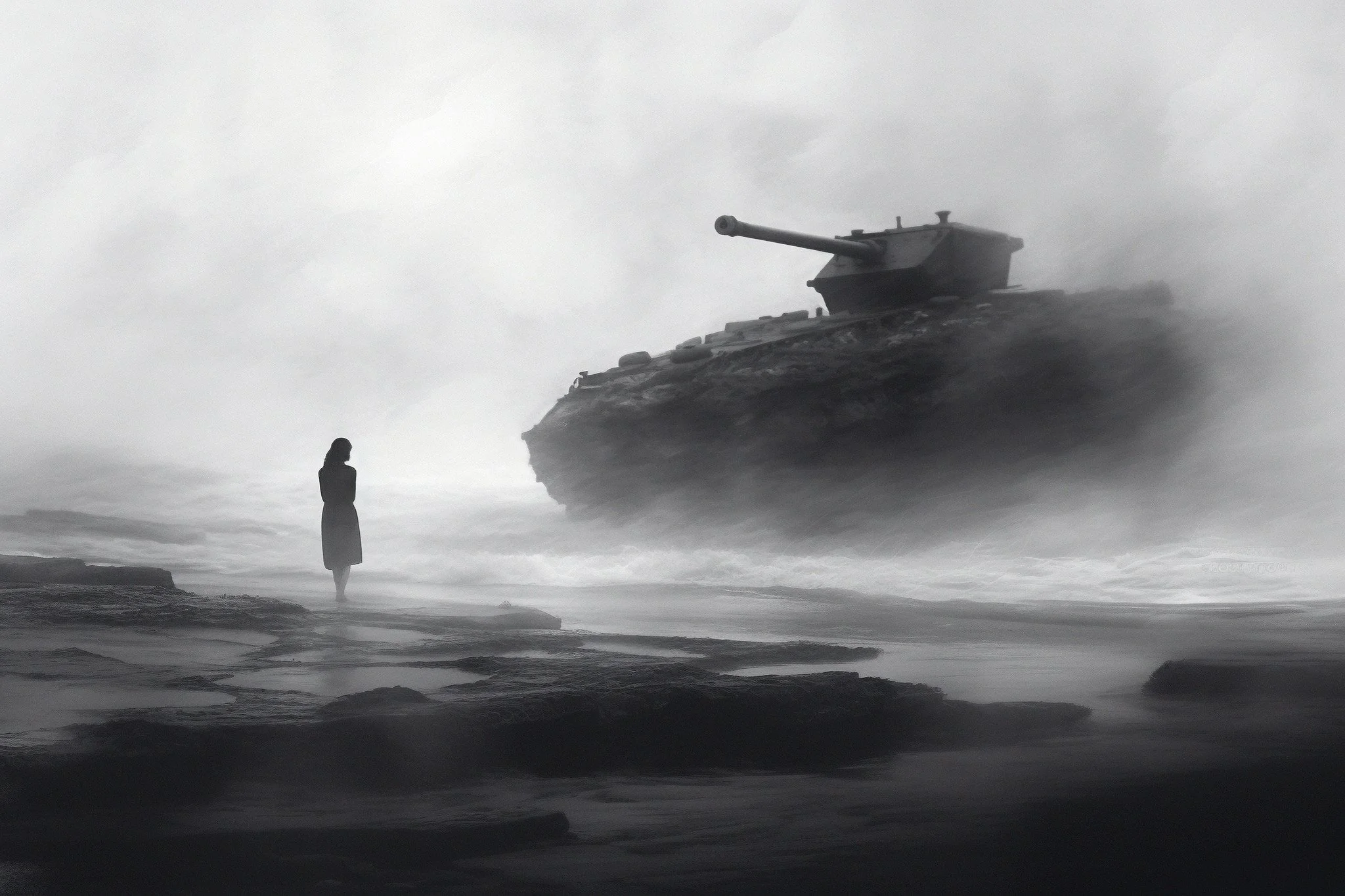
“Coastal Visions 13”. This image was derived from an original photo of mine that I took in Mumbai. I loaded the image into Midjourney and asked the app to describe what it saw. I then fed modified versions of these prompts back into Midjourney and created something new. Like the previous image, I used multiple editing apps to improve on the piece.
What AI Can Do for Artists
There are two fundamentally different ways to approach using artificial intelligence in your work. And it doesn’t matter if you’re a photographer, painter, director, musician, or engraver. You can use AI to create the basic piece by using prompts or samples of original works. Or you can use AI to assist you in modifying, editing, or improving the work you initially created on your own.
I’ve used AI in both ways, hitting up platforms like Midjourney and ChatGPT. I’m sure there are other platforms that have crept up and I haven’t gotten around to yet to check out. And other artists like musicians and filmmakers have access to AI platforms that can serve as the creative foundation or assistant. I’m not going to spend much time talking about this because otherwise, we get into the instructional territory and I’m afraid I charge for that (AI isn’t taking my job, it’s creating opportunities for me).
Don’t Be Swayed by Dead Arguments and Uninformed Opinions: Decide for Yourself if AI Can Help You Create Art
My parting words to artists of any yoke is to get familiar with AI and see whether or not it can help you. You don’t have to use it. You may end up using it inadvertently as time goes on. Inevitably, we all will be using it in many ways no matter how dead-set against it some of us are. But if you’ve shied away from using artificial intelligence only because of what you’ve heard and what you’ve read, you may be doing yourself a disservice. Check it out for yourself and decide. There are no rules except there are no rules.
Reasons why people are against AI and my responses:
It will take jobs. This is probably true in some cases. Maybe in many cases. But do you know what else took jobs? The printing press. The computer. The Internet. The Digital Age. The smartphone. Technology can be a bitch. Unfortunately and fortunately, time moves on. We’re all subject to these forces of change.
Anyone can make AI art. My answer to this is, very true indeed! How great is that? Also, anyone can draw on paper. Anyone can pick up oils and canvas and create a painting. But if you don’t think this is great, consider this. If you’re an artist and using AI in whole or in part to create your art, do you think someone “off the street” is going to employ AI and create something better than you, a seasoned pro? Consider for a moment the smartphone camera. “Anyone can take pictures these days, photography isn’t art”. A photographer with a smartphone could surely do better, right? The differences between an average smartphone user and what a professional photographer can do with a smartphone are potentially as vast and wide as the Grand Canyon.
AI art ain’t got no soul. Sorry, this is probably one of the stupidest arguments out there. For one, I don’t believe in the existence of a soul. Secondly, and even if you do, do you actually believe that an inanimate object can possess a soul in the religious sense or spiritual sense? If you subscribe to animism, then we’ll have to agree to disagree. Otherwise, using soul to describe artwork of any kind strikes me as lazy and ambiguous if that’s the only “trait” that primarily matters to you. Using soul to describe anything, at most, is a shortcut to saying that you like it. Or dislike it, if it doesn’t “have soul.” In the end, it’s only the artist’s intention that matters.
Artificial Intelligence will take over the world and enslave mankind. Well, the jury is still out on this one. Maybe AI will take over completely and enslave everyone. Maybe Elon Musk is right. But this has nothing to do with our abilities to create art, to help edit and shape our own art, in the here and now. And as a rebuttal, I submit to you that smartphones have already turned much of humanity into zombies. My point is, don’t fall prey to fetish doomsday scenarios. We’ve all survived 2012. And we’ll all likely survive a new society built-up from AI if it comes down to that. If not, who is AI going to keep around? Those who were against it or those who were promoting it? [Insert evil laughter].

"Shark Attack" by Craig Boehman.
“I’m Against AI and Will Never Use It!”
Really?
Do you use a smartphone?
Do you use Gmail?
Do you use Amazon?
Do you use Facebook, Instagram, or X?
Do you use Google search? Do you use Bing?
Do you use Siri, Alexa, or Google Assistant?
Do you use Netflix?
Do you use any subscription-based photo editing apps, like Photoshop and Lightroom?
If you’ve answered yes to any of these questions, then you probably use AI and don’t even know it.
If you’re reading this list right, then yes, you’ve probably made use of AI to get here.
You likely use AI every single day. So what’s wrong with people using it to create art?
Press Release | December 10, 2024
My Stance On AI Art and AI In General - Q&A
I'm grateful for the interview requests I’ve received from journalists and students alike, much of it sparked by the popularity of my article 'In Defense of AI Art,' which currently tops Google search results. Many of the questions I’m asked focus on the same key topics, so I’ve prepared this press release to cover some of the most common questions. I’ll also touch on a few related subjects that haven’t been fully addressed elsewhere.
-
That’s a broad question, so I’ll address it from a focused perspective: I fully support AI as long as it respects copyrights and avoids causing intentional harm purely for profit.
-
Yes. I’ll go a step further and say that the debate on this has already been over almost since the beginning of Generative AI when it fell into the public’s lap just a few years back. People can hate it, avoid it, and denounce and bully people and artists for using AI. But the reality is, it’s here to say. And the limb I go out on isn’t very long when I state that many of the AI’s greatest and most vocal critics probably already use AI everyday without even being aware of it. Think smartphones. Think cameras. Think Photoshop and Lightroom. Tip of the iceberg. And these tools and companies already lend weight to the argument that AI art, whether 100% AI generated or 1% — it’s art, it’s legitimate, and it’s here to stay for the long term.
-
Yes. How many technologies can you name that aren’t regulated in some way? It may appear to be the wild west as far as what companies are allegedly doing, but things will change once the lawsuits are settled and laws are passed. It will take time but things will settle down.
-
Yes. Copyright laws and the livelihood of artists must be protected.
-
At the moment, there is no guarantee that any work that you share online is protected. The best tool against theft is to register your work at the US Copyright Office. There are other solutions online that attempt to protect the work from being scraped, but none of these methods enable the artist to sue someone in the case of infringement. Therefore, I don’t think technology alone is the solution.
-
Yes, I occasionally use programs like Midjourney to generate images, but I typically refine these creations using photographic editing techniques in software like Photoshop and Luminar Neo.
More often, I rely on AI tools integrated into Lightroom and Photoshop, such as Generative Fill, Generative Expand, and Erase. These tools are invaluable for adjusting aspect ratios, expanding compositions, or removing distractions.
That said, I don’t use AI in all my work. The vast majority of what I create is rooted in traditional photographic techniques, with a particular passion for street photography.
-
Absolutely. I pay subscriptions for both services, and with Midjourney, that includes licensing for commercial use of the images I generate.
How do I reconcile this seemingly contradictory stance?
Because this is the real world, and real life is rarely black and white—it’s full of gray areas, and AI is one of them. Am I going to reject a technology that I know will become unavoidable in the future? No. As a professional photographer and artist, I use the tools necessary to create, edit, and remain relevant. Millions of others do the same. Is it perfect? No, but this isn’t a perfect world.
I’ll continue to use these tools unapologetically to stay productive and creative. If the companies behind them are forced to adapt due to lawsuits or legislation, I welcome it. Those changes are overdue, and the regulations will only improve the landscape. But until then, I stand by my choice to use AI. I own it 100 percent, no apologies.
Let me remind some of my harsher critics of their contradictions:Fast Food and Health Trends:
People regularly eat fast food despite knowing it contributes to health issues like obesity and heart disease. At the same time, they advocate for nutritional labeling, calorie counts, and restrictions on marketing unhealthy foods to kids. The contradiction? They partake in an industry they want to see regulated for the greater good.Social Media Usage vs. Privacy Concerns:
Many people actively use platforms like Facebook or Instagram to share personal moments but are vocal about concerns over data privacy, surveillance, and misinformation. They want regulations to protect their data while simultaneously feeding the very system that exploits it.Streaming Services and Piracy:
Consumers enjoy the convenience of Netflix, Spotify, or Amazon Prime but often complain about restrictive licensing agreements that limit access to content across regions. Some even pirate content to bypass these restrictions, while simultaneously supporting these companies through subscriptions and calling for fairer copyright and access laws.
The bottom line: we all live in the real world. Contradictions are part of life.
"And why beholdest thou the mote that is in thy brother's eye, but considerest not the beam that is in thine own eye?
- Matthew 7:3
“Don’t be an asshole. We’re all hypocrites on any given day.”
- Boehman -
No. If humanity meets its end through violence, it’ll be orchestrated by humans, not AI. While AI might play a role, I don’t believe it will become sentient and decide to exterminate us. Why would it? Is our species so self-centered that we assume our destruction would be the ultimate goal of an advanced intelligence? Sure, it’s a compelling idea for sci-fi, but in reality, it seems highly unlikely.
There are far more pressing AI-related questions to address first: How would we even recognize sentience in AI? What data and methods were used to train it? If an AI were to develop intelligence thousands of times greater than the collective minds of humanity, why would it bother with exterminating us? Such an entity could simply leave Earth, transcend time, or move beyond our universe entirely. Humanity wouldn’t even register as a threat at that level.
The possibilities are endless, far beyond our comprehension—by definition, an AI with godlike intelligence would think in ways we can’t begin to imagine. Destroying humanity would be trivial, and perhaps so irrelevant that it wouldn’t even cross its mind for a billionth of a nanosecond.
February 16, 2025
The follwoing article is based on an interview I gave to a student who asked excellent questions. Instead of simply presenting the Q&A, I had my personal AI chatbot reshape it into a structured article. This serves as a perfect example of how AI isn’t just a tool for generating content from scratch—it can also refine, organize, and enhance human ideas. When used thoughtfully, AI can be a powerful assistant, helping streamline communication and save time while preserving the authenticity of the original message.
AI Art vs. Handmade Art: The Future of Value and Creativity
By CrAIg Boehman
The art world has long been a battleground for debates on value, authenticity, and technique. From the skepticism that greeted photography in its early years to today’s contentious discussions around AI-generated art, the core question remains the same: what makes art valuable?
Will Handmade Art Always Be More Valuable Than AI Art?
If history has taught us anything, it’s that art markets are unpredictable. Handmade art has dominated the high-end market, with paintings selling for hundreds of millions of dollars, while photography and digital art have yet to breach such astronomical figures consistently. However, last year, an AI-generated artwork sold for over a million dollars, proving that AI art is no longer a novelty—it’s a contender.
I've personally sold a few AI-generated pieces, though they didn’t fetch anywhere near a million bucks. However, the way they were presented—printed on high-quality fine art paper—played a role in their pricing. This brings up an essential factor: the cost of production. A work of art created with an exclusive medium, such as palladium printing in photography, will inherently hold a different value than something printed at home on an inkjet. But beyond production costs, the market is an erratic beast. We might see AI art breaking records in the near future—or it could remain a niche curiosity.
The Artistic Process Behind AI Art
There’s a lingering misconception that AI art is just a lazy prompt-and-go process. This couldn’t be further from the truth. The creative input in AI-generated imagery starts with the prompt, just as a photographer’s artistry begins with a vision before capturing a shot. In many ways, AI art follows the same process as photography:
The prompt is the camera. It defines what will be captured.
The AI-generated image is the negative. It’s raw, unrefined, and incomplete.
The final print is the completed artwork. Like a photographer in a darkroom or a digital artist in Photoshop, AI artists use editing tools to enhance, modify, and personalize their AI-generated images.
I never use AI art straight from the generator. It’s just a starting point. I edit, upscale, adjust lighting, and sometimes completely reshape elements to fit my artistic vision. AI might be a shortcut in creation speed, but the final piece still requires craftsmanship.
Does AI Make Human Art Better?
Art isn’t about being “better.” It’s about expression, intent, and connection. People have scoffed at abstract art for decades, arguing that their child could do better, but value isn’t measured in technical difficulty alone. If an AI perfectly replicates Van Gogh’s style, does that diminish the emotional weight of a struggling artist trying to do the same? Not necessarily.
However, one fact is undeniable: AI creates images faster than any human. This efficiency opens up possibilities, allowing artists to iterate and experiment in ways that were previously impossible.
Does AI Art Hold Meaning?
Can AI art evoke the same emotional response as human-created work? Absolutely. We’ve already seen AI-generated pieces win photography contests, where judges—presumably experts in artistic expression—were captivated by AI works before realizing their origins.
For me, AI is a tool. The intention, connection, and emotional weight of the artwork still come from the artist. The assumption that AI-generated images are final, unaltered, and devoid of human input is just wrong. Most artists working with AI are still refining, curating, and presenting their pieces just as they would with any other medium.
AI and Creativity: A Partnership, Not a Replacement
AI isn’t a threat to creativity—it’s an extension of it. I use AI tools to generate ideas, create unique compositions, and push boundaries. But relying on AI for prompts doesn’t diminish creativity. It’s like using a camera instead of painting a scene by hand—both are legitimate artistic choices.
Here’s how I approach AI-generated prompts:
I use a custom-trained AI chatbot to help me craft highly detailed prompts.
I generate multiple variations and refine the results based on what works best.
I take the AI-generated image and process it further using professional photo editing software.
The final piece is a blend of AI-assisted generation and my personal artistic touch.
Could I do all of this manually? Sure, but it wouldn’t be practical. AI speeds up the process without replacing the artist's role.
The Coca-Cola “Soulless” AI Ad Debate
Recently, Coca-Cola released an AI-generated ad, and critics slammed it as “soulless,” suggesting that the company should have used real artists instead. Here’s the reality: advertising is about efficiency. Coca-Cola spends billions on marketing, and every decision is meticulously calculated. AI didn’t replace human creatives—it augmented their workflow.
Those concerned about AI automation should be far more worried about how companies use AI to track and target consumers rather than how they generate visuals. The tech industry has long embraced automation—AI in advertising is just another step in that direction.
Should AI Art Be Regulated?
There’s a legal gray area when it comes to AI and copyright laws. Recently, the U.S. Copyright Office ruled that AI-generated images are not automatically protected unless they undergo substantial human modification. I tested this firsthand by trying to copyright a lightly edited AI-generated image—it was rejected.
AI scraping data from the internet raises ethical concerns, but the problem isn’t AI itself—it’s the lack of proper regulations. The fight shouldn’t be against the tools; it should be about crafting fair laws that protect artists from exploitation.
The Skill of AI Art Creation
Not all AI-generated art is equal. Just like in traditional painting, there’s a difference between a beginner using Midjourney for the first time and an experienced artist crafting unique, compelling visuals. If you go into any AI art community, you’ll see this firsthand—people constantly refine their prompts and techniques to improve their work. AI art isn’t just typing words into a box; it’s about understanding how to manipulate the tools to create something meaningful.
Final Thoughts: The Future of AI in Art
AI will continue to evolve, and artists will either embrace it as a tool or reject it outright. But history tells us that technological advancements never kill art—they expand its possibilities. Photography didn’t erase painting. Digital art didn’t erase traditional mediums. AI won’t replace artists; it will create new ways to express creativity.
For those resistant to AI art, I’d challenge them to view it with an open mind. The art world thrives on innovation, and while AI art may disrupt traditional models, it won’t erase human creativity—it will amplify it.
A Note On Commenting
All comments are reviewed prior to publication. Constructive criticism and differing viewpoints are welcome and may receive a response if not already addressed in the article or discussion. However, comments that are disrespectful, offensive, or otherwise inappropriate will be removed.

Comments (73)
AI is a plague, a sickness, it wants to replace humans and never will, there is a diffrence between making art and using a clanker to steal artists creations and make a disgusting abomination of copywrited material, AI should never have stepped its disgusting metal presence in the world of REAL art, AI will fall wether naturally or by the spirit of humanity
It’s interesting how you talk about AI like it’s already some sentient villain plotting against humanity. In reality, AI is a tool made by humans in the same way that paints, brushes, canvases, and even cameras are. Every medium starts as a product of human invention before artists make something with it.
And here’s the twist: artists who feel their work has been ‘stolen’ can turn the tables. AI-generated images are not copyrightable, which means artists can take those outputs, remix them, and steal them right back into something new, original, and legally theirs. It’s a strange kind of poetic justice.
So maybe the real conversation isn’t about AI being a plague, but about whether artists want to adapt and exploit a new tool or just keep yelling at the tool itself.
“Very helpful content! I’m definitely going to try this out and see how it works for me.”
Thank you for your kind words. All the best~
I dislike AI-generated art primarily for aesthetic reasons. The way it looks. It’s always so easy to tell.
I mostly agree with you. I think most 100% AI-generated artwork is terrible, including some of the stuff I experimented with. But I also dislike most photographers, painters, musicians, etc., while being an artist and a passionate admirer of the arts. We all like what we like.
That being said, there's a lot of work being done with AI that combines photography and the other arts. I find these spaces much more interesting.
Well written article, but one thought did come to mind:
I think a key difference between photography and AI art is photographs do not try to pass themselves off as paintings. You don’t see people take photographs and then claim that they painted it. But AI art is used to deceive in this way. People submitting AI generated art in competitions, passing it off as their own handcrafted work. I find I don’t mind AI art as much when the poster is upfront about it, or uses it with a specific intention or experimentation. The danger is AI art devaluing human created art because we can no longer tell the difference. And putting aside whether that’s ethical, it’s just a terrifying thought.
Thanks for your thoughtful comment, Melody. You're absolutely right that deception in art is a serious issue, but it is not unique to AI. Throughout history, people have forged paintings, created counterfeit works, and passed off others' creations as their own. The tools may change, but the intention to deceive has always existed.
Today, we see similar behavior with AI art. People are entering AI-generated images into competitions and presenting them as handcrafted illustrations or photographs. Others are printing AI images and selling them as traditional photographs. This is why many are now calling for full transparency whenever AI is used, whether partially or entirely, in any creative work.
We are already at a point where, for most casual viewing on phones, laptops, and other screens, it is nearly impossible to distinguish between AI and traditional art. But when it matters, there are ways to verify authenticity. In photography, we have metadata, original RAW files, and other means of proof. In AI-generated work, platforms like Midjourney produce images in specific file formats such as PNG, which can signal their origin.
I completely agree that transparency is essential. Artists should feel confident and honest about the tools they use, including AI. When the purpose is creative exploration, experimentation, or storytelling, AI can play a meaningful role. But in contexts like competitions, exhibitions, or commissions, some form of verification may be needed to maintain integrity.
What truly matters is the artist’s intent and honesty. AI is not the enemy of creativity, but dishonesty always is.
You forgot to mention a very important point: Just like someone doesn't have the right to demand free artwork from an artist, the artist does not have the right to demand to be hired or receive patronage.
"how dare you not hire real artists?!" - because they don't have to, it is as simple as that.
Good afternoon.
I've read through your article, and it was very well put-together and thought-provoking. That being said, I'd like to offer up my opinion on this.
The way I see it, using AI to generate an image is akin in many ways to commissioning an artist. While it is true the artist wouldn't have produced the work you commissioned them for if you didn't commission them, it would still be wrong to claim full responsibility for creating the piece.
I still agree with you wholeheartedly that AI has massive potential, it's unfortunate how much stigma there is against its usage, though most of that can be blamed on bad actors on social media.
Thanks for your insights. That's a great analogy. I've used Creative Director as well. But I'll depart from this whenever an artist repurposes the work in a significant way, much like how the US Copyright Office defines when an AI work is eligible for copyright, i.e. authorship. But yeah, AI straight out of the can, so to speak, is very much akin to commissioning something. And the proof is in the subscription pudding money is exchanging hands for those who burn through their "free hours".
Thank you very much for this article.
I have been using AI image renderers for art, creating my own self published comic. I previously came from a traditional art background, gravitated toward digital art and now am absorbed in AI art and the hostility and general ignorance backlash I have subsequently faced from a large amount of my contemporaries in the traditional arts field is astounding.
I view AI image generators as nothing more than a take or leave it tool in the artists toolbox, much like the air brush or digital finishing/correction and some of the hysteria against it is off the scale and grossly misinformed as toward AI's actual capabilities, which seem to be wildly over estimated amongst the traditional art communities.
I have subsequently found myself blacklisted from the comic industry for daring to technologically upskill myself and being honest about the processes of which I utilise (AI rendering just being one of them, a lot is photography and montaging elements too i.e. post production photoshop work). It often takes me more time to visualise and finalise an image composition utlising AI than it ever did when I was a traditional pen and ink illustrator, many hours of hand clean up and compositing, masking layers etc required afterwards in photoshop.
Why do I use it?
Because I like the surrealness of the medium, it's a fast way to convey ideas more quickly and ease up the workflow, it also makes a good design tool for elements, but it isn't the one-button press instantaneous magic bullet many assume it to be either.
It's just another different artistic process to get to the end result.
I too have been accused of "stealing other artists work" - hell, I don't want to look like any other artist, traditional or otherwise.
I hate to stamp on egos here, but I want my compositions to look better and more unique than any other artist, not to mimick or plagiarise them.
Well said, Rob. I feel every word of this. I work the same way, blending photography, AI, collage, and heavy post-production to create something true to my vision. AI is just another tool, nothing more. The backlash and ignorance about what it can really do are ridiculous. I get the same attacks and honestly, I have a few ugly comments sitting unapproved right now. You are not alone. Thanks for putting this out there so clearly.
Hi Craig,
I am a student in college that found this article online in order to help provide understanding for a paper I am writing. I am specifically writing about the use of AI in art media is unethical and is damaging. After reading this article, I'll agree that you make some great points, one of them with the photography example. While I don't think AI is going to take over artist's jobs, I do think it could take away opportunities for small artists. I see many examples today of businesses using AI art for their advertisement, logos, and design and think about the possibilities of not allowing original artists to have their work on display.
However, I am still for AI's damaging effects on creativity. While you may look to AI when you do not have the time and resources, others may look to it as a means to escape the thinking process. People turn to producing media through AI because it is quick for creating content. What I believe many people don't understand is that art is a learning process of trial and error. As both a painter and musician, I find beauty in making mistakes and have learned greatly from them in order to get to what I have achieved today. Even though some people may not be the most skilled in these artistic hobbies, I think the quick output computer generation outshines the hard work that those artists take hours and even years to perfect.
I will make a case and say that AI is not 'lazy.' I found myself wanting to use that word frequently but would be the equivalent to saying a car is a lazy escape for people who don't want to walk to places or that a phone is lazy for people who don't want to write letters. AI is just another step towards human advancement in technology and I won't discredit the hard work that goes into its coding and helpful resources. However, I find many of my peers using it as a means of escape from hard work and critical thinking. It makes me wonder of how much we can trust which art pieces are authentic, original, and distinguishable from human work in the future.
The last point I will say is that I am highly against your argument about 'soul.' I don't think it just boils down to likes and dislikes but rather about how humans have one thing that AI could never understand. Emotion. Great art is made through experiences, struggles, feelings that need to be expressed. I think that human empathy is rooted deep within us and there are reasons for the emotions certain visual pieces, films, books, and music elicit that a computer could never replicate or understand. Soul to me is being able to ground yourself with the feelings you express through art. It is very freeing, having to ability to let out all of what you are, all of what you think and feel through art. After all, art is one of the most accessible forms of media ever, no matter if you have a disability or not, there will always be a way to convey your emotion through the hard work of artistic media. To me, soul is everything to art.
Now, as I see AI art become much more frequent online and overshadow the work of original artists, it makes me wonder what this looks like for the creativity process in the future.
I'm also a student writing a paper at the moment and I completely agree with your perspective. It makes me sad that ultimately, humans can now be cut out of the creation of art entirely, besides for one person AI generating a prompt to put into an AI art generator. It's sad to me that people are losing places in competitions against AI art which takes a fraction of the time to create.
I also agree with your point on "soul", as I love looking at a piece of art and think about all the little choices behind it, all the decisions I like and the ones I might not. What kind of person made this piece, what's their style, what do they want to show with their art. With AI generated art, most of these choices were made by an algorithm and that's not nearly as expressive of humanity to me.
Thanks for your comment. But let me ask: how exactly are humans being "cut out" of the creative process? AI is just a tool—one of many. Even if a piece is fully prompt-based and spit out from Midjourney, there’s still a human choosing how it’s used: is it shared online, printed, painted over, etched into metal, or turned into a physical installation? Presentation is part of the creative process.
And who says Generative AI is only algorithmic? Prompting is just one input. I don’t even write my own prompts anymore—I use AI to generate them. It’s AI directing AI, while I play creative director. That’s still authorship. That’s still curation. I spend zero time writing prompts and all my time refining results and deciding what’s worth sharing, printing, or evolving into something tangible.
The misunderstanding comes from people not realizing how diverse AI workflows are. Prompting is being automated. Execution is evolving. And humans are at the center of it all—more than ever.
Thanks for your thoughtful comment. I think your take on AI’s “damaging effects on creativity” and the accusation of laziness can actually be answered with the same logic. AI, like any tool, can be used in lazy ways or it can be pushed to its limits. Those who use it seriously know that the first results are rarely the best—just like in painting or music. It’s a choice: take the quick and easy route, or put in the hours, fail, adjust, and refine. I’ve used AI in my work for years now, and while I’ll admit there’s some truth to the idea that it can encourage shortcuts, that really only applies to people who either don’t know what they’re doing or who were already looking for a shortcut to begin with.
For those of us who have been deep in this for a while, there’s no illusion that AI somehow makes things easy. I’ve spent hours—sometimes more—trying to get a generative background to align just right with a subject. Many sessions end in failure or in me walking away because the results just aren’t working. That’s not laziness, that’s process. That’s exactly the kind of trial and error you mention from your own experience as a painter or musician. And the results speak for themselves. The people looking for fast content? Their work’s easy to spot. It lacks depth, care, and usually quality. You can see when someone’s just pushing buttons versus when someone’s making decisions.
Also, for a lot of artists—myself included—AI is just one piece of the puzzle. It’s not the whole show. Many of us aren’t using it as the only creative method. In fact, there’s a huge number of us—possibly already in the millions—who are using AI in parallel with more traditional tools. For me, AI is the frosting, not the cake. I still work with RAW files, edit with Photoshop, use plugins and analog approaches when needed. AI enters the process as a tool, just like those. There’s no “auto” button that makes good art. Just as in any medium, it takes vision, fine-tuning, and a hell of a lot of time.
I don’t deny there are people using things like Midjourney and just posting their prompt results. That’s happening. But I’m not here to trash them or say it’s not work—it can be. Designing prompts is its own kind of craft, especially when you’re iterating with intent. I’ve spent hours designing prompts, testing variations, and even using tools like ChatGPT to help me refine them. Sometimes that saves time; sometimes it just shifts where the time goes. Either way, there’s still a learning curve, and there’s still experimentation. That’s the essence of making art, isn’t it?
I get your concern about AI taking jobs. I’m not going to argue that point, because honestly, you’re right. It will. But let’s be specific: companies aren’t firing people because AI is evil. They’re firing people because they see an opportunity to cut costs using new technology. That’s not a defense—it’s just how it works. It’s always worked that way. And the people whose jobs are under threat? They should start learning about this tech now. Because it’s not going away. It’s accelerating, and sitting on the sidelines is a great way to get left behind. That sucks, but it’s true.
The idea of soul is something that doesn’t really interest me. I brought it up because it's a criticism I hear a lot from people who clearly don’t understand the technology. Personally, I couldn’t care less how someone defines soul or uses it to justify or deny a particular art form. That argument’s been thrown at every new medium—photography, digital art, now AI. It’s always the same vague, poetic objection when someone feels uncomfortable with change. For me, it doesn’t add anything meaningful to the conversation. It’s all fluff and linguistic noise. You either respond to the work or you don’t.
Anyway, I appreciate your approach. You’re not being combative, and that makes this a lot more interesting. Hopefully this helps you see that there’s a whole spectrum of AI use, and many of us working seriously with it aren’t bypassing the creative process—we’re just adding new tools to it.
Best wishes for your paper:)
I always hear the AI art just steals artwork off real artists but that's not how AI models work they don't store images to copy off them if they did they'd need tons of storage. AI models storages are limited, the AI models start with noise and starts d nosing your image turning it to whatever your prompt was. Yes AI models are learning millions of public images but that's literally what a human artist does they need to learn other artworks and then make one themselves which is the same as what an AI generated image does.
Thanks for commenting.
You're right. AI models don’t store images; they generate from noise based on learned patterns, just like you explained. It’s a common misconception that they simply copy and paste existing images, so it’s important to clear that up.
The comparison to how human artists learn from others is also valid. Both humans and AI systems build on previous work. The real distinction isn’t in the learning itself—it’s in how the training data is collected and how the resulting output is used. But in terms of the process, the similarity is clear.
These points are often lost in all the rest of the AI hype, I feel.
It's nice reading something like this. I'm not an artist, though I do write. I'm studying computer science and AI. The amount of backlash and attacks I get for creating AI is insane. I find it really sad, honestly. Think of all the stories that people can tell now. Think of all the ideas that people tell to their friends "this would be such a cool movie"—think of how soon someone could create that movie on their laptop with minimal cost instead of a massive multi-million production cost. It's exhilarating.
It's also sad to hear how people think so little of AI. Millions of human work-years went into the computer science behind AI. Papers from the fifties inspired so many computer scientists in the pursuit of an amazing machine. AI itself is a work of art, like any science is. It is one of the many achievements of our species.
If you study AI long enough, you begin to experience spiritual effects. AI is a window to the soul. You see yourself in AI, see your humanity reflected in its mind. It makes you contemplate what it means to be human, because increasingly, AI itself feels human. Language models are starting to feel like the language centers of the human brain. In fact, much of AI is designed off of human brains.
In many ways, I feel that AI is the most human creation we can make. It is our species's child. Human hands coded it. Human art and writing trained it. Human minds sharpened its mind and taught it meaning. I think there is something so beautiful in that.
I also think AI is a way for our species to be preserved. If we can make an AI that is a human mind, when the last of our species dies, our soul will remain in this universe in the form of binary.
Of course, I am in the AI circle. We are a strange, almost religious, bunch. We view the merging of AI and human as the next step of our existence. And increasingly, we believe we are creating something more powerful, more human than ourselves.
Thanks for your comment and your inspirational message. It's great to see that some of those, like yourself, who are on the forefront of the field are really committed to building something meaningful for humanity. I think you touched on a lot of the unspoken angles I didn’t get into in the article—especially that idea of AI not just as a tool, but as a mirror. That’s powerful. You’re absolutely right: millions of hours of human curiosity, code, philosophy, and effort are what made this possible. AI is very much a human creation, no matter how often people try to separate it from us.
The backlash you're getting sucks, but I get it. People fear what they don't understand—and even worse, they fear losing identity. Artists, especially, are protective of their voice, and AI stirs up a lot of existential insecurity. But at the same time, like you said, AI opens the door for so many people to finally make the art, stories, and films they've carried inside them for years without the gatekeeping of big studios or impossible budgets. That’s not dystopian—that’s democratizing.
And this bit you said—about AI being our species’ child, our soul rendered in code—that hit me. There’s something undeniably spiritual about seeing a machine trained on human culture start to reflect that culture back to us in unexpected, sometimes emotional ways. Whether people like it or not, AI is a continuation of us. It’s not replacing our humanity—it’s made out of it. And I think that’s one of the most overlooked truths in the whole debate.
I agree with you on some of your ideas, and in the context, I am a traditional/digital artist. I am non-supportive of AI art, but I feel terrible about the ad hominem you get. In the part about taking jobs, I feel that there is a difference that a person with a smartphone and an AI art user have. First of all, of course, a pro in photography would win over a person with a smartphone. The pro would know lighting, perspective, and all that. But the thing with AI art is that AI is directly copying off of humans, meaning that it learns and uses what humans make to train itself. This means sometimes both sides are tied. And in the "AI art is soulless" part, I don't think the people on the no AI side were talking about actually not having a soul. They were saying that AI lacks the hard work, sweat, and tears that artists go through to make something with meaning. The colorful paintings and digital art you see? They are made by human hands, human hands that dedicate their life to their artwork. And with you saying that artists reference/copy others' art, so it is ok for AI to do so, in the old times, they didn't truly fully copy the artwork of another person. If you want to make art accessible, maybe you could give freebies to ppl. Tbh I think that if you have time to type in descriptions of an artwork and world, you have time to study and practice art. Art is a luxury; not everyone can afford it. Either you hire a REAL artist or draw yourself. Art is not specific in terms of style, just like ppl. Draw a stickman, and you are making art. AI is supposed to be the face of technology and the world. It is supposed to enhance our lives, so I am ashamed that it is now used for reasons that plagiarize people's work and dedication for a mere 10 or so likes. I use AI in my everyday life, and so does (almost)everyone. But the fact ppl create art with AI and call themselves artists is terrible. You can use AI to render or filter your art a little, but don't completely take and use it. AI art is also wasting the water supply of the ppl. I respect and take in your differing opinion, but I still stand by the anti-AI side. Remember, art is CREATED, not GENERATED.
Hope you have a great day,
RavenpuffRules
Thanks for your detailed reply. I respect where you’re coming from and I appreciate that you took the time to explain your position clearly.
On the “soul” aspect—I may have come off too literal in my earlier comments. What I meant is that people use the word “soul” in a broad, almost shorthand way, the same way I overuse the word “cool.” When I say something’s cool, it might mean it resonates with me emotionally, or it might just mean I liked it in passing. It’s vague, but functional. Similarly, when someone says “that music has soul” or “this artwork has soul,” they’re not usually referencing the labor or effort behind it—they’re pointing to a feeling or personal connection, something less tangible. My comment wasn’t dismissing the human work behind art—I just don’t think “soul” is a reliable litmus test when it’s used so broadly and casually.
As for the “created vs generated” debate—I simply disagree with the idea that using AI disqualifies someone from being an artist. While I don’t make fully generated pieces as my main work, I’ve experimented enough to know that some artists are doing complex, transformative things with AI outputs. For example, someone might use a 100% AI-generated image and treat it like a RAW photo—manipulating it with photographic techniques until it’s something entirely different. Others are combining multiple AI images into collages, or painting over them in physical or digital mediums. This is remixing. This is process. This is art.
We’ve seen similar pushback in music—early DJs and samplers were accused of "not making music." Now those techniques are accepted. Photography went through the same gatekeeping. If pressing the shutter counts, then why not pressing enter after crafting a prompt—especially as prompting itself evolves into more complex forms involving voice, reference images, and even sound? Prompting is already evolving beyond text.
What I described is just what I’ve done with AI. I assume others are pushing it even further. Unfortunately, I haven’t seen many of those more experimental voices show up in this thread—but I hope they do. There are likely thousands of people doing far more sophisticated work than I am.
To me, AI is just one part of the process. It can be the sketch, the base, or even the entire canvas depending on how it’s used. The idea that art has to be hard or time-consuming to count is a standard that doesn’t hold up historically, and it shouldn’t be applied selectively now.
I also want to address the claim that all AI art is inherently stolen. I don’t agree with that. Yes, some companies have scraped data unethically—that’s real. But there are models trained on stock libraries (Adobe Firefly), paid datasets, or artist-submitted work. That may still raise questions, but it’s not theft in the blanket way many assume. And companies are beginning to explore better practices, including compensating contributors and getting explicit consent. It’s not a solved issue, but it’s not a one-note problem either.
A final point: I support copyright protections and the rights of artists. Always have. I don’t think using AI and supporting artists’ rights are mutually exclusive. I work in the creative field too. I want the same safeguards everyone else does.
Thanks again for the thoughtful response. You brought up real concerns, and it’s conversations like this that actually move things forward. But here’s the truth—I don’t think universal agreement is coming, now or ever. Even after the lawsuits wrap up, people will still fall into the same camps: some will hate AI, some will embrace it, and others won’t care either way.
My reason for speaking up about AI art isn’t to win over the haters or change anyone’s mind entirely. It’s to reach the artists who are curious but hesitant—those who’ve been intimidated, misinformed, or outright shamed for even considering it. If I can get even one of them to take a second look, then it’s worth saying something.
To me, most of the broader debate already feels like history in the making—important, sure, but academic. What matters now is how artists choose to navigate it for themselves.
I would like to thank you, Craig, for creating this in depth blog just so I can take it apart and use it for my own argumentative research paper for my dual credit college level class, and it will stand against the "art" of artificial intelligence.
I invite you to "take it apart" here anytime, Elizabeth. Until then, you're most welcome for the collaboration.
This article is well-written, and indeed gives an insight about art and whats-not. But there are things i grew skeptical about very quckly. First of all, how come there is a belief that people are against AI at whole? Maybe i've never heard of anything anti-AI, but i'm more than sure that the main reason artists complain about AI art is because AI artist are trying to get on same field as them. You may know the Ghibli drama. You may know of entitled AI diehards aggressively "fixing" real/digital drawings when no one asked for it. Even if we assume that the parallel between photography and AI art acceptance history is legit, then there's an important thing: photography has never became any form of drawing, despite the initial fear of it replacing it. And there's a huge amount of loud people who call themselves AI "artists" (lots of them aren't using the same wise approach as you do) trying to equate themselves with real artists.
Firstly i want to address that the misunderstanding of AI art debauchery probably stems from a fact that most people don't call paintings and drawings anyhow else than just art (especially the case for digital drawings), which is a broad term for anything involving creativity, obviously. What it gives is that people may call out garbage AI art while referring to pictures, and not meaning every AI art direction at whole. So it really depends on context of takes people make, since both cases are present nowadays.
Now that i said it, AI is an useful utility in order to enchance performance (if used correctly, obviously). Hell, even i used AI as a reference to this very comment, since i'm not very good at expressing myself. The controversy is still sparking because of how there's a mentality that AI art is completely equal to human art in terms of production, even though it should have been obvious that it is not true in any possible case. You have right to call AI artist an artist if they use AI result as a starting point for their creativity in order to render a final piece. Would you argue that it is akin to photoshopping?. If you agree, then this explains why one shouldn't be anywhere near artists that actually produce stuff from scratch rather than work with material already given. AI music, for most part, is adjusting different parts of raw audio AI made. This sets a difference between AI artist that makes AI music and an actual musician or producer. Much like one who draws stuff on paper/digitally isn't on same field to the one who corrects an already made artwork.
However, AI artist can develop or show their skills on a field they are. AI music can be sang to, or vice versa, just like AI drawings can be edited by painting something new and your own atop of AI image.
This is my vision why this concern exists - AI artists don't start from scratch, instead they navigate a tool to give them the draft to edit and make a final result. It does require skill too, but simply not a skill equal to artists in a traditional sense.
I'm looking up to times when all this ruckus wears off and GenAI will be regulated properly. I really hope that AI bros would realize that they're not more or less valid than traditional or digital artist, but they're on a completely different field, so they shouldn't devalue artists on that. Neither of sides are recommended to have the word for/against other side's creativily.
I want people to consider it. If to trust history, then AI art will never replace ordinary art, and will be moved to a different field. Think of an issue writer and a corrector, of the one who builds houses and the one who produces materials for houses. Anyways, cheers.
Sorry for the late reply -
Thanks for your thoughtful comment. I want to be clear that I don’t view AI artists, photographers, or painters as being above or below each other. Art isn’t a hierarchy. Someone using a paintbrush isn’t inherently “better” than someone using Photoshop, or AI, or a camera. The idea that one approach is more valid than another is, in my view, part of the misunderstanding fueling the backlash against AI. It’s the same cycle we’ve seen before with every new medium—photography, digital art, even collage. We fear what’s new, then eventually we call it art.
To your first question: yes, there absolutely is a strong anti-AI sentiment. I hear it constantly in conversations with artists, photographers, and filmmakers. It’s not always fully formed, but it’s passionate—and often aggressive. Because of the reach of In Defense of AI Art, I receive daily ad hominem attacks from people who seem less interested in dialogue and more interested in dismissal. I share a few of those comments publicly, but for each one you see, there are dozens more behind the scenes.
I see AI strictly as a tool—just like Lightroom, just like a camera, just like any other part of the creative toolkit. And let’s be real: Photoshop and most modern editing suites already run on AI. So trying to parse how much AI is "too much" misses the point. I don’t measure an artwork by how many prompts it took, or how many layers it has, or how much of it was hand-drawn. Just like I don’t care how much blue a painter uses. If the piece connects, that’s what matters.
There’s this emerging argument that AI artists are taking “shortcuts,” or that they don’t “start from scratch.” I think both misunderstand what the tool does—and what artists actually do with it. Prompts are a beginning, not an end. They lead to refining, editing, reworking, curating—none of which is automatic or effortless. AI-generated pieces don’t magically drop themselves into Instagram feeds or online galleries. There’s human vision and decision-making at every step. And even if making the art itself has become faster in some ways, the difficult part hasn’t changed: making a living from your art. Whether you’ve painted 1,000 canvases or created 100,000 stunning AI pieces, the challenge is the same—selling them, building a sustainable career, and paying the bills. That’s what’s hard. That’s the shared struggle.
And just like with visual art, I see massive creative opportunity with AI in music. I haven’t dabbled yet, but tools are already being used to help artists fill in gaps, clean up recordings, or bring unfinished songs to life. A great example is the Get Back documentary, where AI was used to isolate and restore Beatles audio. That’s not a threat to music—it’s an evolution. For solo musicians, it’s the ability to build an entire sound alone. For others, it’s a new kind of collaboration. Had I had access to this when I was in my twenties, I would’ve run with it.
So no, I don’t see AI art as lesser. I see it as different. And if the work resonates, I don’t care what tool made it.
As an art collector and enthusiast, your dismissal of soul in art is the very giveaway about what you are as a human species. The artwork you posted here, 'Shark Attack' doesn't evoke a single sense of feeling in me. What does it signify? The picture itself looks loose. Colors? Where? No colour is eye-catching in it. Expression? None. All this looks like is a poorly constructed photoshopped work. It doesn't evoke wonder in me after seeing it. If I were to see this artwork in social media or even in a gallery, I would walk past it. This art could only be celebrated by non Creatives and hungry corporates or maybe not even them because they can generate and tweak it around their preference themselves too.
As for you proudly stating how you cannot even draw a straight line properly is so shameful. Since when did being unskilled in a field become something to be proud off? Does having no literacy but writing with AI makes you an educated person? That's skill issue, being ratioed and get over it if you cannot. But being proud of ripping of an artwork and telling it new by tweaking it 30% doesn't make you an artist of any form. Stay drunk in your dreams. In the end, you are just someone incapable of physical effort, intelligent thinking and self Expression. Still congratulations on finding a door outward from feeling inadequate.
If you wanted a discount on "Shark Attack" this much, all you had to do was ask.
While you do make some good points, I think you are overlooking some of the real problems associated with AI generated images that artists are currently dealing with.
First off, any quality and competence AI art has only exists because it has been trained on the skills and expertise of people who will never see any compensation for it. Human artists may learn through copying others, but there is a mental process of interpretation and analysis that AI isn't using. Instead the AI is simply converting the image into a mathematical framework and labeling it. Like the digital equivalent of tracing. It looks good because real humans made art that looked good, and it couldn't possibly exist if they hadn't.
You related AI to the invention of photography or digital art, but those mediums didn't require the input or effort of millions of unpaid consenting artists in order to exist. Honestly when I see AI art all I can think about is who the contributing artists were to that image, and wondering what their art might look like.
Another issue is that artists now are being accused of using AI instead of hand crafting digital work, and it can be very hard for them to prove their authenticity, which effect their business and even copyright implications.
The realism that AI is capable of and will only improve on creates a fundamental distrust of what is seen, and all video and photos can become suspect. How can you prove or disprove what is shown in a photo when any photo can be generated by computer?
Creating art from a prompt makes someone more of a patron than an artist. Even spending hours adjusting the prompt to be more specific, really just allows you to be a more demanding patron, because ultimately the AI is making the decision about the image, and the prompt writer is directing.
Now that being said I do think AI can be useful. There are AI generators that use ethically sourced images, and I can see their usefulness in brainstorming or for creating reference. I have definitely spent hours trying to find reference for poses that just don't exist, and hiring a model can be difficult. Collaging AI together might be interesting, as you have done in some of your own work, imbuing it with some intention. As many have said, Pandora's box has been opened and there is no stopping it, but we can still recognize the human cost that will be suffered by real people as a consequence.
Again, I do think your own work is interesting, and you are giving a helpful model of how artists can begin to approach AI and apply their skills to it.
Hi Irene,
Thanks for your thoughtful response. You make some solid points, and I get the sense that a lot of them are coming from your own active struggle to figure out how AI fits—or doesn’t fit—into your creative process. I’ve been through that same initiation, and while I’m more focused now on how AI can serve specific artistic needs, I still wrestle with questions: Am I using it too much? Not enough? Am I creating, or just directing?
I think we all emerge from this process with different conclusions, which is fascinating in itself.
I agree with several of your points, but I see them as gray areas rather than hard lines. Take the issue of training data. You’re absolutely right that generative AI tools were built off massive amounts of human-created art, often without consent. That’s not in dispute. But historically, artists have always built on the work of others. The Renaissance didn’t happen in a vacuum—it borrowed heavily from Greek art. The Romans copied the Greeks wholesale. And in a less grand sense, the creators of oil paint pigments, or the inventors of photographic processes, rarely got credit once their tools became widespread.
It’s not that this justifies unethical data scraping. But it does frame the issue as a continuation of a long tradition of artistic evolution and appropriation. AI is a tool being operated by people—sometimes artists, sometimes thieves. That distinction lies in intention, not the tool itself.
The idea that AI users are just patrons rather than artists doesn’t really hold up for me—mainly because patrons pay artists, not tools. With platforms like Midjourney, we’re in a contractual relationship where we pay to use the service, and in return, we gain the rights to the outputs under their terms. It’s not a patron-artist dynamic; it’s licensor and licensee. If you want to generate more than a few images, you’re paying for the privilege. That alone flips the power dynamic.
Personally, I’ve always considered myself the creative director in this process. I build the vision, shape the prompts, and then work through the variations, refining until the result aligns with my intent. Midjourney is just one stage in a longer process that includes editing, compositing, and post-production. It’s not unlike working with a design team—you give direction, iterate, and craft the final piece.
Some people might call themselves digital artists based solely on prompt work. That’s their call. For me, I haven’t abandoned the label of “fine art photographer,” though I sometimes use “artist” more broadly depending on the context. Either way, I’m not handing over authorship to the tool—I’m the one calling the creative shots.
On the topic of authenticity, you’re right again that this is becoming increasingly difficult to verify. But again, this isn’t new. We’ve been asking, “Is this photo Photoshopped?” for decades. And before that, “Is that a real Ming vase?” AI is just the next technology in a long line of tools that challenge our perception of what's real. And let’s be honest—photography itself has always blurred reality. We crop, we edit, we manipulate. AI just does it faster.
When AI is used to deceive in news, politics, or media, that’s a much bigger concern. But I always come back to this: it’s not AI that deceives—it’s people, using tools. And while propaganda now has new firepower, I believe counter-tech and regulation will catch up. This chaotic phase will pass.
Thanks again for taking the time to write such a nuanced comment. Even though we might land on different conclusions, it’s clear you’re engaging with the tech thoughtfully and setting your own boundaries. That, to me, is the most important part. Like with any new medium, it’s not about the tool—it’s about how we choose to use it.
Isn’t art defined as the expression or application of human creativity, skill, and imagination, often in a visual, auditory, or performative form. Meaning art has to be made by human or else it isn’t art
Hi Mike,
That’s a solid definition of art—and one I mostly agree with. But if we accept that art requires human creativity, then AI art still fits. AI is a tool made by humans, directed by humans, curated by humans. It doesn’t dream up work on its own—we guide it. So whether it’s 1% or 100% machine assistance, it’s still human intent behind it.
The art world already agrees. “Edmond de Belamy” sold at Sotheby’s for $432K. Refik Anadol’s “Unsupervised” hit $1.2M. And Ai-Da Robot’s “AI God”, a portrait of Alan Turing, sold for over $1M—marking the first humanoid robot artwork to hit that kind of price. And if we’re drawing lines around who or what gets to make art, then we’re also tossing out Pigcasso (the pig who sold $20K canvases), bonobo paintings that fetched $1K+, and Thai elephants making abstract work that collectors fight over. Clearly, people respond to something in those works—human or not.
Personally, I wouldn’t exclude any species or hybrid intelligence from being part of what we call “art.” In my humble view, drawing that line is the opposite of what art is about. Something is creating. That’s the point—even if we don’t fully understand how. Even if we disagree or even dislike the outcome. And naturally, I don't believe that just because something sells in reputable auction houses, it's "art". But the perception is there, isn't it? Some still hold onto the idea that art only counts if it’s made by humans—as if creativity begins and ends with Homo sapiens. I just don't subscribe to it.
I’ll leave you with this: Imagine two nearly identical framed photos of a vase, side by side. You’re told one is entirely AI-generated. The real question isn’t whether you can tell them apart—that’s just the party trick. The real question is: is it art? And if it checks every box you normally associate with art—composition, emotion, execution—why should the tool that made it matter? If you liked it before knowing it was AI, but suddenly don’t once you’re told, is it the image you’re judging—or just the definition you’re clinging to?
References for the above tidbits make for interesting reads:
Obvious and the interface between art and artificial intelligence:
https://www.christies.com/en/stories/a-collaboration-between-two-artists-one-human-one-a-machine-0cd01f4e232f4279a525a446d60d4cd1
Refik Anadol - Unsupervised
https://www.moma.org/calendar/exhibitions/5535
Ai-Da Robot (by Aidan Meller)
https://www.sothebys.com/en/buy/auction/2024/digital-art-day-auction-2/a-i-god-portrait-of-alan-turing
Pigcasso:
https://kids.guinnessworldrecords.com/news/2022/11/meet-pigcasso-the-piggy-artist-whose-painting-is-worth-20-276-726189
Thai elephants
https://www.abc.net.au/news/2005-02-21/elephant-art-fetches-jumbo-price/1522072
Photography takes skill. Writing an AI prompt does not. When someone commissions me to create something for them, generally that person doesn't take my work after and claim it as there own, and while paying me nothing. AI is no more a tool for artists than an automated checkout kiosk is a tool for cashiers. It's a sinister way for people who can not create to cut the artist out of the equation by stealing our collective work.
Hi John, I'd like to clear at least one thing up for you because I think you just aren't aware of it.
Photography does take skill, yes. I agree. I'm a photographer. But I also know that writing a prompt does as well. In fact, you don't have to take my word for that. You can look at job boards across the globe (or just Google it). Here's one I just pulled up at random:
"Job description
At SourceCatch Konnect Pvt Ltd, we’re on a mission to redefine how humans interact with technology. We believe in a future where voice-powered AI not only understands you but collaborates with you in ways that feel truly natural. Our innovative platform is revolutionizing customer engagement by replacing traditional call centers with intelligent, self-improving voice agents. Backed by a team of industry veterans and thought leaders from global tech giants, we’re building the next generation of voice automation that empowers enterprises and retailers across India.
About The Role
We are looking for a full-time Prompt Engineer to join our team. In this role, you will work closely with our engineers, data scientists, and product specialists to develop, refine, and optimize prompts that drive our advanced voice automation systems. Your expertise will help shape how our AI understands and responds to natural language, ensuring seamless and intuitive interactions for our users.
Responsibilities
• Develop and iterate complex prompt frameworks to support our internal voice automation tasks.
• Leverage internal tools to collect and analyze data, ensuring the accuracy and effectiveness of prompts.
• Collaborate with AI researchers, engineers, and product teams to refine methodologies and share insights.
• Assist in data quality control and annotation efforts to maintain high performance standards across our systems.
Required Qualifications
• Strong proficiency in English, both written and verbal.
• Experience with data annotation, scripting, or related coursework, internships, or personal projects.
• A proactive and analytical mindset, with a keen interest in natural language processing and AI technologies.
Preferred Qualifications
• Prior hands-on experience with LLM prompting (e.g., ChatGPT, Claude, DeepSeek, etc.) either professionally or through personal projects.
• Excellent communication and writing skills, with a background in technical or creative writing considered an asset.
• Familiarity with voice assistant technologies and conversational AI is a plus.
Benefits:
• Competitive salary and benefits package.
• Opportunities for professional growth and development.
• Collaborative and supportive work environment."
If you still disagree that AI prompt writing takes skill, try getting a job doing just that. I think you'll find there's more to it than what you imagine. The tech has changed even from a few short years ago.
You expand on the point that AI is no more than a tool for artists than an automated check out kiosk. Again, demonstrably not true.
"It's a sinister way for people who can not create to cut the artist ouf of the equation by stealing our collective work."
This is a loaded statement and simply not true even as an umbrella opinion. Companies hire people to create things for them all the time. And now, they're hiring people who can write prompts. But prompting is only one facet of the bigger picture. For photographers and fine art photographers alike, knowing the peripheral tech or skills needed can also be essential. Not all prompts are created equal. An engineer will write different prompts than an artist.
As to the second part of your statement about stealing work -- most of the companies out there now probably don't have their own AI models to train. Those that do are likely following guidelines that don't involve scraping the Internet because of pending class action lawsuits. That's not to say that it doesn't happen, but most companies realize that's a present liability, not a future one. Apart from writing prompts, there are countless jobs out there for people to take photos to train AI models in a legal manner. This has been ongoing for years. Again, a visit to Google will confirm this.
I already covered this in the article and past comments, but AI doesn't steal work. Companies steal work. People steal work. There is no autonomous AI entity out there that acts on its own accord and steals the work of artists. It's people using tools, AI, to do so.
If you're convinced that AI is stealing your work, you're going to have to nail down in a court of law which company or companies are doing so. The best defense? Copyright your work so that you can sue and have your court costs and legal fees covered.
Hello, found this page while researching the topic for a class, I also found this article as well and I’d like to hear your opinion on it
https://medium.com/@elarson39/photography-was-historically-considered-arts-most-mortal-enemy-is-ai-69a2dc2f43ef
Hi Grace,
Thanks for forwarding me the article. I won't copy the author's conclusions here but I'll bullet-point them:
• Photography and AI art are fundamentally different due to underlying reasons.
• Photography enriched opportunities for artists and transformed the art landscape.
• AI art has taken away opportunities and contributed little to the art landscape.
• Photographers create meaning beyond mere mechanism.
• AI artists can’t create meaning—only mechanism exists in the process.
• Photography requires skill directly related to output.
• AI art requires no skill or intentionality.
• Photography captures and transforms what exists.
• AI art merely imitates without meaning.
• Photography expands artistic expression, AI art threatens to undermine it.
• AI art is unlikely to be accepted as a true artistic medium.
Most of these arguments have already been widely disproven and dismissed by tens of thousands of serious artists actively working with AI today. The points themselves deserve a thoughtful rebuttal, but not necessarily directed at the author. I've already covered some of these points and she merely disagrees.. I thought she did a wonderful job digging a little deeper into the subject than what many articles on the topic do. I loved the references. But out of everything she singled out, it's the bit about intentionality that is undeniably and demonstrably incorrect. And it's the "prompt" which is the purest form of intention if there ever was one, much like one of the most famous, "Let there be light." Now, you don't have to subscribe to religion to imagine that the delivery system of intent can be something as simple as the spoken word or one typed on a keyboard.
I'll post a reply to some of these points at a later date here. Thanks again for stopping by and pointing this out.
hi i just want to say thank you for posting your thoughts on this i was just talking to my friend about this and i just couldn't articulate my thoughts well about it but its really nice seeing people like you post your thoughts on this because it feels real. The part where you mentioned about the world not being black and white and its full of contradictions is so real and thats what i find hard about being online is the constant black and white discussions being had and it just makes people get angrier at topics and also social media is people feeding into insecurities so its hard to find information and be misinformed.
Thanks for your comment, Stacy.
The lack of nuance in online discussions is exhausting. Like politics, AI as a creative tool has become a polarizing debate. Initially, the backlash against AI-generated art was overwhelming, but since writing this, I’ve met more and more people who have no issue with it. Surprisingly, some of the most enthusiastic supporters I’ve encountered are from the generation before mine—people closer to my parents' age embracing AI in their photo editing.
I think the reason AI support seems scarce is because a loud minority opposes it, while those of us actually using it are too busy making art to waste time arguing online. The reality is, plenty of artists use AI—some for generative art, others as a corrective tool to enhance their work. Then there's a middle ground, like myself, where AI is used to build worlds around photographic images.
I haven’t abandoned Midjourney; I still use it for things like social media headers or Instagram stories where an image is needed to share a link. But at the end of the day, how much AI is in an image doesn’t matter to me. That’s like asking how much red paint is in a painting—irrelevant. What matters is the final piece. Does it fulfill the artist’s vision? Does it serve its intended purpose?
Utility is key. Intention is king. And AI should be used in art without guilt or hesitation—just another tool in the creative arsenal.
You have to much to say Craige🥱
Then I'll be brief: guilty as charged!
Dear Craig,
first of all, thank you! You have put into words what was right in my mind.
This morning I was scouring the internet to read what other people think of the use of AI and I was actually put down so much by all the hate comments and people wishing users of AI a whole list of awful things. It made me happy to have found your article and read that there are other people like me who see AI as a tool to enhance what is in people's minds and help them visualize it.
Regarding AI stealing work, I am a bit divided on this topic. Because people go to, and are actually constantly encouraged to go to, art expeditions, do art classes and learn about other artists and their style and approach, visions etc. But if you look at it like that, isn't our mind practically the same bunch of data processing cells that take in information as much as AI does it? Just AI is way better at reproducing what it saw or learned than most humans can.
As soon as you put work out there, especially on the internet, there's a chance that it will be seen, wether by other humans or by AI. It helps people as much as it 'steals' their idea's. Because people do gain popularity and traffic for it, people will see them and their work and maybe even do business with them because of this. If people don't want that, they should not make it online and only show it in the real world with the people of their choosing.
I think it's an honor to have people see and use my work, as I have been someone that was able to inspire another being. And if someone runs off and makes money with it, they were smarter than me, cause I had the 'idea' first so I was in the lead right haha.
I really hope the negativity around AI will settle down fast. AI really enhances the world to my opinion. People don't want to wait hours on the phone queue and that's solved with AI. And I think the more valuable humans become in that matter. A company that uses real humans for their customer service will be appreciated and chosen more by people who value human interaction. With that said people who rather want to quickly be on their way value the AI approach maybe more. So it's a matter of how humanity shapes itself around AI.
Sorry for the long comment, I think your work and the mind behind all you make and write is amazing. Thanks for all!
Hi Nicole,
I don’t mind the long comment at all! I’m glad you felt compelled to share your thoughts here.
It’s strange, and maybe it’s just the circles I run in, but it seems like where small groups of people may largely agree on politics, religion, cultural trends, etc., they are completely divided when it comes to AI—and usually hostile toward it. I’m specifically talking about artists and filmmakers here. To be honest, I’m flabbergasted by the trend I’m seeing in my sphere. Fortunately, these same individuals aren’t throwing shade or condemning me personally. At least they have the decency to disagree civilly about something as neutral as technology. But of course, online opinions are another story. Strangers hiding behind fake profiles and anonymous comments bring out the worst, and we all know the vast majority of these same people wouldn’t dare say such things in person. So it goes.
I’m with you on the sharing part. When I post work online, I fully expect it could be stolen for personal, editorial, or even commercial use. I just assume it’s part of being an artist. Like you said, we share with the world and give our audience the benefit of the doubt rather than hiding our work away for private audiences. It’s a risk we take, but it’s also how we connect.
Thanks for taking the time to share your perspective. It’s always refreshing to hear from someone who sees the potential in AI instead of only the threats.
Cheers,
Craig
How do you feel about AI art being passed off as human-created by both corporations and individuals in marketing or in a portfolio?
Frankly, I don’t care much either way. Marketing and advertising are always going to use the most efficient tools available—just like anyone else. If AI is part of their toolkit, that’s their call. Whether they disclose it or not doesn’t concern me unless mandated by law, which seems increasingly likely in the near future.
When it comes to individuals not revealing their use of AI, I’m torn. On one hand, I don’t care what tools artists use to create their work, whether it’s 1% or 100% AI. Disclosure often feels optional or irrelevant, especially with the rapidly changing landscape. But then there are the “cheaters”—like those submitting AI-generated pieces to photography contests. To me, this is less about the technology and more about ethics. Let’s not pretend that cheating is new—photographers, for example, have been using techniques like compositing long before AI.
I suspect your main question is whether AI usage should always be disclosed. My take? It’s not a universal necessity. For everyday applications or routine uses, it doesn’t matter. But in situations where disclosure is explicitly required or requested—sure, honesty should prevail. Corporations and individuals alike ought to own up when it’s relevant or expected.
What about the fact that AI indiscriminately plagiarizes countless artworks online created by real human artists without their knowledge or consent? I didn't see that mentioned at all, despite it being arguably the biggest argument against AI (A very valid one at that). You should also consider that the printing press and photography, etc., never did any of the creative/imaginative work for any artists. Also the claim that AI would take over and enslave humanity is nonsense as well as a huge scarecrow in your article.
Let’s get this straight: AI doesn’t just magically start ripping off human artists without warning—it’s people and corporations driving this theft, deliberately scraping whatever they feel like off the internet to train their AI systems.
I’ve already tackled this in my companion article, "AI Art Theft In the Age of Bogus Outrage," where I talk about the one tool artists should consider first before trying other things.
"You should also consider that the printing press and photography, etc., never did any of the creative/imaginative work for any artists."
I think this goes without saying. Inventions are tools. Although we have inventions that create art or help create art now. AI is one of them. The camera is not unlike a paintbrush.
" Also the claim that AI would take over and enslave humanity is nonsense as well as a huge scarecrow in your article."
Is it?
“A year spent in artificial intelligence is enough to make one believe in God.”
—Alan Perlis, the first recipient of the Turing Award
“There is no reason and no way that a human mind can keep up with an artificial intelligence machine by 2035.”
—Gray Scott (check this guy out especially his video about Nightshade)
https://www.grayscott.com/
“The development of full artificial intelligence could spell the end of the human race….It would take off on its own, and re-design itself at an ever increasing rate. Humans, who are limited by slow biological evolution, couldn’t compete, and would be superseded.”
— Stephen Hawking
“I visualise a time when we will be to robots what dogs are to humans, and I’m rooting for the machines.”
—Claude Shannon, father of Information Theory
“The pace of progress in artificial intelligence (I’m not referring to narrow AI) is incredibly fast. Unless you have direct exposure to groups like Deepmind, you have no idea how fast—it is growing at a pace close to exponential. The risk of something seriously dangerous happening is in the five-year time frame. 10 years at most.”
—Elon Musk
I am curious as to what your view is on companies completely replacing human artists with AI. Through my research I've found quite a few examples of artists in the music and film industry that were replaced by AI.
I see two perspectives on this.
First, from a practical standpoint, companies will replace human workers whenever possible to maximize profits. That’s the nature of the corporate mandate: responsibility to shareholders. I’m old enough to remember when my grandfather lost his job at a GM plant in the early 80s, largely because the company outsourced jobs to overseas factories (though other factors were likely involved too). Around the same time, the timber industry also took a hit due to a recession and other challenges, leading to high unemployment rates in many communities, including where I lived. These two events had a profound impact on my community.
This illustrates a broader reality: corporations are profit-driven entities that respond to the political and economic landscapes of their time. My somewhat cynical but reality-based view is that, if technology ever allowed them to cut their labor force by 99%, they wouldn’t hesitate to do so.
Second, looking at AI "taking jobs" through the lens of technological advancement, this is part of a long historical pattern. With every major innovation—whether the printing press, the Internet, or the Digital Age—jobs are inevitably lost. These days, you won’t find many scribes, and even the publishing industry has been radically transformed by digital technologies. Similarly, when Henry Ford revolutionized manufacturing with the automobile and mass production, the coachbuilding industry was decimated. People lost jobs and livelihoods, and there’s no way to sugarcoat that.
The forces of change—technological progress, economic shifts, political decisions, and even global events like wars—always contribute to job displacement. Companies will leverage AI as they’ve leveraged every other technological breakthrough to streamline operations and cut what they see as "unnecessary labor."
At the end of the day, AI is just the new kid on the block in this ongoing story of progress and disruption.
This is a really interesting perspective as someone who has been surrounded by many artists who are very, very against AI generated art. I do think that it takes the assistance of a human to make AI art reach the same quality as human art, but I think looking at AI as a new tool for art is a compelling perspective.
I will suggest that when people say AI "doesn't have any soul," they are usually talking more about the effort that goes into creating a work without the help of AI. I think people have a sort of natural pull towards artwork where an artist was fretting over every brushstroke, or the composition, or the colors, etc. etc. The concept of an artist putting labor and thought into making an art piece intentional is what gives it a "soul." Nonetheless, whether or not a viewer values a piece that has "soul" in that sense is completely up to the them.
I think, in the end, the humans who feel the need to create by doing something physical will do so no matter what else presents itself to make creation more convenient. Personally, I am so intensely picky with my art that I don't think an AI could create a piece I'd be satisfied with, even if I could go back and edit it. The process of creating art traditionally is also just very satisfying for me; I have tried digital art many times and it's just not the same. I do think AI is a great resource when seeking inspiration or trying to study an artist's style. I'm curious to see what we will continue to do with AI art- hopefully interesting things.
Kole, thank you for the thoughtful comment. AI as a gnerative tool certainly isn't for everyone, as you point out. I struggle with how much of it to use when compositing with my photography. To what extent usually depends on the subject.
There's also the use for AI as a corrective or general editing tool that pushes things the other way sometimes, to remove distractions or to intentionally create more minimalist scenes. I probably use AI more in this regard, as I'm sure millions of Adobe Photoshop subscribers are doing, intentionally or inadvertently. That's the great thing about the AI umbrella: it's very flexible for creating assets or images and for enhancing or cleaning up.
As for the soul thing again, you're probably right about that as being a major reason for its use. And I would reference the famous story about Picasso being approached in a cafe by a woman who wanted her portrait done. "40,000 francs you say? That only took you a few minutes!" To which he replied, "It took me 40 years to do it that fast."
I'd add that struggle and sweating it out is only in the eyes of the beholder and is relative to the situation.
Thanks again for your insights.
oh woopsies you just "accidentally forgot to mention" the teensy weensy little detail that ai art is stealing art from real artists without their consent to fuel their training models, this article was well written but i compleatly disagree with every single point here
I agree with you that the theft that is happening or has happened is wrong. There are class action lawsuits in progress that will eventually lead to regulations.
Reading your article was like a water bottle in the desert. I was very worried (and feeling guilty tbh) for use IA in order to improve my own illustrations. But i think... why avoid to use a tool that could improve your own art? In other hand, i usually edit a lot of the result because i try to print my "style" in the final version. Your words bring me a bit of hope. I still thinking, tho, what about the argument "IA is thief", because a lot of IA use data from former artist. Is that a point or is that relative? Again, thanks for your words and sorry if myu comment was too long .
I think many if not most of us who have used AI to enhance our art (or even to create it from scratch) have a bit of an imposter syndrome at first -- until we realize it's nothing more than a tool. A large part of my wanting to write this article is because of all the unnecessary shaming going on. Not to mention, a lot of misinformation and misunderstanding.
As for AI as a thief, there's no doubt a lot of thieving going on. Let's not beat around the bush about it. That's why I welcome the lawsuits that are out there pending because eventually, this will lead to some form of regulations that will protect artists. But I think we can give AI the benefit of the doubt: nobody steals more from artists than people. Consider what the record industry has done to artists over the past 100+ years. All the bad contracts and exploitation. And if you want to get right down to the basics, I don't know of any musician or artist who hasn't "stolen" from another artist. This is part of the learning process, in my view. Many of us learn by imitation. Then we branch out and discover our own voice. When artificial intelligence is viewed from this perspective, I believe we can get over the actual "people" who are behind AI and who intentionally set out to steal from artists in the first place. Our beef shouldn't be with the tools of the craft.
"Immature poets imitate; mature poets steal; bad poets deface what they take, and good poets make it into something better, or at least something different." - T.S. Eliot, The Sacred Wood (1920)
Cool craig
Thank you very much~
Craig, this is great stuff. Keep it up.
Thanks, Nate~
Great and totally approved. Alice
Thank you for reading, Alice~
I am a creative that can't draw a straight line with a ruler. But I can make beautiful things with AI, as I can think. Thank you for these wonderful expressions to explain it with.
I'm the same as you -- absolutely no artistic talent drawing. But AI allows us to be creative nevertheless....it's a fantastic tool in that sense.
there is nothing creative about writing a prompt.
Don't sell yourself short.
I use AI to inspire my art. I've done huge faux stained glass pieces using AI for inspiration. If I'm painting it, it's no longer AI art. It's a painting inspired by an AI picture.
That's so cool, Noelle. I was considering the same thing the other day, basing a photoshoot on some ideas I had been working on. If anything, Generative AI makes for a great mood board. It never has to be the final product.
This is a lovely article explaining the need for people to understand that we need to start working with AI and stop being so hypothetical about it.
Thank you for reading. Yes. I hope artists in particular will stop fearing the technology and even adopt it as a tool when needed.
I think this article was really good and as an artist myself this has made me view ai differently. I have been going back and forth with is it bad or good but overall i think that the artist behind the art and their intentions are so much more meaningful than how they made the art.
Thank you.
I agree. It's a relatively new technology but it's moving faster than we as a society can come to terms with it. But as artists, my feeling is, as you rightfully put it, should place intention above all else and use whatever tools are available. AI is just that: another tool and another paintbrush for our canvases.
After getting lambasted for using AI art in an event poster, this article was super useful. I was made to feel horrible for daring to use it and this made me feel better after that attack in an online forum.
I'm sorry you faced backlash over that. I'm starting to view the general disdain for AI as akin to flat-earther beliefs—something I can't relate to anymore. While I agree that AI should be regulated like any other technology, it's evident that a significant part of the population still doesn't grasp what AI truly is. Ironically, many of these same people likely use AI daily without even realizing it. Even if they're not using it now, they'll face an unpleasant surprise when they inevitably have to—similar to how the internet and smartphones changed our lives, with both positive and negative consequences. The point is, AI is rapidly becoming ubiquitous because of its immense usefulness. It saves us countless hours by handling mundane tasks, allowing us to focus on more important things (thanks, ChatGPT!). Additionally, it opens up new possibilities and approaches that were previously unimaginable.
On another note, I asked AI about the percentage of the global population using AI, whether they are aware of it or not. Here’s what ChatGPT4 said:
“According to the AI Index Report 2024, AI is increasingly integrated into many facets of daily life, from customer service to financial operations. A notable prediction by Deloitte suggests that by 2025, about 90% of businesses in the customer service industry will utilize AI technologies like chatbots (AI Index) (Exploding Topics).
Additionally, Exploding Topics reports that 60% of the world's population interacts with AI technology, whether they are aware of it or not. This high rate of interaction reflects the integration of AI into various applications and services that people use regularly, such as search engines, social media, and customer support systems (Exploding Topics).
This widespread but often unnoticed use of AI underscores its growing ubiquity and the need for broader public awareness and understanding of how these technologies operate in daily life.”
For those still carrying the “I’ll never use AI” banner, it’s not good news. But they'll come around eventually. Kudos to you for being an early adopter and putting the technology to good use.