AI Art Theft In the Age of Bogus Outrage

Ever since writing In Defense of AI Art, my website has blown up with clicks and comments. The article hit number one on Google Search, bringing in a tidal wave of traffic that’s been… well, mostly positive. But after wading through the flood of opinions, it’s clear that the Internet’s got a pulse in need of serious medical attention. Judging by the noise, you’d think every artist—living, dead, or otherwise—was being plundered by AI companies “scraping” the internet like renegade trawlers sweeping the sea floor. And maybe they are. Maybe the rush to build the fastest, most comprehensive AI systems has already left the internet scraped clean, every piece of art dragged through the digital net of at least one generative AI engine. Maybe it’s too late to object. Artists and photographers have historically been slow to adapt to technology, whether for better or worse. So why would now be any different?
From conversations I’ve had, the main gripe is that AI is a job killer. But even louder than the fear of job losses is the outrage over artists’ work being ripped off to train models for companies like DeviantArt, Midjourney, and Stability AI. All the online anger seems to boil down to one single class action lawsuit brought by artists (not other companies) against these three companies, brought by just three plaintiffs: Sarah Andersen, Kelly McKernan, and Karla Ortiz. And here’s the kicker: only one of these artists, Sarah Andersen, was able to proceed without a hitch. Why? Because she had registered her work with the U.S. Copyright Office. Hats off to her!
Let that sink in. All the outrage, the noise, the calls for justice—and yet, we’re looking at just one major lawsuit, three plaintiffs, and only one of them equipped with the basic legal tools to protect her work.
This article cuts straight to the point: the uproar against AI “stealing” art is mostly bullshit. It’s a lot of noise without much real action to back it up. Somehow, the battle to protect artists’ rights has been left to internet warriors and people with more opinions than plans. Does action speak louder than words? In this case, not at all. The loudest cries to stop the so-called “theft” seem to drown out the one simple, real defense that’s been available for years but is still ignored by most artists.
Registering your work with the US Copyright Office.
Will registering your work protect you from theft in the first place? Of course not. But if you want to seek damages, it’s your golden ticket. Here’s how it works: with a registered copyright, you’re eligible to pursue statutory damages and attorney’s fees, which can make taking legal action worth the cost. Statutory damages mean you don’t have to prove the exact monetary loss or profit gained from the theft—you’re entitled to a set amount. Without registration, you’re left only with the option to claim “actual damages,” which requires proving exactly how much money you lost due to infringement—a process that’s lengthy, expensive, and rarely covers the damage caused.
So, while registration won’t physically protect your work, it arms you with the legal power to fight back. In the world of AI scraping, where companies are eager to exploit any unprotected content, a registered copyright isn’t just a formality; it’s a shield. Raise it up like it matters. The best offense is a good defense.
Don’t Become Part of the Internet Crybabies Club – Take Action!
If you’re serious about protecting your art, register it with the U.S. Copyright Office. Start by hopping on the eCO Online System, where you can register a single piece for around $45 or a collection for $55. Photographers, listen up—skip the one-by-one routine and register hundreds of images at once by filing them as a “collection.” As long as the images share a common title or project name, you can batch them together, saving yourself time and cash.
For the extra-savers out there, here’s a trick. If your work has been published within the same year, go with the “Group Registration of Published Photos” (GRPPH) option. You can upload up to 750 images in one shot for $55. The same goes for unpublished photos, with the “Group Registration of Unpublished Photos” (GRUPH). It’s a game-changer for anyone with a large portfolio. Just remember to keep your files organized and name them consistently, so you’re not dealing with a digital mess when it’s time to upload. There you go—legal protection without breaking the bank.
Don’t you have to be an American citizen or resident to register your work in the U.S.?
No. The U.S. copyright registration is open to anyone, thanks to the Berne Convention, a global treaty that protects artists across borders. Almost every major country is a member, which means artists from these countries can register their work in the U.S. and receive the same protections as U.S.-based creators. Here’s why this matters for both U.S. and international cases.
Protecting Your Work in the U.S. Market
If you’re an artist based in, say, Italy, Canada, or Australia, and someone in the U.S. infringes on your work, having your copyright registered in the U.S. lets you file a lawsuit in U.S. courts. Registration qualifies you for statutory damages and attorney’s fees, which are major legal advantages, especially for international creators who might otherwise struggle with costly, lengthy legal battles. The eCO Online System makes the registration process straightforward: create an account, upload your work, pay the fee, and you’re set.
What About Suing in Foreign Courts?
The Berne Convention ensures that most member countries (over 180) offer baseline copyright protection, so an artist registered in the U.S. can sue for copyright infringement in another Berne Convention country. But here’s the catch: each country’s legal system operates independently, meaning that the specifics—like damages, requirements, and procedures—vary.
If You Register in the U.S. but Need to Sue in Another Country: U.S. registration doesn’t automatically transfer all legal benefits abroad. For example, if an artist registered in the U.S. wants to sue an infringer in Germany, German copyright law will apply in the German courts. Some countries may have more limited damages or requirements for filing claims, so it’s wise to understand local laws where you might face infringement.
If You Need to Sue a Foreign Defendant from Within the U.S.: With U.S. registration, you can still bring a foreign defendant into U.S. court if their actions infringed on your work within the U.S. market (e.g., selling unauthorized prints online accessible to U.S. buyers). But international defendants may not always be forced to comply with U.S. judgments unless the U.S. and defendant’s country have mutual enforcement agreements. Even so, this is often worth pursuing, as many companies want to avoid having U.S. judgments against them.
For Artists Whose Work Circulates Globally: Registering in multiple countries or your primary markets (like the U.S., EU, UK, or Canada) is ideal if your work is widely distributed. This way, you have the full legal weight in key regions, ensuring you’re covered regardless of where infringement occurs.
The Bottom Line: Registering in the U.S. is a strong move for international artists, especially if your work reaches U.S. audiences or if you deal with U.S.-based platforms. It’s a straightforward process that amplifies your rights both in and beyond U.S. borders, with potential protections under Berne Convention countries. But if you’re facing global infringement, understanding local laws—or registering in additional regions—could make or break your case.
I’m a fine art photographer, an artist—I’m not a lawyer, and this isn’t legal advice. But seriously, register your work. It’s a step you won’t regret. I’ll be diving into this and other AI art topics in more detail soon, so stick around for more.
The AI Elephant In the Room

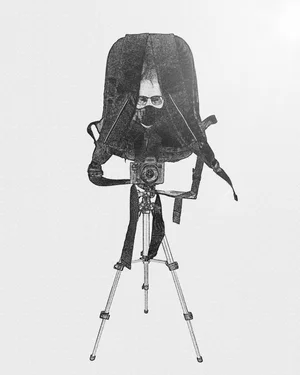
Created in Midjourney. Edited in Photoshop & Luminar Neo
Let me address the elephant in the room: yes, the header image for this article and the one above were created in Midjourney. I pay for a subscription to the platform, and I abide by their terms of use. As of now, using tools like Midjourney is entirely legal. The courts haven’t ruled on the pending lawsuits yet, and whether Midjourney or similar platforms will need to change their practices remains to be seen. That said, I believe Midjourney—and generative AI tools like it—will likely still exist in some form after these legal battles are resolved. AI is here to stay, and as long as its use aligns with ethical and legal standards, I see no issue with leveraging it as part of my creative process.
But here’s the rub: I’m not blind to the fact that the data used to train these models may have been sourced through scraping methods that infringe on copyright. It’s a valid concern, and it’s why I support the lawsuits that are bringing these practices to light. The point of this article isn’t to pretend these tools are perfect—it’s to highlight how we, as artists, can protect our work and adapt in an ever-changing creative landscape. While I use Midjourney legally and ethically now, I fully support efforts to hold AI companies accountable if they’ve crossed the line. Transparency, consent, and compensation for artists must be part of AI’s future.
For now, I use these tools with the understanding that the courts will determine what changes, if any, are needed. Until then, it’s on us as artists to stay informed, protect our rights, and engage critically with the technology shaping our world.
Comments (4)
Your article was easy to understand and its a unique view on this troubling debate. I was wondering if when you sue a Ai firm for copyright, are your fees paid by the office or do you have to foot the bill? I have heard that copywrite cases are often hard to prove and these laws are often hard to enforce. I used to protect my work with nightshade however my PC is trash and i aint got no funds to continue glazing my artwork. Any help is welcomed! thank you :)
Hi JJ, thanks for stopping by.
When you take on any copyright case, you will be paying out of your own pocket. Here is the thing. No matter how much or little you give Nightshade to protect your images from AI, and for the sake of debate, let us say it works perfectly and always will, it still will not protect you from regular people ripping you off. They can clear the metadata and manipulate the image in Photoshop or other programs to wipe out any coding. Flattening an image in Photoshop usually erases generative details from Adobe’s own Firefly. I would guess a user could do the same with Nightshade-type tech. If not, a screenshot and some upscaling could get close enough.
The best protection against theft is copyrighting your work. You can register up to 750 images in a collection with the US Copyright Office for $55. That is a good deal when you look at the price per image. Once registered, you do not have to prove actual damages. If there is reasonable doubt, you are entitled to a set amount per infringement, and you can also sue for legal expenses.
As counterintuitive as it sounds, AI is not the real enemy. Corporations are. Greedy and dishonest people are. Using the latest tech to block AI scraping your work or copying your style will not help you if a company actually steals your images. Style alone is not protected by copyright. What the court needs to see is your registered copyright. That is the only way a ruling will likely be in your favor. The better path is to avoid court, and a lawyer can handle this for you. Sometimes, sending a bill or using another simple tactic is enough to get a company to pay.
The most foolproof way to protect your work is to never post full-resolution files online or to not share them at all, but that is not realistic for most of us. This is why registering your work is so important.
Hope that helps.
I love the way you were phrasing things in this article, and I think apps like nightshade might help. IF AI were to truly steal art without consent, it would be damaged. It might sound awful to some ppl, but I think this idea is perfect. If someone willingly submits artwork to be trained, it would not be poisoned, and the AI will not face any lawsuits of such. BUT, if the AI steals art from artists who do not consent(this is easy, if an artwork is poisoned, the artist probably does not want their art to train AI) the AI will be poisoned a little, sound like karma to me. I think this way, both systems will be protected if they do not attack each other.
Hope you have a great day,
RavenpuffRules
Absolutely agree with you, and I really appreciate the way you framed this. What Nightshade does feels like poetic justice—if AI scrapes poisoned work without consent, it gets corrupted. That’s not sabotage; that’s a clear message: train ethically or face the consequences.
That said, I still have some overall doubts about programs like Nightshade and Glaze. I’ve got zero experience with coding, so maybe I’m oversimplifying, but it seems like any artwork protected by these tools could still be vulnerable. A screenshot, a screen recording, or some other workaround that doesn’t involve the original file might bypass the protection entirely. And if the people scraping art without consent are already ignoring ethical boundaries, who's to say they haven’t already figured out how to dodge these defenses—or are actively building those workarounds?
Maybe this is the new normal: a game of measures and counter-measures. Either way, I don’t blame any artist for trying out whatever defense they think might help. The stakes are too high not to try.