Why did YouTube remove the "last hour" filter?
YouTube removed the "last hour" search filter and the "sort by upload date" option in early 2026 to prioritize its own recommendation algorithm over chronological transparency. According to the official YouTube support announcement, the platform claims these features were removed because they were underused or didn't work as expected. However, thousands of users across Reddit and tech blogs like PPC Land disagree. They see this move as a way to force-feed "popular" content while burying smaller creators and breaking real-time news discovery.
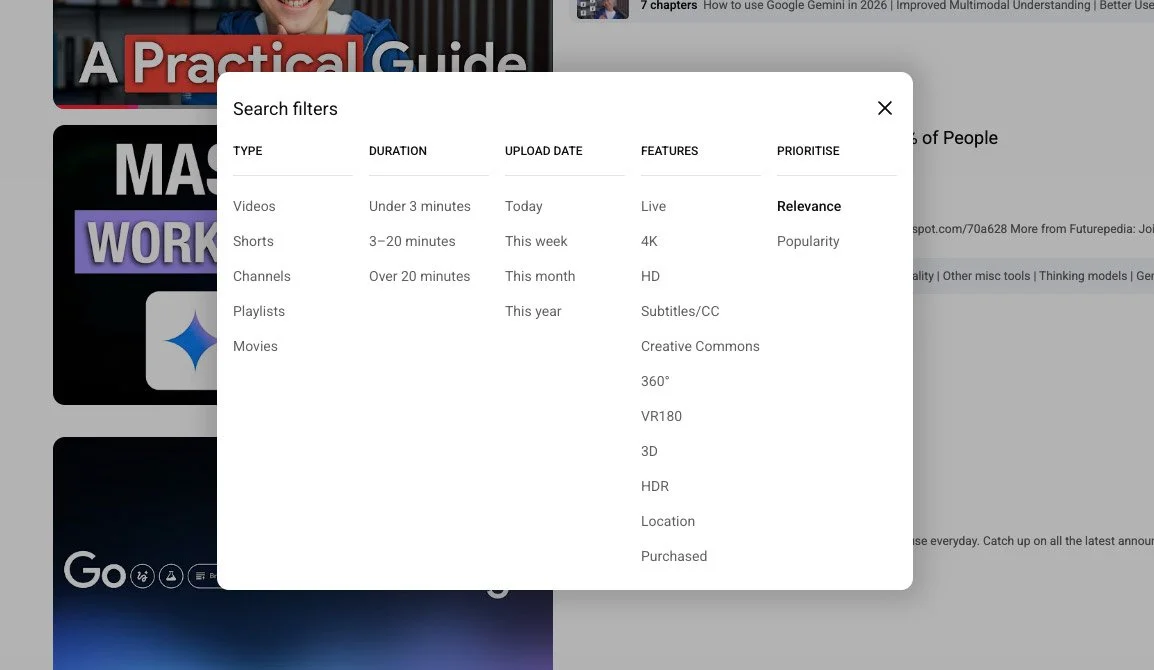
Why did YouTube remove the "last hour" filter?
The official story: "Simplifying" the experience
If you ask YouTube, they are just trying to help you. The platform recently reorganized its search menu, changing "Sort By" to "Prioritize" and renaming "View Count" to "Popularity" as detailed in this Digital Information World report. They argue that the "last hour" filter led to user complaints because the results were often low-quality or irrelevant. By removing these options, Google states they are making the search process more intuitive.
They want you to trust their "Relevance" and "Popularity" signals. These signals don't just count views; they look at watch time and other internal data to decide what you should see. In YouTube's view, a video from ten minutes ago isn't as valuable as a video from three days ago that already has a million likes.
What real people are saying on Reddit
If you step away from the official PR and look at communities like r/youtube, the mood is completely different. Users are not just annoyed; they are furious. Many feel that the platform is taking away their "map" to the internet and replacing it with a treadmill that only goes where the algorithm wants.
One Reddit user noted that these filters weren't removed because they were "broken," but because they allowed people to skip the algorithm entirely. Another common theory discussed in this creator analysis video is that this is a form of hidden censorship. Videos uploaded in the last hour haven't been fully reviewed by human moderators or AI systems yet. By hiding these videos, YouTube can prevent "unvetted" perspectives from going viral before they have a chance to flag or shadow-ban them.
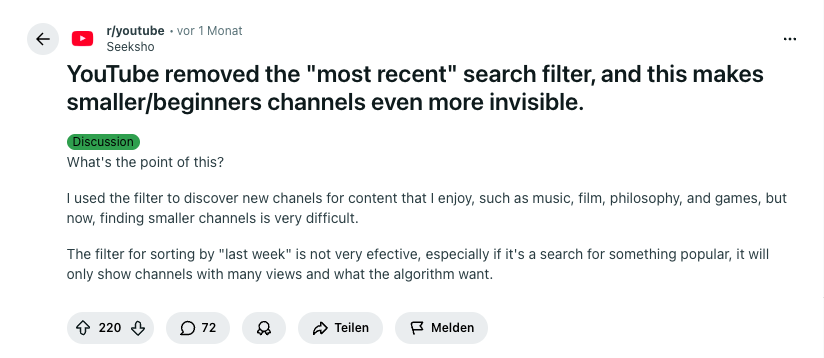
Screenshot of a Reddit post
The death of the small creator
One of the biggest problems with this change is how it hurts the "little guy." For years, the only way a new channel could get noticed was by being the first to upload a video about a trending topic. When a viewer searched for that topic and filtered by "last hour," that new creator was at the top of the list.
Now, that path is blocked. The Verge reports that without a chronological filter, you are stuck in a loop of seeing the same "mega-influencers" every time you search. Since the new "Popularity" filter favors videos that already have massive watch time, a small creator with zero views stands no chance of being seen. It feels like only the "elites" are allowed to be seen online anymore.
Why recency is essential for truth
Removing the "last hour" filter isn't just a minor UI change; it fundamentally breaks how we use the internet for news. When a major event like a protest, a natural disaster, or a live event happens, you don't want a "popular" video from two months ago. You want the raw footage from someone standing on the street ten minutes ago.
Critics on tech blogs like PPC Land argue that this change turns YouTube into something more like cable television. You don't choose what you watch; you choose from a list of things the "station" has already approved for you. This makes it impossible to find eyewitness accounts from small channels that haven't been "blessed" by the corporate algorithm yet.
A pattern of control across social media
We have seen this story play out before. Instagram removed the "Recent" tab on hashtags for the exact same reasons, as noted by The Verge. The goal is always to keep you on the app longer by serving you addictive, high-engagement content rather than giving you what you actually searched for.
This trend is often called "enshittification." It is the process where a platform starts out great for users, but slowly changes its features to prioritize its own profits and control. By removing your ability to sort by "Newest," YouTube is making sure you only see content that is profitable for them to host.
How to take back your search
At RecentReborn, we believe that the internet should be a place of discovery, not a gated community. While big platforms like YouTube and Instagram are busy building walls, we are building bridges. Our mission is to give you back the tools they took away.
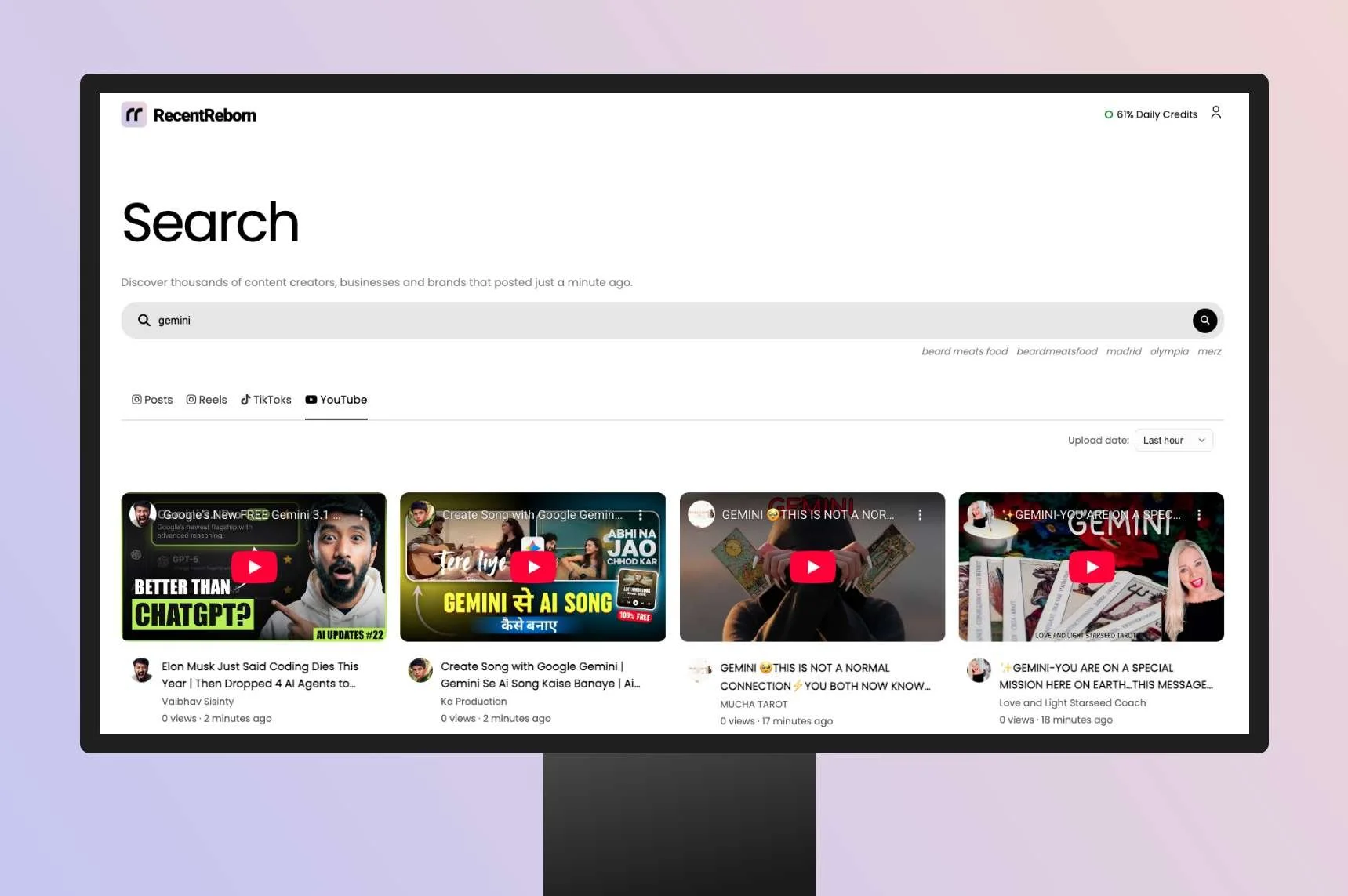
Screenshot of RecentReborn’s Youtube search
Whether it is our Chrome extension or our web app, we focus on restoring the real-time experience. You shouldn't have to wait for a corporate filter to tell you what is "relevant." You can decide that for yourself.