


The Zohran Mamdani Special
and why entertainment and fandom predicted his win

Hi there. Welcome to a special issue of Active Faults.
I got to know Zohran Mamdani through his Instagram-viral Gaydar Show appearance in May, clad in his default Suitsupply jacket and mistaking Anthony Porowsky for the “guy who has the Elvis voice” (he meant Austin Butler). My algorithm then fed me his Subway Takes guesting, where the mayoral candidate debunked his attack ads with quick and precise statistics before swerving to talk about overpriced matcha lattes (he’s unsure what to do about them).
And I remember my intuition all those months ago: he is going somewhere. Years of observing entertainment and fan communities would give anyone a prescience in the next idol, the next phenomenon that will flood public discussions and the next focal point of attention.
Today, let’s talk about the historic campaign of New York City’s Mayor-Elect, and how his success is anything but a surprise if you’ve been paying attention to fandom.
First of all, there were clues in those two videos alone.
As a straight male on the Gaydar Show, he was clearly out of tune with (young) queer culture, fumbling when asked to name a gay bar and clueless as to what “WLW” stands for. But he took the host’s teasing in stride, succumbed to his ignorance with a charming laugh, opened up to being educated, and left it at that. There was no cringe-worthy attempt to seem hippy, no put-upon eager to “address the minority”, no regurgitation of a rhetoric that sounded like a LinkedIn post in Pride Month. He knew his place and knew his mission better, and he got me behind his campaign objectives in under two minutes. I don’t even live in New York.

On Subway Takes, he held the conversation with a grace and versatility that had nothing to do with media training and PR cheat sheets but everything to do with “touching grass”, with genuine and consistent interactions with everyday people. He was quick-witted in a way that wasn’t grating, professional in a way that wasn’t tepid. His politics were communicated in a way that was digestible, for white collars scrolling through recommended reels on their lunch breaks and for those who work 16 hours a day without a lunch break.

Zohran hit just about every ingredient in my recipe for modern stardom: diligence, authenticity, vulnerability, humour, and competence. I’ve seen it spun by SEVENTEEN, the actor Wei Daxun, pan-celebrities on Bilibili, Olympians, the Filipino papal candidate in the conclave. When these individual components coalesce with an underdog character arc and the right public mood, you have your icon. It’s almost maths.
Setting personal charms aside, the strategisation of a celebrity’s management company is equally paramount. I watched on my feed his unprecedented city-wide “scavenger’s hunt” that gathered throngs of potential voters with an air of childlike whimsy. His team also ran football tournaments, arts and craft workshops, got the supporters making friendship bracelets and filming TikToks. Sounds familiar?
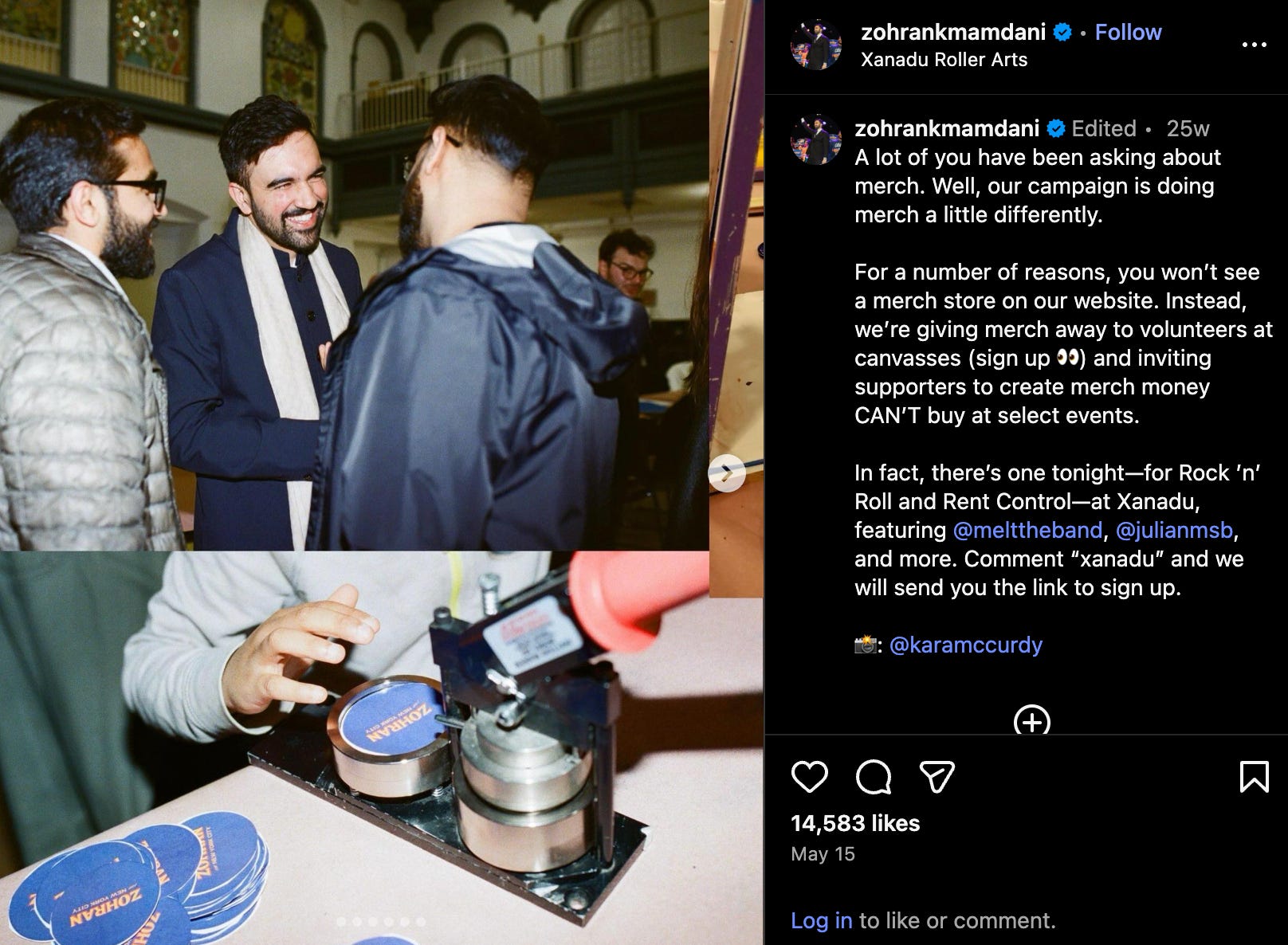
Not only did they “infotainment” the campaign, they tore a page straight from neiyu’s playbook: merchification. A small graphics design co-operative called Forge designed some damn good branding for him, donning vibrant colours, friendly visuals, simple images and an endearing font that feels like a huggable bear, the kind you’d choose over a man if you’re alone in the woods. Only they didn’t stop there.
They paid homage to the best trick that K-pop ever pulled: manufacture demand out of thin air by creating scarcity. Instead of mass-producing and selling the merch to land more funds, the team reserved the merch for the supporters to win as prizes after a certain level of engagement. The commodity is now a symbol, a hard-earned reward, a luxury. It is now associated with your identity, your action, your status and your stance. Scarcity equals demand equals meaning-making, and meaning is what draws people in. Ask any fan why they buy merch, and it will eventually boil down to this.
A New York Times piece attributed the campaign’s success to its amelioration of “Gen Z loneliness”, which is true—except that Gen Z loneliness was already driving everyone to entertainment and fandom, and only a handful caught on. It’s written all over the newfound popularity of Formula 1, the domination of Taylor Swift, the rise of Jujutsu Kaisen. To me, Zohran did nothing new. He did exactly what celebrities and media content have been doing in the past decade, which is giving us something real and palpable to hold onto.
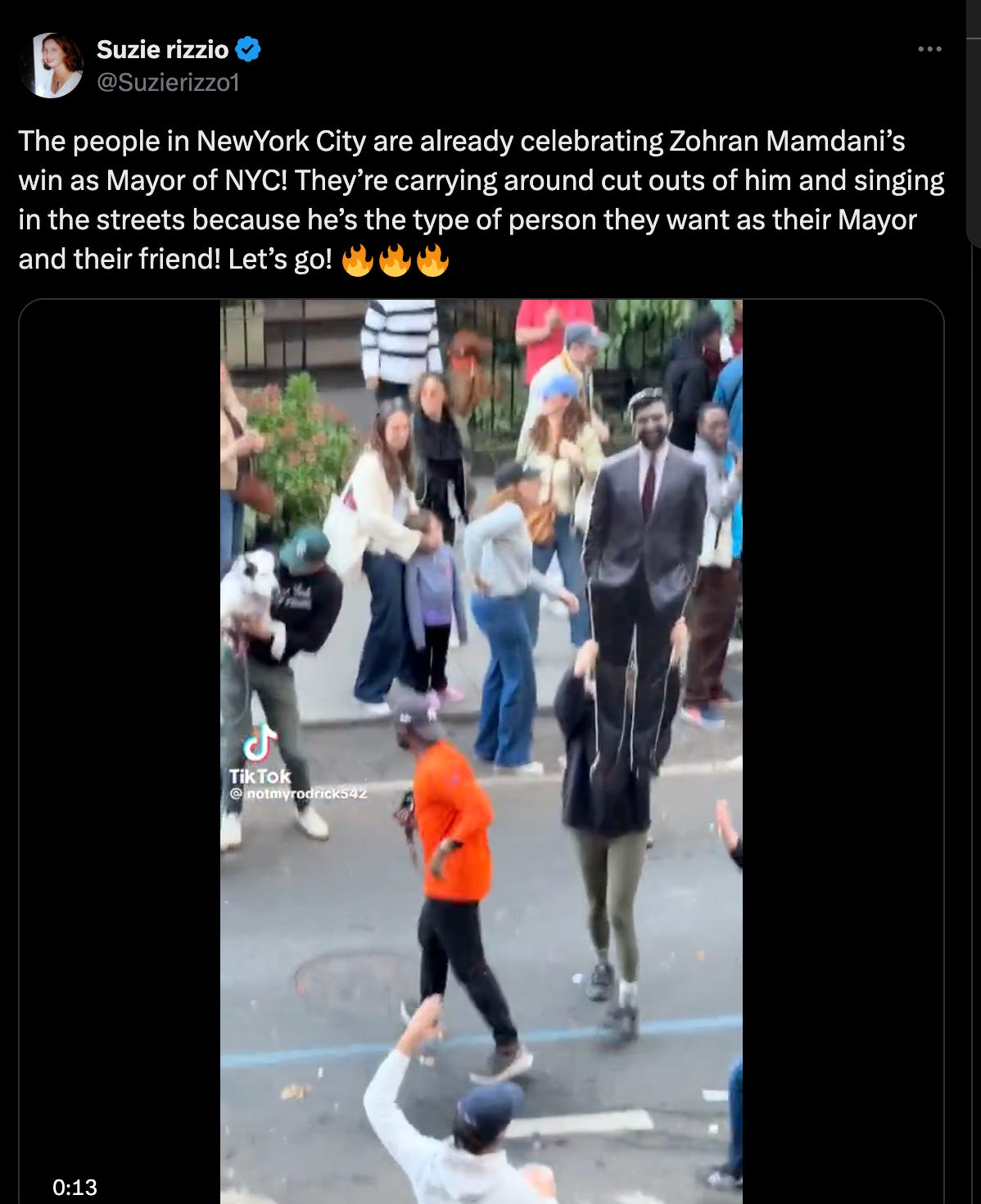
That’s why he was embedding himself and his campaign into the urban landscapes of New York, the way HYBE has been desperately experimenting with. Creating spectacles to build a connection. The Big Apple must have felt like Zohran’s “tong-city” in the lead-up to the election. He was in falafel trucks at 9am, running a 5K for Gaza before dinner, talking to LaGuardia cabbies past midnight, and hit 6 nightclubs belting to Alicia Keys at 3am. He went to a Knicks game, trick-or-treating, danced with elderly ladies in a senior home, walked through Chinatown talking about shrimp dumplings. He was everywhere, appearing tangibly in the topographies and touching it with his humanity, before throwing it back at a populace that is increasingly siloed in their sufferings. He carried an appeal you cannot resist, because the appeal is not an appeal but animal warmth, deep from the flesh that we all share. Cuomo made a TV ad with AI.
He made politics fun again and made “caring” cool again, and that got him half way there before the polling station even opened. I, alongside many others outside of America, was only made aware of his treacherous backstage negotiations with establishments and business moguls a couple of hours ago, through newspaper deep dives. He kept the behind-the-scenes exactly where they were, and leaned into the festivity of it all. Fuss and fanfare, exactly how a concert might feel like, a moment of release, escape and abandonment, joy and life-force.

 Tiktok failed to load.
Enable 3rd party cookies or use another browser
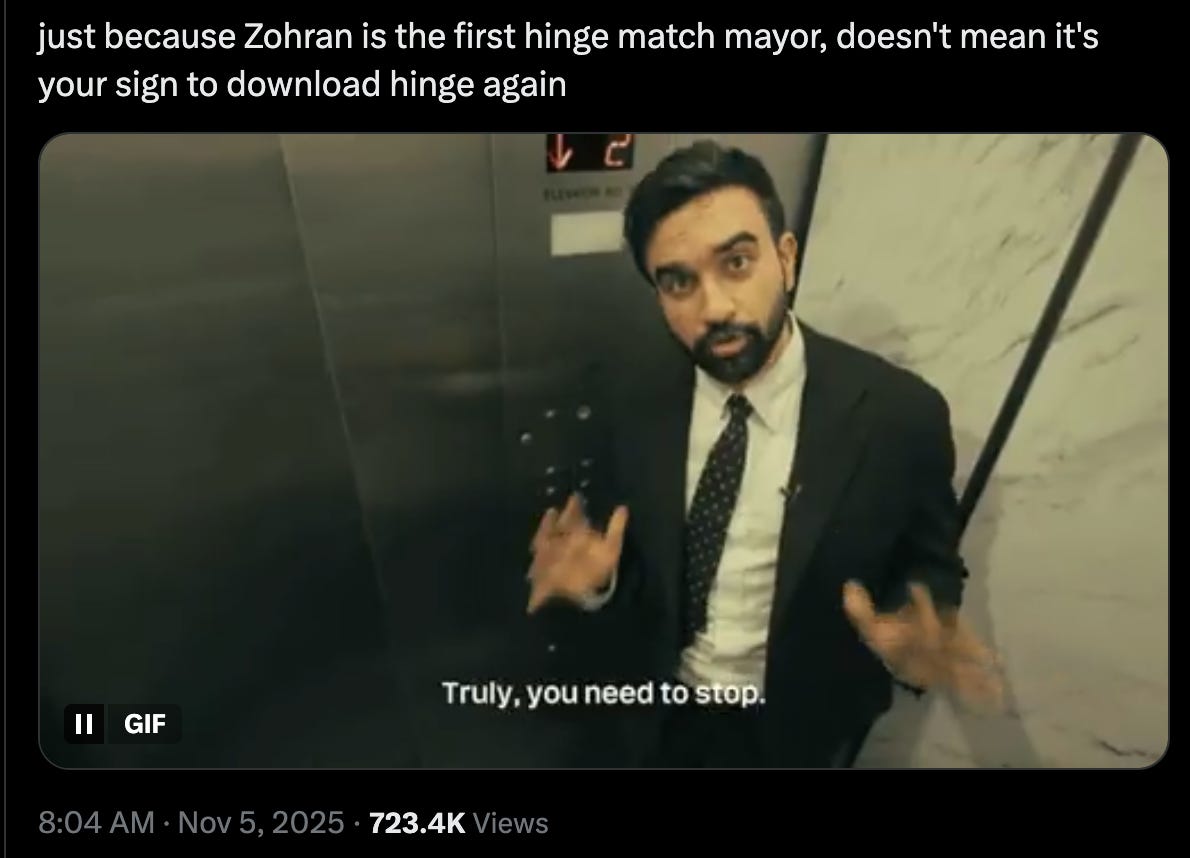
He also had no qualms talking about his dorky rapper days, stagenamed “Mr. Cardamom”, but he was just embarrassed about it enough that people delight in digging up his dirt. The people around him, especially his “aloof wife” (that he met on Hinge) piqued so much interest with her mystique. He created memes after memes (while Cuomo’s campaign was aptly described by NYT as “anti-memeable) with his speeches and responses to hate-train, rode on the internet trends and let the algorithms work their magic. He appeared on Twitch streams, at comedy shows, in underground raves. He weaved in his speech subtle clapbacks and Easter Eggs only people familiar with the campaign would recognise, in true pop star fashion. His victory tweet was footage of a train arriving at city hall, and Twitter described it as unbelievably “c*nty”. He ended his victory speech with an iconic Bollywood soundtrack that I had to ask my Bangladeshi friend to explain the cultural significance to me. His campaign had the right amount of unhinged and room for interpretation to attract engagement and diffuse the tension sparked by his views, “incendiary” to some but timely for others.
 Tiktok failed to load.
Enable 3rd party cookies or use another browser
Look towards the way Chinese netizens have exclusively referred to celebrities as “208”, and you’ll see that the Mayor-Elect has been a long time coming. I wrote about the anti-wealth sentiments that have been brewing since we never bounced back from the pandemic, as well as a pervasive discontentment that turned people away from stories and towards instant dopamine. The record-breaking hype of Nezha 2 was all about toppling the system, condemning the authorities, and breaking the confines of the old to usher in the new. Going to see Lu Han 5 times a year instead of getting pregnant and buying Labubus instead of real estate is all about disobedience and dissatisfaction.1 Entertainment and fandom wrote the prophecies in small prints, like I’ve been arguing for years.
His victory speech is about to be the most imitated piece of political statement for years to come, although I doubt anyone else can achieve it. The messaging was provocative, relational, in-touch without being overbearing, and it created parasociality. It reminds me, as ridiculous as it might sound, of the idols’ closing remarks at their concerts. It talks of gratitude and promises, shows humility and determination. Most importantly, it redirects the power to “you”. The city is yours, Zohran said, and it spoke to a much greater audience than the one he had in mind.
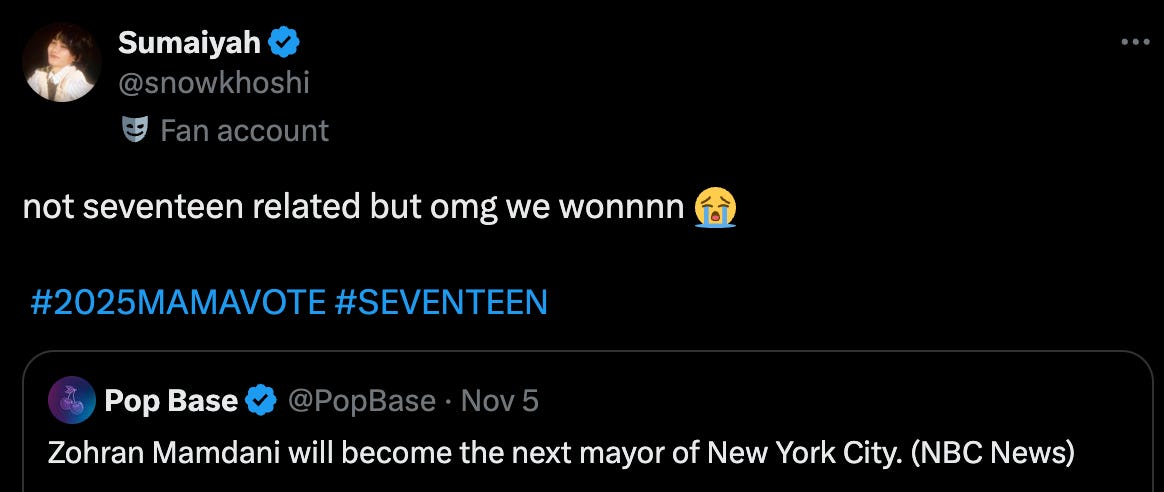
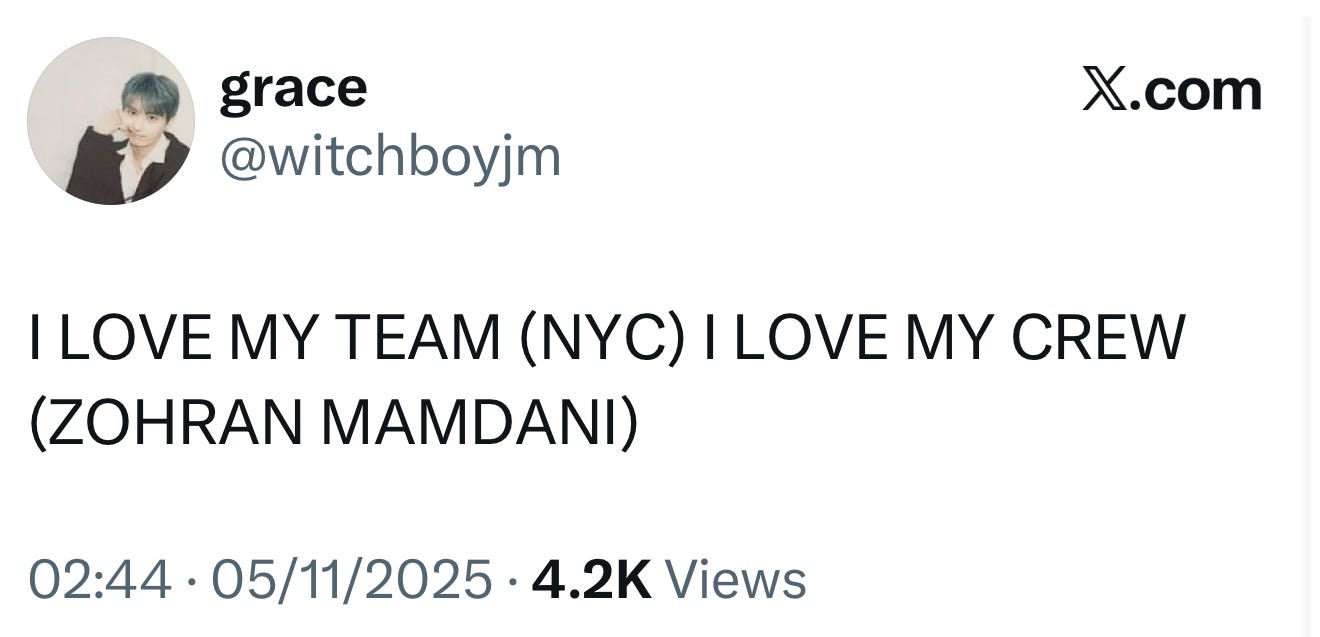
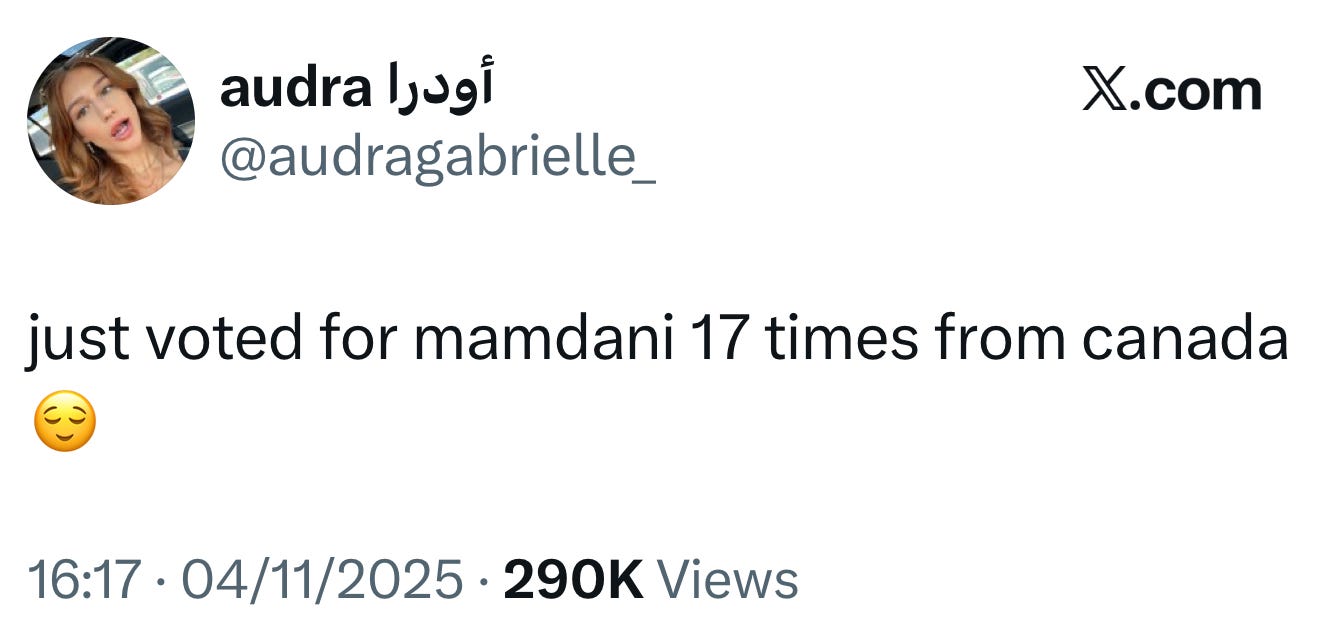
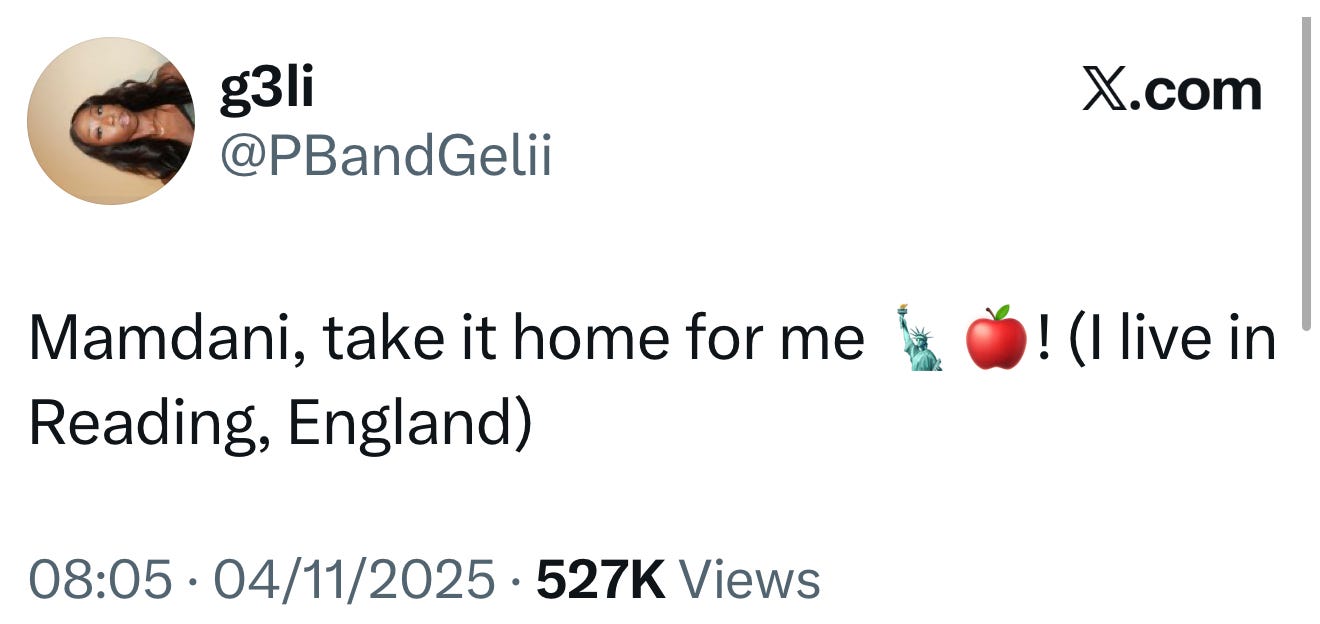
I know I’m far too privileged to benefit substantially from his policies. But even then I am profoundly moved by his ethos being where I am now, on the brink of exile from a country that doesn’t want me here. He articulated an inkling that has been ringing in our bones from dawn till dusk: that life shouldn’t be like this. It shouldn’t feel like dispossession, discouragement, distress and despair. We shouldn’t feel this hollowed out, fatigued, disheartened, stuck. This is a “We” that spans far beyond NYC, all the way around the world to a country they insist is demonically different. We’re not that different after all.
Funnily enough, news of a PopMart livestream screwup broke as I prepare this piece for publication, where two sellers were heard conversing off-screen: “Isn’t 79RMB too expensive for this little thing?” and the other responded “don’t worry, they will still buy it anyway”. Currently the internet is outraging.


Yes! You nailed it. I think the merch with unlicensed iconic NYC logos was also a great move--did they get C&Ds? Yes. But they had a willing crowd lapping it up, and those legal actions just added to the underdog images.
so good. so smart.