Advertisement
Advertisement

Commentary

Commentary: TACO time is over for stocks

Donald Trump’s military gambit in Iran is nothing like his tariff experiment or even his threats to take Greenland by force, says Jonathan Levin for Bloomberg Opinion.

Commentary: TACO time is over for stocks
A trader works on the floor at the New York Stock Exchange (NYSE) in New York City, US. REUTERS/Brendan McDermid/File Photo
25 Mar 2026 05:58AM
Read a summary of this article on FAST.
FAST

MIAMI, Florida: Investors have grown accustomed to the idea that Donald Trump-induced shocks rarely last long, because, as the popular TACO acronym tells us, “Trump Always Chickens Out”.

But the president’s decision to join Israel in starting a war with Iran has opened a geopolitical and macroeconomic Pandora’s box that may make a tidy walk-back impossible. Under the surface, financial markets are starting to take note.

The TACO regime in US stocks – in which every selloff was a buying opportunity – may be officially over. That thesis will now get a test after Trump postponed threatened strikes against Iranian energy infrastructure and power plants for five days, pending the outcome of what he said were talks with Iran to end the 24-day war.

Consider the extraordinary difference between 2025 and 2026. In the first year of the new Trump administration, the president became a one-man market narrative. He hinted at firing Federal Reserve Chair Jerome Powell, but any market effects were nullified when he moderated his rhetoric.

On Apr 2, 2025, he triggered a market crash by unveiling sweeping and indiscriminate tariffs on the entire world, but he also ushered in a v-shaped recovery less than a week later by opening the door for delays and negotiation. Because the market was driven by words rather than actions, it was easy to repair what was broken.

LOST CONTROL

By starting a real kinetic conflict in Iran, Trump has lost any semblance of control. Now, the market moves on attacks against energy infrastructure and the inability to get tankers through the Strait of Hormuz. And with higher gasoline prices, he’s also losing sway over the flagging sentiment of American consumers.

You can see the difference in market pricing. After a few brutal days in April 2025, the S&P 500 Index surged back and never retested the post-“Liberation Day” lows. While the recent selloff has unfolded much more slowly, the recovery looks elusive.

The picture is a bit worse under the surface. The average stock is actually doing worse than the index as a whole: An equal-weighted basket of stocks is underperforming the capitalisation-weighted one, and about 80 per cent of stocks are trading under their 50-day moving averages.

Another problem is Trump’s apparent desire to counter his “TACO” critics. (As a reminder, credit for the acronym belongs to the excellent Financial Times writer Rob Armstrong, of the Unhedged newsletter). 

When he was asked about the TACO habit by a reporter last year, Trump called the question “nasty” and sought to reframe his behaviour as a conscious strategy. “You call that chickening out?” Trump said. “It’s called negotiation.”

But whether you call it “madman diplomacy” or the Art of the Deal or anything else, it can’t possibly work if the whole world has your number. Trump is seemingly eager to reassert his unpredictability in Iran, which – if true – would constitute an awful excuse for continuing a war with tremendous economic and, above all, human costs. 

NORMALCY WILL NOT BE RESTORED ANYTIME SOON

Certainly, it’s possible that financial markets have now priced in some – maybe a lot – of the economic damage, but we can’t know for sure. Looking at previous geopolitical risk events, the S&P 500 tends to bottom on average around eight days after the event. (In other words, in a world of averages, the bottom may already be in by now.)

But averages can be tremendously deceiving and the actual outcomes exhibit no clear pattern, from the rally after the Iraq War to the long grinding retreat after the start of the Gulf War. Every conflict is unique.

So too are the economic and market circumstances. Relative to other major geopolitical shocks, the Iran conflict is unfolding against high stock-market valuations and low consumer confidence. (Only at the outset of the Iraq War was confidence meaningfully lower.) 

In short, shocks have the potential to play out differently based on starting circumstances. The Iraq War unfolded at the end of a crash, and cheap stocks rallied. The Ukraine conflict unfolded near the top of a market bubble. And sure, the US is helped by its position as a net energy exporter. But that was true when the Ukraine conflict was unfolding, and it didn’t insulate the US from economic pain then.

Whatever happens next, investors shouldn’t expect a sense of normalcy to be restored anytime soon. Trump’s military gambit in Iran is nothing like his tariff experiment or even his threats to take Greenland by force, because explosions are rocking the Middle East. And market participants thinking this is just another “Liberation Day” should be advised that the TACO era is over and the next one may be much more dangerous.

Source: Bloomberg/el

Sign up for our newsletters

Get our pick of top stories and thought-provoking articles in your inbox

Subscribe here
Inbox
FAST
Advertisement

World

Trump cites progress with Iran, US proposes plan to end war

Trump said the US was talking to "the right people" in Iran in order to reach a deal to end hostilities, adding that Tehran wanted to reach a deal very badly.

Trump cites progress with Iran, US proposes plan to end war

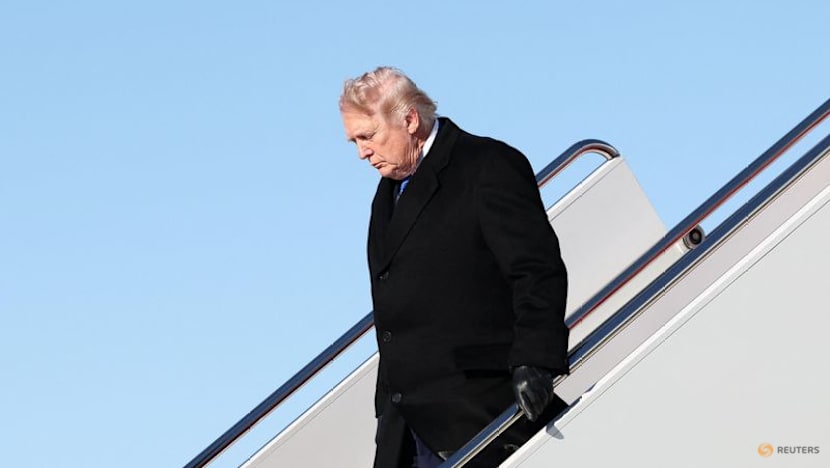
US President Donald Trump disembarks Air Force One upon arrival at Joint Base Andrews in Maryland, US, Mar 23, 2026. (Photo: REUTERS/Kevin Lamarque)

25 Mar 2026 06:31AM (Updated: 25 Mar 2026 07:36AM)
Read a summary of this article on FAST.
FAST

ISLAMABAD: US President Donald Trump said on Tuesday (Mar 24) the US was making progress in its efforts to negotiate an end to war with Iran, including winning an important concession from Tehran, while a source confirmed that Washington had sent Iran a 15-point settlement proposal.

Trump told reporters at the White House the US was talking to "the right people" in Iran in order to reach a deal to end hostilities, adding the Iranians wanted to reach a deal very badly.

"We're in negotiations right now," he said.

Tehran has denied that direct talks have taken place. Iran's powerful parliament speaker, Mohammad Baqer Qalibaf, on Monday dismissed the reports as "fake news".

CNA Games
Show More
Show Less

The New York Times reported on Tuesday that Washington sent Iran a 15-point plan to end the war in the Middle East. Israel's Channel 12, quoting three sources, said the US was seeking a month-long ceasefire to discuss the 15-point plan.

A source familiar with the matter confirmed that the US had sent a plan to Iran but provided no further details.

The Israeli media outlet said the plan would include the dismantlement of Iran's nuclear program, ceasing support for proxy groups, and the reopening of the Strait of Hormuz.

Israeli Prime Minister Benjamin Netanyahu's office did not immediately respond to a request for comment.

The Republican president told reporters at the White House that Iran had made a valuable concession related to non-nuclear energy and the Strait of Hormuz,  although he did not elaborate.

Iran has told the United Nations Security Council and the International Maritime Organization that "non-hostile vessels" may transit the Strait of Hormuz if they coordinate with Iranian authorities, according to a note seen by Reuters on Tuesday.

Iran has effectively shut the waterway, where 20 per cent of the world's oil normally transits, since the US and Israel launched attacks four weeks ago, creating the worst energy supply shock in history and sending fuel prices soaring. 

"It was a very big present, worth a tremendous amount of money," Trump said in his comments on Iran, adding: "It was a very nice thing they did."

But US, Israeli and Iranian strikes continued and sources said Washington was preparing to send more troops to the region. Two people familiar with the matter told Reuters on Tuesday that the US was expected to send thousands of soldiers from the Army's elite 82nd Airborne Division to the Middle East.

The forces will add to the 50,000 US troops already in the region and accelerate Washington's massive US military buildup there, fuelling fears of a longer conflict. 

Pakistan's prime minister said on Tuesday that he was willing to host talks between the US and Iran on ending the war, a day after Trump postponed threats to bomb Iranian power plants, saying there had been "productive" talks.

In a post on X, Prime Minister Shehbaz Sharif said Pakistan fully supported ongoing efforts to pursue dialogue and was ready to host "meaningful and conclusive talks for a comprehensive settlement".

A Pakistani government source said discussions on a meeting were at an advanced stage and if it did happen, "a big 'if'", it would take place within a week. Pakistan has long-standing ties to neighbouring Iran's Islamic Republic and has been building a relationship with Trump.

The US and Israel launched strikes on Iran on Feb 28 after saying they had failed to make enough headway in talks aimed at ending Iran's nuclear program, although mediator Oman said significant progress had been made.

Source: Reuters/fh

Sign up for our newsletters

Get our pick of top stories and thought-provoking articles in your inbox

Subscribe here
Inbox
FAST
Advertisement

Commentary

Commentary: How to redirect the ‘responsible parent’ script in Singapore’s education system

Instead of asking parents to change their mindsets in a vacuum, we should reduce the conditions that make kiasu behaviour feel necessary, say the Institute of Policy Studies’ Mathew Mathews and Melvin Tay.

Commentary: How to redirect the ‘responsible parent’ script in Singapore’s education system

Students having a lesson in a classroom in Singapore. (File photo: CNA/Raj Nadarajan)

New: You can now listen to articles.

This audio is generated by an AI tool.

25 Mar 2026 06:00AM (Updated: 25 Mar 2026 08:03AM)
Read a summary of this article on FAST.
FAST

SINGAPORE: In Singapore, much has been said about the need to break away from an education “arms race”.

This was reiterated by Education Minister Desmond Lee in parliament this month, when he cautioned that a fixation on grades can pit children against one another, diminish their joy of learning and crowd out character-building.

Mr Lee’s remarks reaffirm efforts that the Ministry of Education has pursued for more than a decade – including doing away with mid-year examinations, softening labels of giftedness or academic excellence or lack thereof, and dampening obsession with “top” schools – in hope that the anxiety and stress experienced by parents and students would recede. The ministry is also studying how to further reduce the stakes of examinations.

The key point, however, is this: Lowering stress involves more than adjusting milestones. It also means changing the incentive environment around them, so families feel they can step off the treadmill without taking an irreversible risk.
 

CNA Games
Show More
Show Less

WHEN EDUCATION MEETS BEING "KIASU"

But why are people on the treadmill in the first place? Findings from the recent IPS-CNA national identity study suggest something deeper may be at work.

When 2,000 Singapore residents were asked what traits define a Singaporean, the two most common responses were, surprisingly, not Singlish or our local food culture. 

Instead, they were "valuing education" and "being kiasu". The latter, according to those who participated in the study, was a negative identity marker.

If these are traits that sit near the centre of how we imagine a “typical Singaporean”, then the schooling, tuition and education arms race that have been widely debated in the public sphere are not only behaviours to be corrected. It is also part of an identity system, reinforced through everyday decisions and social expectations. This also helps explain why well-intentioned messaging, such as the idea that “every school is a good school”, may have struggled to shift lived realities.

EDUCATION AS INSURANCE, NOT STATUS

It is easy to assume that parents hanker after brand-name schools mainly because they are status-conscious or competitive. But there is a more psychologically honest explanation – for many, school choice is about managing risk and fulfilling responsibility.

Kiasu-ism is hence a way in which parents seek security for their child’s future and moral adequacy for themselves. In a way, schooling functions like insurance, where families hedge against regret and try to reduce uncertainty about what feels like an irreversible loss.
 

Take the tight competition for popular schools as an example. The explanation for this does not simply involve kiasu parents, but also perceived differences in attractiveness tied to autonomy, awards, Special Assistance Plan status, co-curricular offerings, as well as differences in resources.

If parents believe some schools offer better environments, stronger networks or smoother pathways, chasing them becomes a rational response.

When education functions like insurance, families who can afford more coverage will buy it for reassurance, alongside embracing private tuition, Direct School Admission preparatory classes and other avenues to improve the chances of getting a child admitted into a brand-name school.

However, when reassurance has a monetary cost, inequality deepens quietly because the ability to buy certainty becomes another layer of advantage, and stress is not shared evenly across families.

This identity lens also explains a familiar frustration: When competition is reduced in one visible area, it reappears elsewhere. For example, reduce overt ranking and anxiety shifts to admissions routes, volunteering hours and even moving homes.
 

WHAT WE CAN DO DIFFERENTLY

Instead of simply portraying kiasu parenting as a troubling feature of society and asking parents to change their mindsets, we should do more to reduce the conditions that make kiasu behaviour feel necessary.

First, the perceived cost of being “wrong” early needs to be lowered.

The more irreversible early sorting feels, the more obsessive optimisation becomes. Strengthening credible second chances and permeability across pathways reduces the sense that one exam or one school “decides everything”.

Second, we should undo hierarchy, not just hide it.

If certain labels continue to signal stronger networks, richer programmes, and better resourcing, then families will keep treating school choice as a high-stakes bet. Narrowing opportunity gaps between schools - especially in enrichment, exposure and specialised CCA training - is essential.

Third, we should reduce the perceived need to buy advantage.

When private tuition becomes the default way families secure reassurance, stress and opportunity become unevenly distributed, and the system will begin to feel like it rewards not just effort, but access to such resources.

The way forward is to narrow the marginal value of specialised coaching by ensuring that most students can complete core learning and assignments with confidence within school time.

Technology will help. As new tools mature, well-designed AI-augmented support can help level the playing field. If every student has access to high-quality and easily accessible tutoring-on-demand, the advantage of procuring expensive niche tuition will shrink.

None of this is easy because it requires us to rewrite a national script. But the IPS-CNA findings offer a constructive starting point.

If valuing education is central to who we are, we should keep it.

If kiasu-ism is central to our identity, we should not pretend it can be wished away. Our task is to redirect it, so that diligence does not become fear, and aspiration does not become exhaustion.

Redirecting means making the “responsible parent” script less about gaming scarce advantage, and more about building steady foundations and faith in lifelong learning.

Only if we get this right can we remain a society that values education, and be less anxious that one narrow definition of winning is the only way to live securely and well.

Mathew Mathews is Head of the Social Lab and Principal Research Fellow at the Institute of Policy Studies, National University of Singapore. Melvin Tay is a Research Fellow at the same Institute.

Source: CNA/sk

Sign up for our newsletters

Get our pick of top stories and thought-provoking articles in your inbox

Subscribe here
Inbox
FAST
Advertisement

Commentary

Commentary: Your leftover blood samples are valuable to science – but they are often discarded

When leftover blood or tissue samples are disposed, we lose the opportunity to gain important medical knowledge, say academics from Yong Loo Lin School of Medicine.

Commentary: Your leftover blood samples are valuable to science – but they are often discarded
Millions of biospecimens are discarded after clinical use, representing an immense untapped resource that could accelerate scientific discovery. (Photo: iStock/RossHelen)
New: You can now listen to articles.

This audio is generated by an AI tool.

25 Mar 2026 05:59AM
Read a summary of this article on FAST.
FAST

SINGAPORE: At some point or another, you probably have had some of your blood or tissue collected as part of your medical care. What you may not know is that not all of that material was needed. Some of it, perhaps leftover drops of blood in a test tube, almost always ends up being thrown away – in more technical terms, disposed of as “biological waste”.

There is an important second sense of “waste” that comes into play here: When we dispose of these materials, we lose the opportunity to gain important new medical knowledge. Each year, it is estimated that millions of biospecimens are discarded after clinical use, representing an immense untapped resource that could accelerate scientific discovery and improve healthcare outcomes.

Using high-tech biomedical techniques such as genome sequencing, metabolite profiling and microbiome characterisation, researchers can learn more about diseases by analysing biospecimens.

There are numerous examples of breakthroughs from this type of research. Analysis of stored breast cancer tissues has enabled the identification of genes that led to marked improvements in the treatment of this malignancy. The discovery of the role of BRCA genes led to the discovery that some women are at higher risk of breast cancer, and that they can take important steps to reduce their risk of dying from that disease.

CNA Games
Show More
Show Less

Furthermore, elucidation of the role of the HER2 gene in breast cancer was a monumental discovery which continues to bear fruit, allowing the development of treatments that have dramatically extended survival times for many breast cancer patients.

Research with biospecimens also led to the discovery that human papillomavirus (HPV) is a major cause of cervical cancer, which in turn enabled the development of a vaccine. The vaccine is offered to Secondary 1 female students in Singapore, with the uptake being around 90 per cent in 2022, reducing the incidence of HPV-associated cervical cancer. 

THE BARRIER TO BIOSPECIMEN COLLECTION

Given the potential benefits from this research, the case for saving every single drop of blood or every piece of excess tissue is clear. However, well-intentioned rules designed to protect patients have made this a challenge.

In Singapore, the Human Biomedical Research Act (HBRA), passed in 2015, lays out the ethical conduct of human biomedical research. In appropriately protecting privacy and confidentiality, biospecimens are only given to researchers after they have first been stripped of information that would allow the researchers to identify the people whose biospecimens they are getting. 

But a major barrier to making the most successful use of biospecimens in research is the requirement for obtaining the consent of each person before their biospecimen can be used, or even before it can be saved and stored for possible future research.

Researchers must usually obtain either consent for the specific study in which the biospecimen will be used, or a “broad” consent to the types of future studies for which it might be saved. Such rules aim to respect patients’ autonomy.

However, there are several reasons to question the appropriateness of consent requirements. Indeed, there appears to be a recent trend around the world of public support for the removal of active consent procedures as societies become increasingly aware of the drawbacks.

ARGUMENTS FOR RELAXING CONSENT REQUIREMENTS

There are several arguments in favour of relaxing consent requirements. First, the benefit society gains from a wider pool of biospecimens outweighs the benefit individuals gain from preventing the use of their biospecimens in research.

Assuming that stringent protections for privacy and confidentiality are built into the rules for conducting medical research – as is already the case in Singapore – the use of a person’s biospecimen for research has almost zero impact on his or her life. In contrast, combining the biospecimens from many thousands of patients can yield an almost limitless amount of new medical knowledge. 

Second, the need for consent-taking can end up harming racial minorities and other groups of patients who are less well-represented in medical research. Historically, a great deal of research has taken place on Western populations. The result is that there is much less knowledge available about the specific ways that medical treatments need to be shaped for Southeast Asian populations – including Singaporeans.

To counter that long-standing problem, we need to do everything possible to accelerate the growth of information about the genetics of Southeast Asians. Putting up consent barriers would be going in the wrong direction. 

Third, a consent-taking procedure does not directly minimise the risks of re-identification or other privacy breaches. Paradoxically, it increases the risks to participants. It makes it a requirement for anonymised bio-specimens to be tied to the consent forms for verification purposes, creating an unnecessary linkage between the biospecimen and the donor, thus making breaches of confidentiality easier.

AN OPT-OUT SYSTEM

There actually exists a much better model for dealing with consent issues relating to biospecimen research in Singapore: the Human Organ Transplant Act (HOTA), which creates an “opt-out” system for organ donation.

In Singapore, you have the right to specifically put yourself on a list saying that you do not want your organs to be used for transplantation purposes after your death. But if you fail to take that action, the default is that your organs will be available for transplantation.

A similar rule could be used in the case of research with biospecimens. It would allow anyone to object to the use of their biospecimens for research. But for those who do not, their biospecimens will otherwise automatically become available to be stored and used for research.

Far fewer biospecimens will be inappropriately trashed. And a great deal of the time, effort and money spent in obtaining consent will be saved, freeing it up to pay for the actual conduct of research.

It would be a huge win if more specimens were made available for medical research on the unique aspects of the Singaporean population. This would go extremely far in fostering a much more conducive environment for local biomedical research without offending key bioethical pillars.

Shaun SE Loong and Kylie Heng are Clinician-Researchers and Roger Foo is Director of the Cardiovascular Metabolic Translational Research Programme, Yong Loo Lin School of Medicine, National University of Singapore. Jerry Menikoffis Professor of Bioethics at the Centre for Biomedical Ethics, Yong Loo Lin School of Medicine, National University of Singapore.

The authors published an academic paper on this topic with Gini W W Wong, Athena Ham, Aaron D’Sa and Mayank Dalakoti.

Source: CNA/el

Sign up for our newsletters

Get our pick of top stories and thought-provoking articles in your inbox

Subscribe here
Inbox
Advertisement

World

Meta ordered to pay US$375 million over child safety violations in landmark trial

Meta ordered to pay US$375 million over child safety violations in landmark trial

A recording of Meta Founder and CEO Mark Zuckerberg's deposition is played for the jurors on Mar 4, 2026, in Santa Fe. (Photo: Jim Weber/Santa Fe New Mexican via AP)

25 Mar 2026 05:08AM (Updated: 25 Mar 2026 08:43AM)
Read a summary of this article on FAST.
FAST

A New Mexico jury determined Tuesday (Mar 24) that Meta knowingly harmed children’s mental health and concealed what it knew about child sexual exploitation on its social media platforms, a verdict that signals a changing tide against tech companies and the government's willingness to crack down.

The landmark decision comes after a nearly seven-week trial, and as jurors in a federal court in California have been sequestered in deliberations for more than a week about whether Meta and YouTube should be liable in a similar case.

New Mexico jurors sided with state prosecutors who argued that Meta — which owns Instagram, Facebook and WhatsApp — prioritised profits over safety, and violated parts of the state’s Unfair Practices Act.

The jury agreed with allegations that Meta made false or misleading statements and also agreed that Meta engaged in “unconscionable” trade practices that unfairly took advantage of the vulnerabilities of and inexperience of children.

HOW MUCH META OWES

CNA Games
Show More
Show Less

Jurors found there were thousands of violations, each counting separately toward a penalty of US$375 million. That's less than one-fifth of what prosecutors were seeking.

Meta is valued at about US$1.5 trillion and the company's stock was up 5 per cent in early after-hours trading following the verdict, a signal that shareholders were shrugging off the news.

Juror Linda Payton, 38, said the jury reached a compromise on the estimated number of teenagers affected by Meta’s platforms, while opting for the maximum penalty per violation. With a maximum US$5,000 penalty for each violation, she said she thought each child was worth the maximum amount.

WHAT WILL CHANGE META'S PLATFORMS

The social media conglomerate won’t be forced to change its practices right away. It will be up to a judge — not a jury — to determine whether Meta's social media platforms created a public nuisance and whether the company should pay for public programs to address the harms. That second phase of the trial will happen in May.

A Meta spokesperson said the company disagrees with the verdict and will appeal.

“We work hard to keep people safe on our platforms and are clear about the challenges of identifying and removing bad actors or harmful content,” the spokesperson said. "We will continue to defend ourselves vigorously, and we remain confident in our record of protecting teens online.”

Attorneys for Meta said the company discloses risks and makes efforts to weed out harmful content and experiences, while acknowledging that some bad material gets through its safety net.

OTHER LAWSUITS AGAINST META

New Mexico’s case was among the first to reach trial in a wave of litigation involving social media platforms and their impacts on children.

More than 40 state attorneys general have filed lawsuits against Meta, claiming it’s contributing to a mental health crisis among young people by deliberately designing Instagram and Facebook features that are addictive.

“Meta’s house of cards is beginning to fall,” said Sacha Haworth, executive director of watchdog group The Tech Oversight Project. “For years, it’s been glaringly obvious that Meta has failed to stop sexual predators from turning online interactions into real-world harm."

Haworth pointed to whistleblowers like Arturo Béjar, as well as unsealed documents and other evidence, saying it painted a damning picture.

New Mexico’s case relied on an undercover investigation where agents created social media accounts posing as children to document sexual solicitations and Meta’s response.

The lawsuit, filed in 2023 by New Mexico Attorney General Raúl Torrez, also said Meta hasn’t fully disclosed or addressed the dangers of social media addiction. Meta hasn’t agreed that social media addiction exists, but executives at trial acknowledged “problematic use” and say they want people to feel good about the time they spend on Meta’s platforms.

“Evidence shows not only that Meta invests in safety because it’s the right thing to do but because it is good for business,” Meta attorney Kevin Huff told jurors in closing arguments. “Meta designs its apps to help people connect with friends and family, not to try to connect predators.”

Tech companies have been protected from liability for content posted on their social media platforms under Section 230, a 30-year-old provision of the US Communications Decency Act, as well as a First Amendment shield.

New Mexico prosecutors say Meta still should be responsible for its role in pushing out that content through complex algorithms that proliferate material that is harmful for children.

“We know the output is meant to be engagement and time spent for kids,” prosecution attorney Linda Singer said. “That choice that Meta made has profound negative impacts on kids.”

Meta attorney Kevin Huff makes closing arguments Mar 23, 2026, in state court, in Santa Fe, in a trial where the social media conglomerate is accused of misleading its users about how safe its platforms are for children. (Photo: Eddie Moore/The Albuquerque Journal via AP)

WHAT THE NEW MEXICO JURY REVIEWED

The New Mexico trial examined a raft of Meta’s internal correspondence and reports related to child safety. Jurors also heard testimony from Meta executives, platform engineers, whistleblowers who left the company, psychiatric experts and tech safety consultants.

The jury also heard testimony from local public school educators who struggled with disruptions linked to social media, including sextortion schemes targeting children.

In reaching a verdict, the jury considered whether social media users were misled by specific statements about platform safety by Meta CEO Mark Zuckerberg, Instagram head Adam Mosseri and Meta global head of safety Antigone Davis.

They also considered Meta's failure to enforce its ban on users under 13, the role of its algorithms in prioritising sensational or harmful content, and the prevalence of social media content about teen suicide.

ParentsSOS, a coalition of families who have lost children to harm caused by social media, called the verdict a “watershed moment”.

“We parents who have experienced the unimaginable — the death of a child because of social media harms — applaud this rare and momentous milestone in the years-long fight to hold Big Tech accountable for the dangers their products pose to our kids,” the group said in a statement.

Source: Reuters/fh

Sign up for our newsletters

Get our pick of top stories and thought-provoking articles in your inbox

Subscribe here
Inbox
Advertisement

World

Trump says Iran made a major energy-related gift to the US

US President Donald Trump said Iran had given the United States a major energy-related concession, describing it as “a very big present”.

Trump says Iran made a major energy-related gift to the US

US President Donald Trump speaks as he attends Markwayne Mullin's swearing-in as Department of Homeland Security (DHS) Secretary, at the White House in Washington, DC, US, Mar 24, 2026. (Photo: REUTERS/Evan Vucci)

25 Mar 2026 03:29AM (Updated: 25 Mar 2026 03:30AM)

WASHINGTON: US President Donald Trump said on Tuesday (Mar 24) that Iran had made a major energy-related concession to the United States, describing it as a positive development, although he did not give details.

Trump suggested the gift was related to the Strait of Hormuz, the oil transit waterway that the United States has struggled to keep open.

"They gave us a present and the present arrived today, and it was a very big present, worth a tremendous amount of money," Trump told reporters in the Oval Office.

"It wasn't nuclear, it was oil-and gas-related, and it was a very nice thing they did."

Trump, reiterating that he felt the United States had already won the war, indicated that Defence Secretary Pete Hegseth was disappointed as how quickly the campaign had gone.

"Pete didn't want it to be settled," he said, but did not give details.

Trump said the United States was talking to "the right people" in Iran in order to reach a deal to end hostilities, adding the Iranians wanted to reach a deal very badly.

"We're in negotiations right now" over Iran, he said, but would not provide details, particularly on whether US envoys Steve Witkoff and Jared Kushner planned talks this week. He said Witkoff, Kushner, Vice President JD Vance and Secretary of State Marco Rubio were involved in negotiations.

Pakistan has said it is willing to host talks between the United States and Iran.

Source: AFP/fs

Sign up for our newsletters

Get our pick of top stories and thought-provoking articles in your inbox

Subscribe here
Inbox
Advertisement

World

Oil, stock trading spiked before Trump's Iran remarks: Media 

“What stands out here isn't just the size of the trades, but the timing,” said Stephen Innes, analyst at SPI Asset Management.

Oil, stock trading spiked before Trump's Iran remarks: Media 

A pedestrian walks past a stock quotation board showing the Nikkei share average and the exchange rate between the US dollar and Japanese Yen, outside a brokerage in Tokyo, Japan, Mar 24, 2026. (Photo: REUTERS/Kim Kyung-Hoon)

25 Mar 2026 03:05AM (Updated: 25 Mar 2026 06:10AM)
Read a summary of this article on FAST.
FAST

LONDON: Thousands of oil contracts - a higher volume than normal - traded 15 minutes before US President Donald Trump pledged to halt strikes on Iranian energy infrastructure, sending prices tumbling, financial media reported Tuesday (Mar 24).

Between 1049 and 1050 GMT on Monday, oil trading volumes surged to around US$580 million, according to the Financial Times. Bloomberg put the value at US$650 million.

During those two minutes, at least six million barrels of Brent crude and West Texas Intermediate changed hands, far above the roughly 700,000-barrel average recorded at a similar time over the previous five days, Bloomberg reported.

About 15 minutes later, Trump stepped back on his threat to attack energy sites citing "very good" talks to end the war in a social media post, which sent crude prices plunging more than 14 per cent.

The traders who bet on prices dropping ahead of the announcement would likely have profited from Trump's sudden reversal, prompting some analysts to question whether some market participants had acted on prior information.

"What stands out here isn't just the size of the trades, but the timing," Stephen Innes, an analyst at SPI Asset Management told AFP.

"Traders are not clairvoyant. When positioning shifts minutes ahead of a market-moving headline, it usually means someone is acting on ... intel before the story broke," he added.

Similarly, S&P 500 stock index futures showed an unusual burst of trading activity early Monday, about 15 minutes before Trump's social media post, CNBC reported.

Senator Chris Murphy, responding to a social media post that alleged a single US$1.5 billion purchase of S&P 500 futures just before Trump's announcement, called it an example of "mind blowing corruption."

"A US$1.5 BILLION BET ... 5 minutes before Trump's post. Who was it? Trump? A family member? A White House staffer? This is corruption. Mind blowing corruption," the Democratic lawmaker said on X.

The speculation about insider trading has also spread to prediction markets, which allow people to bet on the likelihood of thousands of global events.

CNN reported that one trader made US$1 million from dozens of well-timed bets on Polymarket that correctly predicted US and Israeli military actions against Iran. 

Based on findings from Bubblemaps, an analytics company that tracks blockchain transactions, this particular bettor has had a pattern of prescient bets, including hours before Israeli's Oct 2024 strikes on Iran, CNN reported.

Innes noted that the oil market is "not just traders speculating on price; it's a tightly connected ecosystem of physical players, refiners, shippers and governments, all operating within overlapping information channels."

He added that the activity could have been driven by a large producer hedging against a potential price drop, given that oil futures had surged 40 per cent since the start of the war.

A few hours after Trump's announcement, Tehran's parliamentary speaker, Mohammad Bagher Ghalibaf, reportedly involved in talks, said "no negotiations" were underway, insisting Trump was seeking "to manipulate the financial and oil markets."

Source: AFP/fs

Sign up for our newsletters

Get our pick of top stories and thought-provoking articles in your inbox

Subscribe here
Inbox
Advertisement

Sport

Liverpool's Salah to end glittering Anfield career at end of season

Liverpool's Salah to end glittering Anfield career at end of season

Liverpool's Mohamed Salah celebrates scoring their fourth goal in the match against Galatasaray. (Photo: REUTERS/Phil Noble)

25 Mar 2026 02:54AM (Updated: 25 Mar 2026 06:52AM)
Read a summary of this article on FAST.
FAST

LONDON: Mohamed Salah will leave Premier League champions Liverpool at the end of the season, the Egyptian forward announced on Tuesday (Mar 24) as he started a farewell to what the club said were nine "illustrious" years at Anfield.

The 33-year-old arrived at Anfield from Roma in 2017 before making 435 appearances for Liverpool, scoring 255 goals to leave him third on the Reds' all-time leading goalscorers chart behind only Ian Rush and Roger Hunt.

Salah has also won the Premier League Golden Boot award on four occasions while starring for Liverpool in both their 2019/20 and 2024/25 title triumphs as well as lifting the 2019 Champions League trophy.

His Liverpool honours also include a Club World Cup, UEFA Super Cup, FA Cup and two League Cups.

CNA Games
Show More
Show Less

But the currently injured Salah has scored just five Premier League goals so far this season, compared with 29 in last term's title-winning campaign.

And his Anfield future became the subject of intense speculation after a dramatic bust-up with Liverpool manager Arne Slot in December.

He accused Liverpool of throwing him "under the bus" after he was benched for three games in a row and said he had no relationship with the Dutch boss.

"UNFORTUNATELY, THE DAY HAS COME"

Salah, in a video on social media featuring highlights of his time with Liverpool, said: "Hello everyone. Unfortunately, the day has come.

"This is the first part of my farewell. I will be leaving Liverpool at the end of the season.

"I wanted to start by saying that I never imagined how deeply this club, this city, these people would become part of my life. Liverpool is not just a football club.

"It's a passion, it's a history, it's a spirit. I can't explain in words to anyone not of this club."

Salah, who, in common with many Liverpool players and staff, was deeply affected by the death of team-mate Diogo Jota in a car crash in July, added: "We celebrated victory, we won the most important trophies and we fought together through the hardest time in our life.

Liverpool's Mohamed Salah leaves the field after a substitution during the second leg of the Champions League round of 16 match between Liverpool and Galatasaray, in Liverpool, England, Mar 18, 2026. (Photo: AP/Jon Super)
Liverpool's Mohamed Salah celebrates by taking a selfie after winning the English Premier League soccer match between Liverpool and Tottenham Hotspur and clinching the Premier League title at Anfield in Liverpool, England, Apr 27, 2025. (File photo: AP/Jon Super)

"I want to thank everyone who was part of this club throughout my time here, especially the teammates, past and present.

"And to the fans, I don't have enough words. The support you showed me through the best time of my career, and you stood by me in the toughest times. It's something I will never forget and something I will take with me always.

"Leaving is never easy. You gave me the best time of my life. I will be always one of you. This club will always be my home, to me and to my family.

"Thank you for everything. Because of all of you, I will never walk alone," insisted Salah in a reference to the Liverpool fans' chant.

"SECOND TO NONE"

Salah's agent, Ramy Abbas Issa, tried to quieten speculation about the future of his client, now a free agent at the end of the season, with an X post that read: "We do not know where Mohamed will play next season. This also means that no one else knows."

Meanwhile, Liverpool defender Andy Robertson, who signed for the club in the same transfer window as Salah in 2017, paid tribute to his team-mate.

"Mohamed, thank you," the Scotland defender wrote on Instagram. "Nine of the best years of our lives with amazing memories on and off the pitch. Watching you become the best at what you do and become one of the best to ever have worn the Liverpool shirt has been a joy to watch and be part of.

Robertson added: "You deserve a send-off that reflects your status at LFC - the greatest. Second to none."

Liverpool said on their website: "Mohamed Salah is to bring the curtain down on his illustrious career with Liverpool at the end of the 2025-26 season.

"The forward has reached an agreement with the Reds that will see him close a remarkable nine-year chapter at Anfield."

Salah was forced off at Anfield last week after scoring in Liverpool's 4-0 victory against Galatasaray, which sealed their place in the Champions League quarter-finals.

But injury meant he missed fifth-placed Liverpool's 2-1 loss at Brighton last weekend.

Source: AFP/fh

Sign up for our newsletters

Get our pick of top stories and thought-provoking articles in your inbox

Subscribe here
Inbox
Advertisement

World

Russia's vast daytime drone attack kills three, wounds 30 in Ukraine

A Russian daytime drone attack on Ukraine killed at least three people and wounded 30 in Lviv, damaging historic buildings.

Russia's vast daytime drone attack kills three, wounds 30 in Ukraine

Residents look at firefighters who work at the site of a building which was hit by a Russian drone strike, amid Russia's attack on Ukraine, in the downtown of Lviv, Ukraine, Mar 24, 2026. (Photo: REUTERS/Stringer)

25 Mar 2026 02:21AM (Updated: 25 Mar 2026 02:49AM)
Read a summary of this article on FAST.
FAST

KYIV: A rare Russian daytime drone attack on Ukraine killed three people, wounded several dozen and set a building in the historic centre of the western city of Lviv aflame on Tuesday (Mar 24), officials said, following an overnight bombardment that killed five.

More than 550 drones were launched at Ukraine in the middle of the day, Ukraine's air force said, an abrupt change from Russia's usual tactic of launching similarly massive aerial attacks at night during its more than four-year-old war.

It followed an earlier attack overnight in which it fired hundreds of drones and dozens of missiles. Taken altogether, Russia had launched nearly 1,000 long-range drones at Ukraine since Monday evening, Kyiv said.

There was no immediate comment from Russia.

UNESCO SITE HIT, CASUALTIES MOUNT

CNA Games
Show More
Show Less

Video footage posted online showed a drone crashing into an old building next to a church in the historic centre of Lviv, some 60 kilometres (37 miles) from the Polish border, and Warsaw said it scrambled fighter jets.

Twenty-two people in the city were wounded, officials said.

The attack stunned residents of Lviv, which lies closer to Vienna than to the nearest active frontline on the other side of Ukraine. Although it has seen some lethal bombardments during the war, they are far less frequent than in other major cities.

Tetiana Kachkovska, a local resident, saw the drone glide past the fifth floor window of her workplace.

"My hands were shaking, my legs were shaking," she recalled. "You can't get used to this."

Lviv Mayor Andriy Sadovyi said a residential building was hit by a second drone, while debris from a third drone fell in a street.

"Russia is attacking a crowded city centre in broad daylight," Prime Minister Yulia Svyrydenko wrote on X.

Lviv regional governor Maksym Kozytskyi said part of the Bernardine monastery complex in the historic centre of Lviv, a UNESCO World Heritage Site, had been damaged.

Firefighters work at the site of an apartment building hit by a Russian drone strike, amid Russia's attack on Ukraine, in Zaporizhzhia, Ukraine Mar 24, 2026. (Photo: REUTERS/Stringer)

In another western Ukrainian city, Ivano-Frankivsk, a national guard soldier and his 15-year-old daughter were killed by a strike, according to regional Governor Svitlana Onyshchuk.

She said he had attended the birth of his baby daughter at a nearby maternity hospital several days ago.

City mayor Ruslan Martsinkiv said windows at that hospital had been blown out, but that nobody inside was harmed.

Vinnytsia Governor Natalia Zabolotna said on Telegram that one person had been killed and 13 wounded in her region, southwest of Kyiv.

Air defences also engaged drones throughout the day near Kyiv.

Ukraine's air force posted warnings on social media of drones overhead in more than a dozen areas across the country.

Officials in the western region of Ternopil said two energy facilities were attacked.

Moscow denies targeting civilians, although its attacks have killed thousands since it invaded in Feb 2022. It says Ukraine's civil infrastructure is a legitimate target because striking it can reduce Kyiv's ability to wage war.

Ukraine has also targeted Russia's energy system, particularly oil refineries, depots and transport terminals.

OVERNIGHT ATTACK

The daytime strikes came after a wave of overnight strikes that killed five people across Ukraine and caused disruption to power supplies in Moldova. Ukraine's air force said Russia had launched 34 missiles and 392 drones overnight and that 25 missiles and 365 drones had been downed or neutralised.

Two people were killed and 12 wounded, including a five-year-old child, in the attack near the eastern city of Poltava, a regional official said.

President Volodymyr Zelenskyy said damage had been reported in 11 regions and issued a new appeal for allies to supply Kyiv with air defence munitions.

He has repeatedly warned that Kyiv, whose main supplier of air defence systems against ballistic missiles is the United States, will face a deficit of missiles while Washington is focused on the US-Israeli war on Iran.

Source: Reuters/fs

Sign up for our newsletters

Get our pick of top stories and thought-provoking articles in your inbox

Subscribe here
Inbox
Advertisement

World

Oil prices jump as Trump's Iran claims raise doubts

Oil prices jumped as traders worried a US-Iran deal to end the Middle East war may not happen, while US and European stocks stayed steady.

Oil prices jump as Trump's Iran claims raise doubts

Michael Capolino works on the floor at the New York Stock Exchange in New York, Thursday, Mar 19, 2026. (Photo: AP/Seth Wenig)

25 Mar 2026 01:48AM (Updated: 25 Mar 2026 04:50AM)
Read a summary of this article on FAST.
FAST

NEW YORK: Oil prices jumped Tuesday (Mar 24) as traders turned cautious over the prospect of a negotiated agreement between the United States and Iran to end the Middle East war.

European stocks held largely steady while Wall Street's major indexes lost ground, after strong gains Monday on US President Donald Trump's delay of strikes on Iranian energy sites his announcement of positive talks with Iran.

Asian equities caught up with the strong gains Tuesday but the rally fizzled in the European and US sessions.

Oil prices, which tumbled on Monday, rebounded with Brent popping back above US$100 a barrel.

"The Iran war is not over, and the Strait of Hormuz remains closed," said Kathleen Brooks, research director at XTB.

"It will take more conciliatory remarks from Donald Trump to extend Monday's recovery rally and give hope that the war is close to wrapping up," she said.

Patrick O'Hare of Briefing.com said he believed the market's mixed showing reflected how it was "caught in limbo," not knowing what happens next in the war.

"It's tough to have conviction one way or the other, knowing you can get burned one way or the other based on what could happen overnight," he said.

Although Trump stepped back Monday from his threat to attack energy sites, citing "very good" talks to end the war, Tehran's parliamentary speaker said "no negotiations" were underway.

The speaker, Mohammad Bagher Ghalibaf, also alleged that Trump was seeking "to manipulate the financial and oil markets."

Hours after Trump's apparent U-turn, Iranian media reported that Israeli-US strikes targeted two gas facilities and a pipeline.

GROWING QUESTIONS

"Markets (are) increasingly questioning the validity of Trump's claim of positive negotiations with Iran," said Joshua Mahony, chief market analyst at Scope Markets.

The economic impact of the war is also becoming clearer. 

Business activity in the eurozone slowed significantly in March, according to a closely watched survey published Tuesday, as the war sent energy prices surging and disrupted global supply chains.

The HCOB Flash Eurozone purchasing managers' index registered a significantly lower figure of 50.5 for March, down from 51.9 in February. A reading above 50 indicates growth.

"The flash Eurozone PMI is ringing stagflation alarm bells as the war in the Middle East drives prices sharply higher while stifling growth," said Chris Williamson, chief business economist at S&P Global Market Intelligence, which published the findings.

Iran's choking of the Strait is also impacting airlines, with Lufthansa, Cathay Pacific and Air France extending flight suspensions to destinations across the Middle East. 

Lufthansa shares fell nearly two per cent and Air France-KLM shares ended the day down three per cent. 

Source: AFP/fs

Sign up for our newsletters

Get our pick of top stories and thought-provoking articles in your inbox

Subscribe here
Inbox
Advertisement

Business

Epic Games to cut more than 1,000 jobs as Fortnite usage falls

Chief Executive Tim Sweeney said the layoffs at Epic Games are due to declining engagement with Fortnite and are not related to AI.

Epic Games to cut more than 1,000 jobs as Fortnite usage falls

Fortnite game installing on Android operating system is seen in this illustration taken, May 2, 2021. (Photo: REUTERS/Dado Ruvic)

25 Mar 2026 12:39AM
Read a summary of this article on FAST.
FAST

Epic Games said on Tuesday (Mar 24) it would cut more than 1,000 jobs after a drop in engagement for Fortnite, its flagship title, the latest cuts in the video-game industry whose growth has stalled amid economic uncertainty.

The cuts, along with more than US$500 million in savings from lower contracting and marketing spending and unfilled roles would put the company in "a more stable place," Chief Executive Tim Sweeney said in a note to employees.

The cuts are the latest in the gaming sector, where companies have faced weaker growth as consumers have been sticking with proven titles amid economic uncertainty.

But even those, especially live services games, which depend on a steady stream of new content to keep players engaged, are now showing signs of cracks.

CNA Games
Show More
Show Less

"We've had challenges delivering consistent Fortnite magic," Sweeney said, adding "market conditions today are the most extreme" since the early days of the company founded in 1991.

"The layoffs aren't related to AI," Sweeney noted amid industry worries the technology could replace video-game developers.

The move marks Epic's second major round of layoffs in three years. In Sep 2023, the company cut about 830 jobs, or roughly 16 per cent of its workforce.

It was not immediately clear what percentage of staff would be impacted by Tuesday's announcement.

The gaming sector has faced mounting pressure. In September, Electronic Arts laid off hundreds of workers and cancelled a Titanfall game that was in development at its Respawn Entertainment unit, according to media reports. Amazon's broader job cuts late last year also affected its gaming division.

Source: Reuters/fs

Sign up for our newsletters

Get our pick of top stories and thought-provoking articles in your inbox

Subscribe here
Inbox
Advertisement

East Asia

China FM Wang Yi tells Iran counterpart 'talks better than fighting'

China's top diplomat says that while Beijing remains a key partner of Iran, it "does not go along" with Tehran's strikes on Gulf states.

China FM Wang Yi tells Iran counterpart 'talks better than fighting'

An excavator clears rubble from destroyed residential buildings in northern Tehran on Mar 23, 2026. (Photo: AFP)

24 Mar 2026 11:36PM (Updated: 24 Mar 2026 11:45PM)
Read a summary of this article on FAST.
FAST

BEIJING: China's top diplomat urged his Iranian counterpart in a phone call on Tuesday (Mar 24) that "talking is always better" than fighting, after Tehran denied Donald Trump's claim that negotiations were underway.

The war between the United States, Israel and Iran has spiralled throughout the Middle East and caused a worsening energy bottleneck in the Strait of Hormuz, the route for about a fifth of global crude shipments.

The US president said on Monday his administration was speaking with an unidentified "top person" among Iran's leadership, as he extended by five days a deadline to hit the country's power plants.

But Tehran's parliamentary speaker Mohammad Bagher Ghalibaf insisted "no negotiations" were taking place, accusing Trump of seeking "to manipulate the financial and oil markets".

Beijing remains a key partner of Iran, but has said it "does not go along" with Tehran's strikes on Gulf states hosting US bases and has urged a ceasefire.

According to China's foreign ministry, Wang Yi told Abbas Araghchi he hoped "all parties can seize every opportunity and window for peace and start the peace talks process as quickly as possible".

The Iranian foreign minister said vessels could "safely pass through" the strait, except those belonging to "countries currently engaging in conflict", the statement added.

He also told Wang that "the Iranian side is committed to achieving a comprehensive end to the conflict, not just a temporary ceasefire", and thanked China for its humanitarian assistance.

The call was held "at the request" of the Iranian side, according to the ministry.

Trump had been due to visit Beijing this month, but postponed the trip to deal with the war's fallout and has urged China and others to help reopen the Strait of Hormuz.

Source: AFP/ec

Sign up for our newsletters

Get our pick of top stories and thought-provoking articles in your inbox

Subscribe here
Inbox