



Canada’s immigration department failed to act effectively on study permit applicants and holders flagged for potential fraud and non-compliance — and did not even know if those with expired permits had left the country, a federal government audit has found.
Between 2023 and 2024, more than 153,000 post-secondary international students were identified as potentially non-compliant with study permit conditions, but officials had funding to probe only 2,000 cases annually, according to a report released Monday by the Office of Auditor General of Canada.
The department began 4,057 investigations, but 41 per cent of these cases could not be closed because of a lack of response from students; another 50 cases were identified as non-compliant and requiring further followup.
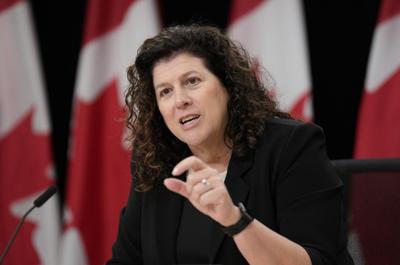
“Immigration, Refugees and Citizenship Canada implemented reforms to the international student program that supported a reduction in new study permits but fell short in other key areas,” said Auditor General of Canada Karen Hogan in a news release.
“The department needs to act on the information it has to address integrity concerns in the program.”
The international student program has been under close scrutiny since 2023 when borders reopened after the pandemic and international enrolment surpassed one million. Runaway growth in the temporary resident population — including foreign workers and asylum seeker — was blamed for the affordable housing crisis, straining public resources such as health care and rising unemployment.
It prompted then prime minister Justin Trudeau’s Liberal government to cap the number of international student applications and reduce new study permits issued by 35 per cent in 2024 and another 10 per cent in 2025. New measures were also introduced to tighten eligibility for postgraduation work permits, address fraud and strengthen program integrity.
The audit focused on whether the federal government was effectively reducing the number of students and implementing these reforms to the international student program.
In 2024, the department forecasted approving 348,900 new study permits but 149,559 were approved, representing a 67 per cent drop from 2023, the report found. Last year, 255,360 approved new study permits were projected, but only 50,370 were approved by September.
These approvals were intended to be reduced most in provinces with large populations such as Ontario and British Columbia, while the projected decreases for smaller provinces were estimated at 10 per cent or less. However, Manitoba, Prince Edward Island, Nova Scotia, New Brunswick, Newfoundland and Labrador and Saskatchewan all experienced a 59 per cent or greater decrease in approvals in 2024 compared with 2023.
Between December 2023 and September 2025, the immigration department used the new letter‑of‑acceptance verification system to process 97 per cent of more than 841,000 letters of acceptance submitted with study permit and extension applications, with the rest being manually processed. Ninety-four per cent of them were confirmed genuine by the designated learning institutions.
The auditor general examined a representative sample of 51 applications flagged as potentially fraudulent to assess whether processing officers acted on the potential fraud indicated by the schools. It found that processing officers did not follow standard procedure in addressing the potential fraud before reaching their final decisions in 14 of the cases. Two of them were approved without followups.
The fast-growing international student program was the result of aggressive recruiting by the post-secondary education sector due to years of provincial underfunding, and by unregulated foreign agents looking to profit from signing up students for schools.
Under Ottawa’s two-step immigration pathways that favour applicants with Canadian education credentials and work experience, migrants increasingly look at studying in Canada as a back door to working and earning permanent residence here.
A Star investigation found the growth of international student enrolment in recent years was primarily at public colleges because they offer shorter programs and cost less than universities but, unlike private colleges, still provide access to coveted post-graduation work permits.
The government audit also examined the status of the 549,000 people whose study permits expired in 2024 and found that 93 per cent of people were allowed to remain in Canada and identified 39,500 individuals who should no longer be in the country. The Canada Border Services Agency confirmed about 40 per cent or 16,000 of these individuals had left.


To join the conversation set a first and last name in your user profile.
Sign in or register for free to join the Conversation
Conversation
All Comments