Advertisement
Advertisement

Singapore

Singapore remembers past with Japan but can still move forward to forge mutually beneficial relationship: PM Wong

On his first visit to Japan as Singapore's prime minister, Mr Wong spoke about the importance of maintaining strong relationships with other countries amid a more complex geopolitical environment.

Singapore remembers past with Japan but can still move forward to forge mutually beneficial relationship: PM Wong

Prime Minister Lawrence Wong speaking to the media during his visit to Japan on Mar 18, 2026. (Photo: MDDI)

Listen
8 min
New: You can now listen to articles.

This audio is generated by an AI tool.

19 Mar 2026 11:00AM (Updated: 19 Mar 2026 11:05AM)
Read a summary of this article on FAST.
FAST

TOKYO: Singapore does not allow itself to be "trapped by history” but can move forward to forge a mutually beneficial relationship with Japan, said Prime Minister Lawrence Wong on Wednesday (Mar 18).

Singapore and Japan on Wednesday announced the upgrading of ties to a Strategic Partnership, with moves to expand cooperation in five areas.

Speaking to reporters after a meeting with Japanese Prime Minister Sanae Takaichi, Mr Wong said that the historical sensitivities stemming from the legacy of World War II were mentioned during talks.

He said that while Singapore remembers the lessons from the Japanese Occupation, this does not stop it from moving forward to forge a relationship with Japan, as it has done over the decades.

Mr Wong, who is also the finance minister, also spoke about the importance of maintaining strong relationships with other countries amid a more complex geopolitical environment, along with developments in the Middle East.

He began his first official visit to Japan as Singapore's prime minister on Tuesday.

"The relationship we have with Japan is long-standing. It's mutually beneficial, and the cooperation is wide-ranging, and the elevation of the Strategic Partnership will enable us to do more together," Mr Wong said.

He said that Singapore and Japan were strategically aligned in supporting free and open trade and a rules-based international order.

He added that the priority sectors Japan is pushing for are similar to those in Singapore, such as AI, quantum space and cybersecurity.

Singapore Prime Minister Lawrence Wong meets Japan Prime Minister Sanae Takaichi in Tokyo, Japan, on Mar 18, 2026. (Photo: MDDI)

STRONG, RELIABLE PARTNERSHIPS

Asked whether historical sensitivities were raised in bilateral talks, Mr Wong said both sides had touched on the issue during discussions on Wednesday.

Singapore's starting point is the desire for a peaceful, stable and secure region in its national interest, Mr Wong said.

"Of course, we cannot achieve that by ourselves, so we need to do this with partners, and that is why we have long advocated for an open and inclusive region with ASEAN (Association of Southeast Asian Nations) at the centre," he said.

Japan will be a very important partner for ASEAN with its economic and diplomatic clout, and should play a key role in regional affairs.

However, history is important and cannot be forgotten, he said.

"We will never forget what happened – the dark, painful period during the Japanese Occupation," Mr Wong said, adding that this was why Singapore marks Total Defence Day annually on the anniversary of the British surrender to the Japanese in 1942.

"So we remember the past. We do not forget it, and we learnt the hard lesson, which is, no one else will defend Singapore but us Singaporeans.

"But at the same time, we do not allow ourselves to be trapped by history. Remembering the past does not mean we cannot move forward to forge a mutually beneficial relationship with Japan, as we have been doing over the decades."

Mr Wong added that this position dates back to 1967, when founding Prime Minister Lee Kuan Yew opened the Civilian War Memorial.

Referencing the late Mr Lee, Mr Wong said the memorial was not meant to "arouse old hatreds or to seek settlements for blood debts, or even to warn us of another Japanese invasion". 

He added that the world has changed, and Singapore's approach is to build a more secure nation with "as many strong and reliable friends as possible", with Japan being one of them.

While many ASEAN countries felt the same way, some still felt that historical issues had not been resolved, he noted.

"Singapore's position is, we hope Japan can more clearly articulate its position on these issues and put to rest these outstanding historical issues. 

"Doing so, we believe, will enable Japan to play a larger role in regional affairs and to be more active on regional security matters."

He added that Japan understands this position, with the building of trust and confidence ongoing and moving "at a different pace for different countries". 

Meanwhile, Japan remains an important partner for ASEAN, contributing significant investments to the region to create new jobs, and financing infrastructure and potentially renewable energy projects on top of the ASEAN Power Grid, he said.

Singapore Prime Minister Lawrence Wong attends a delegation meeting with Japan Prime Minister Sanae Takaichi in Tokyo, Japan, on Mar 18, 2026. (Photo: MDDI)

TIES WITH JAPAN AND CHINA

Mr Wong said that Singapore does not view its relations with China and Japan as a "zero-sum affair", noting that it is possible to maintain good ties with both, and the United States.

While Japan's relationship with China is more challenging, he expressed hopes that both sides would continue to maintain dialogue and eventually find ways to resolve their differences.

Mr Wong was also asked how China would respond to his visit to Japan, given the recent tensions between the two East Asian neighbours.

He said China was aware of his visit to Japan, and continued to invite him to the Boao Forum in Hainan next week, where he will deliver a keynote speech.

"Having good relations with one does not come at the expense of another. We can be friends with both China and Japan and America, for that matter. We want to maintain as many good friends as possible," he added.

He said that in today's world, this can be more complicated because of "great power rivalry" and more scrutiny over what Singapore does. 

"When I am in one country, the other country may take notice. This time it is Japan. Next week will be China. At some point, when I am in America, the same thing will happen, but that is just the reality of the complicated geopolitical environment that we are in.

"But as far as a small country is concerned, it is helpful to have maximum strategic space for us to operate, and that means cultivating and maintaining good relations with as many powers as possible as we can," he said.

Asked about reactions to his remarks at a Bloomberg forum last year, where Mr Wong had commented on the dispute between China and Japan over Taiwan, the prime minister said Singapore has maintained good relations with both countries.

While countries may hold differing views, such differences need not hold back bilateral ties or partnerships, he said.

"Our focus in Singapore has always been to find the common ground, to focus on the areas where we have good opportunities to work together and to advance this cooperation in a mutually beneficial manner," he added.

Prime Minister Lawrence Wong attends a welcome ceremony in Tokyo, Japan, on Mar 18, 2026. (Photo: MDDI)

MIDDLE EAST TENSIONS

Turning to global developments, Mr Wong warned that escalating tensions in the Middle East, particularly any prolonged disruption to the Strait of Hormuz, would have severe consequences for the global economy.

Beyond rising oil and gas prices, he cautioned that there could be potential knock-on effects on sectors such as food and helium supply.

"A prolonged blockage of the strait will have significant implications for the global economy, and may tip the global economy into a tailspin, into a downturn or even a recession," said the prime minister. 

"So these are things that we worry about. We do not know if it will happen, but we are monitoring very closely."

Asked if the government is considering any assistance for drivers who face higher pump prices, Mr Wong said measures from this year's Budget are being rolled out, with further assistance available if needed.

Mr Wong also highlighted opportunities for Singapore and Japan to cooperate on longer-term energy security, including in liquefied natural gas supply chains and low-carbon energy solutions such as hydrogen and ammonia. Singapore is also looking to learn from Japan’s experience in civilian nuclear energy.

More broadly, he cautioned that ongoing conflicts risk weakening the rules-based international order, leading to a more unstable and unpredictable world where countries will be more inclined to use force to get what they want.

"We worry about this, and that is also why we work very hard to forge coalitions of like-minded countries who feel very strongly about upholding a rules-based order," he said. 

Source: CNA/wt(mi)

Sign up for our newsletters

Get our pick of top stories and thought-provoking articles in your inbox

Subscribe here
Inbox
FAST
Advertisement

East Asia

China steps up push for marriage and childbirth amid shifting social attitudes

Authorities have rolled out incentives to boost marriages and births, but shifting attitudes and economic pressures among young Chinese pose deeper challenges.

China steps up push for marriage and childbirth amid shifting social attitudes

A couple gets ready for a wedding photoshoot in Shanghai, China.

Listen
4 min
New: You can now listen to articles.

This audio is generated by an AI tool.

19 Mar 2026 09:52AM
Read a summary of this article on FAST.
FAST
SHANGHAI: The past year has been both challenging and fulfilling for music teachers Huang Zhen Hui and Liang Ren Jia. 
 
Not only did they set up their own music school in Shanghai, they also got married after dating for seven years. 
 
Initially, the couple were worried their parents might oppose their relationship due to the 1,000km-long distance between their hometowns. Huang is from Shandong province and Liang is from Zhejiang province.  
 
But both families gave their blessings, and they tied the knot last November in Shanghai. 
 
“(Marriage) gives both of us something to look forward to in life,” Huang told CNA. 
 
“Many young people nowadays just date casually; if one doesn’t work out, they move on to the next. But deep down, everyone craves a sense of belonging, and perhaps marriage is where that belonging lies.” 
 
Music teachers Huang Zhen Hui (left) from Shandong and Liang Ren Jia from Zhejiang said "I do" to each other in Shanghai last year, after a rule requiring couples to register marriages in their hometowns was removed.
Liang added that like other young Chinese, the pair face financial pressures too, but are taking it in stride together. 
 
“When you’re dealing with financial stress alone, it feels overwhelming. Two people are strong than one person ... we can tackle these challenges together,” she said. 
 

MARRIAGE RATES REBOUND IN 2025

 
The couple was among 6.76 million registered marriages in China last year, a rebound from a historic low in 2024. 
 
The increase has been attributed to several factors, including policy changes and cultural considerations. 
 
In May last year, China removed a decades-old rule requiring couples to register marriages in their hometowns, allowing them to do so anywhere in the country.
 
2024 was also dubbed the "Year of the Widow" according to the traditional Chinese calendar, leading couples to postpone their marriages to 2025, which was an auspicious year. 

POLICY PUSH AT TWO SESSIONS

 
At this year’s Two Sessions – the country’s largest annual political gathering – officials pledged to build a “childbirth-friendly society” in the next five years, with measures such as improved maternal healthcare and better housing support for married couples. 
 
The country will also step up population services and foster positive attitudes toward marriage and childbearing. This pledge comes on top of a range of measures rolled out in recent years to boost marriage and birth rates. 
 
After scrapping its one-child policy in 2016, China allowed couples to have two children, and later three in 2021. 
 
More recently, authorities have offered cash handouts of 3,600 yuan (US$520) per child under the age of three. Some provinces offer additional local incentives such as extended maternity leave. 
A couple register their marriage in Shanghai.
However, population experts warn that fundamental livelihood issues such as income and employment, as well as shifting attitudes toward marriage and family, will continue to pose major challenges. 
 
“It used to be that marriage and childbearing took very important, central roles in China’s society. Now, that importance is seeing a decline,” said Mu Zheng, deputy director of the National University of Singapore’s Centre for Family and Population Research. 
 
“They have many (other) things on their checklists to define what is fulfilling and achieving success in adult life.” 
 

DEMOGRAPHIC PRESSURES MOUNT 

 
These shifting views are a growing concern for authorities,  as marriage and childbearing remain closely intertwined in China. 
 
Like many nations, China is grappling with a worsening demographic crisis: a rapidly ageing population and record-low fertility. 
 
The country’s birth rate fell to a new low of 5.63 per 1,000 people last year. Its population also shrank by 3.39 million to 1.4 billion, the fourth consecutive year of decline. 
 
At the same time, a growing number of elderly citizens are left with little family support, increasing reliance on state pensions. 
 
These demographic changes add further pressure on the world’s second-largest economy, which is already grappling with slowing growth and weak domestic consumption. 
Source: CNA/dn(mp)

Sign up for our newsletters

Get our pick of top stories and thought-provoking articles in your inbox

Subscribe here
Inbox
FAST
Advertisement

Commentary

Commentary: Why firms are pivoting from 'China shedding' to 'Chinamaxxing'

Some of China’s most successful global companies have spent years masking their origins to sidestep Western scrutiny. That has changed, says Juliana Liu for Bloomberg Opinion.

Commentary: Why firms are pivoting from 'China shedding' to 'Chinamaxxing'

A customer holds shopping bags with a Shein logo in the first physical space of Chinese online fast-fashion retailer Shein on the day of its opening inside the Le BHV Marais department store, the Bazar de l'Hotel de Ville, in Paris, France, Nov 5, 2025. REUTERS/Sarah Meyssonnier

19 Mar 2026 05:58AM
Read a summary of this article on FAST.
FAST

HONG KONG: Some of China’s most successful global companies have spent years masking their origins to sidestep Western scrutiny. But that approach, called “China shedding”, has run its course - at least for the bigger players.

The surprise homecoming of online retailer Shein’s founder should be the final nail in the coffin for the strategy. Last month, Xu Yangtian, who has been rarely photographed, took to the stage in the southern Chinese province of Guangdong to thank the local government and suppliers for helping the company to become a retail juggernaut.

Shein is now the biggest player in the global market for bargain-priced apparel, according to GlobalData, ahead of the likes of Primark and Target. Private market research firm Sacra estimates its 2025 sales at US$60 billion, which would be more than Hennes & Mauritz and Inditex’s Zara combined.

CHANGING APPROACH

Blurring ties to Beijing to minimise regulatory or reputational risk overseas was a defensive manoeuvre five years ago. At the time, telecoms equipment maker Huawei Technologies was still making headlines after being banned by Washington over spying concerns. Following that episode, Chinese firms aiming for international prominence wanted to avoid a similar fate.

CNA Games
Show More
Show Less

Three of the most successful - social media platform TikTok and budget online retailers Temu and Shein - have all tried to distance themselves from their roots. None have succeeded. Increasing opposition from Beijing, combined with a recent vibe shift that has elevated perceptions of Chinese products suggest it would be smart for homegrown companies to be more upfront about where they’re from.

What was unusual about Xu’s first-ever public appearance is that Shein had been presenting itself as a Singapore-based fast-fashion giant, with only perfunctory mentions on its website of the region that powers its ability to churn out designs in as little as three weeks. It’s a positioning that reportedly upset the Chinese regulators who must approve its long-delayed IPO.

Another reason companies should be more honest is that China shedding was always a hard sell. Just look at TikTok, owned by Beijing-based ByteDance. No matter what it tried, the short-form video platform was unable to convince the public it wasn’t Chinese, even though it doesn’t exist in China. 

Fearing a Huawei-like ban following a 2019 national security probe, TikTok hired Kevin Mayer, a former Walt Disney executive, as CEO in an effort to improve its standing in the US. The platform even left Hong Kong in 2020 to signal independence from China. To no avail. President Joe Biden’s efforts to investigate it culminated in a congressional grilling of the next chief executive, Chew Shou Zi, in March 2023.

Pressed on whether TikTok was Chinese, Chew sidestepped the question, saying only that the app was unavailable in China and based in Los Angeles and Singapore. Though Chew comported himself well, his argument was unconvincing. 

The lesson? Simply downplaying Chinese ties was not enough to avoid political scrutiny. Eventually, the Trump White House brokered a deal to create a US-controlled TikTok to which ByteDance licenses its algorithm.

“CHINAMAXXING” TAKES OFF

Concern over TikTok’s future drove many young Americans to check out RedNote and contributed to a tonal shift over the past few months in how some, especially Gen Z, view China. 

A trend called “Chinamaxxing” has taken over social media feeds with influencers drinking hot water, using chopsticks, or engaging in other ways of “becoming Chinese.” An association with Made in China hasn’t alienated the wider US public, despite tough talk.

Last year, during the height of the US-China tensions, President Donald Trump ended a long-standing tariff exemption on goods under US$800 that had propelled the fortunes of Temu, owned by PDD Holdings, and Shein. But while the active users of both online shopping sites fell, they eventually recovered, with Shein bouncing back especially quickly, according to market intelligence firm Sensor Tower. 

In fact, trade volatility hasn’t hurt the seller of US$1 eyebrow shapers and US$4 wax strips at all. 

Shein raised its US prices before tariffs on small packages were imposed, which is expected to have helped its net income hit US$2 billion in 2025, nearly double the year before, Bloomberg News reported.

Smaller companies may still be able to fly under the radar with China shedding. Not so for the global heavyweights for which honesty would be the best policy.

Source: Bloomberg/sk

Sign up for our newsletters

Get our pick of top stories and thought-provoking articles in your inbox

Subscribe here
Inbox
Advertisement

Singapore

Singapore and Japan upgrade ties to Strategic Partnership, expand cooperation in five areas

Both countries will enhance cooperation in trade, digitalisation and technology, defence, green transition and energy, as well as other people exchanges.

Singapore and Japan upgrade ties to Strategic Partnership, expand cooperation in five areas

Singapore Prime Minister Lawrence Wong meets Japan Prime Minister Sanae Takaichi in Tokyo, Japan, on Mar 18, 2026. (Photo: MDDI)

Listen
12 min
New: You can now listen to articles.

This audio is generated by an AI tool.

18 Mar 2026 08:29PM (Updated: 18 Mar 2026 11:08PM)
Read a summary of this article on FAST.
FAST

TOKYO: Singapore and Japan announced on Wednesday (Mar 18) the upgrading of bilateral ties to a Strategic Partnership, with expanded cooperation across five areas.

The upgrade in ties was announced by Singapore Prime Minister Lawrence Wong and Japan Prime Minister Sanae Takaichi.

Mr Wong is making his first visit to Japan as prime minister. He met Ms Takaichi during the visit and she hosted him to a working dinner.

Welcoming Mr Wong, Ms Takaichi expressed hopes that both countries' ties will deepen through diverse exchanges and programmes this year. 

CNA Games
Show More
Show Less

"Our two nations, as like-minded countries, have together defended and promoted rules-based free and open international order and free trade. Japan and Singapore are firmly united as nations that can place confidence in each other," she said. 

Mr Wong said that Japan has been a reliable and valuable partner for Singapore throughout the past 60 years. 

"Today, our relationship has matured, and we have become partners with similar strategic outlooks and complementary strengths, and our cooperation is multifaceted, substantial and mutually beneficial," he added. 

"There is a strategic imperative to deepen our cooperation further, especially as we face profound changes in the world today, with more uncertainty, fragmentation and disruption. 

"Both Japan and Singapore share similar strategic principles and views of the world. And as like-minded partners, I believe we can work together to uphold a multilateral, rules-based system and an open and inclusive regional architecture."

In a statement, Singapore's Ministry of Foreign Affairs (MFA) said the two leaders affirmed the partnership between Singapore and Japan on the 60th anniversary of the establishment of diplomatic relations.

"They welcomed robust bilateral economic ties, noting that Singapore and Japan are each other’s top investors," added MFA. 

"They agreed to deepen cooperation in areas such as the green and digital economies, as well as supply chain and economic resilience. 

"This will help both countries better navigate the uncertain geopolitical environment, and deliver benefits for our peoples and businesses."

Both prime ministers agreed on the importance of working together to uphold free and open trade, the rules-based international order and the open regional architecture with the Association of Southeast Asian Nations (ASEAN) at its centre.

"As the country coordinator for ASEAN-Japan relations, Prime Minister Wong committed to work closely with Japan to implement the ASEAN-Japan Comprehensive Strategic Partnership," said MFA. 

"This includes deepening economic integration and collaborating on digital and green initiatives, such as the ASEAN Power Grid. The prime ministers exchanged views on regional and international developments, including the situation in the Middle East."

The ministry said the Strategic Partnership provides a framework to "deepen and expand bilateral cooperation in existing and forward-looking areas, which can serve as pathfinders for broader regional and international cooperation".

Mr Wong also had separate meetings with former Japanese prime ministers Shigeru Ishiba, Fumio Kishida and Taro Aso.

"He thanked them for their contributions to strengthening bilateral cooperation and deepening Japan’s engagement with the region. They also discussed regional and international affairs," said MFA.

STRATEGIC PARTNERSHIP

A joint statement from both countries laid out the details of the Strategic Partnership.

This partnership will deepen the foundations of the relationship and expand cooperation in several areas, including:

  1. Promotion of free trade and economic cooperation
  2. Digitalisation and technology 
  3. Security and defence 
  4. Green transition and energy cooperation
  5. Partnerships and exchanges

The foreign ministers of both countries will oversee the progress in implementing the Strategic Partnership. It will be regularly reviewed to ensure that the bilateral cooperation remains relevant and future-ready, said the joint statement.

Both countries acknowledged that as a trusted partner of ASEAN, Japan has been contributing to the region's peace, stability, prosperity and integrity through its engagement.

This includes its support for ASEAN Centrality and the ASEAN Outlook on the Indo-Pacific (AOIP). 

"We share the mutual understanding that the AOIP and the Free and Open Indo-Pacific (FOIP) share fundamental principles, and the promotion and implementation of the AOIP will also contribute to promoting an international order based on the rule of law and a rules-based Indo-Pacific that is free and open," said the two countries. 

"In this regard, we welcome the adoption of the Joint Statement of the 28th ASEAN-Japan Summit on Further Promotion and Implementation of the AOIP, which affirms the synergy between the AOIP and the FOIP, and reaffirm our commitment to promote and implement concrete AOIP projects and activities that contribute to fundamental principles shared by the AOIP and the FOIP."

FREE TRADE, ECONOMIC COOPERATION

In the joint statement, both sides reaffirmed their commitment to open and free trade, economic resilience and mutual prosperity. 

Enterprise Singapore and the Japan External Trade Organisation will renew a Memorandum of Cooperation (MOC) to enhance the facilitation of trade and investment flows.

Singapore's Ministry of Sustainability and the Environment (MSE) and Japan’s Ministry of Agriculture, Forestry and Fisheries will renew an MOC to spur agri-food trade.

"We reaffirm our commitment to free and open trade, economic resilience, and mutual prosperity. The Japan-Singapore Economic Partnership Agreement is the cornerstone of our substantive and dynamic economic relationship," said the two countries.

"This is complemented by the Japan-Singapore Economic Dialogue as a high-level platform to discuss enhancing cooperation in priority areas."

Prime Minister Lawrence Wong attends a welcome ceremony in Tokyo, Japan, on Mar 18, 2026. (Photo: MDDI)

DIGITALISATION AND TECH

Both countries will establish an information and communication technology policy dialogue between Singapore's Ministry of Digital Development and Information (MDDI) and Japan’s Ministry of Internal Affairs and Communications to explore cooperation in the digital fields, including the digital infrastructure development.

They will strengthen collaboration on artificial intelligence to support a safe, secure, and trustworthy ecosystem, including in areas such as AI governance and models.

The countries will also promote research cooperation in cutting-edge fields such as AI, quantum technologies, and future communications. This will be pursued through international joint research, researcher and talent exchanges, among other programmes. 

An MOC on Quantum Science, Technology and Innovation was signed between MDDI and Japan’s Cabinet Office in January to deepen collaboration across eight key areas, including quantum research and innovation dialogue, academia-private sector interactions, education and talent exchange, and security policy dialogue.

An MOC between Singapore's Cyber Security Agency (CSA) and Japan's National Cybersecurity Office will be renewed to facilitate cybersecurity cooperation in areas such as industry and academic collaboration, capacity building and operational exchanges. 

Singapore's Personal Data Protection Commission and Japan’s Personal Information Protection Commission will agree to sign an MOC in 2026 to facilitate cooperation on the protection of personal information.

The National Space Agency of Singapore and the Japan Aerospace Exploration Agency will agree to sign an MOC this year to formalise bilateral space cooperation.

On Wednesday, both countries signed an MOC to mutually recognise cybersecurity labelling schemes for smart devices.

Under the arrangement, smart devices that obtain cybersecurity labels under Japan’s JC-STAR scheme or Singapore’s Cybersecurity Labelling Scheme (CLS) will be recognised in both countries. 

Manufacturers will be able to apply for the other country’s label through a streamlined process.

The arrangement will take effect from Jun 1. It will cover smart devices such as smart home assistants, home automation, and alarm systems and hubs that connect multiple devices.

Japan is the fifth nation to establish such an arrangement with Singapore, after Finland, Germany, South Korea and the United Kingdom.

Singapore Prime Minister Lawrence Wong attends a delegation meeting with Japan Prime Minister Sanae Takaichi in Tokyo, Japan, on Mar 18, 2026. (Photo: MDDI)

SECURITY AND DEFENCE

The joint statement said that both countries have a shared interest in regional peace and stability, while acknowledging an increasingly challenging security environment and the vital importance of open sea lanes to both countries. 

They intend to strengthen cooperation by facilitating high-level exchanges between defence authorities, including a regular ministerial meeting at the Shangri-La Dialogue.

The two will deepen collaboration between operational authorities, including through bilateral and multilateral exercises.

They will enhance defence equipment and technology cooperation through professional exchanges in defence industry and technology, as well as by fostering innovation through startup collaboration.

Exchanges between law enforcement agencies will be enhanced, alongside efforts to combat transnational crime such as online scams.

Exchanges between agencies to address disaster management will also be stepped up. 

Both sides will deepen cooperation on arms control and disarmament efforts, including in the context of the Treaty on the Non-Proliferation of Nuclear Weapons review cycle.

ENERGY

On energy, both sides signed a framework on Sunday to strengthen collaboration in areas such as cross-border electricity imports, low-carbon hydrogen and ammonia, carbon capture, utilisation and storage, civil nuclear energy, liquefied natural gas, advanced grid system enablers and offshore wind.

"We will strengthen cooperation to facilitate our transition into a green economy, including through platforms such as the Asia Zero Emission Community," the joint statement said. 

An MOC on environmental matters will be renewed between MSE and Japan’s Ministry of Environment to enhance cooperation in areas, including environmental protection, management, and sustainable development.

The countries intend to strengthen collaboration on decarbonisation and digitalisation of shipping based on the MOC on Green and Digital Shipping Corridor between Japan’s Ministry of Land, Infrastructure, Transport and Tourism and Singapore’s Ministry of Transport.

Another MOC between MSE and Japan’s Ministry of Land, Infrastructure, Transport and Tourism will be expanded to deepen cooperation in climate science and climate adaptation.

Singapore Prime Minister Lawrence Wong attends a lunch with Japanese business leaders in Tokyo, Japan, on Mar 18, 2026. (Photo: MDDI)

PARTNERSHIPS AND EXCHANGES

"We recognise that mutual trust and understanding must be sustained through increasing and regular engagements at all levels, including through institutional, social, arts and culture, youth, and academic exchanges," both countries said in the joint statement.

Singapore and Japan will continue the annual dialogue between the foreign ministries to take stock of relations and enhance cooperation.

They will foster mutual understanding between officials under a programme where Japanese senior officials visit Singapore at the invitation of MFA.

Japan's National Personnel Authority and Singapore's Public Service Division will enhance civil service exchanges.

Opportunities for youth exchanges will also be expanded, as will bilateral cooperation in education.

Exchanges in arts and culture through exhibitions, performances and joint programmes will be promoted.

The two countries said they would enhance cooperation to further expand mutual travel and deepen collaboration in civil aviation.

Source: CNA/wt

Sign up for our newsletters

Get our pick of top stories and thought-provoking articles in your inbox

Subscribe here
Inbox
Advertisement

East Asia

Nvidia gets Beijing's nod for H200 chip sales, adapts Groq chip for China, sources say

Nvidia gets Beijing's nod for H200 chip sales, adapts Groq chip for China, sources say

Nvidia's Groq 3 chips are displayed at the company's GTC conference in San Jose, California, US on Mar 17, 2026. (File photo: Reuters/Max A Cherney)

18 Mar 2026 05:51PM (Updated: 18 Mar 2026 05:54PM)
Read a summary of this article on FAST.
FAST

NEW YORK: Nvidia has won Beijing's approval to sell its second-most powerful artificial intelligence chips to China and is also preparing a version of the Groq AI chip that can be sold to the Chinese market, sources familiar with the matter said.

The long-awaited regulatory approval paves the way for the US chipmaker to resume sales of the H200 chips, which have emerged as a major flashpoint in US-China relations, in a market that once generated 13 per cent of Nvidia's total revenue.

Despite strong demand from Chinese firms and US approval for exports, Beijing's hesitation to allow imports has been the main barrier to shipments of the H200 chips to China.

Earlier on Tuesday, Nvidia CEO Jensen Huang said that it had been licensed for "many customers in China" for the H200 and had received purchase orders from "many" companies, allowing it to resume production of the chip.

CNA Games
Show More
Show Less

"Our supply chain is getting fired up,” Huang said at a press conference.

The company had halted production of the chip last year because of increasing regulatory hurdles in the US and China, according to a report at the time.

Nvidia had been waiting for licenses from both the US and China for months. It has received some US approvals, and a source familiar with the matter said the company had now also received licenses for many customers in China from Beijing.

A spokesperson for the Chinese embassy in Washington said they were "not aware of the specifics" and directed questions to "the competent authorities".

CNBC also reported on Tuesday that Huang told them the company now has clearance from both the US and China.

A Chinese company source said that they did not know if the Chinese government had given final approval, but that Nvidia had told them that they could now place purchase orders.

In a filing with the US Securities and Exchange Commission late last month, Nvidia said that the US had granted a license in February that would allow "small amounts of H200 products to specific China-based customers".

In January, Reuters reported that China granted preliminary approval to three of its largest tech companies - ByteDance, Tencent and Alibaba - along with AI startup DeepSeek to import the chips, although the regulatory conditions for China's approvals were still being finalised.

The Chinese companies did not immediately respond to emailed requests for comment.

Huang's bullish comment on AI agent OpenClaw, which has experienced rapid adoption in China, helped propel some Chinese AI stocks to record highs on Wednesday.

Shares in large-language model upstarts MiniMax and Zhipu AI surged more than 19 per cent each after Huang said OpenClaw was "definitely the next ChatGPT".

NVIDIA READIES GROQ CHIP FOR CHINA

Nvidia is also preparing a version of the Groq AI chip that can be sold to the Chinese market, Reuters reported earlier on Tuesday, citing two sources familiar with the matter.

It plans to tap Groq chips for what is known as inference, where AI systems answer questions, write code or carry out tasks for users. In the products Nvidia showed this week, the company plans to use its forthcoming Vera Rubin chips, which cannot be sold in China, in combination with the Groq chips.

While Nvidia dominates the market for training AI systems, it faces much more competition in the inference market. Several major Chinese firms, including AI heavyweights such as Baidu, already produce their own inference chips.

The chips being readied for China are not downgraded versions or made specifically for the Chinese market, one of the sources told Reuters. But the new variant can be adapted to work with other systems, the source said, adding that the Groq chip is expected to be available in May.

Nvidia did not immediately respond to a request for comment. 

Source: Reuters/dc

Sign up for our newsletters

Get our pick of top stories and thought-provoking articles in your inbox

Subscribe here
Inbox
Advertisement

Business

Tencent's quarterly revenue rises 13% on gaming, AI demand

Tencent's quarterly revenue rises 13% on gaming, AI demand

Tencent's logo is displayed at its booth at the China International Fair for Trade in Services (CIFTIS) in Beijing, China, on Sep 11, 2025. (Photo: REUTERS/Maxim Shemetov)

18 Mar 2026 05:51PM (Updated: 18 Mar 2026 05:55PM)
Read a summary of this article on FAST.
FAST

BEIJING: Tencent Holdings reported a 13 per cent increase in fourth-quarter revenue on Wednesday (May 18), driven by strong demand for gaming and growth in its artificial intelligence services, cementing its position as China's largest social media and gaming company.

The Shenzhen-based firm posted revenue of 194.4 billion yuan (US$28.3 billion) for the three months to Dec 31, just above the 193.5 billion yuan forecast by analysts polled by LSEG.

Quarterly net profit was 58.26 billion yuan, compared with an average estimate of 57.75 billion yuan.

Tencent has been accelerating AI investments funded by its gaming arm as it competes with rivals including Alibaba and ByteDance.

CNA Games
Show More
Show Less

The company is embedding AI across its WeChat messaging and payment app, cloud services and gaming, drawing on an ecosystem of more than one billion users.

Domestic gaming revenue rose 15 per cent to 38.2 billion yuan, while international gaming revenue surged 32 per cent to 21.1 billion yuan. Online advertising revenue climbed 17 per cent to 41.1 billion yuan, boosted by AI-enhanced ad targeting.

Gaming growth was driven by newer titles including Delta Force and Valorant Mobile, alongside established hits Honor of Kings and Peacekeeper Elite.

Revenue in its FinTech and Business Services segment, which includes cloud computing, rose 8 per cent to 60.8 billion yuan. Tencent does not break out cloud revenue separately.

AI INVESTMENT RAMPS UP

To compete with rivals such as Alibaba Group and ByteDance, Tencent ramped up AI talent acquisition, including hiring former OpenAI researcher Yao Shunyu to lead the development of its proprietary Hunyuan large language model.

It spent 1 billion yuan promoting its Yuanbao AI chatbot during the Chinese New Year holiday period to gain market share in China's increasingly crowded AI sector.

This month, it launched its "OpenClaw" AI product suite, comprising QClaw for individual users, Lighthouse for developers and WorkBuddy for enterprises, as competition intensifies around AI agents - software that can perform multi-step tasks autonomously.

Capital expenditure for 2025 totalled 79.2 billion yuan, compared to 76.8 billion yuan in 2024.

Source: Reuters/ec

Sign up for our newsletters

Get our pick of top stories and thought-provoking articles in your inbox

Subscribe here
Inbox
Advertisement

East Asia

Chinese tourists ditch Japan for third month running

Chinese tourists ditch Japan for third month running

People gather at Tagonoura port near industrial facilities as Mount Fuji is seen in the background from Fuji city, Shizuoka Prefecture on Mar 14, 2026. (Photo: AFP/Philip Fong)

18 Mar 2026 04:32PM (Updated: 18 Mar 2026 04:56PM)
Read a summary of this article on FAST.
FAST

TOKYO: Chinese visitors to Japan tumbled 45.2 per cent in February from a year earlier, official data showed on Wednesday (May 18), as the fallout from the countries' diplomatic spat bit for the third month running.

Previously, Chinese travellers were the biggest source of tourists to Japan, contributing to a boom in the land of cherry blossoms and Mount Fuji that was fuelled by a weak yen, making shopping cheap.

But in January, South Korea overtook China as the largest contingent, a trend that continued in February, with visitors from the country jumping 28.2 per cent to 1.1 million.

That compared with 396,400 visitors from mainland China last month, the Japan National Tourism Organisation said.

CNA Games
Show More
Show Less

By comparison, 18 countries and regions set new records for the number of their nationals who visited Japan in February - including South Korea, Taiwan and the United States, data showed.

The number of visitors from Hong Kong also shot up by 19.6 per cent compared to last year.

While February is typically the low season for travel to Japan, this year, due to the timing of Lunar New Year, the number of visitors shot up, the tourism group said, noting a particular uptick from East Asia.

CHINA VISITORS UP ELSEWHERE

Japan-China ties have worsened since Prime Minister Sanae Takaichi suggested in November that Japan might intervene militarily in any Chinese attempt to take Taiwan.

China regards the democratic island as part of its territory and has not ruled out force to annex it, and was furious over the comments.

It summoned Tokyo's ambassador and warned Chinese citizens against visiting Japan.

The number of Chinese visitors to Japan already tumbled 45 per cent in December and nose-dived 60.7 per cent in January.

Instead, other countries including South Korea saw a jump in the number of Chinese visitors.

In January, 418,703 visited South Korea, up from 364,460 the same month last year, according to the Korea Tourism Organisation.

The number of Chinese visitors to Thailand edged up 4.24 per cent on average during the January-February period compared to the same period last year.

Japan's cherry blossom season will be in full swing in late March and early April and some local media reports suggest a decline in the number of Chinese visitors will continue.

Contacted by AFP, one hotel in the Tokyo Bay area said the number of Chinese guests "had halved since November" and that will likely continue in March and April, although a handful of other hotels said they have seen no significant impact from the souring ties between Tokyo and Beijing.

Source: AFP/ec

Sign up for our newsletters

Get our pick of top stories and thought-provoking articles in your inbox

Subscribe here
Inbox
Advertisement

East Asia

China makes energy security 'reunification' offer to Taiwan amid Middle East war

Taiwan says it has secured alternative supplies for the months ahead, including from the United States.

China makes energy security 'reunification' offer to Taiwan amid Middle East war

A Taiwan flag flutters in Keelung, as China conducts "Justice Mission 2025" military drills around Taiwan, in Keelung, Taiwan, on Dec 30, 2025. (File photo: Reuters/Ann Wang)

18 Mar 2026 04:18PM (Updated: 18 Mar 2026 04:26PM)
Read a summary of this article on FAST.
FAST

BEIJING: China offered on Wednesday (Mar 18) what it said would be energy stability to Taiwan if it agreed to Beijing's rule, part of a campaign by China to convince the island of the benefits of "reunification", which it has long rejected.

Governments around the world are scrambling for alternative energy supplies during the Middle East War and the severing of shipping lanes through the vital Strait of Hormuz.

Taiwan, which had received a third of its LNG from Qatar and sources no energy from China, has said it has secured alternative supplies for the months ahead, including from the United States, the island's main international backer.

Chen Binhua, a spokesperson for China's Taiwan Affairs Office, told reporters in Beijing that "peaceful reunification" would bring better protection of Taiwan's energy and resource security with a "strong motherland" as its backing.

"We are willing to provide Taiwan compatriots with stable and reliable energy and resource security, so that they may live better lives," he said, responding to a question about Taiwan's energy supplies during the war in the Middle East.

There was no immediate response to the comments from Taiwan's government, which rejects Beijing's sovereignty claims and says only the island's people can decide their future.

Speaking at a meeting of his ruling Democratic Progressive Party in Taipei on Wednesday, Taiwan President Lai Ching-te reiterated that energy supplies for this month and next are assured, and from June, more US gas will be imported.

"Taiwan has adopted a diversified and multi-source strategic approach to energy imports," Lai said, according to a party statement.

China has long offered Taiwan "one country, two systems" autonomy if it agrees to be brought under Beijing's control, which no major Taiwanese political party supports.

In October, China's official Xinhua news agency mapped out what it said were the advantages Taiwan would enjoy after "reunification", including economic support, but said the island had to be run by "patriots".

China has never renounced the use of force to bring Taiwan under its control.

China, the world's top oil importer, last week banned fuel exports until at least the end of March, in an attempt to preempt domestic shortages, sources said, curbing exports that last year totalled US$22 billion.

Source: Reuters/rk

Sign up for our newsletters

Get our pick of top stories and thought-provoking articles in your inbox

Subscribe here
Inbox
Advertisement

East Asia

Chinese tech giants wade into OpenClaw frenzy with launch of new AI agents

Chinese tech giants Alibaba, Tencent and Baidu have all embraced the OpenClaw trend - rolling out products as they look for new revenue streams.

Chinese tech giants wade into OpenClaw frenzy with launch of new AI agents

The logo of OpenClaw, an open-source AI assistant, is seen on the software's website in this illustration picture taken on Mar 12, 2026. (Photo: Reuters/Florence Lo)

18 Mar 2026 01:12PM (Updated: 18 Mar 2026 01:16PM)
Read a summary of this article on FAST.
FAST

BEIJING: Chinese tech giants have waded into the OpenClaw frenzy sweeping China - launching new artificial intelligence (AI) agents and intensifying competition in the rapidly evolving Chinese AI agent market. 

On Tuesday (Mar 18), Baidu unveiled a suite of AI products, tapping growing domestic interest in OpenClaw, an open-source framework for agents able to perform complex tasks with less human input than chatbots.

The company introduced what it called a family of "lobsters" - a popular nickname for AI agents built on OpenClaw - spanning desktop software, cloud services, mobile tools and smart-home devices.

The agents are designed to carry out multi-step tasks such as editing videos, creating presentations, conducting research or ordering coffee, operating across multiple apps and devices.

CNA Games
Show More
Show Less

OpenClaw's rapid global uptake has fostered a growing community of enthusiasts in China who describe themselves as "raising lobsters", reflecting the idea that agents improve through feedback and training.

Chinese tech giants including Alibaba, Tencent, and Baidu have embraced the trend, rolling out OpenClaw-based products as they look for new revenue streams.

Alibaba on Tuesday also launched its own platform called Wukong - a platform coordinating multiple AI agents able to carry out complex business tasks including document editing, spreadsheet updates, meeting transcription and research within a single interface. 

It is currently available for invitation-only beta testing.

Its launch came a day after Alibaba unveiled its reorganisation under the newly-established Alibaba Token Hub (ATH) business group, signaling a company-wide push into enterprise AI agents.

Wukong is the flagship product from the Wukong Business Unit under ATH.

Users can access Wukong as a standalone desktop application or through DingTalk, Alibaba's collaboration platform, which serves more than 20 million corporate users.

The platform will also be able to connect with other messaging services including Slack, Microsoft Teams and WeChat, according to a press release.

"NEW ERA"

Speaking at a company event, Baidu Executive Vice-President Shen Dou said the technology could reshape how software connects devices and services.

"It could become an operating-system-level capability for a new era, unlocking almost all hardware and breaking down the barriers between devices," Shen said.

Baidu said its agent ecosystem includes the DuMate desktop assistant, the RedClaw mobile platform and a cloud service, DuClaw, which allows users to deploy agents without configuring hardware.

Its smart-device unit Xiaodu said its speakers will integrate OpenClaw capabilities, enabling voice commands to trigger complex tasks across household devices.

"This lobster is still not perfect," Shen cautioned. 

"It makes mistakes, takes detours and sometimes even complicates simple things."

Baidu's push comes as it seeks to regain ground lost in China's AI chatbot market. After gaining an early lead in 2023 with its answer to ChatGPT, rival chatbots such as Bytedance's Doubao, Tencent's Yuanbao, and Alibaba's Qwen have surged in popularity.

Zac Cheah, co-founder of Singapore-based platform Pundi AI, said OpenClaw-style tools are spreading quickly in China.

"Chinese users are comfortable with super-app ecosystems, and products such as Doubao, Tencent Yuanbao, and Qwen have already familiarised the public with AI at scale," he said.

OPENCLAW CRAZE DESPITE SECURITY CONCERNS

Chinese tech giants have been hosting OpenClaw installation sessions

Tech giant Tencent did so earlier this month at its Shenzhen headquarters - drawing snaking queues, while long lines were seen last week near Baidu’s headquarters in Beijing. 

Crowds of around 1,000 people turned up to a similar installation session hosted by the company.

Local governments have also moved quickly to support the trend. Authorities in Shenzhen and Wuxi unveiled draft measures to support OpenClaw-centred ecosystems. 

But amid the craze, OpenClaw has already been flagged for potential vulnerabilities. 

Chinese authorities have issued security advisories over improper installation or use.

China’s National Computer Network Emergency Response Technical Team/Coordination Center issued an advisory on Mar 10, warning that improper installation or use of OpenClaw could expose users to cybersecurity risks.

That same day, the Ministry of Industry and Information Technology warned that default or improper OpenClaw configurations could expose systems to cyberattacks or data leaks.

According to a Bloomberg report, Chinese government agencies and state-owned enterprises, as well as major banks, have received notices in recent days warning against installing OpenClaw on office devices for security reasons.

Source: Agencies/lk(ht)

Sign up for our newsletters

Get our pick of top stories and thought-provoking articles in your inbox

Subscribe here
Inbox
Advertisement

East Asia

Japan, US to discuss joint rare earths development

Both countries, as well as many others, are seeking to curb dependence on China for the valuable minerals.

Japan, US to discuss joint rare earths development

Heavy mining equipment haul overburden material across Molycorp's Mountain Pass Rare Earth facility in Mountain Pass, California, on Jun 29, 2015. (File photo: Reuters/David Becker)

18 Mar 2026 12:37PM (Updated: 18 Mar 2026 12:46PM)
Read a summary of this article on FAST.
FAST

TOKYO: Japanese Prime Minister Sanae Takaichi said on Wednesday (Mar 18) she would discuss joint development with the United States of deep sea rare earths off a remote Pacific island when she meets President Donald Trump this week.

Tokyo last month succeeded in retrieving sediment containing rare earths, 17 metals used in everything from electric vehicles to hard drives and missiles, from ocean depths of 6,000m on a test mission close to Minamitorishima island.

Japan and the US, as well as many other countries, are seeking to curb dependence on China for the valuable minerals.

"We discussed resources development when President Trump visited Japan in October last year, and since February, Japan and the US have begun concrete discussions on cooperating regarding development of marine mineral resources," Takaichi told parliament.

CNA Games
Show More
Show Less

"The rare earths in waters around Minamitorishima are one of the targets of this effort ... I expect it will also be taken up in the upcoming Japan-US summit meeting," scheduled for Thursday, she added.

"We will be discussing the specifics of what such cooperation should look like."

US President Donald Trump and Japan's Prime Minister Sanae Takaichi pose during a signing ceremony for an agreement on critical minerals and rare earths at the Akasaka State Guest House in Tokyo, Japan, on Oct 28, 2025. (File photo: Pool via AFP)

The sediment containing rare earths was collected by a deep-sea scientific drilling boat called the Chikyu that set sail in January for Minamitorishima, where surrounding waters are believed to contain a trove of valuable minerals.

The mission came as Beijing ramped up pressure on Japan after Takaichi suggested in November that Tokyo may react militarily to an attack on Taiwan, which China has vowed to seize control of by force if necessary.

It blocked exports to Japan of "dual-use" items with potential military uses, fuelling worries in Japan that Beijing could choke supplies of rare earths.

China has long used its dominance in rare earths for geopolitical leverage, including in its trade war with Trump.

The US last month unveiled a critical minerals partnership with the European Union and Japan, after a gathering in Washington amid growing concerns about China's dominant role in the sector.

Source: AFP/rl

Sign up for our newsletters

Get our pick of top stories and thought-provoking articles in your inbox

Subscribe here
Inbox
Advertisement

East Asia

Why this Japanese city painted its fire hydrants yellow

Once ravaged by repeated fires, Hakodate has transformed itself into a model for fire prevention by redesigning everything from hydrants to entire streets.

Why this Japanese city painted its fire hydrants yellow

Hakodate’s fire hydrants are yellow, unlike their red counterparts in the rest of Japan.

Listen
5 min
New: You can now listen to articles.

This audio is generated by an AI tool.

18 Mar 2026 09:43AM (Updated: 18 Mar 2026 06:36PM)
Read a summary of this article on FAST.
FAST
HAKODATE, Japan: Fire outbreaks have intensified across the world over the past year, leaving destruction in their wake. 
 
The United Nations estimates that wildfires burned through 390 million hectares worldwide in 2025 – a total area almost the size of the European Union.  
 
Japan, too, has faced its share of fire disasters. Prolonged extreme dry weather has fuelled blazes in both cities and forests. In January, a wildfire in Yamanashi Prefecture scorched nearly 400ha of land and took over a month to bring under control. 
 
Amid these growing risks, one Japanese city has spent more than a century learning how to adapt. 

A CITY SHAPED BY FIRE

 
Hakodate, a scenic port city on Japan’s northern island of Hokkaido, has a long history of devastating blazes.  
 
Today, its streets carry subtle reminders of that past, including an unusual detail: yellow fire hydrants. 
 
Elsewhere in Japan, hydrants are painted red. Hakodate’s choice of bright yellow is rooted in hard-earned experience. 
 
From the late 19th century through to the early 20th century, the city repeatedly suffered from major fires. The deadliest came in 1934, when a massive inferno destroyed two-thirds of central Hakodate and killed more than 2,000 people. 
 
In the aftermath, city planners travelled to the United States to study how to modernise firefighting infrastructure and prevent future disasters.
 
Back then, Hakodate's fire hydrants were installed underground and marked by manhole covers, making them difficult to locate or access, especially when buried under snow.  
Many of Japan’s fire hydrants are built into the ground, marked by brightly coloured metal covers featuring designs that range from playful to serious. Clockwise from top left, the manhole covers pictured are from Tokyo, Hakodate in Hokkaido, Fukuyama in Hiroshima, and Osaka. (Images: iStock)
In 1937, the city overhauled the system, installing hydrants above ground – a small but critical change that improved response times. 
 
They were also painted an eye-catching yellow, in line with American industry recommendations for hydrants connected to public water supplies. The colour made them highly visible in snowy weather and in the dark. 
 
The city’s hydrants were further designed with three outlets – instead of the typical single outlet – allowing a greater volume of water to be discharged during emergencies.  
 
“Hakodate became one of the first (cities in Japan) to set hydrants above ground. That way, we advanced the planning of a city that can withstand fires,” said Dai Konishi, head of the Hakodate Fire Department. 
Hakodate's yellow fire hydrants come with three sprouts, which allows for a larger volume of water to be dispersed.

REBUILDING WITH RESILIENCE 

 
Hakodate itself had long been outward-looking. In 1854, it became one of the first Japanese ports to reopen to international trade after more than two centuries of national isolation. 
 
As a gateway to Hokkaido, the city developed a distinctive architectural fusion: Western-style upper floors and traditional Japanese ground levels. 
 
Many of those buildings, however, were destroyed by massive fires. The city was particularly prone to fires because of strong winds, densely packed wooden homes, and insufficient water supply due to a lack of rivers. 
 
But the disasters also drove change. 
The Hakodate City Local History Museum, formerly the Kanemori Western Goods Store, preserves the records of the city’s past fires.
One enduring example is the city’s local history museum, housed in a shophouse built in 1880 that survived the Great Fire of 1934. Its founder had previously lost seven shops to fires. Determined not to repeat the tragedy, he rebuilt using fire-resistant methods, including covering bricks with plaster to reduce the risk of ignition.
 
Today, the building stands as a testament to Hakodate’s resilience and how lessons from past disasters helped shape a more fire-resistant city. 
 

DESIGNING A FIRE RESILIENT CITY 

Urban planning became central to Hakodate’s defence strategy. 

At the foot of Mount Hakodate – an inactive volcano and the city's highest point – streets such as Hachimanzaka and Nijukenzaka were widened as part of a redesign aimed at slowing the spread of fires. 

This map shows Hakodate's green belts, where roads are widened and trees are planted to prevent fires from spreading.

These streets form part of a broader “green belt”, a network of wide roads and open spaces that act as firebreaks. In some areas, roads have been expanded to as wide as 55m, reducing the risk of flames spreading from one area to another. 

“As a result, this area did not burn down (in the Great Fire of Hakodate). The landscape from the time of the port's opening still exists,” said the city’s mayor Jun Oizumi. 

The iconic Kanemori Red Brick Warehouse was once destroyed by a large fire. Today, it's a shopping and dining complex popular with tourists.
Even with these safeguards, authorities say the threat is evolving and they are staying vigilant. Firefighters in Hakodate continue to train regularly to stay ready for emergencies.
 
“Due to rapid climate change, there are mountain fires and fires in big cities. So, we continue to prepare for the worst possible scenario,” said Oizumi.
 
Fire department chief Konishi believes Japan now has one of the world’s most effective fire prevention systems, but added there is always room for improvement. 
 
One idea under consideration is the use of drones to detect hotspots early, before fires spiral out of control.   
 
For a city that once burned repeatedly, Hakodate’s long struggle with fire has reshaped both its streets and its mindset, offering lessons for other cities facing rising fire risks in a warming world. 
Source: CNA/dn(lt)

Sign up for our newsletters

Get our pick of top stories and thought-provoking articles in your inbox

Subscribe here
Advertisement

World

Trump says to make delayed China trip in 'five or six weeks'

After delaying the trip due to the conflict in Iran, US President Donald Trump said he expects to visit China in about five to six weeks, adding that he has a “very good” relationship with its president, Xi Jinping.
Trump says to make delayed China trip in 'five or six weeks'

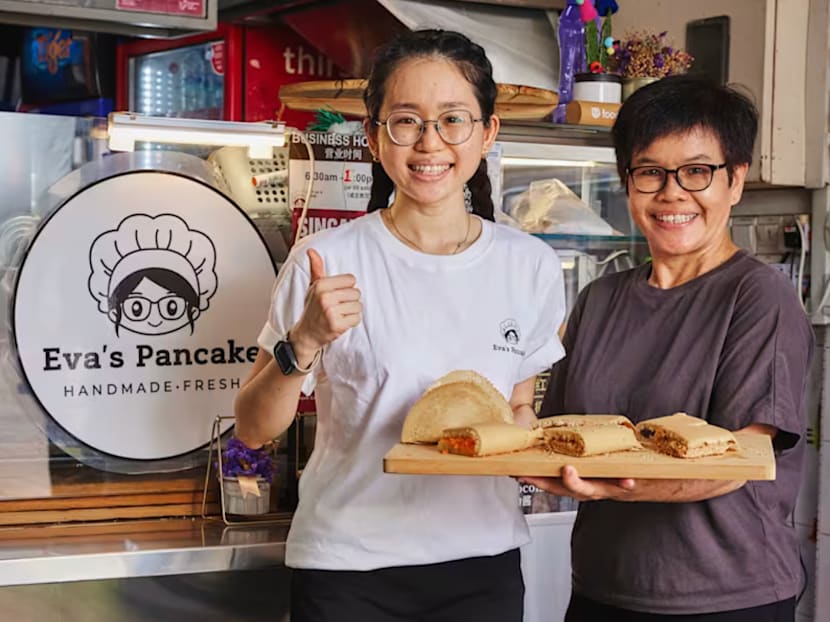
US President Donald Trump and Chinese President Xi Jinping talk as they leave after a bilateral meeting at Gimhae International Airport, in Busan, South Korea, Oct 30, 2025. (Photo: REUTERS/Evelyn Hockstein)

18 Mar 2026 02:43AM (Updated: 18 Mar 2026 06:34AM)
Read a summary of this article on FAST.
FAST

WASHINGTON: US President Donald Trump said Tuesday (Mar 17) he expected to travel to China in a bit over one month, after postponing the trip slated for the end of March due to his war on Iran.

"We have a very good working relationship with China, so we're making it in about five or six weeks," Trump told reporters in the White House.

Trump sought to play down the significance of the delay and said he had a strong relationship with Chinese President Xi Jinping.

"We're working with China. They were fine with it," Trump said of the delay.

"I look forward to seeing President Xi; he looks forward to seeing me, I think."

Trump said that China "has become, economically for us, very good, very good", in what he called a shift for the United States.

Trump has repeatedly hailed his trade negotiations with China, saying that a better relationship can benefit the United States. 

It marks a contrast with Trump's tone before returning to office, in which he cast China as a major adversary and vowed to focus the United States on countering the Asian power.

Trump on Feb 28 launched a war on Iran alongside Israel, despite the president's earlier criticism of US intervention in the Middle East.

Trump suggested earlier that his trip, which was supposed to run from Mar 31 to Apr 2, would depend on whether China helped Washington to reopen the Strait of Hormuz, the vital maritime waterway that has been effectively closed by Iran in retaliation for US and Israeli strikes.

In Beijing, Chinese foreign ministry spokesman Lin Jian said earlier Tuesday that it noted that the United States has "has publicly clarified these false reports".

The trip, Lin said, "has nothing to do with the issue of the open navigation of the Strait of Hormuz".

Source: AFP/fs

Sign up for our newsletters

Get our pick of top stories and thought-provoking articles in your inbox

Subscribe here
Advertisement

Business

China restricts some overseas-incorporated firms from Hong Kong IPOs

China restricts some overseas-incorporated firms from Hong Kong IPOs

Bull statues near screens showing the Hang Seng stock index and stock prices outside Exchange Square, in Hong Kong, China, on Feb 3, 2026. (Photo: REUTERS/Tyrone Siu)

17 Mar 2026 10:39PM
Read a summary of this article on FAST.
FAST

Beijing is restricting certain Chinese companies incorporated overseas from seeking initial public offerings in Hong Kong, requesting them to change their domicile back to China before going public, according to China's securities regulator.

The China Securities Regulatory Commission (CSRC) said on Tuesday (Mar 17) some red-chip firms, companies that are registered abroad, but hold assets and businesses in China via equity ownership, received the guidance to unwind the structure recently.

"Regulators at home and abroad have long scrutinised red-chip vehicles given their opaque shareholding structures and relatively high compliance risks," the CSRC said in a statement responding to Reuters queries.

Sources with knowledge of the matter told Reuters earlier on Tuesday that the CSRC had requested a number of IPO candidates in recent days that they should not list in Hong Kong unless they overhaul their corporate structure.

CNA Games
Show More
Show Less

It was not immediately clear how many IPO candidates have received such guidance.

The CSRC said it has since December allowed five red-chip companies to complete their filings in order to list offshore.

FOCUS ON RED CHIPS FORMED SINCE NEW RULES

The securities regulator has since March 2023 implemented a new filing regime under which companies which adopted complex holding structures such as red chips are subject to Beijing's approval to raise funds offshore.

"Under the new regime, authorities typically examine the necessity and compliance of establishing red-chip structures, particularly whether such structures were built after the measures took effect," the CSRC said in the statement, referring to the new offshore listing rules.

Currently, more than 530 companies have filed applications for a Hong Kong listing, according to the exchange's website.

The CSRC, which said the guidance to unwind red-chip structures was a standard regulatory move, added it had consistently supported enterprises in lawfully listing in Hong Kong and other offshore markets.

The Hong Kong stock exchange declined to comment.

Bloomberg News first reported on Tuesday the restrictions, citing people familiar with the matter. The tightening measures contrast with Hong Kong's latest proposal to lower market value thresholds for companies seeking to use a dual-class share structure, among other new measures to boost its competitiveness.

Hong Kong was the top global IPO market last year. Chinese companies accounted for 77 per cent of its total market capitalisation at the end of 2025, exchange data shows. 

Source: Reuters/ec

Sign up for our newsletters

Get our pick of top stories and thought-provoking articles in your inbox

Subscribe here