
Mario has appeared in many bootleg games for the Famicom and NES, including Somari, Kart Fighter, and Super Mario World (Famicom), but he has also appeared in cheap graphical hacks of other licensed video games. Often released for Famiclone systems, these hacks of games like Tiny Toon Adventures, Joe & Mac, and Armadillo slap a Mario sprite over the main character's sprite(s), and sometimes with minor graphical changes in enemies and objects or change the number of lives you start with.
Numbered Hacks[]
These games were numbered in a possible attempt to make it seem like they were an extension of the original trilogy.
1990 Super Bros. 4[]
- Main article: 1990 Super Bros. 4
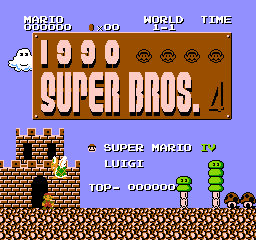
Title screen.
A hack of Super Mario Bros: The Lost Levels (Super Mario Bros. 2 in Japan) that changes the title screen, some of the graphics, and edits some of the power-ups to do different things - a Super Mushroom turns Mario into Fire Mario, and a Super Star allows Mario to swim in the air. Graphics are used from Super Mario Bros. 3, although some sprites are custom.
Trivia[]
- 921001 is written on the PCB, which likely means its release date was around October 1992.
- In an issue of Club Nintendo México (an official Nintendo magazine), a reader asked if a game they saw was "Super Mario Bros. 4", with a description very similar to 1990 Super Bros. 4 (see third photo below).


Mario IV[]
- Main article: Mario IV
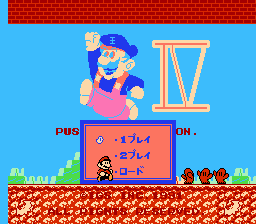
Title screen.
Mario IV is a hack of Armadillo which changes the title screen and replaces the main character with Mario. Some graphics are taken from Dian Shi Ma Li and Super Mario Bros. 3. An alternate version of the hack has a stage select that enables starting from any of the eight worlds.
Trivia[]
- The game's origin is currently unknown. It might share a developer with Super Mario Bros. 7 (see below), due to one of Mario IV's numerous releases having an almost identical PCB and box-art to said game; it also somewhat hints that the J.Y. Company likely released it at some point.
- One PCB reads 911223, suggesting the hack was either first released very early into 1992 or had already hit the markets on or later than December 1991.
- A rare alternate title screen variant of this hack known as Mario 6 (not to be confused with a Tiny Toon Adventure hack with a similar name) is known to exist, presumably to differentiate with 1990 Super Bros 4, which was also released in 1992. Aside from the title screen, the main hack appears to be untouched.


Super Mario 4 (Game Boy)[]
- Main article: Super Mario 4
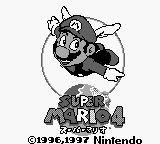
Title screen.
An extensive hack of the Japan-only original Game Boy game Crayon Shin-chan 4: Ora no Itazura Dai Henshin, originally published by Bandai and developed by TOSE. There are four levels throughout the entire game and the game now has the player control Mario. Many changes are made to the original game for this hack, such as adding a new animated title screen featuring a depiction of Mario from the Japanese Super Mario 64 box art, removing the story elements, adding new level layouts, and reskinning the power-ups to be Mario-themed. The level layouts in particular are a major point of criticism with the game as they unfairly increase the difficulty compared to the original game. Various graphics used in this hack are taken from multiple Game Boy Mario games, including Super Mario Land 2: 6 Golden Coins, Mario & Yoshi (Yoshi), and Yoshi's Cookie, with a few being original to this hack.
While the title screen has a 1997 copyright year visible, it is currently unknown when the game was originally released. However, it is known that the game started appearing on multicarts as early as 1998.
Super Bros. 5 / Super Wonderful Mario 5 / Super Wonderful Mario[]
- Main article: Super Bros. 5
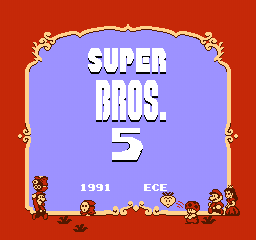
Title screen.
A hack of the PAL version of Super Mario Bros. 2 (aka Super Mario USA) except the title screen has been changed and Mario's name is now spelled as "Merio" in the story text - perhaps intentionally to get around copyright. An earlier variant exists under the name Super Bros. 2, is credited to CTC and dated 1989. Gameplay wise, it's still the same.


Super Bros. 6[]
- Main article: Super Bros. 6
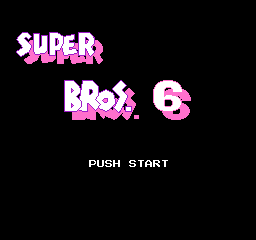
Title screen.
A hack of Tiny Toon Adventures that changes the title screen to the words "Super Bros. 6" using the Super Mario Bros. 3 title screen font on a black background with no copyright text, a title screen style seen in many of these hacks. It also replaces some of Buster Bunny's sprites with a pink Mario; sprites such as Buster's map icon and powerup sprites, along with the rest of the playable characters, remain intact, however. The sprites for Mario are from Super Mario Bros. 3.
This hack can be found in various multicarts.


Super Mario Bros. 7 / 7 Grand Dad[]
- Main article: 7 Grand Dad
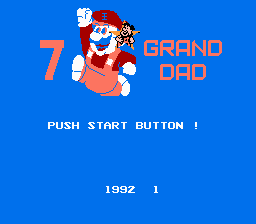
Title screen.
A well-known Mario bootleg of The Flintstones: The Rescue of Dino and Hoppy which spawned into an infamous meme. The hack changes parts of the title screen, and replaces Fred Flintstone's head with Mario's on Fred's sprites. The copyrights at the end of the game have all letters changed to X's. The Mario on the title screen was taken from Dian Shi Ma Li and the sprite that replaces Fred Flintstone's head was taken directly from Super Mario Bros. 3. The game starts on the map screen, allowing you to choose any of the first 3 levels at the start of the game, and has a built-in level select accessed by pressing Select on the title screen.
Trivia[]
- The first release likely originates from J.Y. Company. One PROM on the PCB has JY215 written on it.
- Only the main gameplay graphics were altered, meaning any connections with Mario are minor. All references to Fred Flintstone via dialogue are also retained.
- During the basketball minigame, Fred's head was not replaced.
- This game appeared in a commercial for a Famiclone from Argentina, which can be viewed here.
- The bootleg game would eventually become an internet meme in the mid-2010s.


Super Mario World 7 / Super Mario Land 7[]
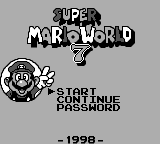
Title screen.
A title screen and sprite hack of the North American/European version of Adventure Island II: Aliens in Paradise. It was released for the Game Boy in 1998 by an unknown company. On some cartridges and multicarts, the game is labelled as Super Mario Land 7. However, they all contain the same game with the title screen on the right.
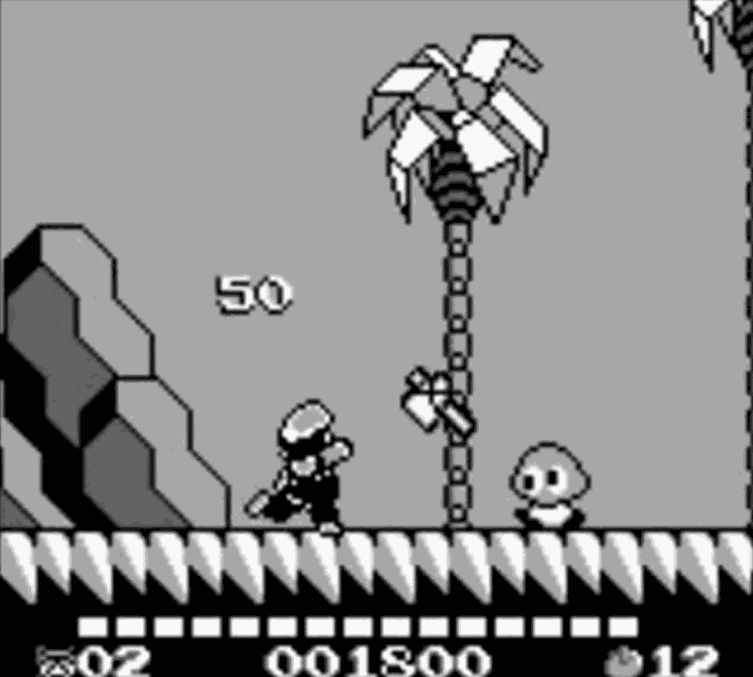
Mario throwing a stone axe at a deformed Goomba during gameplay.
The intro cutscene from the original game is replaced with a custom splash screen in addition to the title screen being edited. Master Higgins' sprites have been replaced with Mario sprites based on ones from Super Mario Land 2: 6 Golden Coins - some of these sprites are directly ripped from that game, while others are either sprite edits or drawn from scratch. The fruit have been replaced with sprites of the Mushroom, Fire Flower, and Star items from the Super Mario games, and the snail enemy sprites have been replaced with original drawings of what is supposed to be a Goomba. The hack is otherwise identical to the original game.
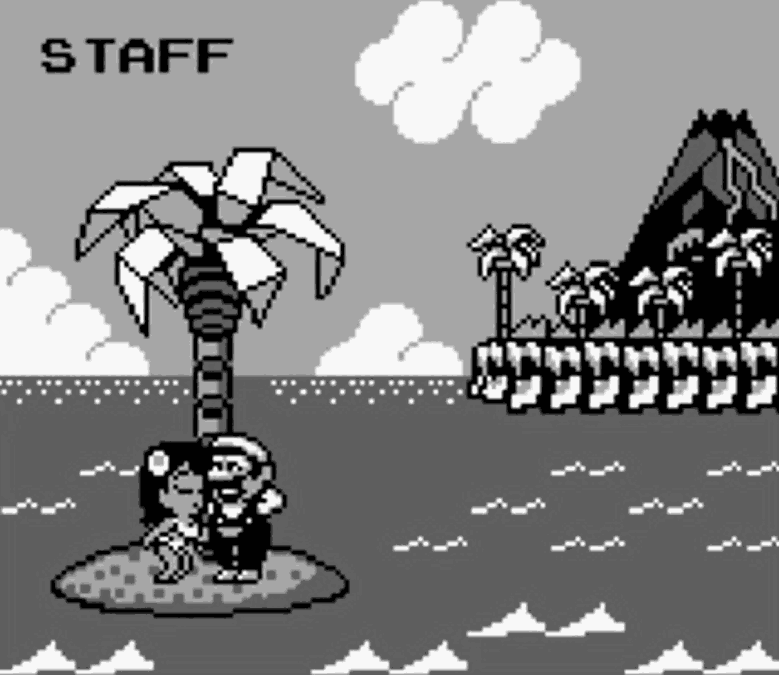
The credits screen of Super Mario World 7.
The original ending and credits sequence from Adventure Island II: Aliens in Paradise is kept fully intact in this hack, with the only change being that Mario stands in for Master Higgins being repeatedly kissed by his girlfriend.
Gallery[]


External Links[]
- Video of the credits of Super Mario World 7
- Longplay of Adventure Island II: Aliens in Paradise
- Blog post about the game by fcgamer
Super Bros. 8[]
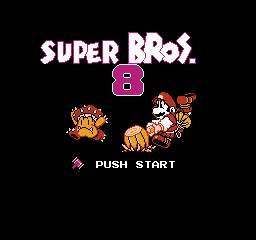
Title screen.
A hack of Don Doko Don 2 that changes the title screen and replaces the two characters with Mario and Luigi. Graphics are used from Super Mario Bros. 3. In the ending, the game is erroneously referred to as "Super Mario Part 6" instead. In some versions, the game starts with 9 lives instead of 3.
Trivia[]
- The first release of this hack likely originated from J.Y. Company. The PCB has 2 PROMs suggesting this, one reads JY-A1 and another JY211.
- The PCB manufacturing code implies it would have been made during March 1992.


Super Bros. 9 / Super Mario World 9[]
- Main article: Super Bros. 9
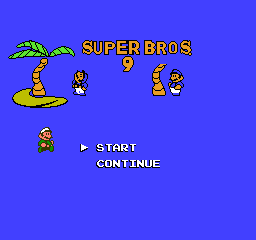
Title screen.
A hack of Adventure Island II which replaces all of Master Higgins' sprites with Mario (but leaves Higgins' palette unchanged, making him look more like Luigi). Graphics are used from Super Mario Bros. 3. A somewhat more common variant of this game instead exists under the name Super Mario World 9 which was released in 1996, confusing "Super Mario World" with "Super Mario Bros.". This version starts with 10 lives instead of 4. It has its own variant that adds in the area select code on the title screen: Right + Left + Right + Left + A + B + A + B.
Trivia[]
- 920618 is printed on the PCB. It is likely the manufacture or design date. It might be released on or after June 1992.


Super Bros. 10: Kung Fu Mari[]
- Main article: Super Bros. 10: Kung Fu Mari
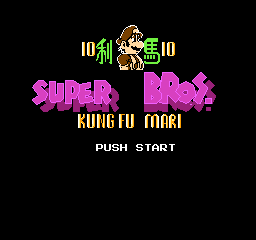
Title screen.
A hack of Jackie Chan's Action Kung Fu which changes the title screen and swaps out Jackie Chan's head with Mario's. The graphics were taken from Super Mario Bros 3.
Trivia[]
- The reprint shown below has 810425C written on it (April 25th, 1992). It means Mario 10 had likely already hit the market by then.


![A reprint released in 1996[1] by Realtec, as indicated by the three digit code "S-B5". The cover features characters from the Kaiketsu Yanchamaru cover for Famicom, but the main character's head is replaced by Mario's from the Wrecking Crew cover. This version is known to have been sold in Russia.](https://bootleggames.fandom.com/wiki/File:Super_Bros_10_(reprint).jpg "Super Bros 10 (reprint).jpg (351 KB)")


.jpg "S-l1600 (1).jpg (358 KB)")


Super Bros. 11 / Mario Adventures 11[]
- Main article: Super Bros. 11
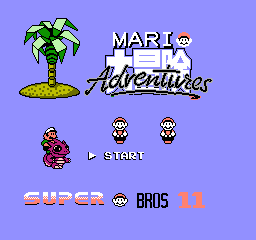
Title screen.
A hack of Adventure Island 3 which replaces all of Master Higgins' sprites with Mario. The fruits the player collects are replaced with multi-colored coins, and the eggs with mushrooms. The game starts with 30 uses of all items instead of 0 and 10 lives instead of 4, making it much easier. The graphics are from Super Mario Bros. 2 (FDS version) and Super Mario Bros. 3. The "Adventures" part of the logo from Tiny Toon Adventures is also used on this hack's title screen, albeit colored black.
Trivia[]
- Mario 11 and Mario 14 both have almost identical PCBs.


.jpg "S-l1600 (2).jpg (347 KB)")

Mario 12[]
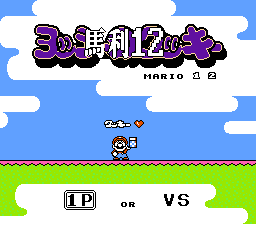
Title screen.
A simple title hack of the Japanese version of Yoshi's Cookie.

.jpg "Ma Li 12 - Select menu (1 player).jpg (16 KB)")

Super Mario Bros. 13 / Super Brother Mario 13[]
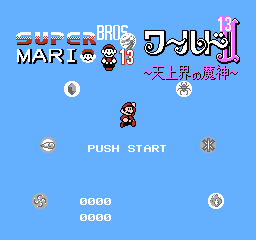
Title screen.
A hack of Saiyūki World 2: Tenjōkai no Majin, the Japanese version of Whomp 'Em, that replaces the main character's sprite with Mario's. The graphics used are from Super Mario Bros. 3.
Trivia[]
- The PCB reads 820212C which translates to February 12th, 1993.
- The title screen is very similar to Super Bros. 11, using the same "Mario" text, hinting at the fact that they could be from the same developer.


Super Mario 14[]
- Main article: Super Mario 14
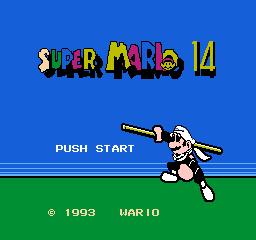
Title screen.
A hack of Kaiketsu Yanchamaru 3: Taiketsu! Zouringen (AKA Kid Niki: Radical Ninja 3 on English-speaking websites) that changes the title screen and replaces a few of Kid Niki's sprites with Mario. Some enemies are replaced with Koopas and Spinies (which seem to be walking backwards) and some items are changed to coins and mushrooms. The graphics used are from Super Mario Bros. 2 (aka Super Mario Bros. The Lost Levels) and Super Mario Bros 3.
Trivia[]
- Humorously, the game is credited to "Wario" on the title screen. However, there is also a rarer version of this game where the copyright on the title screen is written as "1996 Mario".[2] It is known this version was sold in Russia.
- Mario 14's PCB is almost identical to Mario 11.


Mario Bros. 14 Adventures / Mario Bros 15[]
- Main article: Mario Bros. 14 Adventures
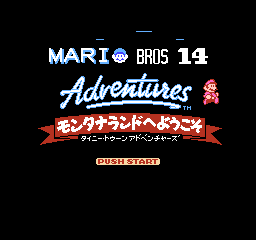
Title screen.
A hack of the Japanese version of Tiny Toon Adventures 2: Trouble in Wackyland officially (for the publishers) that, like Super Bros. 6, replaces Buster Bunny (along with other characters, such as Babs Bunny) with a pink Mario and uses graphics from Super Mario Bros. 3. Some cartridge labels list the number "15" despite that it still remains with a "14" in-game.


Mario 16 / Super Bros Jurassic Park / Mario and Dinosaur[3][]
- Main article: Mario 16
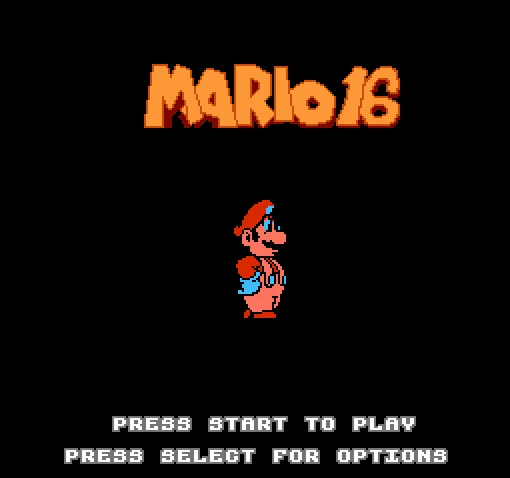
Title screen.
A hack of Joe & Mac that changes the title screen and replaces some of Joe's sprites with Mario. The game starts with 10 lives instead of 3. The graphics used are from Super Mario Bros. 3.
Trivia[]
- The PCB manufacturing code reads 810936C, which translates to September 1993.
- There's a rare alternate version of this game called "Super Mario Jurassk Park" (Super Bros Jurassic Park on the cartridge label). It differs only in the title screen's title. It was likely also released in 1993.
- Mario 16 for the Dendy was reviewed on the Russian game show Dendy: The New Reality. The original Joe & Mac was also reviewed later. The host was seemingly under the impression that Mario 16 was the original and Joe & Mac was the hack when it is the other way around.


Super Bros. 16[]
- Main article: Super Bros. 16
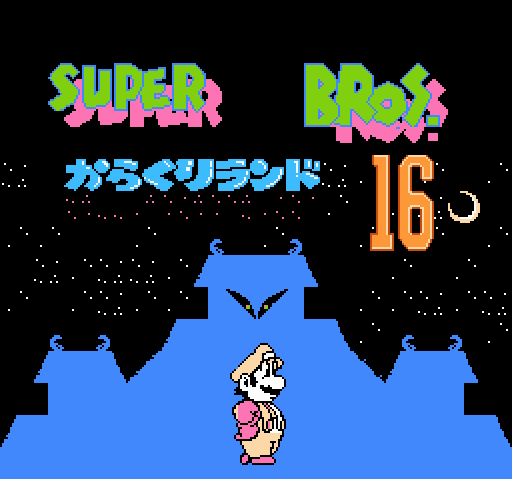
Title screen.
A hack of Kaiketsu Yanchamaru 2: Karakuri Land (AKA Kid Niki: Radical Ninja 2) that replaces the main character with a poorly drawn Mario. The game starts with 10 lives instead of 3 and 5 points of energy instead of 0. Several graphics are from Super Mario Bros. 3.


Super Bros. 17: Fighting of the Mali Lugi[]
- Main article: Super Bros. 17: Fighting of the Mali Lugi
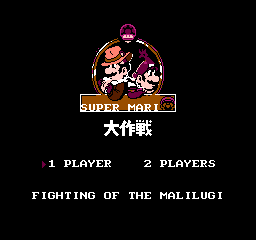
Title screen.
A hack of Chip n' Dale: Rescue Rangers that changes the title screen and replaces Chip, Dale, and two enemies with Mario, Luigi, Yoshi, and Bowser, respectively. The graphics used are from Super Mario Bros. 3 and Yoshi's Cookie.
Trivia[]
- The final "officially" numbered Mario pirate hack to date.
- Despite being marketed as the "17th" Mario game, the actual pirate hack's title screen doesn't mention anything about being a 17th Mario game.


Non-Numbered Hacks[]
These games were pirate hacks that were released on original Famicom cartridges.
Mali & Lugi Fighting 2[]
- Main article: Mali Lugi Fighting 2
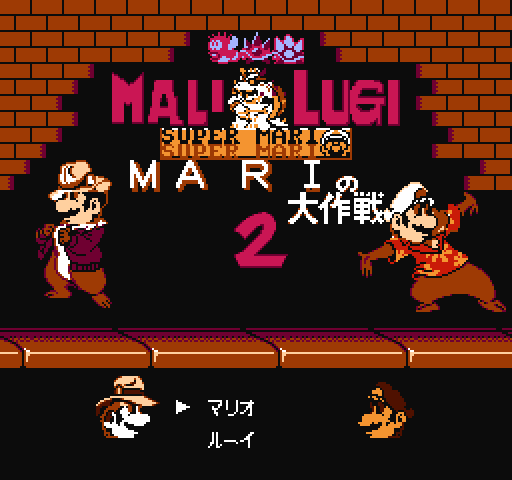
Title screen.
A sequel to Super Bros. 17, based on Chip 'n Dale: Rescue Rangers 2. The graphics are the same as the former title.
Trivia[]
- The game may have not received a proper or at the very least limited retail release, since the original copy of the game currently found was stored inside a regular Rescue Rangers 2 case.


Adventure Mario[]
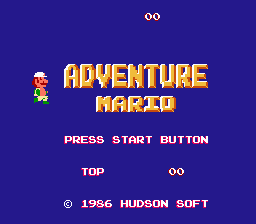
Title screen.
A hack of Adventure Island exclusively found on multicarts that changes the title screen and replaces Master Higgins with Luigi, albeit poorly. Graphics are used from Super Mario Bros..


Mali Boss[]
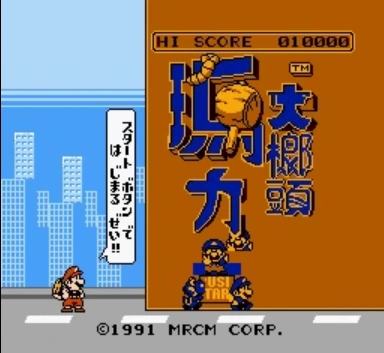
Title screen.
A hack of Daiku no Gen-san, the original version of Hammerin' Harry, that changes the title screen and replaces the main character's head with Mario and enemies with Toads and the Ice Land King from Mario 3. The graphics used are from Yoshi's Cookie and Super Mario Bros. 3.
Trivia[]
- There are two versions of this hack. One is a commonly affordable 9 lives hacked version with expanded time limit, and the other version is a rare standard 3 lives version with regular 3 minute time limit just like the original game. Aside from the additional lives, and minor copyright changes in the intro company logo, the main sprite hack remains the same for both versions.


Super Mali Splash Bomb / Super Mali Soda Water[]
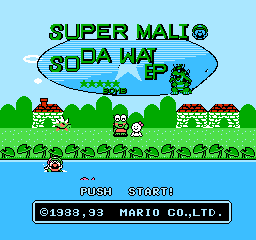
Title screen.
A hack of Keroppi to Keroleen no Splash Bomb that changes the title screen and replaces Keroppi with Luigi. The graphics used are from Yoshi's Cookie.
Trivia[]
- For whatever reason, the hack includes a broken English translation, as well as being extremely glitched with text on both the menu screen and status bar during gameplay.


Super Mali Hero Legends / Hero Mali Brothers[]
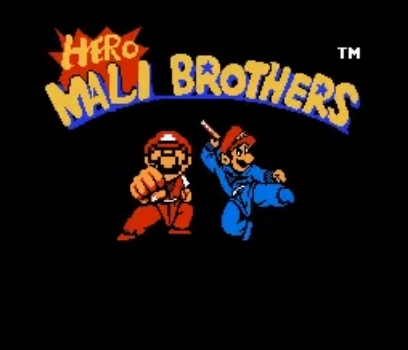
Title screen.
A hack of Little Ninja Brothers that changes the title screen and replaces the Ninja Bros. with the Mario Bros. instead. The graphics used are from Yoshi's Cookie.
Trivia[]
- The game is notably based on the American version of Little Ninja Brothers, rather than the Japanese version, Super Chinese 2.


M.C. Mario[]
- Main article: M.C. Mario
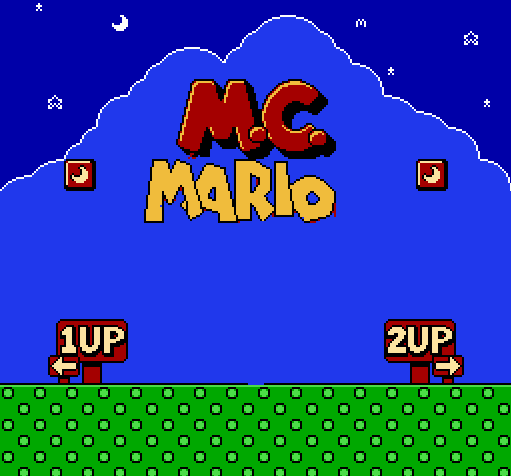
Title screen.
A hack of M.C. Kids (aka McDonaldland) that changes the title screen and replaces Mick and Mack with Mario, using graphics from Super Mario Bros. 3. The opening segment at the beginning showing Mick and Mack reading the story is cut out and takes you right to Ronald's house instead.
Trivia[]
- The cover variant shown below (middle) has a PCB with 811209C on it. It translates to December 9th, 1992. This is likely a reprint by another distributor, suggesting the game was released before that.
- Despite the sprites of the characters having been changed, their names are still Mick and Mack in the cutscenes.
- Gregg Iz-Tavares, who was a programmer for the original M.C. Kids, mentioned this hack on his blog. He said that, although he was sad to see a game he worked on ripped off, he still thought it was interesting to see the hack. The original post can be found here.


Pizza Pop Mario / Mary Pizza Pop[]
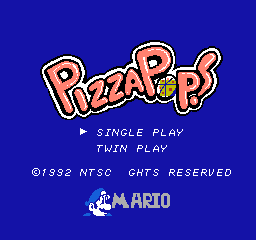
Title screen.
A hack of Pizza Pop that changes the title screen and replaces the playable character, a pizza delivery man, with Mario. The game has the player start with 8 lives and 7 hearts (two of which are not rendered on the HUD) instead of the 2 lives and 3 hearts the original game has the player start out with. The Mario graphics (at least the ones on the title screen and for the player character sprites) are taken from Super Mario Bros. 3.


Super Bros. Pocker Mali[]
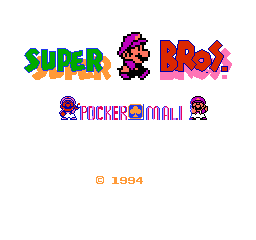
Title screen.
A hack of Crayon Shin-Chan: Ora to Poi Poi that replaces Shinnosuke with Mario. Some of Shinnosuke's story graphics have been erased, leaving the other Crayon Shin-Chan characters, including the text, fully intact. All references to Shinnosuke via dialogue are retained. The graphics used are from Yoshi's Cookie.


Mario Rider / Super Mario Kart Rider[]
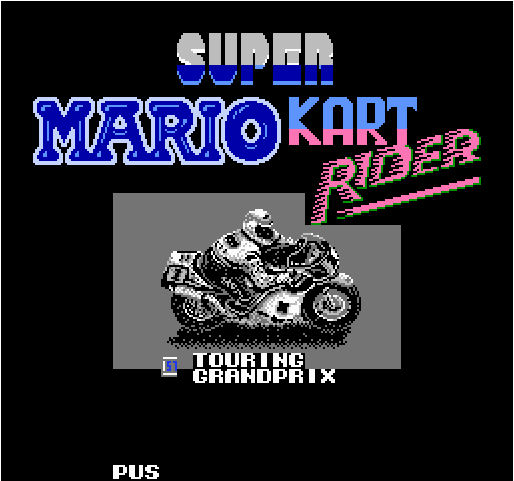
Title screen.
A Top Rider hack which replaces the head of the biker with a Super Mario Bros. 3 sprite. Some variants have multiple heads to choose from in the form of other characters from Super Mario Kart. This hack changes the controls to support a normal controller as the original game required a bike peripheral to play it.
Trivia[]
- The hack unintentionally predicted the inclusion of bikes in the Mario Kart series starting with Mario Kart Wii.

.JPG "$ 57 (1).JPG (322 KB)")

Mario Kart[]
- Main article: Nice Code Software/NES/Famicom hacks#Mario Kart
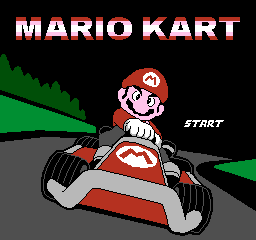
Title screen.
A F1 Race hack that changes the three courses to Mushroom, Flower, and Lightning Cu, and allows the player to play as either Mario or Luigi. The graphics are used from Super Mario Kart, Mario Kart Super Circuit, and Mario Kart 7 (with a lower resolution and fewer colors).


Miss Peach World[]
A hack of Menace Beach (AKA Sunday Funday), possibly by Hacker (acording to the Box), that replaces Scooter with a character that very vaguely resembles Princess Peach (although she mostly looks to be based on Marilyn Monroe). It also revamps most of the game's presentation; having girls strip in the cutscene and completely redoes all of the enemies' graphics.


Mario Bobble[]
A small graphic hack of the FDS version of Bubble Bobble made by Sun in 1989 that replaces Bub and Bob with Luigi and Mario. The sprites were taken from the original 1983 Famicom port of Donkey Kong, as well as Kaettekita Mario Bros. This hack was commonly found in places like Hong Kong among other bootleg copies of Famicom Disk System games at the time. It seems to be related to another hack featuring Ninja-Kun.
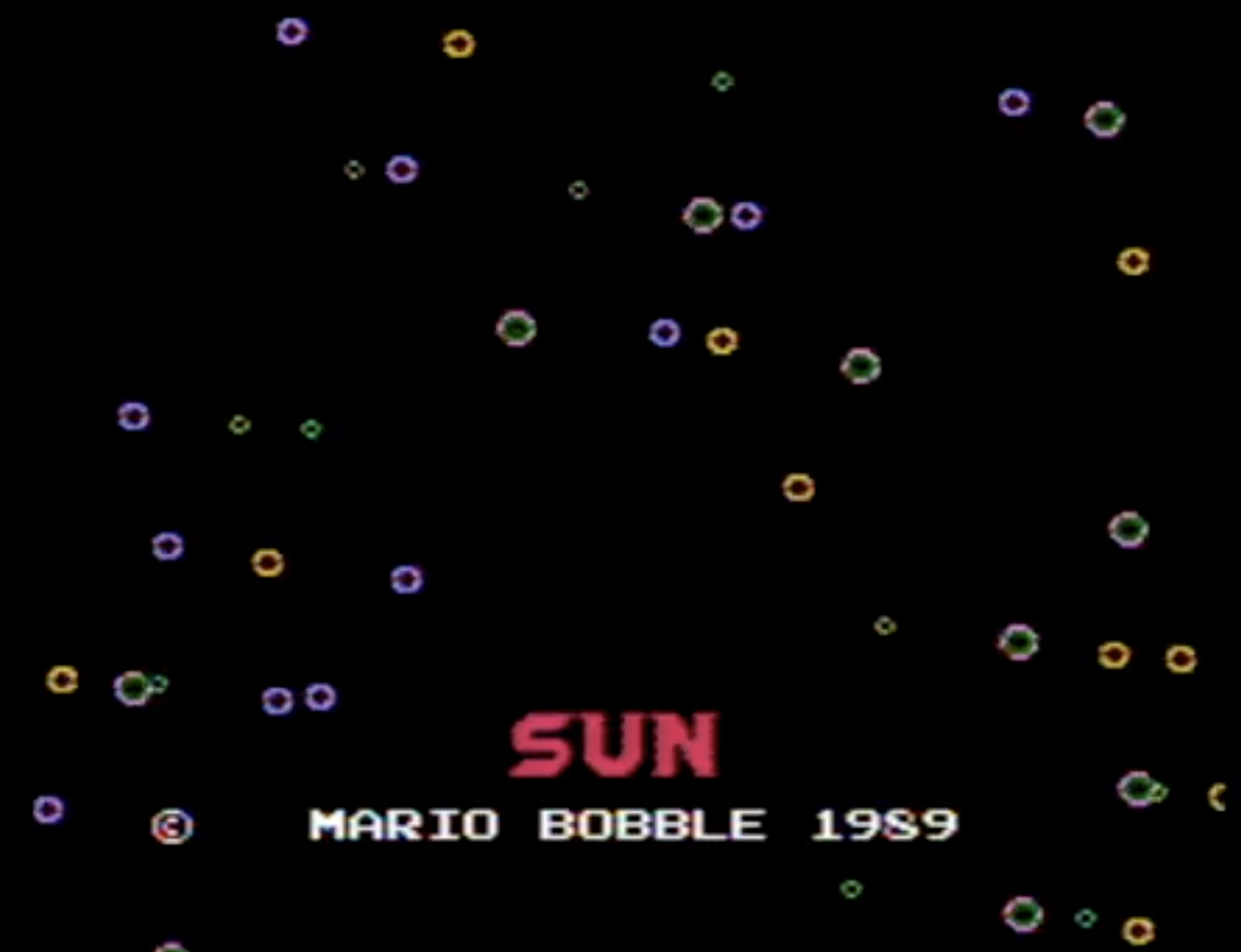
Title screen.
Trivia[]
- This can be the first Mario pirate hack to be released, dated at 1989.
- This is one of only two bootleg Mario hacks on the FDS to date. The other being Mario Castlevania, a hack of the original FDS version of Akumajou Dracula.
- This is one of, if not the only, Mario pirate hacks that have a full "company" copyright to date (Sun), even if it's a possible alias of the unknown hacker(s) behind this hack.
- Both Mario Bobble and Akumajou Mario appeared in Fuji Television documentary "Cyber City - Hong Kong Copy Heaven" in 1990. This hack was more prominently featured in the documentary along with other pirated hacks Disk, while Akumajou Mario can be seen briefly in the Hong Kong market footage along with the other pirated disks.


Mario Castlevania/Akumajou Mario[]
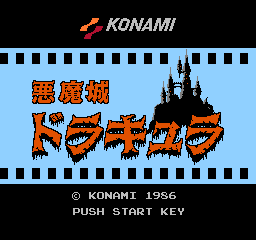
Title Screen
A hack of the FDS version of Akumajou Dracula (Castlevania) which replaces Simon Belmont with Mario from the first Super Mario Bros. Unofficially, it is often referred to it as "Akumajou Mario" or "Mario Castlevania", though the title screen is completely unmodified. Like Mario Bobble, this hack was first discovered in places like Hong Kong, where FDS piracy, hacks and console mods for copying disk games were a lot more common at the time.
Trivia[]
- Much like Mario Bobble, it is possible that this hack would have been one of the earliest, if not, first Mario bootleg hacks. Unlike Mario Bobble, however, the specific date for this hack's publication to the pirated market is unknown other than an unaltered Konami copyright that's dated in 1986.
- One of the few earliest Mario bootleg hacks where the sprites were not taken from Super Mario Bros 3, but instead from the first Super Mario Bros.
- Although very briefly, both this hack and Mario Bobble were showcased in an episode of a Fuji Television documentary known as "Cyber City - Hong Kong Copy Heaven" in 1990.


Warioland II[]
- Main article: Wario Land 2 (Famicom)
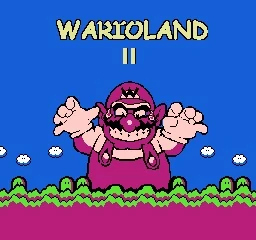
Title screen.
A hack of Kirby's Adventure that replaces Kirby with Wario. Despite its rather poorly-done visuals, it is a rather advanced hack technologically. The graphics used are from Wario Land II (Game Boy) and Wario's Woods.
Trivia[]
- The only known release originates from J.Y. Company. The PCB code (EL870914C) indicates it was manufactured during September 1998, which may make it one of, if not the final J.Y. Company single cartridge releases for the Famicom with Final Fight 3.


Bugger Man[]
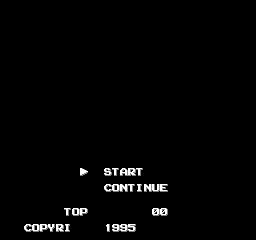
Title screen.
A hack of Bomberman featuring a poorly colored Goomba as the main character, only found on the JY-120A 45 in 1 multicart. The graphics used are from Super Mario Bros. 3 and Armadillo.
Trivia[]
- The game likely originates from RCM Group, as it is very similar to the hacks found on their 1500-in-1 multicart (see below). This is the only one of those hacks to have been republished elsewhere.

1500-in-1 hacks[]
The 1500-in-1 Multicart by RCM Group features literal hundreds of (very low quality) pirate hacks, many of which feature Mario, Goombas, and Koopa Troopas. The hacked games include Battle City, BB Car, Bomberman, Circus Charlie (starts on level 2), Donkey Kong, Nuts & Milk, and Road Fighter. Due to the gigantic amount of them, they cannot be fully listed here, although three examples can be seen below. Many Nuts & Milk and Donkey Kong hacks feature sprites from Armadillo.


Hacks of Mario games[]
These games are the opposite of the other bootlegs above in that they are hacks of Mario games with different characters in them.
Many of the ones based off of Super Mario Bros. are in fact based off of "2", the title-hacked pirated version of Super Mario Bros. originally released by Whirlwind Manu under the ID LB35.
Genius Merio Bros / Super Malee Bros 2 (天才瑪琍)[]
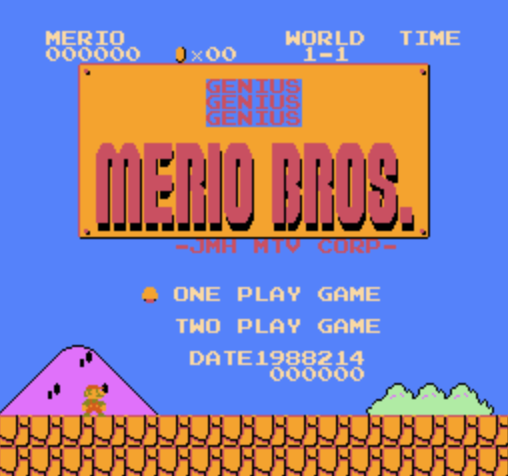
Title screen.
An advanced Taiwanese hack of Super Mario Bros. The hack alters the stage palette, as well as changing some of the physics when it comes to controlling Mario. In addition, there's a code where you can have an access with the debug mode, and by pressing select on stage, Mario can now swim through the levels.
Trivia[]
- There are two versions of this hack known to exist. The first version is a heavily altered title screen hack version with Genius Merio Bros (Genius Genius Genius Merio Bros) copyrighted by "JMH MTV CORP", and the other version is an altered version of the commonly found "2" title-hacked pirated version without the copyright. It is unknown which version came first.
- According to the copyrighted date, the hack was released presumably around February 14th, 1988 (reading 1988214).
- For a cartridge based only Mario game, this hack is one of the first Mario pirate hacks to date.
- By pausing the game and pressing a combination of A, B, right, up, left, down, B, A, and then pressing any of the final combination of buttons on the controller, you can either obtain items for Mario or change the behavior of the game such as enemy patterns.
- For whatever reason, you can actually get killed by obtaining items such as Mushrooms (Both Super and 1up Mushrooms), Fire Flowers, and Stars, while stationed on the ground. You have to obtain the item during a mid-air jump in order to obtain the item without getting killed.
- Both Mario and Luigi now have slippery physics while sliding on the ground, similar to Luigi's physics in the Japanese version of Super Mario Bros 2.
- As credited on the hacked title screen, there is a possibility that Hwang Shinwei’s frequent affiliate programmer, Hwang Jiun-Ming, may have been involved in this hack, as notable traits found in Hwang's pirated hacks include the shortened name syllables “JMH” or “JIUN MING HWANG.” However, it remains unconfirmed whether they were indirectly involved or involved at all with this hack.

.png "Geniue Merio Bros Cartridge (Back).png (7.6 MB)")
.png "Super Malee Bros 2 (Genius Merio Bros).png (36 KB)")
Al Basha's Adventures (AKA الباشا)[]
- Main article: Al Basha's Adventures
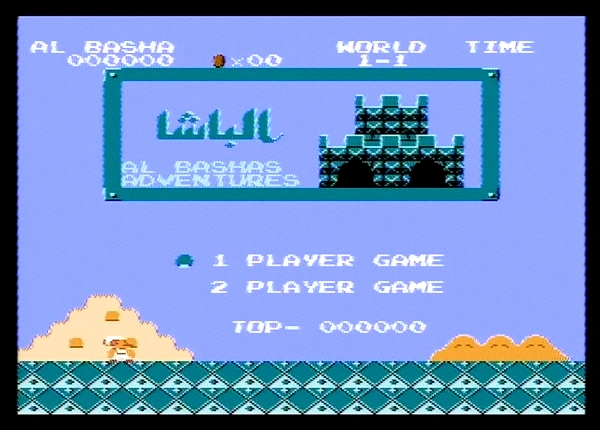
Title screen.
A hack of Super Mario Bros. where Mario is altered to be dressed as a Pasha. This hack alters the palettes, slightly alters the music to sound normal on Famiclones with swapped duty cycles, and alters the graphics for most enemies and background elements to some extent. The game itself is based on the aforementioned 2, a title hack of Super Mario Bros.
.png "Al Basha's Adventures (Gameplay).png (188 KB)")
Van der Merwe en Boetie (Van der Merwe Bros)[]
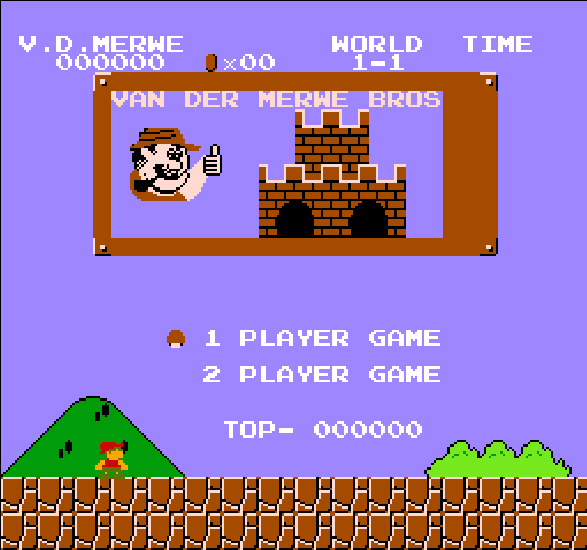
Title screen
A minor hack of Super Mario Bros. where the only real change is that Mario and Luigi are changed to generic characters with South African lineage. The game itself is based on the aforementioned 2, a title hack of Super Mario Bros.

Pandamar (AKA Panda / Panda Adventure / Kung Fu Panda)[]
- Main article: Pandamar
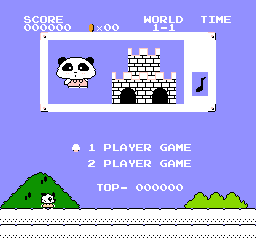
Title screen.
A more advanced hack of Super Mario Bros. that changes the palettes, replaces nearly all enemy and tile sprites, changes Mario into a panda, and replaces the entire music with a handful of drastically different short, looping tunes. The game itself is based on 2, a title hack of Super Mario Bros. It is connected to Inventor.
Trivia[]
- On the 101-in-1 Arcade Action II plug 'n play system, the generic music is replaced with a rendition of Hello! Ma Baby.
- There is also a variant titled Impossible Panda, which features different levels seemingly ripped from a fanmade "Kaizo" hack.

Frog Prince / Mushroom[]
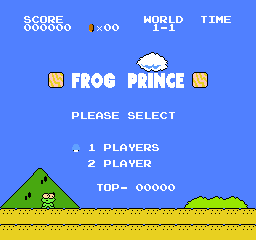
Title screen.
Both are hacks of Pandamar with different palettes, protagonists, tiles, enemies, music, etc. They are also connected to Inventor.
-!--0.png "Famicom Yarou 54 (Unl)-!--0.png (2 KB)")
-0.png "Mushroom (Unl)-0.png (3 KB)")

Pika Chu / Pocket Maero / Pika / Pika Man / Pocket World[]
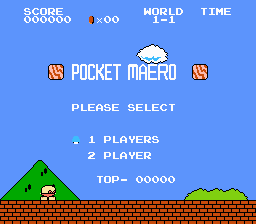
Title screen.
A hack of Mushroom featuring a Pikachu–Pichu hybrid (its small form being an anthropomorphic Poké Ball) and the same music as Pandamar. It is connected to Inventor.


-1.png "Pocket Maero (Unl)-1.png (2 KB)")
Super Boy[]
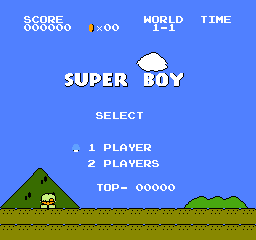
Title screen.
Not to be confused with Super Boy I, this is yet another Pandamar variant. Seemingly mixes elements from both Frog Prince and Mushroom, with an original music track. It is connected to Inventor.
Trivia[]
- There is also a hack of Adventure Island II called Super Boy World, which stars the same generic protagonist and is seemingly based on Super Mario World 9.
_(Unl)-0.png "Super Boy (Super Mario Bros. hack) (Unl)-0.png (3 KB)")
Super Mario Sister[]
- Main article: Super Mario Sister
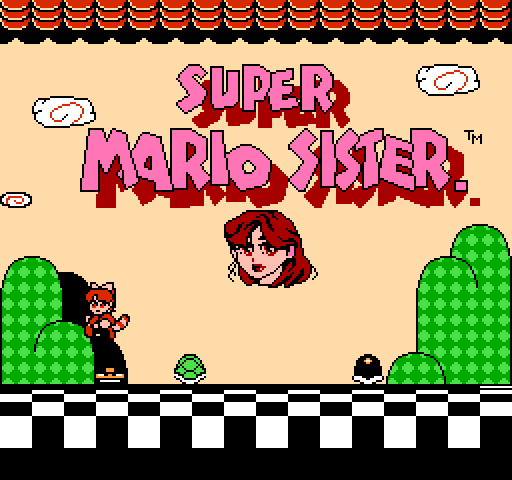
Title screen.
A minor hack of the Japanese version of Super Mario Bros. 3 that replaces Mario and Luigi with female counterparts. The game starts with 10 lives instead of 5, and some graphics are modified.


Super Simpsons / Super Simpson IV[]
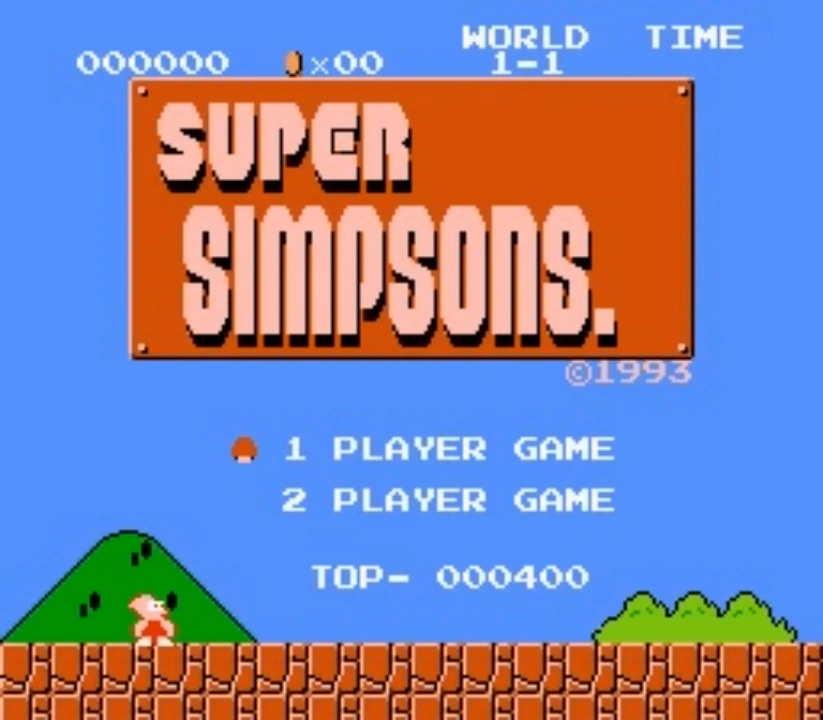
Title screen.
A minor hack of Super Mario Bros. that replaces Mario with Bart Simpson. The game unlocks the stage selection cheat and allows for worlds higher than 8-1 to be selected. Simpsons IV is listed in advertisements in the Action Game magazines of Argentina since 1993.


Super Shrek Bros.[]
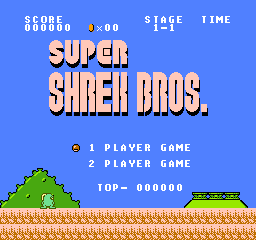
Title screen.
A hack of Super Mario Bros. that replaces Mario's super form with Shrek, while his small form is an unidentified monster. The game's palettes, tiles, items, enemies etc. have been extensively overhauled, though unlike the Pandamar family of Super Mario Bros. hacks, the in-game music and sound effects are fully unaltered from the original game. The game is a hack of the PAL version of Super Mario Bros., meaning the game will run slightly faster than it should if played on NTSC hardware. It is connected to Inventor.
Trivia[]
- Even though the tiles are completely changed, the hill tiles are still based off of the cloud tiles, much like the original tiles for these were.

Vs. Skate Kids.[]
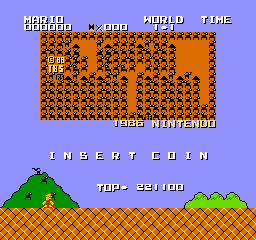
Title screen.
A graphics hack of Vs. Super Mario Bros. (the arcade version of Super Mario Bros. released for the Nintendo Vs. System series) that replaces the Mario Bros. with a skateboarder, among enemies turned into common animals or objects, and so on. It was released in 1988 by Two-Bits Score, without an official license from Nintendo (even if the Nintendo copyright info remains on the screen.) As far as it goes, this is the only commercial unlicensed hack of Vs. Super Mario Bros. ever released.


Teletubbies[]
- Main article: Teletubbies
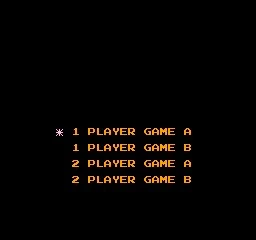
Title screen.
A minor hack of Mario Bros. found on "Y2K" multicarts and Famiclones that replaces Mario and Luigi with poorly-colored versions of Dipsy, who is recoloured to look like Laa Laa, from Teletubbies.

_201812161707440.jpg "Teletubbies (Unl) 201812161707440.jpg (13 KB)")

Roge Brer / Rouge Brothers / Jump and Journey[]
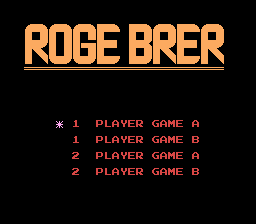
Title screen.
A more elaborate Mario Bros. hack found on plug 'n play systems that replace Mario and Luigi with generic characters or use the sprites of Milon from Milon's Secret Castle. A later revision changes the Shellcreepers into an orange Meowky from Mappy, although the other enemies remain the same. It is connected to Inventor.
_-_Gameplay.png "Roge Brer (Version 1) - Gameplay.png (2 KB)")


Pest Place[]
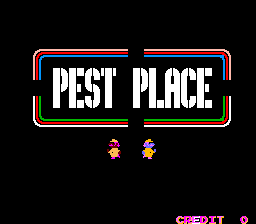
Title screen.
A hack of the arcade version of Mario Bros. that changes the names of Mario and Luigi to, respectively, Peter and Jimmy, as well as several palettes. The game's framerate is much slower and choppier than the standard version of Mario Bros. for arcades. It also uses music and sound effects from the arcade version of Donkey Kong Jr.

Dora Bros.[]
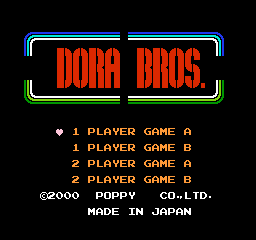
Title screen.
A hack of Mario Bros. found on "Y2K" multicarts and Famiclones that replaces Mario and Luigi with poorly-colored versions of what seems to be the titular character from Doraemon, and pow text say DORA.

Super Boy World / Cross-Pacific[]
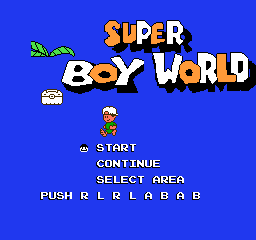
Title screen.
Super Boy World is a hack of the Super Mario World 9 version of Super Bros. 9, possibly made by Inventor. It changes a lot of the sprites to hide its original form.


Trivia[]
- Almost all Mario pirate hacks use graphics from Super Mario Bros. 3 and/or Yoshi's Cookie, as these official games were made around the time when the first Mario graphic hacks were made. These games were also made around the time when Famiclone systems (NES clones) were made.
- Presumably for copyright reasons, most of the Mario pirate hacks do not actually say Mario on the title screen. The few that do say Mario format the title logo to have Mario's head as the "O", likely so the name could technically be "Mari" instead.
- Several fan-made hacks have also been bootlegged as part of PocketNES compilations; these include Super Mario Mappy (Mappy), Mario Runner (Lode Runner), Balloon Mario (Balloon Fight), Koopa Invaders (Space Invaders), Mario & Luigi (Nuts & Milk), Maria Sisters (Mario Bros.), and Bomber Mario (Bomberman).
- Many modern-day bootleg consoles feature a game titled "Giabbit", a hack of Super Mario Bros. by user 79 based on Japanese baseball teams. This is a fan-made title, however, which likely got mixed in with some bootleg romsets.


