Updated March 31, 2025 09:00AM
The 10 Best Stretches for Runners
These best 10 active stretches from physical therapist Gerard Hartmann are the essentials every runner needs to keep healthy and efficient.
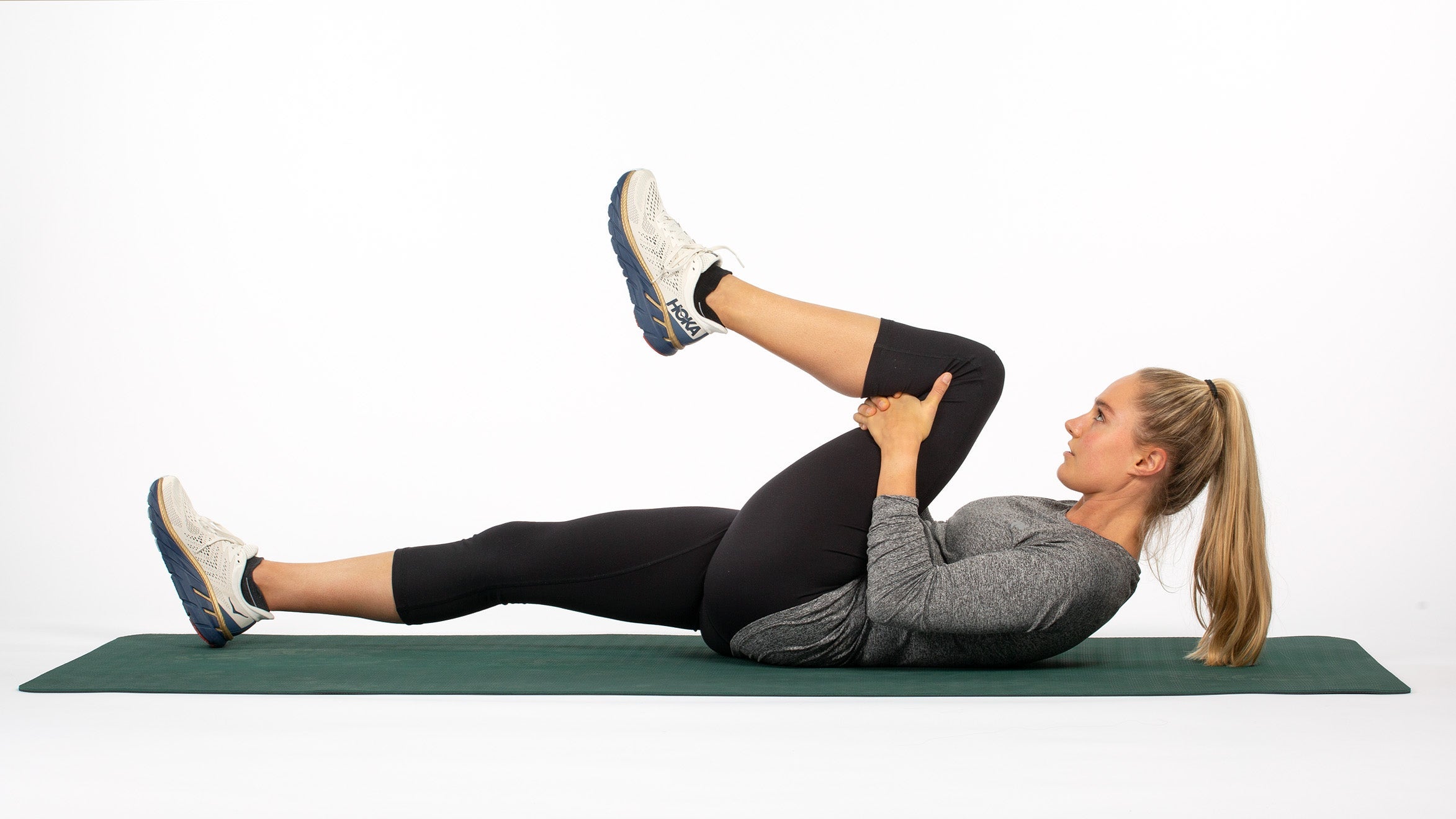
Woman runner demonstrating the best running stretches (Photo: Brad Kaminski)
It’s no secret that runners need mobility and flexibility, but when it comes to the best stretches for runners, there’s some debate about the best practices. How exactly should runners stretch? And is there a specific stretching routine to keep us healthy and ready for optimal performance?
0 of 5 minutes, 50 secondsVolume 0%
Press shift question mark to access a list of keyboard shortcuts
Keyboard Shortcuts
Shortcuts Open/Close/ or ?
Play/PauseSPACE
Increase Volume↑
Decrease Volume↓
Seek Forward→
Seek Backward←
Captions On/Offc
Fullscreen/Exit Fullscreenf
Mute/Unmutem
Decrease Caption Size-
Increase Caption Size+ or =
Seek %0-9
Next Up
Running in Tokyo: The World's Largest Metro Area
02:31

Here’s what we know for a fact: Regular stretching is the single most important thing you can do to keep your body limber, prevent stiffness, and limit injury. And it’s not a mystery—there is a right way to stretch, including the timing and technique. This 10-stretch program for runners was developed by Gerard Hartmann, an injury therapist who has worked with over 70 Olympic medalists and world-record holders, including Paula Radcliffe and Khalid Khannouchi.
RELATED: Measurable Goals for Running Mobility, Strength, and Balance
It’s a simple step-by-step stretching routine that Hartmann advises all of his athletes to work into their training. The routine typically takes 10 to 15 minutes. Follow the program daily to keep limber all the muscles you use while running, adding efficiency to your stride and keeping you healthy.
ADVERTISEMENT
How to Perform the Best Stretches for Runners:
- Do the stretching routine in the order listed below. These moves follow a natural progression from one muscle group to the next.
- Hold each stretch for 2–4 seconds. Return to the start position and repeat each stretch 8–12 times.
- The stretching routine can be done before running because these are active stretches. (Some runners do an easy run for 7 to 10 minutes to increase circulation beforehand, but this is optional.)
- The routine can be done after running to recoup tissue extensibility.
- Don’t force the stretch. Instead, gently encourage the lengthening of your muscles.
1. Single-Leg Pelvic Tilt Stretch

Muscles stretched: low back and gluteus maximus.
- Lie on your back with your legs straight.
- Flex the exercising knee and pull it toward the chest.
- Place hands behind thigh to prevent pressure on knee and provide assistance.
2. Hamstring Stretch

Muscles stretched: hamstrings.
- Lie on your back with your legs straight.
- Slowly lift exercising leg using your quadriceps (the front of your thigh).
- At end of movement, use a rope or exercise band to gently pull your foot toward your body.
Note: Bend the non-exercising leg to stabilize the spine if you have a history of back injury.
ADVERTISEMENT
3. Glute Stretch

Muscles stretched: gluteus medius and minimus, piriformis.
- Lie on your back with your legs straight.
- Flex your left knee at a 90-degree angle and place the rope around the mid-foot, clasping the rope with the right hand.
- Use your left hand to stabilize your thigh by clasping at the left knee.
- Contract your abdominals and hip adductors to lift your knee toward the opposite shoulder.
- Once you complete the sets on the left side, switch to do the right side.
4. Long Adductor Stretch

Muscles stretched: adductor longus, adductor magnus, gracilis.
- Lie on your back with your legs extended and wrap the rope around the arch of your left foot.
- Point your right foot inward.
- Lift your left leg to the side by contracting your outer-thigh and hip muscles.
- Pull your leg outward (gently) with help from your rope or band.
- Complete on the opposite leg.
5. Quadricep Stretch

Muscles stretched: rectus femoris.
- Lie on your right side and bring both of your knees to your chest.
- With your right hand, grasp the right knee from outside.
- With your left hand, grasp the left ankle and extend left thigh back by contracting buttocks and hamstrings.
- Use your hand to draw your left heel close to your buttocks.
- Reverse the move.
ADVERTISEMENT
6. Hip Flexor Stretch

Muscles stretched: rectus femoris, psoas.
- Kneel down on your left knee, and place a pillow or cushion under it for comfort.
- Step your right foot forward so your right leg is bent.
- Keep your pelvis and back steady by tightening your abdominal muscles.
- As you move forward, squeeze your butt and hamstrings to try to bring your left heel toward your left buttock.
- If you can, use one or both hands to gently pull your heel closer to your buttock, stretching as much as your flexibility allows.
- Switch so that you are kneeling on your right knee and complete the stretch.
7. Short Adductor Stretch

Muscles stretched: pectineus, adductor brevis, proximal adductors.
- Sit with the soles of your feet pressed together.
- Tighten the muscles on the outside of your hips to spread your thighs as far apart as you can.
- Use your arms to gently press down between your knees to help deepen the stretch.
8. Composite Upper Calf, Hamstrings-Neural Stretch

Muscles stretched: gastrocnemius, hamstrings.
- Sit with legs fully extended and about six inches apart.
- Loop the rope around the ball of your left foot.
- Straighten the left leg and pull your toes toward you by contracting the shin muscles.
- For a deeper stretch, lean forward at the trunk and allow foot to leave floor when pulled.
- Repeat on the right side.
ADVERTISEMENT
9. Bent-Knee Calf Stretch

Muscles stretched: Achilles tendon, soleus.
- Stand on your right leg and bend the knee slightly.
- Place your left foot behind your right calf.
- Hold this stretch 8 to 10 seconds and keep your heel on the ground.
- Switch and repeat on the other side.
10. Straight-Leg Calf Stretch

Muscles stretched: gastrocnemius.
- Find a wall, tree, chair, car—anything to lean onto to perform this move.
- Step your left foot forward, keeping both legs straight.
- Press your right heel (the back heel) into the ground while keeping it straight.
- Lean forward slightly from your hips, keeping your back straight, until you feel a stretch in the calf of your back leg.
- Repeat on the opposite side.
These 10 stretches first appeared in an article in Irish Runner magazine. Used with permission.


