


...And the Youth Pastor Stood Over the Earth
Timely thoughts on young men, ethics, politics, and cultural expression.

Thus, if you find that you are unable to arouse your soul with heroes and wonder, then the dazzling spectacle of the world would remain a mere theater production. Since your soul cannot respond, its guide will abandon you, and then you can sit yourself down and listen, unharmed… to a lecture on ethics.
Klages, On Ethics (1918)
Our sight of the blooms and dew of the season at hand marks but the sixth year beyond the implementation of what could only be described as a terrible psychosis. Following the declaration of a national emergency on March 13th, we bore witness to the activation of valves and levers that were previously thought unthinkable: the required presentation of healthcare records to order McDonald’s, or SWAT teams rappelling from helicopters onto sun-soaking picnickers, to provide a quick jolt of memory and allow all other examples to come forth. Yet what was perhaps so crushing about these long years was the prescription and proscription of essentially all acts and desires, each and all inspected through the many thou shalt not’s derived from an ethereal, unspoken social consensus. Every singular expression of character or social habitude was due for inspection: have you considered that your Easter gathering will kill grandma, or, is your night at the gym worth its contravention of “public health”? We may have thought to ourselves that we would never forget such a period, but we do not remember if we made that pledge or not. We have a remarkable capacity for amnesia.
Of course, all of this was clearly visible on the horizon, steaming ahead with a cloud of dust and ash in tow, more than a decade ago. Society itself had increasingly come to be known, as a matter of intrinsic identity, as the moral command itself. Whereas previous peoples may have expected expression, productivity, or ingenuity, ours expects nothing but—and do not allow this language to suggest anything short of a totality—the submission of oneself to the category of “a decent freaking human being”. Nor should the reader be confused into thinking that this was a phenomenon exclusive to the pulpits of the left: thou shalt not disrespect the flag, thou shalt not dress immodestly, thou shalt not skip Sunday service, thou shalt not engage in sports betting or devilish music, thou shalt not contribute to the lowering of the TFR—among a million other more traditional (1990s) moral commands pertaining to sexuality, drugs, or alcohol.
Evidently any expectation that we would be permitted to return to some sense of individuality—which should be defined as the freedom to express what is inborn—was completely mistaken. Counterrevolutionary forces have devised a set of total moral commands of their own, and before they even have a whiff of institutional power, have already begun to picture themselves as paternalistic “fathers” of the people this will be imposed upon. This time the moral order will be “based!”, “Apollonian!”, by which they simply mean as necessarily all-encompassing and non-negotiable it can be; who wouldn’t want the most of what is possible out of such obviously good things! Yet what might be most revealing about these circumstances is who exactly is being addressed by this declaration by both sides of the tug-of-war: young men.
Indeed, the political current of the last few decades can be summarized simply by “we will pursue that which controls young men the most”, again, for both sides. There is no distinction in this fact other than the argument itself, which differs only in what precisely young men will be forced to do and expected to act. In some areas even this distinction is not so impressive, such as in the field of sexual ethics and courtship, where the heterosexual man is equally punished by both ends demanding that he not “sexualize women” by desiring them for their bodies. There are countless examples which may serve to illustrate the essential point: both ends are relentlessly dedicated to, in fact, the suppression of young men—but only one is honest about its intentions.
Each party can admit to the other that they represent two irreconcilably hostile powers, and thus they are in basic agreement on at least one crucial point. The opposition is crystal clear: they believe in the unyielding strife between Heaven and Hell. Each party, of course, sees Heaven in what the other regards to be Hell. On the other hand, no reconciliation is possible with the ethical teacher of today, who wages war against life, and who has no inclination to parley with the enemy. Like the Church Father, he stands on the side of the enemies of life, but, unlike them, he is ignorant, he hides behind a mask, he is a liar: and he is devoid of self-understanding.
—Klages, On Ethics (1918)
What persists in our circles can only be described as the not-so-proverbial youth pastor, typically a mildly-aged man, perhaps recently endowed with paternalistic duties in his own life, which he now brings to those poor souls he wills to shepherd. He elects himself as a conduit for spiritual blessings from a position of proximity to the youth, not necessarily to animate them, but to press them finely through the sieve of this proposed moral order. In fact, this moral order, despite the advice of wiser priors, has become God himself to him.
Therefore, he is a servant to the γέρων, ensuring that the young are consumed into the old through him. For as much as he may performatively gesticulate about “the feminist longhouse”, understand he is constructing precisely that, and doubly as it actually existed in antiquital matriarchies—which were in reality gerontocracies—in which, familiarly, the perpetual punishment and humiliation of young men benefitted women. He elevates, in fact, no one but himself and his own ontogeny retroactively—as is the nature for all of those of “priestly” character. In no uncertain terms, it is utterly essential to his nature that he act to control and suppress, ostensibly under the disguise of “moral guidance”. He exists for no other purpose. The same is true, be it in a church, or in the cultural world at large. Of course, the youth pastor may be found in higher concentration among circles which consider themselves as “the religious right”, or “Christian nationalists”. The newfound stole drapes over their slacked shoulders with a certain perfect, destined, fit, and to the right-wing youth they go to deliver the Good News:
Their syllogism is natural and simple: too much sexuality, do less of it. No more grinding in the club. Cover yourself modestly. Delete the apps and go to church. Once all of this nonsense about “sexual drive” is bottled back up and we complete our puff-chested condemnation of “horniness”, then we can get back to raising the fertility rate and buying our wives sundresses and books on Hügelkultur. Even for what is seen in Pope John Paul II’s Theology of the Body as the most liberal, or rather life-affirming stance on sexuality Christendom has begrudgingly managed, we are still instructed to never “desire”—for to desire one is to dehumanize them!—and elsewhere firmly reminds us to avoid a practice of natural family planning which results in the “lowering the number of births in their family below the morally correct level.” That is their Final Solution to the OnlyFans question. As a result, this reaction removes all matters of sexuality from the private and public alike in an over-zealous quarantine, incinerating the leprous and the immunized all together. What little can be said about this regrettable—sinful!—act of concupiscence driven by our animal bodies is that it may come with the gift of family and children. It is a reaction which bowdlerizes the vitality of antiquity with the placement of a fig leaf upon the body, mandated by the priest to not “excite one’s lust”. It is an awful silence over all of these matters held into strict compliance by the Panopticon of a youth pastor’s ire. It is an assault on life and the body itself, despised and feared by the mind as but a rebellious stumbling block—such is the root of all conceptions of “obscenity”.

Yet the precise moment they begin the sermon is when the curtain is lifted on this minstrel show, revealing to young men that what is offered is only yet more propositions detailing the nature of their submission. We have been provided with estimable examples of this fact in recent arguments from such corners of the “Christian Nationalist” right numerous times before, and it is certainly not a uniquely American phenomenon. Even in the United Kingdom, which is an essentially irreligious nation (more true for its young men, particularly), the youth pastor fulfills acts according to his instinct. Charlie Downes, now campaign director for the budding Restore Party, had this message to share with young men in 2023 through the Lotus Eaters platform:
Conservatives must recognise that what modern people—especially young people—lack is not freedom, but purpose. The modern world offers us freedom, but freedom to do what? To merely pursue our appetites? To endlessly consume? To drift, aimlessly, through the wilderness of modernity? Freedom is valuable, but in the absence of purpose, it invites nihilism. The individualistic, Rousseauian form of freedom towards which our societies have drifted over the decades sees sentimental attachment and personal responsibility as burdens from which we must be liberated. And now, we see a generation that is ‘free’, but entirely directionless.
—Freedom, Like Equality, is a False God. (June 26, 2023)
The need to differentiate “real freedom” from “appetite” in this way is a longstanding mental exercise in both conservative and Christian circles, so it is not particularly shocking to see this sentiment draped in its cursory coming-of-age expression. What is shocking, almost to an apoplectic level, is the description of the youth—in the United Kingdom of all places—as suffering from an overindulgence in freedom, that “freedom” is the one thing that the world offers to young men. We have thereby abandoned all aforementioned charges of amnesia (remember?) and entered the territory of full-blown delusional blindness. If there is any place on Earth where the expression of the young White man is punishable by jail, it is the United Kingdom, and it is completely unbelievable that someone so involved in British politics would overlook the fact! On the contrary, there is excruciatingly little left of freedom left available to young men on that island—everything mistaken for a “freedom to choose vice” is merely characteristic of the self-imposed distractions of a caged zoo animal.
It is not as if this is a one-off moment of an individual’s misjudgment, which would otherwise be entirely forgivable. We present Carl Benjamin, who had this to say in defense of his friend’s article, doubling down on the absurdity:
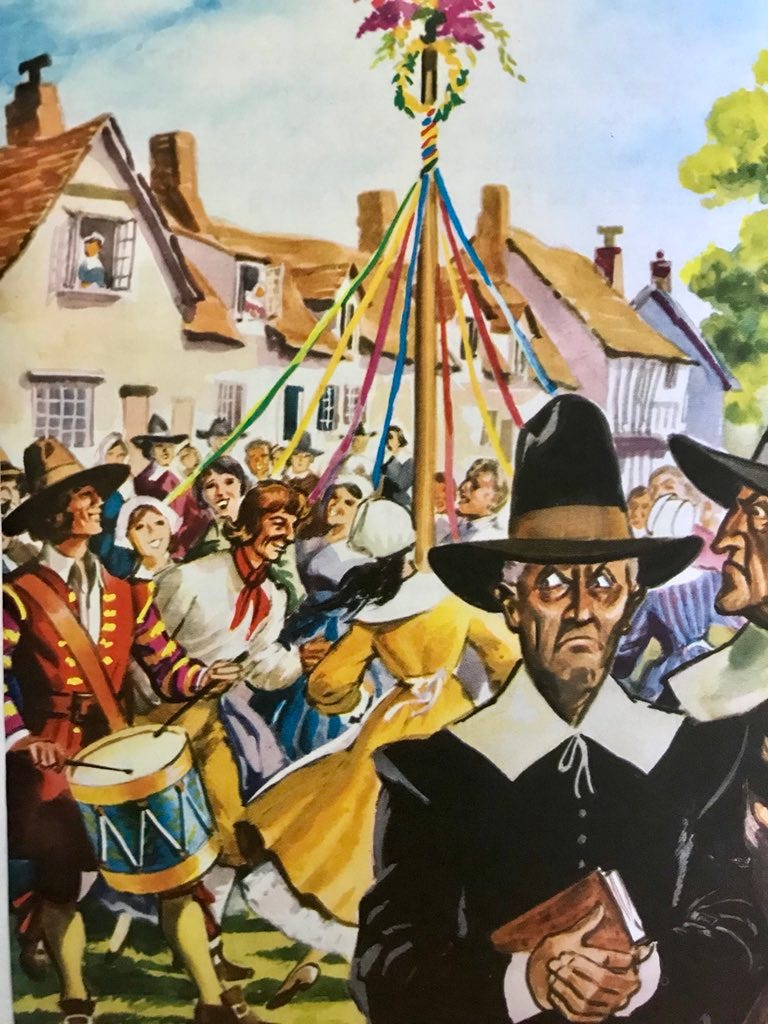
The second is a complaint about Charlie's perspective that young people "have too much freedom". This is just a demonstrably correct take: young men know they shouldn't have infinite porn on tap, legalised drugs, complete license to have premarital sex, etc and there is an argument to be made to young women that abortions should not be used as birth control and have exterminated a third of Gen Z. Moreover, they are protected from failure by an ever-expanding welfare state (tying into the Rousseauian liberalism we just mentioned) to prevent them from suffering the consequences of their choices. This is a state of affairs that can't last, and won't last. Objecting to the formulation "we have too much freedom" because it sounds bad to a foreigner, but actually a lot of British people have a puritanical moral streak and understand that duty means acting against one's base nature and reining oneself in. Perhaps someone called "Bronze Age Pervert" doesn't agree or care for Cromwellian morals, but so what?

Young people have too much freedom: a demonstrably correct take. Is the message clear? Aside from obvious rebuttals such as that young people are actually having less premarital sex than any other generation before, and that the presentation of Gen Z as “protected by the welfare state” is the most bizarre of contradictions from two people who have repeatedly (correctly) stated elsewhere that young White men are in fact the principle victims of this gerontocratic, cosmopolitan welfare state, we set these aside to return to the core diagnosis. What is being presented is in fact yet another “moral order”, a new list of thou shalt not’s directed squarely at young men as the struggling Atlas of the occident itself, buttressed by the command presented in no uncertain terms: “duty means acting against one’s base nature”. What Benjamin and Downes are proposing is not the enabling of young men to pursue what they have been robbed of, for so long and by every imaginable form of politics, but yet another imposition upon them sold in a conspicuous package labeled in black ink, “Meaning”. It is appropriate to say: we have been here before.
Beyond all of the falsehoods and contradictions, there is another flaw: naivety. The reasoning behind the presentation of a “Cromwellian” moral order is the belief that a people must have one or the other either way, and that this is prescribed top-down from the command itself. If young men are told to stop sexualizing women, and this is enacted as a command from the highest levels of institutional power and legislated to this effect with all incentive and disincentive involved, then it shall actually become the ethical expression of the people, its new-found moral order. In shorter terms, commandment = creation. This is but one of many ways in which the youth pastor envisions himself as the father and prophet Moses!
But this is not the case, it is unequivocally not how culture or “ethics” is expressed or changed. Consider the obvious question, “why was the command given in the first place?” What our youth pastors present culture to be is a sort of mold or template which is given to a people rather than produced by them. This is proven by the case that, as the youth pastor provides freely, moral commands can only necessarily negate. What Benjamin and Downes have in mind, as they have repeatedly stated, is a list of things to take away and prohibit from young men. What can be generated can only come from the “sociobiological” itself, only life is capable of producing such a feat. Klages offers a particularly interesting illustration of this fact in an essay we have already quoted extensively:
When the sergeant shouts the order “Halt!” or “March!”, is the energy that sets the soldier in motion released as soon as the command is issued, or does it require the living force embodied in the soldier who hears it? What holds true in this case holds true in every other. Surely the command cannot produce results by itself, for it always requires the innate responsive force of the person who has heard it. In other words, the command requires the whole spatiotemporal world, particularly its vital energy and, ultimately, a conscious mind within that world, to recognize the existence of the command: without such responsive recognition, it is nothing.
What is the very essence of a command or an order? One must answer: a precept. But what exactly is a precept? To this we respond: always and everywhere it is a prohibition! The commands say, of course, “You must.” […] I have scarcely opened the pages of the Roman Catholic catechism when I discover that, out of the “Ten Commandments,” seven employ the formula “Thou shalt not,” whilst the remaining three take the “Thou shalt” form. But it requires no great critical astuteness to perceive that even these three have merely cloaked their negative substance in a positive verbal disguise. The essence of every commandment — and every categorical imperative — is to forbid something; that which is forbidden is, in every case, a natural or vital process. Therefore: the categorical imperative is the categorical annihilation of vitality.
—On Ethics (1918)
Thus, counterintuitively, any expectation for the expression of a living culture—and thereby its ethics—must actually come from some degree of permission. An ethical people must first have values, and values must first be generated out of their own ecological condition. As a matter of tautology, dead things express no ethics. Perhaps it can now be understood why the youth pastor is so puzzled and troubled by the apparent hedonism of young men, who have been barred from all means of expression, permitted to do no singular thing that could at all be said to be in their interests! The legalist-minded devotee is utterly incapable of generating any sort of moral virtue, in spite of how loud he may exclaim to the contrary, he may only serve to chisel and cudgel what is already present. These facts are apparently utterly foreign to the milieu of today, as no political party or movement has settled upon this conception for what it is. There is not an atom of it in existence today, evidenced by, such as, the repeatedly raised question of “where did all the art go?” We had an couple of artists, perhaps; one was jailed for tweets and the other entered seminary.
A subtle change in messaging is therefore suggested to the political movements of today, which is entirely achievable: for the first time in generations, permit, encourage, and allow young men to breathe. That is, to express itself for what it ought and wills, to actually be alive as this word is properly understood. In return for this, they will follow you to the stars. The alternative however remains equally true: offer yet more proscriptions, more expectations, more demands, and more commands—though you lie to yourself and to them that this is actually “Meaning”—they will call the bluff, and you will lose. At that point then, as the youth pastors have said, you will have “gotten what you deserved”. Is this an advocacy for the rejection of all virtue, to cast all but barbarism out? Certainly not. We merely ask for the following consideration to be kept in healthy mind: only once we have a living patient at all can we begin to discuss therapy; whether he can exercise or be limited to nothing heavier than a jug of milk for the time being. However we can be certain that this outpouring of youth pastors and clerics, which seeks nothing short of the dominion over the “right wing” itself, cannot be relied upon to do anything of the sort. That is not its job, and it must wait to be called forth.
Young men exist in conditions that were carefully manufactured explicitly for their subjugation and torment. At every turn they are reminded of their status in this menagerie, which is subsists entirely upon their suffering. They are, quite literally, in desperate need of liberation in all areas of life. Economic freedom, sexual freedom, artistic freedom, spiritual freedom—all of it and more!—but they will take what they are offered, if only someone would. Appeals to centuries-old critiques of Rousseau are beyond dead in the water. If these absurd pretenses about “Cromwell not Rousseau”, “the rejection of freedom”, “true Meaning!” are finally cast away—just for a moment—then maybe cultural momentum can be accrued. It is only a matter of who does so first.
Leftists offer their own everything, at the expense of young men.
What will you offer them?


It truly is a shame that Nietzscheanism and vitalism have so little influence over the mainstream right (yet, hopefully). Some fine fellows like Juden Peterstein did a fine job of shitting in the well of future discourse by trying to draw elements of the disaffected youth into the warm embrace of Christianity during his time in the sun.
Young men definitely deserve better, far better, than any of the time-worn nonsense that the churches can offer. The church itself often being ideologically captured in a Gramscian fashion, or suffering from the typical malaise of cuckservatism as mentioned. The closest thing I can think of to an alternative for the disaffected young man is active clubs, as these often act as a means to allow men to fulfill their vitalistic impulses while being freed from the rot of contemporary institutions.
Reading your article I was reminded of Mishima's Runaway Horses, where Isao's father resents the youthful energy and strength of his son, and undermines his efforts to restore the emperor through an act of terrorism. The youth pastor has many parallels. Isao's father ran a patriotic school for young men, wherein extreme RW thought could burgeon, but when it was about to utilize some freedom by actually doing something, the panicked father shut it down by getting the police to shut down the terror cell to-be. Similarly, the church could ultimately become a bastion for powerful RW organization &c, however it is too paralyzed by its fears of any useful freedom, and would prefer its lambs remain forever lambs.
What troubles me is whether the right will adhere excessively to Christianity as the proper "tradition" of the West, for this will surely not fail to perpetuate the cycle, and shall undoubtedly keep us trapped in an interminable Kali Yuga. Anyways, let us hope the youth will not be led astray by the ravages of the Christian pastor nor the lures of pornography, but rather that a Vital spirit of rebellion will awaken and spread.
I admit I am somewhat biased here: I have been entirely convinced by the, for the lack of a better term, "vitalist" faction of the right. I credit, above and beyond anyone else, Nietzsche and BAP for getting me to move out, work out and get a damn life rather than just sit around rotting in my parents house until the end of time. Vitalism offers an essentially positive vision of the future; a vision in which life is free to grow, exhaust itself and flourish. It is the antithesis of all things conservative.
Benjamin's comment about welfare protecting men from the consequences of their actions is one of the most flagrantly absurd, utterly braindead things I've ever had the displeasure of reading. Frankly, the man strikes me as a closeted leftist. He has no meaningful dispute with the left: he merely wants to co-opt their political apparatus so as to impose his own preferred morality onto young people. He's a gerontocrat.
Brilliant article, as usual!