


Klages on Death and Ancestor Worship
Selections and Commentary from Vom Kosmogonischen Eros

Open are the double doors of the horizon, unlocked are its bolts
Clouds darken the sky, the stars rain down, the constellations stagger
The bones of the hellhounds tremble, the porters are silent
When they see this king: Dawning as a soul…
—Libretto of Akhnaten (Refrain, Verse I), Philip Glass (1983)
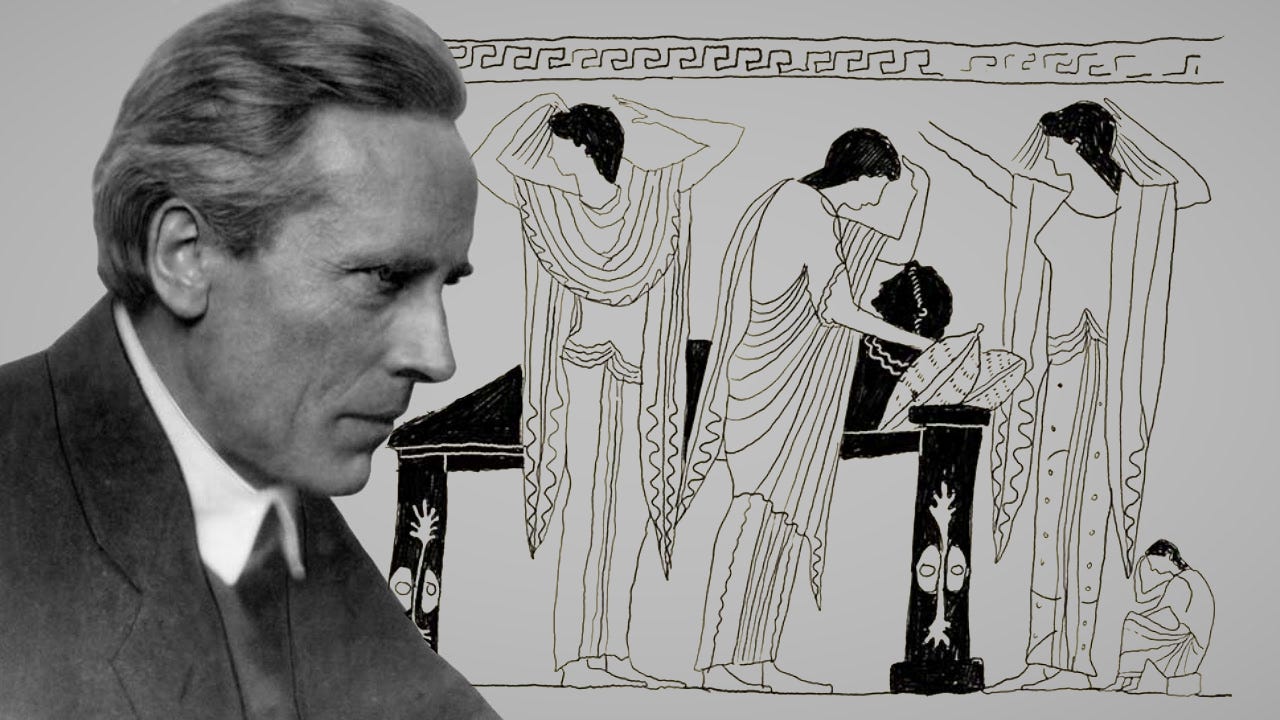
One of the most clarifying differences in religious practice between the pre-Christian world of ritual and pantheon and the successive world of the one God, both in its distinction and residue beyond the changing of the guard, is the practice of ancestor veneration. It is a section of religious practice that is accurately identified for its antiquated value: for the vast majority of those who breathe occidental air today, the concept of ancestor “veneration” or “worship” is met with philistine scorn; the mass individual wishes to hear nothing of his forebears. Even among the devout flock of the Cross the practice is seen anywhere from an unimportant side-story of hypodulia to an outright communing with the devil himself. Thus, the practice of genuine worship of one’s departed ancestors has clearly entrenched itself as the rallying point of a return to different religious values, against those of the atheoi and monotheoi — both equally zealous believers in the individual spirit.
Contemporary pagans and revivalists have latched onto this aspect of pagan religiosity as a result, devoting much study and practice to it. Indeed, for a variety of reasons of which only a few have been noted so far, it appears to be of recurring importance amongst those seeking to reconjure the Old Gods, be it purely academic or out of a sentiment of religious devotion; the works of figures such as Ficino, Herder, Novalis, Nietzsche, and Evola readily offer rich viewpoints of this religious view and practice in varying directions. To add to this list of individuals, I happily (and as a pagan, satisfactorily) offer to you the name of Ludwig Klages. This man is not only certainly representative of this pagan fixation on ancestors—himself a devoteè of Dionysus (or Wotan, if you ask Jung)—but perhaps greater than anyone else does his writings and worldview offer up the greatest bounty for those seeking to understand what it is to commune with one's ancestors.
Klages is somewhat of a subterranean figure today, unduly cast into a dark pit of chains following the sweeping coronation of a new worldview following the surrender at Flensburg. His pagan metaphysics, arguably the first cohesive presentation of such a religious system in nearly two thousand years, is even more neglected in favor of discussions of his contributions to psychology, environmentalism, and “anti-rationalism”. Yet underneath the rubble of Munich still sits his image, itself one which strove relentlessly to uncover far more ancient rubble in search of the primordial. It is my aim to bring his rich pagan worldview back into the light of Day, with a special emphasis on familiar and ripe ground for today’s revivalists. We need only to be careful archaeologists of these tombs and barrows.
Great Heathens (III): Ludwig Klages

Great Heathens is a series which details figures in recent history who, while typically not open and practicing pagans, were drawn in and contributed greatly to its worldview. The series details their lives, thoughts, and actions; and how they contrasted with the modern culture they lived in.
The impetus of Klages’ interest in the cult of ancestors came in the form of a neatly-topping bow upon his system in the anthropological works of J.J. Bachofen. Largely forgotten by the time of Klages, Bachofen was resurrected by the accidental discovery of his works by Klages and the so-called Munich Kosmikerkreis, who as poets and servants of Dionysus saw great potential in Bachofen’s descriptions of a telluric and matriarchal primordial religion. The Circle members each saw themselves as “Dithyrambiker des Unterganges”, the bardic orators of man’s downfall from this primordial source. Though Bachofen is mostly known for his novel theory of clan matriarchy in primordial peoples, and indeed Klages takes some notable inspiration from this conception, what most significantly drove Klages to dedicate himself to the revival of Bachofen’s works (an effort to which we can solely credit for our contemporary awareness of Bachofen) was his focus on the ancient funerary rites and mythological symbols pertaining to the afterlife. In simpler terms, Klages was, through Bachofen, enraptured by the antiquital understanding of life and death.
The reader should be aware of two concepts in the Klagesian world before moving on much further, if only for the briefest time we have for this inquiry: ecstasy (Rausch) and the image (Bild). It may be helpful to link Bild to the etymologically similar Bilden, or form, as the image can be thought of the essential form or experience in which a soul presents itself. The image is, more simply the image/appearance of the soul. Yet Klages’ soul is a vital psyche (ψυχή), not the mind or intellect (νοῦς); in fact the intellect serves as a barrier and antagonist against the genuine experience of the reality of the images. Therefore, the only way to experience “soul”, the gods, is through ritualistic and dreamlike ecstasy—ἔκστασις, (ék-stasis), “outside of oneself”. Klages knows, as ancient man knew, of only three ways to the divine: to become a god, to die, or ecstasy. As we shall see, these three paths are more related than an initial impression suggests.
With these considerations buckled tightly in our satchel, we can progress to the substance of Klages’ deployment of ancestor veneration in service to these concepts. Much of this is found in one of only two complete works translated into English: his Vom Kosmogonischen Eros (1926), particularly in a chapter titled “Vom Ahnendienst” (On Ancestor Veneration).1 The difficulty of reading Klages is most evident in this chapter, with a ceaseless volley of mythological and poetic illustrations which are not explained in detail. However, this too reveals the richness of his writing, and offers us plenty for discussion. Consider, firstly, the opening paragraph:
Wreath = crown is the ancient symbol of completion, of Telete2, of attained perfection. Every crown is a “crown of life” or a sign of the gamos of life’s poles, the consummated marriage of a crowned soul with the soul of the universe. Therefore, the wreath or band adorns the mystic, therefore the victor, the ruler, the priest, therefore the bride! But now we know that the Mycenaean also adorned his dead with wreath and band! The dead was also bestowed with the highest consecration; he had become mystic, hero, even daimon to him, and the process of dying coincided with the consummation of the consummating gamos! They are highly revered as “Tritopatores” who in return bestow blessings, and because of this were present at every wedding.3
Immediately, we are met with anthropological and mythical territory, wrapped ever-so-beautifully in the metaphysical system Klages has developed. One may reflect deeply on the wreath that adorned Caesar, the wreath of Hedera that adorned the Maenads, the wreath of wheat that adorns the sacrificial bull of Mithraic tauroktonois, or even the ceramic wreath of flowers that adorned some buried young girls in Greece. Though we see a wide variety of applications and “moods” of the associated ceremonies, Klages is correct in identifying the central theme: the wreath, the symbol in and of itself, is the crown of unity with the world. Though the greats are crowned in life, all are crowned this way in death.


Already, we see Klages’ appreciation for ancient funerary rites. Understanding this and the relationship between the living and the dead in primordial religion is essential to understanding the practice of Ahnendienst, not only because one’s ancestors are of course dead, but because the “service” of ancestors in fact depends on the ancestors being dead. Your living father can be consulted in person, and as well and good as this is, he is limited to the circumstances of his body and experience. The departed ancestor, on the other hand, is of purely divine soul. Their soul can therefore be summoned at any time or place with all of the heavenly power associated with the pure soul. The dead, in this way, become daimons.
Klages offers us a key example of this relationship between the dead and living through the Attic belief in the Tritopatores, the thrice-ancestors, who were ritually worshipped particularly at weddings and events or circumstances pertaining to family, fertility, or the health of children. The function of the worship is perfectly clear, and it was precisely the opposite of our contemporary “fear of ghosts”: the ancestors of both families bring divine protection and blessing upon the continuation of their image and bloodlines, and are worshipped in seeking of this specific end. In this way, ancestors are “called upon” for certain things in certain settings that could not be otherwise provided by the living.
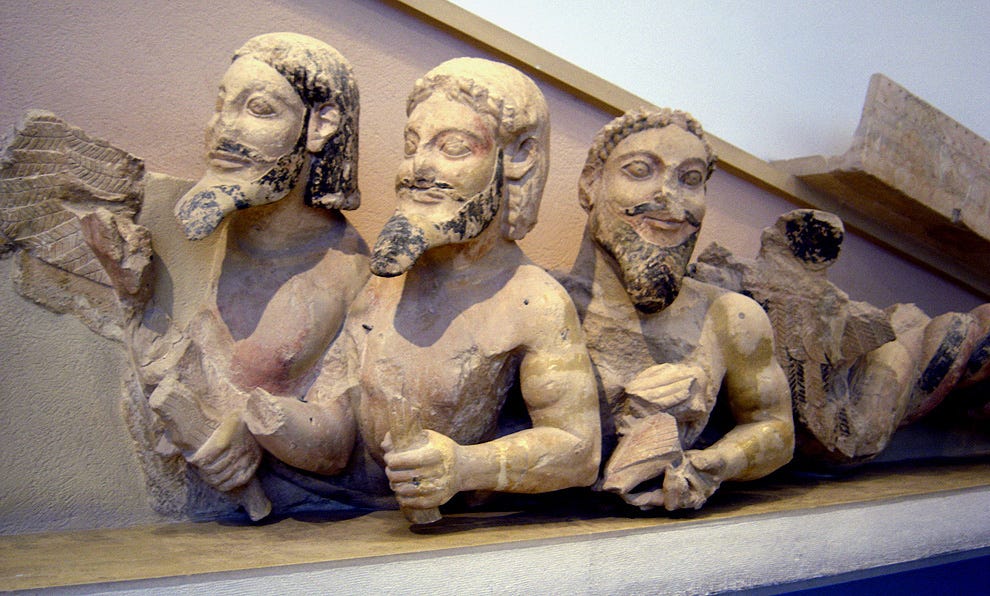
Just as important as what ancestors provide to the living is where and how they are doing so, which as Klages reminds us, is essentially always at a place dedicated specifically for their appearance, in the same way that a temple is the house of a particular god who is physically dwelling there—an understanding which has carried itself even through contemporary Christianity. He lists off a few examples of this in a section that is worth showing in full:
Nothing preoccupied Pelasgian man more than the solemnity of burial and the care for the corpse. The most deeply moving tragedy of all antiquity celebrates Antigone’s self-sacrifice in service to sacred rites for the body of her fallen brother—a motif unparalleled when compared to modern poetry! The original burial most likely took place in the house, under the hearth, or perhaps in the middle of the village, outside the walls, at the city gate, in the marketplace, in the prytaneum, or in the festival grounds! Thus, at Olympia, the tomb of Pelops was located next to the great fire altar of Zeus, and the temples were also the burial sites of a daimon (for example, the Temple of Apollo at Delphi over the tomb of the earth god Python.) Indeed, Christendom also formerly buried the dead of noble families in cathedrals and minsters, and even today, villagers gather their graves in the sanctuary of churches. The most colossal structures of the Egyptians, the pyramids, are burial sites, as are the rock temples of the Lycians and Rome’s catacombs. “Greater care,” Diodorus tells us of the Egyptians (according to Bachofen’s translation), “is taken in the dwellings of the dead than in those of the living; they regard the latter as mere lodgings for a brief, temporary stay, while tombs alone are considered the true and permanent residences for eternity.” No less important as burial sites were the sacred groves and hallowed mountains of so many peoples, the Manitou Stones of the Native Americans, the pagodas of the Chinese, and the stupas of the Indians. The soul of the dead flutters and hovers around the tomb, dwells there in serpentine form, and resides as the genius loci, as the Agathoaimon4, bestowing blessings in the house of the living!
The entire Roman cult originates from the veneration of ancestral spirits, the Lares, as does the Shintoism of the Japanese. The tribes of antiquity, and indeed all “savages,” often named themselves after a mythical ancestor. In honor of the deaths of celebrated heroes of the past, the Greek agon5 arose, symbolizing the cycle of birth and death! Who could fail to recognize that it is not ghosts that are feared and warded off here, but rather the loving veneration of the present, which woos the reciprocated affection of the elevated being of the past, drawing it anew with customs—some of immediate comprehensibility, others of mysterious depth of meaning! What could assure us of this more irrefutably than the poignant custom of late Greek times of depicting the heroized dead on terracotta tombs in the form of Eros himself, sometimes asleep with a torch, sometimes gently weary from the feast of life in the light, crowned and reclining on a bed of revelry, with the cup from the drinking party! But it was not “immortality” that the dead of ancient times had gained in this way, but rather, having not died at all, he had transformed himself!6
We could spend months driving out every worthwhile point from this selection. Instead, I will attempt to be brief in illustrating the highlights as it pertains to ancestor veneration. As indicated before, the funerary and religious customs of “Pelasgian man” (that is, the Greeks around and before the time of the Mycenaeans) possessed at its core the act of summoning: of bringing forth the dead (that is, the divine) to the moment of the present for some particular function. This cyclical, cosmogonic relationship between the two worlds, of one turning to the other and back again, was essential to the religiosity of pre-Christian peoples and is everywhere in ancient symbols. Bachofen, for example, had much to say about the “cosmic egg”—whose encasing-and-cracking shell represented the circular liminality between life, death, rebirth—which can be seen in the myths of Orpheus, the Shinto Nihongi, and the Finnish goddess/personification of Nature Luonnotar of the Kalevala.
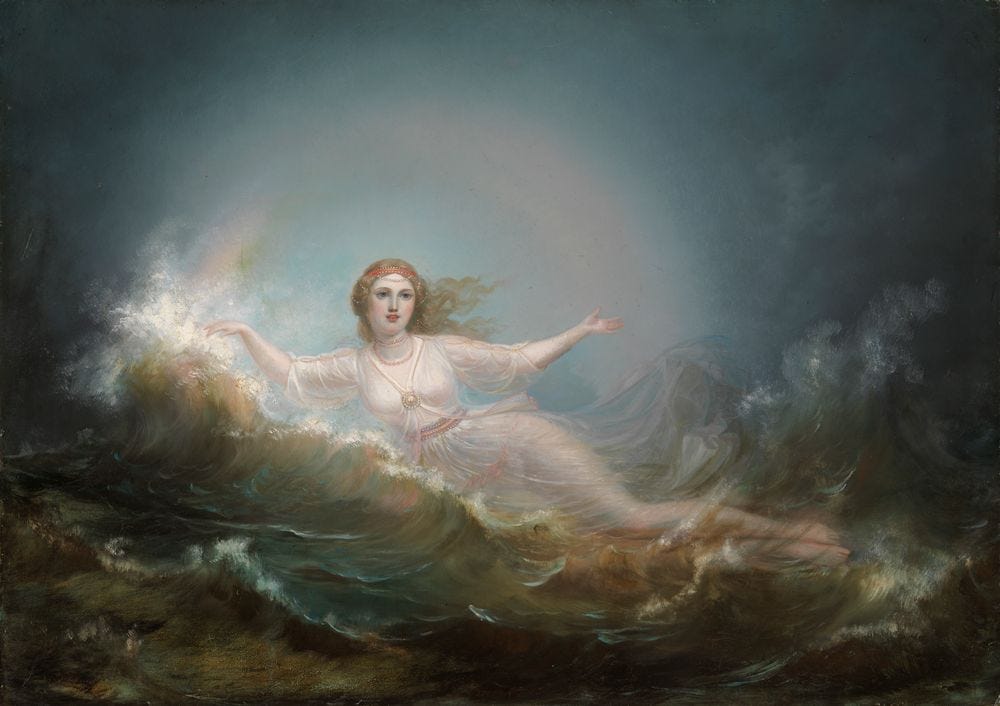
Understanding that souls need a particular site to reside within, ancient peoples dedicated the first religious sites: tombs, pyramids, temples, mounds, obelisks, cenotaphs, groves, and so on. This conception, as Klages makes clear through multiple comparisons to the Christian understanding of the afterlife, is what strikes a resonating chord between both the life-denying tendency of Platonism and the Abrahamic religions, and the atheistic causal-materialism of the day. The soul was able to persist outside the body, and indeed be liberated from it in this sense, but it was not liberated from the world entirely. As a matter of fact, such a conception would leave the soul to wander aimlessly, completely divorced from life in a dark chasm of amnesia; and in a sense, truly, finally, dead. It is precisely this “spiritual” apprehension of life—body and soul—which has injected into man the terrifying fear of death. The soul of the departed does indeed wander, always seeking its proper host through which it can be animated again: be it a mound under a bright moon, a temple decorated for Thargelia, or a towering idol at the fork between two village roads. This is the distinction between an enduring existence and the lie of “eternal life”, which is in actuality nothing but the refusal to participate in the cycle of life itself!
As already indicated above, the wandering soul is threatened by the danger of being driven from expanse to expanse, from transformation to transformation, ultimately to becoming unrealized through the loss of the capacity for shaping. The Icelanders called the departure of souls “Gestaltenfahrt” (journey of form). While they gained the vast expanse of space as their homeland, they lost the homeland of place, of intimate and warm closeness. Now, space and place, distance and nearness, heaven and earth, wandering and clinging, periphery and center belong to each other as polar opposites. Separated from the ebb and flow of the firmament, the telluric withers; unanchored in the earth’s core, the sublime dissipates. If the former requires the fertilizing storm of past images for its blossoming, then the dreamlike, daimonic ancestral souls are preserved from disintegration in the nocturnal abysses of space by the fervent veneration and generous spirit of sacrifice of those embodied in the light. Therefore—to speak metaphorically—like thirsting wanderers, those who have been yearn for a place blossoming and preserved as sacred, and those, in turn, kindled by Eros, From afar, they prepare and seal with evocative symbols a grave or temple, grove or column, tree or stone pyramid, urn or cave, statue or figurine: that it may be the favorite seat and secret resting place of the soul, not banished from space, but released to wander aimlessly without the comforting love of those still protected by the body. If a warrior had fallen far away, or someone had been shipwrecked at sea, their relatives on land would erect a “cenotaph,” an empty grave: the protected place where the image of the dead was invited to dwell! The fabric of Eros spins inextricably between the images of the past and the minds of the present.7
There are two sentiments I wish the reader to hone in on from this excerpt. Firstly, is the sort of risk or endangerment the soul is in when it is utterly detached from body. If it finds itself “unanchored” in some distant realm, unable to perform what we so foolishly today call “haunting, possession” which is met with the frantic call for a priest’s exorcism, then the soul is in effect imprisoned by its limitless, formless space! Ergo, ancestor worship is the essential care of our departed kin. No exaggeration is found in the statement that ancestor veneration therefore saves them from the most grim of fates, of eternal torture… “Hel” is the resulting dominion of a scorned and forgotten ancestor. In return for sparing them of such a condition in which they are eternally imprisoned in, they bestow upon us the divine blessings that only become accessible to them through death, through that crowned “marriage with the cosmos”. That settles the “why” of ancestor worship on multiple grounds. Secondly, he makes note of what he calls “the Icelandic wandering of souls”, which if correct, I believe refers to the German folkloric concept of the hamr and fylgja8. The Hamr is a shifting form or shape which appears and disappears, able to take on multitudes of forms, such as Valkyries who appear on battlefields as ravens and elsewhere as swans. This not only refers to the souls of ancestors, daimons, or gods, but likewise the ritual participant himself who has become enraptured by the ecstatic moment. Ecstasy, for the Dionysian such as Klages, was to experience outside of one’s self. Only in these two states, dream and ecstasy (or the third, death!), do we possess the same gifts as gods:
We encounter a characteristic of dreams that seems to have been emphasized by all observers, yet not fully explored by any: the restless mutability of all dream images. The road I was just driving on in my dream has, in the next instant, transformed into a canal, the car into a ship, and already the walls of the houses have receded, and I am driving among many ships in the harbor; and yet I am not astonished, nor do I feel any lack of coherence in the sequence of events. If, above, we deduced from the transience of dream reality the predilection of mythical thought for cloud-like, plastic atmospheres, we now find the reason for this mood in the ability of every dream phenomenon to transform itself into any other, and for myth, the motive for its selection in the necessity of including gods, daimons, fairies, elves, and other divine beings are also equipped with the same gift. It is, after all, common to all of them, both to change their own form and to transform friend or foe, things, animals, or humans.9
….
The principle of transformation, and with it bringing souls into the power of the waking mind, is the ancient goal of all theurgists, spirit conjurers, and necromancers, and one of the pro-ethnic roots of mysticism, whose original form, untainted by any spiritualistic debauchery, we can grasp, for example, in the self-transformation of Germanic heroes into werewolves and berserkers, of the Zeylonian devil dancers into demons, of the ancient Thracian Sabos mystists into the rapturous thiasos of the raging bull god.10
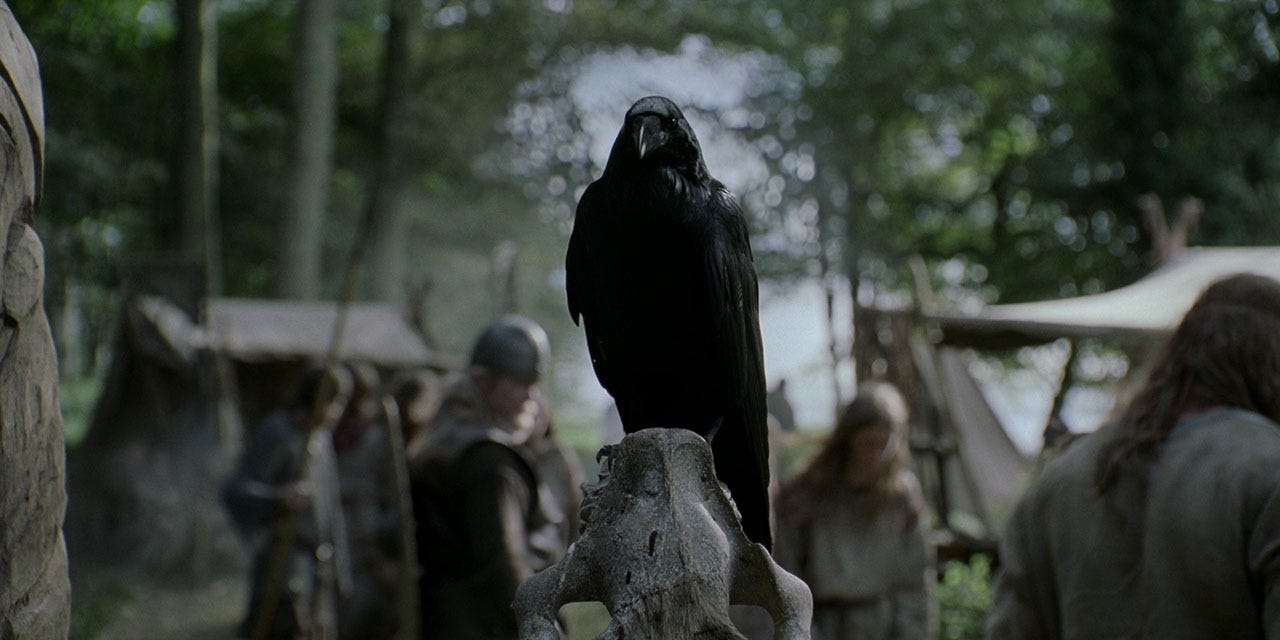
To cut away from Klages and antiquity for a second, we can illustrate this further with a recent popularization of myth as seen in The Northman, which itself was based on old sagas and myth. Amleth’s father, The Raven King Aurvandill, is shown after his death in the form (hamr) of a fylgja—a raven who lands next to a bloodied idol and tilts his head curiously at Amleth to remind him of his fate, to whom he replies, “Father”. In a literal interpretation of the terms themselves, the fylgja is the freed and wandering soul itself, while the hamr is the specific shape or form it manifests as in the world. Thus, in a Klagesian lexicon, the hamr is the body and its image (soma; σώμα) while the fylgja is the soul (psyche, ψυχή). The two exist inseparably in a state of ceaseless flux and transition.
One final connection as we draw nearer to our conclusion. Consider, additionally, the Roman practice of casting imagines maiorum, or death masks. Upon the death of a family member, be it patriarch or infant, families would create wax relief casts of the deceased’s face and create replicas of their “image” with metal. Over time this cabinet grew, and given proper care, centuries of ancestry would be present in one’s home in the form of more-than-lifelike images. The Romans would store these masks in large cabinets near the entrance of the domus, the first to greet the family or guest as they entered the home. This served two functions: first, to remember the dead; their deeds, their character. Secondly, and more importantly, these masks would serve as receptacles for the wandering soul of that person, into which it can inhabit and in turn provide its blessings—like the Greek Tritopatores or Agathodaimon, protecting the house, keeping the family healthy, and guiding them through their daily lives. The dead become crowned as Lares, freed into an unconscionable means of existence; yet, thanks to the practice of ancestor worship, are allowed to frequently return home. Furthermore, the more attended and venerated this daimon was, the more powerful its protections over the household would be! This, if I could interject, is far more moving of a concept than comforting one with the loss of his beloved with the suggestion that they are now “in a better place”, never to return.
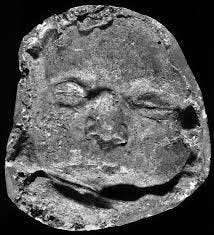
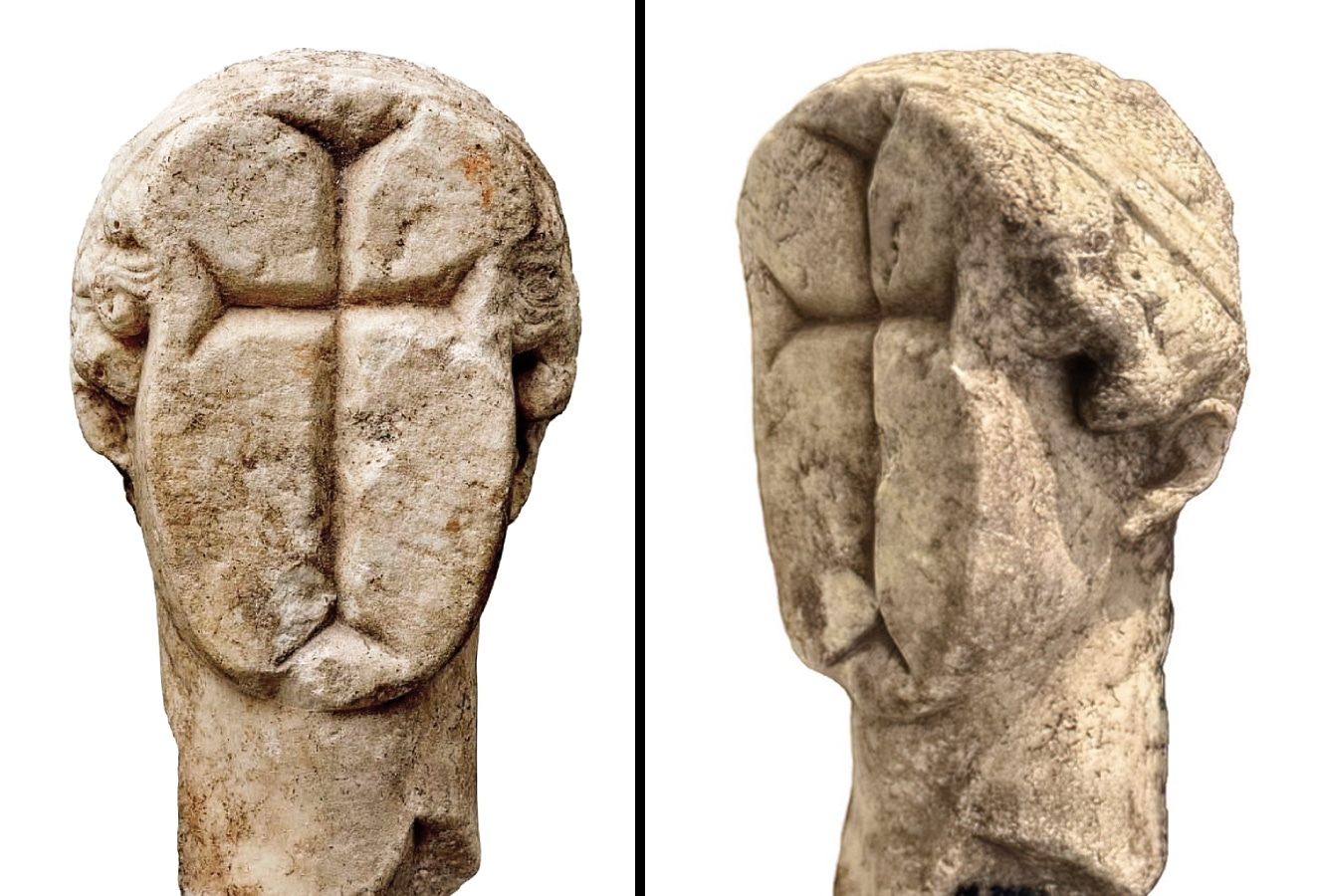
Clearly, as I have written before, the Early Christians were no fools when they ran around in packs of violent mobs defacing and destroying the sharp-eyed idols of antiquity through the Semitic practice of nullification (בַּטָּלָה, bitul, to make something idle and lifeless). These statues were literally “possessed by demons”, only for the mob of Abraham—now inflicted with the fear of death, the ecstatic, the animated—did this fact of existence incur a response of violence as opposed to that of veneration. When these statues were defaced, the ability of a soul to migrate into its body was effectively destroyed. There was nowhere that the soul recognized as home that it could imbue, and was thus cast into a homeless void of eternal longing, departing to and from what faint vestiges of a body it could. Klages offers the following on the Christian relationship to Ahnendienst:
And here we reflect on what the temples originally were! Not like Christian cathedrals, places of worship for the congregation, but houses of the gods, and accordingly, those places where reverential piety could behold them and truly beheld them in the sight of their “idols”! So much was the essence of daimonic powers to the pagans synonymous with the ability to appear that the most popular explanation of the word θεῖον (Theion), the divine, derived it from θέατον (Theaton), the visible! Therefore the pagan mocked the Jew and Christian as Atheoi, god-haters, and undeniably rightly so: for they had elevated the spirit, the invisible principle of the image-hating will, to the god-denying God! Early Christianity was well aware of this, as is evident, for example, from Augustine’s accounts in “The City of God” regarding the opinions held concerning the legendary bearer of Egyptian wisdom and magic, named Hermes Trismegistus. He was said to have known and taught how to inviting the spirits of the gods to inhabit “visible and tangible images,” which are now “endowed with senses and filled with spirits… know the future and proclaim it by lot, by priests, by dreams, and in many other ways.”
The images, flashing up in the event of vision, come and go, change, can never be grasped or held, and the place to be touched is, at best, their abode. They can be present there without the person necessarily noticing them. Not everyone recognizes the secret signs of their presence, and only the ecstatically raptured perceive their breath, overflowing with a shivering awe. But when sacrificial piety permeates the local symbol with a captivating essence, then it is revealed to the settling soul, which momentarily transforms the afterimage, dissolving it into the appearance of the god.11
I hope by now, if nothing else, we have illustrated the utter importance and meaning of idols in pre-Christian religion and why the Yahwists rejected them utterly out of fear for the dead and the daemonic: as frequently reported by Christians missionaries pagan lands, they worked!
I will conclude with a personal story. My in-laws have a sort of family garage that all sorts of people from various corners of the bloodline use to repair their vehicles and toil away on certain projects. They all agree, without hesitation, that it is haunted by the man who built it, my grandfather-in-law. They can hear him stomping up and down the wooden stairs towards its attic, the tinging and clanging of metal when no one is around, and above all else the suprarational “sense” of his presence in the garage. In paranormal contexts the multitudes of what was before his personal belongings are called “anchors”, though this erroneously implies the inability of a soul to leave them. This greatly troubles my in-laws; Klages would suggest it is a necessary conclusion of the Christian worldview that they devoutly hold onto. My reaction is contrary, even when I myself sense his presence in that room: “Of course he’s here, this is all of his stuff. Every atom in this garage is the work of his body.” How could you not be reminded of him? How could he not be here?—and I do not mean this in a purely rhetorical fashion. Surely, if I never wanted to hear of such hauntings of his on this world ever again, I would burn that shed to the ground and pave over it with asphalt. Consider him nullified. Of course, I would never do such a thing. Rather, when I am in that garage, I welcome the haunt as I would welcome any other: the reflection of crashing waves, the gathering of portent-bearing flocks, a howl and chill to the rear corner off a wooded trail.
Perhaps in a better time, a more lively one, can we relearn how best to venerate the dead in ways more fitting than leftover “anchors” atop a dusty attic, or a block of gravestones placed at the edge of a town in its appropriate building zone. I encourage those of a pagan soul to consider the words of Klages with heart, knowing now what it is to commune with one’s ancestors. All daimons are daimons of a particular place and essence, and it is—essential!—that they are allotted their due.

“Ahnendienst” translates literally to “ancestor service”, which may initially read as a hardly-religious sentiment of “honoring” or “duty” towards one’s progenitors. However, consider the similar “Gottendienst”, or the more familiar American “Sunday service”. Klages’ use of the term, therefore, includes an element of communal action and ritual. Perhaps this element of (ecstatic!) ritual is why he opted for “dienst”, as opposed to the expected “verehrung” (worship/veneration).
“Teleta” would most literally be translated to teleuté (τελευτή), end, completion, or death. Here I would like to add, for those more familiar with Klages & Bachofen, the interesting note that the goddess Telete—associated with nighttime festivity and Bacchic ritual—was the daughter of Dionysus and granddaughter of the Magna Mater. Klages, well-read in his Greek myth, would have certainly intended this literary function.
“Kranz = Krone ist das uralte Sinnbild der Vollendung, der Teletä, der erreichten Vollkommenheit. Jede Krone ist „Krone des Lebens“ oder Zeichen des Gamos der Lebenspole, der vollzogenen Vermählung einer gekrönten Seele mit der Seele des Alls. Darum ziert der Kranz oder die Binde den Mysten, darum den Sieger, den Herrscher, den Priester, darum die Braut! Nun aber wissen wir, dass der Mykenäer mit Kranz und Binde auch seine Toten schmückte! Der Tote hatte ihm auch die höchste Weihe verliehen; Er war ihm Myste, Heros, ja Dämon geworden, und der Vorgang des Sterbens fiel zusammen mit der Vollziehung des vollendenden Gamos! Als „Tritopatoren‘ hochverehrt und ihrerseits segenspendend sind denn.”
Literally, the “good daimon”. Also doubly refers to the god of the same name, Agathodaimon, who like the Tritopatores, served as a serpentine god of the household.
The Olympic games, more specifically.
“Nichts beschäftigt den Menschen der pelasgischen Stufe mehr als die Feierlichkeit der Bestattung und die Sorge für den Leichnam. Das menschlich ergreifendste Trauerspiel des ganzen Altertums feiert die Selbstaufopferung der Antigone im Dienste der heiligen Bräuche für den Leichnam des gefallenen Bruders, ein Motiv ohnegleichen, wenn wir es messen an der Dichtung der Neuzeit! Die ursprüngliche Beisetzung fand höchstwahrscheinlich im Hause unter dem Herde statt, ferner inmitten des Dorfes, vor den Mauern, im Stadttor, auf dem Markte, im Prytaneum, auf dem Festplatz! So befand sich zu Olympia das Grab des Pelops neben dem großen Aschenaltar des Zeus, und die Tempel waren zugleich Grabstätten eines Dämons. (Beispiel: der delphische Apollotempel über dem Grabe des Erdgottes Python.) Auch die Christenheit pflegte ja früher die Toten edler Geschlechter in den Domen und Münstern beizusetzen und versammelt noch heute auf Dörfern ihre Gräber im Schutzraum der Kirchen. Die gewaltigsten Bauten der Ägypter, die Pyramiden, sind Totenstätten, ebenso die Felsentempel der Lykier und Roms Katakomben. „Größere Sorgfalt“, erzählt Diodor von den Ägyptern (nach der Übertragung von Bachofen) „wird auf die Wohnungen der T’oten als auf die der Lebenden verwendet; diese betrachten sie als Herberge für einen kurzen vorübergehenden Aufenthalt, die Gräber allein als die wahren und dauernden Wohnsitze für ewige Zeiten.“ Totensitze waren nicht minder die heiligen Haine, die geheiligten Berge so vieler Völker, die Manitusteine der Indianer, die Pagoden der Chinesen und die Stupas der Inder. Die Seele des Toten flattert und schwebt um das Grabmal, haust dort in Schlangengestalt, wohnt als genius loci, als Agathodämon segenspendend im Hause des Lebenden!
Der ganze römische Kult nimmt seinen Ursprung von der Verehrung häuslicher Ahnengeister, der Laren, ebenso wie dem Sintoismus der Japaner. Die Stämme des Altertums und gleicherweise sämtliche „Wilden“ benannten und benennen sich gern nach einem mythischen Urahn. Zu Ehren des Todes gefeierter Helden der Vorzeit entstand der griechische Agon, versinnbildend den Kreislauf des Werdens und Vergehens! Wer möchte verkennen, dass hier nicht Gespenster gefürchtet werden und abgewehrt werden, sondern dass es die liebende Verehrung der Gegenwärtigen ist, die um die Gegenliebe erhöhtes Wesen der Vergangenheit wirbt, sie mit Bräuchen, teils von unmittelbarer Verständlichkeit, teils von geheimnisvoller Bedeutungstiefe, immer von neuem „ins Leben gezogen“! Was endlich könnte uns dessen unwiderleglicher vergewissern als die ergreifende Sitte spätgriechischer Zeit, den heroisierten Toten auf Grabterrakotten in der Gestalt des Eros selber erscheinen lassen, bald schlafend und miter Fackel, bald gleichwie sanft ermüdet vom Feste des Lebens im Licht, bekränzt auf ein Ruhebett hingelehnt und mit der Schale vom Trinkgelage! Nicht aber „Unsterblichkeit“ hatte auf diese Weise die Tote der Vorzeit gewonnen, sondern er war, als überhaupt nicht gestorben, verwandelte sich gegen!”
“Wie oben schon angedeutet, droht nämlich der schweifenden Seele Gefahr des Umgetriebenwerdens von Weite zu Weite, von Wandlung zu Wandlung, zuletzt der Entwirklichung durch Verlust des Vermögens zur Eingestaltung. „Gestaltenfahrt‘‘ hieß bei den Isländern die Ausfahrt der Seelen. Sie gewann zur Heimat zwar den über kosmische Fernen spannenden Raum, büßte aber ein die Heimat des Ortes, der innig und warm zusammenschließenden Nähe. Nun gehören polar zueinander Raum und Ort, Ferne und Nähe, Himmel und Erde, Schweifen und Haften, Peripherie und Mittelpunkt. Abgetrennt vom Umschwung der Firmamente verdorrt das Tellurische, unverankert im Kern der Erde verflüchtigt sich das Sıderische. Wenn jenes für seine Flöre des befruchtenden Sturmes der Vergangenheitsbilder bedarf, so bewahrt vor Zerschwebung in nächtlichen Schlünden des Raumes die traumdämonischen Ahnenseelen verehrende Inbrunst und gabewilliger Opfersinn der leibhaft im Licht Gegenwärtigen. Darum — im Gleichnis gesprochen — wie dürstende Wanderer lechzen die Gewesenen nach einer umblühten und für heilig bewahrten Stätte, und jene hinwieder, entfacht vom Eros der Ferne, bereiten ihnen und siegeln mit rückbeschwörenden Zeichen Grab oder Tempel, Hain oder Säule, Baum oder Steinpyramide, Urne oder Höhle, Standbild oder Larenfigur: daß es Lieblingssitz und heimlicher Ruheplatz der zwar nicht raumverstoßenen, ohne die bettende Liebe der noch vom Leibe Beschützten aber zu ortlosem Schweifen entlassenen Seele sei. War etwa ein Krieger in der Ferne gefallen oder hatte jemand auf dem Meere Schiffbruch gelitten, so errichteten seine Anverwandten am Lande ein „Kenotaph“, ein leeres Grab: die behütete Stätte, wo einzukehren das Bild des Toten gebeten war! Unzerreißbar spinnt das Gewebe des Eros zwischen den Bildern der Vorzeit und den Gemütern der Gegenwärtigen”
Hamr, interestingly in relation to previously discussed topics of the Mater and cosmic egg, is still widely used in Scandinavian language to refer to the amniotic sac.
“Anknüpfend an den dritten Punkt, die ziehende Flüchtigkeit des Wirklichen für den traumhaft Gestimmten, treffen wir auf eine Eigenschaft des Traumes, die von allen Betrachtern unterstrichen, wie uns scheint, jedoch von keinem bis zu Ende durchmessen wurde, auf die rastlose Veränderlichkeit aller Traumgebilde. Die Straße, aufder ich im Traum soeben gefahren bin, hat sich im nächsten Augenblick in einen Kanal verwandelt, der Wagen in ein Schiff, und schon sind auch die Häuserwände zurückgewichen und ich fahre zwischen vielen Schiffen im Hafen; und dabei erstaune ich nicht und habe kein Gefühl eines Mangels an Zusammenhang in der Abfolge der Vorgänge. Wenn wir oben aus der Flüchtigkeit des traumhaft Wirklichen die Vorliebe des mythischen Denkens für die wolkenhaft plastischen Atmosphärilien ableiteten, so finden wir zu diesem Stimmungsmoment nunmehr den Grund in der Fähigkeit jeder Traumerscheinung, sich in beliebige andere zu verwandeln, und für den Mythos das Motiv seiner Auswahl in der Nötigung, Götter, Dämonen, Feen, Elben und sonstige Geisterwesen ausgerüstet zu wissen mit der nämlichen Gabe.”
“Das Prinzip der Verwandlung und mit ihm die Seelen in die Macht des tagwachen Geistes zu bringen, ist das uralte Ziel aller Theurgen, Geisterbanner und Totenbeschwörer und eine der proethnischen Wurzeln der Mystik, deren von keinem Vergeistigungsschwindel angekränkelte Urform wir erfassen können angesichts etwa der Selbstverwandlung germanischer Helden in Werwölfe und Berserker, der zeylonischen Teufelstänzer in Dämonen, der altthrakischen Sabosmysten in den schwärmenden Thiasos des rasenden Stiergottes.”
“Und hier besinnen wir uns, was denn ursprünglich die Tempel waren! Nicht gleich den christlichen Domen Andachtsräume für die Gemeinde, sondern Häuser der Götter und demgemäß solche Stätten, wo verehrender Frommsinn diese zu erschauen vermochte und sie wirklich erschaute beim Anblick ihrer „Idole‘‘! So sehr war für den Heiden das Wesen dämonischer Mächte dasselbe mit der Fähigkeit zu erscheinen, daß die beliebteste Worterklärung deiov (Theion), das Göttliche, von Beardv (Theaton), dem Schaubaren abstammen ließ! Atheoi, Götterverächter, hießen ihn deshalb Juden und Christen und zwar unbestreitbar mit Recht: hatten sie doch zum götterverneinenden Gotte den Geist erhoben, das unsichtbare Prinzip des bilderhassenden Willens! Die Frühzeit des Christentums wußte genau darum, wie z. B. aus den Angaben des Augustinus im „Gottesstaat‘‘ über die Meinungen hervorleuchtet, die man inbetreff des legendären Trägers ägyptischer Weisheit und Magie, mit Namen Hermes Trismegistus, hegte. Der nämlich soll es gewußt und gelehrt haben, wie man die Geister der Götter einlade, „sichtbare und fühlbare Bilder‘ zu bewohnen, die nun „sinnbegabt und geisterfüllt ... . die Zukunft vorherwissen und sie durch das Los, durch die Priester, durch Träume und auf viele andere Weise verkünden“. Noch aufschlußreicher ist die Entrüstung des Minucius Felix (im „Octavius“): „So werden denn die Dämonen, wie von Magiern, Philosophen und von Platon gezeigt worden, durch die Weihe in Statuen oder Bilder eingeschlossen und erhalten durch die Inspiration eine Gewalt gleich der einer gegenwärtigen Gottheit, indem sie zu Zeiten Priester begeistern, Tempel bewohnen, die Fasern der Eingeweide beleben, den Flug der Vögel lenken, das Fallen der Lose leiten und Orakel erteilen . ... Und dies sind die Tollen, die ihr auf den öffentlichen Plätzen rasen seht; und selbst die Priester werden außerhalb der Tempel toll davon, rasen und drehen sich im Kreise herum . .“ Was aber für die Seelen der Götter, das gilt geıingeren Grades für die näheren Seelen hingegangener Freunde und Anverwandten; denn die Götter sind selbst nur Ahnenseelen, aus einer anderen Runde der Menschheit freilich und dank der Natur des Schauens die Gegenwart umso strahlender übersternend, je mehr die Vergangenheitsferne, aus der sie leuchten, zu wachsen scheint. In seinen „Resten arabischen Heidentums“ berichtet Wellhausen aus dem Orient, wie man von mehreren Verstorbenen Bilder gefertigt habe, sodaß nun jeder seinen Bruder, Vetter oder Vater besuchen konnte; im folgenden Geschlecht sei die Verehrung der Bilder noch höher gestiegen, das dritte aber habe sie angebetet! Der Kriegsgott der Chinesen war nach Auffassung des Volkes der Geist eines ehemals großen Kriegers, der Kunstgott eines Erfinders von Werkzeugen, der Schweinegott eines ausgezeichneten Sauhirten. Dem Geist des Konfutse gar wurde als einer mächtigen Gottheit bis in die jüngste Vergangenheit vom chinesischen Kaiser jährlich zweimal ein feierliches Opfer gebracht.
In den Worten des Augustinus, denen sich zahlreiche ähnliche zugesellen ließen, klingt schon jener nur allzu verständliche Zweifel durch, der in neuerer Zeit für die Völkerkunde zu dem noch ungelösten Problem sich verdichtete, ob Standbild, Idol und ‚Fetisch‘ selber dämonische Wesen oder nur deren Sitze seien. Sie sind in Wirklichkeit beides zugleich: als tastbare Körper Sitze der Seele, als nur schaubare Bilder die Seelen selbst. Die Bilder, aufblitzend im Ereignis der Schauung, kommen und gehen, wandeln sich, lassen sich niemals ergreifen und halten, und der leiblich zu berührende Ort ist im Verhältnis zu ihnen bestenfalls ihre Stätte. Sie können an ihm zugegen sein, ohne daß der Mensch sie notwendig bemerkte. Nicht jeder erkennt von ihrer Anwesenheit die geheimen Zeichen, und ihren mit rieselndem Schauder überströmenden Anhauch empfängt nur der ekstatisch Entrückte. Wenn aber opfernder Frommsinn das örtliche Sinnbild mit bannender Essenz durchblutet, dann ward es erschlossen der sich niederlassenden Seele, die augenblicksweise das Nachbild wandelt, es lösend in der Erscheinung des Gottes.”


I traveled to each site of my American forefathers after returning to this religion. In Texas, I offered a piece of our clan's tartan, and I collected red soil for myself, my father, and a dear friend who shares ancestry from that area of Texas. I need to return.
In North Carolina, I visit the grave of my first American ancestor every year. I have given him a few offerings at this point. I wish to return again - soon! So soon, when spring comes, and the new sun rises.
Fantastic read. Fantastic article. Have to say, I have a hard time finding English sources for introductory level Klages. Do you have a place to point me to, or good translations you recommend?