


Great Heathens (III): Ludwig Klages
The Last of the Romantics

Great Heathens is a series which details figures in recent history who, while typically not open and practicing pagans, were drawn in and contributed greatly to its worldview. The series details their lives, thoughts, and actions; and how they contrasted with the modern culture they lived in.
Our previous article looked at the still-impactful writings of the enigmatic Englishman D.H. Lawrence. Remembered best for his writings on romance and sexuality, a closer analysis revealed a deep reverence for ancient peoples and a burning pagan soul. This article will cover the forgotten Ludwig Klages, whose philosophy of life may be one of the most important body of works to be lost to the 20th Century.


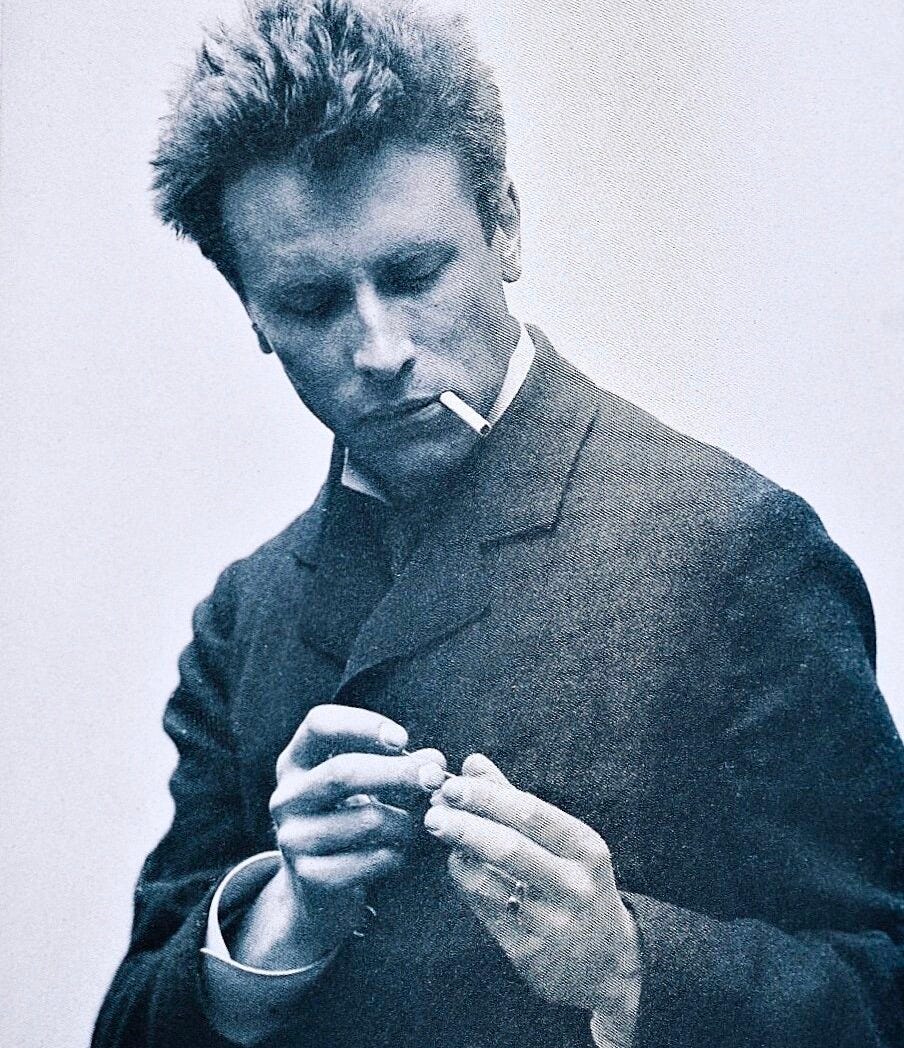
My God, what is Klages actually? In the end, just a man with a mad and wonderful mind that captivated us all. But where does he take us?
—Diary of Franziska zu Reventlow, “The Bohemian Countess”
“We might well call Klages the most significant restorer of polytheism since Julian”, says Dr. Paul Bishop, one of Klages’ modern translators and author of Ludwig Klages and the Philosophy of Life: A Vitalist Toolkit. Not Nietzsche, not Heidegger, Wittgenstein, nor the Huxleys. Such a claim beckons us to pay attention, not to mention two nominations for a Nobel Prize in Literature and a Goethe Medal for Art and Sciences in 1932. Germany knows him as a priest for life itself, a faithful inheritor of the Lebensphilosophie of Goethe and Nietzsche—and perhaps its capstone. If only any of us in this distant Anglophone world had the slightest clue to who this Klages figure was to begin with! Indeed, despite his heroic status in the German world, here in the realm of Britannia and all of her daughters he remains an essentially unknown figure. Most of his works remain untranslated and completely inaccessible to the English reader, aside from a handful of excerpts, aphorisms, and short books which touch upon his worldview without much explanation or introduction.
Klages later in life once remarked he saw himself as “the most plundered author of the present age”, and it is not a claim without merit, nor was his boast to be the most original thinker of his time. If one has read Oswald Spengler1, Carl Jung, Henri Bergson, Sigmund Freud, Herman Hesse, Graf Keyserling, or Theodor Lessing, he has already been introduced to Klages in some fashion. Some of this list are thieves, others admirers, but all so typically unaware of the extent of the influence—tellingly, assuming what belonged to Klages was standard contemporary thought! Despite his renown in the early 20th, Klages has been unduly forgotten by this world, which stands against everything this great philosopher of life had orated. Here begins the effort to illustrate how tragic this fact is, and to remedy it where possible.
Let us begin with one interesting example from this list. Upon the banks of the mile-wide Zürichsee in Switzerland sat two modest homes in the early decades of the 20th Century; on the west bank in Kilchberg resided Klages, and across from him on the east bank in Küsnacht resided one Carl Gustav Jung—a name which needs little introduction. Curiously, the two never cooperated or much interacted, but were aware of each other and their work. Like Jung, Klages was something of a philosopher-psychologist, one who intertwined together various interests such as consciousness, life, the soul, ancients, ancestors… and gods. He was actively involved in the science of psychology, once referring to the concept of psychoanalysis as a “bizarre bastard”2, inferior to his own concept of characterology. Jung was well aware of Klages, even attesting to him by name in his now-famous essay Wotan:
The German youths who celebrated the solstice with sheep-sacrifices were not the first to hear a rustling in the primeval forest of the unconscious. They were anticipated by Nietzsche, Schuler, Stefan George, and Ludwig Klages. The literary tradition of the Rhineland and the country south of the Main has a classical stamp that cannot easily be got rid of; every interpretation of intoxication and exuberance is apt to be taken back to classical models, to Dionysus, to the puer aeternus and the cosmogonic Eros. No doubt it sounds better to academic ears to interpret these things as Dionysus, but Wotan might be a more correct interpretation. He is the god of storm and frenzy, the unleasher of passions and the lust of battle; moreover he is a superlative magician and artist in illusion who is versed in all secrets of an occult nature.
—C.G. Jung, Wotan (1936)3
Sheep-sacrifices upon the solstice? Dionysus and Wotan, the eternal boy and cosmogonic Eros? Would any of us expect to see such things in Germany in the decades preceding the Great War? Who is this man, and what exactly are we gazing upon here?
What will be illustrated here is, in what little can be said in a short article of this form, the reanimation of one of Germany’s best and most undeservedly forgotten thinkers.
One of Klages’ first works of literature was Man and Earth4, which was in actuality a written lecture. This was read aloud not in a university hall, but at the peak of the Hoher Meißner mountains in Hesse to a band of nationalist and Romantic youth leagues known as the Wandervogel, in 1913. This lecture, seemingly a perfect symbolization of this movement and Klages’ thought, was a viscous condemnation of modernity—particularly its notion of “progress”. This “progress” has fractured and paved over forests and refuges for highways and railroads, “progress” has marched forward with the extinction of countless species and ecosystems, “progress” has eliminated the national and bioregional cultures of the world, “progress” has abolished the existence of night in Germany’s cities, “progress” has reduced man to a hobbled technological and urban mass charted by its productivity.
Like an all-devouring conflagration, “progress” scours the Earth, and the place that has fallen to its flames, will flourish nevermore, so long as man still survives. The animal- and plant-species cannot renew themselves, man’s innate warmth of heart has gone, the inner springs that once nurtured the flourishing songs and sacred festivals are blocked, and there remains only a wretched and cold working day and the hollow show of noisy “entertainment.” There can be no doubt: we are living in the era of the decline [Untergangs] of the soul.
—Klages, Mensch und Erde (1913)
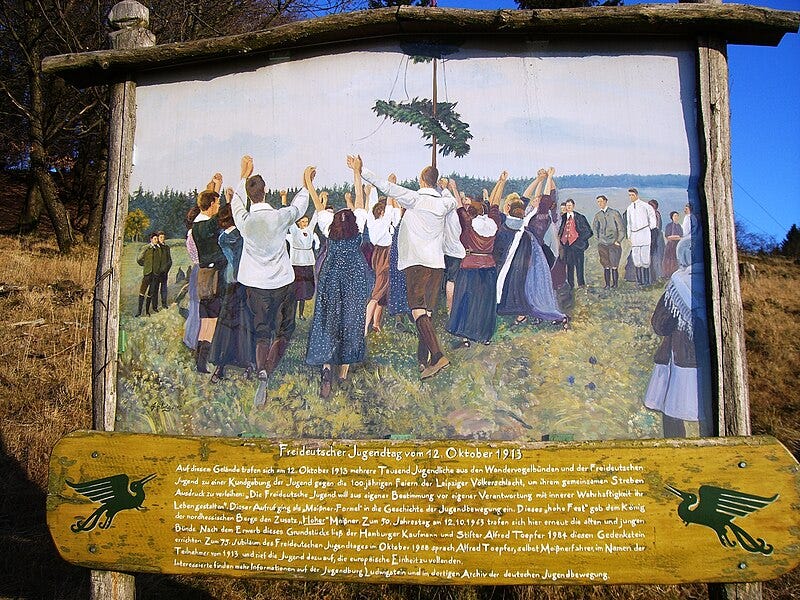
What is remarkable about this lecture is that while its initial impression is that a standard ecological or conservationist piece—lamenting the urbanization & technologization of mankind, resulting in the destruction of both him and the natural world—a closer inspection reveals the germination of Klages’ worldview which blended together mythology, Romanticism, psychology, and philosophy into a fundamentally unique metaphysical system. For Klages believed these issues were religious, to such a degree that the decayed religions of the day couldn’t capture. In fact, he shows no hesitation in blaming these dire straits chiefly upon the Christian religion, lamenting the destruction of ancients. He writes, ending with a quotation of Schiller’s Gods of Greece:
Capitalism, along with its pathfinder, science, is in point of fact the fulfillment of Christianity; the church, like science, constitutes a consortium of special interests; and the “one” that is addressed by a secularized morality is indistinguishable from the life-hostile “ego,” which, in the name of the unique godhead of the spirit — only now coupled with a blind cosmology — accounts for the war that has been waged against the innumerable, “many” gods of the world; earlier ages were at least more honest in their opposition to the cosmic deities, for they frankly approached the fray in the menacing aspect of judges.
Icy northern winds have gone
To devastate the blooms of May;
To make us worship only ONE,
A world of gods must fade away!
—ibid.
It is here we begin to see the center of Klages’ world view. We of contemporary society are familiar with philosophical strife involving some derivative of the old Cartesian mind-body dualism: mind and body, soul and material, natural and supernatural, science and metaphysics, man and animal, and on goes the list. But what Klages offers is a complete transcendence of this typical duality by offering up a whole that has been unduly splintered into warring factions—life itself. Klages instead details a polarity between life and the intellect, yes, life itself is elevated into its own metaphysical category, one which is supreme above all others! The intellect, unlike the “seat of the soul” and precious gift which elevated us above the animal as earlier thinkers had described it, was in fact the destroyer of soul, an antagonist from without that wages war upon body and soul alike. This structure is contained in Klages’ 1500-page long magnum opus Der Geist als Widersacher der Seele (1932), or The Spirit as Adversary of the Soul. Because of the book’s length, as well as the difficulty of Klages’ language and expressions, it has never been fully translated into English and likely, regrettably, never will be. Yet we can glean much from a selection of scholarly work, as well as a handful of brave individuals who translate sections for hobby alone.
Klages confusingly terms his metaphysical structure as the Pelasgian trinity, after the legendary ur-Greeks whom he saw as representative of his ideal, though it is more of a unified-polarity than a tripartite division of a whole. His “trinity” details a reality of polarized body and soul, which synthesize into the whole of life. Whereas the later Greeks developed a number of tripartite divisions of the soul which often put the logos or logistikon as its head, Klages instead presents the logos as an external enemy of the soul. The stress and tension between these two polarities—this sturm und drang—are two essential qualities of a unified whole, just as a sense of temperature is felt between hot and cold, or the seasons which oscillate between summer and winter. Break one off, and the unity of the whole is destroyed. It is precisely the intellect, the Geist, which exists to destroy this unity and experience of life:
Body and soul are poles of the life-cell which belong inseparably together, into which from outside the spirit, like a wedge, inserts itself, in the endeavor to split them apart, to ‘de-soul’ the body, to disembody the soul, and in this way finally to kill all the life it can reach. […] The soul is the transience of the body. […] As souls we are inescapably intertwined in what is essentially a fleeting reality, but as spirits we are based literally outside this reality, unable, even for the briefest moment, to merge with it!
—Klages, Der Geist als Widersacher der Seele (1932), excerpt translated by Paul Bishop in Ludwig Klages and the Philosophy of Life, A Vitalist Toolkit (2018)
Geist is the prevailing force which rules over our familiar day. In older days it was referred to pneuma, nous, or the logos; today we would simply refer to it as the rational mind. It is the force which destroys life through a relentless will-to-dominate, a drive towards a cold and aloof rationalism, the lie of “progress”, and the industry & technology it sires. A reader of Spengler may associate this with Faustian man, and a reader of Aristotle may interpret it as, the mind or intellect is something external to life—nous thurathen5—which invades, and adulterates, life.
More simply, we may say that Geist is the destroyer of life. Not just the internal meaning of life as experienced by man, but life itself, which Klages has uniquely elevated to the highest value.
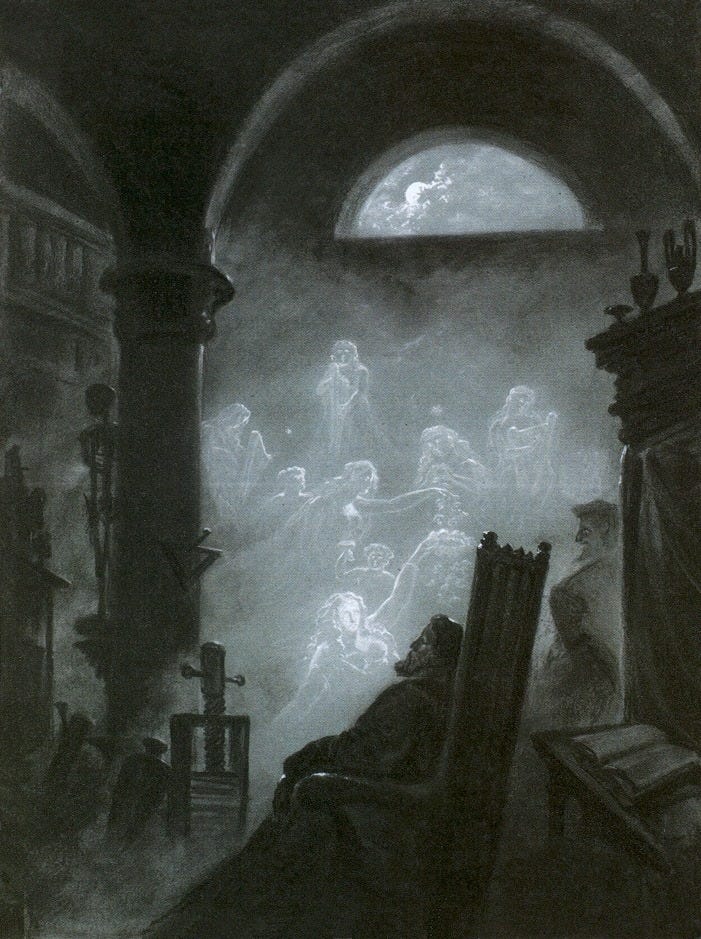
What then is “life” and “Seele” to Klages? Life is not merely biological life, though certainly included. His was an ecological view of reality, which included within “life” not just wandering birds, mankind, or bacterial colonies, but also rocks, streams, sun, night, wind, and even space-time. Life is therefore the primordial, unconscious, and vital essence of existence. Seele, subtly different, is by no means meant to relate to our contemporary, Christian, understanding of a “soul” which inhabits and “gives life” to an entity (a contradiction in Klagesian terms!); rather it refers to the “identity” or “character” of an entity, so that we speak of “the soul of the city”, or “the soul of a nation”. More simply, life is the rhythm and flow of reality, while Seele is the identity or character of individual phenomena which drive life’s ceaseless animistic nature. Seele can be thought as an interpretation of the Greek psyche, and we can corroborate this association by the fact that Klages never referred to his psychology as “Psychologie”, but “Seelenkunde”!
Klages raises life to an absolute value. He hypostatizes it. There is no greater value than life, none that approaches it, none subordinate to it. He shares with the German romanticists their passionate devotion to intensity of living; as it was to them, life is festive to him, and he believes in honoring the feast of life by uninterrupted celebration.
He defines life as eternal flow, change, becoming, renewal, chaos. His chaotic world is actually that of the flux and flow of Heraclitus and the panta rei, but without the indwelling Logos.
—Lydia Baer, The Literary Criticism of Ludwig Klages, The Journal of English and Germanic Philology 40, no. 1 (1941)
This is all better understood through Klages’ understanding of phenomena as timeless and rhythmic “images” (Bilder), a description of reality as a ceaseless expression of such images, which can only be understood as the soul of phenomena. This concept is unapologetically mystical, and can be difficult to penetrate. It is therefore useful to beckon the very inspiration in this riddle of Klages’, Heraclitus, who is recorded in fragments as saying “death is what we see when awake, and reality is what we see when asleep”. When one dreams, he has access to images which are not necessarily seen (and certainly not felt), but sensed.
Now, of course, dreams consist of repackaged memories, such that it is not possible for the human mind to generate a “new” face during its dance. This is not something Klages is intending to contest. What he is illustrating is that these dreams are not merely mental pictures or memories of the physical world but archetypal realities that exist independently of our sensory experience. He terms these realities as “elemental souls”, “essences” (in the phenomenological language of Edmund Husserl), or more simply, “gods”. Thus, Klages sees sleep as sacred ground where the soul receives the true rhythm of existence through a stream of images, unmarred by the confused and sensory-bound “death” of waking consciousness. Here lies the Mount Olympus of the cosmos:
There are gods of water and gods even of particular stretches of water, gods of the plant kingdom as well as of a particular tree, gods of the hearth as well as of the hearth of a particular house, but also gods of the night, of the day, of the dawn, of the light, of the darkness, of the thunderstorm, of the rainstorm, of lightning, furthermore of love, friendship, revenge, reconciliation, of anger, furthermore of death, of sickness, of fertility, finally of prayer, sacrifice, exchange, healing, making war, swearing, warding off evil and so on into infinity.
—Klages, Der Geist als Widersacher der Seele (1932), excerpt translated by Paul Bishop in Ludwig Klages and the Philosophy of Life, A Vitalist Toolkit (2018)
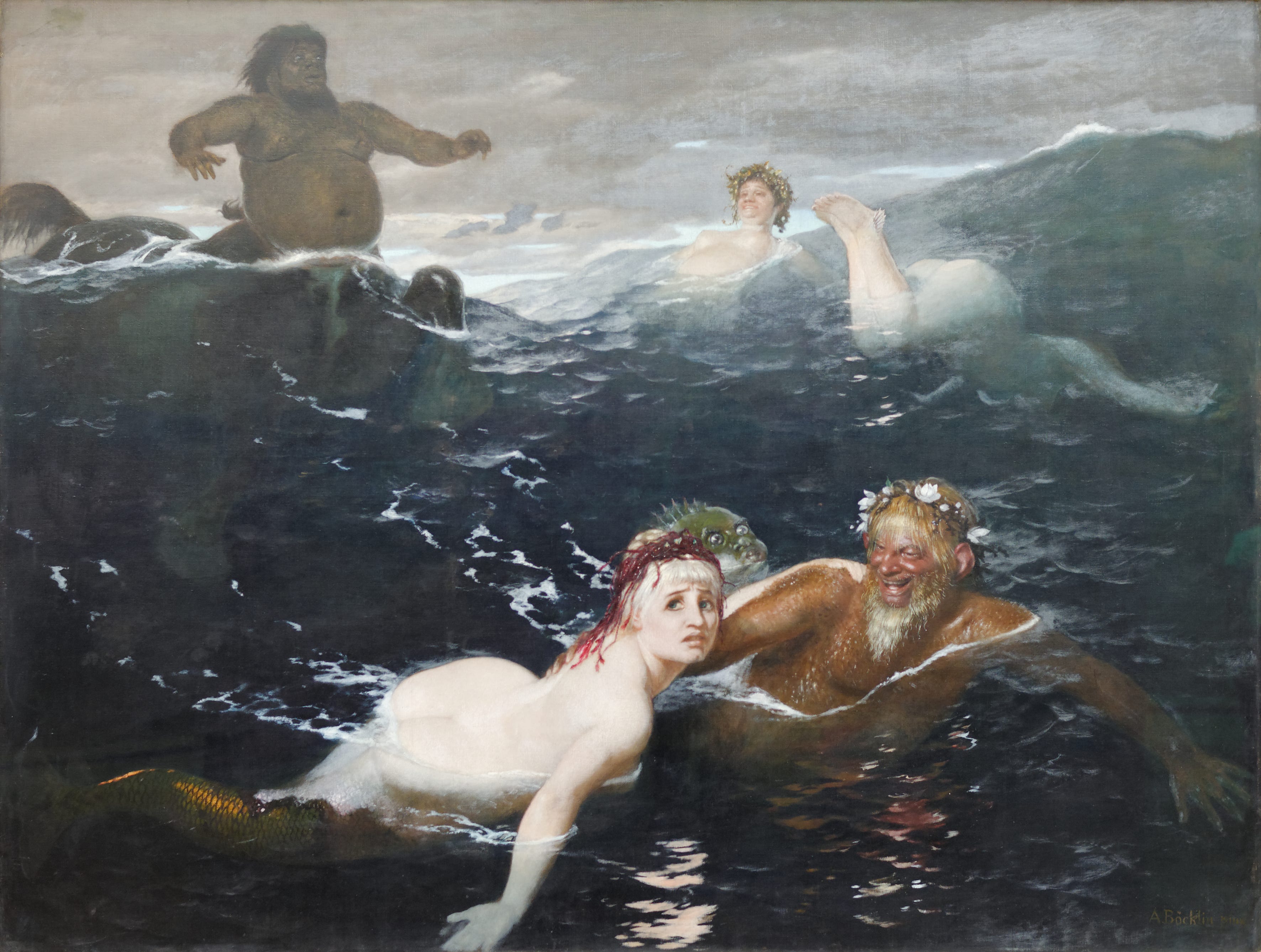
With a few concepts we conclude what I would consider but a mere introduction into the worldview of Ludwig Klages, and find ourselves at the hinge point between his technical metaphysics and his religiosity. From the skeleton of his worldview alone, we can conclude without hesitation that Klages was an avowed animist. He is interested not in the particular manifestation of religion from iron-age Germanics as others of his nation were and soon would be, but with religiosity as the experience of the world itself independent of the logos. This explains his infatuation with the Pelasgians: religion is only valid insofar as it resembles the precognitive relationship between Man and Earth, visible in the most primitive forms of human society (and far, far beyond). Such a religious disposition could not be “thought” of, or tricked into existence by the perversions of Geist, but so intrinsic to life itself that it could not possibly exist in any other way, seamlessly unifying all periods of human and pre-human existence.
Academic inquiry into the culture of the Pelasgians is tricky, and their exact identity is not entirely known even today6. But we can point to a specific culture and religious system which does fit the Klagesian bill, representing something of an ur-religion that operates upon the experience of life and the reception of images: “The Dreaming” of the Aboriginals. What a convenient name for our inquiry!
The Dreaming is a world unlike anything the West and its distant ancestors had been accustomed to for thousands of years. There are no idols, no sin or afterlife, no concretely-depicted or named gods with special associations and anthropomorphic qualities… there is only the eternal now, a cosmos filled with a never-ending stream of images and energized life. The closely-associated translations of various Aboriginal tribes elucidate this fact even further, for they are called “the Everywhen”, “the ancestral present”, and “unfixed in time”. Furthermore, as we are told by academics such as Lucien Levy-Bruhl, the driving emphasis of Aboriginal religion has been a participation with the divine reality of the world, of which they themselves are inextricably tied:
That they can be both the human beings they are and the birds of scarlet plumage at the same time appears to be inconceivable, but to the mentality that is covered by the law of participation there is no difficulty in the matter…
[T]he mentality of these undeveloped peoples which, for want of a better term, I call prelogical, does not partake of that nature. It is not antilogical, it is not alogical either. By designating it ‘prelogical’ I merely wish to state that it does not bind itself down, as our thought does, to avoiding contradictions. It obeys the law of participation first and foremost.
—Lucien Levy-Bruhl, Revival: How Natives Think (1926)
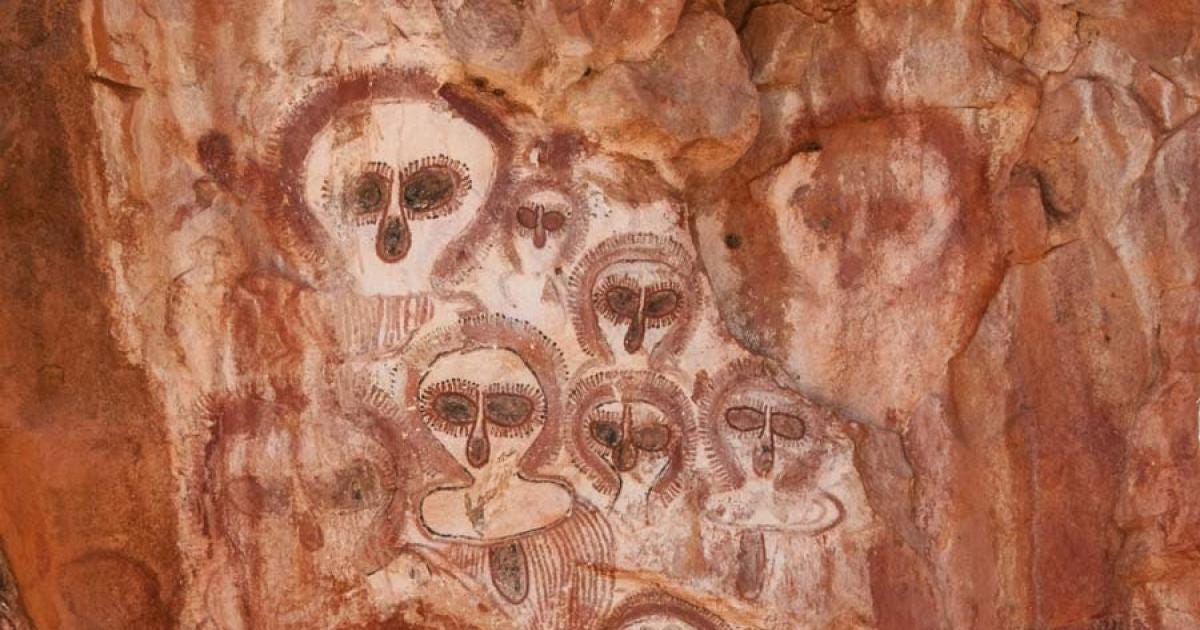
In regards to ancestor worship (not only for the Aboriginals, but for all of mankind), Klages has much to offer in understanding this tradition through his metaphysical scaffolding, as well as why we no longer understand it. He cites an account from the ethnologist Julius Lippert, which states his observation of an African chief who removed himself from company to deal with a migraine, which reminded him that he had fallen behind in the care for his deceased father’s soul. He compares this attitude to ours, dominated by Geist:
Art and culture of the prehistorical world prospered on the soil of the grave cult, because they did not know immortality of the soul, but instead knew only of its permanent presence; the whole of Christianity that believes in immortality sees in the corpse merely a cadaver, in the grave merely a place, which after thirty or forty years one plows over it again for a more useful purpose, and once the alive ancestor is a completely powerless being: the dead in no way intervenes in the interests in the living anymore. To transfer the soul as immortal into the hereafter means to deprive it of its worldly home, to make it a “secluded” and thus void soul!
It was not the “memory” of an ancestor’s soul in need of being worshipped, but its apparition [Phantasma] that took possession of its mind. His animal-like feeling of fear and his primitive will for knowledge does not need any explanation: the rationally inaccessible manner of his interpretation, however, shows irrefutably that he was also connected with a reality of dreamlike images while awake. Even he who in principle denies any claim of a phantasmal reality can’t help but admit this.
—On Cosmogonic Eros (1922), p. 101, trans. K.J. Elliott (2023)
Like a handful of other thinkers of his time (particularly Heidegger), Klages is concerned with the ways in which an obsession with the rational element of consciousness that can disrupt true experience. Klages illustrates this by returning again to Heraclitus, highlighting the character of the flow of reality which Geist adulterates. Consider the difference in character between a beating hummingbird’s wings, or the changing seasons, versus the driving action of the pistons of a steam engine and striking gears of a clock. One represents rhythm, the other repetition. We are often disgruntled or surprised by the northern wind’s refusal to herald autumn’s expected entry, and caught off guard by the torrentuous flooding and storms for which we clearly designate a “season” for. Conversely, it is the steam engine and the clock which operate through repetition, striking pistons and gears at the precise, engineered, moment. Repetition is the language of the Geist; rhythm is the language of the Seele. Klages reminds us of the etymology of rhythm in Greek—rheein (ῥεῖν), “to flow”, cognate with “the Rhine”—in a perfect extrapolation of Heraclitus’ famous wisdom, “no man enters the same river, for he is not the same man, and it is not the same river”. The rhythm of soul participates in an eternal creation of similarities, while the repetition of Geist flattens the whole of reality under a single regnant principle—the vitality of existence, destroyed! For this reason, Klages saw the monotheism of Abraham and the monism of later philosophies to be but masks for what can only be considered atheism.
[Rhythm] reveals to us first of all a constancy that can appear with particular beauty in a wave of water. Its incessant alternation of peak and trough takes place without break, leap, or gap from an indivisible, gradual change between two limiting states. And thus a second characteristic of rhythm becomes immediately apparent: to bring back in always similar periods of time something only ever similar. No wave of water has precisely the same shape and duration as the previous one, no breath and pulse exactly the same length as the following one, no left side of a leaf, an animal, or a human being exactly mirrors the right side.
Spirit’s essentially monotheistic tendency can be witnessed in the pronouncements of the numerous scholars who seem to be compelled to subordinate everything that exists to one regnant principle. Spirit aims at universal rule: it unites the world under the ego or under the logos. When spirit attained to hegemony, it introduced two novelties: the belief in historical progress on the one side, and religious fanaticism on the other. The spirit utilizes force to eliminate all possible rivals. Over the warring and agitated primordial forces, spirit erected the tyranny of the formula: for some it announces itself as the “ethical autonomy of the individual”; the Catholic Church, on the other hand, still relies on the idea of holiness.
—Aphorisms from Rhythmen und Runen (1944)
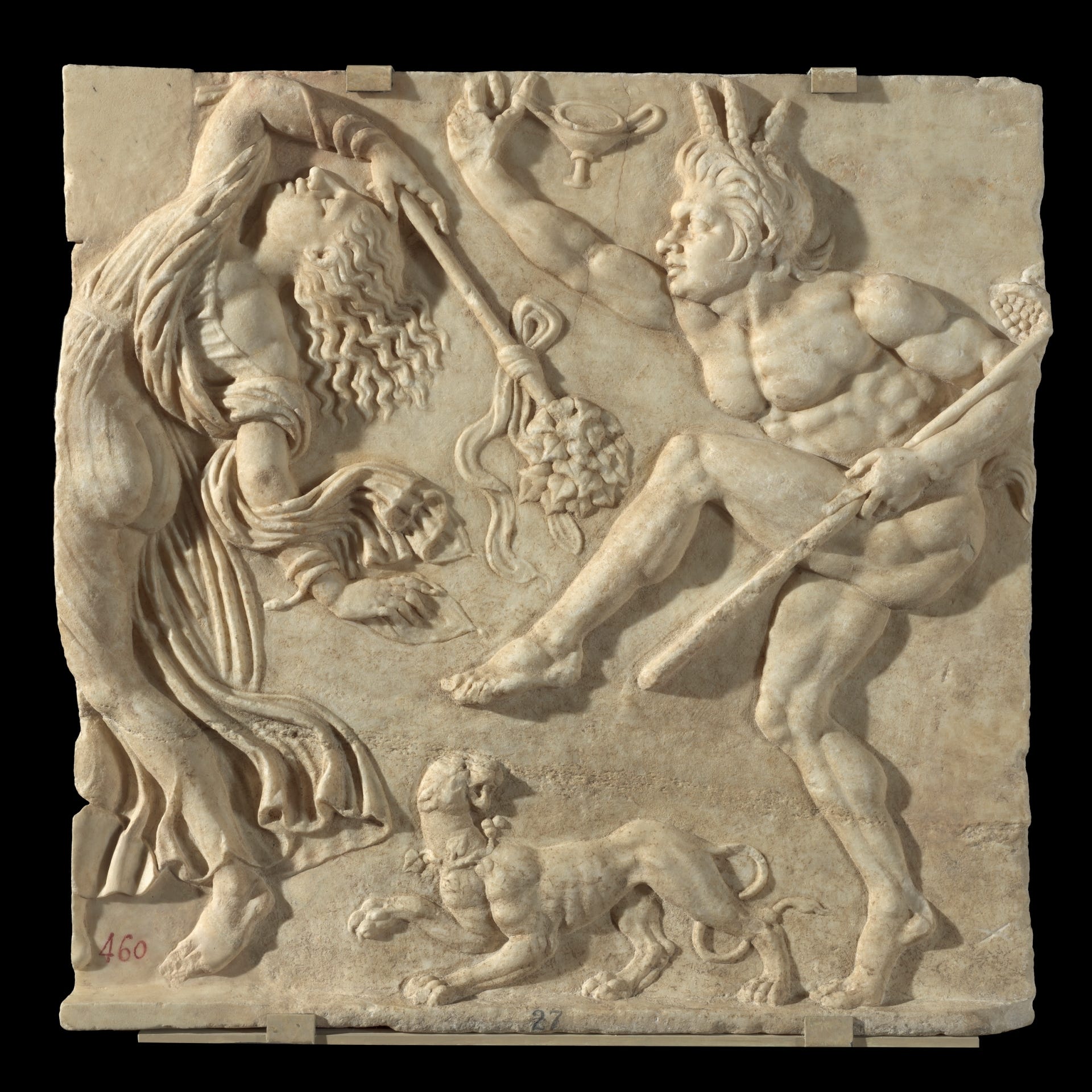
One may notice Klages’ curious obsession with the language and imagery of dreams. This is more than a useful illustrative scaffolding for his metaphysical system, but in fact an extension of his life. Klages was an insomniac, waking often and violently due to the emphysema that plagued him his entire life (perhaps due to his smoking habit). Sleep was a rare luxury to him, and when he once remarked that “true pagans regard sleeplessness as the most monstrous conceivable evil”, he was not speaking entirely metaphorically. Perhaps it was this restlessness that gave him an awareness and love of sleep and dreams, and hatred of the heightened-wakefulness that his active life demanded of him. Perhaps this is why in his youth he, rather than enjoying a good night’s sleep, frightened the local townspeople by donning a masked costume of Dionysus and dancing in the streets with knives.7
Moving on from dreaming, we have seen but a hint of the contempt Klages had for Christianity in all forms, if it was not already evident by his association of the logos with the life-devouring Geist. The concept of the Christian God, the Abrahamic God, is everything his metaphysical system is structured to detest as its enemy. It is the only conclusion available to Klages: Christianity is “the machine” and all it represents. As Goethe had once remarked in a poem titled Great is Diana of the Ephesians, the conception of Abraham’s Yahweh is that of a purely mental god, offering no relation to the body… “And once he heard a raging crowd/ Howl through the streets, and clamor loud/ That somewhere existed a God behind/Man’s foolish forehead in his mind,/ And that He was greater and loftier too,/ Than the breadth and the depth of the gods he knew”, so goes the pen of Goethe.8
Klages, however, treated this as more than just a silly mistake, but the very epicenter of the rot of the West’s spiritual and cultural values that Nietzsche had diagnosed. Though Klages does not entirely blame the god of Abraham for the entrance of the Geist as some Gnostics would, placing its fixation upon man well before even our first civilizations, he does associate it with the clearest agent of such a possession in our time. Indeed, Christianity prides itself upon an awareness of the logos (reinterpreted to be Christ himself!), as well as a number of purely-rational “proofs” of the existence of the One God, which themselves were borrowed from Aristotle and the later Neoplatonists:
It is impossible to conceive of a more fatal blindness than that of the cult instigated by this Jewish sectarian and his apostles and camp followers. Torn from the bonds of nature and the past, man must now direct his gaze at the wasteland known as the “future”; into that desert he stares, paralyzed by dread of the vengeful Jew-God. And before this insane masquerade of the “kingdom come,” the “last judgment,” and “eternal punishment” can complete its conquest of the world, the true heroes and the real gods must first be made to grovel before the cross!
The values endorsed by Christian philosophical systems are either ethical or logical, i.e., functional values devoid of living substance. With that one statement, however, we have judged Christian philosophy.
—Aphorisms from Rhythmen und Runen (1944)
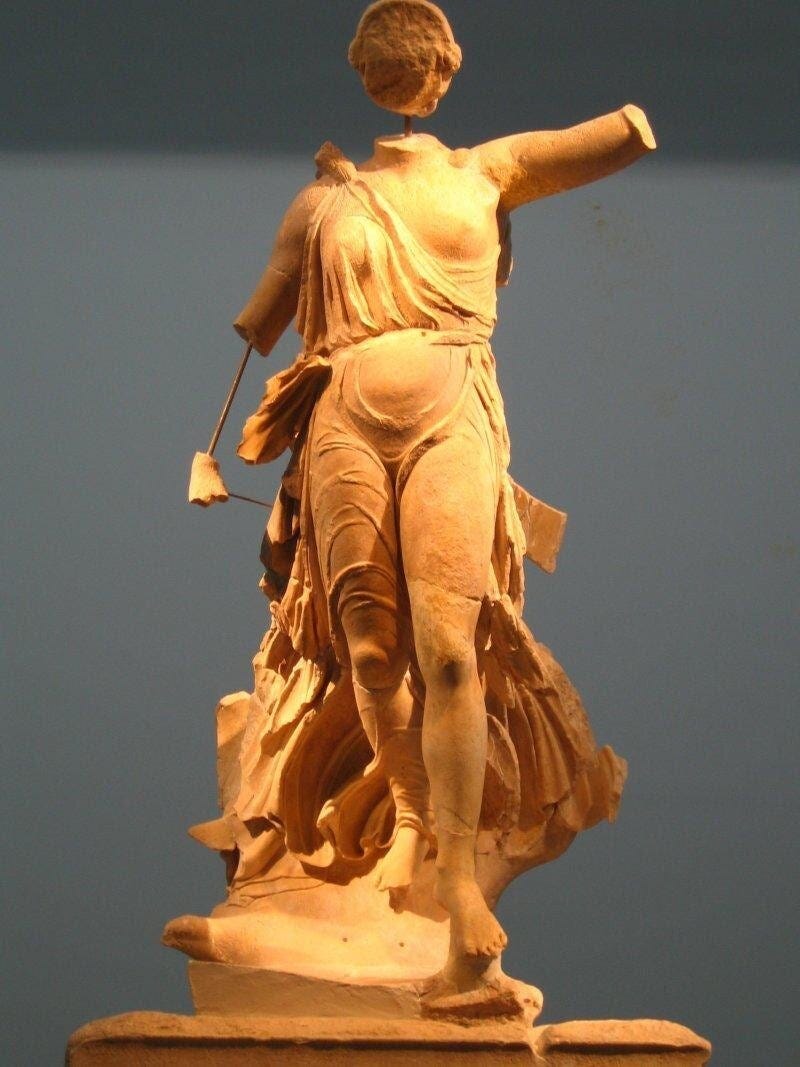
Perhaps this is why—exemplifying an implicit yet perfect understanding of this worldview—the Early Christians practiced the rite of nullification during its pillaging and destruction of the marble of Antiquity, chopping off the face and nose of statues to exorcise the statue, that is, remove its ability to serve as an image!
The legacy of Ludwig Klages is a difficult, and tragic, one. During the early 1930s, he enjoyed a level of prestige and admiration that catapulted him to the highest levels of cultural and academic interest in Europe. In the eyes of Germany, he was the most important psychologist and philosopher at hand. This would be overturned in the coming apocalypse of the 1940s. The Nationalist Socialist regime outright rejected him, going as far to publish in 1942:
“On the 70th birthday of Ludwig Klages, we wish once again to insist that we regard this man as our enemy. With regard to all of the decisive philosophical questions, we state that there can be no reconciliation whatsoever between the World-View of Klages and that of the National Socialist Movement. His view of nature and history, of man and his future, is, in principle, utterly incompatible with the fundamental theses of National Socialism!”
—Völkischer Beobachter, Dec. 10th, 1942
While the Third Reich was not kind to him, the following order would arguably be worse. With the convergence of Allied and Soviet columns came a new hegemony under which the flower of German culture was utterly crushed. “The West” was reshaped under the colors of American character, which brought the dominance of economy, technology, and rationality—computers, plastics, and the atom bomb. The Geist had finally achieved its total victory over the human soul.
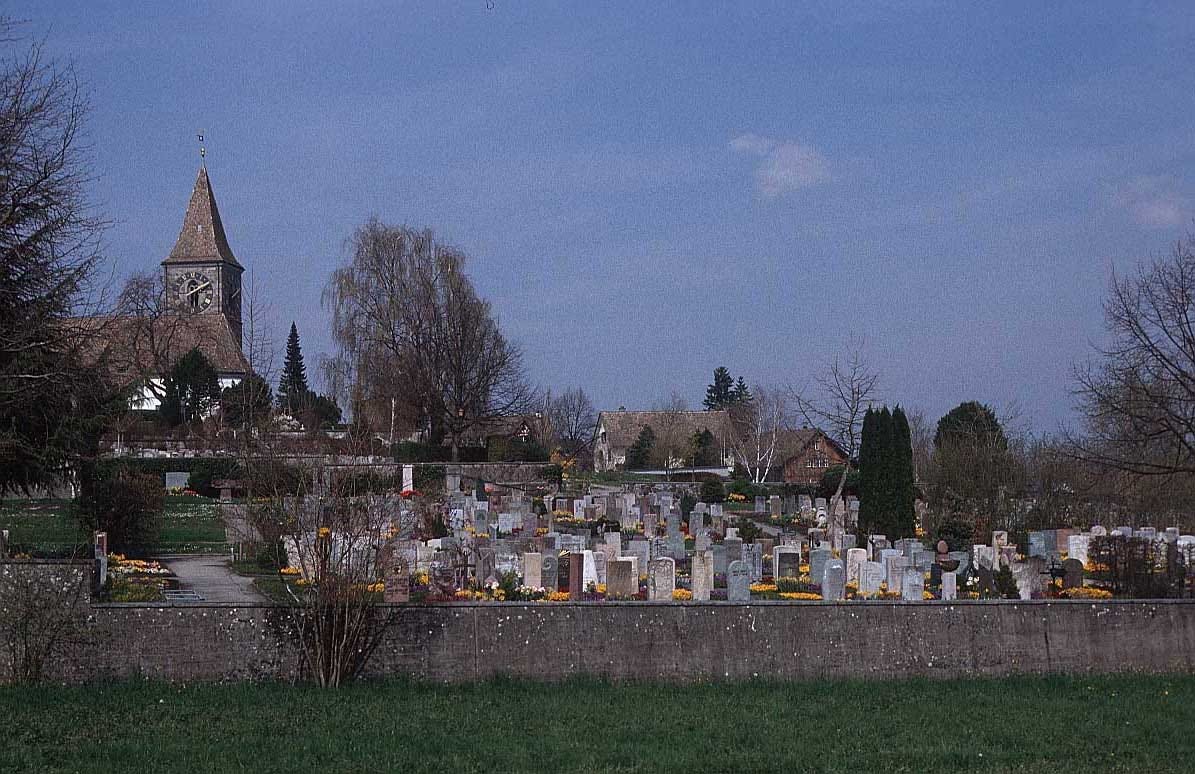
Klages spent the final days of his life in Kilchberg, editing and completing manuscripts of his life's work. Though there was little else to do, he was already aware of his circumstances, remarking some time near his end, “My teachings are buried.” Characteristically, upon the publishing of his biography 10 years after his death, the German paper Der Spiegel complained that the author had not properly condemned the dead man for his antisemitism and hatred of the Jewish god. For much of the Cold War (and still today), academic interest in Klages is understood as verboten, an association with a dangerous racist and antisemite.
Yet today, that old world is crumbling. The youth of today share much in common with that jovial band to which Klages had preached to in the autumn of 1913—acknowledging the spiritual importance of nature, singing the forgotten hymns of the nation, reviving the heroes and gods of times gone by. Let the mesmerizing phantasm of Ludwig Klages be among those heroes! Academics have consistently scoffed at the prospect of an English translation of Spirit as Adversary of the Soul, and I can think of no better people than our own to prove them wrong, as our talented friends have already revived many of the forgotten works of Junger and Mishima. One page at a time if it must… no matter the pace, the worldview of Klages has much to offer to us in a time of the swelling of the Geist, where it manifests itself utterly in the form of artificial intelligence and other impediments to genuine human flourishing. It is up to us to summon his phantasm, and some have already begun:
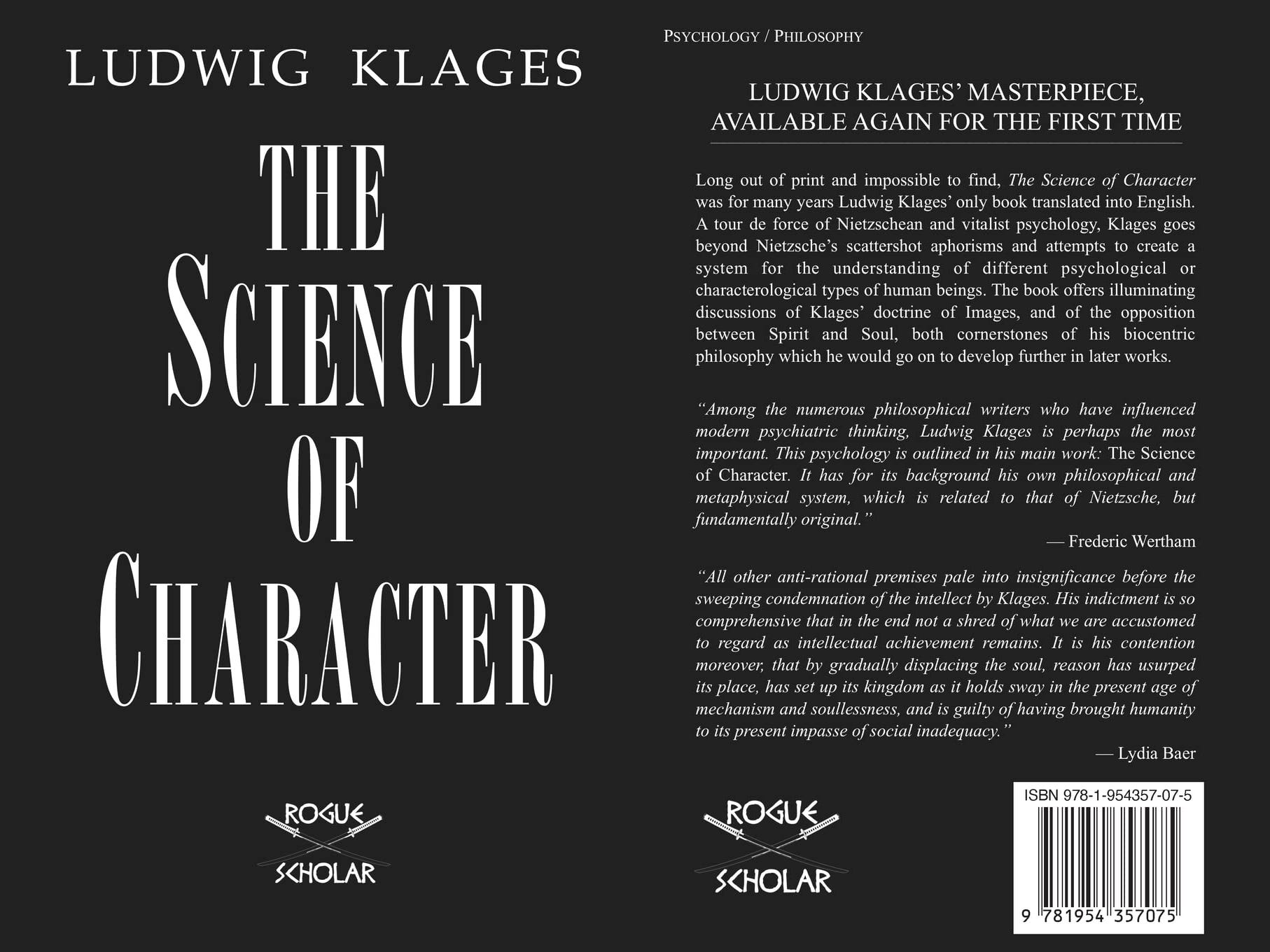

The legacy of Ludwig Klages is still being written. His place as the “pillaged” genesis of so much great thought from the early 20th is certain to be remembered, but whether or not this remains stuck in a forgotten time is to be seen. What we may contribute to his legacy is thus: it was the great project of all of the Romantics from Goethe to Nietzsche to set forth a Lebensphilosophie, a philosophy of life, which sought to ground itself in the experience and affirmation of life. Klages may therefore correctly be seen honorably as not only The Last Romantic, but the perfect capstone to everything this philosophy had set out to accomplish. The world that Klages leaves for us is a world of rhythm and divine poetry, a wellspring of being which beckons us to dance.
Out of Phlegethon! Out of Phlegethon, Gerhart, art thou come forth out of Phlegethon?
With Buxtehude and Klages in your satchel, with the Ständebuch of Sachs in your luggage—not of one bird, but many
—Ezra Pound, Canto LXXV
Indeed Spengler may have Klages—who he described as “towering over all of his contemporaries [in psychology]”—to thank for a number of his concepts, such as the assignment of races/cultures with a specific psychological character and the association of the West’s character with technology and the Geist.
https://www.revilo-oliver.com/Writers/Klages/Psychoanalysis.html
https://www.philosopher.eu/others-writings/essay-on-wotan-w-nietzsche-c-g-jung/
https://www.revilo-oliver.com/Writers/Klages/Man_and_Earth.html
In On the Generation of Animals, Aristotle remarks that “intellect (nous) alone remains to enter from outside (thurathen) and it is the one that is divine.” This concept was instrumental in instructing the Christian conception of an immortal soul, which separates from the body upon its death.
Debate still goes on today as to whether the Pelasgian language can be identified as Indo-European or not, with the weight of the evidence currently indicating that it is not. This would affirm Klages’ theory and use of the Pelasgians. For our discussion, it may be prudent to think of the Pelasgians as the Minoan civilization. Klages kept artifacts from the Minoan palace in his study, so this is true to character.
Nitzan Lebovic, Dionysian Politics and the Discourse Rausch (p. 5)
https://opensiuc.lib.siu.edu/cgi/viewcontent.cgi?article=2134&context=ocj


I have already liked and restacked this post. But I reread it today and I wanted to comment how much I appreciate you writing this. This is a wonderful article.
Why were there so many of these guys concentrated in 1890s-ish Germany? Why didn’t we see a similar grouping in any other Western European country?