


Between Three Philosophies of Life
A Portrait of Lebensphilosophie, Vitalism, and Natural Science

The laws of life are not the laws of self-preservation. This is the dreadful side of life, and it serves as the basis of all tragedy.
—Ludwig Klages, Rhythms and Runes (1944)
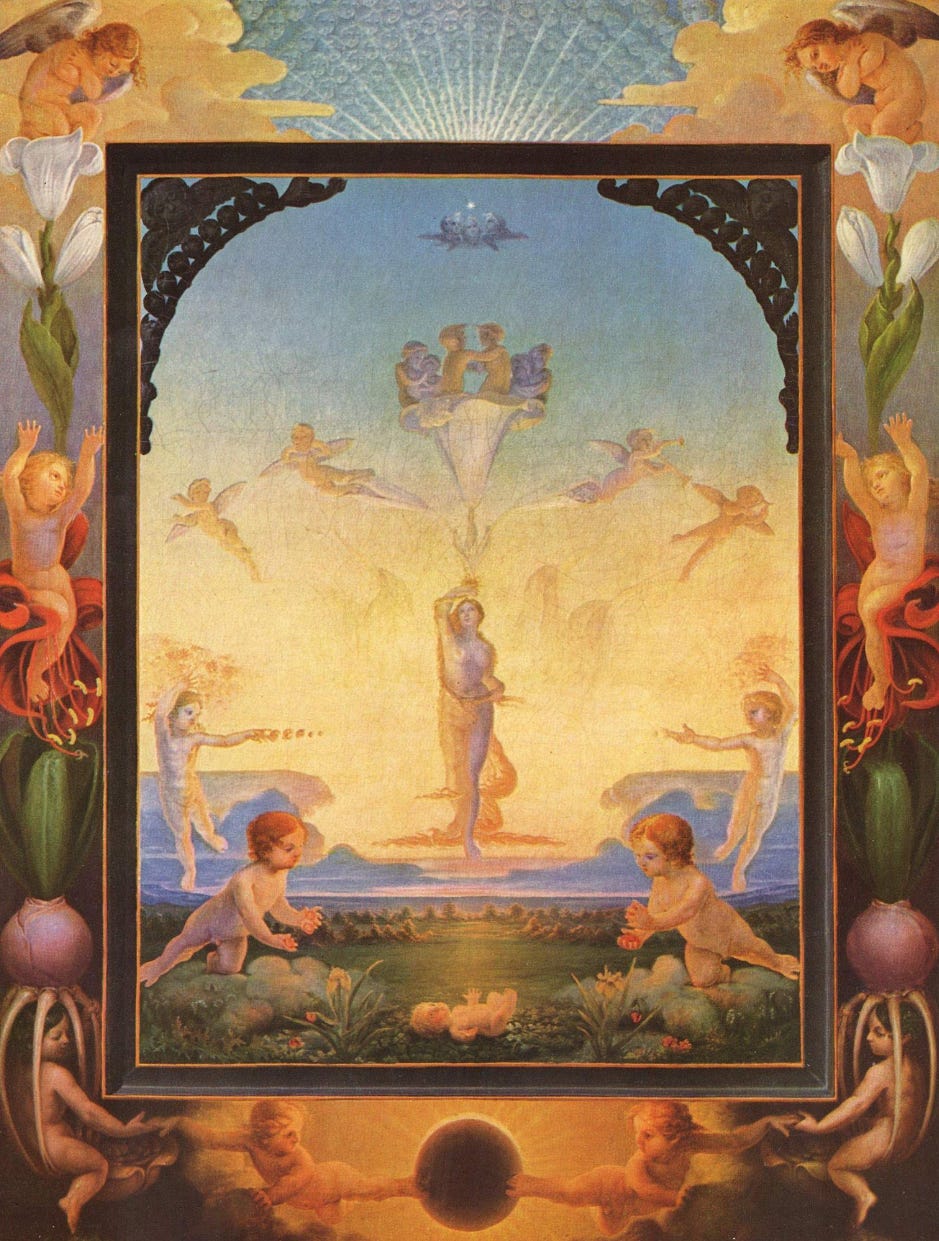
At the heart of the question of life, of its nature and of its origins, is the phenomenon of ordering and integration. The organism, we are told, is a self-integrated system of otherwise independent components; a handful of organs, a few billion nucleotides, ten trillion proteins… one man. Death, we are told, is the loss of this self-integrating quality, when a brain wiring together dozens of trillions of cells ceases to be, and the body falls into disarray.
For man, this conception is ideal. But nature is comprised of life far more alien to man than his own still so poorly understood res extensa, offering a number of inconveniences to our heuristics. I can think of no greater example of this than a peculiar—simple—little slime mold, Dictyostelium discoideum1. These are normally your typical and mundane amoeba, feasting on the E. coli of dirt and litter. But when a state of starvation or life-threatening stress is introduced, something peculiar happens, and the lines between mere slime-matter and self-integrated organisms become blurred. A stressed amoeba leeches cAMP molecules into the environment, and its nearby kin begin migrating towards it. Multitudes of individual organisms begin to aggregate and subsume within another into a multicellular slug-beast. Individuals willingly sacrifice themselves to the zygotic hulking daughter, consumed and repurposed. Has the many become one? Has the multitudes of organisms perished in its act of creation? The slime concerns itself with none of this, stretching its tentacles out in search an ideal environment. Satisfied with its setting, it again metamorphosizes into a stalk of spores, resigning itself to death, and the propagation of a new generation.
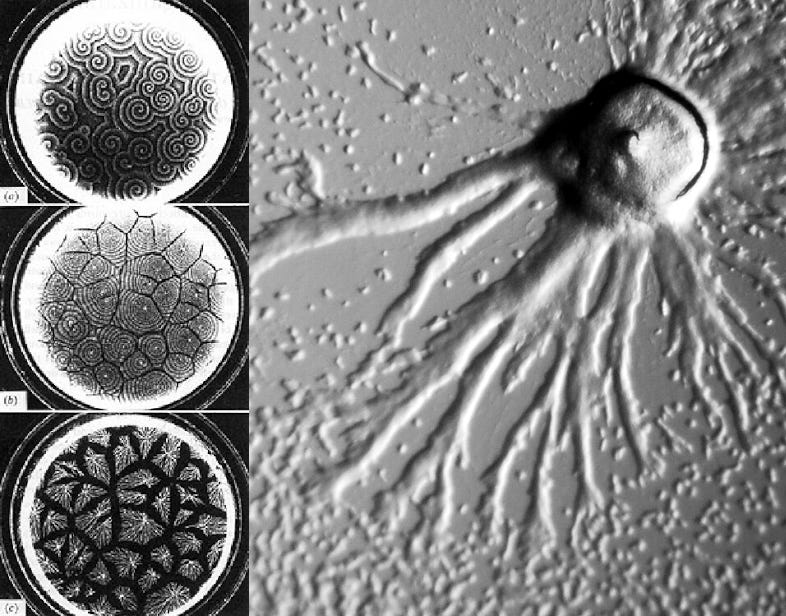
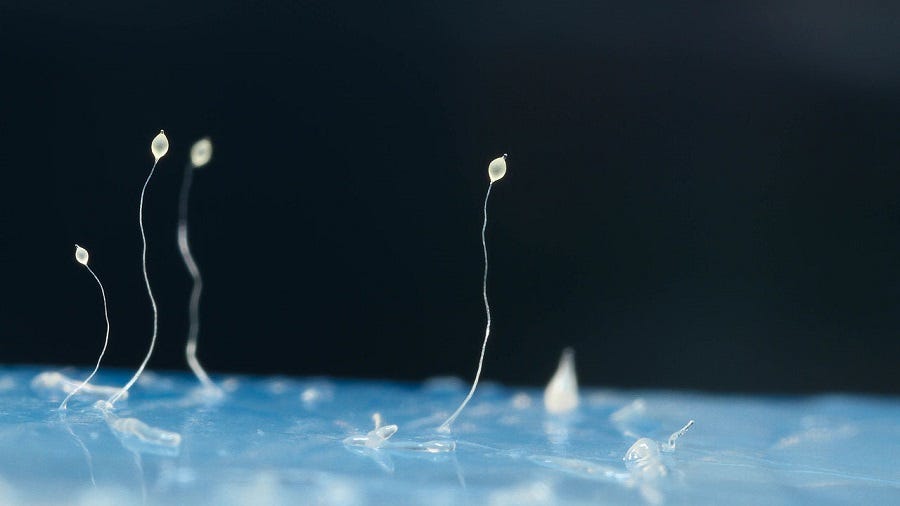
And to think that at some distant era in our evolutionary past, our own bodies were once identical to these alien pseudoplasmodiae. Perhaps we have been misled about our uniqueness by prior scaffolding; perhaps the line that divides life and mere molecules is but a foggy blur. It has been suggested—with firm and seemingly insurmountable evidence—that there exists between us and a primordial gaseous cloud but a measurable chain of molecular reactions. Indeed, the indelible march of evolutionary and biological science has left us with no conclusion but as much. There is no need to further relitigate here what is already an essential understanding of our culture, all are aware of its conclusions.
This biologization of mankind, a lightning bolt hurled down by Charles Darwin and others, had struck man into the awareness of his separation from nature as only by degree—not by kind. The effect was immediate and profound, quickly serving as an accelerant for ongoing debates around matters of secularism and culture. For most evolution became accepted wisdom—the final nail in antiquated traditions already buried by advances in chemistry, geology, and physics2. Yet for others, this total resignation of what man had accomplished and experiences to the accidents of molecules was a bridge too far; shims were needed to distance civilization from something so caustic. How can man rationalize his position in front of (or rather, within) nature in light of such revelations? What can he make of this newfound juggling act he finds himself in between the new thermodynamics or genetics and the old theology?
To this end, three irreconcilable philosophical positions have emerged: Lebensphilosophie, vitalism, and natural science. Natural science charts life to material mechanisms—quantifiable molecular processes—which seek to present the abolition of any functional distinction between life and material. Lebensphilosophie rejects such a reduction, emphasizing a type of idealism that places life as firmly distinct from mere material, a metaphysical category of its own right that can only be apprehended by itself. Between them stands biological vitalism, which insists upon a quasi-scientific, metaphysical “vital force” that animates matter, distinguishing living organisms from mere molecular machinery.
Such a tripartite division of philosophies into related yet fundamentally irreconcilable categories is not new. The polymath Wilhelm Dilthey once identified three Weltanschauungen in response to scientific materialism3: the “naturalism” of the Epicureans and scientists of today (reducing life to physical processes), the “subjective idealism” of the pre-Socratics and many Romantics (accepting unity with nature’s laws), and an “idealism of freedom” of the old Athenians and the poetry of Schiller (preserving dualistic primacy of mind/soul over matter).
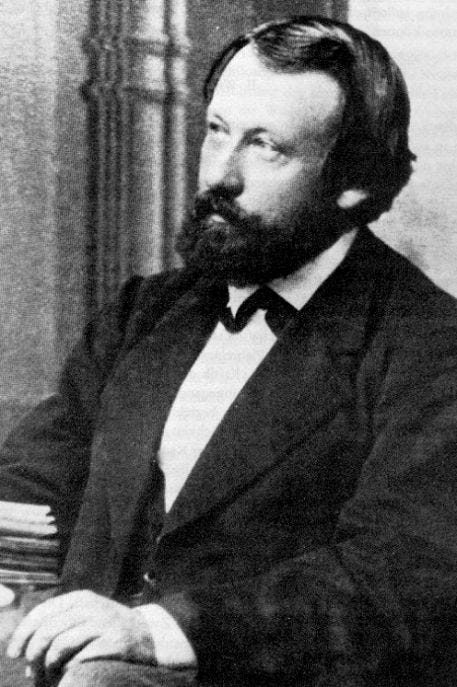
Dilthey of course makes many generalizations, but a number of deceased and contemporary philosophies do fit neatly within these categories. Naturalism is without question the prevailing wisdom of today, permeating every cubic inch of our technological culture. The freedom of idealism entails the traditional and/or religious reaction, promoting a dualistic conception of a human soul or consciousness that firmly separates it from nature. Between them exists subjective idealism, which while rarer, can nonetheless be found today in intellectual circles promoting conceptions of pantheism or monistic philosophy.
Whereas Dilthey operated purely on the realm of the metaphysical, our partition at hand will strike a similar chord, but instead dealing with the line where the biological meets the metaphysical. What can these three philosophies of life offer us in terms of man’s relation to nature, where do they err, and how do they contradict? We will begin first with Lebensphilosophie.
Lebensphilosophie
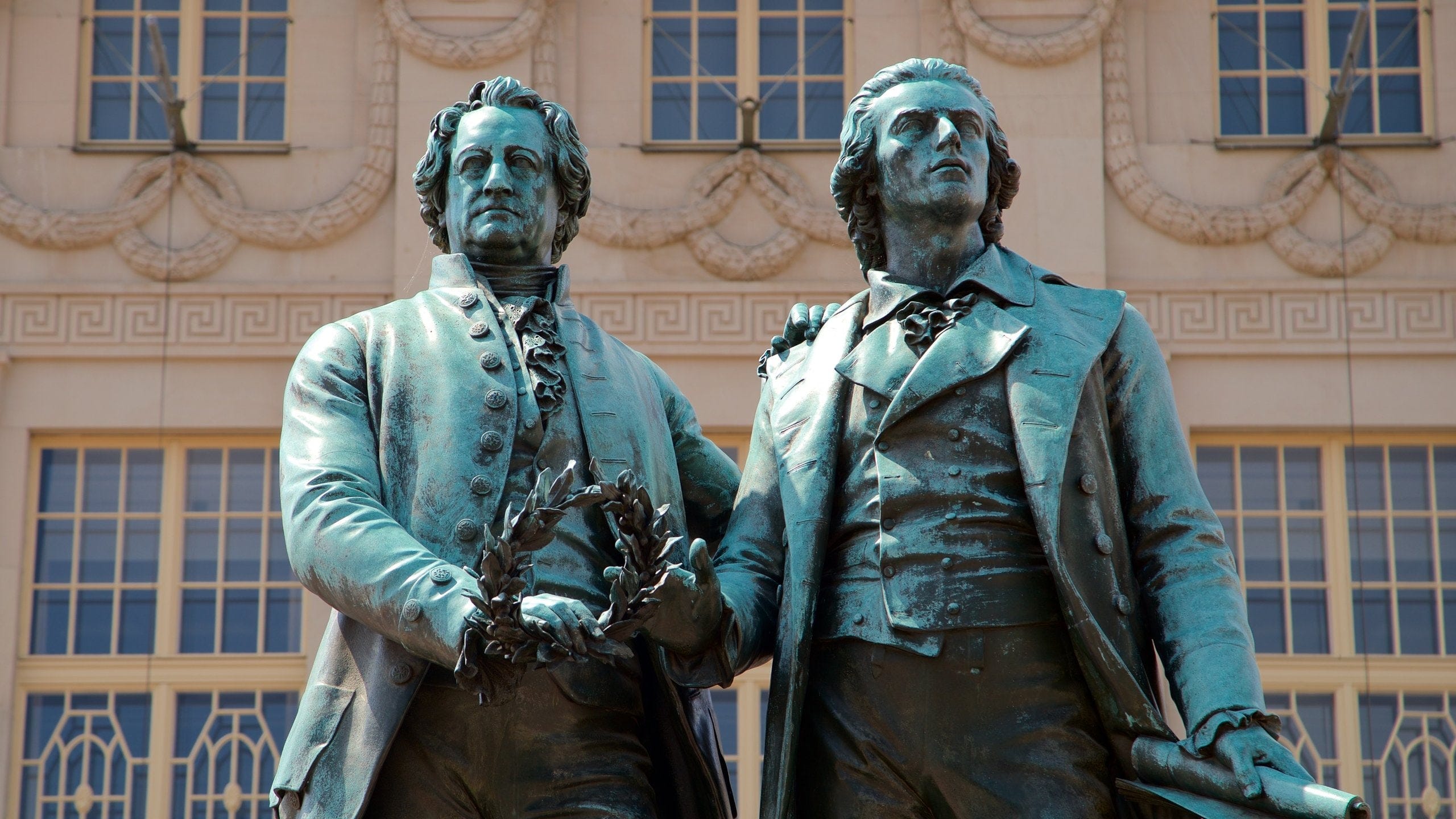
In Germany, a movement had been ongoing for a century by the time of Darwin that almost seemed engineered as an anachronistic response to his theories. In response to the Enlightenment values of scientism, rationalism, and progress, the German Romantic movement born of Goethe, Schiller, Hölderlin, and Schelling was well underway. For these men, the Enlightenment was no longer capable of properly describing and illustrating the human condition; it had removed the element of human experience and individuality from the equation entirely in search of objectivity. While the rationalism found in France and England at the time removed man as a subjective roadblock, the Germans turned inward, viewing the internal subjective experience of life as the only true known quality, and philosophy’s bedrock. Here the pure human experience took primacy over an aloof rationality, even on scientific matters themselves:
The ultimate goal would be: to grasp that everything in the realm of fact is already theory. The blue of the sky shows us the basic law of chromatics. Let us not seek for something behind the phenomena… they themselves are the theory.
—Goethe, Scientific Studies (Maxims & Aphorisms), trans. Douglass Miller
How the Romantics approached science—something they were by no means afraid to do4—entailed confident rejection of the manner in which empirical sciences greatly distances the observer from the phenomenal, and a lauding of the poetry found in the individual’s own experience of nature. Such was a sentiment which continued to germinate within the fledgling German nation over its first century, soon becoming a generalized approach to and understanding of nature—Lebensphilosophie, the philosophy of life. This was the worldview of titans such as Nietzsche: an embodied affirmation of life, not merely of biological life, but of life as it is experienced by man… its will, its ecstasy, and its tragedy.
Life for the Lebensphilosopher—and this is especially true of figures such as Goethe and Schiller—is not a product of random natural mechanics, but a type of process which can only be understood within itself through its inborn intuition and will. What is meant by this sentiment is twofold: First, it states that “mechanics” cannot satisfactorily explain more the human relation to aesthetics (indeed, Kant excluded this specifically from his Wissenschaft), such as beauty, taste; or particularly for Henri Bergson, laughter. Secondly, it is a faithful inheritor of earlier philosophical movements in that subjective internal experience is the only rational given. From this arises the conclusion that any proper understanding of life can only be apprehended from such an internal inquiry into the experience of nature. What remains in this distinction for man is essential: his freedom. Dilthey elected Schiller has the poet of his idealism of freedom, and in Schiller’s works we see such a fair wisdom:
But Man can be at odds with himself in a double fashion: either as savage if his feelings rule his principles, or as barbarian if his principles destroy his feelings. The savage despises Art and recognizes Nature as his sovereign mistress; the barbarian derides and dishonours Nature, but—more contemptible than the savage—he continues frequently enough to become the slave of his slave. The cultured man makes a friend of Nature and respects her freedom while merely curbing her caprice.
—Schiller, Fourth Letter on the Aesthetic Education of Man (1795)
To repeat an earlier point, a philosophy built for the human experience predictably does wonders for those concerned with the human experience as such. But what does it tell us about the fundamental nature of life itself, which this philosophy alleges to detail? We return back to our humble slime molds to serve as an appropriate illustration of these positions. The application of scientific rationalism finds a purely molecular, mechanistic explanation: genes encode for proteins, which trigger reactive cascades in response to internal and external chemical stimuli such as starvation. More chemicals are excreted, drawing in its peers which are bound by yet more proteins, yet more enzymatic reactions and signaling pathways. The “gene-centric” view of biology states that in its death and reproduction of the reproduction it fulfills the things it was encoded by its very nature to achieve, and there is little sense of a mystery. What can be said of “the freedom in the internal apprehension of life” here?
A philosopher of life may reply here by pointing to the peculiarity of an organism choosing to act in such a way, from which arises an incredulity to the notion that mere signals could fully explain the why of life in this scenario. Perhaps there is underneath all of this, unknown to the blind eye of natural science, a wholistic animating force of life which drives such events.
Vitalism
It is here we introduce a third philosophy of life, bisecting Lebensphilosophie and the natural sciences: biological vitalism. I am sure to address it now specifically as such biological vitalism, because there exists a number of different “vitalist” philosophies, some of which are explicitly human-focused and have little to do with biological life. It is often the case that an individual will address himself as a vitalist simply upon the premise that he affirms a “yes to life” as a prophet once said, but here I address a more specific tradition in relation to natural life. Biological vitalism is a quasi-scientific metaphysical tradition which highlights a certain type of “vital force” within life that separates it from purely material or mechanical forces. It is such a vital force which grants life both its origin and nature, otherwise inexplicable by modern science. Peculiarly, it simultaneously rejects natural science while attempting to engage in it at some level, perhaps aiming to replace it with a science of its own.
The “vital force” has seen a number of different names and interpretations across human history. Some have labeled it vril, in Taoism it is Qi, in Vedic texts prana and/or soma, and for the Stoics and later Europeans it flew under the color of pneuma. Each of these concepts represent the same essential idea that biological life is firstly not explained by material forces, and secondly that it is instead driven by one of these vital forces. Such a force is responsible for the mysterious wills and drives that differentiate even the most simple organisms from simple molecules, such as a will-to-live, regeneration, and self-integration.
Perhaps the best known theory of vitalism belongs to Henri Bergson, a proponent of his own vital force known as élan vital. Following him came Hans Driesch, offering his own vital force under the umbrella of what he called “entelechies”, forces which actualizes life from purely potential material. The vital force in these descriptions acts as a self-actualizing principle, which animates life from matter by actualizing a potentiality. Such a force implies a sort of orthogenesis, a tendency for matter to organize itself to increasingly higher and more perfect forms. Aristotle emanates off of these pages very clearly.
Bergson was careful to keep élan vital in a category of its own, distanced a fair deal from the natural sciences. Yet following thinkers were confident they could find such a vital force under the microscope as a quantifiable phenomenon, provable by testable hypotheses. In a peculiar turn, biological vitalism began to try to repeal the findings of natural sciences by engaging in its own methodology. These biological vitalists began criticizing earlier philosophers of life for not being sufficiently materialist, and searched for the nature of life in novel pseudosciences. Such a sentiment is evident from one biological vitalist, Wilhelm Reich:
“Between 1919 and 1921, I became familiar with Driesch’s ‘Philosophie des Organischen’ and his ‘Ordnungslehre’… Driesch’s contention seemed incontestable to me. He argued that, in the sphere of the life function, the whole could be developed from a part, whereas a machine could not be made from a screw… However, I couldn’t quite accept the transcendentalism of the life principle. Seventeen years later I was able to resolve the contradiction on the basis of a formula pertaining to the function of energy. Driesch’s theory was always present in my mind when I thought about vitalism. The vague feeling I had about the irrational nature of his assumption turned out to be justified in the end. He landed among the spiritualists.”
—Reich, Genitality in the Theory and Therapy of Neurosis (1927)


Baron Carl von Reichenbach was an early proponent of what he coined as the Odic force, after the Germanic god Odin. Rather than associating it with metaphysical concepts such as Qi or prana, von Reichenbach and his supporters saw the Odic force as an electromagnetic phenomenon specific to life, emanating a faint blue-hued light in total darkness. Following him came Reich and his concept of “orgones”5, a massless magnetic force which permeated all of existence and actualized life from dead matter. Just as he had promised, Reich’s endeavor was almost entirely scientific, producing testable hypotheses and quantifiable results. New-age websites of today are rife with boastful presentations of these confidence intervals and p-values of proof of life’s vital soul.6
One wonders if this is merely a nebulous reinvention of the soul, done so in so many knots and twists to allow its existence under the modern hegemony of the natural sciences. Further, it remains an essential question as to what is resolved about the problem of materialism through the promotion of a purely material “organizing principle”. On these grounds, vitalism has been consistently charged with a fleeting and inconsequential character. Julian Huxley summarized the modern scientist’s contempt of such an approach with a famous quip: “To say that biological progress is explained by the élan vital is to say that the movement of the train is ‘explained’ by an élan locomotif of the engine.” If the vitalist is indeed attempting to elaborately redefine the soul under the impersonation of natural science’s own concepts such as free energy or electromagnetism, then he has been caught in the act red-handed.
Even in its effort to strike a balance between Lebensphilosophie and natural science, it cannot meet the strict demands of either. By the middle of the 20th century, scientific attempts to enshrine biological vitalism had ceased entirely. It does not offer much to Lebensphilosophie’s poetic interpretation of life and freedom, and to the natural scientist, a far more egregious violation of its principles are at hand. Vitalism, in its insistence of the autonomy of biology and the uniqueness of life contrasted with mere matter, displays a readiness to accept an ultimate discontinuity among aspects of the universe. There can be no greater sacrilege among the prevailing philosophy of the natural sciences, which offers a fundamental unity of all things and a mutual intelligibility of all sciences.
This discontinuity is a glaring weakness in the biological vitalist’s armor, and in a way contradictory to the entire enterprise: it is a core belief of vitalism that life must be looked at from a wholistic viewpoint to properly understand its nature and origin, but is unable (and unwilling) to coagulate life with the rest of nature by that very wholistic framing. Perhaps for many vitalists, this is essentially the point… to cut off scientific rationalism at the trunk and create a clearing for more preferable religious and metaphysical systems to propagate. For instance, one of Bergson’s criticisms of modern science is its evaluation of a “space-time continuum”—where time and matter are intertwined and relative to one another—in favor of his dualistic conception of durée, which distinguished time as phenomenologically distinct from space. Here, too, would dualist thought struggle to communicate with science; Bergson’s critiques of the contemporary Albert Einstein received little popularity.
Natural Science
We assume, as it has been assumed for the topic insofar, that the reader has an implicit familiarity with what natural science represents and how it operates. Indeed, of the three philosophies of life, none enjoy the cultural and technological hegemony over our contemporary lives than it. But a number of theories bear a needed mentioning particular to this division between philosophies of life, and what specifically it offers beyond merely hand-waving off the metaphysical as untestable.
Our two earlier philosophies bore a sort of dualism in varying degrees. For the Lebensphilosopher, life belonged to a category of its own entirely, offering in that distinction a way for human vitality and freedom. For the biological vitalist, life more generally possessed a fundamental organizing principle that did not operate upon mere material. But for the modern scientist, the distinction between life and material is fiction. What separates the complex mind reading this text and the protons of distant stars is merely a matter of degree, and not by kind. The earlier case provided by the model organism D. discoideum certainly applies to this count, but we can illustrate something more essential. Today we possess robust scientific theories that operate right upon the threshold between life and matter, and conclude it to be but a small part of one giant physical process stemming from the act of Creation. Here we speak of theories pertaining to abiogenesis, which purport to answer in its own blunt way the origin and nature of life.
It is assumed here that the reader is accustomed to the theory of evolution and abiogenesis in the most general sense, including experiments such as that of Miller-Urey and theories such as RNA-world7. Starting here, critics are happy to point out that these do not exactly show a continuous mechanism which could explain life, and in a way they are correct. However modern science has been able to produce such a mechanism that shows a seamless gradient between molecular chemistry and life, including the odd implication that chemistry itself behaves as a sort of life.
Primitive life requires a few fundamental (perhaps metaphysical, if a vitalist is inquired) qualities to count as under such a classification. A hypothetical ur-life must: 1.) metabolize, taking in energy and processing it to some other output, 2.) be self-integrated into a closed system of reactions, and 3.) be self-sustaining and self-replicating over multiple “generations”. Modern science has been able to satisfy all of these conditions within simple chemical networks known as autocatalytic sets. In such a system, the reaction is sustained (or catalyzed) by molecules which themselves are produced at some point in the reaction. A very simple example of this is the decomposition of arsine, which is catalyzed by the arsenic produced in the reaction (2AsH3 → 2As + 3H2). Several studies have capitalized on this theoretical framework and produced a number of ways from which random chemical reactions can produce basic hereditary components of life, such as through template replication or RNA-enzymes8.
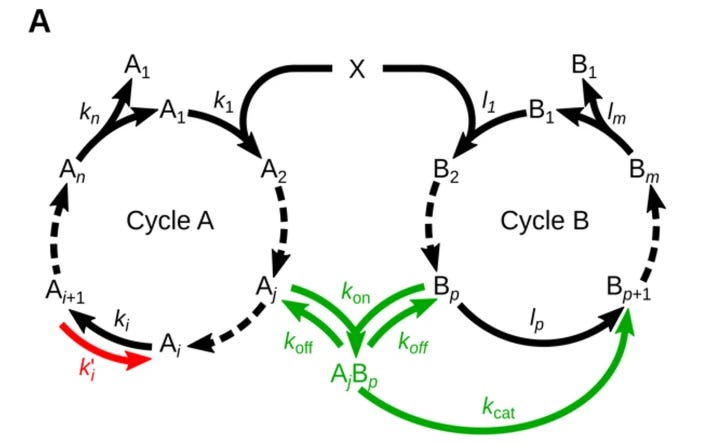
The relevance of this to our discussion is thus: what is most peculiar about this theory is that it allows for evolution event at the level of these simple molecular reactions, which few would dare to call “living”. These sets are self-replicating, meaning they can produce new generations. The introduction of a molecular form of genetic drift, or random interference, can slightly alter these sets and provide variation within a population. The sets that were negatively altered become chemically unstable or metabolically inferior, slowly replaced by the sets that were positively altered to be more efficient with its use of energy and ability to replicate. Richard Dawkins had once hypothesized such a primitive form of life, which transitioned into the gene:
Darwin’s theory of evolution by natural selection is satisfying because it shows us a way in which simplicity could change into complexity, how unordered atoms could group themselves into ever more complex patterns until they ended up manufacturing people[…] At some point a particularly remarkable molecule was formed by accident. We will call it the Replicator. It may not necessarily have been the biggest or the most complex molecule around, but it had the extraordinary property of being able to create copies of itself.
—Dawkins, The Selfish Gene (Ch. 2, The Replicators)
In a way we ourselves are such an autocatalytic set, along with the rest of past, current, and future life as it is known. No individual part of our bodies or cellular machinery are capable of self-replication without assistance from other parts of the whole, and it is the set as a whole which must be replicated including all of its constituent parts for the set to continue function in perpetuity. Who knows what else this could be applied to? The simple point is thus: despite our reliance on firm distinctions between various forms including ourselves and the Earth, modern science promotes evidence that these are illusory. The only possible conclusion of such a brutally materialistic philosophy horseshoes into a remarkably metaphysical one: monism.
No one recognized this more than “The German Darwin” Ernst Haeckel, himself an essential promoter and defendant of Darwin’s evolutionary theory from his seat at the University of Jena. As an aside from his zoological work, he founded the Monistenbund, an intellectual league in Germany which aimed to promote a monistic philosophy which natural science left no option but to accept. Echoing Dilthey, he aimed to establish “a natural Weltanshaaung”, embodying the “subjective idealism” that Dilthey associated with Spinoza and Giordano Bruno. Indeed, Haeckel himself was a firm proponent of both of these individuals:
We have at least attained to a clear view of the fact that all the partial questions of creation are indivisibly connected, that they represent one single, comprehensive “cosmic problem,” and that the key to this problem is found in the one magic word—evolution. The great questions of the creation of man, the creation of the animals and plants, the creation of the earth and the sun, etc., are all parts of the general question, What is the origin of the whole world? Has it been created by supernatural power, or has it been evolved by a natural process? What are the causes and the manner of this evolution? If we succeed in finding the correct answer to one of these questions, we have, according to our monistic conception of the world, cast a brilliant light on the solution of them all, and on the entire cosmic problem. […]
The monistic idea of God, which alone is compatible with our present knowledge of nature, recognizes the divine spirit in all things. It can never recognize in God a “personal being,” or, in other words, an individual of limited extension in space, or even of human form. God is everywhere. As Giordano Bruno has it: “There is one spirit in all things, and nobody is so small that it does not contain a part of the divine substance whereby it is animated.” Every atom is thus animated, and so is the ether; we might, therefore, represent God as the infinite sum of all natural forces, the sum of all atomic forces and all ether-vibrations. It comes virtually to the same thing when (as was done here by a speaker on a former occasion) God is defined as “the supreme law of the universe,” and the latter is represented as the “working of universal space”.
—Haeckel, Die Welträthsel (1899)

This is an encapsulation of the stance of the natural sciences: a harmony between all things, which can be ascribed to natural laws simple enough to fit on a chalkboard. It was to the Monistenbund in a series of private lectures that one Albert Einstein proposed such a unifying law of nature, uniting Mayer and Lavoisier under a single equation: E = mc2.9
Closing Remarks
We arrive at a point of conclusion, where the irreconcilable nature of these philosophies of life and their effects on human society become evident. Natural science has offered a relentless barrage of inescapable realities of the world, offering itself as a selection pressure of its own against which few philosophies and traditions have survived. Multiple responses have been leveled against the assault on older systems, and they are not all identical.
The Lebensphilosopher is cautious about its engagements, aiming to maintain the element of human experience in freedom—particularly through aesthetics—and gives natural science its due only when needed. It was Goethe who put the human experience to paper in a way that no man since has been able to, but it was also Goethe who was credited by Haeckel himself as one of the first and foremost theorists of biological evolution.10 However, the modern scientists remain explicit about what they think about “the soul”, and its relation to the body: a meaningless abstraction of material forces, which dies alongside the body it purports to organize. The Romantics would find little company in such a cold conception.
The Vitalist attempts a new strategy in defeating the modern scientist on his own terms, offering quantifiable evidence of the philosophies of the ancients. As a cost of its approach towards natural science, it is inflicted with a cost of distancing away from the Lebensphilosopher, offering little substantive in service to “the human experience” and worrying more about electromagnetic organizing principles. Yet as discussed before, its inherent dualism conflicts with the essential spirit of science, which seeks to establish a mutual intelligibility among all philosophies and establish a single, unified description of the world.
As for the natural scientist, we should be careful to depict him as an uncontested victor. Men such as Ludwig Klages were well aware of modern science’s tendency to aggregate all of reality under a single whole, and had a few choice words. In its tendency to coagulate all into one, it has killed the very vitality and essence of the life it wishes to quantify and described. To him natural science renders life as a moribund and defunct blob of bouncing particles, and in an ironic twist only reinvents the problems of the religious traditions natural science has scalped:
Spirit’s essentially monotheistic tendency can be witnessed in the pronouncements of the numerous scholars who seem to be compelled to subordinate everything that exists to one regnant principle. Spirit aims at universal rule: it unites the world under the ego or under the logos. When spirit attained to hegemony, it introduced two novelties: the belief in historical progress on the one side, and religious fanaticism on the other. The spirit utilizes force to eliminate all possible rivals. Over the warring and agitated primordial forces, spirit erected the tyranny of the formula: for some it announces itself as the “ethical autonomy of the individual”; the Catholic Church, on the other hand, still relies on the idea of holiness.
There is a knowledge that kills and a knowledge that awakens. The first can be seen in the verbal jugglery of our intellectuals; the second blossoms in the dithyrambic creativity of the poet and the visionary. As has been said of the latter type, he lives his life to the full as long as he inhabits the earth. He renews himself as if by a perpetual series of rebirths. The other sort is merely the mummified ash-heap of a once-living fire, the fossilized relic of a perished substance. His knowledge does produce mechanized results, but as he manipulates his carcasses, he speaks as if this dead matter were yet among the living. One sees with horror how he deludes himself into believing that he finds life only within his clockwork mechanisms.
—Ludwig Klages, Rhythms and Runes (1944)
It is difficult to criticize this sentiment, which can be found in both the Vitalist’s and Lebensphilosopher’s reply to men such as Haeckel (a near-contemporary of Klages’). Modern science has indeed crushed traditions into their graves, along with them their utility and benefits. But Klages’ project is perhaps a rare exception to our tripartite division, in which he offers Life itself as its own metaphysical principle. This must be left aside for evaluation in future projects. What will be noted here, in a reminder to Klages’ sentiments, is that myth and poetry is only valuable insofar it retains the ability to speak to truth in ways common discernment may not.
One claims an affront to poetry, a second denounces an assault against data, and the third attempts a scientific proof of the metaphysical. It is not my place to settle for all of human history which is to be declared victor. Which of the approaches that individuals and our collective culture come to reply upon can be assured to change and be reevaluated in terms of their importance, just as it had done so in all of the preceding peoples civilizations.

See Evolutionary crossroads in developmental biology: Dictyostelium discoideum https://pmc.ncbi.nlm.nih.gov/articles/PMC3014629/
Prior to Darwin’s time, something approaching a theory of evolution was already assumed given the discrepancy between modern and historical fossil records of living species, such as elephants. In context of religion, or more specifically biblical literalism & Genesis, it was already accepted that the Earth was some billions of years old, with multiple extinction events leading up to the arrival of humans. See this article on the life and work of geologist Charles Lyell.
The Romantics took scientific endeavors incredibly seriously and are accurately accredited with the formation of many modern scientific theories. Goethe’s theories on color (which Schopenhauer assisted him with) and plant morphology, for example, are foundational to modern science.
“Vital medicine” remains popular today, and this is particularly true for orgones. Pyramids, crystals, chambers, and electronics which purport to capture and concentrate orgones upon the body are common sights in alternative medicine shops.
Journals dedicated to the research of orgones and other vital theories still exist today, publishing research in frequent intervals. See this study for an example.
See this pop-science article for a quick brief on RNA world if needed. Aside from this, the technical material on RNA world and the earliest stages of life are very interesting. Nick Lane’s introductory book The Vital Question is a worthwhile read here.
Template replication can be thought of the base-pair replicating quality possessed by RNA and DNA, and the origination quality is essential to getting to an “RNA world”. See this excellent paper on autocatalysis and template replication.
See the above linked article of mine on Haeckel for further reading.
Haeckel: “Pre-eminent among [evolutionary theorists] was the great German poet and philosopher, Wolfgang Goethe, who, by his long and assiduous study of morphology, obtained, more than a hundred years ago, a clear insight into the intimate connection of all organic forms, and a firm conviction of a common natural origin.” See this page for more aphorisms related to Goethe and evolution.


Every time you post I feel a little more ignorant of German philosophy and my reading list gets a little longer. If you ever publish a book exploring these kinds of threads, I would certainly buy it.
I don’t know why you keep trying to depict idealism as dualistic when almost no idealistic philosophers are dualist in nature, nor why you associate “pantheism” or monism with an extremely exclusive and particular subjective idealism.
Idealistic philosophy suggests that material or empirical phenomena are condensed instances of mind or spirit. Any philosophy suggesting otherwise runs into the interaction problems. Can you give me one example of any major western idealist theories that are ontologically “dualist”?