


Paganism and Public Religion
A Reply to David Herod at Tooky's Mag

It can often be difficult to keep up with the movement and changing of dialogue in regards to the recent thrust of paganism and an interest in it within communities. Luckily, these discussions have (so far) followed roughly the same plot in each community they take place, and I have partaken in them a few times before. There is first this strange, hyper-political element that introduces itself into a community, and is rejected upon that basis. “This isn’t a religion, it’s aesthetics, it’s LARP, it’s race politics playing dress up”. Nevertheless, this element doesn’t go anywhere, and discussions about “paganism” start to formalize. Only here, and this may take months or years to occur, is paganism treated as a genuine presence which operates precisely upon what its practitioners say it operates upon.
This app’s reincarnation of that discussion is somewhere in the mix of those two ends. We can see this best in a recently published article at Tooky’s Mag, which tries to play both ways. Rather than simply handwaving it as LARP, the writer David Herod handwaves it off as LARP with an argument based on his understanding of what paganism is. The thesis is essentially this: paganism, because it is so necessarily decentralized and personalized, can’t be seen as a religion in any real sense of the word. To quote his conclusion:
Perhaps someday there will be a common pagan creed and a leader capable of driving it into a new structure, but then it would be a fundamentally different religion. But in the meantime I can only encourage people not to waste their time engaging with pagans — not out of any malice or lack of respect for their intelligence (many are brilliant and sincere people), but simply because in a political sense you may as well be talking to the birds.

To reduce this down even further, the point is that paganism cannot be a public religion. Whenever it attempts to coalesce into a “church”, it has a number of practical and metaphysical problems prevents this from occurring, and so Herod concludes that it simply never will coalesce. Further and more seriously, it becomes impossible to nail down what paganism “is”. Allow me to cut to the chase and say that this is indeed a huge problem, but Herod leaves a few things unconsidered.
First, this is not a problem unique to paganism, but as Fortissax had alluded to in the original article, a problem fundamental to Western civilization’s philia of secularism. Christianity is certainly by no means immune to it, and in fact is this problem’s very progenitor. Secondly, historical paganism is rife with examples of public religions maintained by a central authority, and to a degree that would be incomprehensible to a modern practitioner. If anything, our problem would be that we do not go to such a length, not that this option isn’t available. Thirdly, the presence of this problem splits modern religion, Pagans and Christians alike, into two camps: eclectic and traditional religion. Given that we are both in the latter camp, and provably so, the attempt to “cut off” any discussion over the idea that we would be necessarily eclectic is retrospectively silly. Let us go over these points in more detail.
1.) Paganism Does Not Uniquely Suffer From Atomization, and the Nicene Creed is Dead
The central thrust of this article is Herod’s contrast of Christianity and paganism, with the former providing structure, hierarchy, and unity through things such as the Nicene Creed, while paganism lacks anything of the sort. Once again, purely from an observational basis I cannot deny that currently paganism suffers from a lack of the structure necessary for a public religion. But to exclaim that this is a problem particular to paganism shows that Herod is not familiar with the recent history of Christianity, or the dire straits religion is in within the West more generally.
Arguably one of the most important articles on religion in the West is Robert Bellah’s 1964 Religious Evolution, and I have used it extensively in my writings over the years. Bellah gives a generalized trajectory of the “evolution” of religious attitudes as it progressed from hunter gatherers, to ancient civilizations, to medieval Christendom, to the Reformation, and to today. He typifies “modern religion” precisely by this problem of atomization, featuring a flat rejection of orthodoxy, an infinite multiplication of religions as numerous as individuals, and the loss of mutual intelligibility between these highly individualized religions. See the below article for a more in depth summary.

He writes:
To concentrate on the church in a discussion of the modern religious situation is already misleading, for it is precisely the characteristic of the new situation that the great problem of religion as I have defined it, the symbolization of man's relation to the ultimate conditions of his existence, is no longer the monopoly of any groups explicitly labeled religious. However much the development of Western Christianity may have led up to and in a sense created the modern religious situation, it just as obviously is no longer in control of it. Not only has any obligation of doctrinal orthodoxy been abandoned by the leading edge of modern culture, but every fixed position has become open to question in the process of making sense out of man and his situation. This involves a profounder commitment to the process I have been calling religious symbolization than ever before. The historic religions discovered the self; the early modern religion found a doctrinal basis on which to accept the self in all its empirical ambiguity; modern religion is beginning to understand the laws of the self's own existence and so to help man take responsibility for his own fate.
American Sociological Review, Vol. 29, No. 3 (Jun., 1964), p. 372
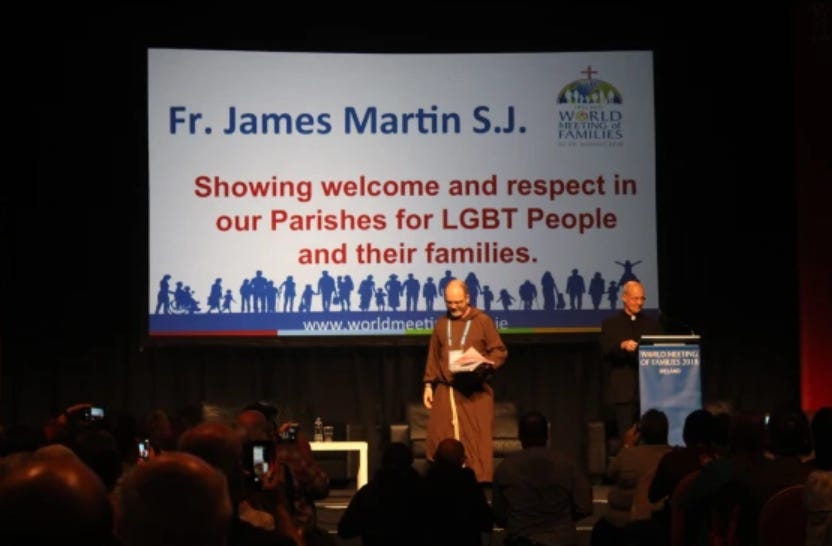
As Bellah had shown, the religious landscape of Western society is suffering from a problem of institutional authority. We are all living in the consequences of the Peace of Westphalia. Orthodoxy means nothing to modern peoples: as Jefferson had stated, “I am a sect myself.” Why would I submit myself to the Catechism when I can see the damage that the Church teaching on immigration has done to my people? Why would a leftist go to church when the God in their head wouldn’t scold them hosting a lesbian book club? On that point, what gives you the authority to promote the “traditionalist” message of Christianity while James Martin enjoys all of the pontifical support in the world to promote the precise opposite? Sure, objective morality and metaphysics and all the sort, but I as a pagan would say exactly the same to your charge against me: the truth is there, was there, and we will build it. But we are talking about institutions here, and as it turns out, neither of us have one.
The State of Theology is a report curated and published by Ligonier Ministries and LifeWay Research, which assesses the ability of American Christianity to adhere to orthodoxy. Each report is abysmal. According to the latest 2022 report, nearly every Christian in America is a heretic: 51% believe God changes and adapts, 71% are Pelagians — believing that humans are born innocent, 56% disagree that Christians even have an obligation to go to Church, and 46% believe that the biblical condemnation of homosexuality no longer applies today. To say the least, the idea that Christianity provides its practitioners with any sort of orthodoxy, any sort of coalescing or unifying medium, is utterly kidding itself. These things exist only on paper, and the collapse of Christianity in the West can certainly be correlated to these changing beliefs. Sure, the Creed exists and every denomination has an arsenal of ways of enforcing it. So why haven’t they? Even where authority is available, it is not utilized.
I’ll put it more simply at this. What good is the fact that Christianity has a Nicene Creed, which states that Christ was “begotten, not made, consubstantial with the Father”, when 73% of American Evangelicals profess the Arian heresy by believing that Jesus was made by God, the exact thing Nicaea was called to tackle in the first place?
Clearly, we must widen our scope of this problem rather than placing at the feet of paganism. The fact that we are all in this same boat strongly indicates that this is not a problem of pagan metaphysics, but of Western civilization itself.
“I do not believe in the creed professed by the Jewish church, by the Roman church, by the Greek church, by the Turkish church, by the Protestant church, nor by any church that I know of. My own mind is my own church.”
Thomas Paine, The Age of Reason
2.) Historical Paganism Contained Numerous Examples of Centralized, Public Religions
If decentralization is a uniquely modern problem, then we would expect that the median of any of our ancestors would have a different approach to religion, including our distant pagan ancestors. Of course one could argue that the centralization was a uniquely Christian invention as Herod has. However, we have a number of anecdotes from historical paganism to suggest otherwise.
Firstly, we must make an important distinction between “paganism” and specific iterations or pantheons of it. Paganism is a religious framework, not necessarily a religion per se. Shintoism and Hinduism are both pagan religions and exemplify the religious attitudes of that framework, but neither could be referred to as a singular “paganism”. When we use this term, it is assumed that we mean the specific cultural iterations that we would belong to. I can certainly find mutual intelligibility in terms of religion with Alaskan natives or perhaps even Aboriginals, but never would I endeavor to form a singular, cohesive “religion” that encompasses all of pre-Christian humanity. The underlying reality may be the same, but how we perceive it and the traditions set in place to retain that understand is too different for any “unity” to this extent to be plausible. To accuse pagans of failing to do so is to accuse us of not having Christian metaphysics and a belief in universalism; well, guilty as charged. We have our own set of beliefs.

With this clarification in mind, we can see more clearly how the pagan religions of historical peoples enforced belief. The Romans placed all matters of religion in the hands of the College of Pontiffs, headed by the Pontifex Maximus, who eventually became the Emperor himself (as a subtle reminder, being grafted onto this framework is of course where much of Christianity’s institutional authority comes from!). So serious was the Roman belief in orthopraxy that the slightest error in ritual, as we are told by Livy, prompted the entire affair to be started over from the beginning following the resignation of officiants. Of course, the Romans allowed mystery cults and a degree of syncretism, but it was anything but “do what thou will”: cults or foreign intrusions which were too subversive to the Roman people were stamped out with ferocity, and indeed we see this in the early history of Christianity itself as the very hand that felled its many martyrs.
Deviations in belief such as disrespecting sacred groves or failing to honor the gods through proper sacrifices, even in decentralized peoples such as the Celts or Germanics, could have resulted in exile or death. Thus, even in less centralized pagan societies which were nowhere close to a modern “nation-state”, mechanisms existed to enforce shared beliefs and practices. These peoples utterly depended on the central authority that their pagan religion provided to survive as a people, and to suggest that they experienced the opposite effect that we have today is obviously incredibly silly.
One essential element of pre-Christian religiosity which we can dive further into was sacral kingship, the belief that the king was endowed with a certain spiritual significance and charged with ruling over both political and religious affairs. This belief survived well after Europe’s Christianization, exemplified by Henry VIII, Charles V, Louis XIV, and (as Evola had illustrated in Pagan Imperialism) Frederick II Hohenstaufen and his Ghibelline followers. So powerful was the ruler’s responsibility and authority over matters of religion that the conversion of the king meant the immediate conversion of his people by law, and we see this clearly with the conversion and baptism of the Frankish king Clovis I, the Norwegian king Olaf Tryggvason, and Constantine the Great. If pre-Christian peoples did not have a sense of orthodoxy and orthopraxy within their peoples, then the conversion of one’s king would’ve meant as little to them as the religious beliefs of our President does to us. Instead, it meant everything.


3.) We Do Share A Lot In Common, Actually
Herod later declares: “There can be no productive interfaith dialogue with pagans.” Disheartening given the level of interest in such a dialogue, but this too is incorrect. Even with this article, I can show that there are indeed a number of similarities, and here is a major one: There is an interesting tidbit buried in the middle of this article, where Herod makes note of “a resurgence of traditional Christian communities” in response to various criticisms against a form of Christianity which, he incorrectly asserts, these traditional forms are asymptomatic of in this regard.
Nonetheless, a pagan would find this thought process very interesting and familiar. A Christian is staking the future of his spirituality not on eclectic revisions of a base material, but a special emphasis on tradition, which can only be found in forms that stretch back as far in time to “the beginning” as possible. Where are Christians deriving their pontifical authority? From the Bible, of course! Evidently not: as Herod suggests, each individual may have a highly individualized reading of scripture, and requires some authoritative instruction. The average man is a terrible theologian. Authority, specifically institutional authority, is therefore derived from legitimate forms of the oldest, “truest to origin” Christianity available. It turns out that pagans are not the only ones practicing something like the Ancestral Principle, but rather, this is something fundamental to society, tradition, culture, and religion more generally.

This is purely a somewhat tongue-in-cheek way to say that this discussion is only possible because a vast array of our similarities is outright assumed and foolishly ignored. When you talk about paganism, you are not thinking of Wiccans or Satanists. When we think about Christianity, we are not thinking about those lesbian deacons in the pride flag-waving Episcopalian churches of Washington DC. Why would either of us ever initiate a conversation with any of those groups? As I had indicated earlier, we are in the same boat, driving for the same purpose with different conclusions. We are both seeking the reestablishment of cohesive, authoritative, and centralized public religions which guide and rule society. We are both faced against “eclectic” elements which seek to enshrine forever the principles of secularism, where the state and religion are mortal enemies, and where each man has his own God. So why is it that we can’t have “any productive interfaith dialogue”? On the contrary. We are sailing in the same direction, for now.
Christians believe we are worshipping demons and are called upon the Lord to save every single one of us from our foolishness. We see Christianity as at least a bloated corpse, and at worst a prion from a foreign culture which is leading to the destruction of our people. Despite the fact that we can never pretend we are the same group with the same objectives, our short-term ends are indeed the same and they are entirely significant enough to allow, at the very least, a dialogue. We are inches away of losing the idea of a religious tradition at all to secular humanism, forever. The more there are of us, either of us, than there are secularists and atheists, the better. It is important our arguments gain traction towards this end, and we must be willing to cast as wide of a net as possible while retaining the identity of our intentions.
Conclusion
The recent surge of interest in paganism has been interesting to watch, and I hope this article adds some much needed context and considerations as to what pagans believe and how we approach these issues. Further, I hope it shows Christians my approach to interfaith dialogue. I have no doubt our worldviews are too different to make us perpetual allies. However to suggest we have nothing to gain from one another simply isn’t the case. Neither of us are going anywhere soon, so it is best to at least leave the door open. The decline of public religion, the religion of the state, is something that we are forced to deal with. It is unclear if this is a course we can actually reverse. However, we both are committed to this end, and employ a number of arguments and movements to that end.
I would also like to remind readers that Christianity did not always enjoy the institutional authority and dogmatic fist that it wielded in the medieval. From the moment Christ was witnessed to have risen, it was embattled with heresies, local cults, and intra-institutional wars over trivial matters such as circumcision. It would be some 300 years before its beliefs, institutions, and administration would be firmly established, and 200 further until it found the strong arms of the Franks to enforce its authority upon the insolent in the West. It was never a granted fact that Christianity was to rule the West, and at certain points it was on the brink of extinction. At the very least, it would only be fair to give paganism the same grace period as it experiences the same growing pains.
We do not know what the future holds. But we are confident in our aims, and resolute in our intentions. We can only hope those seeking the same thing likewise are.
And once he heard a raging crowd,
Howl through the streets, and clamor loud
That somewhere existed a God behind
Man's foolish forehead in his mind.
And that He was greater and loftier too,
Than the breadth and the depth of the gods he knew.
The artist scarce noted the words of the throng,
He let his prentice boy run along.
But he himself continued to file
The stags of Diana without guile,
Hoping that worthily and with grace.
He might succeed to chisel her face.
Should any one hold a different view,
He might in all as he pleases do;
But the craft of the master he must not despise.
For in disgrace he'll end otherwise.
—Goethe, Great is Diana of the Ephesians


Interesting article.
I'm willing to concede there's some benefit in centralising religious decisionmaking, but like any form of centralisation it can go too far. If these institutions are allowed to grow to the scale of millions of people they will inevitably attract men who seek power for it's own sake, while the genuinely righteous will give up in frustration at the weight of corruption bearing down on them.
Centralised institutions must be bound to dunbar's number. If you don't at least know where the man deciding your doctrine sleeps then he's too far removed from you to be doing that job.