Advertisement
Advertisement

Asia

ASEAN ministers to hold meetings to address Middle East crisis

Officials will weigh impacts and responses to surging oil prices as well as disruptions to shipping, logistics and trade flows.

ASEAN ministers to hold meetings to address Middle East crisis

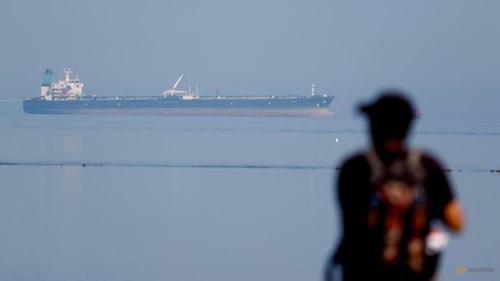
A foreign tanker carrying Iraqi fuel oil damaged after catching fire in Iraq's territorial waters near Basra, Iraq on Mar 12, 2026. (Photo: Reuters/Mohammed Aty)

12 Mar 2026 07:51PM (Updated: 13 Mar 2026 08:58AM)
Read a summary of this article on FAST.
FAST

MANILA: The widening conflict in the Middle East is expected to dominate discussions at Friday's (Mar 13) ASEAN economic ministers' retreat, with foreign ministers also holding a virtual meeting on the same day to tackle a deepening crisis that has upended global markets.

The Philippines, this year's ASEAN chair, is hosting the meetings as officials weigh impacts and responses to surging oil prices as well as disruptions to shipping, logistics and trade flows across the region's export-reliant economies.

"The concern is a given," Philippine trade undersecretary Allan Gepty told reporters, saying the region could not ignore the effects of the crisis on inflation and jobs.

Joint United States and Israeli strikes on Iran launched almost two weeks ago have so far killed around 2,000 people and have thrown global energy markets and transport into chaos.

The conflict has effectively shut the Strait of Hormuz, the chokepoint that funnels about a fifth of the world's oil and LNG to Asia, sending crude surging to above US$100 a barrel.

The crisis has forced ASEAN foreign ministers to call a special virtual meeting to assess the implications for Southeast Asia, where several economies rely heavily on crude and LNG shipments from the Gulf.

The Philippines sources much of its oil needs from the Middle East and Qatar's LNG halt has also tightened supplies.

Several ASEAN countries have already taken concrete steps to cope with the impact of the Middle East crisis.

The Philippines has shortened the government work week to conserve fuel, and its president has asked Congress for authority to suspend excise taxes on fuel to help stabilise costs.

Vietnam on Thursday cut its retail fuel prices overnight following the easing in global crude oil prices from earlier highs, but the government warned prices will remain volatile, with more supply disruptions anticipated.

Earlier this month, Thailand also halted energy exports to all countries other than Laos and Myanmar. "It is important that our actions and responses to the ongoing conflicts must be synchronised," Gepty said.

ASEAN foreign ministers have said that the escalation in conflict was "particularly regrettable" and urged an immediate cessation of hostilities, calling on all sides to exercise maximum restraint, protect civilians, and resolve differences through dialogue in line with international law.

Source: Reuters/dc

Sign up for our newsletters

Get our pick of top stories and thought-provoking articles in your inbox

Subscribe here
Inbox
FAST
Advertisement

World

US opens unfair trade practices probe of 60 countries over forced labour

Economies subject to the probe include China, Hong Kong, Indonesia, Japan, the Philippines, Singapore, South Korea, Taiwan, Thailand and Vietnam. 

US opens unfair trade practices probe of 60 countries over forced labour

A cargo ship full of shipping containers is seen at the port of Oakland in Oakland, California, US, on Feb 3, 2025. (File photo: Reuters/Carlos Barria)

13 Mar 2026 10:38AM (Updated: 13 Mar 2026 10:45AM)
Read a summary of this article on FAST.
FAST

WASHINGTON: The US Trade Representative's office said late on Thursday (Mar 12) it had initiated Section 301 unfair trade practices probes of 60 economies in relation to what it called failures to take action on forced labour.

President Donald Trump's administration has sought to rebuild tariff pressure on countries around the world after the US Supreme Court struck down his global tariffs as illegal on Feb 20.

"These investigations will determine whether foreign governments have taken sufficient steps to prohibit the importation of goods produced with forced labour and how the failure to eradicate these abhorrent practices impacts US workers and businesses," US Trade Representative Jamieson Greer said in a statement.

The list of 60 countries includes some major US trade partners and allies such as Australia, Canada, the EU, Britain, Israel, India, Qatar and Saudi Arabia. China and Russia are also on the list.

Other economies subject to the probe include Hong Kong, Indonesia, Japan, the Philippines, Singapore, South Korea, Taiwan, Thailand and Vietnam. 

Trump imposed a 10 per cent tariff for 150 days under Section 122 of the Trade Act of 1974 after the Supreme Court's ruling. 

On Wednesday, his administration said it was launching trade investigations into excess industrial capacity in 16 major trading partners.

Greer said on Wednesday the "Section 301" unfair trade practices investigation could lead to new tariffs imposed against China, the European Union, India, Japan, South Korea and Mexico by this summer. 

The US has already cracked down on solar panel imports and other goods from China's Xinjiang region under the Uyghur Forced Labor Protection Act signed into law by former President Joe Biden, and the probe could expand such actions to other countries.

Greer said he wanted other countries to enforce bans on goods produced with forced labour similar to those enshrined in a nearly century-old trade law.

The US alleges that Chinese authorities have established labour camps ​for ethnic Uyghur and other Muslim groups. Beijing denies allegations of abuse.

Greer said he hoped to conclude the Section 301 investigations, including proposed ​remedies, before Trump's temporary tariffs expire in July.

Source: Reuters/co

Sign up for our newsletters

Get our pick of top stories and thought-provoking articles in your inbox

Subscribe here
Inbox
FAST
Advertisement

World

US allows countries to buy Russian oil stranded at sea for 30 days

US Treasury Secretary Scott Bessent said the measure would not provide significant financial benefit to the Russian government.

US allows countries to buy Russian oil stranded at sea for 30 days

A tourist watches the MT Desert Kite oil tanker carrying Russian oil at Narara Marine National Park in the Arabian Sea, Gujarat, India, on Mar 11, 2026. (File photo: Reuters/Amit Dave)

13 Mar 2026 09:49AM (Updated: 13 Mar 2026 10:04AM)
Read a summary of this article on FAST.
FAST

The United States issued a 30-day licence for countries to buy Russian oil and petroleum products currently stranded at sea in what Treasury Secretary Scott Bessent said was a step to stabilise global energy markets roiled by the Iran war.

The announcement comes a day after the US Energy Department said that the US would be releasing 172 million barrels of oil from the strategic petroleum reserve in an effort to curb skyrocketing oil prices in the wake of the war in Iran.

That release was part of a broader commitment by the 32-nation International Energy Agency to release 400 million barrels of oil. 

The agency said earlier on Thursday (Mar 12) that the war in the Middle East was creating the biggest oil supply disruption in history.

Bessent, in a statement on X released hours after benchmark oil prices shot above US$100 a barrel, said the measure was "narrowly tailored" and "short-term" and would not provide significant financial benefit to the Russian government.

"The temporary increase in oil prices is a short-term and temporary disruption that will result in a massive benefit to our nation and economy in the long-term," Bessent said in the statement, echoing President Donald Trump.

Thursday's licence, which authorises the delivery and sale of Russian crude oil and petroleum products loaded on vessels as of Mar 12, will remain valid through midnight Washington time on Apr 11, according to the text of the licence posted on the Treasury Department's website.

The US Treasury previously issued a 30‑day waiver on Mar 5 specifically for India, allowing New Delhi to buy Russian oil stuck at sea.

Among other measures to tame energy prices, Trump has already ordered the US International Development Finance Corporation to provide political risk insurance and financial guarantees for maritime trade in the Gulf and said the US Navy could escort ships in the region.

In another attempt to control prices, the Trump administration is considering temporarily waiving a shipping rule known as the Jones Act to ensure energy and agricultural products can move freely between ​US ports, the White House said. 

Waiving the rule would allow foreign ships to ​carry fuel between US ​ports, potentially lowering ⁠costs and speeding deliveries.

"The president is taking every action he can to lower prices ... unsanctioned oil that's at sea to get that into the market, continuing to push our own producers to drill and expand production as fast and as far as they can, providing regulatory relief, and you're going to see more and more in the days to come," White House Deputy Chief of Staff Stephen Miller told Fox News' "Primetime" program on Thursday.

There were about 124 million barrels of Russian-origin oil on water across 30 different locations globally as of Thursday, Fox News reported, adding that the US licence would provide around five to six days of supply when taking into account the daily loss of oil from the Strait.

Trump said earlier on Thursday the US stood to make significant money from oil prices driven higher by the war, prompting criticism from some lawmakers who accused him of caring only about rich people.

US and Israeli strikes on Iran and the subsequent response by Tehran have widened regional tensions and paralysed shipping through the Strait of Hormuz, disrupting vital Middle East oil and gas flows and sending energy prices higher.

Raising the stakes for the global economy, Iran's Islamic Revolutionary Guard Corps says it will block oil shipments from the Gulf unless the US and Israeli attacks cease.

Source: Reuters/rl

Sign up for our newsletters

Get our pick of top stories and thought-provoking articles in your inbox

Subscribe here
Inbox
FAST
Advertisement

World

Qantas to pay US$74 million to customers for cancelled COVID-19 flights

Qantas to pay US$74 million to customers for cancelled COVID-19 flights

Travellers wait in line after verifying their COVID-19 vaccination status as they check in for a flight to Sydney, Australia on Qantas Airways inside the Tom Bradley International Terminal at Los Angeles International Airport on Nov 1, 2021, in Los Angeles, California. (Photo: AFP)

13 Mar 2026 09:11AM (Updated: 13 Mar 2026 09:18AM)
Read a summary of this article on FAST.
FAST

SYDNEY: Australia's Qantas Airways said on Friday (Mar 13) it would pay out A$105 million (US$74 million) to settle a class action alleging it misled customers and failed to provide ticket refunds for flights cancelled during the COVID-19 pandemic.

The class action on behalf of Australian passengers related to international and domestic flights cancelled by Qantas between 2020 and 2022.

Qantas had provided flight credits instead of cash refunds.

"Under the terms of the settlement agreement, Qantas has agreed to pay A$105 million, with no admission of liability," the airline said.

The deal is subject to court approval and will see the money to fund cash refunds paid to an administrator in the first half of 2027, Qantas said.

Echo Law, which brought the class action, alleged Qantas had "unlawfully benefited from customers by holding for years a very significant amount of customer funds that ought to have been refunded".

The court will provide details of how customers can claim refunds in the coming weeks, the law firm said on Friday.

Source: AFP/rl

Sign up for our newsletters

Get our pick of top stories and thought-provoking articles in your inbox

Subscribe here
Inbox
Advertisement

World

Oil price stays above US$100, Asia stocks fall

Brent crude inched further above US$100 a barrel after Iran vowed to attack oil resources in the Middle East and keep choking the Strait of Hormuz.

Oil price stays above US$100, Asia stocks fall

Liberia-flagged tanker Shenlong Suezmax, carrying crude oil from Saudi Arabia, is seen at the Mumbai Port in Mumbai, India, Thursday, Mar 12, 2026. (Photo: AP/Rafiq Maqbool)

13 Mar 2026 09:00AM
Read a summary of this article on FAST.
FAST

TOKYO: Brent crude inched further above US$100 a barrel and stocks fell in early Asian trade on Friday, after Iran vowed to attack oil resources in the Middle East and keep choking the Strait of Hormuz.

Having risen above US$100 on Thursday, Brent was up 0.20 per cent at US$100.66 at around 12.20am GMT, while West Texas Intermediate was flat at US$95.75.

In Japan, the Nikkei was down 1.4 per cent at 53,687.30 points while the Kospi in South Korea fell 2.2 per cent to 5,462.97.

With Gulf states slashing production and oil tankers stuck in the Gulf, benchmark oil prices have risen 40 to 50 per cent since the United States and Israel attacked Iran on Feb28, threatening to curb growth and stoke inflation.

CNA Games
Show More
Show Less

The Strait of Hormuz, a crucial waterway for crude, remains effectively shut.

Saudi forces intercepted dozens of drones on Friday and Israel came under attack from missiles launched by Tehran.

The International Energy Agency has warned that the Middle East war could lead to "the largest supply disruption" in the industry's history.

But US President Donald Trump wrote on social media that defeating Iran's "evil empire" was more important than crude prices.

Source: AFP/gs

Sign up for our newsletters

Get our pick of top stories and thought-provoking articles in your inbox

Subscribe here
Inbox
Advertisement

World

Iran says it will make US regret war as oil prices soar

"While starting a war is easy, it cannot be won with a few tweets. We will not relent until making you sorry for this grave miscalculation," says Iranian security chief Ali Larijani.

Iran says it will make US regret war as oil prices soar

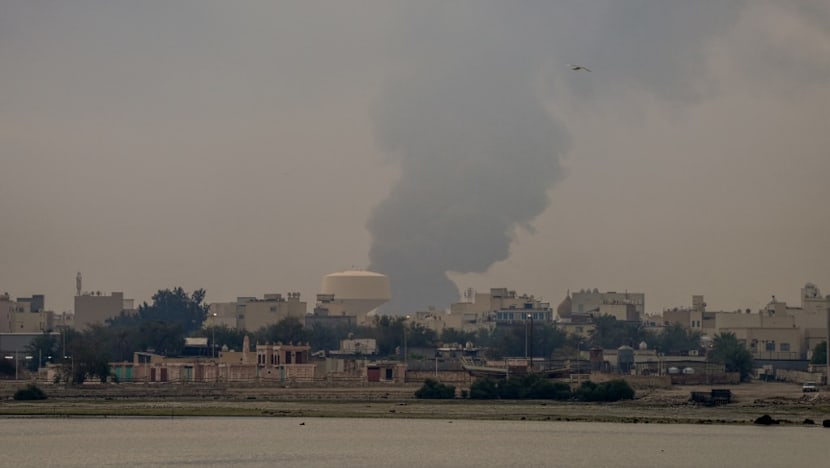
A plume of smoke rises after a reported Iranian strike on fuel tanks in Muharraq on Mar 12, 2026. (Photo: AFP/Fadhel MADHAN)

13 Mar 2026 08:43AM (Updated: 13 Mar 2026 09:22AM)
Read a summary of this article on FAST.
FAST

TEHRAN: Iran vowed Thursday (Mar 12) to make the United States regret attacking the Islamic Republic and said it would keep up a chokehold on the Strait of Hormuz that has sent oil prices soaring.

The International Energy Agency warned that the Middle East war could lead to "the largest supply disruption" in oil industry history, but US President Donald Trump wrote on social media that defeating Iran's "evil empire" was more important than crude prices.

Trump has faced intense political pressure as the global economic fallout of the crisis has mounted, and he has given mixed messages as to when the US campaign might end.

"While starting a war is easy, it cannot be won with a few tweets. We will not relent until making you sorry for this grave miscalculation," Iranian security chief Ali Larijani said on X.

His comments came after Iran's new supreme leader, Mojtaba Khamenei, issued a defiant statement - his first since being appointed last Sunday after the death of his father and predecessor Ali Khamenei in a strike.

Mojtaba Khamenei, who was reportedly wounded, has yet to appear publicly since his nomination, and his message calling for vengeance was read by an anchor on state television.

"The lever of blocking the Strait of Hormuz must definitely be used," Khamenei said of the waterway through which a fourth of the world's seaborne oil trade usually transits.

The strait, which also normally accounts for a fifth of the world's liquefied natural gas (LNG) supplies, lies off Iran and is just 54km wide at its narrowest point.

"WAR OF ATTRITION"

Israeli Prime Minister Benjamin Netanyahu said the joint US-Israeli campaign was "crushing" Iran and the Tehran-backed militant group Hezbollah in Lebanon.

Speaking in a televised media briefing, he added that the war on Iran was intended "to create, for the Iranian people, the conditions to bring down this regime", in addition to hobbling its nuclear and missile programmes.

In an interview with AFP, Iran's deputy foreign minister Majid Takht-Ravanchi said Tehran was acting only in "self-defence" and wanted to ensure that war could not be "imposed" on it again.

Takht-Ravanchi confirmed that Iran had been approached by some "friendly countries" to put an end to the conflict, without specifying which ones.

"We are telling them the same thing, that we want the ceasefire to be part of an overall formula for ending the war altogether," he added.

FUEL TANKS, AIRPORT HIT

Gulf states have borne the brunt of retaliatory attacks from Iran, which said Thursday that it would "set the region's oil and gas on fire" if its own energy infrastructure and ports were attacked.

Images from Bahrain on Thursday showed thick smoke rising after a strike on fuel tanks in Muharraq, with residents told to stay inside and close their windows.

Drones caused damage again at Kuwait's international airport and in downtown Dubai, while Saudi Arabia said it had intercepted drones headed towards its Shaybah oil field and its embassy district.

With Gulf states slashing production and oil tankers stuck in the Gulf, benchmark oil prices have risen 40 to 50 per cent since the US and Israel attacked Iran on Feb 28, threatening to crimp growth and stoke inflation.

A volunteer walks in front of a residential building in Tehran, Iran, Thursday, Mar 12, 2026, after it was damaged on Sunday during the US-Israeli air campaign. (Photo: AP/Vahid Salemi)

"EXTREMELY TENSE"

The war has upended daily life for Iranians.

A 30-year-old woman living in Kermanshah in western Iran said 90 per cent of shops in her city had closed.

"People are desperately trying to withdraw their savings from the banks, as trust in them has vanished," she said. "Bread is now rationed. The population is extremely tense and outraged."

The conflict has also spread to Lebanon, where authorities reported 687 people killed by Israeli attacks, including at least 12 who died in a strike Thursday on Beirut's blood-stained seafront, where displaced families were camping in tents.

Israel's military said Hezbollah had launched a barrage of 200 rockets and drones on Wednesday night in "a simultaneous attack with Iran".

Israeli Defence Minister Israel Katz said Thursday that he was ordering troops to "prepare for expanding" attacks on Lebanon, and Israeli forces pushed further into southern Lebanon.

Israel also launched a new broad wave of strikes in Tehran, saying it had struck checkpoints of the Basij paramilitary force that has been deployed to suppress protests against the clerical government.

Iran's health ministry said on March 8 that more than 1,200 people have been killed in the war, a figure AFP has not been able to independently verify.

Three million people have been displaced by the war in Iran, according to figures issued Thursday by the UN's refugee agency, while a UN rights expert said the world had entered a "new dark age of abuses" with US attacks on Iran and Venezuela.

Officials said 14 people had been killed in Israel since the start of the Iran war, while attacks in the Gulf have killed 24, including 11 civilians and seven US military personnel.

Source: AFP/gs

Sign up for our newsletters

Get our pick of top stories and thought-provoking articles in your inbox

Subscribe here
Inbox
Advertisement

Singapore

Second RSAF evacuation flight from Saudi Arabia arrives in Singapore; available seats offered to other nationals

After prioritising and catering for Singaporeans, available seats were also extended to foreign nationals, said MINDEF.

Second RSAF evacuation flight from Saudi Arabia arrives in Singapore; available seats offered to other nationals

Minister of State for Defence Desmond Choo greets people disembarking from the Republic of Singapore Air Force (RSAF) A330 Multi-Role Tanker Transport (MRTT) aircraft returning from Jeddah, Saudi Arabia, on Mar 13, 2026, to evacuate Singaporeans from the Middle East. (Photo: MINDEF)

New: You can now listen to articles.

This audio is generated by an AI tool.

13 Mar 2026 07:15AM (Updated: 13 Mar 2026 08:57AM)
Read a summary of this article on FAST.
FAST

SINGAPORE: The second Republic of Singapore Air Force (RSAF) A330 Multi-Role Tanker Transport (MRTT) aircraft deployed to Jeddah, Saudi Arabia to evacuate citizens stranded in the Middle East arrived in Singapore at 5.59am.

In a statement, the Ministry of Defence (MINDEF) said that 81 Singaporeans and their dependents were on the flight.

After prioritising and catering for Singaporeans who registered to be on the flight, available seats were also extended to nationals from Australia, Brunei, Indonesia, the Philippines, Sri Lanka and Vietnam, said MINDEF.

"This is in the spirit of solidarity, just as how other countries have assisted Singaporeans in returning home in past crises."

Over the two evacuation flights conducted by the RSAF, the Singapore Armed Forces (SAF) has successfully supported the return of 299 Singaporeans and their dependents from the Middle East, MINDEF said.

Singapore had also previously mounted two repatriation flights out of Muscat, Oman. The flights served Singaporeans in Oman and the United Arab Emirates.

It had also arranged a flight to Oman for foreign visitors affected by the airspace disruptions.

Source: CNA/nh

Sign up for our newsletters

Get our pick of top stories and thought-provoking articles in your inbox

Subscribe here
Inbox
Advertisement

World

US refuelling aircraft crashes in western Iraq

The KC-135 is at least the fourth US military aircraft lost during the war in the Middle East.

US refuelling aircraft crashes in western Iraq

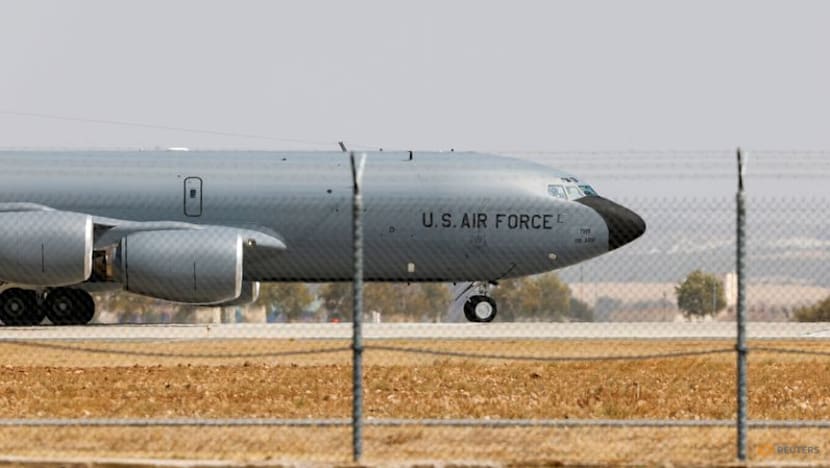
A US Air Force Boeing KC-135 taxies at the Moron Air Base in Moron de la Frontera, southern Spain on Aug 27, 2021. (File photo: Reuters/Marcelo del Pozo)

13 Mar 2026 06:50AM (Updated: 13 Mar 2026 08:48AM)
Read a summary of this article on FAST.
FAST

WASHINGTON: An American KC-135 aerial refuelling aircraft crashed in western Iraq while a second plane involved in the incident landed safely, the US military said Thursday (Mar 13).

"One of the aircraft went down in western Iraq, and the second landed safely. This was not due to hostile fire or friendly fire," US Central Command (CENTCOM), which is responsible for American forces in the Middle East, said in a statement.

Iran's military, however, claimed in a statement carried by state TV that an allied group in Iraq had downed the aircraft with a missile, killing all its crew.

The KC-135 is at least the fourth US military aircraft lost during the war in the Middle East, after three F-15s were shot down by friendly fire over Kuwait.

KC-135s, which have been in operation for more than 60 years, generally have a crew of three - a pilot, a copilot and a third who operates the boom used to refuel other aircraft, according to the US Air Force.

But some KC-135 missions require a navigator, and the aircraft can carry up to 37 passengers, an Air Force factsheet said.

Early in the war - which began on Feb 28 - Kuwaiti forces mistakenly downed three American F-15E fighters, but all six crew members were able to eject, according to CENTCOM.

That incident occurred during combat, including "attacks from Iranian aircraft, ballistic missiles, and drones", the military command said at the time.

Source: AFP/nh

Sign up for our newsletters

Get our pick of top stories and thought-provoking articles in your inbox

Subscribe here
Inbox
Advertisement

Also worth reading

Advertisement