Advertisement
Advertisement

World

Iran's new leader, still silent, was elevated by the Revolutionary Guards

Mojtaba Khamenei's selection as Iranian supreme leader may signal a more aggressive stance abroad and sterner internal repression.

Iran's new leader, still silent, was elevated by the Revolutionary Guards

Mojtaba Khamenei, son of Iran's supreme leader Ayatollah Ali Khamenei, in Tehran on Oct 13, 2024. (File photo: AFP/Hamed Jafarnejad/ISNA)

11 Mar 2026 07:22AM (Updated: 11 Mar 2026 07:55AM)
Read a summary of this article on FAST.
FAST

DUBAI: Iran's Revolutionary Guards forced through the choice of Mojtaba Khamenei as the new supreme leader, seeing him as a more pliant version of his father who would back their hardline policies, bludgeoning aside the concerns of pragmatists, senior Iranian sources said.

Already very powerful, the Guards have gained yet greater sway since the war began and quickly overcame the misgivings of senior political and clerical figures whose opposition to the choice delayed the announcement by hours, the sources said.

Adding to the concerns of those who opposed Khamenei's installation as supreme leader, he had still issued no statement by Tuesday (Mar 10) evening, nearly 48 hours after his selection during a war that has killed more than a thousand Iranians.

Khamenei's selection, engineered by the Guards, may add up to a more aggressive stance abroad and sterner internal repression, said the three senior Iranian sources, a reformist former official and another insider.

Two of them said they feared the Guards' domination of the system would further transform the Islamic Republic into a military state with only a thin veneer of religious legitimacy, undermining an already shrinking support base and allowing less room to address complex threats.

NEW LEADER MAY HAVE BEEN WOUNDED IN STRIKE

Though an influential backroom operator for decades spent running his father's office, Mojtaba Khamenei remains an obscure figure to many Iranians and may have been wounded in the US-Israeli strikes that killed his father.

A state television anchor appeared to confirm widespread rumours Khamenei was hurt, describing him as a "janbaz", or "wounded veteran" of the Ramadan War, as Iran calls the current conflict. Reuters has not been able to confirm his condition.

That - and security fears after his father's assassination on Feb 28 - may explain his silence since the 88-member Assembly of Experts announced late on Sunday that they had elected him as the country's supreme leader.

Authority is most visibly held by the Guards and the supreme leader's office, known as the beyt, which operates a parallel system of influence across the bureaucracy.

Any doubts over who was really in charge evaporated on Saturday when President Masoud Pezeshkian, part of a triumvirate mandated to rule during the gap between leaders, was forced into a climbdown after apologising to Gulf states for attacks. Senior Guards were furious at his apology, sources told Reuters.

One of the three senior sources, who said the Guards were now running Iran, said the late Ayatollah Ali Khamenei had been able to rein in the corps, balancing its views against those of political and clerical elites in the system.

But even assuming the new leader is well enough to take the helm, the Guards may now get the final say in major decisions in future, the source added.

Alex Vatanka, a senior fellow at the Middle East Institute in Washington, DC said: "Mojtaba owes his position to the Revolutionary Guards and as such he is not going to be as supreme as his father was."

Iran’s new supreme leader, Mojtaba Khamenei, the second son of late Iran's Supreme Leader Ayatollah Ali Khamenei, attends a meeting in Tehran, Iran on Jul 18, 2016. (File photo: Reuters/Amir Kholousi/ISNA/WANA)

BLUNT GUARDS MESSAGE TO BACK KHAMENEI

The choice of leader constitutionally belongs to the Assembly of Experts, but in both elections of a new leader since the Islamic Revolution of 1979, it has been swayed by the advice of other power brokers.

When Ayatollah Ruhollah Khomeini died in 1989, the kingmaker was influential politician Ali Akbar Hashemi Rafsanjani, who told the assembly that Khomeini had whispered Khamenei's name to him on his deathbed.

This time, the kingmakers were the Guards and they were a lot blunter in their messages, all five of the sources said. The Guards used the argument that the war required a fast process and selecting a candidate who defied the United States.

Because their hall in the seminary city of Qom was bombed, the Assembly of Experts had to gather in a different - so far undisclosed location - and some of the members could not be present or even informed of the vote, said one member, Ayatollah Mohsen Heydari, on state television.

The body reached its quorum of two-thirds, he said, without specifying how many had in fact taken part, with 85-90 per cent of those present backing Mojtaba Khamenei.

It was not clear how many of those not present might have backed or opposed him but the figures showed less than the unanimous decision the Guards may have hoped for.

CONCERNS ABOUT HARDER LINE

A group of ayatollahs had disliked the apparent hereditary succession and feared that the choice would alienate even many supporters of the ruling system, said two of the sources.

Behind the scenes, some clerics and members of the political establishment were trying to push for an alternative in numerous discussions over the past week, one of the sources said.

However, the reformist former official said the Guards had threatened critics of Khamenei's accession. The Islamic Republic insider said the Guards had contacted members of the assembly, prompting objections, but in the end, they felt compelled to support him.

Khamenei's appointment was originally intended to be announced on Sunday morning, but only came late in the evening as a result of the lingering opposition to his choice, all five sources said.

As head of the supreme leader's office for many years under his father, Mojtaba Khamenei had built very close ties with the Guards, particularly the second-tier commanders who have replaced the top generals killed in the war, one of the officials said.

The upshot, said the reformist former official, will be a foreign and domestic policy moving in a more radical direction with the Guards finally having what they sought for years - full control.

Source: Reuters/nh

Sign up for our newsletters

Get our pick of top stories and thought-provoking articles in your inbox

Subscribe here
Inbox
FAST
Advertisement

World

Israel launches new strikes on Beirut's southern suburbs

Israel, which kept up strikes targeting Hezbollah despite a 2024 ceasefire, has since launched attacks across Lebanon and sent ground troops into border areas.

Israel launches new strikes on Beirut's southern suburbs

A fireball rises from the site of an Israeli airstrike that targeted an area in Beirut’s southern suburbs overnight on Mar 10, 2026. (Photo: AFP/Fadel Itani)

11 Mar 2026 07:35AM (Updated: 11 Mar 2026 07:45AM)
Read a summary of this article on FAST.
FAST

BEIRUT: Israel staged new attacks on Beirut's southern suburbs on Wednesday (Mar 11), Lebanese state media reported, with the Israeli army saying it was again targeting the Iran-backed Hezbollah group.

Lebanon was drawn into the Middle East war last week when Hezbollah attacked Israel in response to the killing of Iranian Supreme Leader Ayatollah Ali Khamenei in US-Israeli strikes.

Israel, which kept up strikes targeting Hezbollah despite a 2024 ceasefire, has since launched attacks across Lebanon and sent ground troops into border areas.

Lebanon's state-run National News Agency said "the Israeli enemy launched a violent raid" on Beirut's southern suburbs, where Hezbollah holds sway. AFPTV's live footage showed plumes of smoke rising from places struck.

The Israeli military said in a statement it "has begun strikes against Hezbollah infrastructure" in the area.

Hezbollah said in separate statements on Tuesday that its fighters had attacked Israeli troops near the southern border towns of Khiam and Odaisseh, and launched rockets at Israel, including at a "missile defence site" south of Haifa.

It later said it was engaging an Israeli force near the border town of Aitaroun "with light and medium weapons".

Lebanese authorities said Tuesday that 759,300 people had been registered as displaced, with 122,600 staying in shelters.

The health ministry on Wednesday said that "successive raids launched by the Israeli enemy" on the southern town of Qana, Tyre district, killed five people and wounded five others.

In Hennawiyeh, Tyre district, the ministry said the night prior that an Israeli strike wounded two people, and a follow-up attack killed them with the rescuer who came to the scene.

Source: AFP/nh

Sign up for our newsletters

Get our pick of top stories and thought-provoking articles in your inbox

Subscribe here
Inbox
FAST
Advertisement

World

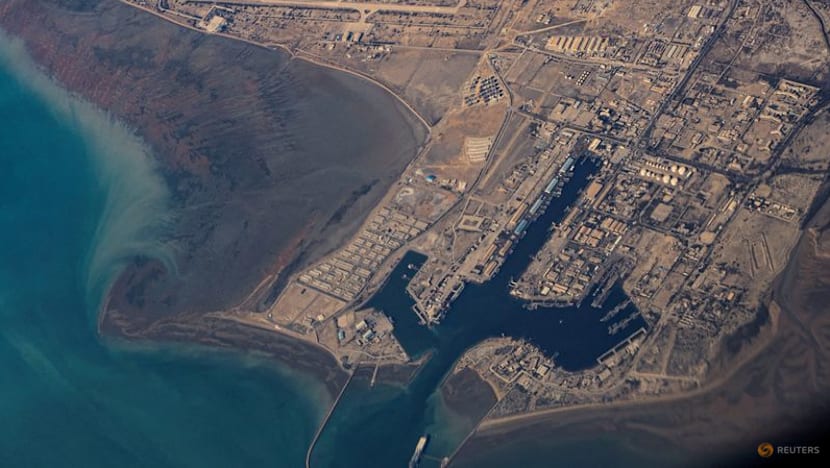
US Navy tells shipping industry Hormuz escorts not possible for now

Shipping along the narrow strait has all but halted since the start of the US-Israeli war on Iran more than a week ago.

US Navy tells shipping industry Hormuz escorts not possible for now

An aerial view of the Iranian shores and Port of Bandar Abbas in the strait of Hormuz, Dec 10, 2023. (Photo: Reuters/Stringer)

11 Mar 2026 06:28AM (Updated: 11 Mar 2026 06:33AM)
Read a summary of this article on FAST.
FAST

LONDON: The US Navy has refused near-daily requests from the shipping industry for military escorts through the Strait of Hormuz since the start of the war on Iran, saying the risk of attacks is too high for now, according to sources familiar with the matter.

The Navy's assessments spell continued disruption to Middle East oil exports and reflect a divergence from President Donald Trump’s statements that the US is prepared to provide naval escorts whenever needed to restart regular shipments along the key waterway.

Shipping along the narrow strait has all but halted since the start of the US-Israeli war on Iran more than a week ago, preventing exports of around a fifth of the world’s oil supply and sending global oil prices surging to highs not seen since 2022.

A senior official with Iran's Revolutionary Guards has said the Strait is closed and Iran will fire on any ship ​trying to pass, Iranian media reported last week. Several ships have already been hit.

The US Navy has held regular briefings with shipping and oil industry counterparts and has said during those briefings it is unable to provide escorts for the time being, three shipping industry sources familiar with the matter said.

The sources, who declined to be identified due to the sensitivity of the matter, said the shipping industry has been making requests almost daily during the calls for naval escorts through the strait.

One of the sources said the Navy’s assessment during Tuesday’s briefing had not changed and that escorts would only be possible once the risk of attack was reduced.

The Pentagon did not immediately respond to a request for comment.

Source: Reuters/zl

Sign up for our newsletters

Get our pick of top stories and thought-provoking articles in your inbox

Subscribe here
Inbox
Advertisement

World

Nurses beyond borders: How UK visa changes are putting a strain on healthcare staff numbers

About one-fifth of the UK’s National Health Service workforce was born abroad, but tighter entry requirements may change that. In the third of a four-part series on the global nursing shortage, CNA looks at how that has shaped overseas nurses’ lives.

Nurses beyond borders: How UK visa changes are putting a strain on healthcare staff numbers

A nurse working in a hospital in the United Kingdom.

New: You can now listen to articles.

This audio is generated by an AI tool.

11 Mar 2026 06:00AM
Read a summary of this article on FAST.
FAST

LONDON: About 25 years ago, Louie Horne left the Philippines to seek work abroad.

She was one of five foreign nurses at her hospital in east England at the time – today, the picture is very different.

In the 2020s, for every United Kingdom-trained nurse joining the national register, an internationally trained nurse joined too, underscoring the health service’s growing reliance on overseas staff.

But the country’s nursing landscape is changing again.

HIGHER VISA FEES

Last year, the UK government tightened entry requirements for overseas nurses to lower record-high net migration numbers. The move shifted resources and recruitment in favour of domestic staff.

Visa fees rose by 7 per cent, and foreign nurses working in the private sector may now have to wait 10 years instead of five to qualify for settled status and live in the UK indefinitely.

Combined with the comparatively lower pay than in countries such as the US, New Zealand and Australia, the changes have made the UK less attractive to foreign nursing talent. Because of that, the number of new international joiners has dropped significantly.

According to quarterly data from the UK’s Home Office, the number of nursing professionals granted visas to the UK fell by 93 per cent – from 26,100 in 2022 to 1,777 in 2025.

Uncertainty, rather than just visas, is the key concern for foreign nurses, said medical education researcher Katherine Woolf from University College London.

“It will give the message that the UK isn't a secure place, in that way where you can come and you know this is what the situation is going to be,” she said.

“I never hear people complaining that they have to have a visa … I think that the issue is that kind of certainty about what they are paying the money to be here for.”

Around one-fifth of the UK’s National Health Service workforce is born overseas.

Half of them are Asian, mostly from India and the Philippines, highlighting how crucial international perceptions of life in the UK are to recruiting the healthcare workers required to sustain the system.

Horne, who was appointed national nursing officer at trade union UNISON in November last year, told CNA that the new visa rules risk increasing vulnerability among overseas staff.

Louie Horne, who left the Philippines to work as a nurse in the United Kingdom, speaking to CNA.

“It's very important as a trade union for us to protect these workers; to make sure that they are safe where they're working; (that) they're not treated unfairly,” she added.

Workforce surveys also point to worsening experiences of racism and xenophobia, making foreign nurses feel less welcome in the UK.

"I think it's still an attractive destination for international nurses and healthcare workers, but it wasn't the number one choice like it was before,” Horne warned.

Global nursing shortage

A global health challenge is intensifying.

Demand for nurses – the backbone of healthcare systems – is growing. While headline figures show supply is also expanding, a deeper look reveals widening gaps, uneven distribution and mounting pressure on poorer regions.

Nurses make up roughly more than 40 per cent of the global health workforce, according to numbers from the World Health Organization (WHO).

Any shortage doesn’t just affect hospitals – it weakens entire healthcare systems, from primary care clinics to emergency response networks.

The numbers: growth on paper

According to the State of the World’s Nursing 2025 report by the WHO and International Council of Nurses (ICN):

  • In 2023, there were about 29.8 million nurses worldwide.
  • By 2030, that number is projected to rise to 35.9 million.

At first glance, this appears to signal progress.

But by 2030, those nurses will need to serve a projected global population of 8.5 billion people, stretching systems that are already under pressure.

Not all regions are affected equally.

The African and Eastern Mediterranean regions are expected to face the most severe shortages in the coming years. These are also regions with some of the greatest healthcare needs.

On the move

Migration is now central to global healthcare staffing. According to the WHO and ICN report, about one in seven nurses works outside the country of their birth.

This reflects how heavily many healthcare systems depend on migrant labour. But the challenge is not simply about overall supply – it is about distribution.

About 78 per cent of the world’s nurses are concentrated in countries that account for less than half of the global population.

Across much of Asia, the outflow of nurses to wealthier economies is straining local healthcare systems.

Expand

IMPACT WORSE ON ELDERLY CARE SECTOR

As the UK government attempts to reduce reliance on international workers and reduce the number of people eligible for permanent residency, the shake-up has been more dramatic in the elderly care sector.

Recruiting carers directly from abroad has effectively been banned. Care homes can no longer sponsor visas for applicants who are not already legally living in the UK.

In a statement to CNA, the UK Home Office said: “We hugely value our international care workers, but too many have seen unacceptable levels of abuse and exploitation. In some cases, leading to debt, mistreatment or finding that jobs promised to them don’t exist.”

The government said the changes were necessary due to “unacceptable levels of abuse and exploitation” of arrivals.

Residents of a care home in the United Kingdom.

While industry players acknowledged these issues, they said they had already warned the government about this when care visas were issued en masse during the COVID-19 pandemic to fill more than 100,000 vacancies.

“We've always had, both in health and in social care, a percentage of a migrant workforce,” said Nadra Ahmed, executive chair of the National Care Association, a trade association in the UK for small- and medium-sized care providers.

“We did at that time say, ‘could you just make sure that they were for people who were registered providers?’ And they didn't take notice of that.

“And of course, there was an influx, with families. And that has been the challenge,” she added.

The association said a largely domestic workforce will always be the better option, but that has been impossible to achieve.

While wage increases could be the answer, social care is predominantly reliant on public funding, noted Isabel Shutes, associate professor in social policy at the London School of Economics.

“Providers have argued that often they're operating below the fees that actually cover the costs of care and are dependent on private sources of income through people paying for their own care,” she added.

With salaries constrained, international recruitment effectively halted, and an ageing population increasing demand, care providers fear mounting pressure.

Raj Sehgal, chief executive officer of care home services provider Armscare, said the impact is already being felt.

“Firstly, we cannot accept applications from overseas, which is devastating. And what they've said is that we can only recruit migrant workers who are already in the UK,” he said.

Raj Sehgal, chief executive officer of care home services provider Armscare in the United Kingdom, speaking to CNA.

Sehgal previously recruited successfully from southern India, where there is a plethora of nursing graduates willing to work - a larger pool of qualified people than he can find in Britain.

He also warned that potential further rule changes could force foreign workers already in the UK to wait 10 or 15 years for permanent residency or to bring family members over, which would harm retention.

“The rest of the world … fortunately for them, is actually welcoming, (like) Australia, Canada, Ireland, the EU. They have the same needs as we do, but they are more welcoming,” he said.

“They have less stringent rules and less sort of draconian rules around family life and everything else, which means that people can work and settle and have a family life.”

FRUSTRATION OVER FUNDING MODEL

One Armscare employee who has been affected is Alamin Mia. He moved to England from Bangladesh in 2021 to study business administration.

After graduating from university in his home country, he struggled to find fulfilling work at home, and now works as a carer in rural east England.

Alamin Mia moved to England from Bangladesh and now works as a carer.

“Lots of people are suffering in different (ways) – different types of dementia, different types of disease. But what I found is, it's enjoyable to work with them, to help them,” he said.

But he is frustrated by the funding model that shapes pay in the sector.

“It's very difficult to survive here when you are working in the care sector. But … what we are doing, we are giving our best. We are working very hard to support people.”

The UK government has said it is creating a new body to negotiate pay between trade unions and employers, which it claims will raise care workers’ salaries by 2028.

But the care sector argues that may be too little, too late – and unlikely to attract enough domestic workers to fill the gap left by the sharp fall in overseas recruits.

Source: CNA/lt(mp)

Sign up for our newsletters

Get our pick of top stories and thought-provoking articles in your inbox

Subscribe here
Inbox
Advertisement

Commentary

Commentary: The global narrative is shifting in favour of China – don’t misread it

The shifting narrative in favour of China has more to do with anger over US President Donald Trump’s disruptive policies, says former SCMP editor-in-chief Wang Xiangwei.

Commentary: The global narrative is shifting in favour of China – don’t misread it

Workers prepare humanoid robots for a performance at a trade fair in Beijing on Feb 18, 2026. (AP Photo/Vincent Thian)

New: You can now listen to articles.

This audio is generated by an AI tool.

11 Mar 2026 06:00AM
Read a summary of this article on FAST.
FAST

HONG KONG: The world has been scrambling and fretting over the erratic ways in which the United States is redefining its global role. Amid growing uncertainty and chaos, there is intense speculation over one question: What kind of role China will choose to play on the world stage? 

The shifting global narrative in favour of China is hard to miss. 

Scouring international media, one cannot help but notice a growing chorus of reports and commentaries painting a picture of China “winning” the geopolitical game and the AI race in the great power competition with the US, among other things.

But understand this: The praise for China has more to do with Western frustration and anger over US President Donald Trump’s disruptive policies rather than any unalloyed admiration for Beijing’s model.

China is neither willing nor capable of filling the void left by the US. From a Chinese perspective, America’s further retreat from the international stage, particularly in the Eastern hemisphere, could bring more harm than benefits in the foreseeable future.

A STABLE AND RESPONSIBLE WORLD POWER

US actions over the past year have no doubt allowed China to enhance its image as a stable and responsible world power. 

Since Mr Trump’s second term began a little more than a year ago, he has launched a global tariff war, abducted a sitting head of state, blasted a “decaying” Europe and demanded the acquisition of Greenland. Since Feb 28, the US is in a war with Iran that shows little signs of de-escalation, while oil prices soar.

In January, Mr Trump signalled a further retreat by withdrawing the US from 66 international organisations, including various United Nations entities focused on climate, health and development.

Against this backdrop, China is boosting its soft power particularly in the Global South. 

More developing countries, seeking alternatives to Western-led institutions, are turning to China. Beijing-led international forums, such as BRICS and the Shanghai Cooperation Organization (SCO), have countries from Asia, Africa and beyond lining up to join or deepen their engagement.

NO ONE’S BIG BROTHER

But any optimism that China can and should do more to manage global affairs is misplaced. Beijing is neither politically willing nor financially and militarily capable of replacing the US – not in managing global affairs nor in providing security protections as the US does.

Take the US action to abduct Venezuelan President Nicolas Maduro. For decades, both Venezuela and Cuba have tried to deepen ties with China, with Beijing’s outstanding investments in Venezuela estimated at about US$10 billion now at the mercy of the US. The intervention has also squeezed Cuba, which relies heavily on Venezuelan oil. 

The best Beijing has managed is to repeatedly condemn the US action and seek reassurance that its oil supply would not be affected – to which Mr Trump has effectively agreed.

Similarly, with Iran, one of China’s major energy suppliers now under bombardment by US and Israeli jets, Beijing has merely voiced its strongest condemnation and offered moral support. The implicit message is clear: Any country hoping to count on Beijing as a big brother for protection will be disappointed in the foreseeable future.

Over the past decade, President Xi Jinping has moved away from Deng Xiaoping’s policy of biding time and keeping a low profile. Beijing has adopted an increasingly assertive stance on core issues like Taiwan, Hong Kong and the South China Sea. International commentators often portray these moves as evidence of expansionist ambitions. 

Yet from China’s viewpoint, Taiwan and Hong Kong are integral territories, and it has legitimate security interests in the South China Sea, through which about 90 per cent of its maritime crude oil imports pass.

Beyond these core interests, China’s direct influence remains limited. This stems not only from a lack of power projection capabilities for distant interventions but from deliberate strategic choices.

Beijing recognises that overextension could jeopardise its primary focus on domestic economic development and stability. 

Getting entangled in far-flung conflicts would drain resources needed for internal challenges like technological self-reliance and social cohesion, while risking escalation with a still-superior US military. Prudence dictates prioritising resilience at home over global policeman duties.

FILE PHOTO: U.S. President Donald Trump and Chinese President Xi Jinping walk as they leave after a bilateral meeting at Gimhae International Airport, on the sidelines of the Asia-Pacific Economic Cooperation (APEC) summit, in Busan, South Korea, October 30, 2025. REUTERS/Evelyn Hockstein/File Photo

LOW-KEY INVOLVEMENT IN REGIONAL CONFLICTS

China’s reluctance was evident in several regional conflicts. 

Mr Trump has claimed he “ended 8 wars in just 8 months”. Whatever the debate on whether to give him credit, his claim included three conflicts at China’s doorstep: between Thailand and Cambodia, Armenia and Azerbaijan, and Pakistan and India. Notably, Pakistan, Thailand and Cambodia are very close to China, while Armenia and Azerbaijan seek closer ties with the SCO.

China’s interests would have been well-served by leading mediation, but its efforts proved limited and low-key compared to Mr Trump’s actions.

Tensions between China and Japan have escalated significantly over Taiwan following remarks in November 2025 by Japanese Prime Minister Sanae Takaichi. She described a Chinese attack on Taiwan as a “survival-threatening situation” for Japan, opening the door to potential military intervention. Beijing responded with intense diplomatic and economic pressure. 

The timing, shortly after the Busan summit between Mr Xi and Mr Trump where Taiwan was not mentioned, suggests Ms Takaichi may have deliberately ratcheted up tensions to draw the US back into the region. Mr Trump has long signalled indifference toward Taiwan beyond its semiconductors.

China may take an increasingly assertive approach in defending its core interests, including Taiwan and the South China Sea, but it has remained very much restrained from intervening in the internal affairs of other countries. Putting its own house in order has been and will remain its top priority.

CHINA STILL RELIES ON US PRESENCE

Some Chinese nationalists have hailed Mr Trump’s efforts to reintroduce the “law of the jungle” as confirmation of the rise of the East and the decline of the West. 

But the truth is that a rising China still needs the US to play a stabilising role, even in its own backyard. 

In February, North Korean leader Kim Jong Un vowed to strengthen his country’s nuclear programme. The primary reason neither Japan nor South Korea has pursued their own nuclear weapons – despite possessing the technology – is the US security umbrella. One can only imagine the proliferation nightmare and regional instability if Washington were to fully withdraw from the area.

In this turbulent era, while China benefits from America’s inward turn, Beijing understands that true global leadership requires capabilities and commitments it is not yet ready – or eager – to assume. A rising China, focused on sustainable growth, still relies on the US presence in its backyard to maintain a delicate balance of power.

Wang Xiangwei is a former Editor-in-Chief of South China Morning Post. He now teaches journalism at Hong Kong Baptist University.

Source: CNA/ch

Sign up for our newsletters

Get our pick of top stories and thought-provoking articles in your inbox

Subscribe here
Inbox
Advertisement

Commentary

Commentary: The balancing act of Singapore’s foreign policy as global conflicts intensify

Though Singapore has limited ability to influence international affairs, its actions are keenly watched by investors and other countries, says strategic consultancy managing director Nicholas Fang.

Commentary: The balancing act of Singapore’s foreign policy as global conflicts intensify

A black plume of smoke rises from a warehouse at the industrial area of Sharjah City in the United Arab Emirates following reports of Iranian strikes in Dubai, Mar 1, 2026. (Photo: AP/Altaf Qadri)

New: You can now listen to articles.

This audio is generated by an AI tool.

11 Mar 2026 05:59AM (Updated: 11 Mar 2026 08:25AM)
Read a summary of this article on FAST.
FAST

SINGAPORE: As the war in Iran deepens with little sign of resolution anytime soon, a question that small nations like Singapore increasingly face is what agency they have amid bigger powers acting on their own agendas.

The decision by the US and Israel to attack Iran on Feb 28 has sparked a conflict that threatens to engulf the Middle East and disrupt countries’ energy supplies.

As a small but influential player on the global stage, Singapore is often placed in an interesting position.

While not a major power able to dictate the direction of international geopolitics, Singapore’s leaders are often consulted for their views on global developments at fora ranging from the United Nations to the World Economic Forum and Munich Security Conference.

As a transport, technology and finance hub, Singapore’s policies and actions have had an outsized impact on the region and the world, and are keenly watched by investors and other states.

WHEN ELEPHANTS FIGHT

As the proverb goes, “When elephants fight, it is the grass that suffers.” Smaller players like Singapore often find themselves on the decision-making sidelines when major powers make moves against one another.

In recent years, we have seen wars break out in Europe and the Middle East. While the tensions in Gaza seem to have eased slightly after a ceasefire, the latest turmoil in Iran will ratchet up the temperature in that region again. 

The impact on the proverbial “grass” has already been felt around the world. Oil and energy prices have surged, financial markets have tumbled amid increasing uncertainty, and the prognosis for global economic development in 2026 appears bleaker than it was prior to the conflict.

With a speedy end to the Iran war seemingly not a priority of Israel and the US, such global uncertainty looks set to persist in the near term at least.

A DELICATE BALANCING ACT

This brings us to the question of what Singapore can do in such scenarios. The tension between being a small but influential country is brought into focus when conflicts emerge abroad.

In these situations, it may seem that the only option available to smaller nations is to issue carefully worded statements that express concern and call for the cessation of hostilities, respect for sovereignty and human life, and adherence to international law.

A recent exception was the Russian invasion of Ukraine in 2022. Along with its statements condemning the invasion, Singapore also imposed rare unilateral sanctions on Russia, targeting military exports, some Russian banks and financial transactions connected to Russia.

Last week, Foreign Minister Vivian Balakrishnan said Singapore endorses the statement made by the ASEAN foreign ministers on the latest situation in the Middle East.

The statement expressed “serious concern” at the escalation of conflict in the Middle East, and urged parties to respect international law, including the Charter of the United Nations.

Though this may seem to be another example of Singapore’s limited ability to influence international developments, the country faces unique circumstances.

As a multi-racial and multi-religious country that is open to information and influences from around the world, international conflicts often arouse different views among the domestic populace. On potentially contentious issues or developments, the government thus avoids taking a strong position that could result in animosity or unhappiness among local communities.

When it comes to foreign policy, Singapore’s long-held preference to maintain good relations among as many friends as possible means that excessively strong statements or official positions can mean the loss of strategic ambiguity, which can be invaluable when it comes to international diplomacy.

WHITHER SINGAPORE’S AGENCY?

At the same time, Prime Minister Lawrence Wong argued that Singapore is not without agency in an increasingly complex and unpredictable global environment. 

Speaking at the S Rajaratnam Lecture series organised by the Ministry of Foreign Affairs' Diplomatic Academy last year, Mr Wong said that, despite Singapore’s limitations as a small state, it cannot afford to be a passive bystander and should seek to shape its own destiny.

He said this can be done via three key thrusts: contributing actively to the stewardship of the global commons, championing deeper regional cohesion and integration, as well as strengthening its global network of partnerships. 

While Singapore looks outward to achieve these aims, it must balance sensitivities at home and with partners abroad. As the world evolves away from a stable rules-based global order into one that is marked by greater contestation, military and otherwise, this tightrope will become increasingly difficult to walk.

But as a small nation, retaining agency must remain a key national priority for the foreseeable future.

Nicholas Fang is founder and managing director of strategic consultancy Black Dot, and a former journalist and Nominated Member of Parliament. He writes a monthly column for CNA.

Source: CNA/el

Sign up for our newsletters

Get our pick of top stories and thought-provoking articles in your inbox

Subscribe here
Inbox
Advertisement

Commentary

Commentary: What TikTok and Huawei can teach Anthropic

Anthropic has been labelled a supply chain risk by Washington but that's not exactly a death knell, says Catherine Thorbecke for Bloomberg Opinion.

Commentary: What TikTok and Huawei can teach Anthropic

FILE PHOTO: Anthropic logo is seen in this illustration taken May 20, 2024. REUTERS/Dado Ruvic/Illustration/File Photo

11 Mar 2026 05:58AM
Read a summary of this article on FAST.
FAST

TOKYO: The Pentagon formally notified Anthropic last week that its products have been deemed a supply chain risk, marking the first time Washington has publicly placed that label on an American company.

But if it sounds like a death knell, it isn’t. Such attacks are usually reserved for Chinese tech, meaning there’s now a pattern for how these things play out: Usually with a lot of noise and remarkably little lasting damage.

Let’s start with TikTok. Washington spent more than half a decade targeting the platform under the banner of national-security risks. The short-form video app initially faced the threat of a ban during President Donald Trump’s first term due to its Chinese origins.

Pundits spent years declaring the end. But Trump then reversed course, and campaigned to save it when he was re-elected to the White House. The app’s scale and cultural reach made the crusade to ban it politically untenable, and Trump even sidelined Congress multiple times to buy breathing room to strike a deal. After all that, TikTok’s US operations emerged unscathed - as did the ambitions of its parent company ByteDance.

Anthropic, meanwhile, sued the Defense Department on Monday over the designation, and has said the vast majority of its customers are unaffected by it anyway. While such a warning can chill federal contracts and spook risk-averse partners, the company has said the official letter ultimately has a “narrow scope”. 

Still, a snag for the Pentagon is that Anthropic isn’t a villain the public wants.

A REPUTATIONAL UPSIDE

The clash traces back to the AI firm stating that it would refuse to compromise on its safety principles, specifically that it won’t allow its technology to be used for fully autonomous weapons or mass domestic surveillance. That’s exactly what makes people recoil from AI in the first place. 

If anything, Anthropic’s stance burnished Chief Executive Officer Dario Amodei’s image (even if this should be the bare minimum from leaders building what they call the most consequential technology of our time). Instead of isolating Anthropic, Washington helped it look like the rare tech firm willing to say “no”.

The reputational upside is already measurable. As my colleague Dave Lee has written, Anthropic’s Claude app downloads have surged since its disagreement with the Pentagon became public, while rival ChatGPT’s have ticked down.

The politics are shifting in Anthropic’s favor. 

When half of Americans are more concerned than excited about the increased use of AI - and only 10 per cent feel the opposite - picking a fight with the safety-minded company is an odd hill to die on. And it’s not just the public rallying behind Anthropic, but large swathes of the tech industry as well.

TikTok isn’t alone in emerging stronger from US government attacks. 

For roughly a decade, Washington has targeted Huawei, first as a supply chain risk and then with increasingly more restrictions. Yet research published late last year from the Washington-based Information Technology and Innovation Foundation think tank argues that Huawei “is a more innovative company today” than when the US started trying to choke it.

The lesson, they argued, is that US techno-economic leverage is “weaker than most think”.

WHAT WILL WASHINGTON DO?

Anthropic isn’t Huawei or TikTok. The firm is American and has worked with the US government. But that’s precisely the point. There’s a reason the Defense Department chose it in the first place - it offered up some of the best technology on the market. Trump’s team may have used TikTok to reach younger voters despite attacking it, but the stakes for AI are higher. Don’t be surprised when US officials recognise that they need Anthropic, too.

At the same time, everyone from lawmakers to national security hawks have already warned that the US can’t compete with China in AI while kneecapping American innovation. Calling a homegrown champion a risk may satisfy a bureaucratic impulse to appear tough, but it doesn’t build AI capacity.

Washington can spend years sounding national security alarms, only to quietly back away once public opinion, political incentives and practical dependence on the technology collide. 

If TikTok, and even Huawei, can emerge stronger after sustained US pressure, the likeliest lesson here is that Washington will eventually decide it can’t afford to sideline one of its best AI firms, and find a face-saving way to move on.

Source: Bloomberg/sk

Sign up for our newsletters

Get our pick of top stories and thought-provoking articles in your inbox

Subscribe here
Inbox
Advertisement

World

US stocks hold steadier as Wall Street waits for the next signal on how long war with Iran may last

Markets react to oil drop and US President Donald Trump saying “the war is very complete, pretty much.”

US stocks hold steadier as Wall Street waits for the next signal on how long war with Iran may last

Traders work on the floor at the New York Stock Exchange in New York, Tuesday, Mar 10, 2026. (Photo: AP/Seth Wenig)

11 Mar 2026 05:38AM
Read a summary of this article on FAST.
FAST

NEW YORK: The US stock market held steadier Tuesday (Mar 10) as Wall Street waited for the next signal on when the war with Iran may end.

The S&P 500 dipped 0.2 per cent, a day after its latest wild swings caused by extreme moves in the oil market. The Dow Jones Industrial Average fell 34 points, or 0.1 per cent, and the Nasdaq composite edged higher by less than 0.1 per cent.

Oil prices, meanwhile, remained sharply below their peaks hit on Monday. Such spikes have been rocking financial markets worldwide because of worries that the war could block the global flow of oil and natural gas for a long time.

The price for a barrel of Brent crude, the international standard, settled at US$87.80. That’s down 11.3 per cent from its settlement price the day before, but much of that drop happened on Monday before the US stock market finished trading. That’s why it did not give much of a boost to US stocks Tuesday.

Oil prices plunged Monday afternoon from a high of nearly US$120 per barrel, its most expensive level since 2022, after President Donald Trump told CBS News he thinks “the war is very complete, pretty much.” That raised hopes that the war may end relatively soon, which could allow oil to flow freely again from the Middle East to customers around the world.

But Trump’s comments later Monday, after the US stock market finished trading, were not as clear. And a spokesperson for Iran’s paramilitary Revolutionary Guard said that “Iran will determine when the war ends.” Iran launched new attacks Tuesday at Israel and Gulf Arab countries, keeping pressure on the Middle East in a war started by Israel and the United States.

That has Wall Street waiting for the next clue about how long the war may last.

One point where Trump remained clear was his desire to keep the Strait of Hormuz open. The war has effectively blocked the waterway off Iran’s coast, where a fifth of the world’s oil sails on a typical day. That’s been a central reason for extreme swings in oil prices recently, which have dominated other financial markets and raised worries about the global economy.

“If Iran does anything that stops the flow of Oil within the Strait of Hormuz, they will be hit by the United States of America TWENTY TIMES HARDER than they have been hit thus far,” Trump said in a posting on his social media network late Monday.

“The outlook for oil right now is about as binary as it gets,” according to Hakan Kaya, senior portfolio manager at Neuberger Berman.

“Either the Strait of Hormuz reopens and you see a massive unwind of the risk premium, or it stays shut and we are looking at the largest supply disruption in modern history. There is no middle ground, and that is why putting a number on it is almost irresponsible.”

The US stock market has a history of bouncing back relatively quickly from military conflicts, as long as oil prices don’t stay too high for too long. Uncertainty about whether that may happen this time around has led to stunning swings up and down for markets worldwide, often hour-to-hour.

If oil prices do stay high for long, household budgets already stretched by high inflation could break under the pressure. Companies would see their own bills jump for fuel and to stock items on their store shelves or in their data warehouses. It all raises the possibility of a worst-case scenario for the global economy, “stagflation,” where growth stagnates and inflation remains high.

On Wall Street, Vertex Pharmaceuticals leaped 8.3 per cent for the biggest gain in the S&P 500 after reporting encouraging trends from a trial for its treatment for a life-threatening kind of kidney disease.

West Pharmaceutical Services sank 5.7 per cent after Eric Green said he’ll retire as CEO and chair once the board finds and hires his successor.

All told, the S&P 500 fell 14.51 points to 6,781.48. The Dow Jones Industrial Average dipped 34.29 to 47,706.51, and the Nasdaq composite added 1.16 to 22,697.10.

Stock markets in Asia and Europe jumped after getting their first chances to react to Trump’s comments from late Monday and the subsequent easing of oil prices. Indexes leaped 5.3 per cent in South Korea, 2.2 per cent in Hong Kong and 1.8 per cent in France.

Tokyo’s Nikkei 225 rose 2.9 per cent after the government also released revised economic data showing Japan’s economy grew faster in the final quarter of last year than initially estimated.

In the bond market, the yield on the 10-year Treasury rose to 4.15 per cent from 4.12 per cent late Monday.

Source: AP/fs

Sign up for our newsletters

Get our pick of top stories and thought-provoking articles in your inbox

Subscribe here
Inbox
Advertisement

World

Heaviest day of strikes yet on Iran despite market bets that war will end soon

The White House press secretary said the American public will see oil and gas prices drop rapidly once the objectives of the joint Israeli-US air war are fully achieved.

Heaviest day of strikes yet on Iran despite market bets that war will end soon

Smoke plumes billow from the site of airstrikes near Azadi Tower in western Tehran on Mar 10, 2026. (Photo: AFP/Atta Kenare)

11 Mar 2026 04:52AM (Updated: 11 Mar 2026 08:22AM)
Read a summary of this article on FAST.
FAST

DUBAI: The United States and Israel pounded Iran on Tuesday (Mar 10) with what the Pentagon and Iranians on the ground called the most intense airstrikes of the war, despite global markets betting that President Donald Trump will seek to end the conflict soon.

Raising the stakes for the global economy, Iran's Revolutionary Guards said they would block oil shipments from the Gulf unless US and Israeli attacks cease.

Iran's Islamic Revolutionary Guard Corps also said it launched missiles on Tuesday evening at Qatar's US-operated Al Udeid base and the Al Harir base in Iraq's Kurdistan.

But the White House reiterated Trump's threat to hit Iran hard over moves to stop the flow of energy supplies through the Strait of Hormuz, where the war has effectively halted one-fifth of the world's oil and liquefied natural gas shipments, and repeated his offer for the US Navy to safely escort tankers.

"Today will be yet again, our most intense day of strikes inside Iran: The most fighters, the most bombers, the most strikes, intelligence more refined and better than ever," US Defense Secretary Pete Hegseth told a Pentagon briefing.

In a message posted to his Truth Social platform later in the day, Trump said, "Within the last few hours, we have hit, and completely destroyed" 10 of Iran's "inactive" mine-laying vessels. He did not clarify where the strikes occurred.

"BOMBING EVERYWHERE"

Tehran residents reached by Reuters described the war's most intense night of bombardment.

"It was like hell. They were bombing everywhere, every part of Tehran," a resident said by phone, speaking on condition of anonymity for security reasons. "My children are afraid to sleep now."

In Tehran's east, two five-storey residential buildings were hit on Monday, blasting out floors and walls and leaving a rickety concrete frame. Footage from Iran's Red Crescent showed rescuers there carrying a victim in a body bag. Workers were still recovering bodies at the site on Tuesday when a missile struck a road intersection nearby.

Yet with Trump having described the war on Monday as "very complete, pretty much", investors appeared convinced he would end it soon - before the disruption to global energy supplies caused a worldwide economic meltdown.

A historic surge in crude oil prices on Monday to nearly US$120 a barrel was reversed as Brent crude settled back down below US$90 on Tuesday. Asian and European share prices staged a partial recovery from earlier precipitous falls, and Wall Street bounced around its late February levels, before the war.

White House press secretary Karoline Leavitt told reporters on Tuesday that the American public will see oil and gas prices drop rapidly once the objectives of the joint Israeli-US air war are fully achieved.

A source familiar with Israel's war plans told Reuters the Israeli military wanted to inflict as much damage as possible before the window for further strikes closes, under the assumption that Trump could end the war at any time.

Israel's foreign minister, Gideon Saar, said the war would proceed until his country and the US determine the time had come to cease hostilities, but that Israel was not seeking an "endless war."

"We will continue until the minute that we, and our partners, think that it ⁠is appropriate to stop," he said.

TRUMP PRESS CONFERENCE APPEARS TO REASSURE MARKETS

Iran has refused to bow to Trump's demand that it let the United States choose its new leadership, naming hardliner Mojtaba Khamenei as supreme leader to replace his father, who was killed on the war's first day.

But occasionally contradictory remarks from Trump at a Monday press conference seemed to reassure markets he would stop the war before provoking an economic crisis like those that followed the Middle East oil shocks of the 1970s. He said the US had already inflicted serious damage and predicted the conflict would end before the four weeks he initially set out.

Trump has not defined what victory would look like, but on Monday did not repeat declarations that Iran must let him choose its leader.

Several congressional aides have said they expect the White House to soon request as much as US$50 billion in additional funding for the war.

The US used US$5.6 billion in munitions in the first two days of strikes against Iran, a source familiar with the information said on Tuesday.

IRANIAN DEFIANCE

Several senior Iranian officials voiced defiance on Tuesday.

"Certainly, we are not seeking a ceasefire; we believe the aggressor must be struck in the mouth so that they learn a lesson," Iran's parliament speaker, Mohammad Baqer Qalibaf, posted on X.

Foreign Minister Abbas Araghchi told PBS that Tehran was unlikely to resume negotiations with the US

At the White House, Leavitt told reporters on Tuesday that Trump and his energy team were closely watching the markets and consulting with industry leaders while military leaders devised "additional options" for opening the Strait of Hormuz.

The deliberations reflect White House concerns that rising oil prices will undermine the US economy ahead of the November midterm elections, when Trump's fellow Republicans hope to retain control of Congress.

But a spokesperson for the Revolutionary Guards said Tehran would not allow "one litre" of Middle Eastern oil to reach the US or its allies while US and Israeli attacks continue.

"We are the ones who will determine the end of the war," the spokesperson said.

Smoke rises after an Israeli strike on Beirut's southern suburbs, following an escalation between Hezbollah and Israel amid the US-Israeli conflict with Iran, Lebanon, Mar 10, 2026. (Photo: Reuters/Mohamed Azakir)

QUICK END TO WAR COULD LEAVE IRAN'S LEADERS IN PLACE

Ending the war quickly would appear to preclude toppling Iran's leadership, which held large-scale rallies on Monday in support of the new supreme leader.

Many Iranians want change and some openly celebrated the death of the elder Khamenei, weeks after his security forces killed thousands of people to put down anti-government protests. But there has been little sign of protest during the war.

More than 1,300 Iranian civilians have been killed since the US and Israeli airstrikes began on Feb 28, according to Iran's UN ambassador, Amir Saeid Iravani. He said nearly 8,000 homes have been destroyed, along with 1,600 "commercial and service centres" and dozens of medical, educational and energy-supply facilities.

The intention of US and Israeli strikes is "to terrorise civilians, massacre innocent people, and cause maximum destruction and suffering," the ambassador said.

Scores have also been killed in Israeli attacks on Lebanon to root out the Iran-backed group Hezbollah, which has fired into Israel in solidarity with Iran.

Iranian strikes on Israel have killed 12 people. Iran has struck US military bases and diplomatic missions in Arab Gulf states but also hit hotels, closed airports and damaged oil infrastructure.

In addition to the six US soldiers killed at the outset of the conflict, the Pentagon on Tuesday estimated that about 140 American troops have been wounded, the vast majority of them characterized as minor.

The Defense Department previously said eight US military personnel had been seriously injured.

Source: AP/nh

Sign up for our newsletters

Get our pick of top stories and thought-provoking articles in your inbox

Subscribe here
Inbox
Advertisement

World

Family of Canada mass shooting victim sues OpenAI

Lawyers say the lawsuit seeks to “learn the whole truth” about the Tumbler Ridge mass shooting and OpenAI’s response to the killer's chatbot activity.

Family of Canada mass shooting victim sues OpenAI

Candles, flowers, photographs and plush toys at a makeshift memorial after a mass shooting took place at a school in British Columbia, Canada, Feb 12, 2026. (Photo: REUTERS/Jennifer Gauthier)

11 Mar 2026 04:00AM
Read a summary of this article on FAST.
FAST

TORONTO: The family of a girl gravely injured during a mass shooting in Canada is suing OpenAI over the company's failure to notify police about the killer's troubling activity on its ChatGPT chatbot, lawyers said Tuesday (Mar 10). 

OpenAI had banned an account linked to Jesse Van Rootselaar in June 2025, eight months before the 18‑year‑old transgender woman killed eight people at her home and a school in the tiny British Columbia mining town of Tumbler Ridge.

The account was banned over concerns about usage linked to violent activity, but OpenAI has said it did not inform police because nothing pointed towards an imminent attack.

Lawyers representing the family of Maya Gebala, a 12-year-old who remains in hospital following the shooting, said in a statement that they were suing OpenAI over allegations of negligence.

"The purpose of this lawsuit is to learn the whole truth about how and why the Tumbler Ridge mass shooting happened, to impose accountability, to seek redress for harms and losses, and to help prevent another mass-shooting atrocity in Canada," the firm of Rice, Parsons, Leoni, and Elliot said.

It said the suit centres on "extremely serious, though unproven, allegations against the American technology firm."

Canada summoned OpenAI executives to Ottawa last month to discuss its security protocols and British Columbia Premier David Eby has had direct talks with the company's chief executive Sam Altman.

Late last month, OpenAI said that its current security protocols would have compelled the company to notify Canadian police about Van Rootselaar's account. 

It said it implemented various policy changes "several months ago," including consulting "mental health, behavioural, and law enforcement experts" to identify when chatbot conversations amount to a credible risk.

OPENAI'S RESPONSE

Asked about the lawsuit, OpenAI told AFP: "What happened in Tumbler Ridge was an unspeakable tragedy."

"OpenAI remains committed to working with government and law enforcement officials to make meaningful changes that help prevent tragedies like this in the future," a company spokesperson said in a statement

The law firm said Gebala "is fighting for her life" in hospital. 

"Maya has endured multiple emergency brain surgeries, other life-saving medical procedures, and severe infection. Slowly, Maya is stabilising, but her long-term prognosis is unknown," the statement said. 

Van Rootselaar killed her mother and brother at the family home before heading to the local secondary school, where she shot dead five children and a teacher.

She died of a self-inflicted gunshot wound after police entered the building.

Source: AFP/fs

Sign up for our newsletters

Get our pick of top stories and thought-provoking articles in your inbox

Subscribe here
Inbox
Advertisement

Also worth reading

Advertisement
Advertisement

World

British warship leaves for Mediterranean to protect Cyprus

HMS Dragon has deployed to the eastern Mediterranean to bolster defences at the British air base RAF Akrotiri in Cyprus after the base was struck by an Iranian drone earlier this month.

British warship leaves for Mediterranean to protect Cyprus

The HMS Dragon during ammunitioning operations at Upper Harbour Ammunitioning Facility (UHAF) in Portsmouth Harbour, Britain Mar 4, 2026. (Photo: REUTERS/Carlos Jasso)

11 Mar 2026 02:59AM (Updated: 11 Mar 2026 03:00AM)
Read a summary of this article on FAST.
FAST

LONDON: A UK warship Tuesday (Mar 10) left port in southern England en route to the eastern Mediterranean to "bolster British defences in the region" amid the US-Israeli war with Iran, the Royal Navy said.

The HMS Dragon's departure from its base in Portsmouth follows criticism from opposition politicians and the Cypriot government for a perceived slow reaction to a drone attack on Britain's Akrotiri base in southern Cyprus on Mar 1.

An Iranian-made drone hit the runway of the Royal Air Force (RAF) base at Akrotiri.

The destroyer's long-awaited deployment comes a day after US President Donald Trump said the war, which began on Feb 28, would be over "soon".

The ship is capable of shooting down drones and ballistic missiles fired by Iran and its proxies as Iranian attacks "continue to target British interests in the region", the Royal Navy said.

"HMS Dragon is one of the most capable air defence warships in the world, and she will add to our significant defensive capabilities in the region by strengthening our ability to detect, track and destroy aerial threats, including drones," the defence ministry said in a statement.

Royal Navy personnel have worked "at pace" to ready the warship, completing six weeks' worth of work in six days, the ministry said.

Earlier, the defence ministry said a further British ship was being prepared for a potential deployment to the region.

"We have taken the decision to bring RFA Lyme Bay, a landing ship with humanitarian and medical capabilities, to heightened readiness as a precaution should she be needed to assist in maritime tasks in the Eastern Mediterranean," it said.

In the past week, the UK has deployed extra counter-drone specialists, additional Wildcat and Merlin helicopters to Cyprus, Typhoon jets to Qatar and begun defensive sorties in support of the United Arab Emirates.

Overnight, a ground-based British unit took out a drone in Iraqi airspace that was heading towards coalition forces, the defence ministry said.

British pilots have completed more than 230 flying hours on defensive operations in the region, it added.

Advertisement
Source: AFP/fs

Sign up for our newsletters

Get our pick of top stories and thought-provoking articles in your inbox

Subscribe here
Inbox
Advertisement

Also worth reading

Advertisement