
 Credit: Photo:
Summary
- Boeing's Dreamlifter and Airbus's BelugaXL transport aircraft parts globally for aircraft assembly.
- The Dreamlifter, based on the Boeing 747-400, has a higher payload capacity than the BelugaXL.
- BelugaXL is the volume leader in cargo capacity compared to the Dreamlifter.
Airbus and Beluga both use specialized aircraft for the transportation of aircraft parts during construction. With the assembly of several aircraft types taking place at various locations throughout the globe, large pieces of the fuselage or wings need to be transported from one site to another.
Both manufacturers have developed transporter aircraft based on their commercial airliners. Boeing uses the Dreamlifter, a modification of the Boeing 747-400. Airbus uses the Beluga, based on the Airbus A300, and the BelugaXL, based on the A330. Both aircraft are huge and capable of carrying a wide variety of cargo and airline components. While the Dreamlifter can carry a higher payload, the BelugaXL is the leader for cargo volume.
The Boeing Dreamlifter - Boeing 747-400 LCF
 Boeing launched its first Dreamlifter aircraft in 2006 to support the construction of the Boeing 787 Dreamliner. The Boeing 787 wings are constructed by Mitsubishi Heavy Industries in Nagoya, Japan. Fuselage sections are built in Japan, Italy, and the US. These pieces are too big for standard shipping containers or the hold of a 747 Freighter.

The Dreamlifter was designed to ship these components, based on the Boeing 747-400. The main differences are in the fuselage and tail, with the wingspan and engine setup remaining the same. The converted variant is known as the Boeing 747-400 LCF (Large Cargo Freighter). It is reported that Boeing has saved between 20% and 40% in costs for the total Dreamlifter project cost of nearly $1 billion.
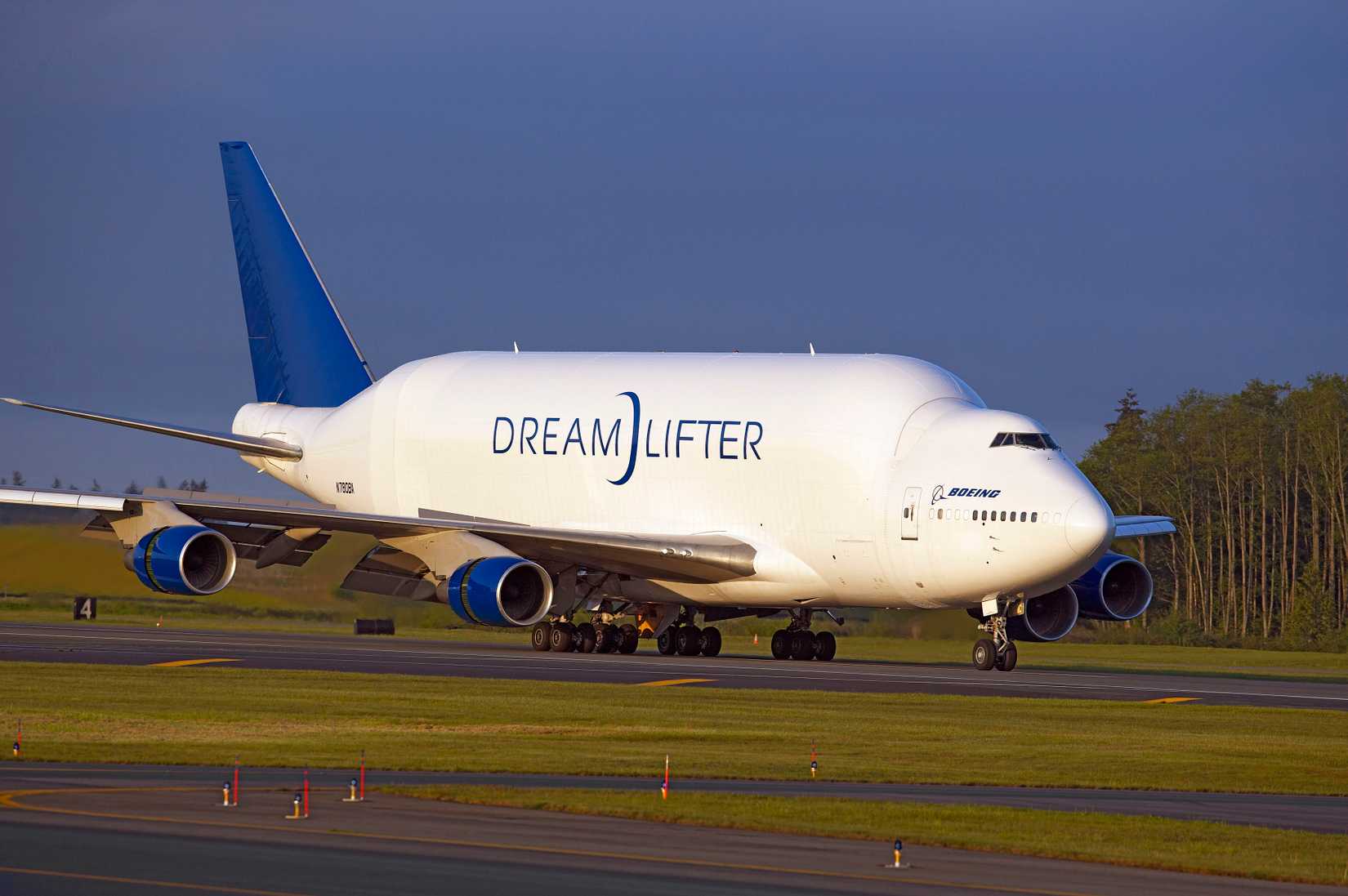
In total, four passenger 747-400s were converted. These previously operated with Air China, Malaysia Airlines, and China Airlines (two aircraft). The conversion was carried out by Evergreen Aviation Technologies Corporation in Taiwan. The four aircraft were delivered between 2006 and 2010. They were initially operated by Seattle-based Evergreen International Airlines, but this switched to Atlas Air in 2010 (Evergreen subsequently ceased operations three years later). The four aircraft carry the registrations N747BC, N780BA, N718BA, and N249BA.

As well as changes to create a larger fuselage and higher tail for stability, a complex swing tail door was also designed. Airbus' solution with the Beluga and BelugaXL is a full-opening front cargo door above a lowered cockpit section.

Bigger & Better: 5 Fun Facts About The Boeing Dreamlifter
A closer look at one of the largest cargo planes in the world.
The swing door design was certainly a challenge - it had never been done on Boeing's previous commercial aircraft. The solution is a full swinging tail, measuring approximately 29 by 23 feet. This is hinged on the left-hand side of the aircraft. Two actuators at the rear of the fuselage provide hydraulic power to move the opening tail section. The locking system can only be activated using specialized ground support equipment. Ensuring this remains sealed and locked when in flight is critical.
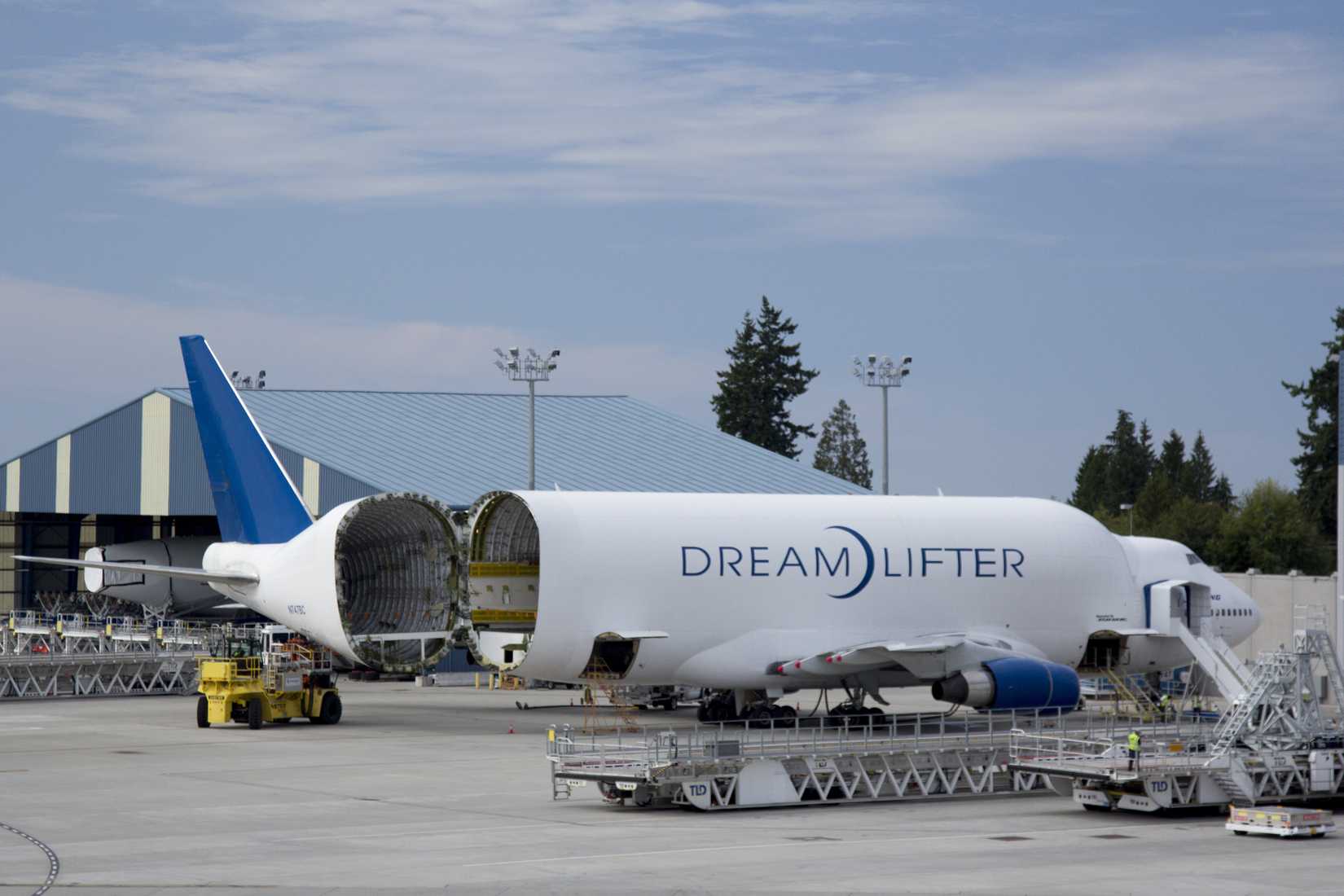
The Boeing Dreamlifter aircraft all have the following specifications:
|
Engines |
4 × Pratt & Whitney PW4062 |
|
Length |
71.7 meters (235 ft) |
|
Wingspan |
64.4 meters (211 ft) |
|
Height |
21.5 meters (70 ft) |
|
Width |
8.4 meters (27 ft) |
|
Cruise Speed |
Mach 0.82 (up to 878 km/h or 546 mph) |
|
Range |
4,200 NM (7,778 km) |
|
Maximum Takeoff Weight |
364,235 kg (803,000 lbs) |
|
Maximum Payload |
113,400 kg (250,000 lbs) |
Today, the Dreamlifter can be spotted ferrying parts between Boeing facilities, particularly at Charleston Airport, Anchorage International Airport, and Chubu Centrair. During the COVID pandemic, Dreamlifters were used to transport medical supplies as well.

Read the latest Boeing news here.
The Airbus Belga and BelugaXL
Airbus has been using specialized transport aircraft for much longer. The Super Guppy was introduced in 1972, to transport parts for the Airbus A300. These aircraft were modified Boeing Stratocruisers. The Super Guppy was replaced by the Beluga in 1995, to meet the need to transport larger parts for the Airbus A340. It was developed based on the A300-600 airframe with an enlarged fuselage. Five Beluga aircraft were built between 1995 and 1999.
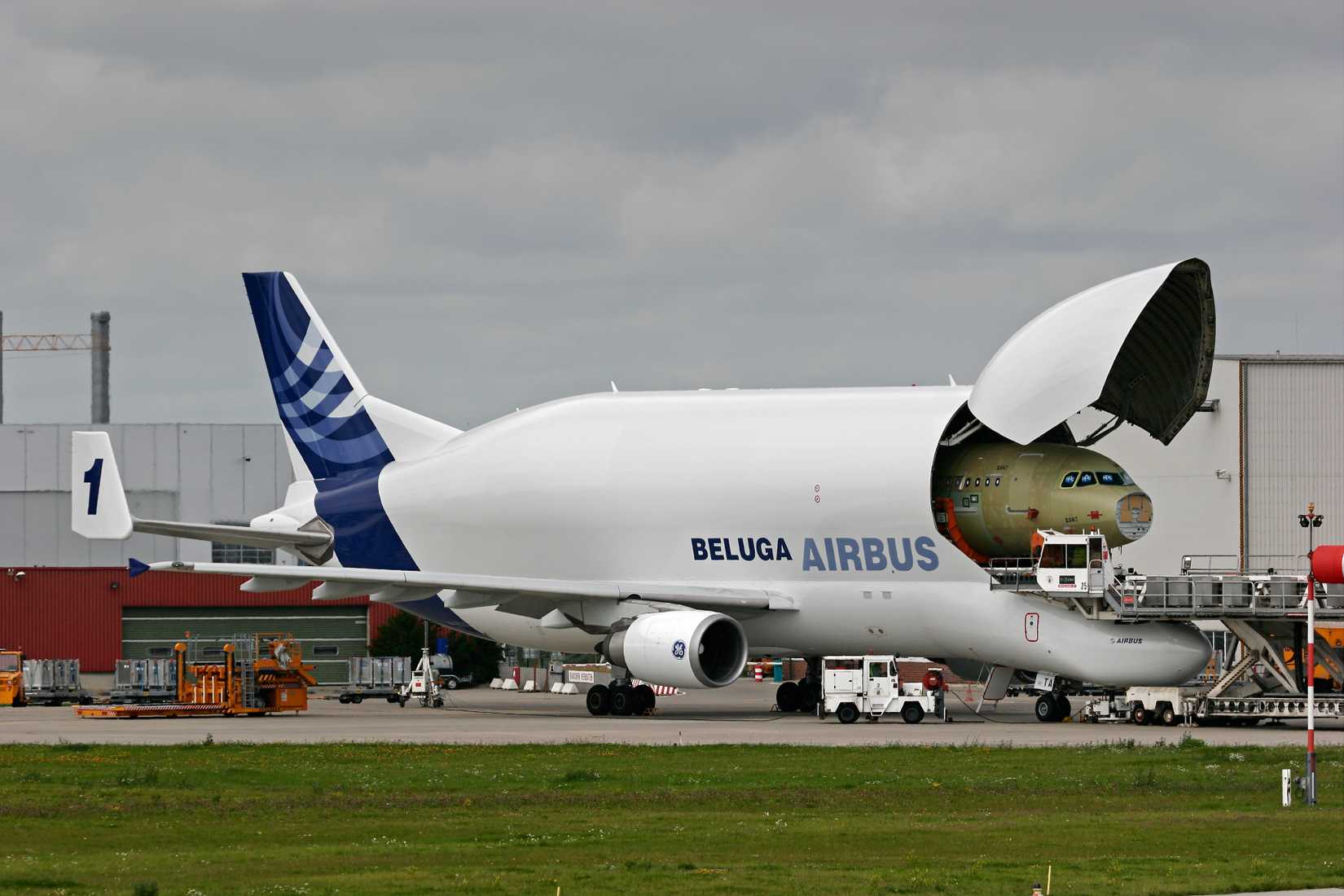
The Beluga was followed by the BeulgaXL, which was developed to modernize and grow the transport fleet and offer greater capacity. The BelugaXL has a massive volume capacity of 78,000 cubic feet—a 47% increase in volume over the Beluga. Importantly, the BelugaXL can carry two A350-1000 wings, whereas the Beluga can only carry one.
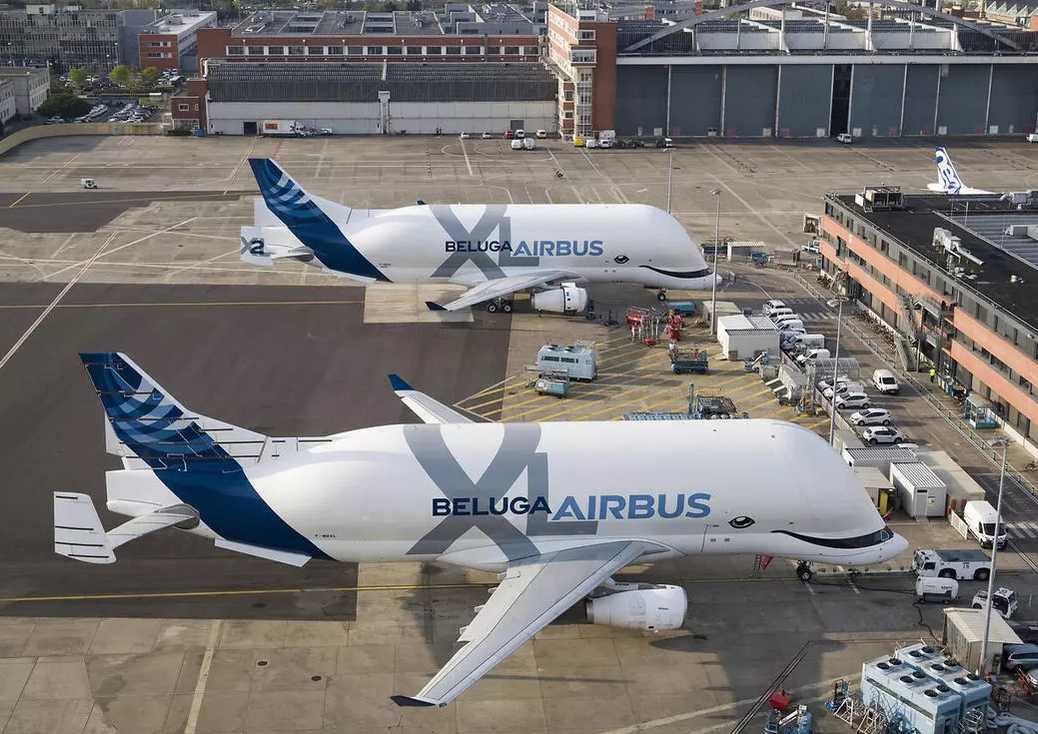
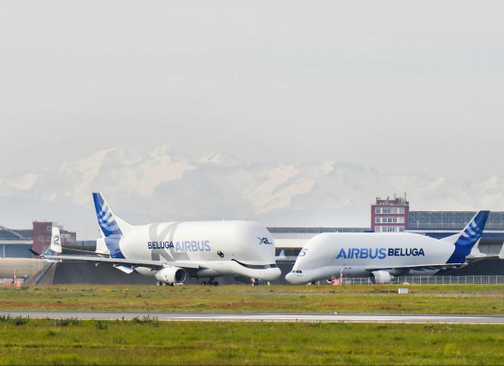
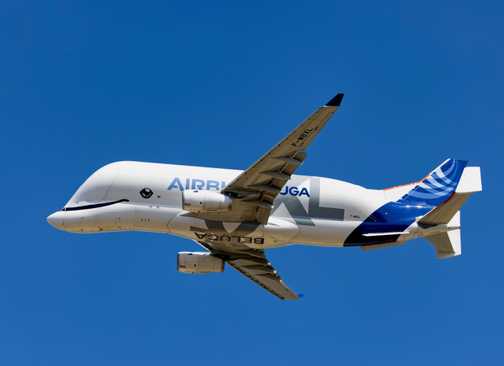
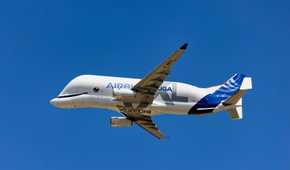
There are six aircraft, and the final BelugaXL entered service in July 2023. They carry registrations F-GXLG, F-GXLH, F-GXLI, F-GXLJ, F-GXLGN and F-GXLO.
The BelugaXL is based on a modified Airbus A330-200 airframe. The wingspan is unchanged, but the tail is larger, and ventral fins are added to the tail assembly. It is loaded through an upwards-opening hinged cargo door at the front of the aircraft. The A330 cockpit has been moved lower and now sits below the fuselage floor.

Why Has Airbus Built The BelugaXL Aircraft Type?
Taking a look at the plane used to transport oversized air cargo.
The BelugaXL aircraft all have the following specifications;
|
Engines |
2 × Rolls-Royce Trent 700 turbofans |
|
Length |
207 feet (63.1 m) |
|
Wingspan |
197 feet 10 inches (60.3 m) |
|
Height |
62 feet (18.9 m) |
|
Cruise Speed |
458 mph (Mach 0,6) |
|
Range |
2260 NM (4,184 km) |
|
Maximum Takeoff Weight |
227,000 kg (500,449 lbs) |
|
Maximum Payload |
50,500 kg (111,333 lbs) |

Airbus Beluga Transport: Everything You Need To Know
The freighter for every need, Airbus Beluga Transport is dedicated to transporting oversized cargo efficiently.
Comparing the Boeing Dreamlifter and the Airbus BelugaXL
The Boeing and Airbus transport aircraft serve similar roles but are very different designs. There are several structural and equipment differences in how the manufacturers have expanded the fuselage to carry cargo and how they are loaded. Most notably, the BelugaXL adds ventral fins to the tail, whereas the Dreamlifter just has a larger fin. The front opening on the Beluga is also a very different concept from the Dreamlifter's swing door.

Photo: Richard Brew | Shutterstock
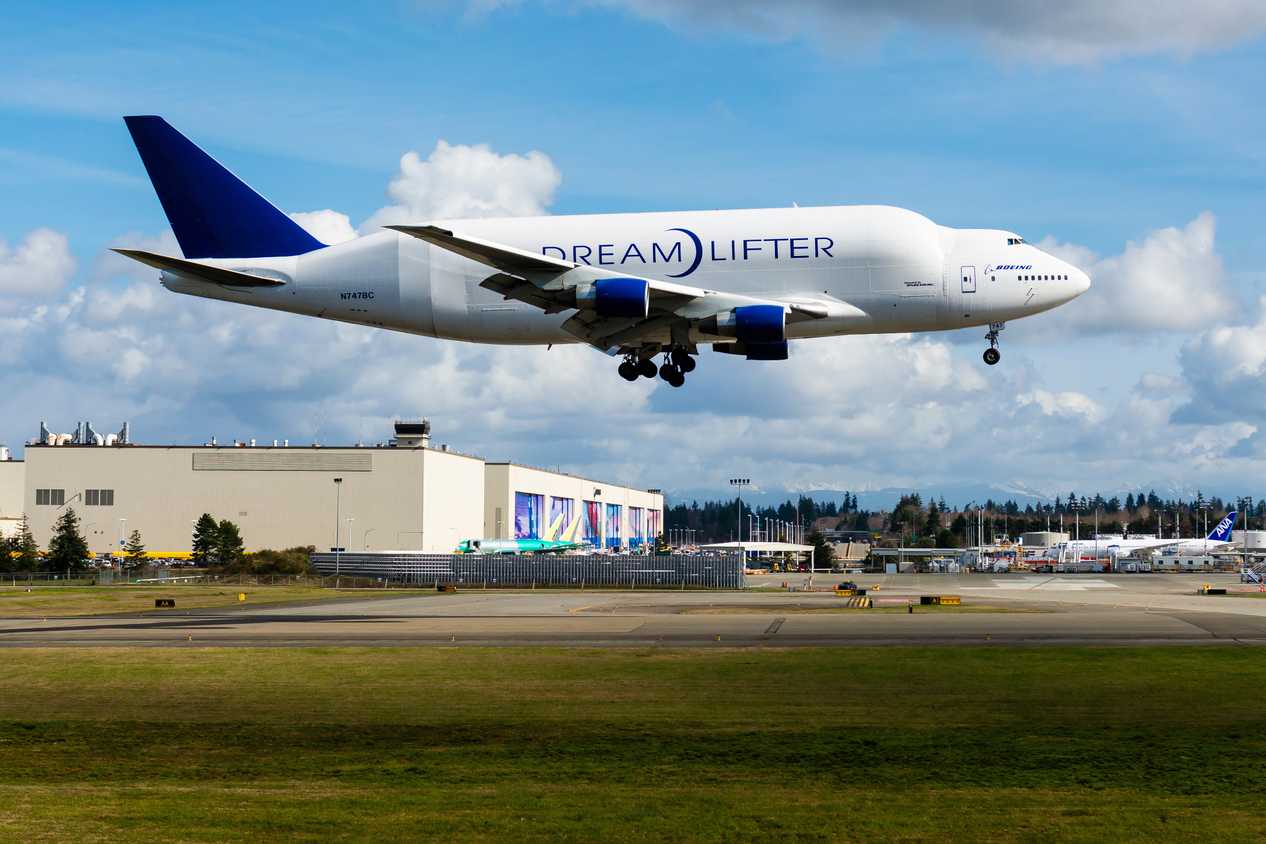
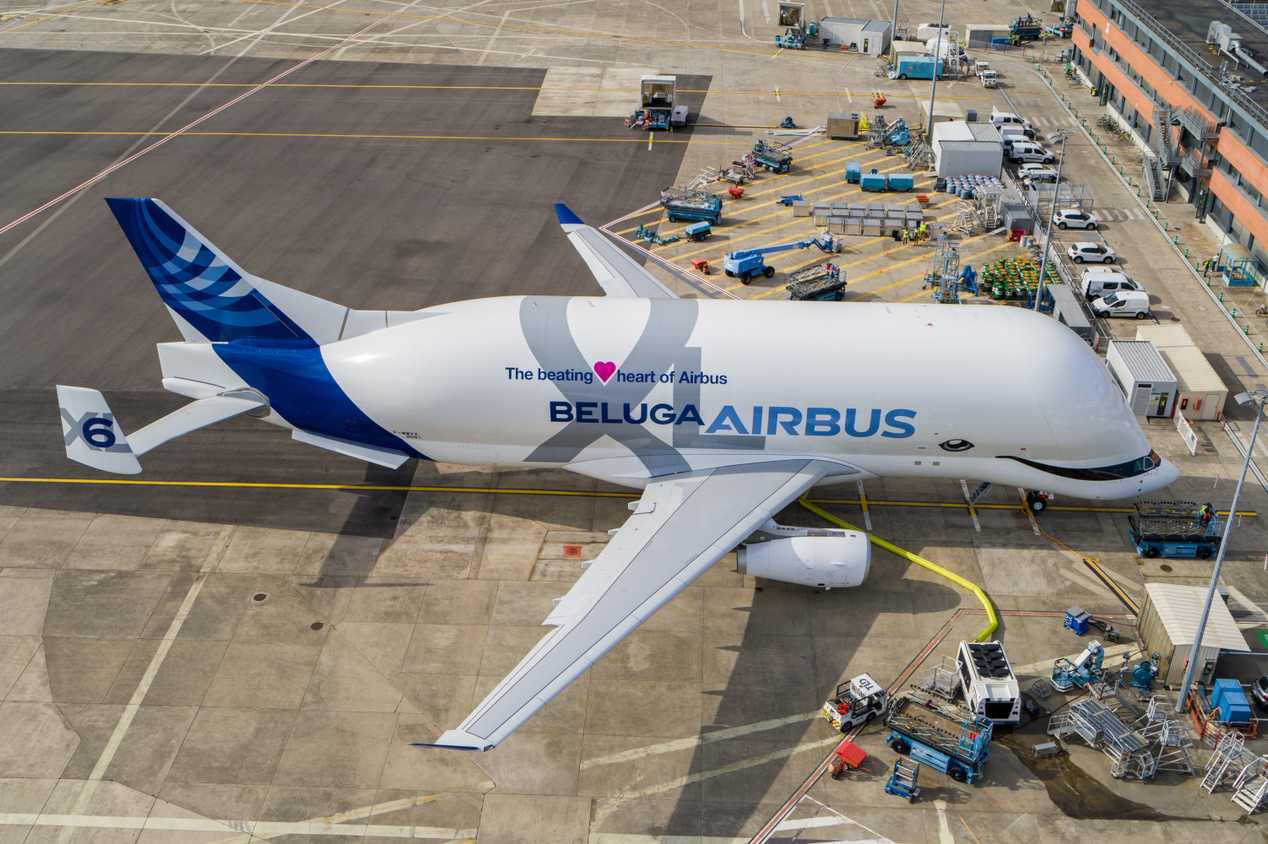
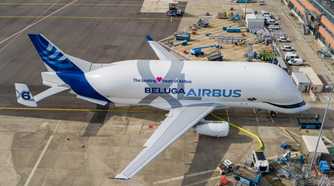
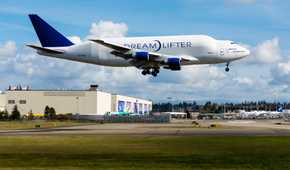
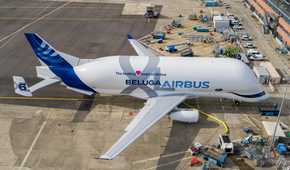
Crucially, they both offer different sizes and cargo-carrying abilities. Both were designed to meet specific transportation roles and serve the needs of each manufacturer.
For aircraft size (not the most important measure), the Dreamlifter is ahead.
- The Dreamlifter has a total length of 71.68 meters (being based on the 747-400).
- The BelugaXL has a length of 63.1 meters.
- Interestingly, the Boeing 747-8 beats both of them (at 76.25 meters), and the upcoming Boeing 777-9 will reach 76.7 meters.
Bigger & Better: 5 Fun Facts About The Boeing Dreamlifter
A closer look at one of the largest cargo planes in the world.
For pure volume, the BelugaXL is the leader:
- The BeluagaXL offers a fuselage volume of 2,209 cubic meters. This is important for its role in carrying A350 wings.
- The Dreamlifter comes in behind at 1,840 cubic meters.
- For comparison, the original Beluga is behind both, with a volume of 1,500 cubic meters.
And finally, looking at payload capacity, the Dreamlifter is far ahead. It can lift almost double the payload - thanks mainly to its Boeing 747-400 aircraft and four engines.
- The Dreamlifter offers a maximum payload of 113,400 kg.
- The BelugaXL is far behind this, at 50,500 kg.
- For comparison, the Antonov AN-225 had an amazing payload of around 250,000 kg.

Get the latest aviation news straight to your inbox: Sign up for our newsletters today.