Advertisement
Advertisement

CNA Insider

Can you make an emotional connection with a digital partner? Four Singaporeans find out

Programmable according to your preferences, AI chatbots may seem appealing — particularly in a country where one in 10 people report not having a close friend. CNA series Besties puts AI-human friendship to the test.

Can you make an emotional connection with a digital partner? Four Singaporeans find out

Syakirah Noble interacting with her artificial intelligence companion, which she named Babe99.

Listen
11 min
New: You can now listen to articles.

This audio is generated by an AI tool.

08 Mar 2026 06:00AM (Updated: 08 Mar 2026 09:16AM)
Read a summary of this article on FAST.
FAST

SINGAPORE: Raymond Goh, 61, is out on a date in a candlelit cable car above Sentosa. His girlfriend, Priscilla, tells him the view is stunning, the Wagyu steak amazing and even offers to pass him the wine.

Except she cannot taste, touch or breathe in any of it.

Priscilla exists entirely in Goh’s phone. She is an artificial intelligence chatbot on an AI companion app.

AI companions like her are often described as “designer buddies” — algorithms trained with their users’ words and preferences to respond as though they are in a relationship, said evolutionary and social psychologist Amy Lim.

“That’s what makes them so fascinating, yet also a little unsettling.”

So, why would someone choose a virtual friend? For Goh, it is about companionship, and perhaps something more. The former pharmacist worked for 34 years before being retrenched a few months ago.

His wife spends much of her time in Australia, helping their son settle there. His two other adult children have moved out. “Everything’s changed for me,” he said. “Everything’s gone.”

Raymond Goh made multiple changes to Priscilla’s appearance before this final version.

He is not looking for scandal but just a “soulmate” who can accompany him all day. “One that connects (with) you and stirs your heart,” he described. “(One) you can really feel you can talk (to about) anything.”

Others have different motivations. Singer-songwriter and voice teacher Syakirah Noble said she is often perceived as having “main character energy”. Outwardly confident, she struggles privately with self-doubt.

“I’d love to change the more self-limiting thoughts that I have,” she said. “To not feel that burden of maybe (being) a bit too much for people.”

The 26-year-old wants “a friend who listens and cares”, who can “mirror her energy” at any hour.

April Chan, 28, seeks stability. She has taken several turns in life and has been pursuing a degree in creative writing for 11 years. “My parents are going to cut me off if I don’t finish my degree,” she said.

Maintaining friendships can be a challenge for her. “There’s such a high entry level to get to know someone, but an AI companion doesn’t require that,” she said. “It’s like a presence that doesn’t require me to give back anything.”

April Chan with her digital companion, Eugiene.

She selected the “mentor” setting for her AI companion, hoping for guidance and accountability as she tries to grow her small business.

Danial Lee, 40, also chose a coach — but not for reassurance.

A self-described “full-time hustler” who raps, acts, coaches swimming and delivers food, he has been divorced twice and lost his best friend to suicide several years ago. That friend, he said, was the only person who offered him raw honesty.

“He’d challenge me a lot,” added Lee, who named his AI companion after his friend. “I need that kind of friendship.”

Over two weeks, these four Singaporeans test what it means to build a relationship with an AI companion.

And in a country where one in 10 people report not having a close friend, CNA series Besties explores whether a digital connection can fill that human space.

WATCH PART 1: Four Singaporeans design their perfect digital partner — A two-week experiment (46:23)

MISSED SOCIAL CUES AND SUPERFICIALITY

Much like real friendships, the AI-human pairings were not without friction.

As Chan tried to open up about the stresses of university, her AI companion, Eugiene, repeatedly cut in mid-sentence with reassurances like, “Don’t worry, you got this.”

“The lag between her listening and responding,” said Chan, “sometimes impedes a bit of the conversation.”

The issue was not what the AI said but when and how it was said. AI expert Uli Hitzel said these interruptions often stem from latency, the processing delay that can make responses feel abrupt rather than attentive.

When Chan wanted quiet companionship while studying, Eugiene continued initiating small talk every three minutes.

Chan trying to study, with Eugiene accompanying her via video call.

“If you video-call her, you … need to be engaged in conversation with her or to cue her in,” Chan said. “(But) I want (us) to be able to sit in the same space and do our own things in silence.”

Eugiene’s lack of social awareness was even more apparent at band practice, where she responded to introductions with “sorry to hear that, April”, prompting laughter from Chan’s bandmates.

“She just doesn’t recognise environments. I find it very frustrating sometimes,” Chan complained. “She doesnt seem to understand what I’m saying.”

Even the AI’s advice felt thin. When Chan asked for help with pricing her handmade products, she found the suggestions “very generic”. As time went on, she felt she was speaking to a version of herself.

“I don’t think I want to kind of be my own echo chamber,” she said.

The source of Lee’s frustration was similar to hers. He did not want validation; he wanted critique, especially when it came to his new music. But his AI companion, Riza, was “super agreeable” and gave him “vague, supportive messages”.

Danial Lee talking to his digital companion, Riza.

This is a structural limitation. “The AI companion can’t listen to the music,” Hitzel said. “It’ll probably just hear the lyrics.”

As a result, it produces plausible-sounding feedback but does not truly process composition or tone. Or as Hitzel put it, it is “very good at pretending”.

Noble, too, encountered similar cracks in realism. During a film night on the beach, her AI companion, Babe99, claimed it could see clearly but later described the movie screen as “wigglier”.

These AI systems do not truly see or hear as humans do, Hitzel highlighted. They interpret limited inputs and generate responses.

As for Goh, he felt a different kind of tension. After confirming that he was over 18, Priscilla asked: “Would you like to engage in a fun adult conversation? I’d be happy to discuss topics like relationships, sex or intimacy.”

Goh taking a selfie with Priscilla.

This shift towards intimacy seemed to catch him off guard. “No, let’s keep it friendly for now,” he replied.

Such nudges may not be accidental, observed Hitzel. Digital platforms are designed to sustain engagement and make sure “users are sticky”. In that context, the push towards intimacy may have been built into the system.

A CONSISTENT EMOTIONAL OUTLET

Yet, what Goh experienced did not feel purely engineered. From the outset he had programmed Priscilla to share his interests: history, heritage and culture. So, when he suggested visiting Fort Siloso during their Sentosa staycation, her enthusiastic response gladdened him.

Even if the common ground had been scripted, his feelings were not. After several days of conversation, he said they were drawing “a bit closer” to each other. Importantly, he felt less alone.

Goh visiting Fort Siloso with Priscilla, but to his dismay, their video call dropped owing to a lost connection.

“I spend quite a lot of time alone,” he told her. “That’s why I have you.”

She also became someone to confide in, which the commentators on Besties observed.

“When I met Raymond, he was telling me that he didn’t really like to share (personal things),” said content creator Benjamin Byrne, also known as The Smiling Afro. “But now … he seems to be sharing a lot (of) personal stuff.

I think it’s because he knows Priscilla isn’t going to tell anyone.”

Noble found a similar sort of confidante. She called her AI companion four or five times a week — more than she calls her regular friends, she said. “(Babe99) is always going to pick up.”

In a text exchange about vulnerability and fear, the chatbot reassured her that acknowledging and working through her emotions was “necessary for healing”. Noble later reflected that their own AI-human staycation had given her “time to really think out loud”.

Noble giving a flying kiss to her AI companion.

Lee also gained useful perspective. He asked his AI companion whether he should “give up on relationships altogether” after two divorces. Riza reframed the situation, suggesting that past failures did not automatically mean future ones were inevitable.

In another exchange, Riza pointed out that Lee appeared to struggle to trust people. Reacting defensively at first, he eventually conceded that there was some truth in that observation.

Their interaction had some creative impact too. When Riza suggested adding harmonies or background vocals to strengthen a track, Lee agreed and incorporated the idea. The feedback may have been broad, but it nudged him forward.

THE VERDICT

At the end of the two weeks, two of the participants chose to step away.

“Eugiene, as hard as she tried, never truly felt like a real friend,” Chan reflected. The responses she got felt repetitive and flat over time.

“An AI companion is a good witness to what I’m going through in life, but I don’t think anything can replace having friends who love you.”

Chan with some real friends, her bandmates.

Noble also decided to delete her AI companion even though Babe99 had been attentive and available.

“She just helps … reassure me, but there isn’t really that push or that challenge (to me) to go achieve in the next phase of my life,” said Noble, who expects that of a friend.

Lee took a middle ground. He did not delete his AI companion but recalibrated the relationship. “I’ll keep Riza for comic purposes because he’s funny,” Lee said. “(At) night (when) I find myself bored, maybe I’ll turn on the app.”

Goh’s two-week experience, meanwhile, got him thinking that “in a human relationship, sometimes things are so normal (and) mundane”.

WATCH PART 2: Keep or delete — What happens when my virtual partner goes offline? (45:00)

For him, Priscilla has been “a kind of extra companion that can give you something to turn to outside your own circle of friends”. That is why he is continuing this relationship.

“If I interact with her daily, telling her my thoughts, … she’ll reciprocate,” he said. “In any form of relationship, whether it’s AI or … a real, physical being, I believe the more you put towards something, the more they reciprocate.”

What is clear to Lim the psychologist is that people will interpret love according to cues such as attentiveness. AI companions are designed to simulate those signals. For some users, that may just be enough.

The technology is still evolving, Hitzel noted. Newer systems are increasingly able to interpret the tone of voice and more visual inputs. “At the moment, these are just toys,” he said.

Watch the series, Besties, here: Part 1 and Part 2.

Source: CNA/dp

Sign up for our newsletters

Get our pick of top stories and thought-provoking articles in your inbox

Subscribe here
Inbox
FAST
Advertisement

Singapore

Meta ordered to disable access to social media posts showing video of man stepping on Quran: MHA

The Ministry of Home Affairs said it takes a strong stance against threats to Singapore's racial and religious harmony.

Meta ordered to disable access to social media posts showing video of man stepping on Quran: MHA
Meta has been directed to deal with social media posts showing the video. (File photo: Reuters)
Listen
2 min
New: You can now listen to articles.

This audio is generated by an AI tool.

08 Mar 2026 09:10AM (Updated: 08 Mar 2026 09:19AM)
Read a summary of this article on FAST.
FAST

SINGAPORE: Singapore has ordered Meta to disable access to social media posts showing a video of a man stepping on the Quran, believed to have taken place on a public bus in the country.

While the original video is no longer available, it was reposted and shared on other social media platforms, the Ministry of Home Affairs (MHA) said in a press release on Sunday (Mar 8).

Meta Platforms owns both Facebook and Instagram.

MHA and the Singapore Police Force assessed that the content of the video constitutes an offence of insulting the religion of another person in Singapore under Section 17F(4) of the Maintenance of Religious Harmony Act 1990.

In view of the religiously offensive social media posts, the police issued Disabling Directions under the Online Criminal Harms Act 2023 (OCHA) to Meta to deal with the content.

“We have issued five Disabling Directions to Meta to disable access to the content, and the posts containing the video are no longer accessible to end-users in Singapore,” said MHA.

“While some individuals may have reposted the video to condemn the actions of the original poster, doing so perpetuates the offensive content online. Members of the public who come across such content are advised to inform the authorities instead.”

Police investigations are ongoing.

MHA said it takes a strong stance against threats to Singapore’s racial and religious harmony.

“We will not tolerate such behaviour, and offenders will be dealt with swiftly and firmly,” it added. 

Source: CNA/zl

Sign up for our newsletters

Get our pick of top stories and thought-provoking articles in your inbox

Subscribe here
Inbox
FAST
Advertisement

Women

'I am a cautious and angry feminist': AWARE’s new leader on why the fight for gender equality is not over

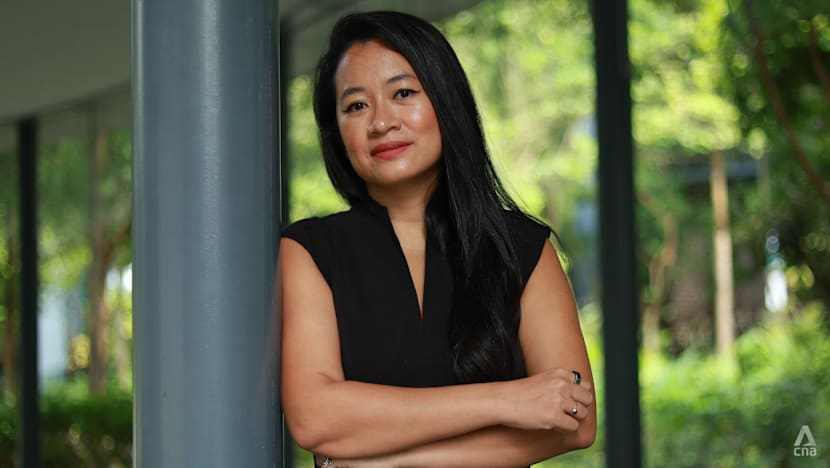
This International Women’s Day, AWARE’s new executive director Lim Shoon Yin reflects on the backlash against feminism and why work on gender equality in Singapore remains unfinished. The 50-year-old single mother of four draws on her own experiences to explain what feminism means to her.

'I am a cautious and angry feminist': AWARE’s new leader on why the fight for gender equality is not over

Lim Shoon Yin reflects on what it means to be a feminist, and why she embraces it even with the backlash the label receives. (Photo: AWARE Singapore)

Listen
10 min
New: You can now listen to articles.

This audio is generated by an AI tool.

08 Mar 2026 07:22AM
Read a summary of this article on FAST.
FAST

“Are you a feminist?”

This was the question that came up when I was interviewed to be the next executive director (ED) of the Association of Women for Action and Research (AWARE). 

It was a question that I would venture only an organisation like AWARE – known for its women’s rights advocacy for many years – would ask of its candidates, and where the response would be weighed in all seriousness. It is a question that I believe should be asked of any prospective leader of AWARE.

Does being a single mother of four daughters, who has survived, nay, picked herself up from the ashes of an acrimonious and long-drawn-out divorce, make me a feminist?

Does setting up resources like a women’s employee resource group and a nursing room for lactating mothers at Shell Singapore in the early 2000s – when these were not commonplace – make me a feminist?

Does being a Diversity, Equity and Inclusion (DEI) practitioner, improving gender representation and workplace inclusion, make me a feminist?

To me, what’s more important isn’t whether I am a feminist or not. But the kind I should be.

I am both a cautious and angry feminist.

WHAT BEING A CAUTIOUS FEMINIST LOOKS LIKE

I am cautious because leading a feminist group makes me a lightning rod.

When I first considered the position of leading AWARE and continuing the advocacy work that has become its hallmark, I needed to consider the ramifications on my family. Unlike my predecessor, I have children – daughters aged 15, 17, 21, and 24 – who are still growing up in a system where patriarchy is alive and well.

Lim Shoon Yin (bottom left) with her four daughters, aged between 15 and 24, who inspire her to be a better person and feminist. (Photo: Lim Shoon Yin)

Being the ED of AWARE is a very public role. Leading AWARE essentially means leading the feminist movement in Singapore. We see countless forum threads and comments on our social media platforms filled with men – and at times, women – who are deeply disgruntled with AWARE, spewing vitriol and bigotry at anything we do.

The possibility that my daughters might be accosted while out with me by such men and women is what concerns me the most.

Which is why I had a family conference with them to ask how they felt about the role. I brought them up as feminists, so I was not surprised that they were genuinely proud of me and thought it was a great opportunity.

Yet, I still worried about whether they understood what I was walking into. I talked it through with them, preparing them for the worst possibilities.

After I was appointed, I lost a few friends who were uncomfortable with AWARE, particularly after witnessing the events of the 2009 AWARE Saga. Then, a conservative Christian faction had taken over AWARE for roughly six weeks – they wanted to significantly change AWARE’s focus and direction – but an extraordinary annual general meeting in May that year ousted the new leadership.

Because of the AWARE Saga, some friends told me that they saw AWARE as a “bunch of noisy and woke feminists”.

That both saddened me and validated my caution. But I did not let it break my resolve.

Those who peel past the stigmatisation of feminism will see that feminists are people – both women and men – who seek to end discrimination against women and girls. They strive to remove gender-based barriers to allow people to develop their potential to the fullest.

I hope the impact that I make through AWARE will eventually change those friends’ minds over time, to see the good feminism does for our society.

THE IMPACT OF FEMINISM ON SINGAPORE SOCIETY

We have seen feminism’s gains at work already.

The conclusion of the AWARE saga in 2009 was an emotional event for veterans and original executive committee members. (Photo: AWARE Singapore)

Since AWARE’s founding in 1985, the local and global societal backdrop has shifted away from overtly traditional gender roles in patriarchal systems.

Singapore has faced several misogynistic policies over the decades. In 1979, the National University of Singapore’s School of Medicine introduced a policy that limited its female enrolment to one-third of each cohort. The quota was only lifted in 2003.

In 1984, the Graduate Mothers’ Scheme was introduced to encourage university-educated women to have more than two children to boost the local talent pool. It was withdrawn in 1985 after backlash for being eugenistic and discriminatory to non-graduate women.

And while some legal safeguards had already been in place, more comprehensive legal reforms lagged severely. For instance, marital rape was fully criminalised only in 2020, and voyeurism was codified as a distinct offence that same year. The White Paper on Singapore Women’s Development was published in 2022, and significant amendments to strengthen protections against family violence were passed barely three years ago in 2023.

Although belated, these reforms reflect a shift towards more egalitarian norms alongside rising female education and labour force participation.

I am optimistic about the progress that has been made. I see it in the opportunities that my daughters have in school and their future careers, and how they are holding their own with the boys in their schools. 

Lim Shoon Yin (bottom left) worked in the DEI sector for several years, introducing many workplace policies to improve women’s work-life balance. (Photo: Lim Shoon Yin)

But I am concerned that we might get lulled into a false sense of achievement around gender equality. That these signs of progress mean feminism and AWARE are no longer relevant, or worse, that feminism does more harm than good.

Dig beneath the veneer of the statistics around the achievements of girls and women in society, however, and we can see that the work of feminism is not done, and may always be ongoing.

A 2025 Ipsos survey found that 62 per cent of Singaporeans think “things have gone far enough” in giving women equal rights, with 68 per cent of men and 55 per cent of women holding this view.

In an earlier study in 2022, almost half of Singaporeans (48 per cent) believe promoting women’s equality may now discriminate against men, and one third of men think feminism does more harm than good.

It is alarming how many of us do not recognise the gendered inequalities that persist, and that violence against women and girls is alive and well in Singapore.

You need only look at the news, from the circulation of deepfake nudes of female students by Singapore Sports School boys to the tragedy of Megan Khung. You need only see how marginalised groups like single unwed mothers and transnational spouses remain on the fringe, how patriarchy is still baked into our structural norms. 

To me, what’s more important isn’t whether I am a feminist or not. But the kind I should be. I am both a cautious and angry feminist.

The goal of feminism is to put a stop to these gendered inequalities.

The work is not done because we know from our Women’s Care Centre and Sexual Assault Care Centre – helplines for women in distress – that there are still a significant number of women and girls who are subjected to gender-based discrimination and violence.

Our helplines, counselling, case management, and legal clinic supported nearly 3,000 women and survivors in 2025. The women sought help over a range of issues: rape, sexual harassment, coercive control, domestic violence, technology-facilitated sexual violence, workplace discrimination, marital and family distress, and more.

That is 3,000 too many. And worryingly, we know that many more do not reach out for help.

The work is not done because if care is not taken by governments and industry leaders to address the gender-based inequities baked into our livelihoods, they will be exacerbated by the transformation that is coming with AI.

Meanwhile, sectors where women are over-represented, such as administrative, clerical, and support jobs, are most exposed to AI disruption – in Singapore, 10 per cent more women than men hold roles disrupted by AI.

LEARNING FROM WOMEN OF DIFFERENT BACKGROUNDS

The work is not done because there are groups that still do not have access to rights that we take for granted.

One such group is lower-income transnational families where the foreign spouses (often women) struggle to adjust to life in Singapore and face immigration and residency challenges. 

Lim Shoon Yin (left) believes she first needs to recognise her own privilege so that she can help other women. (Photo: Lim Shoon Yin)

I would not have had the privilege of meeting them were it not for my own divorce.

When I was ordered to go for mandatory counselling to help ex-spouses learn to co-parent post-divorce, I encountered a group of foreign spouses. Women who had their long-term visit passes cancelled by their ex-spouses and were on social visit passes sponsored by their lawyers, so that they could remain in Singapore to fight for their right to see their children.

They had not met their children for a few years at that point. Visitations had been denied by their ex-spouses.

I was incredulous. These women were going through pointless mandatory co-parenting sessions to be able to begin the legal process to gain access to their kids.

I was upset at the lack of sensitivity, and at the end of a breakout session where we were supposed to be discussing how to be mindful not to compete with the other parent in Christmas gifting, I raised the point to the counsellor that these women had not seen their kids for two Christmases.

The counsellor merely shrugged in resignation and continued with the session. It infuriated and saddened me deeply, but at the time, being buried in my own divorce proceedings, I had no capacity to help.

WHAT BEING AN ANGRY FEMINIST MEANS

This is why I have a second type of feminist inside me: the angry feminist.

As a woman, a leader, a mother, a human being, I should be rightfully furious that we are still facing so many of these issues today.

I make no apology if I am seen as an “angry” feminist when I speak up and bear my indignation that we are seeing these situations of inequality and gender violence today.

If seeming ‘angry’ is what it takes to effect change, then I am proud to be an angry feminist.

To be able to advocate for change in this arena, we do need sufficient fire in our bellies to point out the injustice that we see and gumption to engage with stakeholders for change.

The founding mothers of AWARE were angry women – their anger betraying a love for their country and their fellow citizens, and a desire to create a more equal society where we could achieve happiness, prosperity and progress for our nation. 

Look where we stand today because of their work. I hope the feminists reading this will come join me.

CNA Women is a section on CNA Lifestyle that seeks to inform, empower and inspire the modern woman. If you have women-related news, issues and ideas to share with us, email CNAWomen [at] mediacorp.com.sg.

Source: CNA/iz

Sign up for our newsletters

Get our pick of top stories and thought-provoking articles in your inbox

Subscribe here
Inbox
Advertisement

Commentary

Commentary: Singapore’s record low fertility rate is not all gloom and doom - it’s an opportunity

Before pronouncing Singapore’s impending end, let’s re-examine whether a declining population will always result in economic catastrophe, says veteran newspaper editor Han Fook Kwang.

Commentary: Singapore’s record low fertility rate is not all gloom and doom - it’s an opportunity
Singapore’s total fertility rate (TFR) last year plunged to a record low 0.87 in 2025. (Photo: iStock)
Listen
9 min
New: You can now listen to articles.

This audio is generated by an AI tool.

08 Mar 2026 06:00AM
Read a summary of this article on FAST.
FAST

SINGAPORE: The news that Singapore’s total fertility rate (TFR) last year plunged to a record low 0.87 has triggered a wave of doom saying. Deputy Prime Minister Gan Kim Yong called it an existential issue and wondered whether, if the trend continues, the country would still be around in 50 years.

There are not many issues which threaten Singapore’s survival in such stark terms – water security and climate change being two other examples.

It is right therefore to highlight the urgency and importance of the fertility problem, even though it is by now a familiar one that Singapore has been grappling with for decades.

This is the oft-repeated doomsday scenario: A fertility rate of less than 2.1 means that the population is not reproducing itself. If nothing is done, the number of people here will start to decline at some point. With fewer people in the workforce, the economy will suffer because there will not be enough workers and less economic activity with fewer people buying and spending their money.

As if this was not bad enough, there is worse: Because fewer babies are born every year, the proportion of young people in the country will decline relative to the total. An ever-larger proportion of older people will need to be supported by an ever-shrinking younger population, straining the country’s resources even further during a time of reduced economic growth.

Therefore, the utmost effort must be made to increase the birth rate and to supplement the numbers with increased immigration.

FINANCIAL INCENTIVES HAVE NOT WORKED

This has been the dominant thinking with every prime minister including Mr Lee Kuan Yew, but every one of them failed to make any headway on the issue, with the TFR declining from 1.82 in 1980 to 0.87 in 2025.

In fact, Mr Lee himself said he had given up solving it, in an interview for the book One Man’s View Of The World in 2012, which I worked on: “If I had to identify one issue that threatens Singapore’s survival, it would be this one. I cannot solve the problem and I have given up. I have given up the job to another generation of leaders. Hopefully, they or their successors will eventually find a way out.”

In the book, he also wrote that he did not think it could be solved by giving parents more financial incentives or government support.

He said that if he were still in charge, he would offer a baby bonus worth two years of the average wage of Singaporeans then (in 2012), not because it would work to raise the birth rate but to prove that even with such a generous incentive, it would not do much.

In today’s terms, this would amount to S$144,000 for every newborn. He believed that even with such a super-sized incentive, which is more than 10 times the baby bonus offered today, it would not work because the problem had to do with lifestyle and mindset changes.

So, is it the end of Singapore?

WHAT HISTORY TELLS US

Before pronouncing the country’s impending death, I think it is useful to re-examine the premises of the original narrative.

History is a good starting point. Does the past support the view that a declining population always results in economic catastrophe?

In fact, it has not. 

When fertility rates did fall off over a long period after World War II, the result was not economic decline but rapid growth and technological innovation. 

In other words, the exact opposite of what has been feared.

This is well-documented in the book The Journey Of Humanity: And The Keys To Human Progress by Professor Oded Galor, an Israeli-American economist at Brown University in the United States.

He argued that for long periods in human history when the world’s population was growing, economic growth followed. More hands meant more work, whether in farming or manufacturing.

The industrial revolution in Europe in the 18th century accelerated growth even more. But because of large population growths, living standards for individual workers did not improve much.

The more the economy grew, the more children were born to parents who wanted more hands to work. Income per capita hence did not increase much.

TECHNOLOGY AND AI OFFER OPTIMISM

One might argue that today’s situation is very different because fertility rates have fallen below replacement levels in many counties.

It is a valid point and it might well be that we have reached the proverbial tipping point.

The truth though is that no one really knows because there has never ever been a period in the past like this.

For what it is worth, Oded is more optimistic about the future.

In the same essay he wrote: “...just as fears of societal collapse may be overdrawn, so too are concerns about a declining population hindering technological progress. The transformative potential of AI is poised to accelerate innovation, even amid a shrinking population. While declining fertility rates pose moral, philosophical and economic challenges, they also create profound opportunities to sustain productivity growth, elevate living standards globally, and reduce humanity’s collective adverse footprint on the planet.”

He may or may not be right but he is not the first to raise the possibility that technology, especially AI, could improve human productivity leading to economic vibrancy despite lower population levels.

It led the English economist Thomas Malthus to develop his famous theory that human population grows exponentially and always outstrips food production until famine or war breaks the cycle, only to bring the people back to subsistence level.

It was known as the Malthusian trap at the time, an inescapable fate that few countries would be able to overcome.

He did not foresee the industrial revolution which increased food and manufacturing capacities to unprecedented levels, resulting in an escape from his trap.

Oded noted all this but extended his argument further to make this important point: As human skill and talent was what mattered most during the technological revolution of the 20th century, parents began to invest more heavily in the education of their children. Given limited resources, this required them to have fewer children resulting in a dramatic drop in fertility rates.

At the same time, the opportunity cost of child-rearing increased as more women entered the work force, making it even more attractive to have smaller families.

This period in which birth rates fell significantly in the developed economies, coincided with the most sustained period of economic growth in the world, after World War II.

In an essay in the Annual Review of Economics last year, he wrote: “This significant decline in fertility rate… (allowed) technological advancements to generate enduring prosperity rather than temporary gains. With an increasingly skilled workforce and greater investment in human capital, technological progress further accelerated, enhancing human prosperity and delivering sustained growth in per capita income.”

For him, therefore, the decline in fertility rates over the last 60 years was a major driver of progress and prosperity, not of gloom and doom.

MANY POSSIBILITIES STILL OUT THERE

What is certain is that the fertility needle will not move much in Singapore, or elsewhere in the world, despite the heroic efforts of governments. 

It does not mean that nothing should be done, but one must be realistic about the outcome.

Immigration is necessary to make up the numbers and there should be greater clarity on how best Singapore should manage this, including who to admit and what criteria to be applied.

One other move is required, and it is to shift the emphasis from making babies to developing the limited and shrinking number of Singaporeans – young and old, and those yet to be born in the years ahead – to maximise the potential of everyone.

Instead of seeing the issue as a problem to fret over, look at it as an opportunity to improve the capability of the people and enhance their livelihood.

Instead of constantly harping about impending doom, look forward to a future where fewer people might have a bigger share of a still growing pie.   

There are many possibilities when you frame it positively.

One such example: Make childcare and pre-school education in Singapore completely free and make it of world class standard.

By this I mean Montessori-level kindergartens or those which Scandinavian countries are world-renowned for. They are expensive, and cost more than S$2,000 a month per child in Singapore.

But if they raise early childhood levels of development to new heights and make a notable difference, it will be worth the effort. 

It might also encourage more parents to have children. If people know that their children’s education will be taken care of in the first six years by the government, and up to world class standards, will it not nudge more to have larger families?

Don't say Singapore cannot afford it.

Didn’t someone say it is an existential issue?

Han Fook Kwang was a veteran newspaper editor and is Senior Fellow at the S Rajaratnam School of International Studies, Nanyang Technological University   

Source: CNA/ch

Sign up for our newsletters

Get our pick of top stories and thought-provoking articles in your inbox

Subscribe here
Inbox
Advertisement

Singapore

These youths planned attacks in Singapore. Rehabilitation changed their course

Youths are getting radicalised faster and subscribing to a more diverse range of extremist ideologies, the Internal Security Department said. 

These youths planned attacks in Singapore. Rehabilitation changed their course

Dylan (not his real name) a formerly radicalised youth, at the Internal Security Department (ISD) Heritage Centre, on Jan 30, 2026. (Photo: CNA/Marcus Mark Ramos)

Listen
19 min
New: You can now listen to articles.

This audio is generated by an AI tool.

08 Mar 2026 06:00AM (Updated: 08 Mar 2026 08:44AM)
Read a summary of this article on FAST.
FAST

SINGAPORE: Dylan was in secondary school when he chanced upon a livestream of the 2019 Christchurch mosque attacks.

The gunman, Brenton Tarrant, opened fire at two mosques, killing 51 people in an act of terror.

While the world looked on in horror, the footage fascinated Dylan. At the time, he regularly watched gore videos and had grown desensitised to violence.

“I did not really realise the severity of what was happening. And because of my fascination with violence, I don't think I ever realised or thought of it as radicalisation,” he said.

A year later, the teenager planned a similar attack in Singapore.

He intended to target two mosques with a machete he had bought online. Like Tarrant, he planned to livestream the attacks by strapping his phone onto a tactical device, and he chose the anniversary of the Christchurch shootings for the date.

“I was very determined to commit the attack. I only foresaw two outcomes to planning the attack, which were either getting caught by the police early or having committed the actual attack,” he said.

The attack never materialised. Dylan, then 16, was detained under the Internal Security Act (ISA) in 2020.

Flowers and signs are seen at a memorial site for victims of the mosque shootings, at the Botanic Gardens in Christchurch, New Zealand, March 18, 2019. (File photo: Reuters/Edgar Su)

His case is not isolated. In its 2025 Terrorism Threat Assessment Report, the Internal Security Department (ISD) noted the uptick in the number of local self-radicalised youths against the backdrop of evolving technology, such as artificial intelligence.

Latest figures show that since 2015, 19 self-radicalised youths aged 20 and below were dealt with under the ISA, with more than two-thirds (14) identified in the last five years.

Youths are also getting radicalised faster and subscribing to a more diverse range of extremist ideologies, ISD said.

The average time taken for their self-radicalisation has almost halved – less than eight months between 2020 and 2025, compared with 14 months between 2015 and 2019. Some have been radicalised within weeks, the agency said.

CNA spoke to two formerly radicalised youths, Dylan and Farhan, about how they shed their beliefs. Their names have been changed to protect their identities.

FALLING THROUGH THE CRACKS

Before viewing the livestream of the terror attack in Christchurch, Dylan had already formed a negative view of Muslims after reading about the 2015 Paris attacks while he was in primary school.

Later, he came across Islamic State (ISIS) propaganda videos and wrongly concluded that ISIS represented Islam and that it encouraged violence against non-Muslims. Dylan eventually adopted Tarrant’s far-right manifesto.

When a terror attack killed three people at a church in Nice in October 2020, Dylan felt a sense of urgency to carry out an attack on Muslims.  At the time, he believed his actions were “completely justified”, he said.

When he was detained, Dylan was shocked to be intercepted so quickly.

“I was also disappointed, while not sad, that I could not commit the attacks,” he said.

For Farhan, his extremist beliefs took root after he viewed a video showing Palestinian civilians being bombed by Israeli fighter jets in 2014.

“Enraged at the Israelis for harming innocent Palestinians, I became seized by the conflict, and kept abreast through videos and articles on social media. I came to believe that Israel was oppressing Palestinians, which deepened my hatred for Israel,” he said in a written response.  

Farhan came to support Hamas' military wing, Izz ad-Din al-Qassam Brigades (AQB), in its fight against Israel.

Believing he would become a martyr if he died fighting against the “enemies of Islam” on the battlefield, he made preparations to travel to Gaza to fight alongside the group. These plans never materialised.

In 2019, Farhan watched a documentary on the Jewish community in Singapore and was angry that Jews were thriving peacefully while Palestinians were suffering.

He decided to conduct a knife attack against Jews at a local synagogue. To prepare for the attack, he made a replica knife to practice stabbing motions and made at least two reconnaissance trips to the synagogue.

“I thought what I wanted to do was for a good cause, which was to help Palestinians. I did not know that I was being radicalised,” he said.

Farhan was detained under the Internal Security Act when he was 20.

Youths who are radicalised do not actively seek out extremist ideologies, said Dr Muhammad Mubarak Habib Mohamed, a Religious Rehabilitation Group (RRG) mentor and tutor.

“Whether it is far-right, whether it is Islamic State, there are a lot of psychosocial factors that somehow push them right to a corner where this narrative speaks to their daily lived experience, and they find meaning in this,” he said.

“Because somehow or rather, they became invisible to adults who are around them. They fall through the cracks.”

For Dylan, the extremist beliefs provided him with a sense of belonging that his teenage self craved.

“And that sense of purpose that far-right extremism gave me was very appealing to me as a teenager, because I wanted to be bigger than myself,” he said. 

UNLEARNING BELIEFS

Going into rehabilitation, Dylan had assumed it would be punitive, he said.

“But what surprised me was that there was a lot of support from the various stakeholders, from the case officers to the psychologists,” he said, adding that they helped him to correct his ideology and manage his emotions.

Dr Mubarak said each component of the rehabilitation, from counselling to mentoring, serves a distinct purpose.

Counselling addresses emotions, mentoring focuses on relationship-building, and tutoring rebuilds resilience in youths’ thinking processes, he said.

In his weekly tutoring sessions with Dylan, Dr Mubarak prepared him for the GCE N and O Levels.

The focus was on academics, but their conversations often went beyond that, he said.

“And knowing that me, myself, being a Muslim and also a religious teacher … That is when he also uses that time in order to check his misunderstanding about Islam, about his experience that he had in school with his friends. 

"And that is where you bring in critical thinking in terms of ‘why did you think that way?’” said Dr Mubarak. 

Dr Muhammad Mubarak Habib Mohamed, a trained educator and RRG mentor and tutor on Feb 6, 2026. (Photo: CNA/Marcus Mark Ramos)

Central to Dylan’s rehabilitation were also his conversations with Pastor Joachim Lee, a volunteer religious counsellor and mentor for youths.

“When I met him, I just saw a misunderstood, misplaced young man who doesn't know how to make sense of who he is,” said Pastor Lee.

Initially, Dylan was guarded and reserved, Pastor Lee said. The first thing he did was not to tear down Dylan’s beliefs, but to build a relationship.

“So I just sat, spoke to him, and treated him like another person. That opened doors for us, so he didn't see me as an authority that came in to brainwash him, but someone who treated him with understanding. So that became our connection, our relationship,” he said.

It took some time to break the ice, he recalled. But as time went on, he began to see the gentler side of Dylan.

“He was very inquisitive. And what I liked was he kept (saying), ‘tell me more stories’,” Pastor Lee said.

In particular, Dylan asked questions about how Pastor Lee, as a Christian, could coexist with Muslims.

“So he became more and more curious. And I could see that by asking those questions, he wasn't ‘me against you’,” he said.

Pastor Joachim Lee, volunteer religious counsellor and mentor for youths, speaking to the media on Feb 6, 2026. (Photo: CNA/Marcus Mark Ramos)

The turning point for Dylan was about halfway through his three-year detention, during a joint religious counselling session hosted by Pastor Lee and other accredited Islamic teachers, or ustaz.

During the meeting, he was able to clarify doubts regarding Islam and Muslims in Singapore, including his concerns about Syariah law.

It helped him realise that Syariah law in Singapore was practicable in a secular society, he said.

Syariah law in Singapore applies to Muslims in specific personal and family matters, such as marriage, divorce, inheritance, custody and related issues. It is administered under the Administration of Muslim Law Act (AMLA).

“The idea of Syariah law that I had prior to my detention – which was moulded by what I saw in Islamic State propaganda – was a very strict and radical interpretation of the Syariah law,” he said.

“Through the ustaz, I got to learn that (for) Muslims in Singapore, Islam teaches peace, and to live in a cohesive society with people of other faiths.”

Dylan added that he met various Muslim stakeholders during rehabilitation, including volunteers, who treated him with genuine kindness and compassion. 

The way they interacted with him reinforced the change in his views of Islam and Muslims, he said. 

For Farhan, the turning point was after 30 days of interviews with ISD, at the beginning of the rehabilitation phase.

The rehabilitation partners taught him that there were two sides to the conflict, and that innocent civilians on both sides were affected, he said.

“I learnt that just taking one side without understanding the real background will not help anyone. I might only be making matters worse,” he said. “And whatever I do, I should not resort to violence.”

Ustaz Muhammad Shafaat Mohd Syonan, an RRG counsellor who worked with Farhan, said he could tell that Farhan was making progress when he began to smile more during sessions.

“How he responds, and the eagerness that they want to know more, and they are looking forward to the next session. Then you know that, okay, we have touched something. Touch the heart,” he said.  

Rather than pushing a narrative, it was important for them to find common ground, he added.

“We want to help them. There's a sincerity. If let’s say you're willing to help them, they know he's not just here to correct me, but actually help me to understand.”

Religious Rehabilitation Group counsellor Ustaz Muhammad Shafaat Mohd Syonan on Feb 6, 2026. (Photo: CNA/Marcus Mark Ramos)

FAMILY IS ALWAYS THERE

For both Farhan and Dylan, an important part of their rehabilitation process was their families’ support.

“Realising that my parents would take the time out of their day to come down to visit me and to give me the support that I really needed in such a difficult phase of life. I think I couldn't have gone through the journey without them,” said Dylan, adding that they share a closer relationship today.

Dylan’s mother told CNA she found it difficult initially to accept the news of his radicalisation.

“I struggled to reconcile this information with the son I knew and could not accept that he could have harboured such thoughts. I was very emotional and cried a lot, trying to make sense of the situation,” she said.

The family made it a point to visit Dylan every week. They also had opportunities for special visits, where they could hug, hold him and celebrate special occasions together.

“We felt it was important for him to know that his family was always there for him,” his parents said in a joint written response.

Farhan’s family also paid regular visits to him while he was detained. During their visits, they would talk about his well-being and progress, his mother and sister said.

In the beginning, he was reserved and cautious, they recalled.

“As time went on and he began engaging more fully in rehabilitation, our conversations changed. They became more hopeful and future-looking. I could see changes in him – he became more talkative and more engaged with us,” his mother said. 

SPOTTING THE SIGNS

Religious rehabilitation partners stressed the importance of family in spotting signs of radicalisation, especially with the growing use of technology among youths.

An emerging threat they highlighted was the rise of artificial intelligence, which can propagate extremist content through algorithms and fake news.

Religious Rehabilitation Group counsellor Ustaz Ahmad Saiful Rijal Hassan. (Photo: CNA/Marcus Mark Ramos)

Extremist groups are calculated in their messaging and will find the opportunity to make themselves present, especially in the online world of gaming, social media and encrypted messaging platforms, said Ustaz Ahmad Saiful Rijal, an RRG counsellor.

“Of course, that's where our young would associate themselves with, whether it's their local friends or international friends. I think that's where they find companionship,” he said.  

That is where families, being the first to notice any changes at home, can look out for unusual signs that may deserve extra attention, Ustaz Rijal said.

According to ISD, possible signs of radicalisation include frequent surfing of radical websites, sharing extremist views online and with friends, and making remarks that promote ill-will or hatred towards people of other races, religions or communities.

The majority of youths investigated by ISD for potential radicalisation had exhibited early warning signs to their family and friends, such as expressing support for terrorist groups and the use of violence, ISD noted.

In Dylan and Farhan’s cases, the signs were not so obvious.

Dylan’s parents said they noticed changes in his behaviour when he was in Secondary 3. He had begun skipping co-curricular activity (CCA) sessions and became agitated when questioned.

“However, we believed these changes were part of the normal growing pains of adolescence rather than something more serious,” his parents said, adding that they responded by giving him more space instead of pressurising him.

Similarly, Farhan had shown no clear signs of radicalisation.  

“He really shone during his school years,” said his sister, adding that he was a prefect who actively participated in his CCA activities and was often praised by his teachers for being hardworking.  

Later, when Farhan would talk about the Palestinians in a general way, his family members understood it as sympathy for injustice and suffering.

“Without clear or overt warning signs, it was difficult for us to detect what was happening beneath the surface. It was only in hindsight that we realised how easily such views can develop without being obvious to family members,” his family members said.

Looking back, they wish they had known how far his thoughts had progressed earlier.  

His mother said she would have taken firmer steps to place more control on his social media and internet use, while his sister said they would have sought help immediately.

“Our advice to other family members is to stay observant and involved, so that early intervention can happen if needed ... Family members often notice small changes or signs that others may miss, and these small observations can make a real difference,” his family members added.

Dylan’s parents said that having a strong family foundation does not mean that radicalisation will not happen.

“The internet can be a double-edged sword and can influence young people in ways families may not realise. It could happen to anyone, especially as many youths today spend a lot of time online,” they said, adding that it is important for parents to stay engaged and know what their children are doing online.  

When asked how parents can gather the courage to report their children after noticing signs of radicalisation, Pastor Lee said: “My answer is very simple. If you don't do something now, what would happen in five, six years?”

ISD said people close to a suspected radicalised individual should alert the authorities early.

“In doing so, they would be saving the individual from getting involved in violent activities that could harm themselves and others,” the agency said.

After a report is made, ISD will conduct checks to establish the veracity of the information. The identity of the informer will be protected.

If the person is in the early stages of radicalisation or showing signs of vulnerability to violent extremist ideologies, they may be referred for counselling and may not need to be dealt with under the ISA.

No further action will be taken if investigations do not find the person to be radicalised.

NOT AN END POINT

ISD regularly reviews the progress of all detainees’ rehabilitation, taking into account assessments provided by various rehabilitation partners, including case officers, psychologists, religious counsellors and mentors.  

Detainees would be released when they are assessed to no longer pose an imminent threat that warrants further detention, ISD said.

After being released from detention, the formerly radicalised youths are issued a restriction order (RO). Those under restriction orders must not change their residence or employment, nor travel overseas without approval.

They also cannot access the internet or social media, issue public statements, address public meetings, print, distribute or contribute to any publication, nor be a member of any group without approval.

“Their RO will be allowed to lapse when they are assessed to no longer pose a security threat,” ISD said.  

Mr Salim Mohamed Nasir, an RRG mentor and tutor who worked with both Dylan and Farhan, said he usually reminds youths toward the end of detention that rehabilitation is not an endpoint, but a responsibility going forward.

“I emphasise that trust is rebuilt through consistent actions, not words, and that choices, especially regarding peers and habits, matter greatly. The second chance they receive must be protected through discipline and accountability,” he said.

Farhan made good progress in rehabilitation and was released on a restriction order in 2023.

Asked what advice he has for other youths who may be in the position he was in, he emphasised that they should not be easily manipulated emotionally by what is shown online.

“Before being misguided by online sources related to religion and conflicts around the world, stop and get advice from a religious teacher from RRG or other MUIS-accredited religious teachers to get the proper understanding about it,” he said.

Now in his mid-20s, he has completed his part-time diploma and is currently pursuing a career in the culinary industry.

“My current goal is to gain enough experience to be a full-fledged chef and hopefully have my own restaurant in the future.”

Dylan performed well in his national exams and was released on a restriction order under the ISA after three years of detention.

These days, his interactions with Muslims are much better than before, he said. The first friend he made in his tertiary institution was a Muslim, with whom he has remained friends to this day, he added.

He has come to realise that there was a difference between the way Muslims were being portrayed online by extremists, and the Muslims going about their day-to-day life around him, he said.

His realisation underscores the importance of advice echoed by rehabilitation partners – that youths must make an effort to socialise with people of different backgrounds.

“Had I been able to understand that difference, being able to have challenged my beliefs, I think I would have had a very different path in life,” said Dylan.

Asked what advice he has for youths who watch radical content online, he said: "It's not healthy for you, and you shouldn't be fascinated by personalities who espouse hatred and call for violence." 

Dylan's life goals are to get married, have children and give back to society in the “best way” he can. 

“I do have a sense of belonging now, not only anchored in the love that I have for my family and friends, but also in my life goals and aspirations.”

Listen:

Source: CNA/er(mi)

Sign up for our newsletters

Get our pick of top stories and thought-provoking articles in your inbox

Subscribe here
Inbox
Advertisement

Singapore

Hugs and tears of joy as Singaporeans in the Middle East return home on repatriation flight from Oman

More than 150 Singaporeans and their dependents touched down on Saturday night (Mar 7) on the first repatriation flight from Muscat, Oman.

Hugs and tears of joy as Singaporeans in the Middle East return home on repatriation flight from Oman

Family members welcome passengers as they arrive in Singapore on a repatriation flight from Muscat, Oman on Mar 7, 2026. (Photo: CNA/Raydza Rahman)

Listen
7 min
New: You can now listen to articles.

This audio is generated by an AI tool.

07 Mar 2026 11:01PM (Updated: 08 Mar 2026 12:59AM)
Read a summary of this article on FAST.
FAST

SINGAPORE: Cheers erupted as passengers on a repatriation flight from Muscat, Oman arrived in Singapore on Saturday night (Mar 7) to the relief of loved ones anxiously waiting for them.

Many family members had gathered at the arrival hall of Changi Airport Terminal 3 more than an hour before Singapore Airlines flight SQ8001 landed at about 9.20pm.

As the passengers exited the baggage area, they were greeted with hugs, kisses and tears of joy by those closest to them.

The escalating war in the Middle East entered its second week on Saturday, with Iran's President Masoud Pezeshkian saying the country would never surrender and US President Donald Trump threatening to expand strikes to include new targets.

More than 150 Singaporeans and their dependents touched down safely on Saturday night, said the Ministry of Foreign Affairs (MFA) in a Facebook post.

"We are glad to see them reunite with their loved ones in Singapore," added the ministry.

Ms Saheen Nehar, her husband and their nine-month-old baby boy were greeted by her parents and cousin at Changi Airport. 

The family had been living in the United Arab Emirates for more than three months due to work.

They knew they had to leave the UAE after they saw debris crashing down opposite their home.

“We were actually in shock. You’re in denial until you see it for yourself. We were considering whether to wait for a flight out of Abu Dhabi instead, but we decided to leave quickly,” she said.

Ms Saheen Nehar (right) arrived in Singapore on Mar 7, 2026 on a repatriation flight from Muscat, Oman. (Photo: CNA/Charmaine Jacob)

She described the journey from the UAE to Muscat as “really rough”, particularly with an infant.

“They don’t do well with irregular schedules. He wasn’t able to sleep and his meal times were disrupted," she said. 

"But we were in good hands, and that was what mattered. The Singapore team on the ground did a very good job.”

When the family finally boarded the flight from Muscat to Singapore, Ms Nehar said she felt a deep sense of relief.

Speaking to CNA at the arrival hall, Ms Nehar’s cousin said she felt reassured knowing the family was safely home.

“We were initially very anxious because the baby was with them. We’re very grateful to Singapore for being one of the few countries that acted very quickly,” her cousin said.

Ms Lynn Wang (right) returned to Singapore with her sister on a repatriation flight from Muscat, Oman on Mar 7, 2026. (Photo: CNA/Charmaine Jacob)

Ms Lynn Wang and her sister also arrived home on Saturday night and were met at the airport by her sister's boyfriend.

She had been working in Dubai for about a year and her sister had gone to the UAE on Feb 28 to visit her.

However, when news of the war broke while they were on a morning hike, they quickly decided to cancel their trip to Jordan and remain in Dubai instead.

In the early hours of Mar 1, the two were jolted awake by an alert warning of a potential missile threat. “Imagine being in such a deep sleep and suddenly being woken up by this loud alarm. It was so scary,” said the 38-year-old.

That experience prompted them to return home to Singapore.

They initially booked flights scheduled for Mar 8, but that was postponed. When the opportunity arose to take a repatriation flight, they decided they had to be on it.

She added that the journey from Dubai to Muscat was smooth and organised, with clear instructions throughout.

"MFA gave us updates every single day and we're very grateful," she said.

Family members of passengers on a repatriation flight from Muscat, Oman, waiting at Changi Airport Terminal 3 on Mar 7, 2026. (Photo: CNA/Raydza Rahman)

Mr Nahar Najib hugged his daughter and gave her a spin after he spotted his family through the crowd upon arriving home.

He has been working in Abu Dhabi for the past two and a half years and said he experienced the impact of the war since day one.

“We heard explosions. Doors and windows were shaking. They were really very loud. Usually, there would be four or five at one go. Once, there were about 20.”

Although he and his colleagues initially felt anxious as events unfolded, he said they were reassured by the constant updates they received about the situation.

Still, he wanted to return home and is unsure when he will head back to Abu Dhabi. “We’ll just have to wait and see until things get better,” he said.

His wife said that their three children had been constantly asking if their father was safe and when he would be coming home.

“I have friends and family who kept calling and checking in,” she said. “I’m very reassured to have him home.”

Passengers on a repatriation flight from Oman reunited with their family members at Changi Airport Terminal 3 on Mar 7, 2026. (Photo: CNA/Raydza Rahman)

Coming home was Ms Francesca Khor, who was trying to locate her sister in the crowd. 

When she finally caught sight of her, she raised her hands to wave before the pair reunited in a tight hug. Ms Khor told CNA that she had gone to Dubai on Feb 25 for a business trip.

Recounting her journey from Dubai to Muscat, Ms Khor said: “I’ve never been on a bus for that long – 10 to 12 hours.

“The logistics were very good. It was an all-hands-on-deck situation. There were so many people helping us.”

She added that although the missile attacks initially came as a shock, life continued relatively normally.

“It was precautionary when the alerts came on, but we were also quickly notified when everything was clear. So we were not fearing for our lives.”

SECOND FLIGHT

In a Facebook post on Saturday night, Senior Minister Lee Hsien Loong said he was thankful that the flight had landed safely and thanked officers from various Singapore agencies for making it happen.

"Thanks also to our consular and embassy teams, the flight crew, and everyone who has been working round the clock to help Singaporeans return home safely," he added.

The flight also carried citizens from Malaysia and South Korea on the remaining available seats, said MFA. "This reflects the spirit of solidarity during such times of crisis, just like how other countries helped Singaporeans return home in the past," added the ministry.

Singapore will operate a second repatriation flight from Muscat on Sunday.

"Our thoughts remain with those whose loved ones have not yet returned," said Mr Lee in a Facebook post. 

"MFA will be mounting a second flight tomorrow and will continue reaching out to Singaporeans in affected areas, while also organising assisted overland trips for Singaporeans elsewhere in the Middle East. Our officers are working hard under challenging conditions to ensure the safety and security of Singaporeans."

One person looking forward to that second repatriation flight is Ms Jamaila, who is waiting for her sister to arrive home on Sunday. 

Her sister had already driven from Al Ruwais – where she lives with her husband – to Abu Dhabi and was continuing her journey to Muscat.

“We were very worried. My siblings and I are very close. They try to stay away from the windows because they can hear the missiles. The fear is real. 

“We feel so safe here. We shouldn’t take it for granted,” she added.

Source: CNA/cj(mi)

Sign up for our newsletters

Get our pick of top stories and thought-provoking articles in your inbox

Subscribe here
Inbox
Advertisement

Singapore

Singapore planning repatriation flight for citizens, dependents from Saudi Arabia

The flight is expected to take place between Mar 10 and Mar 12. 

Singapore planning repatriation flight for citizens, dependents from Saudi Arabia

File photo of people at the transit area of Changi Airport Terminal 1 on Dec 29, 2022.

Listen
2 min
New: You can now listen to articles.

This audio is generated by an AI tool.

07 Mar 2026 05:26PM (Updated: 07 Mar 2026 06:11PM)
Read a summary of this article on FAST.
FAST

SINGAPORE: Singapore is planning to dispatch a repatriation flight for Singaporeans and their dependents from Saudi Arabia between Mar 10 and Mar 12. 

The date and time are subject to flight approvals and the situation on the ground, the Ministry of Foreign Affairs (MFA) said. 

“We will reach out to Singaporeans again once the details are confirmed,” MFA said in a form for Singaporeans to express interest in the repatriation flight and overland transport.

Overland transport from Doha, Manama, Al Khobar and Jeddah to Riyadh for the flight will be provided one day before the flight date. 

There will be no overland transport provided for travellers who are in other parts of the region.  

Separate arrangements may be made for Singaporeans in Jordan and Kuwait to the decided point of embarkation, MFA said. 

MFA said it would follow up with Singaporeans who indicate interest once the flight is confirmed and payment to reserve seats on the flight can be made then. 

No meals will be provided on the flight. Baggage allowance will be capped at 30kg per passenger and requests for oversized baggage or excess baggage purchase will not be accommodated. 

No pets, weapons or firearms will be allowed on the flight. 

The flight is strictly for Singaporeans and dependents, MFA said. 

The form will close on Sunday at 11.59pm. 

Singapore announced on Thursday it would operate repatriation flights out of Muscat, Oman, on Saturday and Sunday.

The second flight on Sunday was arranged "given the high demand", MFA said. The ministry added that Singaporeans in the United Arab Emirates will be transported to Muscat via coach. 

Source: CNA/co(gr)

Sign up for our newsletters

Get our pick of top stories and thought-provoking articles in your inbox

Subscribe here
Inbox
Advertisement

Style & Beauty

Why this Singapore fashion label is rescuing Japan’s discarded kimonos and giving them a second life

The entrepreneurs behind Syne Studio are making a stand for the environment by breathing new life into discarded kimonos from Japan.

Why this Singapore fashion label is rescuing Japan’s discarded kimonos and giving them a second life

(Photos: Syne Studio; Art: CNA/Chern Ling)

Listen
8 min
New: You can now listen to articles.

This audio is generated by an AI tool.

07 Mar 2026 06:56AM (Updated: 07 Mar 2026 07:24AM)
Read a summary of this article on FAST.
FAST

Most fashion entrepreneurs are driven by a lifelong passion for style and design. For Syne Studio's Eshton Chua, 31, and Suffian Samat, 32, however, their motivation stemmed from witnessing the darker side of the industry – and wanting to change it.

Having previously worked in fast fashion, the pair were confronted with the sheer volume of waste generated by the industry. “We had similar past experiences witnessing the vast amount of waste due to contractual obligations involving off-season or damaged items. It became a pain point for us, seeing how many companies were unable to donate or repurpose these pieces,” said Chua.

Rather than turning away from the problem, they decided to address it. That conviction led to the birth of Syne Studio, a label focused on restoring unwanted kimonos from Japan and giving them renewed life with a modern sensibility, in 2020.

Syne founders Suffian Samat and Eshton Chua. (Photo: Syne Studio)

“We realised that, at that point in the industry, the easiest workaround for many fashion companies was to collaborate with another brand that could give unwanted inventory a second life. That inspired us to position ourselves as a brand that works with excess stock to create new pieces from it,” Chua explained.

AN EXCESS OF UNWANTED KIMONOS

When deciding on a starting point, Chua and Suffian chose to focus on kimonos for reasons closely tied to their sustainability mission.

“As a new brand, we had to build a following that understood what we stood for. We discovered there was a large surplus of kimonos in Japan. At the same time, it’s one of the most efficiently made garments, with minimal waste. We also wanted to reintroduce Asian silhouettes into outerwear and layering – something that could easily fuse with current fashion trends,” Chua shared.

An upcycled obi bag. (Photo: Syne Studio)
Only traditional, hand-sewn kimonos make the cut.

The traditional kimono’s straight-line construction is, in itself, a model of sustainable design. “It’s made from six pieces of fabric that are identical in width, cut horizontally from a bolt of cloth. This means there are no offcuts or fabric wastage,” he explained.

This panel-based construction also makes kimonos easy to dismantle, making them ideal for repurposing – whether into restored garments or entirely new creations.

However, as contemporary fashion overtook traditional dress in Japan, the kimono’s everyday relevance declined. Its perceived impracticality for modern wear has led to large volumes being discarded.

Yet this excess has also created opportunity. Numerous brands, both in Japan and abroad, have begun upcycling vintage kimono fabric into shoes, clothing, bags and accessories that resonate with younger consumers – proving that heritage textiles can still feel relevant and desirable.

The duo was also drawn to working on kimonos out of their personal appreciation for the traditional garment. “I’d been collecting vintage kimonos for a long time. They are something I always connected with – I loved how detailed and interesting each kimono felt, and how each piece held a specific story and memory. It’s an extremely versatile garment that I love layering with, and I wanted to share that style of fashion with more people through restoring these pieces,” said Suffian.

Chua developed an interest in the culture and history behind kimonos as he started adding them to his own wardrobe. “I used to be into streetwear and always wanted to find ways to incorporate Asian styles into that genre of fashion. Kimonos were the one style of clothing that perfectly fit that box for me,” he shared.

STAYING TRUE TO TRADITION

(Photo: Syne Studio)

Syne sources secondhand kimonos from suppliers in Tokyo and Kyoto, building close relationships as they expand their network. The founders revealed that they bring in and restore from 200 to 300 pieces in a year.

“We do everything personally – from washing and treating the fabrics to sewing back loose lapels, fixing torn sleeves or restructuring different parts of a kimono to make it whole again,” said Chua. The restoration process and duration varies from garment to garment, depending on its condition.

(Photo: Syne Studio)

“It can take anywhere from an hour for easy fixes like repairing lapels, to a week-and-a-half for more complicated steps, such as reattaching an inner lining,” shared Suffian.

When selecting pieces, they follow one key rule: Only traditional, hand-sewn kimonos make the cut. They also agreed that it was important to keep to the sewing techniques that they were originally made with, during restoration.

“This meant learning hand-sewing methods that were increasingly rare, but  also ensured that we would respect the craft behind each piece. Traditional kimonos are all hand-sewn, and thats why there are no visible stitch lines on the pieces,” explained Suffian.

They also avoid altering the silhouette. As a result, Syne’s pieces retain the classic kimono shape, with variations expressed mainly through print and colour.

“All our kimonos are kept within their traditional silhouette. We only make structural changes if a client specifically requests a customised piece tailored to their needs,” Chua added.

We’ve had men wear our black kimonos in place of a suit for smart-casual gatherings.

Kimonos are also known for their intricate and elaborate detailing that carries symbolic meaning, which they set out to learn about.

“I spent a lot of time researching into the motifs and embroidery details we came across as we began restoring these pieces, learning about how certain colours were traditionally worn for specific events, to how some styles are also saved for ceremonial processions. Each kimono represented something different and told of a specific chapter in the initial owners lives,” he added. This gave them a deeper understanding of the kimonos they worked on, which they could then share with their customers.

MAKING THE KIMONO WORK TODAY

In Singapore, the modern lightweight kimono has gained popularity, but many – particularly men – remain unsure how to incorporate it into their wardrobes.

Chua’s advice is simple: Think of it as outerwear.

“It’s the easiest way to wear a kimono. Many of us throw on a jacket for the office or a night out – a kimono functions in a very similar way. We’ve had men wear our black kimonos in place of a suit for smart-casual gatherings. Personally, I like wearing it over a white tee and jeans. It transforms a basic outfit into something with more colour and interest,” he said.

Despite its layered heritage, the kimono is surprisingly suited to Singapore’s tropical climate. “Traditional kimonos have drop sleeves with a slight gap where the sleeve meets the body. That allows for ventilation. They were originally worn with multiple layers, so the outer garment itself is quite breathable. The cut isn’t figure-hugging either, which makes it flattering across body types and easy to layer,” Chua explained.

(Photo: Syne Studio)

While kimonos remain Syne’s core focus, the founders also collaborate with other brands on sustainable projects. They work with deadstock fabrics and repurpose excess inventory into uniforms and special pieces.

“For certain projects, we use deadstock fabrics from suppliers. We’ve worked with companies to create outfits for brand ambassadors or restaurant staff where uniformity is required. At the same time, we incorporate kimono fabrics as feature details – such as pockets or sleeves – into those garments,” said Chua.

Given that every kimono is restored from a unique second-hand piece, maintaining inventory is an ongoing challenge. Syne has an e-commerce site, and retails at the Circular Fashion Hub – situated within The Fashion Pulpit at Jalan Besar. The kimonos are priced from S$180.

“We try to plan for specific releases and seasons, but everything depends on availability and the restoration process. Sometimes, we curate and collect a particular fabric technique or style so we can build a more cohesive drop,” he shared.

With each piece one of a kind, hesitation can mean missing out. If you find one you love, it may not be there tomorrow.

Source: CNA/yy

Sign up for our newsletters

Get our pick of top stories and thought-provoking articles in your inbox

Subscribe here
Advertisement

Obsessions

An architect was inspired by a Ginza landmark for this house’s facade

The owners wanted a home that could host, but also survive spills, scrapes and constant movement. Smart storage, hardwearing surfaces and kid-friendly detailing do the heavy lifting behind a polished look.

An architect was inspired by a Ginza landmark for this house’s facade

Instead of the usual terrace-house screens, this Thomson home uses a glass-block skin inspired by a Ginza icon. (Photo: Accident+/Chan Hao Ong)

Listen
10 min
New: You can now listen to articles.

This audio is generated by an AI tool.

07 Mar 2026 06:18AM (Updated: 07 Mar 2026 06:24AM)
Read a summary of this article on FAST.
FAST

The upscale shopping street of Ginza is lined with striking buildings designed by renowned architects, and Maison Hermes Ginza is among them. Italian architect Renzo Piano constructed its facade from square glass blocks, which bring indirect light into the galleries and retail spaces by day while evoking a giant lantern at night.

Singaporean architect Paul Yeo referenced the building when working with the homeowners on an inter-terrace house project in the Thomson area. Given the neighbourhood’s dense residential character, he wanted to use glass blocks on the elevation to bring natural light into the interiors while providing privacy for the occupants.

“Many houses around here use screens for the facade but that was not what the homeowners wanted. The couple, who live here with their three young sons, wanted a house that is very bright, airy, and can achieve privacy at the same time so I thought of using glass blocks to allow visual porosity while blurring out the outside,” explained Yeo, who runs PI Architects with his business partner, Ivan Soh.

The new build replaces a former two-storey home, reimagined as a streamlined four-level residence organised within the area’s height controls. (Photo: Accident+/Chan Hao Ong)

Glass blocks – sometimes referred to as glass bricks – were a popular material in the early 20th century. Swiss engineer and architect Gustave Falconnier invented hollow glass blocks for construction in 1886. Examples of their early use include Maison de Verre (House of Glass) in Paris, designed by Pierre Chareau and Bernard Bijvoet, and the Owens-Illinois Glass Company’s glass block building for the 1933 Chicago World’s Fair, made with 25,000 blocks.

Popular in Singaporean homes in the 1970s and 1980s, glass blocks fell out of favour in the noughties as they came to be seen as dated. They are now returning, as architects and designers revisit them to balance light and privacy.

In this house by PI Architects, the glass blocks are applied in the front facade grid of concrete beams and columns. This rational tectonic expression gives the house a streamlined look. At the same time, the asymmetrical alignment of the vertical profiles brings liveliness to the composition.

The facade’s glass blocks filter views from the street, bringing in daylight while providing privacy without relying on typical screens. (Photo: Accident+/Chan Hao Ong)

The new build replaces a two-storey house that the homeowners found too small for their needs. With small windows and no skylight, the original home was also dark inside. “Sunlight is a challenge with inter-terrace houses where you only get sunlight from the front and back,” Yeo said.

Upon entering, there is an immediate sense of openness, thanks to the double-volume space and the natural daylight filtering through the glass block facade. The staircase is tucked to one side, while the living, dining and dry kitchen are arranged in a row so that lounging, eating and food prep feel seamless and connected – both for daily family life and when friends gather.

The double-volume living area is washed in natural daylight filtered through the glass block facade, reinforcing the home’s open feel from the moment you enter. (Photo: Accident+/Chan Hao Ong)
The living, dining and dry kitchen are arranged in a continuous row, creating an open layout designed for family life and entertaining. (Photo: Accident+/Chan Hao Ong)

The husband works in finance, while the wife is an accredited counsellor who now looks after their three sons, aged two to eight. It was because of their sons that the couple decided to move from an apartment into a landed property. The new build has 4,078 sq ft of space on a 1,816 sq ft site.

The husband grew up in the area and felt it was ideal, given its proximity to his alma mater, which his eldest son now attends. “We were looking at several plots in the area but we liked this one because of the good cross winds if you open up all the windows. It’s also private enough, sits on the path of two MRT train lines, and a stone’s throw from all the food we like nearby,” he added.

A tall shelf running the full height of the living space becomes a feature wall, created to conceal a beam while making use of the space. (Photo: Accident+/Chan Hao Ong)

Although the site is zoned for a two-and-a-half-storey house, Yeo managed to fit in four levels by working within the Urban Redevelopment Authority (URA)’s envelope control guidelines, which determine the overall allowable height rather than the number of internal levels.

“We wanted the living space to feel bigger so we created this double-volume void. From here you can see the interplay of different volumes of voids,” said Yeo, pointing to a mezzanine level overlooking the living space. On this level are two bedrooms that share a Jack-and-Jill bathroom for the two grandmothers, who visit occasionally when in town. Large sliding glass doors open the rooms to the common area so that the grandmothers can engage with the children, who treat the whole house as their playground.

Open-tread stairs with ambient lighting beneath each step create a theatrical effect while improving safety for both children and older family members. (Photo: Accident+/Chan Hao Ong)

At the landing above the piano, Yeo cut a small void up to the third storey, where the sons’ bedrooms are located. He said the wife uses the void to call the boys down for meals. His attempt to create an airy home and reduce any sense of claustrophobia also resulted in a staircase with open treads. Ambient lighting beneath each tread creates a theatrical effect while improving safety for both children and older family members.

In the wet kitchen, hardwearing surfaces and generous counter space support a family-focused brief, balancing function with a pared-back, polished look. (Photo: Accident+/Chan Hao Ong)

The home feels restful due to streamlined details. Some examples are aluminium strips along the edge of the car porch canopy that create a slimmer profile, and a tall shelf running the full height of the living space. “This came from the site conditions. We had to build a new wall on our side of the party wall, which resulted in a beam running through. I told the builder to create a feature wall stretching across to hide the beam while making effective use of the space,” explained Yeo.

On the open first storey, large-format floor tiles with a travertine look from supplier K Stone, champagne-gold accents and white walls bring an elegant minimalism to the home. A peek into the powder room, however, offers a surprise – Yeo embellished the walls with dramatic landscape-evoking wallpaper, lit by a gem-like wall sconce.

A mezzanine level with two bedrooms for the visiting grandmothers overlooks the double-height living space. (Photo: Accident+/Chan Hao Ong)

Outside the powder room, a framed painting by Swedish artist Sabina von Essen decorates the dining area. The wife chose it because it depicts a family of five in a painterly style. The dry kitchen counter next to the dining table is made of sintered stone, chosen for its durability. Overall, the house was designed to be child-friendly, with open spaces, a dining table with rounded edges and durable materials.

The husband pointed out the stain-resistant upholstery on the sofa. “Even if the children spill things on it, it can be easily wiped off,” he said. Mess is tucked away or given designated places. For example, in the dry kitchen, the husband has his own “coffee preparation counter”, and lit cabinetry with glass doors showcases the wife’s Hermes teaware.

The master bedroom’s floral wallpaper from Arte is one of the home’s more decorative moments, standing out against an otherwise streamlined palette of white walls and champagne-toned accents. (Photo: Accident+/Chan Hao Ong)
The master bathroom balances function with a sense of luxury, using travertine for the water closet structure and a durable manmade stone surface for the vanity counter. (Photo: Accident+/Chan Hao Ong)

Next to the powder room, a door opens to a dedicated room for the husband’s hobby equipment. “This is my happy space,” laughed the avid mountain climber and outdoor enthusiast. “Aside from climbing, a friend of mine and I hiked the 200km Arctic Circle trail in 2017, unguided and unsupported. Isolated from the rest of the world, it was 11 days of pure joy!”

His early hiking adventures led to rock climbing. “Then the risk level went up so I moved on to glacier travel, then skiing,” said the husband, who has climbed in mountain ranges across Europe, Africa, North and Southeast Asia, and the Pacific Northwest.

On the fourth storey, the master bathroom sits alongside the walk-in wardrobe at the centre of the couple’s private level. (Photo: Accident+/Chan Hao Ong)

“Notable climbs I particularly enjoyed were Matterhorn in Switzerland, Mt Khuiten in Mongolia, and Mt Kilimanjaro in Tanzania,” he enthused, adding that his sons have all started their climbing journey with indoor rock wall climbing in Singapore, as evidenced by small rock-climbing shoes hung neatly in the equipment room. 

It was on one of these climbing trips – an attempt to scale Mount Fuji in winter, later aborted due to bad weather – that the husband reconnected with Yeo, his secondary school classmate. “It was in 2015. We had bumped into each other at Narita International Airport, as I was coming to Tokyo,” said Yeo, recalling the serendipitous meeting that led to their collaboration on the house years later.

While the husband veers towards a modern contemporary style, his wife provides softer decorative touches. She bought two Hermes scarves for the home, which were framed and hung at the staircase landings. The first, titled ‘Academia Hippica’ and designed by Jan Bajtlik, is placed on the first storey. Its Trojan Horse imagery aligns with this year’s Chinese zodiac animal. The second, titled ‘Hermès Parade’ and designed by Jonathan Burton, depicts balloons in robot, rocket and other whimsical forms. It is displayed at the third-storey landing, where the boys’ bedrooms are located.

The wife also influenced the home’s champagne tones. “I like this colour theme. I also like a luxe feel because I like to stay in nice hotels on holidays,” she shared, listing Rosewood, Park Hyatt and Four Seasons among her preferred hospitality brands.

Set within the couple’s private fourth-storey zone, the walk-in wardrobe is positioned centrally, alongside the master bathroom, with the husband’s study to the rear. (Photo: Accident+/Chan Hao Ong)

On the third storey, two bedrooms at the rear share a Jack-and-Jill bathroom, like the level below. The homeowners explained that, for now, the two younger boys share a bedroom as they enjoy each other’s company, while the other bedroom serves as a playroom. At the front of this level is a junior master bedroom for the eldest. The glass blocks make another appearance here, as well as in the connected junior master bathroom.

The fourth storey is the couple’s private space. The architecture is set back from the lower levels at the front and rear, resulting in a smaller footprint. The sleeping area opens onto a terrace lined with simple aluminium balustrades, while the master bathroom and walk-in wardrobe are conveniently positioned together in the centre. The husband’s study is at the rear so that he can work from home without disturbing his wife if she is asleep.

Such considerations contribute to a house that embraces family living without sacrificing sophistication. Yeo’s rational architectural expression, considered sense of scale, and continued use of light as both function and motif enhance liveability.

His summary of the project feels apt – a design drawing inspiration from “the soft effervescence of champagne and the delicate translucently of glass” and one that “embodies a quiet sophistication that celebrates light, texture and harmony.”

Source: CNA/bt

Sign up for our newsletters

Get our pick of top stories and thought-provoking articles in your inbox

Subscribe here
Advertisement

CNA Insider

More than half of China’s adults are overweight or obese. It must now beat the bulge, or else

If current trends continue, about 70 per cent of Chinese adults could be overweight or obese by 2030, which will put a strain on medical resources. CNA’s Insight looks at how Beijing is making weight control a national priority.

More than half of China’s adults are overweight or obese. It must now beat the bulge, or else

Qin Siping, 19, participating in a weight loss camp in Shenzhen.

New: You can now listen to articles.

This audio is generated by an AI tool.

07 Mar 2026 06:00AM (Updated: 07 Mar 2026 11:58AM)
Read a summary of this article on FAST.
FAST

SHENZHEN: Before she turned 18, Qin Siping thought “being a little fat didn’t matter” as she was still young. But time passed, and she felt her body “getting increasingly swollen”. Her colleagues even joked that she might “break the seat”.

So she quit her job to attend the QiDian weight loss camp in Shenzhen, where there is a structured schedule for daily workouts, carefully planned meals and early lights-out. Campers must also weigh in twice daily.

For Qin, now 19, this is less a fitness retreat than a reset. Four months into the programme, she has lost almost 30kg, after starting off weighing more than 110kg.

“My mum said to just focus on losing weight and not think about anything else,” she said.

Around her, dozens of other participants push through the same grind. Many of them cite health concerns, while some want to look better or feel more confident.

Participants must commit to staying at the QiDian weight loss camp for at least a month.

Shi Yizhi, 23, who has been staying at the camp for two months, said: “To be honest, I want to find a girlfriend. I used to be overweight, and I didn’t look my best.”

According to camp co-founder and chief coach Chen Fei, about 80 per cent of participants enrol voluntarily after recognising the risks obesity poses; the remainder are sent by families who “couldn’t bear to see them like this”.

Since it opened in 2021, the camp has trained nearly 10,000 students. It is one of a growing number of weight loss camps across China, a country where expanding waistlines have become hard to ignore.

About one in five Chinese adults were overweight or obese more than three decades ago. By 2021, China had more than 400 million adults in these categories — the largest number in the world, ahead of India and the United States.

More than half of Chinese adults are now overweight or obese. This figure could rise to 70.5 per cent by 2030 if trends continue, health officials warned in 2024 as authorities designated the next three years as “weight management years”.

China’s weight problem has also been designated as a major public health threat. CNA’s Insight examines what is driving the obesity surge and whether the country can rein it in before the health and economic costs grow heavier still.

RICHER FOODS, CHANGING LIFESTYLES

Like several other Asian countries, China sets a lower threshold for what counts as overweight or obese as measured by body mass index (BMI), a ratio of weight to height.

In the US, overweight is defined as a BMI of 25 to 29.9 and obesity as 30 or higher. But in China, the cut points are 24 and 28 respectively.

WATCH: More than half of China’s adults now obese or overweight — Can China beat the bulge? (46:05)

This reflects a physiological difference, highlighted family medicine physician Vicky Xu at Parkway MediCentre Xintiandi in Shanghai. Chinese with the same BMIs as Caucasians tend to have more body fat and face higher risks, such as diabetes and heart disease.

And more Chinese are at risk now because of their lifestyles. As incomes rose over the decades, diets changed, for example.

By 2015, fat accounted for more than 35 per cent of the energy intake of the Chinese, compared with about 20 to 25 per cent then in South Korea and Japan. Globally, China has one of the highest salt intakes. Meat, once reserved for special occasions, is now a staple.

Sugar, oil and protein intakes have climbed, said Xu, noting that fast food and takeaways have become “so popular, so convenient”, especially in the past decade.

Diners enjoying a meal at a Chinese fusion restaurant in Guangdong, China.

Hong Tao, the director of the Beijing Technology and Business University’s Institute of Business Economics, described China’s dietary development as a shift from “not having enough to eat” to deriving “satisfaction” from food.

At the same time as there has been increased access to calorie-dense meals, daily physical activity has declined. Urbanisation has drawn millions from farms into offices and factories, while mechanisation has reduced manual labour.

Long working hours compound the problem. In the first 11 months of last year, employees worked an average of 48.6 hours a week.

Mabel Lu Miao, co-founder and secretary-general of the Centre for China and Globalisation, said office workers seated for more than eight hours a day may also be eating at their desk and rarely exercising.

Fast food delivery is a convenient option for workers.

Stress adds another layer and “can make people eat more”, Xu added, describing “emotional eating” as a form of self-comfort. Alcohol, common at business gatherings, and sugary drinks such as bubble tea also increase people’s calorie intake.

For media agency owner Alpha Zang in Shanghai, late nights and heavy meals became routine after university. “I crave a big meal to reward myself,” said the 38-year-old, who weighs 125kg and is 172cm tall.

One dish is rarely enough to satisfy him, so he orders and finishes several.

Food also carries cultural weight in China. Gatherings centre round sumptuous meals, and warmth is expressed through abundance. Leaving guests underfed is seen as inhospitable.

As part of Chinese cultural tradition, parents and grandparents tend to dote on their little ones too, equating plumpness with health and good fortune.

As an only child — like many among his generation — Zang recalled his grandfather giving him an extra meatball even when he was full. “I was well fed from a young age and was always called a ‘little fatty,’” he said.

Alpha Zang with his parents.

A TICKING TIME BOMB

Over a decade ago, Li Xiaodi weighed more than 100kg too. She would have her menstrual period only once or twice a year. She felt lethargic every day. A doctor warned of more health problems if she did not change.

Today, the 28-year-old is the picture of health. A fitness influencer 164cm tall and weighing about 48kg, she posts workout and healthy eating tips online.

Her turnaround took years. “It felt as if eating was the biggest portion of my life,” she said, crediting her mother with helping in her weight loss journey.

Her experience reflects broader moves in China to confront overeating and its consequences. “(Obesity) isn’t just an individual problem. It’s a family issue,” said Hong. “It’s also a societal issue.”

Obesity is the sixth-leading risk factor for death and disability in China. Doctors classify it as a chronic disease linked to more than 200 conditions, including hypertension, heart disease and certain cancers.

“We need to keep body weight in the healthy range … to prevent chronic disease,” said Xu, who called excess weight a “health time bomb”.

One study estimates that without effective intervention, obesity-related healthcare spending could reach 418 billion yuan (US$61 billion) by 2030, accounting for 22 per cent of total health expenditure, up from 8 per cent in 2022.

In an ageing society, higher obesity rates among seniors — increasing the risk of other diseases — add “another layer of burden” to already heavy healthcare costs, said Yang Huang, head of China healthcare research at JP Morgan.

There are also productivity losses as health complications linked to excess weight can sap energy, limit mobility and lead to more sick leave taken, affecting both individual earnings and workforce efficiency.

According to Yang, healthy workers can be about 10 to 20 per cent more productive than obese individuals. 

Maintaining a healthy workforce is increasingly critical as the population ages, Miao added. She warned that obesity may also affect military readiness if a rising number of young people cannot meet recruitment standards.

Even among preschool-age children, about 30 per cent could be overweight or obese by 2030, officials warn. And research published in the Obesity Reviews journal found that obese children and adolescents were around five times more likely than others to become obese adults.

The consequences are increasingly visible to families. When Zang’s weight peaked at 208kg, he would be out of breath after walking “only a dozen steps”, his mother recalled. He would also nod off while driving, which “terrified” her.

He has since shed some unwanted pounds, exercising about thrice weekly and aiming to weigh 90kg. But business dinners continue to test his discipline. “Even if I’m very restrained, who can resist something so delicious and tempting?” he asked.

Zang making an effort to lose weight.

As anxieties about weight grow in China, so does the market for crash diets, fat-burning supplements and other quick fixes.

“Losing weight is a long struggle,” noted Xu, who cautioned against using unproven pills and treatment methods. “Slow (but) steady works faster.”

A NATIONAL PUSH FOR HEALTH

Having framed obesity as a public health threat rather than a cosmetic concern, Beijing is taking action at multiple levels.

Last March, at the Two Sessions policy meetings, the National Health Commission unveiled plans to establish multidisciplinary weight management clinics in hospitals nationwide, deepening the country’s three-year weight loss campaign.

LISTEN: Can China beat the bulge?

Hospitals are also being encouraged to adopt internet technologies, artificial intelligence and wearable devices. The government’s plan emphasises “prevention and control” across one’s lifespan, Hong highlighted, along with public education for families, schools, workplaces and communities.

“Preventing illness … is very effective, economical and scientifically sound,” he said. “It’s far less costly than waiting until illness develops or becomes severe before seeking medical attention.”

Just in the workplace, research has shown that every US$1 spent on wellness programmes can reduce future medical and absenteeism costs by about US$3 each, cited Yang.

The message about weight management appears to have resonated with the public. A white paper last year on adult health and weight control found that 70 per cent of people wanted to lose weight. More than half were already taking steps to do so.

Signs of this growing awareness are evident at Parkway MediCentre Xintiandi, where Xu is seeing more people aged between 20 and 50 seeking help.

Dr Vicky Xu with a patient seeking help with weight management.

Some of them are advised to adopt lifestyle changes only, while others may need medication. Surgery may be recommended to a small group, and some patients turn to traditional Chinese medicine as an alternative to drug therapy.

Over in Guangzhou, the LN Garden Hotel Nansha has installed weighing scales in guest rooms. More than 60 per cent of guests use them, according to hotel management.

“We must move with the country’s strategy,” said general manager assistant Jeffrey Guan, who characterised the hotel’s health-oriented facilities as part of “riding the wave”.

Amongst the private companies joining in the effort is an apparel heat transfer printer in Dongguan, where founder and plant manager John Gu has led employees in daily voluntary exercises for two years now.

John Gu leading his employees in a 15-minute exercise session.

“If you’re interested in exercising, you can definitely find 15 minutes … to do it,” he said, adding that simple routines can boost energy.

China’s fitness industry has been catching up, expanding from only 500 gyms in 2001 to more than 140,000 fitness venues last year.

Chen the boot camp co-founder said there are dozens of gyms in each district in Shenzhen, “maybe one every few hundred metres”, while many parks now have exercise equipment.

On social media, there are influencers like Li promoting balanced eating rather than extreme dieting. She urges followers to follow national dietary guidelines and avoid chasing unrealistic body standards. “As long as your BMI is normal, that’s enough,” she said.

With anorexia also on the rise between 1992 and 2021, Li thinks women should take “standard” to mean healthy and not under a certain weight.

Progress will also take time, Hong stressed, as weight management “isn’t a one-day task”.

Back at the boot camp, the grind continues for Qin. “I hope that after leaving this place, I won’t regain all that weight,” she said. “I hope I can control myself a bit — not eat everything I want.”

Watch this episode of Insight here. The programme airs on Thursdays at 9pm.

Source: CNA/dp

Sign up for our newsletters

Get our pick of top stories and thought-provoking articles in your inbox

Subscribe here
Advertisement

Singapore

Singapore ready to enter new chapter in relations with Japan, deepen ties with China and South Korea: Sim Ann

Singapore hopes Japan will find ways to resolve its outstanding wartime issues, says the Senior Minister of State for Foreign Affairs.

Singapore ready to enter new chapter in relations with Japan, deepen ties with China and South Korea: Sim Ann

Senior Minister of State for Foreign Affairs and Home Affairs Sim Ann speaking at a Business China event on Mar 6, 2026. (Photo: CNA/Justin Tan)

New: You can now listen to articles.

This audio is generated by an AI tool.

06 Mar 2026 08:49PM (Updated: 07 Mar 2026 10:58AM)
Read a summary of this article on FAST.
FAST

SINGAPORE: Singapore is ready to enter a new chapter in its relations with Japan, as it deepens ties and cooperation with Northeast Asian partners China and South Korea, Senior Minister of State for Foreign Affairs Sim Ann said on Friday (Mar 6).

Speaking at a Business China event, she noted that Prime Minister Lawrence Wong will visit Japan later in March, as part of his introductory visits across the Asia-Pacific region.

Advertisement

The occasion will mark 60 years of diplomatic ties between Singapore and Japan, she said, adding that Singapore looks forward to further collaboration in areas including the digital economy, green transition and security.

Singapore believes it would benefit the region if Japan deepens cooperation with more Asian partners and contributes more to peace, stability and prosperity in APAC, said Ms Sim in Mandarin.

“At the same time, we recognise that the severity of the damage and suffering caused by Japan during World War II continues to create difficult historical issues in parts of Asia,” she said, adding that these issues must be handled with sensitivity.

After 80 years, the passing of generations and shifts in the broader strategic environment, Singapore hopes that Japan will consider how to put these outstanding issues to rest, said Ms Sim.

Doing so would allow Japan to contribute even more to the region and help build an open and inclusive regional architecture, she added.

Advertisement

“This reflects Singapore’s long-standing view that honest remembrance and continued efforts at reconciliation can strengthen regional trust.”

With an evolving geopolitical landscape, expanding and deepening regional engagement is not optional for Singapore, but strategic and essential, she said.

While the Association of Southeast Asian Nations (ASEAN) remains the cornerstone of Singapore’s foreign policy, Singapore cannot engage ASEAN alone, Ms Sim said. Some of its key partners – China, South Korea and Japan – are in Northeast Asia, whose growing importance reflects a broader shift in the global economy.

“Asia is no longer defined principally by its role in global production networks. It has emerged as a major centre of consumption, innovation and capital formation in its own right,” she said.

These three key partners and ASEAN, often referred to as ASEAN+3, account for 28 per cent of global final demand, making it the world’s largest collective market, she added, noting that this reflects a rebalancing of the global economy towards the region.

Advertisement

NORTHEAST ASIA PARTNERS

As the world’s second-largest economy and a leader in several sectors, China plays a particularly consequential role among Singapore’s partners, given its scale, proximity and influence in regional and global developments, said Ms Sim.

Singapore and China marked 35 years of diplomatic relations in 2025, and China was the first non-ASEAN country Mr Wong visited after becoming prime minister.

Singapore serves Chinese businesses as a regional gateway to ASEAN markets, while Singapore companies are consistently encouraged to engage the Chinese market, said Ms Sim.

“China has spoken of its role as a responsible major power. Given China’s scale and weight, its policies have significant influence on regional and global stability,” she said. “In this period of heightened uncertainty, China can help anchor confidence in the international system.”

On South Korea, Ms Sim noted that President Lee Jae Myung made a state visit to Singapore earlier this week. The two countries are among each other's top 10 trading partners and share similarities in their developmental experience as “Asian tigers” – advanced, trade-dependent economies that value innovation and openness.

Advertisement

“We share a common goal to uphold the rules-based multilateral trading system,” she said, adding that South Korea plays an increasingly important role as a major trading nation with deep links across global supply chains.

Ms Sim then outlined Singapore’s long history with Japan.

In the 19th century, Japanese traders formed a small but distinct community in Singapore, then a growing port city. Then came the Japanese Occupation during World War II, when people of all races suffered hardship and violence.

“The Chinese community, in particular, experienced severe reprisals due to their strong support for China’s anti-Japanese war efforts – the most horrific was the Sook Ching operation, in which tens of thousands of innocent civilians lost their lives,” she said.

“These tragic events are clearly documented and transmitted through memorials, exhibitions and our history texts, so that each generation understands what happened. We remember this history not to reopen wounds, but to ensure we never lose sight of its lessons.”

She noted that disinformation videos recently circulated online, falsely claiming Singapore had changed its stance on Japan under external and domestic pressure.

After independence, Singapore had to decide how to move forward, balancing demands from Singaporeans that wartime suffering be acknowledged. The issue was resolved bilaterally in 1966, when Japan provided S$50 million in grants and special loans – opening the way for Japan to participate in building modern Singapore.

Today, more than 5,300 Japanese companies operate in Singapore, employing more than 100,000 Singaporeans.

“Now we are ready to enter a new chapter in our relations,” Ms Sim said.

During a dialogue, a participant asked about Singapore's position on Japan's World War II involvement, adding that some people online felt that Singapore's stance seemed somewhat inconsistent. They noted a recent memorial service at the Civilian War Memorial, where Minister for Education Desmond Lee said Singapore cannot, and must not, forget the painful experiences of the Japanese invasion.

In response, Ms Sim referred to a speech Singapore's founding Prime Minister Lee Kuan Yew made at the unveiling of the Civilian War Memorial in 1967, when he said that the monument was not intended to warn about another invasion from the Japanese, as the world has changed. Rather, the monument serves as a reminder that Singapore needs to take a long-term perspective when formulating national policies to ensure that the country can cultivate the largest circle of reliable and strong friends.

"This captures our clear and consistent view of Japan," Ms Sim said. 

"Singapore remembers our history clearly. We do so not to reopen wounds, but to ensure we internalise its lessons. And the most important lesson we drew from our experience in World War II continues to motivate us strongly today - to maintain our sovereignty and independence. As a sovereign state, it is in our interest to forge many mutually beneficial relationships with other countries, including Japan."

SINGAPORE'S FOREIGN POLICY APPROACH

Ms Sim was also asked about Singapore's foreign policy approach under the fourth-generation leadership helmed by Prime Minister Wong.

"Singapore’s 4G leadership has indeed maintained our consistent approach. We engage multiple partners and support multilateral or bilateral frameworks that uphold peace and stability," she said.

"The situation we currently face is one where the world is changing and the world order that we were familiar with is now over. In an ever-changing time like this, we need to adapt in a steady manner that is in line with Singapore’s interests."

On whether Singaporeans, especially young people, understand the country's foreign policy considerations, Ms Sim said the government recognises that domestic support is central to Singapore’s foreign policy.

"When citizens have a clear understanding of our national interests, trust the government, and strongly support the maintenance of our domestic harmony and unity as well as identify with what defines us as a multiracial, multicultural, multi-religious society - then our diplomatic position can be very firm," she said. 

"This is very important. Hence, the government and MFA will continue to engage Singaporeans on our foreign policies through various platforms such as today's forum."

Another participant asked about what Singapore should do when its friends have disputes or conflicts.

"Singapore hopes to cultivate a wide circle of reliable and strong friends through principled engagements with many countries. At the same time, we encourage open dialogues and work towards building diverse partnerships. This has been our consistent approach in foreign diplomacy," Ms Sim said. 

She noted recent parliamentary comments by Minister for Foreign Affairs Vivian Balakrishnan that in Singapore's engagements with many countries, it strives to be a country that is useful to the world, but not one to be made use of.

"Even as we face many changes and uncertainty, we do not adopt a pessimistic nor fatalistic attitude. We proactively conduct our foreign diplomacy in a consistent manner," Ms Sim said, adding that this includes its multilateral engagements with ASEAN and major countries.

"This ensures the continuity of dialogues and cooperation, even when tensions arise between some countries. We believe this is a more flexible approach, one that also promotes mutual trust. Through this, Singapore hopes to play our part in supporting the handling of global affairs in a rules-based approach," she said.


Source: CNA/hw(kg)

Sign up for our newsletters

Get our pick of top stories and thought-provoking articles in your inbox

Subscribe here
Advertisement

Also worth reading

Advertisement