
Mozilla is working on a huge redesign for Firefox, internally named "Nova," featuring strong curves that aggressively round off the tabs and the address bar, pastel colors, a refreshed new tab page, floating "island" UI elements, and more.
Sören Hentzschel, a web developer and author of several open-source extensions, shared these early mockups, but the final app could end up looking pretty different since actual development has only just started.
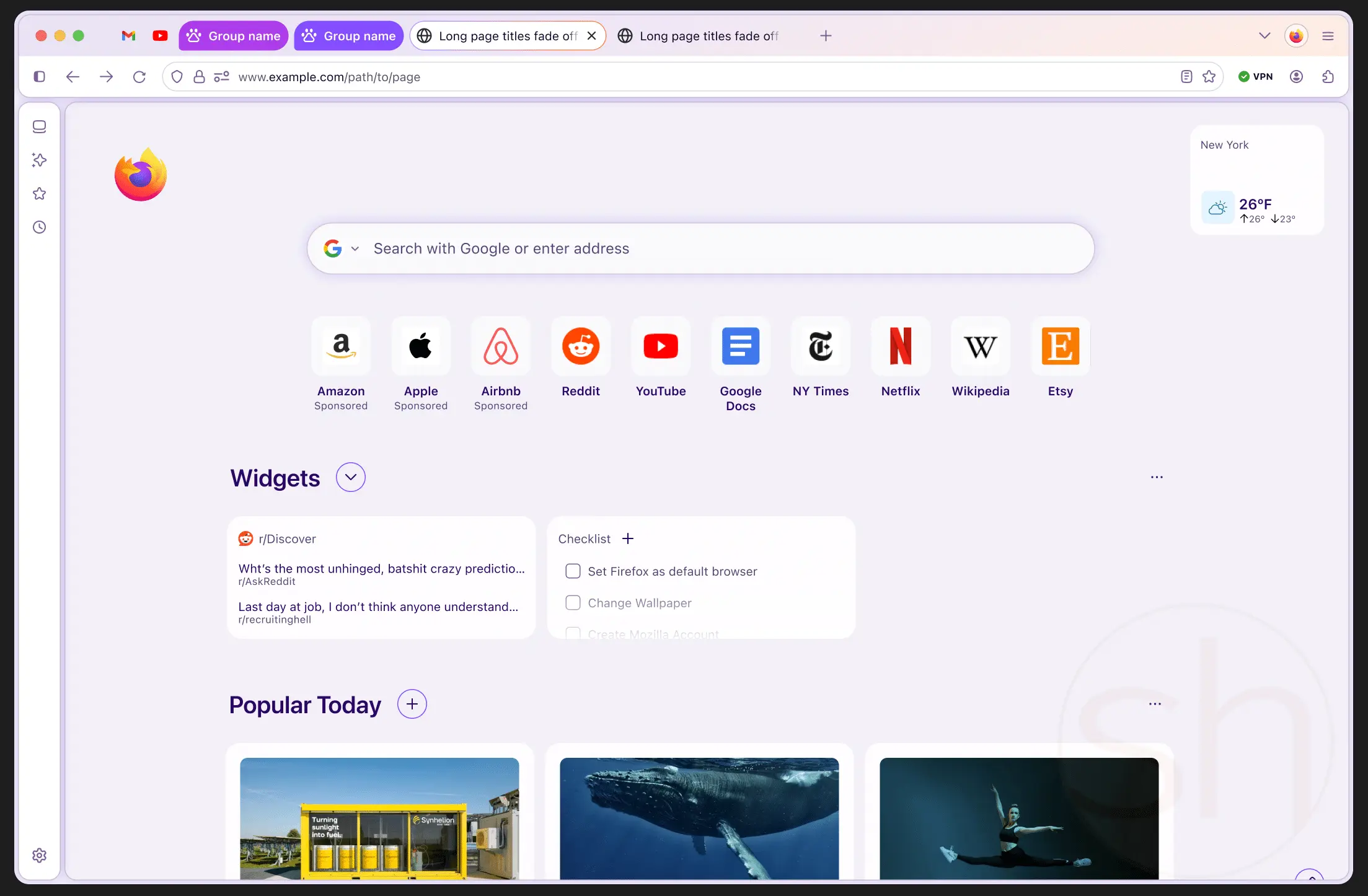
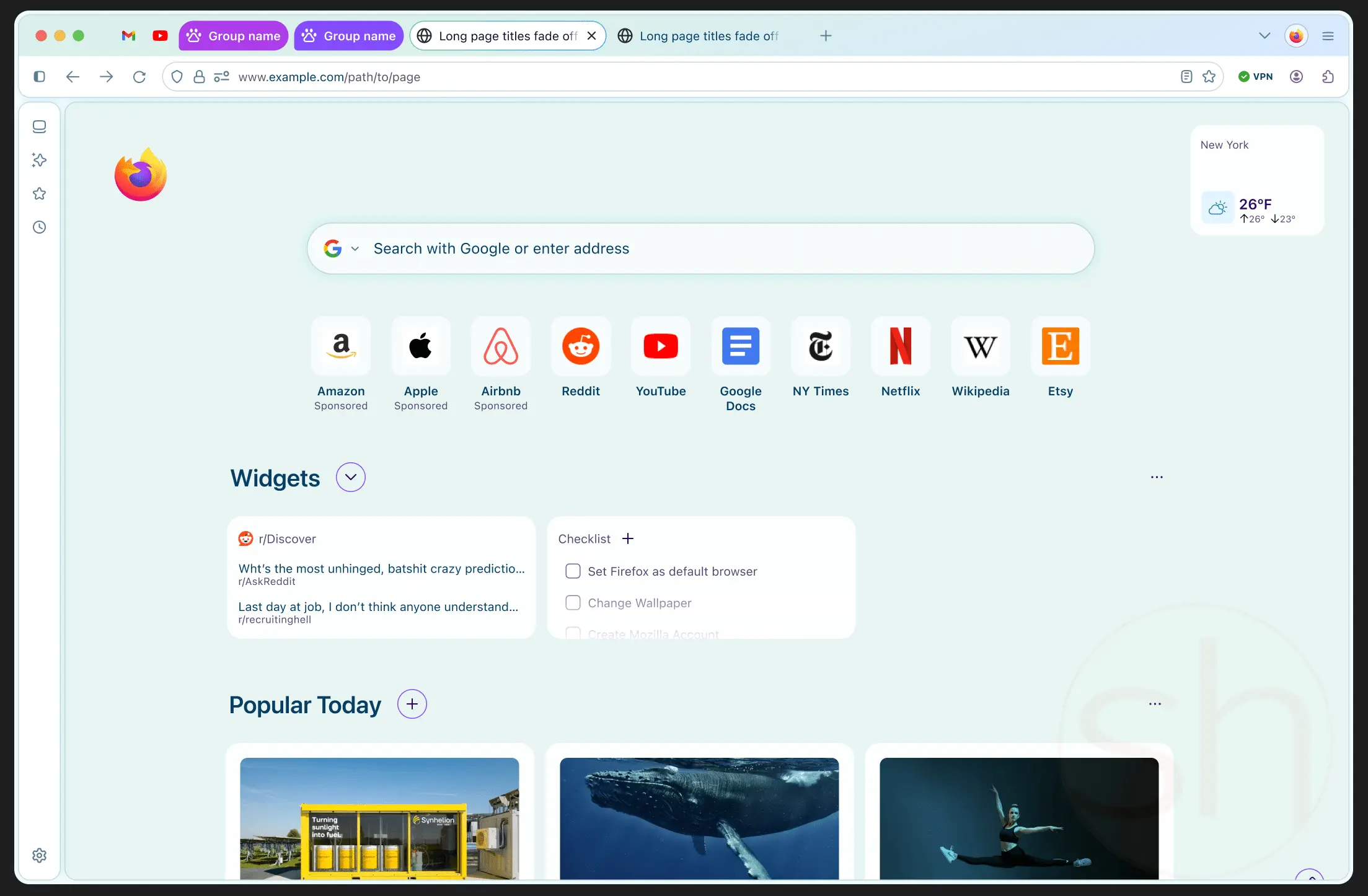
From the mockups, it appears Mozilla took some inspiration from Google's Material You (or at least, the dynamic color extraction part of it) because the browser color accent appears influenced by the wallpaper setting. Choosing a mint-green desktop background automatically shifts the top navigation bars to match that exact shade.
Here's what Nova looks like when you activate vertical tabs instead of the traditional horizontal layout (might remind you a bit of The Browser Company's Arc browser).

Below is what several UI elements like Downloads panels, the Site Protections panel, the Extensions Management dialog, and the Site Permissions box look like under the Nova design language.

If you are interested, you can track the development of Nova on Bugzilla. A Figma document is also available, though access appears to be restricted to Mozilla developers at the moment.
Mozilla has a long history of embarking on huge redesign projects for its Firefox browser. Before Nova, there was Firefox Proton, an update focusing on removing visual clutter with simplified menus back in June 2021 alongside Firefox 89. Going back even further, we saw the 2017 "Photon" redesign land with Firefox 57. The Photon interface gave us Square Tabs and a Combined Search and URL Bar.
Not every redesign project ends well for Mozilla, though. You might remember 2012's Firefox Metro, an ambitious attempt to build a custom browser for Windows 8's touch-first interface. The team built it to operate both as a traditional desktop application and as a touch-optimized Metro app.
Firefox could only run in Metro mode if the user manually set the program as the default system browser in the Windows settings. The whole thing was scrapped in 2014 after two years in development due to a dismally low user adoption rate (a preview version of the software had been released a year earlier on the Aurora channel).


10 Comments
Load the comments and join the conversation!
Read the comments, ask the editors questions, show respect and join the conversation.