Advertisement
Advertisement

Singapore

MRT reliability in last 12 months falls to its lowest level since 2020

From July 2024 to June 2025, rail reliability fell for three MRT lines, but the overall figure remained above LTA's target.

MRT reliability in last 12 months falls to its lowest level since 2020

Commuters waiting to board a shuttle train from Jurong East MRT Station towards Boon Lay MRT Station on Sep 25, 2024. (Photo: CNA/Marcus Mark Ramos)

Listen
5 min
New: You can now listen to articles.

This audio is generated by an AI tool.

05 Sep 2025 01:32PM (Updated: 05 Sep 2025 03:45PM)
Read a summary of this article on FAST.
FAST

SINGAPORE: MRT reliability over the last 12 months fell to its lowest level since 2020, latest figures from the Land Transport Authority (LTA) showed.

According to a rail service reliability report published by LTA on Friday (Sep 5), the MRT network on average clocked about 1.6 million train-km from July 2024 to June 2025 without service delays lasting more than five minutes.

This is the shortest distance trains have travelled without service delays since 2020, when trains clocked about 1.45 million train-km between delays. 

LTA publishes the reliability figures using a 12-month moving average of mean kilometres between failures (MKBF) – a metric that measures train reliability. 

This tracks the average distance that a train travels before it encounters a delay of more than five minutes. 

The authority has set an MKBF target of 1 million train-km for the MRT network.

From July 2024 to June 2025, rail reliability fell for three of the five MRT lines – the Downtown Line, North-South Line and East-West Line.

The Downtown Line saw the biggest drop in MKBF during that period – from 8.13 million train-km in 2024 to 4.12 million train-km in the 12 months to June.

The North-South Line’s reliability also fell to 1.24 million train-km from about 2.49 million train-km. This is also the lowest level of rail reliability the line has seen since 2020, when it recorded 1.08 million train-km. 

The East-West Line also saw a decline to 1.44 million train-km from 1.69 million train-km last year. This is also the shortest mean distance travelled for the line since 2020, when it recorded 1.26 million train-km. 

The North-East Line and Circle Line saw improvements in the last 12 months to June, compared with 2024.

The North-East Line recorded 4.23 million train-km compared with 4.1 million train-km in 2024, while the Circle Line also improved to 1.07 million train-km from 919,000 train-km.

The Thomson-East Coast Line was not included in the report as the line is not fully open. The fifth stage of the line – comprising Bedok South and Sungei Bedok stations – is slated to open in the second half of 2026.  

The MKBF does not reflect the severity of delays, only the distance travelled between delays.

According to the report, there were two service delays lasting more than 30 minutes - one each on the Circle Line and Downtown Line – in the first half of this year. There were seven such delays for the whole of 2024.

The most notable delay between July 2024 and June 2025 was a six-day disruption along the East-West Line in September last year. Public transport operator SMRT was fined S$3 million (US$2.33 million) as a result.

On Mar 5, a train fault on the Circle Line caused delays for commuters between Promenade and Serangoon MRT stations in both directions.

There was also a string of disruptions the month before.

On Feb 7, an engineering vehicle broke down in the morning at a railway crossing in Bishan depot, preventing trains on the North-South Line from being launched. The disruption lasted until the evening.

Three days later, a signalling fault caused a delay on the North-East Line, disrupting services for more than an hour. 

On Feb 11, a signalling fault between Paya Lebar and Marymount stations on the Circle Line caused a power trip that caused delays on the morning commute.

LTA compared Singapore's MRT reliability with that of other cities.  

Compared to other global metros, Singapore’s MRT system ran for 7.7 million car-km before encountering a delay of more than five minutes.

This is compared with: Hong Kong's MTR, which recorded 4.29 million car-km from April to June 2025; New York City subway, which recorded 187,000 car-km from July 2024 to June 2025; and Taipei metro, which came in at 19.12 million car-km in 2023. 

While the overall reliability of Singapore's MRT network has fallen, its LRT lines saw an improvement in reliability. 

The LRT lines recorded on average 534,000 car-km without service delays lasting more than five minutes from July 2024 to June 2025. This is an improvement from 382,000 car-km in 2024. 

The Bukit Panjang LRT saw a slight improvement to 247,000 car-km from 232,000 car-km in 2024. The Sengkang-Punggol LRT recorded 1.25 million car-km, up from 549,000 car-km in 2024. 

There were no service delays lasting more than 30 minutes on both LRT lines in the first half of this year. 

Source: CNA/co

Sign up for our newsletters

Get our pick of top stories and thought-provoking articles in your inbox

Subscribe here
Inbox
FAST
Advertisement

Singapore

SIA, Scoot extend Middle East flight cancellations amid US-Israel war on Iran

"As the situation remains fluid, other SIA flights may be affected," Singapore's flag carrier said.

SIA, Scoot extend Middle East flight cancellations amid US-Israel war on Iran

Passengers looking at a Singapore Airlines plane on Jun 10, 2025. (File photo: AFP/William West)

Listen
2 min
New: You can now listen to articles.

This audio is generated by an AI tool.

06 Mar 2026 11:02AM (Updated: 06 Mar 2026 11:04AM)
Read a summary of this article on FAST.
FAST

SINGAPORE: Singapore Airlines (SIA) and Scoot have extended the cancellation of their Middle East flights, amid the intensifying war on Iran.

In an update on Thursday (Mar 5), SIA said that flights SQ494 (Singapore-Dubai) and SQ495 (Dubai-Singapore) will be cancelled until March 15 due to the "geopolitical situation in the Middle East".

Scoot said that flights TR596 (Singapore-Jeddah) and TR597 (Jeddah-Singapore) scheduled for Mar 9 and Mar 10 will be cancelled. The low-cost carrier runs flights to Jeddah four times a week.

The flights have been grounded since Feb 28.

"As the situation remains fluid, other SIA flights may be affected," SIA said.

Affected customers will be reaccommodated on alternative flights. They can also opt to receive a full refund of the unused portion of their ticket, the airline said.

"Customers are also strongly advised to update their contact details via the manage booking function on our website or subscribe to a mobile notification service to receive updates to their flight status."

As governments seek to repatriate their citizens, limited flights out of the UAE began this week, operated by long-haul carriers Etihad Airways and Emirates, based in Abu Dhabi and Dubai, respectively.

The first flight carrying Singapore residents stranded in the Middle East touched down on Thursday morning.

Minister of State for Foreign Affairs Gan Siow Huang said on Thursday that Singapore would operate repatriation flights out of Muscat, Oman on Saturday and Sunday.

About a quarter of Singaporeans who have e-registered with the Ministry of Foreign Affairs (MFA) have sought help to return home since the conflict began, she said.

Acting Minister-in-Charge of Muslim Affairs Faishal Ibrahim said on Thursday that he had spoken with more than 40 Singaporean students studying in countries such as Jordan, Egypt, Saudi Arabia and Kuwait to "check on their welfare, safety and well-being".

The students are "safe, with minimal disruptions to their studies", he said in a Facebook post.

Source: CNA/nh(ss)

Sign up for our newsletters

Get our pick of top stories and thought-provoking articles in your inbox

Subscribe here
Inbox
FAST
Advertisement

Singapore

Eligible lower-wage adults returning to school can get S$500 per quarter under new ComLink+ pilot

The support can be given for up to three years, depending on the course duration.


Eligible lower-wage adults returning to school can get S$500 per quarter under new ComLink+ pilot

The pilot targets people aged 18 to 39 who are currently in lower-wage jobs or have dropped out of school previously to work. (Photo: iStock)

Listen
7 min
New: You can now listen to articles.

This audio is generated by an AI tool.

06 Mar 2026 10:55AM (Updated: 06 Mar 2026 11:08AM)

SINGAPORE: Eligible lower-wage young adults under the ComLink+ scheme can now receive a S$500 (US$390) incentive every quarter when they sustain their education, Minister of State for Social and Family Development Zhulkarnain Abdul Rahim said on Friday (Mar 6).

“Families bear some costs when they choose to upskill. For example, their income may be disrupted during their studies, and it is not certain even that they will get a job with a higher salary after,” Mr Zhulkarnain said during the debate on the Ministry of Social and Family Development’s (MSF) spending plans for the coming year.

"MSF has observed that this deters some ComLink+ families from upskilling, even when they want to do so and even when they have the opportunity to do so."

The ComLink+ skills upgrading support pilot was launched in January and targets eligible people aged 18 to 39 who are currently in lower-wage jobs or have dropped out of school previously, and may be currently unemployed. 

The ministry said the pilot would address the financial opportunity cost by providing basic living expenses at ComCare short-to-medium term assistance rates, as well as the S$500 per quarter when individuals keep up with their education.

The support can be given for up to three years, depending on the course duration.

“Supportable courses under the pilot are scoped to ensure clear learning outcomes which enable clients to improve employment prospects,” said MSF.

These include full-time full qualification courses, such as the National ITE Certificate (NITEC) or Higher NITEC, as well as polytechnic diplomas.

Those who are in selected vocational courses offered by Education Ministry-funded institutions, Workforce Skills Qualifications-accredited courses or Post Secondary Education Account (PSEA)-eligible courses may also be eligible for the pilot.

Examples of supportable vocational courses include the WSQ Diploma in Infocomm Technology, the WSQ Higher Certificate in Healthcare (Nursing), and the Advanced Certificate in Early Years offered by the National Institute of Early Childhood Development.

“The pilot seeks to enable them to upskill and secure better employment by addressing their families’ basic living expenses if they stop work. This will improve their households’ financial resilience in the long run,” said MSF.

HEALTHIER SG

From 2027, the Ministry of Health (MOH) will extend Healthier SG enrolment to eligible ComLink+ residents aged 25 to 39, Minister for Social and Family Development Masagos Zulkifli announced on Thursday. 

Healthier SG is a nationwide initiative that helps Singaporeans take proactive steps to manage their health, prevent the onset of chronic diseases, and support healthier lifestyles.

Currently, enrolment in the initiative is for Singaporeans and permanent residents aged 40 and above.

Under the expanded enrolment, newly eligible ComLink+ participants will benefit from the existing Healthier SG benefits.

This includes a fully subsidised personalised health plan and access to selected medications for chronic diseases at their enrolled Healthier SG clinic at polyclinic-comparable prices, where eligible.

Other benefits include S$20 worth of health points after their first health plan consultation, as well as special subsidies for Healthier SG screening tests and vaccinations, where eligible.

MSF noted that the health needs of ComLink+ individuals under 25 will continue to be supported by other programmes.

“For example, Grow Well SG is a national health promotion strategy to enhance preventive care and inculcate healthier lifestyles in children up to 12 years old, with plans to expand the initiative to older age groups in future phases,” said the ministry.

“Those with more complex health issues may be supported through the ComLink+ Social-Health Integration trial.”

PRESCHOOL ATTENDANCE

For ComLink+ families, every child receives a one-off S$500 top-up to their Child Development Account (CDA) upon enrolling in preschool by the age of three.

If they have at least 75 per cent preschool attendance, they get a S$200 CDA top-up per quarter.

Mr Zhulkarnain said on Friday that MSF will introduce intermediate milestones to encourage families’ progress towards regular attendance.

“Many families work hard to maintain employment and regular preschool attendance. Yet, despite genuine efforts, some may not be able to meet their targets due to their circumstances.

“We are therefore adjusting our conditions to better support families with more complex challenges,” he added.

Under the changes to the package, each child in a ComLink+ family will receive S$150 per quarter when they achieve 50 per cent to 74 per cent preschool attendance.

Of this amount, S$60 will be paid in cash and S$90 will be credited to the child’s CDA.

Children who achieve at least 75 per cent attendance will receive S$250 per quarter, with S$100 paid in cash and the remaining amount credited to their CDA.

“The enrolment incentive will be removed to focus families’ attention on regular attendance, which is critical for child development,” MSF said.

“Part of the payout will be deposited in the child’s CDA, attracting dollar-for-dollar matching under the Baby Bonus Scheme, up to the co-matching cap.”

REVISED EMPLOYMENT PACKAGE

The employment package for adults in ComLink+ families that maintain employment will also be revised.

Families will be assessed based on their total household income rather than individual earnings.

This would recognise collective family efforts and provide more flexibility for families facing varying circumstances, MSF said.

Currently, each working adult receives S$450 to S$550 per quarter – cash and Central Provident Fund (CPF) combined – for maintaining employment with a gross monthly salary of at least S$1,600 based on CPF records, for up to two adults per household.

When both adults are working, each receives an additional S$50 per quarter.

The revised package will include an intermediate milestone to encourage families that may not be able to achieve a gross monthly household income of S$2,000 at present.

Under the revised package, households earning between S$1,000 and S$1,999 in gross monthly income will receive S$500 per quarter, comprising S$200 in cash and S$300 in CPF contributions.

Households earning S$2,000 or more gross monthly income will receive S$1,250 per quarter, comprising S$500 cash and S$750 in CPF contributions.

“Overall, a ComLink+ family with two preschool-aged children can receive up to S$10,000 every year by maintaining a household income of at least S$2,000 and regular preschool attendance,” said Mr Zhulkarnain.

“More of the payout will be in cash to better support families facing day-to-day cashflow challenges.

“At the same time, a portion will continue to be placed in families’ CPF and child development accounts, so that we support not just today’s needs, but tomorrow’s security.”

Source: CNA/cj

Sign up for our newsletters

Get our pick of top stories and thought-provoking articles in your inbox

Subscribe here
Inbox
Advertisement

Singapore

Delivery rider fined by court for leaving S$1,500 arowana in his car for 4 hours, killing it

He left the fish in a plastic bag in his car for at least four hours after a glitch resulted in the assignment being cancelled.

Delivery rider fined by court for leaving S$1,500 arowana in his car for 4 hours, killing it

Stock photo of an arowana. (Photo: iStock)

Listen
3 min
New: You can now listen to articles.

This audio is generated by an AI tool.

06 Mar 2026 10:28AM (Updated: 06 Mar 2026 10:30AM)
Read a summary of this article on FAST.
FAST

SINGAPORE: A delivery rider who picked up an arowana worth S$1,500 (US$1,170) from a fish farm for delivery to a customer left it in his car for at least four hours, killing it.

Mohamad Isman Rosli, 26, was fined S$2,000 by a court on Thursday (Mar 5). He pleaded guilty to one count of mischief by leaving the fish in his car for four hours, killing it.

A second count of lying to a police officer that he had returned the fish to the farm was taken into consideration.

The court heard that Isman was a part-time Lalamove delivery rider at the time of the offence in October 2025.

He accepted his first delivery job via the Lalamove application on Oct 7, 2025. He was to pick up an Asian red arowana fish from Fu Long Aquatics and deliver it to a customer.

At around 9pm that day, Isman picked up the fish in a plastic bag from the farm. He knew that he was transporting a live fish.

About 40 minutes later, the delivery assignment was cancelled due to a glitch in the application.

However, Isman did not return the fish to the farm nor deliver it to the customer. Instead, he left it in the plastic bag in his car for at least four hours without proper care.

At around 1am on Oct 8, after completing all his other deliveries, Isman returned to the fish farm but found that it was closed.

He then took the fish home and found that it was dead. He threw the fish away in a rubbish chute and did not inform the farm nor the customer about the incident.

On Oct 8, 2025, a representative of the farm lodged a police report, saying the fish was missing and Isman was uncontactable.

Isman was interviewed by the police a day later. He lied that he had returned the fish to the farm at around 11.45pm on Oct 7, 2025.

As a result, the police expended resources to investigate the manner, analysing police camera footage and recording a further statement from Isman.

Isman confessed to throwing away the dead fish only after he was confronted with police camera footage from his residential block.

He did not make any restitution to the customer.

The prosecution sought a fine of S$2,000 to S$3,000, noting the wrongful loss suffered by the victim and the wastage of investigative resources.

For mischief, he could have been jailed for up to a year, fined, or both.

Source: CNA/ll(zl)

Sign up for our newsletters

Get our pick of top stories and thought-provoking articles in your inbox

Subscribe here
Inbox
Advertisement

Women

When fathers don’t pay child maintenance – what women can do to protect their children

When her ex-husband stopped paying maintenance overnight, one mother was left scrambling to cover her son’s expenses while navigating Singapore’s family courts alone – a situation many divorced women face. From understanding your rights to enforcing court orders, this is what the law provides when maintenance payments stop.

When fathers don’t pay child maintenance – what women can do to protect their children

Non-payment of maintenance is a persistent problem among divorced couples, despite being enforceable by law. (Photo: iStock/LordHenriVoton)

Listen
11 min
New: You can now listen to articles.

This audio is generated by an AI tool.

06 Mar 2026 07:26AM
Read a summary of this article on FAST.
FAST

When Lisa (not her real name) separated from her husband, her biggest concern was keeping life stable for their four-year-old son. She didn’t expect to suddenly shoulder the full burden of their household bills. 

Her ex-husband stopped paying his share – not only for their car loan, but their son’s expenses and their Housing Development Board (HDB) flat mortgage, leaving her scrambling to meet payments.

During their five-year marriage, the tech executive and her husband split costs evenly, including their son’s kindergarten fees, and swimming and Chinese lessons. 

“I didn’t expect him to cut off our son like this,” the 35-year-old told CNA Women. She had to seek legal help to ensure he fulfilled his duty of care.

Lisa’s story isn’t uncommon. Non-payment of maintenance remains a persistent problem among divorced couples, despite being enforceable by law, according to statistics from the Family Justice Courts. There was an average of 2,700 maintenance enforcements applications reported in 2023. While some defaulters cite job loss or financial strain, others refuse payment out of resentment.

HOW CHILD AND SPOUSAL MAINTENANCE IS DECIDED

Both child and spousal maintenance are governed by the Women’s Charter, Singapore’s key family law statute, and determined based on the family’s circumstances – chiefly, the child’s needs and the parents’ financial capacity.

FOR THE CHILDREN

Child maintenance covers everyday and developmental expenses, from food and schooling to healthcare or therapy, if needed. Both parents must submit supporting documents such as receipts, payslips and income statements when determining an appropriate monthly amount.

Family lawyer Rajan Chettiar and managing director of Rajan Chettiar LLC, explained: “Both parents should agree on a list of expenses per child. If they can’t, the Family Justice Courts will step in to decide a reasonable amount, proportionate to each parent’s income. 

“For example, a husband earning two-thirds of the household income may be ordered to pay two-thirds of the child’s expenses.”

The Family Justice Courts will decide on a reasonable amount for child maintenance, proportionate to each parent’s income. (Photo: iStock/pondsaksit)

Maintenance obligations usually end when the child turns 21 but may continue if the child is in tertiary education or serving National Service (NS), where the NS allowance is taken into consideration to assess maintenance expenses.

Expenses tied to a child’s special needs or medical care are prioritised in the list of expenses but extravagances such as overseas holidays are typically excluded, even if it took place during the marriage. 

Chettiar said: “Standard of living is not a key factor considered in assessing maintenance.” 

FOR THE WIFE

Spousal maintenance isn’t automatically granted. It applies only when the wife can demonstrate need and the husband is capable of providing. 

This is assessed separately from asset division, says Mathea Lim, Of Counsel at Kith & Kin Law Corporation. “If the division of matrimonial assets already balances both parties financially, spousal maintenance may not be ordered.”

The courts consider reasonable expenses and earning potential. For example, if a wife’s income sufficiently covers her costs, maintenance might not be necessary. 

WHEN MAINTENANCE PAYMENTS STOP

According to a Ministry of Social and Family Development (MSF) article, over 97 per cent of maintenance enforcement cases in the Family Justice Courts are filed by women. Around 30 per cent involve child maintenance.

Maintenance obligations end when the child turns 21 but continue if they are in tertiary education or serving National Service. (Photo: iStock/recep-bg)

For single mothers already managing full-time work and caregiving, non-payment can feel like financial betrayal and adds anxiety to an already stressful time in their personal life. 

Lisa said: “I thought if it was such a burden to be physically and emotionally there for our son, the least my ex could do was to do his part financially. Who knew I would need to get court orders for things like childcare and school fees?”

She added that the stress caused her emotional distress and much resentment. “I felt like I was being dumped and dumped on.” 

Kith & Kin Law Corporation’s Lim said that filing for maintenance through iFAMS – the Integrated Family Application Management System – is the most practical option. The digital process tracks the arrears and builds a record of evidence without requiring a lawyer.

“Getting those payments reinstated restores normalcy,” Lim said.

Once filed, both parents attend mediation to resolve the matter. Unsettled cases proceed to a Court Mention – a procedural administrative hearing or a checkpoint, where the judge gives directions for next steps. 

If unresolved, a trial is then scheduled. The judge’s order then binds both parties to comply with payment directions.

While the process can take between three and six months, or more if financial disclosures are incomplete, the system is designed to ensure fairness and accountability.

ENFORCING MAINTENANCE ORDERS

If a husband ignores court orders, the wife can file a Summons for Enforcement.

The Family Justice Courts - comprising the Family Courts, Youth Courts and Family Division of the High Court - as seen on Nov 1, 2024. (File photo: CNA/Raydza Rahman)

The Family Justice Courts can then compel payment or impose penalties such as:

  • A Banker’s Guarantee for future maintenance. This is a court ordered sum, usually three months of payments, and handed over to the ex-wife within a month of the Court Order. Even with this in place, the ex-husband is legally required to pay maintenance directly to the ex-wife.
  • Attachment of Earnings: Maintenance is automatically deducted from his salary.
  • Community service or up to one month’s jail for wilful non-compliance.
  • Reporting arrears to the Credit Bureau or directing third parties who owe the husband money to pay the wife instead.

The courts distinguish between genuine inability and deliberate evasion. Tougher stances are taken against husbands who default when it comes to light that they have the means to pay the maintenance owing but have not done so, without good reason.

Said Chettiar: “This includes cases where the husband spends lavishly on themselves or their new families, or where it is clear that he has more than sufficient assets or financial liquidity to make payment.”

Lim added that if the husband switches to a lower-paying job for no reason, this would be taken against him as a deliberate act of lowering his income. Those with variable or self-employed income are still expected to disclose their resources honestly.

MAINTENANCE FOR MUSLIM FAMILIES

Nora, who declined to reveal her full name, faced similar struggles after separating from her husband. The mother of three found herself solely responsible for the household expenses.

“One day he was here, and then another, he decided to up and leave. It started small – since he wasn’t home, he didn’t pay for groceries,” said the 39-year-old office manager.

“Then it became school fees and other things like medical bills and insurance. If the bills are piling up, how do I manage three kids financially on my own?”

Muslim mothers may apply for child maintenance before, during or after Syariah Court divorce proceedings, if the child is below 21, or older but still studying or in National Service. (Photo: iStock/fadfebrian)

For Muslims, divorce matters fall under Syariah Court Singapore (SYC), although enforcement of maintenance lies with the Family Justice Courts.

Islamic law outlines three relevant forms of maintenance:

  • Nafkah – ongoing provision for spouse and children’s basic needs, including food, shelter and healthcare.
  • Nafkah iddah – financial support for the wife during the three-month waiting period (iddah) after divorce. The wife is also required not to re-marry during this time. 
  • Nafkah mutaah – a consolatory gift acknowledging the wife’s marital contributions. In Singapore, the SYC practice is to award a sum of money based on the number of days of marriage. 

Nafkah falls under the Family Justice Courts, ensuring parity with civil divorce procedures. Muslim mothers may apply for child maintenance before, during or after Syariah Court proceedings if the child is below 21 (or older but still studying or in NS).

The courts take a tougher stance against husbands who have the means to pay maintenance but have no good reason not to. (Photo: iStock/Sunan Wongsa-nga)

Enforcement against defaulting husbands follows the same process as non-Muslim cases handled at the Family Justice Courts – the Court examines whether the issue stems from inability or refusal to pay.

“Often, the question is whether income is being under-reported or expenses inflated,” said Ahmad Nizam Abbas, managing director of Crescent Law Chambers LLC. “The court ensures that fathers meet their responsibility within their means.”

Nora found that she did not need to run around both courts to obtain child maintenance owed to her. Her ex-husband was ordered to ensure their children were provided with monthly sums that supported their daily living expenses, education and medical care.

Once her children’s maintenance was secured, Nora could keep the family in their flat and work out a payment plan to buy over her ex-husband’s share.

“It was a load off my mind to have the maintenance sorted and to know my children have a roof over their heads. Otherwise, it’s stressful not just for me, but for them too.”

WHERE WOMEN SEEKING CHILD MAINTENANCE CAN GET HELP

For many women, the emotional and financial toll of pursuing maintenance can be daunting but resources in Singapore exist to help.

Women who cannot afford the legal costs of getting their exes to pay maintenance can tap on several resources for help. (Photo: iStock/Ivan Pantic)

“Legal costs can be an obstacle in enforcing the maintenance arrears, especially if the amount owed is similar or less than the legal costs of enforcement,” said Lim from Kith & Kin. “Women can navigate the Maintenance Enforcement Process (through iFam) on their own or if they can’t afford legal representation, they can seek the support of the Legal Aid Bureau.”

The Legal Aid Bureau offers subsidised legal representation for eligible women.

The Singapore Council of Women’s Organisations (SCWO) operates a Maintenance Support Central service for women who have endured financial abuse, such as non-payments and other forms of maintenance arrears. It offers guidance on applications, enforcement, and legal aid referrals plus emotional support from trained volunteers.

AWARE Singapore offers counselling through their Women’s Helpline or 1800-777-555, on weekdays, 10am to 6pm. It supports a wide range of issues, such as trauma, family violence and marital issues, and is an avenue to seek advice and support for maintenance arrears. 

Community organisations like the APKIM Centre for Social Services (ACOSS), and PPIS As-Salaam offer counselling and casework support for Muslim women navigating divorce challenges. 

Women can also access MSF’s Family Service Centres or Family Assist for help. 

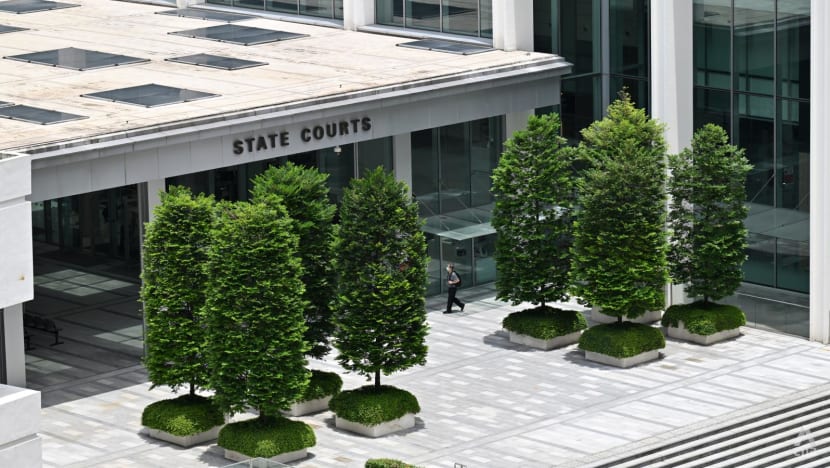
For complex cases involving additional finances for legal fees, the Law Society’s Pro Bono Services can assist. Women can apply through the Community Justice Centre at the State Courts. 

Ultimately, enforcing child maintenance is about ensuring fairness for children to receive the stability they deserve, even though relationships end.

“This isn’t about me winning. It was about making sure my son gets what he deserves – a father’s responsibility to him and a fair shot at growing up,” said Lisa.

CNA Women is a section on CNA Lifestyle that seeks to inform, empower and inspire the modern woman. If you have women-related news, issues and ideas to share with us, email CNAWomen [at] mediacorp.com.sg.

Source: CNA/pc

Sign up for our newsletters

Get our pick of top stories and thought-provoking articles in your inbox

Subscribe here
Inbox
Advertisement

Commentary

Commentary: How the war in Iran could impact global economy, including Singapore

The economic fallout from the war in Iran will go beyond oil markets, says Coface chief APAC economist Bernard Aw.

Commentary: How the war in Iran could impact global economy, including Singapore

FILE PHOTO: 3D-printed oil barrels, an oil pump jack and a map showing the Strait of Hormuz and Iran appear in this illustration taken March 2, 2026. REUTERS/Dado Ruvic/Illustration/File Photo

Listen
6 min
New: You can now listen to articles.

This audio is generated by an AI tool.

06 Mar 2026 06:00AM (Updated: 06 Mar 2026 08:05AM)
Read a summary of this article on FAST.
FAST

SINGAPORE: The global economy that has weathered a year of trade tariffs and other shocks now faces a new test: an escalating United States-Israel conflict with Iran that threatens to disrupt global oil and natural gas supplies and unleash potentially far-reaching implications for the world.

Oil prices have already risen sharply, driven more by uncertainty than by confirmed supply losses. Much of this caution stems from the pivotal role of the Strait of Hormuz, a narrow waterway to the south of Iran that handles roughly 20 per cent of global oil consumption and a fifth of global liquefied natural gas (LNG) trade.

While shipping through the crucial route has not stopped entirely, some vessels have slowed or paused their transit due to higher insurance costs and rising security risks. Marine insurers have also withdrawn war risk cover for ships in the region, leaving more than a hundred vessels, including oil and LNG tankers, stranded or forced to take longer alternative routes.

RIPPLES BEYOND ENERGY MARKETS

Higher oil and gas prices influence many parts of the world economy, from transportation and power generation, to commodity production and industrial activity. When energy markets become volatile, it forces companies to build in buffers such as by holding more stocks, reroute ships or delay shipments until risks subside – all of which add to costs that will eventually filter down to consumers.

Because oil is such a key input for most economies, rising prices tend to spill into inflation.

Studies have shown that geopolitical oil shocks are significant contributors to global inflation, and the current tensions renew that risk. A prolonged price increase of US$15 per barrel can push global inflation higher by nearly 0.5 percentage points, while slightly reducing growth momentum by 0.2 percentage points.

The impact varies across regions. The United States, now a large producer of oil and gas, is somewhat shielded from supply disruptions, though petrol prices and financial market sentiment still respond to global turbulence. The war in Iran also complicates the US Federal Reserve’s inflation fight and rate-cut trajectory for interest rates.

Europe remains more vulnerable, given its reliance on imported energy. Past experiences, such as Russia’s invasion of Ukraine in 2022, have shown how the region's inflation reacted more sharply to energy shocks.

Asia is also highly exposed. 

Around 80 per cent of the crude oil passing through the Strait of Hormuz is destined for Asian buyers, including China, India, Japan and South Korea. Even temporary uncertainty can prompt these economies to adjust stockpiles, revise energy purchasing strategies and prepare for higher import costs. Already, the region’s financial markets are feeling the heat, with the panic selling across North Asia on Wednesday (Mar 4).

Specifically for China – which just announced a lower economic growth target for 2026, marking its first downgrade since 2023 – the end of discounted Iranian oil imports could add to the economic challenges from heightened trade tensions with the US and a protracted property downturn.

At the same time, shipping routes already strained by earlier disruptions through the Red Sea and Suez Canal, where transit volumes were 47 per cent below normal in January, have limited room to absorb additional detours. With fewer stable routes available, delays and higher freight rates become more likely – all of which are bad news for global trade.

WHAT IT MEANS FOR SINGAPORE

For Singapore, a trade-dependent economy that imports nearly all its energy, the implications are direct.

The first channel is energy costs. Household electricity tariffs, which are closely tied to international gas prices with a short time lag, are set to reverse recent declines in the upcoming quarters if global benchmarks remain elevated. Pump prices tend to respond even sooner, making transportation and logistics more expensive.

Rising fuel and shipping costs will eventually reach consumers. Groceries, meals, deliveries and travel all incorporate energy-related expenses at different stages of production and distribution. For households, this means the cost of living may edge up if energy prices remain high for an extended period.

Businesses face differing pressures. Energy-intensive sectors, such as petrochemicals, may see feedstock costs increase. Companies dependent on Middle Eastern or European supply chains could encounter longer transit times or higher freight charges.

Officials have warned of potential economic impact, with Deputy Prime Minister Gan Kim Yong noting earlier this week that Singapore will reassess its growth and inflation forecasts if necessary.

Headline inflation in Singapore averaged 0.9 per cent in 2025, and core inflation at 0.7 per cent. A sustained rise in oil and gas prices could push these figures higher, particularly in categories linked to utilities and transport. With that, the Monetary Authority of Singapore is expected to maintain its current exchange rate policy for now, with a stronger Singapore dollar helping to offset imported inflation if needed.

The extent of these ripple effects will depend on the duration of tensions and the degree to which shipping through the Strait of Hormuz remains stable. If geopolitical conditions ease, energy markets may correct quickly. But if uncertainty persists, cost pressures from energy and freight will continue shaping global and regional economic performance.

Only one thing is clear: Global tensions have become a routine part of the economic landscape and countries will need to continue managing their effects with pragmatic adjustments rather than expecting stability to return quickly.

Bernard Aw is Chief Economist for Asia Pacific at Coface.

Listen:

Source: CNA/sk

Sign up for our newsletters

Get our pick of top stories and thought-provoking articles in your inbox

Subscribe here
Inbox
Advertisement

Singapore

Ban of caged lorries for worker transport 'small step in the right direction': Rights groups

Singapore will ban the use of caged lorries to transport workers from next year.

Ban of caged lorries for worker transport 'small step in the right direction': Rights groups

A caged lorry transporting a worker along Serangoon Road on Mar 5, 2026. (Photo: CNA/Justin Ong)

Listen
5 min
New: You can now listen to articles.

This audio is generated by an AI tool.

06 Mar 2026 06:00AM (Updated: 06 Mar 2026 08:06AM)
Read a summary of this article on FAST.
FAST

SINGAPORE: Migrant workers' rights groups say that banning the transport of workers on caged lorries from 2027 is a step in the right direction, but maintain that the long-term goal should be to ban the transport of workers on all lorries.

Senior Minister of State for Transport Sun Xueling announced in parliament on Wednesday (Mar 4) that Singapore will ban the use of caged lorries to transport workers from next year.

Companies that fail to comply with the ban will face penalties, with details to be announced ahead of the 2027 deadline.

Mr Ang Teck Chye, a lorry driver with more than 30 years of experience, has driven workers in caged lorries in the past and found it to be unsafe. 

He said the cages typically cannot be opened from inside – someone on the outside must unlatch them before workers can disembark. This has made him feel uneasy every time he transports workers on such lorries.

"My feeling is that they're like animals in a cage," he said. "I think this ban is good."

But rights groups say the ban does not go far enough. 

Dr Stephanie Chok, executive director of migrant worker rights group Humanitarian Organization for Migration Economics (HOME), described it as "a small step in the right direction in signalling that migrant workers deserve dignified transport". 

She cautioned that lorries themselves remain an unsafe mode of transport regardless of whether they are fitted with cages.

These caged lorries also constitute just 1 to 2 per cent of the 50,000 lorries in Singapore, she said.

"As such, this measure will affect only a small fraction of workers, who will still continue to be transported on the back of lorries and exposed to the same risks as before," she added. 

Mr Ethan Guo, executive director of migrant workers rights organisation Transient Workers Count Too (TWC2), said the "ultimate goal" should be to phase out goods vehicles entirely for worker transport in favour of passenger buses.

"There will be costs involved in doing the right thing, yes, but in return, the workers arrive at work in peace and consequently perform better in their jobs the rest of the day," he said.

"This isn't something that should be viewed through the lens of profit and loss, but the value of a human life."

TOTAL BAN NOT FEASIBLE: CONSTRUCTION FIRMS

Construction companies, while broadly welcoming the caged lorry ban, say extending it to all lorries is not practical.

Managing director of Nan Guan Construction Akbar Kader said requiring separate vehicles for workers and goods would significantly raise costs, strain the supply of bus drivers and put more vehicles on already-congested roads. 

He also raised a social concern: if workers cannot use lorries, they may turn to public transport instead.

"Workers will all go on the MRT, and then people will start complaining that they don't clean themselves up, and that will become another problem," he said.

Mr Howard How, director of quality, environmental, health and safety at Boustead Projects, said that while his firm does not use caged lorries, he thinks that more can be done to train lorry drivers who transport workers.

He noted that many of these drivers do not have specialised training and are "just workers given the additional responsibility to ferry workers".

"For workers who are given responsibility to drive, years of experience and understanding the highway code is important," he said.

He added that stiffer penalties could be meted out to lorry drivers who get into accidents while transporting workers. 

A caged lorry. (Photo: Ministry of Transport, Land Transport Authority)

CALLS FOR BROADER ACTION

National Trades Union Congress (NTUC) assistant secretary-general Melvin Yong said in a Facebook post on Wednesday that he has "long advocated for safer transport arrangements for workers who are currently transported at the back of lorries".

He called for alternatives such as buses or vehicles with proper seat belts.

"Today's announcement is a step in the right direction. But we should also outlaw the co-mingling of goods and workers at the back of lorries," he said.

Mr Yong added that, where feasible, goods and passengers should be transported separately to reduce the risk of injury during accidents or sudden braking.

Migrant worker charity group ItsRainingRaincoats said that it has been focused on the safe transport of migrant workers for "as long as we have existed".

"We welcome this ban as an important development and are grateful to see it, but it is not the end goal," its spokesperson said. "We hope very soon to see the day when migrant workers enjoy the same protections on Singapore's roads as all other road users in Singapore."

Mr Michael Lim, the director of the Migrant Workers' Centre (MWC), said workplace practices that create unnecessary time pressure, such as penalising drivers for late arrivals, should be reviewed, as they can "inadvertently increase the risk of unsafe driving behaviour". 

"While regulatory measures are critical, they must be complemented by strong enforcement, employer and worker education, and a robust safety culture," he said.

Source: CNA/jx(kg)

Sign up for our newsletters

Get our pick of top stories and thought-provoking articles in your inbox

Subscribe here
Inbox
Advertisement

Singapore

Relief and uncertainty for Singaporeans in the Middle East as repatriation flights beckon

While most Singaporeans CNA spoke to felt relatively safe, some were anxious about the situation worsening.

Relief and uncertainty for Singaporeans in the Middle East as repatriation flights beckon

Planes are parked at Terminal 3 of the Dubai International Airport, following the United States and Israel strikes on Iran, in Dubai, United Arab Emirates on Mar 2, 2026. (File photo: Reuters/Raghed Waked)

Listen
5 min
New: You can now listen to articles.

This audio is generated by an AI tool.

06 Mar 2026 12:07AM (Updated: 06 Mar 2026 08:06AM)
Read a summary of this article on FAST.
FAST

SINGAPORE: The announcement that Singapore would soon operate repatriation flights out of the Middle East has brought relief to many Singaporeans in the region, even as some choose to remain for now.  

Most Singaporeans CNA spoke to said they felt safe, but many had already planned to return home for Hari Raya, and worried that waiting could mean getting caught out if the situation deteriorated.

Minister of State for Foreign Affairs Gan Siow Huang announced on Thursday (Mar 5) that Singapore will operate repatriation flights out of Muscat, Oman, on Saturday and Sunday, as the war in Iran escalates.

Mr Ahmad Shafiq, a senior production manager based in Dubai, was among those who registered interest in the flight. When CNA spoke to him, he had received a second email to submit payment and personal details, though a confirmation had yet to come through.

“I was kind of relieved because I've been looking for options to get out of the UAE, in case things escalate,” he said.

He plans to report to a designated meeting point at 7am on Friday, before making a seven-hour overland journey from Dubai to Muscat with his wife via transport arranged by the ministry.

“Travelling is not an issue, even with the fear or maybe the anxiety that you might get hit. But you might get hit anywhere, even if you're in a building, or you're on a road,” he said.

“But typically, if you are a moving target, it's harder for you to get hit … So I'm not worried about the overland transfer.”

For Singaporeans stranded in Bahrain and Qatar, the Ministry of Foreign Affairs (MFA) will arrange assisted overland trips by bus to Riyadh, Saudi Arabia, where commercial flights remain available.

In Riyadh, the situation has remained relatively calm, said Mr Nadhir Hassan, 37, who has worked in a bank there for five years.

Though MFA has not confirmed repatriation flights out of Saudi Arabia, the embassy has sent an email to gauge interest, and Mr Hassan has put his name forward.  

He had planned to fly home for Hari Raya, but his original flight was cancelled and alternatives were scarce and expensive.

“There were flights, but to India, to Bangladesh and to Sri Lanka, but then those flights are fully packed, and it's just too expensive ... So we were stuck,” he said.  

CONCERNS ABOUT ELIGIBILITY

For some, a different worry loomed: whether their families would be allowed on board the repatriation flights.

In an email to Singaporeans who had e-registered with the ministry, MFA said the flights are strictly for Singaporeans and their dependents. Pets are not permitted on board.

Ms Sallehati Salleh, 43, who lives in Qatar, registered interest in the flight out of Muscat. While she feels safe, her family wants to leave for peace of mind. Her concern is whether her non-Singaporean husband and son would be permitted to travel with her.

“I completely understand it should be just for Singaporeans. One hundred per cent understand. But this is our situation, so I will not leave them,” the housewife said.

Mrs Alison Powell, 52, also based in Qatar, faces the same dilemma with her non-Singaporean husband, and has yet to decide whether to take the flight.

“It's very surreal. On one hand, things are normal. On the other hand, there are missiles flying outside from West Bay,” said the teaching assistant, referring to an area in Doha.  

The attacks were bad last Saturday before quietening, she said, but had intensified again on Thursday.

“The Singapore government is doing their best to help us. So we’re relieved that there are options. It's not like we're stranded here,” she said.

For Ms Laila Humairah, 35, a broadcast journalist in Qatar, one concern is having to leave her cat behind.

“I just wouldn't have enough time to prepare the travel documents needed for my cat with me, and there's no way that I'm leaving her here,” she said.

While the situation feels unsettling, she trusts the local authorities to keep residents safe.

STAYING PUT

For some, remaining in place feels like the right choice.

A Singaporean in Qatar who wanted to be known only as Shar said she was unsure if the situation would change during the journey itself.

“I guess you'll be on the edge if you're out on the road and things can change any second … I think that journey is scarier than staying at home at the moment,” she said.

She was also anxious about getting stuck at borders enroute. Being surrounded by a familiar community, she said, felt more reassuring.

The local Singapore community – known as Red Dotters – had been especially active in sharing information and looking out for one another.

In Dubai, Dinesh – who declined to give his full name – said life is going on as usual. He has lived there for nearly 15 years and felt no need to leave.

“There's a level of transparency here with the government, and what they're doing, so there's no reason to panic,” he said.

He has two siblings with him in Dubai, and the family checks in with their parents back in Singapore every few hours. "I give them the reassurance that everything is fine.” 

Listen:

Source: CNA/er

Sign up for our newsletters

Get our pick of top stories and thought-provoking articles in your inbox

Subscribe here
Advertisement

Singapore

Fewer fresh graduates found work within 6 months in 2025; median salary held steady at S$4,500: Survey

More fresh graduates were seeking work, as opposed to other routes like pursuing further studies or taking a break.

File photo of a graduating cohort. (Photo: CNA/Ili Nadhirah Mansor)
Listen
5 min
New: You can now listen to articles.

This audio is generated by an AI tool.

05 Mar 2026 07:52PM (Updated: 06 Mar 2026 10:39AM)
Read a summary of this article on FAST.
FAST

SINGAPORE: A smaller proportion of university graduates found jobs fresh out of school in 2025, according to graduate employment survey results on Thursday (Mar 5).

The joint survey by Singapore's six autonomous universities found that 83.4 per cent of recent graduates who sought jobs were working within six months of their final exams.

This was down from 87.1 per cent in 2024, and continues a downward trend since 2022.

The median gross monthly salary for this group held steady at S$4,500 (US$3,500).

For the first time, the survey categorises graduates according to whether they have secured or not secured employment, instead of whether they are employed or unemployed.

Previously, those who had accepted an offer and were waiting to start work or taking steps to start a business were considered unemployed.

From the 2025 cohort, those graduates are now included in the group that has secured employment.

Under this new categorisation, the proportion of fresh graduates who secured employment within six months in 2025 was 88.9 per cent – a decline from 91.2 per cent in 2024.

Overall, 92.2 per cent were looking for work in 2025, as opposed to other routes like pursuing further studies or taking a break.

This was an increase from 90.7 per cent in 2024.

A majority of those looking for work – 74.4 per cent – found full-time permanent roles. This was down from 79.4 per cent in 2024.

The share of part-time or temporary workers grew to 7.2 per cent, from 6 per cent in 2024. More of them were involuntary – 3.1 per cent, as opposed to 2.3 per cent in 2024.

The remainder who had secured employment were either freelancing, waiting to start after accepting a job offer, or taking active steps to start their own business.

The proportion of recent graduates who had not secured employment rose to 11.1 per cent from 8.8 per cent in 2024.

This comprised 8.5 per cent who had applied but not received any full-time permanent job offers, up from 5.7 per cent in 2024.

The remainder had rejected full-time permanent job offers or had not looked for any full-time permanent jobs.

The universities said in a joint press release that the number of job vacancies has moderated from the post-pandemic peak, driven by reduced churn and slower hiring.

"This reflects a more cautious hiring sentiment amid broader economic uncertainty and geopolitical developments," they said.

There continue to be entry-level job opportunities, but some hiring in outward-oriented sectors like information and communications has been more subdued compared to previous years, they added.

Beyond the six-month mark, graduate employment outcomes generally improve as more secure jobs, the universities said.

For example, initially, the employment rate of the 2024 cohort was about 2 percentage points lower than the 2023 cohort.

By the 12-month mark, the proportion of the 2024 and 2023 cohorts that had wage records was comparable at 95 per cent.

The graduate employment survey is administered by the National University of Singapore, Nanyang Technological University, Singapore Management University, Singapore University of Technology and Design, Singapore Institute of Technology and Singapore University of Social Sciences. About 14,400 graduates took part in the survey.

The universities said they have stepped up their efforts to support students and fresh graduates, including proactive offers of personalised assistance and regular dissemination of job opportunities.

Graduate employment has come under the spotlight amid reports of job anxieties among younger Singaporeans.

Earlier this week, Manpower Minister Tan See Leng told parliament that the job market for fresh graduates remains resilient.

More than four in 10 job openings in Singapore are entry-level professional, manager, executive and technician (PMET) roles suitable for young graduates, according to the Ministry of Manpower.

The ministry announced that over 400 graduates have started on a new scheme offering government-sponsored traineeships, known as Graduate Industry Traineeships.

The scheme is still open to graduates from the 2025 cohort and applications will also be extended to the 2026 cohort, Dr Tan said.

Source: CNA/dv(gr)

Sign up for our newsletters

Get our pick of top stories and thought-provoking articles in your inbox

Subscribe here