ADVERTISEMENTREMOVE AD
Members Only
lock close icon

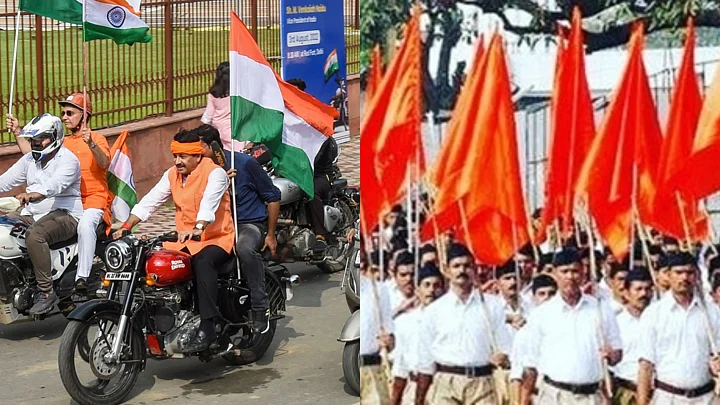
Har Ghar Tiranga: 'Why Didn't RSS Hoist Tricolour for 52 Years?' Asks Opposition

Here's a glimpse of the RSS' relationship with the tricolour over the years.

Published: 
story-hero-img
i
Aa
The Quint as preferred source
Aa
Small
Aa
Medium
Aa
Large
Edited By :Tejas Harad

As the ruling Bharatiya Janata Party (BJP) geared up for India's 75 years of Independence with its 'Har Ghar Tiranga,' the Rashtriya Swayamsevak Sangh (RSS) – the party's ideological lifeblood – is inviting the Opposition's wrath.

Earlier this month, Prime Minister Narendra Modi made a clarion call to social media users to change their display pictures to that of the Tricolour. However, even as display pictures for Modi's Twitter handle, and that of the BJP, were changed, the official handles of the RSS and its chief Mohan Bhagwat didn't follow suit.

This non-compliance has led to Opposition leaders pointing out at the RSS' troubled history with the national flag.

Congress leader Rahul Gandhi on 3 August said that "those running the Har Ghar Tiranga campaign have been members of that anti-national organisation which did not hoist the tricolour for 52 years."

Congress MP Jairam Ramesh added that the PM's message "seems to not have reached his family. Those who did not hoist the flag at their headquarters in Nagpur for 52 years, will they obey the Prime Minister?”
Edited By :Tejas Harad
Become a Member to unlock
  • Access to all paywalled content on site
  • Ad-free experience across The Quint
  • Listen to paywalled content
  • Early previews of our Special Projects
Continue
Members Only
×
×
ADVERTISEMENTREMOVE AD

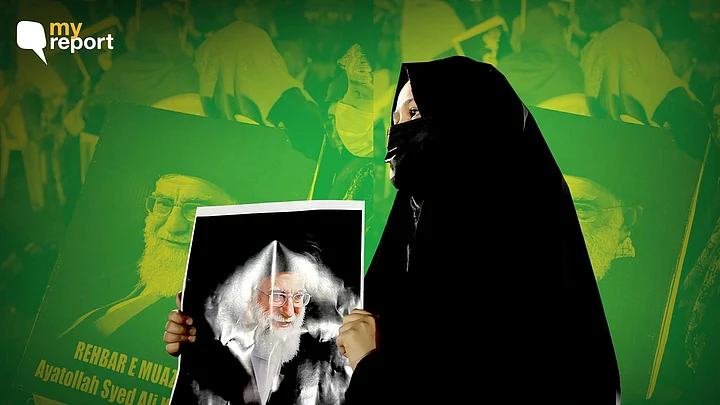
'I Mourn Khamenei for Karbala’s Legacy of Justice, Far Beyond Mere Politics'

'Ayatollah Seyed Ali Hosseini Khamenei was a spiritual guide who carried forward the legacy of Imam Hussain'

Published: 
story-hero-img
i
Aa
The Quint as preferred source
Aa
Small
Aa
Medium
Aa
Large

I write at a moment marked by profound grief and reflection. As a postgraduate student of Persian Language and Literature at Jamia Millia Islamia, my intellectual formation has been deeply shaped by the study of Iranian history, culture, and revolutionary thought.

On 28 February, the Leader of the Islamic Revolution, Ayatollah Seyed Ali Hosseini Khamenei, was martyred at his residence along with several of his family members and advisors. With this, not only the people of Iran, but Shia communities across the globe are in mourning.

A pertinent question, however, arises in many minds: why are Shias across the world grieving so deeply?

The answer lies in our name, our history, and our faith.

ADVERTISEMENTREMOVE AD

Name and History

The full name of our community is Shian-e-Ali, which literally translates to 'the followers of Ali,' the son-in-law of Prophet Muhammad (PBUH). After the Prophet bid goodbye to this world, a dispute over leadership emerged, and Ali ibn Abi Talib was not made the immediate successor to the movement the Prophet had established.

Despite the adversities Ali faced, his followers continued to rally behind him. Even after he was martyred, they maintained their allegiance to his sons, Hasan (AS) and Hussain (AS) ibn Ali. They went on to support Imam Hussain (AS) in Jang-e-Karbala (the Battle of Karbala) on 10 October 680 AD — a battle that took place between Muslim factions.

Imam Hussain (AS) and many of his companions were martyred in Karbala, in present-day Iraq. They were killed because they stood for justice and resisted what they believed to be wrongdoing.

Even fourteen centuries later, members of the Shia community continue to associate themselves with Ali, Hasan, Hussain, and their companions with the same devotion. Standing against immorality and injustice is therefore not new to us. In this spirit, Ayatollah Syed Ali Khamenei was seen by many as a leader and symbol of resistance against the injustice in our times.

Faith

According to Twelver Shia belief, Imam Mahdi (ajtf) is the last of the Twelve Imams. He is believed to be in occultation by God’s command and will reappear in the end times to establish justice and equity. This belief forms a foundational pillar of Shia theology and is not contingent upon the politics of any particular area.

Imam Mahdi is regarded as a divinely appointed Imam, and his station is understood to be entirely distinct from that of any temporal, human, or political leader.

In Iran, the concept of Velayat-e Faqih, systematically developed by Ayatollah Ruhollah Khomeini, holds that during the occultation of Imam Mahdi, a just and qualified Islamic jurist (Faqih) should oversee the religious and social affairs of the community to preserve the Islamic system and uphold social justice. On this doctrinal basis, the office of the Supreme Leader was established in Iran.

Within this framework, the Supreme Leader is not regarded as a representative or substitute for Imam Mahdi, but rather as a temporary, custodial authority entrusted with maintaining order and justice during the period of occultation.

Mainstream Shia belief does not hold that the election or appointment of a Supreme Leader brings about the reappearance of Imam Mahdi, nor that any political process can hasten his return. Shia teachings maintain that the reappearance of Imam Mahdi is entirely dependent upon God’s will and a divinely ordained time. 

ADVERTISEMENTREMOVE AD

Relationship With Ayatollah Khamenei

We perceived ourselves as participants in a broader intellectual and spiritual tradition shared with Shias across the globe. Our engagement was not political; it was civilizational, ethical, and spiritual.

In simple terms, Ayatollah Seyed Ali Hosseini Khamenei was a spiritual guide who, for many, carried forward the legacy of Imam Hussain and was martyred unlawfully.

It is therefore natural for emotions to pour out. Yet those who do not understand the community often brand its members as anti-national, jihadist, and other such labels. They witness the reactions, but they do not know the story behind them.

In a world fatigued by prolonged conflicts, humanitarian crises, and ideological fragmentation, the passing of a prominent leader raises existential questions: Who will articulate resistance to injustice? Who will embody steadfastness in moments of moral uncertainty? These questions are not merely political; they are ethical and psychological.

As an Indian student, and as a believer awaiting Imam Mahdi (ajtf), I once cherished the hope of seeing him in person — of observing firsthand the figure whose speeches and writings shaped much contemporary discourse. That hope now remains unfulfilled. The narrative of martyrdom, deeply embedded in Shia consciousness, frames such loss not as annihilation but as transcendence. Yet human longing endures.
ADVERTISEMENTREMOVE AD

The emotional bond many feel — despite never having met him — parallels the devotional connection to Imam Hussain. Historical distance does not diminish moral proximity. In this sense, grief becomes a form of continuity: an affirmation that ethical exemplars remain alive within collective memory.

Within Islamic intellectual tradition, history shows that when oppression intensifies, figures emerge who embody resistance. When such individuals depart, it can feel as though an era has ended. Yet intellectual legacies do not perish with physical absence. Ideas, once articulated and internalised, take on a life of their own.

Thus, the tears shed today are not solely expressions of sorrow. They signify continuity and commitment — a reaffirmation of the ethical principles associated with his leadership. If martyrdom, in Shia theology, transforms death into testimony, then responsibility shifts to those who remain.

Some individuals continue to shape history even after their passing.
And some martyrdoms recalibrate the moral compass of their age.

In that recognition lies both our grief and our resolve.

(All 'My Report' branded stories are submitted by citizen journalists to The Quint. Though The Quint inquires into the claims/allegations from all parties before publishing, the report and the views expressed above are the citizen journalist's own. The Quint neither endorses nor is responsible for the same.)

Speaking truth to power requires allies like you.
Become a Member
$20
$60
$200

$240 (17% off)

PREMIUM

Monthly
6-Monthly
Annual
Check Member Benefits
Read More
×
×
ADVERTISEMENTREMOVE AD

'Where is Aai?': Children Await Return of Mothers Lost in Nagpur Factory Blast

19 people were killed in a blast at an explosives-manufacturing unit in Nagpur, 15 of them were women.

Published: 
story-hero-img
i
Aa
The Quint as preferred source
Aa
Small
Aa
Medium
Aa
Large

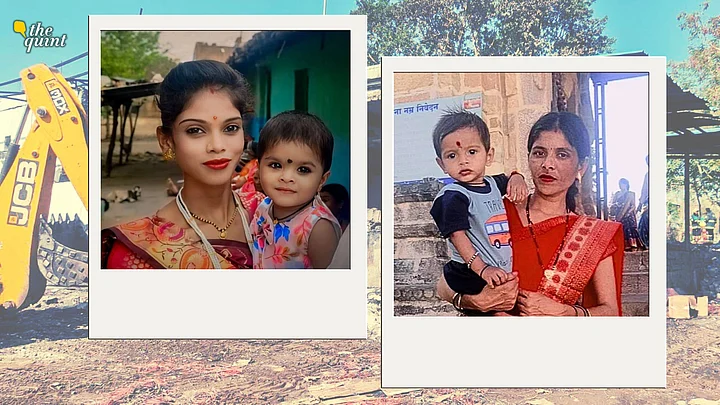
On the highway leading to Katol taluka from Nagpur city lies a small village called Hatla that is currently mourning Meena Yedme (26). For the past three days, her two-year-old daughter has been perplexed as to why her mother, who left for work on 1 March as usual, has yet to return.

Meena, along with 18 others, was killed in a massive blast at SBL Energy Limited, an explosives-manufacturing unit in Katol’s Raulgaon village, on 1 March.

The explosion took place at about 7:00 am on Sunday in a building that houses the unit responsible for manufacturing gunpowder and detonators used in mining operations. Approximately 35 workers were inside the department when the blast ripped through the facility, igniting a major fire and leading to the partial collapse of the structure. The impact of the explosion was so intense that it was reportedly heard across several neighbouring villages.

Of the 19 victims, at least 15 were women aged 20–40, several of them mothers to young children.

“My daughter-in-law was our only support. God should have taken me instead of her. What will happen to my two-year-old granddaughter now? What will happen to my son?” Kamla, Meena’s mother-in-law, told The Quint as she wept inconsolably.

ADVERTISEMENTREMOVE AD

Most Victims Were Young Mothers, Worked To Support Familes

Meena’s husband had previously met with an accident in which he lost a leg and has since been unable to walk. The responsibility of supporting the entire family — her husband, her in-laws and their two-year-old daughter — fell on Meena’s shoulders.

Meena held a Master’s degree in Social Work and had earlier worked at a hospital in Katol. However, the salary there was modest, and following her husband’s accident, additional funds were required for his surgery.

She subsequently took up employment at SBL Energy Limited, where she had been working for the past six months, earning ₹10,000 per month. As the company was located far from her village, she rented accommodation in a nearby village called Metpanjara.

Gayatri Shende (33), a resident of Ajanagaon, around 45 kilometres from Nagpur, is survived by her two children, aged eight and four. On 1 March, she left home at 5:00 am, expecting to return in time for lunch. Instead, her children waited through the night — and the following day — hoping she would walk back through the door.

With no agricultural land and no stable source of income, Gayatri and her husband had moved to her maternal home in search of support.

Determined to secure a better future for her children, Gayatri worked tirelessly to keep the household afloat. Her earnings were crucial to the family’s survival.

Her brother, Sevak Kamble, recalled the last time he saw her.

“I was studying and also looking after my sister’s children. Even on Sunday, she left them with me before going to work. She has left us forever. What will happen to my nephews now? My sister’s home has been shattered. I was about to find a job in four or five months and would have asked her to stop working. But before that could happen, she was gone,” he told The Quint.

Three of the victims were from Dhawalapur village itself — Sangeeta Panchbhai, Durga Gaikwad and Pratibha Walke.

Walke leaves behind two sons — one studying in Class 9 and the other in Class 4. Her younger son, still unable to process the news of her death, has fallen ill following the emotional shock.

Pratibha had studied up to Class 10 and worked tirelessly to ensure her children could continue their education. She initially worked as a daily wage labourer in agricultural fields and had been employed at the explosives factory for the past 18 months.

Many Witnessed Deaths of Friends, Colleagues

Eyewitnesses described the horrors of the tragedy, with dismembered body parts all around them, and many people experiencing immediate hearing loss. Several witnesses said they saw victims engulfed in flames, attempting to run to safety.

For many survivors, those among the victims were friends, neighbours and even family members.

As most of the bodies were charred beyond recognition, identification was carried out through DNA sampling. As of 3 March, at least 15 bodies had been handed over to their families.

At least 23 injured women are currently receiving treatment at Orange City Hospital, of whom at least nine are reported to be in critical condition.

Several patients have sustained severe burn injuries, ranging from 30 to 80 per cent of their bodies, as a result of the intense heat generated by the explosion.

Others were injured by shrapnel and flying debris from the blast. A number of patients have suffered fractures to their arms and legs, while some are also reporting hearing loss and symptoms consistent with blast-induced trauma.

All the injured are in critical condition and have been admitted to the Intensive Care Unit (ICU). Emergency surgeries have already been performed on some patients.

ADVERTISEMENTREMOVE AD

11 People Arrested So Far

In response to the demands of the victims’ families, Guardian Minister Chandrashekhar Bawankule convened a meeting at the Divisional Commissioner’s office on Monday, 2 March. Officials from PESO (Petroleum and Explosives Safety Organisation) and DISH (Directorate of Industrial Safety and Health) were present.

Preliminary reports by both bodies have pointed at severe lapses of protocols on the company's part. Bawankule stated that if necessary, officials from PESO and DISH would also be held accountable.

A culpable homicide case has been registered against the company. A total of 21 individuals, including the company’s directors, have been booked in connection with the incident.

The case has been registered under Section 105 (culpable homicide), Section 25(A)(B) (acts endangering life or personal safety), and Section 288 (negligent conduct with regard to explosives) of the Bharatiya Nyay Sanhita (BNS).

The Police confirmed the arrest of 11 company officials, including the two directors Rakesh Tiwari and Ravi Kamre.

The families of the victims are expected to receive ₹82 lakh each as compensation - ₹75 lakh from the company, ₹5 lakh from the state government, and ₹2 lakh from the central government.

Speaking truth to power requires allies like you.
Become a Member
$20
$60
$200

$240 (17% off)

PREMIUM

Monthly
6-Monthly
Annual
Check Member Benefits
×
×